Perlisten R7i-C

Complementary products
Specifications and features

Overview
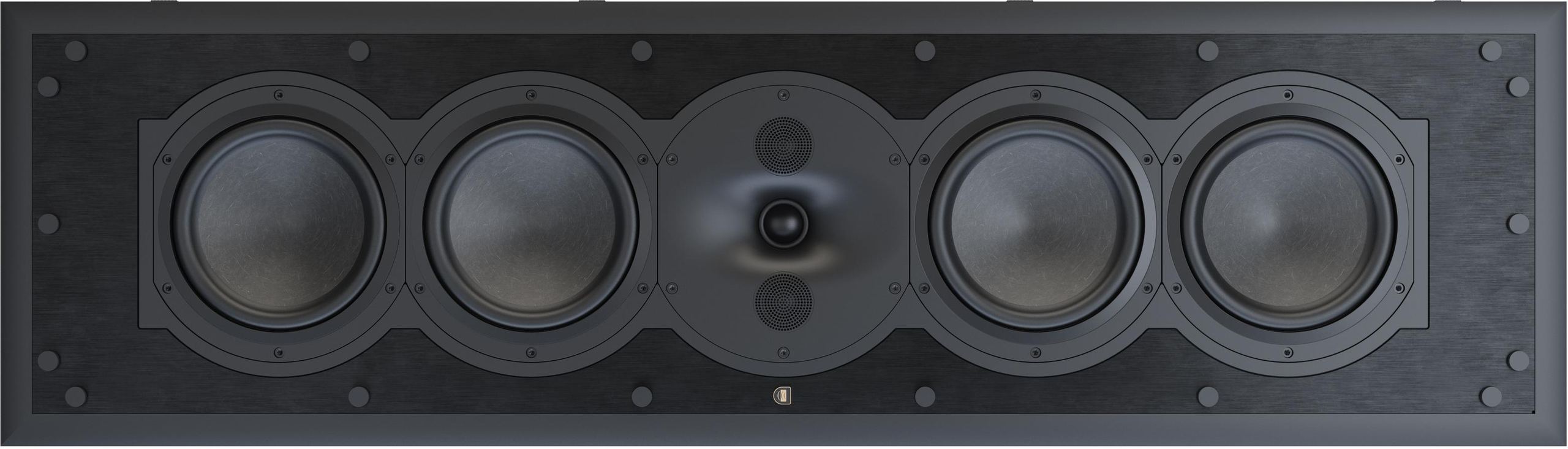
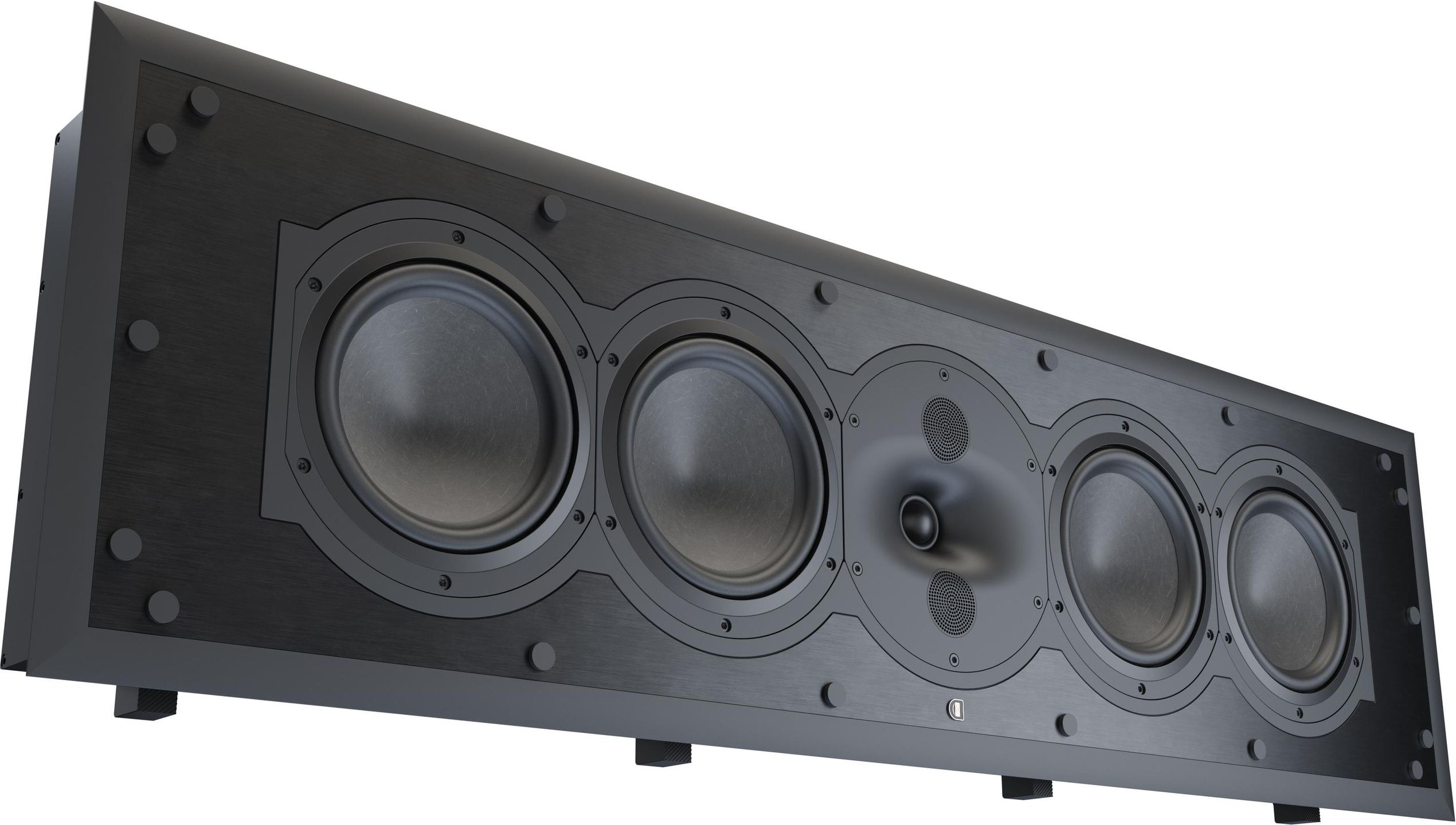
The R7i-C from Perlisten is an in-wall center speaker from the R series. With a depth of 120.8 mm, it features four 165 mm woofers and a DPC array, delivering sound reproduction comparable to larger traditional speakers while remaining discreet.
An aluminum enclosure that combines elegance and acoustic efficiency
The R7i-C stands out first and foremost for its enclosure, made entirely from extruded aluminum. This metal construction serves several essential functions: it ensures optimal structural rigidity that eliminates unwanted vibrations, while creating a sealed, controlled environment for the drivers. The sealed enclosure removes the acoustic variables associated with wall cavities, ensuring consistent performance regardless of wall type.
The matte black aluminum gives the whole a clean, contemporary finish. The precisely machined front baffle houses the seven drivers in a perfectly symmetrical vertical layout. This configuration is no accident: it stems from complex acoustic calculations aimed at optimizing temporal coherence and sound radiation directivity. The magnetic grille, available in white or black, blends seamlessly into any interior while effectively protecting the diaphragms.
Measuring 1032 mm wide by 293 mm high, the R7i-C adopts the classic horizontal format of a center channel, but its slim 120.8 mm depth allows installation in standard stud walls without encroaching on adjacent space. The unit’s 23.1 kg weight attests to the robustness of the construction and the quality of the components used.
The DPC-Array: an acoustic beamforming technology
At the heart of the R7i-C is the DPC (Directivity Pattern Control) array, a technology developed over 18 months by Perlisten’s engineers. This system uses three 26 mm silk-dome tweeters arranged vertically—one central and two peripheral—which operate together based on a principle of passive acoustic beamforming.
Unlike conventional configurations where each driver handles a distinct frequency band, the three DPC domes work in synergy with significant frequency overlap. The relative amplitudes and phases of each driver are carefully calibrated to create constructive interference on the listening axis and destructive interference elsewhere. This technique concentrates acoustic energy toward listeners while minimizing reflections from the ceiling and floor.
The waveguide surrounding the central tweeter plays a crucial role in this setup. Its complex geometry, the result of advanced computer simulations, maintains generous horizontal dispersion up to the highest frequencies while tightly controlling vertical dispersion. This ensures a broad listening area horizontally—allowing multiple viewers seated side by side to enjoy optimal sound quality—while reducing coloration caused by vertical reflections.
Silk diaphragms were chosen after two years of development for their ability to reproduce mids and highs with naturalness and smoothness. Unlike the beryllium used in the high-end S series, silk offers a slightly warmer sonic signature while maintaining remarkable resolution and minimal distortion, even at high volume.
Four HPF drivers for articulate, deep bass
The four 165 mm woofers provide the R7i-C’s bass foundation. Their diaphragms use HPF (Hybrid Pulp Formulation) technology, a proprietary composite developed by Perlisten that blends long and short hardwood fibers, bamboo, and wool. This formulation endows traditional paper pulp with enhanced mechanical properties: increased rigidity, optimal natural damping, and preserved lightness.
Bamboo, integrated into the matrix, significantly increases cone stiffness without adding moving mass. Wool fibers contribute to internal damping by absorbing unwanted resonances. This combination allows the drivers to maintain pistonic behavior up to relatively high frequencies, ensuring a seamless handoff to the DPC array at 1.1 kHz.
The drivers’ magnetic motors feature powerful neodymium magnets and aluminum voice coils. This deliberate choice of aluminum over copper is far from a cost-saving measure; it reduces moving mass to improve transient response. Shorting rings in the magnetic gap linearize magnetic behavior and reduce distortion, particularly at high levels.
The sealed acoustic loading (acoustic suspension) eliminates issues of overhang and unwanted resonances associated with bass-reflex ports. While this configuration limits ultimate low-end extension, it ensures exemplary transient response and precise articulation of low frequencies. Typical in-room extension still reaches 35 Hz, more than sufficient to reproduce the essential frequency range of dialog and cinematic effects.
Acoustic performance and THX certification
Objective measurements of the R7i-C reveal performance that defies the usual limitations of in-wall speakers. Frequency response extends from 42 Hz to 32 kHz (-10 dB), with remarkable linearity of ±2 dB between 80 Hz and 20 kHz. Such consistency over a wide range speaks to the excellence of the design and guarantees faithful reproduction without audible coloration.
A sensitivity of 90.1 dB (2.83V/1m) places the R7i-C among the most efficient speakers in its class. This characteristic makes pairing easy with a wide range of amplifiers, from entry-level 100-watt models to high-end references delivering 400 watts or more. The maximum sound pressure level of 116.1 dB SPL peak allows the most dynamic passages of modern soundtracks to be reproduced without compression or audible distortion.
Total harmonic distortion remains below 3% (2nd and 3rd harmonics) even at 116 dB peak, an exceptional result for an in-wall speaker. This performance stems directly from the careful driver design and the directivity control that limits detrimental interactions with room acoustics.
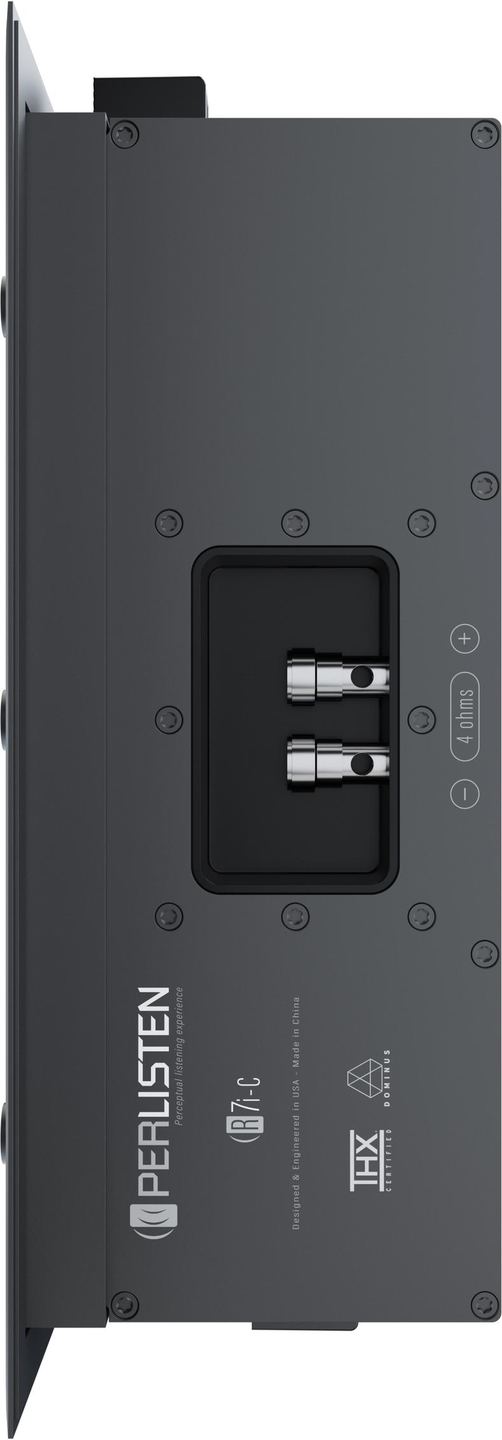
The nominal impedance of 4 ohms (minimum 3.6 ohms) remains relatively stable across the bandwidth, easing the amplifier’s workload. Combined with the high sensitivity, this allows comfortable sound levels even with moderately powered amplifiers, while offering the ability to reach very high volumes with more ambitious electronics.
Documentation
Technical specifications
Transducers
- DPC-Array network: 3 × 26 mm silk-dome tweeters
- Woofers: 4 × 165 mm HPF pulp-cone woofers
- Enclosure type: sealed (acoustic suspension)
Acoustic performance
- Frequency response (–10 dB): 42 Hz – 32 kHz
- Response linearity: 80 Hz – 20 kHz (±2 dB)
- Typical in-room bass extension: 35 Hz
- Sensitivity: 90.1 dB (2.83 V / 1 m)
- Maximum sound pressure level at 1 m (100 – 20 kHz): 116.1 dB peak
- Total harmonic distortion: < 3% (2nd and 3rd harmonics) at < 116 dB peak
Amplification and power
- Nominal impedance: 4 Ω (minimum 3.6 Ω)
- Recommended amplifier power: 100 – 400 W RMS
Dimensions and installation
- Dimensions (H × W × D): 293 × 1032 × 120.8 mm
- Mounting depth: 120.8 mm
- Weight: 23.1 kg
Finish
- Available finish: matte black aluminum with optional white grille
Technologies and design
- Exclusive DPC network (Directivity Pattern Control): three 26 mm silk-dome tweeters ensure precise directivity control and perfect tonal consistency with all speakers in the R Series
- Integrated aluminum enclosure: mounting depth of just 120.8 mm for discreet installation and minimal acoustic leakage to adjacent rooms
- Custom drivers: silk diaphragms for mid and high frequencies, 165 mm HPF pulp-cone woofers for deep, accurate bass
- Tonal uniformity: DPC-Array technology ensures perfect coherence across the entire R Series
- Low distortion and natural response: optimized to deliver detailed, realistic sound even at high listening levels
Highlights
- Precise, natural sound reproduction, ideal for voices and dialogue
- Perfectly controlled directivity for seamless integration in a multichannel system
- Discreet on-wall installation thanks to the shallow aluminum enclosure
- Full tonal compatibility with all speakers in the R Series
- High fidelity and low distortion, even at high volume levels
Frequently asked questions
Can the R7i-C work with amplifiers less powerful than the recommended 100 watts?
Thanks to its high sensitivity of 90.1 dB, the R7i-C can technically operate with 50–75 watt amplifiers, especially in smaller rooms. However, to fully exploit its dynamic capabilities and power handling, an amplifier of at least 100 watts will ensure optimal performance, particularly during demanding passages in modern soundtracks.
What is the main difference between the R7i-C and the higher-end S7i-C models?
The distinction lies mainly in the driver materials. The S7i-C uses a central beryllium tweeter and TPCD (Thin-Ply Carbon Diaphragm) Textreme carbon fiber diaphragms for all drivers. The R7i-C favors more accessible yet high-performing materials: silk for the tweeters and HPF for the woofers. These choices subtly influence the sonic signature, with the S7i-C offering slightly higher resolution and dynamic capability.
Does installation require special skills or specific wall reinforcement?
The substantial 23.1 kg weight does require particular care during installation. Horizontal bracing between studs is strongly recommended to ensure a stable mount and avoid any structural vibrations. A precise cutout template is provided, and professional installation is advised to guarantee optimal results and preserve the product warranty.
How does the R7i-C perform behind an acoustically transparent screen?
The R7i-C was specifically designed for this application. Its directivity control and extended frequency response naturally compensate for the slight attenuation caused by perforated or woven screens. The vertical orientation of the DPC array maintains a stable, focused soundstage, ensuring dialog remains anchored to the image even through a screen.
Does the sealed enclosure really limit bass extension compared to a bass-reflex system?
While theoretically a bass-reflex design could extend lower, the R7i-C’s sealed configuration offers significant advantages in an in-wall context: faster transient response, no port noise, and crucially no risk of adverse interaction with the wall cavity. The 35 Hz in-room extension is more than adequate for a center channel, with lower frequencies generally handled by a subwoofer in a complete home theater system.
- Eco-contribution included in the sale price.