Nelson
Excellent speaker! I recommend it
Comment from 12 August 2026 — Experience from 17 November 2025
Automatically translated — Show original (French)
Excellente cellule ! je recommande
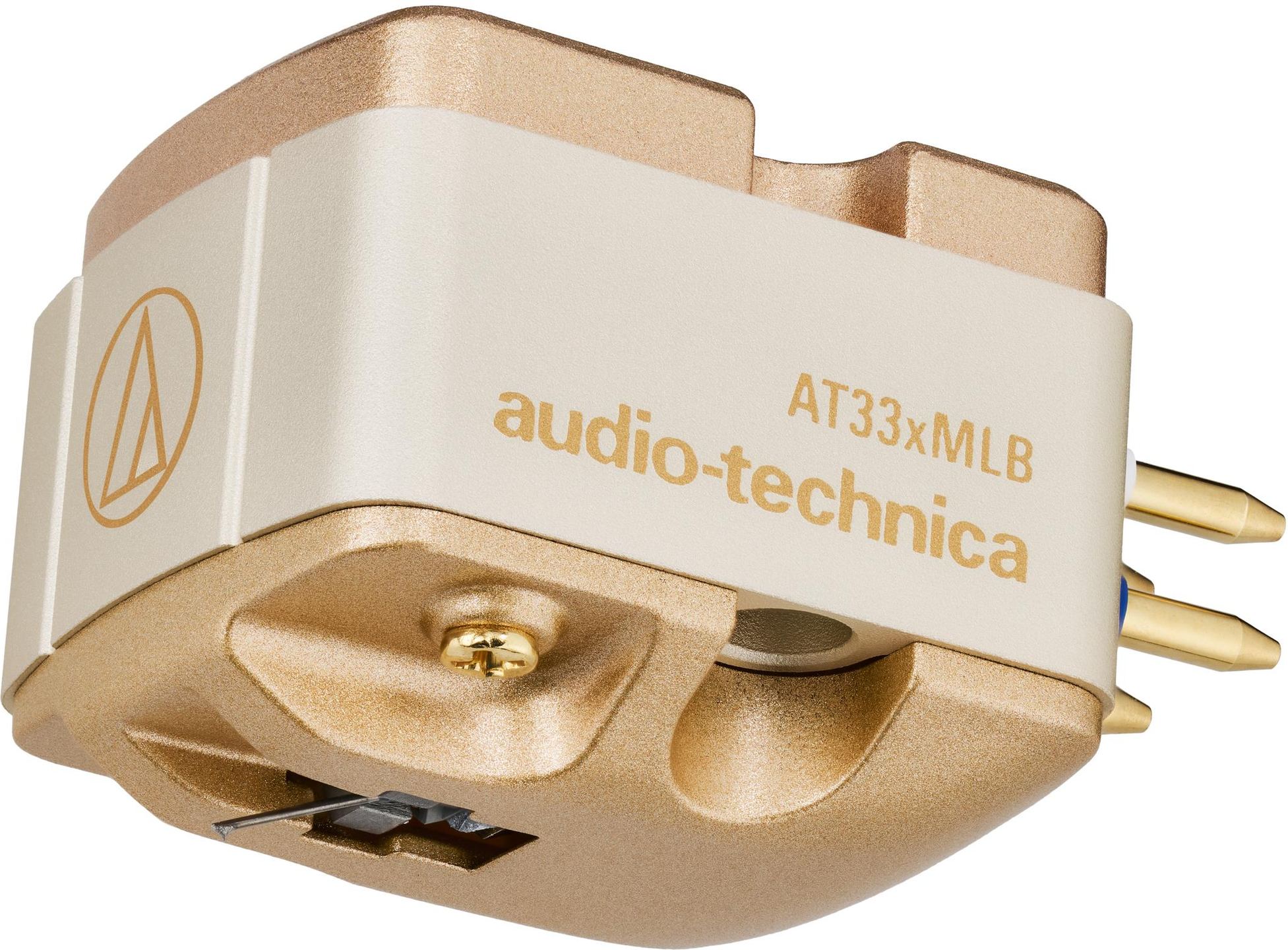
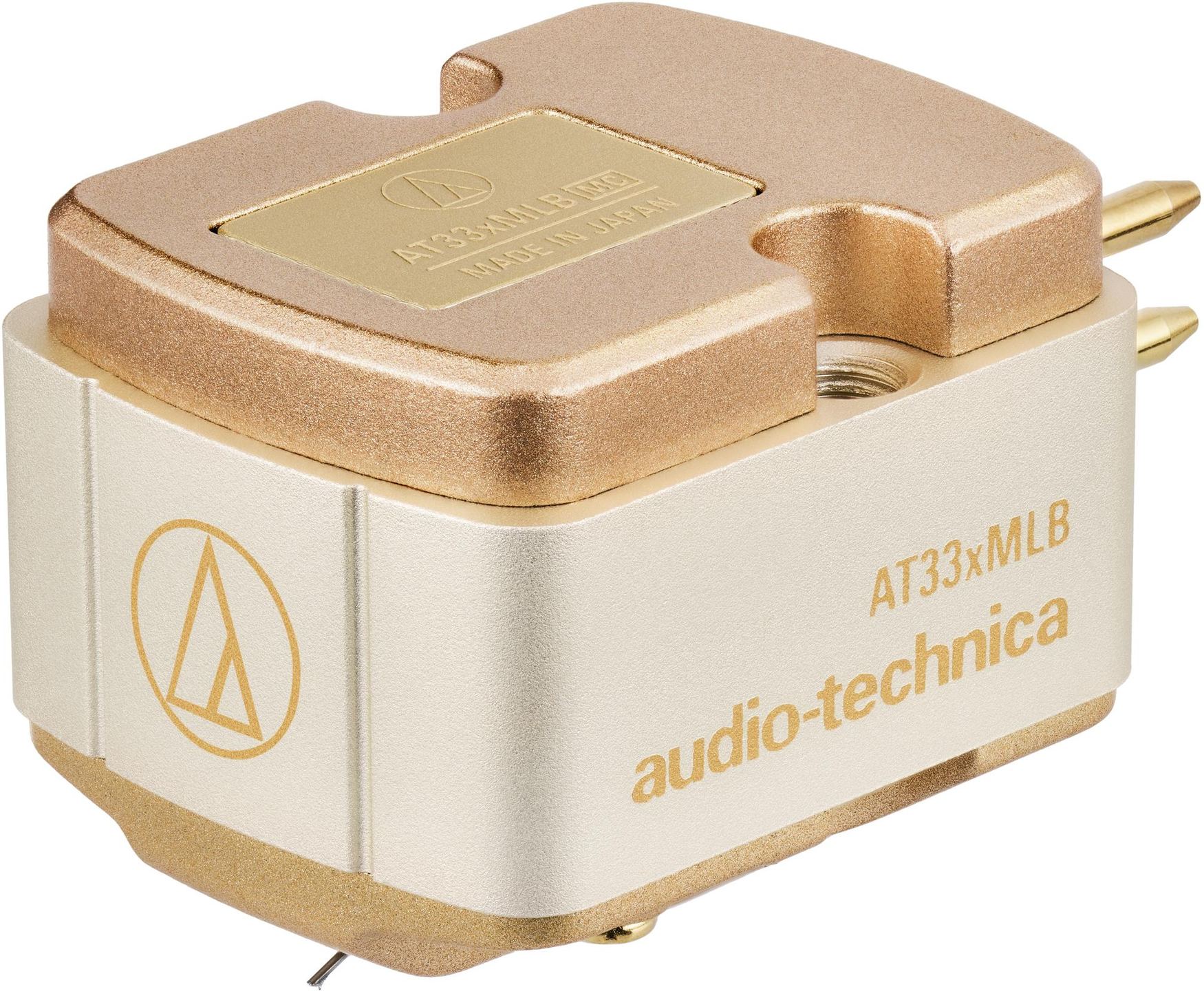
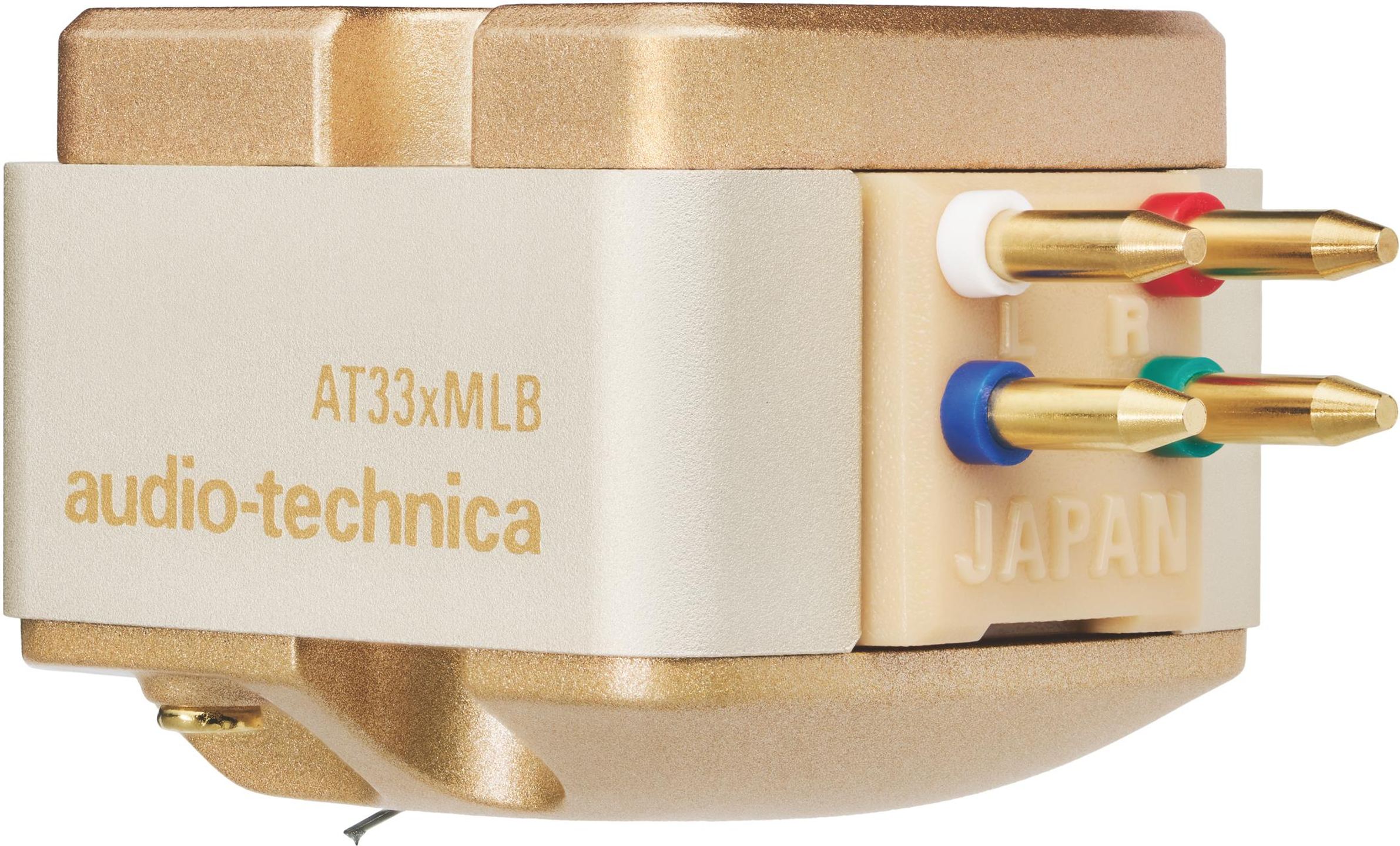
After more than a decade without a major overhaul, Audio-Technica makes its return to high-end moving-coil cartridges with the AT33xMLB. This new generation of the AT33 series blends innovative materials, Japanese craftsmanship, and an obsessive pursuit of sonic detail. With its solid microlinear diamond, solid boron cantilever, and hybrid construction incorporating die-cast zinc for the first time, this cartridge reveals unsuspected nuances in your records, particularly those pressed since the late 1970s.
The AT33xMLB cartridge breaks new ground with the introduction of die-cast zinc in the body’s base—a first for Audio-Technica. This composite structure combines three strategically positioned materials: dense zinc at the base to suppress unwanted vibrations, aluminum in the center for structural rigidity, and a high-rigidity polymer to complete the damping. This architecture effectively disperses resonances, particularly in the mid and low frequencies where the cartridge gains in clarity and definition.
The integrated M2.6 threaded inserts reflect careful attention to practical details. No more tiny, hard-to-handle nuts—two simple screws are enough to securely mount the cartridge on any standard headshell or integrated tonearm. This focus on ergonomics embodies a user-oriented design philosophy that runs through the entire product.
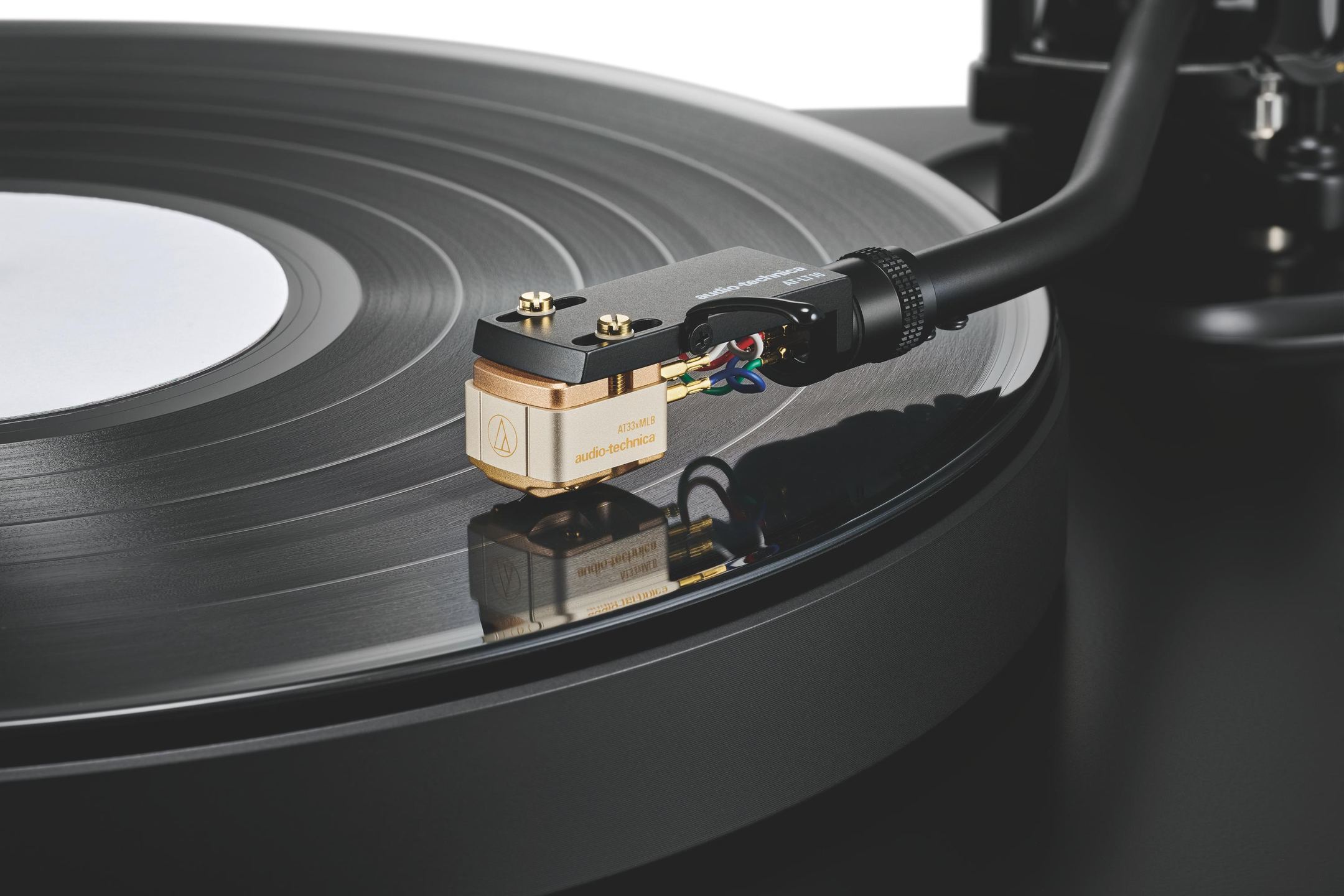
The AT33xMLB’s solid microlinear diamond reproduces almost exactly the shape of the cutting stylus used to engrave the original masters. With contact dimensions of 2.2 × 0.12 mil, this ultra-fine profile explores groove areas inaccessible to conventional tips. Its geometry maintains extended vertical contact while minimizing horizontal contact area, enabling exceptional high-frequency tracking with reduced harmonic distortion.
Longevity is a commonly overlooked advantage: the microlinear’s multi-faceted shape distributes wear evenly, easily allowing 1,000 to 1,500 hours of use versus 500 to 800 for a standard elliptical. This exceptional lifespan, combined with superior sound reproduction, fully justifies the initial investment.
Solid boron offers a near-ideal stiffness-to-mass ratio—about 11 times stiffer than aluminum while remaining lightweight. This combination enables vibration transmission at 18,000 m/s, pushing any parasitic resonance well beyond the audible band. The tapered conical shape optimizes the propagation of mechanical waves, ensuring total transparency across the entire frequency range.
The new suspension mechanism using a piano wire reduces dynamic compliance to 6 × 10⁻⁶ cm/dyne, greatly expanding compatibility with different types of tonearms. This firmer suspension particularly enriches the lower midrange, adding body and substance to musical reproduction.
The architecture uses independent coils for each channel, positioned at the cantilever’s fulcrum. This configuration guarantees 27 dB separation at 1 kHz and remarkably precise stereo imaging. The PCOCC copper coils (Pure Copper by Ohno Continuous Casting)—a monocrystalline conductor with no grain boundaries—preserve micro-details and dynamics in full.
The magnetic circuit combines a neodymium magnet with a permendur yoke, creating a magnetic field of exceptional intensity and uniformity. This peak efficiency generates 0.42 mV with only 12 ohms of internal impedance—ideal characteristics for most MC phono stages.
The AT33xMLB excels with complex orchestral recordings, distinguishing each instrument without congestion even in the densest crescendos. Records produced since the late 1970s—a golden age of analog mastering—take on a new dimension. Jazz fusion, progressive rock, classical: the cartridge reveals production subtleties, natural reverberations, and discreet overdubs that enrich these recordings.
The frequency response extends from 20 Hz to 45 kHz, but it’s in the handling of timbre and acoustic space that the cartridge shows its personality. Violins retain their silky texture without acidity, brass their brilliance without harshness, and double basses their depth without muddiness.
A tracking force of 2.0 g (adjustable between 1.8 and 2.2 g) and a 19° VTA require precise yet accessible setup. Azimuth deserves particular attention: the microlinear’s complex profile demands perfect alignment for optimal contact with both groove walls.
On the electronics side, the 12-ohm impedance accommodates a minimum load of 100 ohms, with optimal results often reported between 200 and 470 ohms. The thick gold-plated connectors ensure a stable, long-lasting contact.
The microlinear diamond has a much more complex profile than an elliptical, with extended vertical contact but a very fine horizontal contact (0.12 mil versus 0.3 to 0.7 mil for an elliptical). This geometry allows it to track high-frequency modulations with superior precision, reducing distortion by 2 to 3% in the treble. The microlinear also accesses groove areas untouched by conventional styli, revealing details buried in the recording.
PCOCC copper is cast using the Ohno process, which produces a continuous monocrystalline conductor with no grain boundaries. In conventional copper, these boundaries act as barriers to electrons, creating additional resistance and micro-distortions. PCOCC eliminates these obstacles, enabling signal transfer with exceptional purity. The difference is subtle but noticeable on a high-resolution system: better transient definition, more coherent soundstage, more natural timbres.
Zinc has excellent vibration-damping properties thanks to its particular crystalline structure. Used at the base of the cartridge where unwanted vibrations from the tonearm are most likely to enter, it acts as a mechanical filter. Measurements show a 6 to 8 dB reduction in resonances between 100 Hz and 1 kHz compared to an all-aluminum body. This improvement translates into a cleaner lower midrange, more natural vocals, and better instrument separation in the mix.
The AT33xMLB particularly excels with complex acoustic recordings: jazz (notably ECM and Blue Note recordings from the ’70s–’80s), classical (orchestral and chamber), progressive rock, and sophisticated productions. Female vocals are rendered with striking naturalness. Live recordings benefit from its ability to recreate spatial ambience. Conversely, for lo-fi garage rock or poor-quality pressings, a less revealing cartridge might be preferable.
Nelson
Excellent speaker! I recommend it
Comment from 12 August 2026 — Experience from 17 November 2025
Stephane
Stunning cartridge...which requires meticulous adjustment and 30/40 hours of break-in to fully express itself.
Perfectly balanced, detailed, dynamic, with a very coherent 3D soundstage, this cartridge borders on perfection, but you should not expect a colored (or warm) sound, appealing at first glance and, in the end, tiring over time....With the AT 33x mlb, it's quite the opposite: This cartridge is straight and of absolute neutrality, moreover endowed with a very surprising level of detail in the midrange register, especially in voices.
I have owned around twenty cartridges of every brand, and it is indeed this AT 33x mlb that I prefer because it captures all the micro-information in the groove without adding any kind of over-definition or listening fatigue.
An exceptional performance from the Japanese manufacturer Audio-Technica. You can buy this cartridge with your eyes closed, you will not be disappointed...
Comment from 11 June 2026 — Experience from 31 May 2026
Patrick
Very punchy cartridge at first, which settles down over time and with break-in. Great energy and a lot of finesse.
Comment from 2 March 2026 — Experience from 11 December 2025