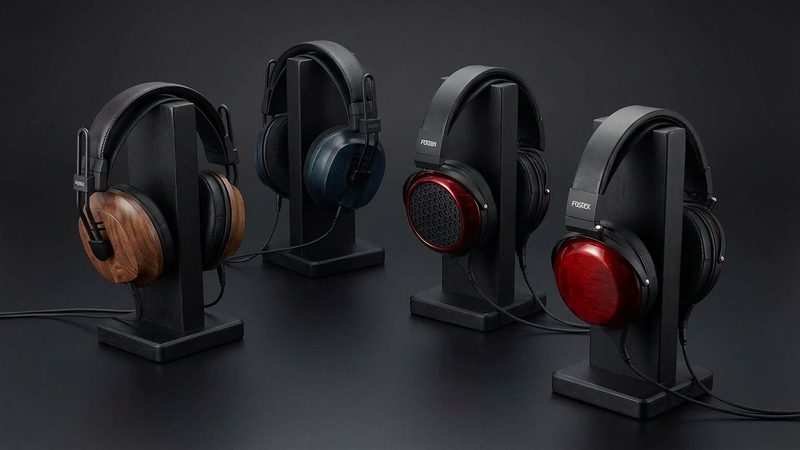
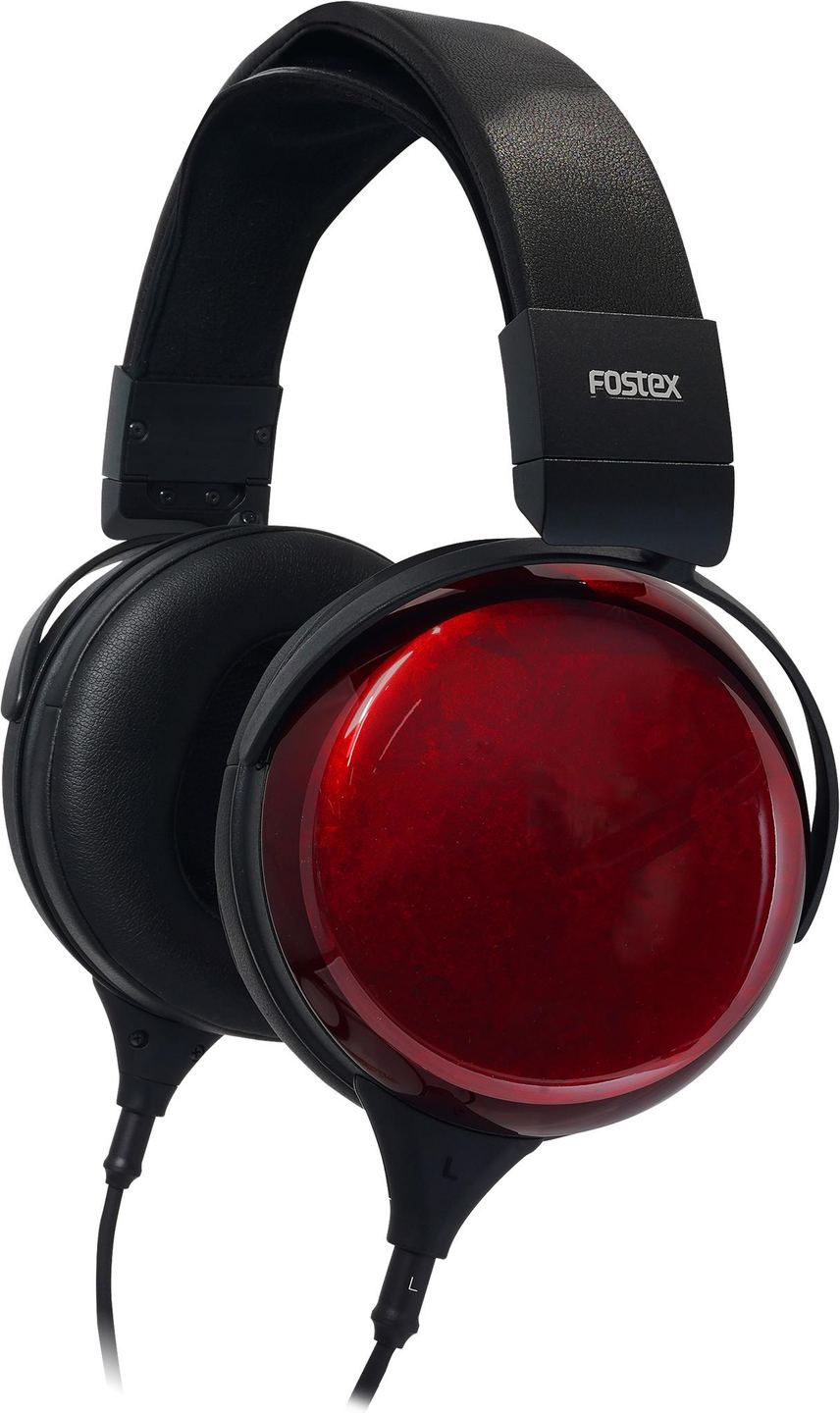
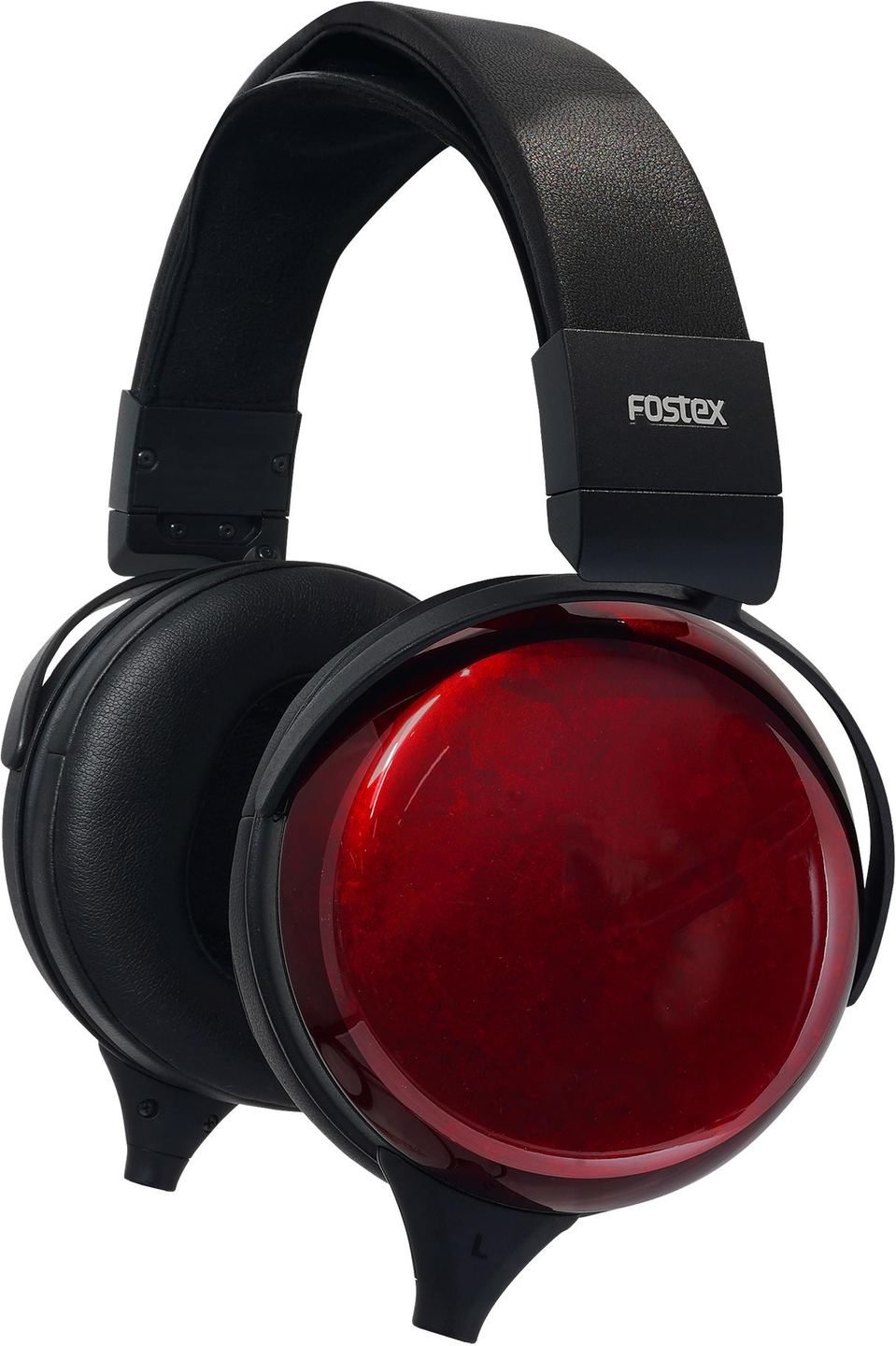
Fostex TH910

Buy as a bundle and save
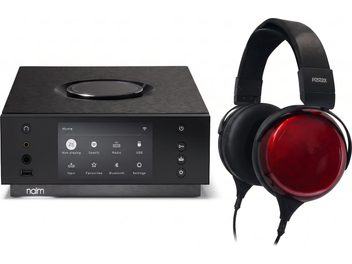
- Fostex TH910
- Naim Audio Uniti Atom Headphone Edition
Overview
Thirteen years after the launch of the TH900, Fostex is back with a complete overhaul of its high-end closed-back headphone. The TH910 doesn’t just refresh the aesthetics: driver, mechanical structure, cups, and earpads have all been redesigned. The Japanese manufacturer’s stated goal? To improve comfort and acoustic precision while preserving the sonic identity that made the series’ reputation.
A completely redesigned BioDyna driver
The heart of the TH910 lies in its new 50 mm BioDyna driver. Fostex hasn’t simply reused the biocellulose diaphragm from previous generations: the surround and voice coil have been redesigned to improve the diaphragm’s amplitude stability.
The biocellulose, developed in-house over several decades, is distinguished by its ultra-fine fibers (20 to 50 nanometers) made of highly pure α-cellulose. This material offers high propagation speed and greater rigidity than conventional plastic diaphragms, while maintaining internal damping that limits unwanted resonances.
In practice, this new design aims to deliver tighter, better-defined bass without bleeding into the midrange. The mids gain in transparency, while the treble retains the series’ characteristic sparkle with added refinement. Frequency response extends from 12.5 Hz to 45 kHz, and the 100 dB/mW sensitivity combined with 25-ohm impedance allows the headphone to be driven from most sources, although a dedicated amplifier is still recommended to fully exploit its potential. The 1,800 mW power handling provides comfortable headroom even with the most powerful amplifiers.
Maple cups lacquered in the Urushi tradition
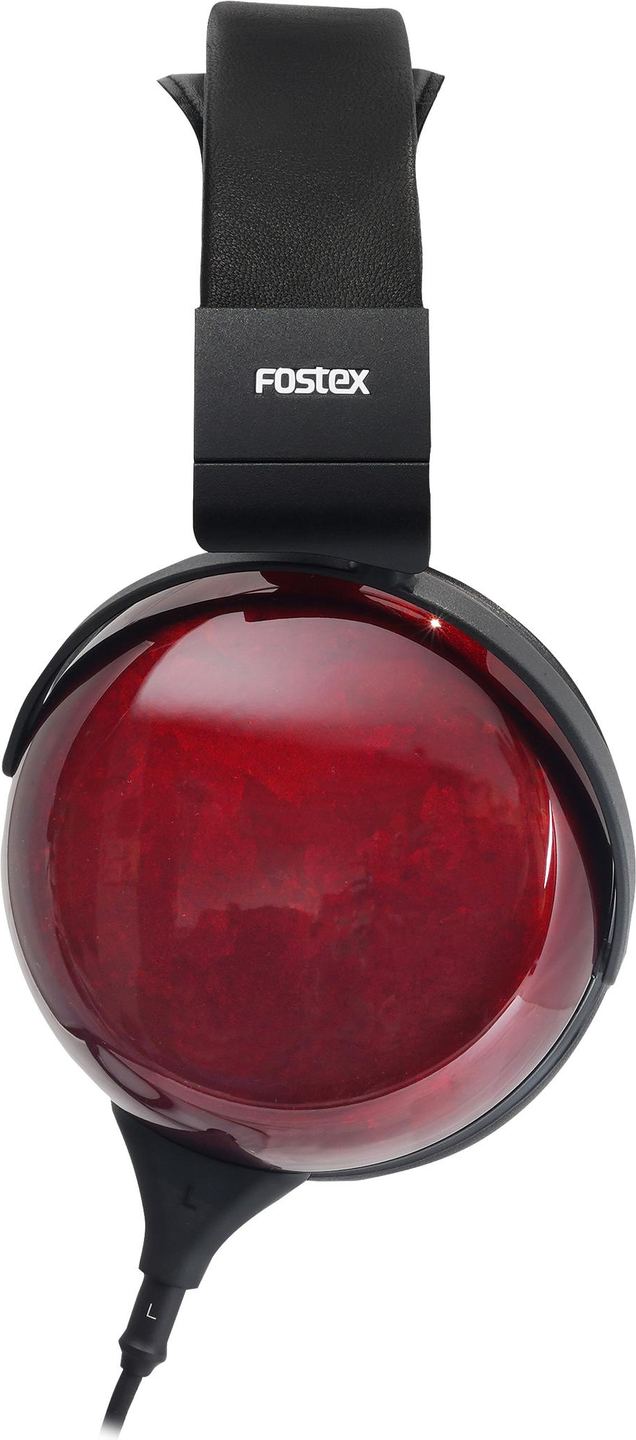
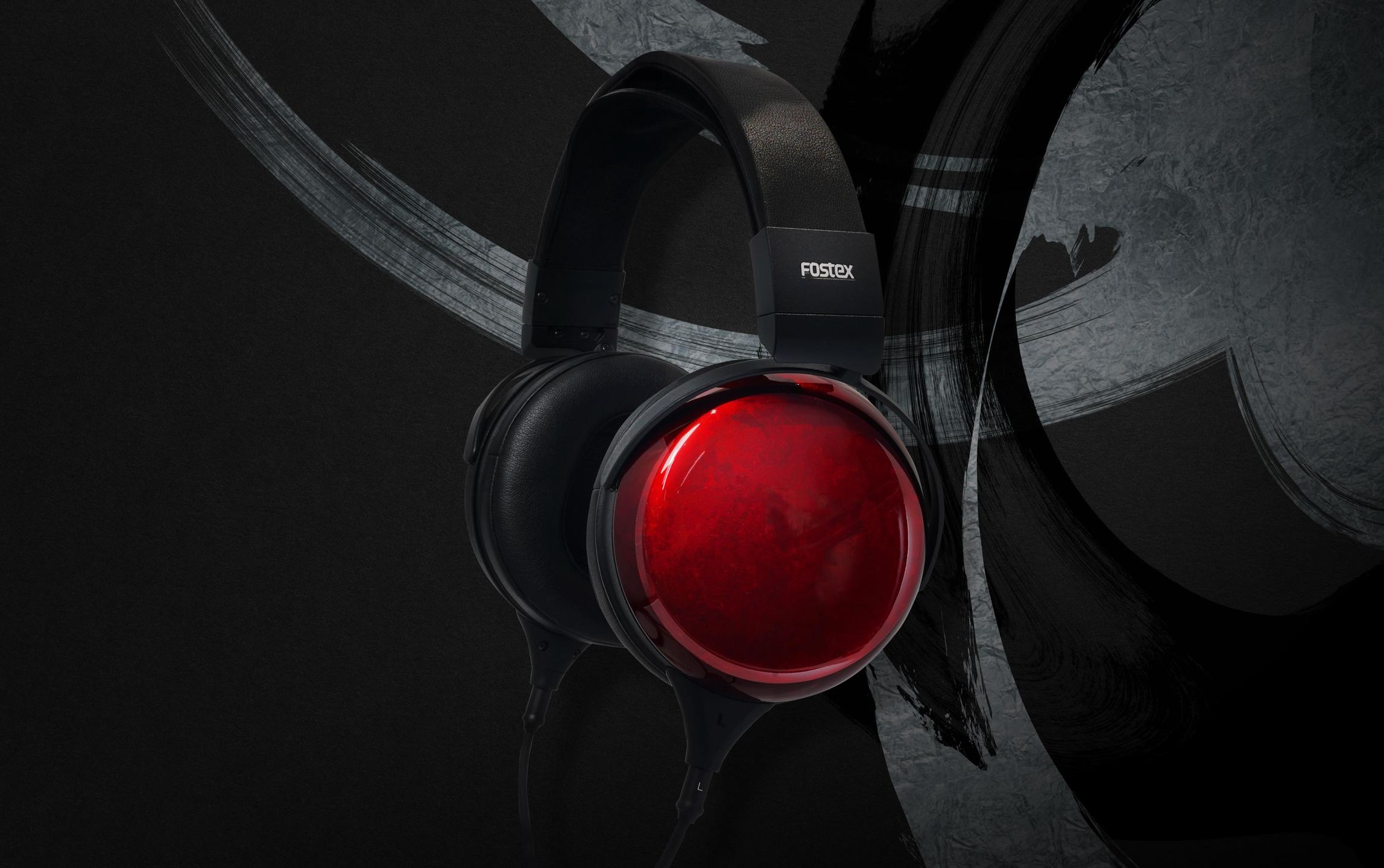
Fostex has chosen solid hard maple for the TH910’s cups, a dense, rigid wood that limits tonal coloration. Each pair is then entrusted to the artisans of Sakamoto Otozo Shoten, a workshop specialized in Urushi lacquer since 1900.
The process used involves layering several coats of black lacquer, onto which fragments of silver leaf pre-smoked with sulfur are applied. This technique gives each headphone a unique pattern with shifting reflections and a visual depth reminiscent of certain traditional Japanese objects. Beyond the aesthetic aspect, the Urushi lacquer forms a hard, stable surface that enhances the wood’s acoustic neutrality.
A lightweight magnesium-alloy structure
To reduce weight without sacrificing rigidity, Fostex has replaced aluminum parts with a magnesium alloy. This modification mainly affects the mounting plate and hinges, cutting the weight of these components by around 20%. The complete headphone weighs 385 grams without cable, five grams less than the TH900mk2 despite the addition of new isolation elements.
The rotation mechanisms now incorporate rubber joints that absorb residual vibrations and eliminate unwanted noises when you move your head. This attention to mechanical damping contributes to the sense of calm and focus the headphone provides once it’s on your ears.
Redesigned earpads for long listening sessions
The TH910’s earpads adopt an angled shape that optimizes the listening angle relative to the pinna. Inside, a dual layer of memory foam combines surface softness with a firmer core, gradually conforming to facial contours without creating pressure points.
The cover uses a synthetic leather enriched with silk proteins, claimed to be three times more durable than the materials previously used. This choice aims to maintain comfort and acoustic seal over the long term, with the understanding that earpads remain consumable parts to be replaced after intensive use.
The headband and support band are covered in genuine lambskin leather, a supple, breathable material that distributes pressure evenly across the top of the head.
Standardized cabling and connectivity
The TH910 comes with a two-meter single-ended cable, fitted with 3.5 mm jacks on the headphone side and a gold-plated 6.3 mm plug on the source side. Both the internal wiring and the supplied cable use 7N-grade OFC copper (99.99999% purity), a choice that minimizes signal loss along the path from amplifier to drivers.
Fostex has abandoned the proprietary connectors used in previous generations in favor of standard 3.5 mm mono sockets on each earcup. This change simplifies cable replacement and opens the door to balanced configurations: a 4.4 mm pentaconn cable (reference ET-TH4.4BL2Y) will be offered separately for amplifiers equipped with a balanced output.
Operating conditions and maintenance
The TH910’s closed-back design provides passive isolation suitable for home listening in moderately noisy environments. The headphone does not feature active noise cancelling.
Routine maintenance consists of wiping down the earpads and headband after each prolonged use to remove sweat, sebum, and cosmetic residue. The earpads are wear parts that should be replaced periodically depending on usage intensity and storage conditions.
Documentation
Technical specifications
Acoustic and electrical specifications
- Type: closed-back dynamic headphones
- Transducer: 50 mm BioDyna dynamic with neodymium magnet
- Impedance: 25 Ω
- Sensitivity: 100 dB / mW
- Maximum admissible power: 1,800 mW
- Frequency response: 12.5 – 45,000 Hz
Transducer and acoustic technology
- New 50 mm BioDyna transducer
- Major evolution of the iconic BioDyna transducer
- Redesigned diaphragm and suspension for better amplitude stability
- Tight, controlled bass with no spillover
- Natural, transparent mids, free from unwanted resonances
- Brilliant, smooth treble with high precision
- Overall sound signature: dense, clear, deep, and highly detailed
Construction and materials
- Mechanical parts in magnesium alloy
- New design reducing weight by around 20%
- Improved rigidity with minimized vibrations
- Swivel mechanism equipped with rubber joints to eliminate resonances
- Enhanced comfort thanks to a lighter, optimized structure
- Hard maple earcups with Urushi lacquer finish
- Solid, high-density hard maple wood providing low sound coloration
- Japanese handcrafted Urushi finish by Sakamoto Otozo Shoten, a house founded in 1900
- Metal leaf pattern: smoked silver leaf applied over black lacquer base
- Luxurious, deep, and unique aesthetics
- Acoustic impact: deep bass and clear, extended treble, without excessive coloration
- New-generation ergonomic earpads
- Angled design to optimize fit
- Dual-layer low-resilience foam: soft outer foam, firmer inner foam for stability
- Silk protein synthetic leather covering, three times more durable
- Improved long-term comfort
- Headband and strap in genuine leather
- Natural lambskin leather
- Soft, breathable, and comfortable
- Flexible adjustment for even support
Connectivity and cabling
- Supplied 2 m asymmetrical cable
- Headphone connectors: 2 × 3.5 mm (2-pin)
- Source connector: gold-plated 6.3 mm stereo
- Internal wiring and supplied cable in high-purity 7N OFC copper (99.99999%)
- 4.4 mm balanced cable available separately
- Reference: ET-TH4.4BL2Y
Dimensions and weight
- Weight: approximately 385 g (without cable)
Supplied accessories
- Leather pouch
- Documentation and safety instructions
Frequently asked questions
What kind of amplifier is suitable for the TH910?
With an impedance of 25 ohms and sensitivity of 100 dB/mW, the TH910 can run from most headphone outputs. However, a quality dedicated amplifier will better control the drivers, especially in the bass, and make full use of the headphone’s dynamic range on the most demanding passages. Amplifiers capable of delivering significant power into low impedance will be particularly well suited.
Does the Urushi lacquer require special care?
Urushi lacquer forms a durable surface that does not require any specific treatment. Occasional wiping with a soft, dry cloth is enough to preserve the shine of the cups. It’s best to avoid solvents and abrasive products that could damage the finish.
Are the earpads and cable replaceable?
Yes, the cable uses standard 3.5 mm jack connectors and can be replaced or upgraded to a balanced 4.4 mm version. The earpads are also designed to be replaced; Fostex offers original spare parts.
What’s the difference between the TH910 and the TH919?
The TH910 is a closed-back headphone, while the TH919 uses an open-back design with grilles inspired by Kumiko, a Japanese decorative art. The TH919 offers a more spacious soundstage and less isolation, whereas the TH910 focuses on intimacy and passive isolation.
Is the TH910 suitable for portable use?
The headphone comes with a leather pouch, but its size, weight, and non-folding design make it primarily intended for stationary use. The two-meter cable and 6.3 mm plug further underline its orientation towards home listening with hi-fi equipment.
How does the TH910 compare with the TH900mk2?
The TH910 represents an evolution in several areas: redesigned BioDyna driver, switch from Japanese cherry birch to hard maple, weight reduction thanks to magnesium, new angled earpads, and standardized connectors. The TH900mk2 remains in the lineup for those who prefer its sound signature or its distinctive burgundy finish.
Is the 45 kHz frequency response actually audible?
The human ear generally doesn’t perceive frequencies above 20 kHz. This extension into the ultra-highs mainly reflects the driver’s ability to reproduce transients accurately and avoid phase distortions in the upper audible range, which can contribute to a more natural rendering of timbre.
- Eco-contribution included in the sale price.
- GTIN / EAN: 4995090310343