Marantz AMP 30
Complementary product
Overview
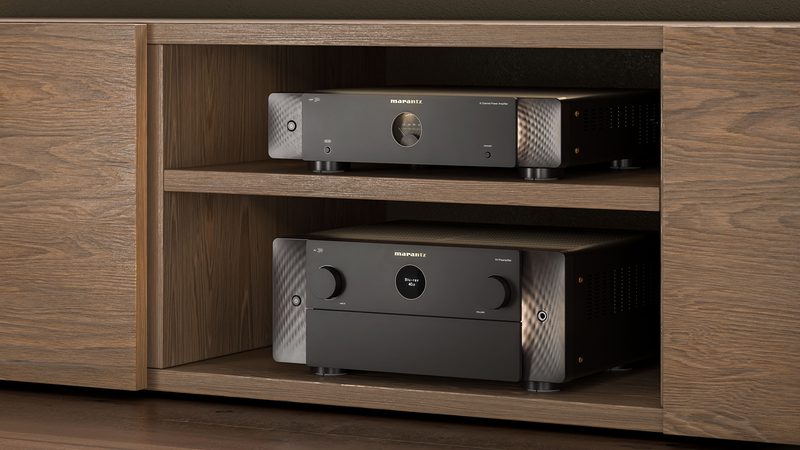
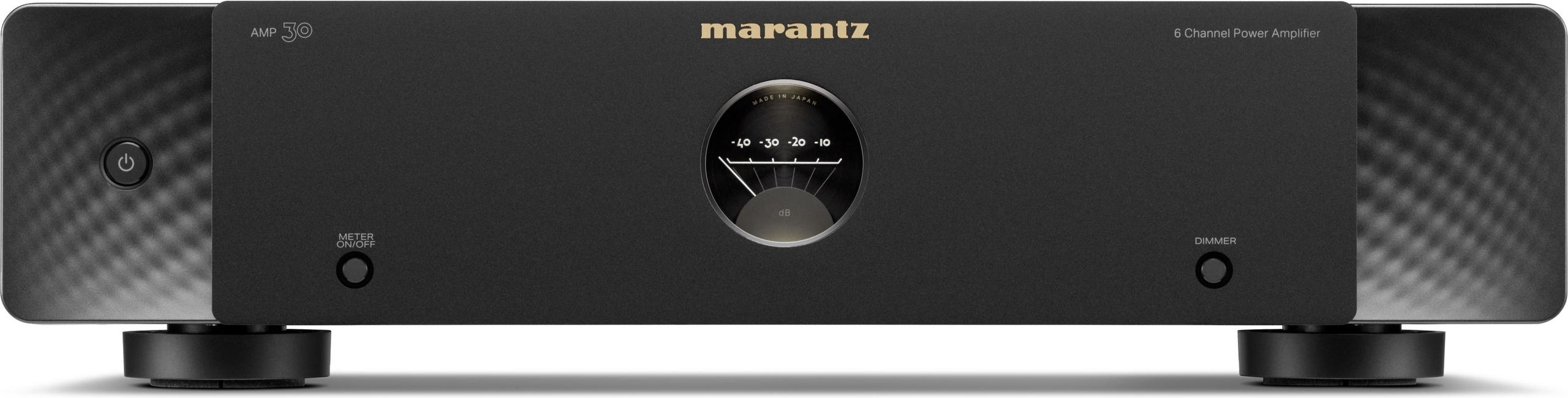
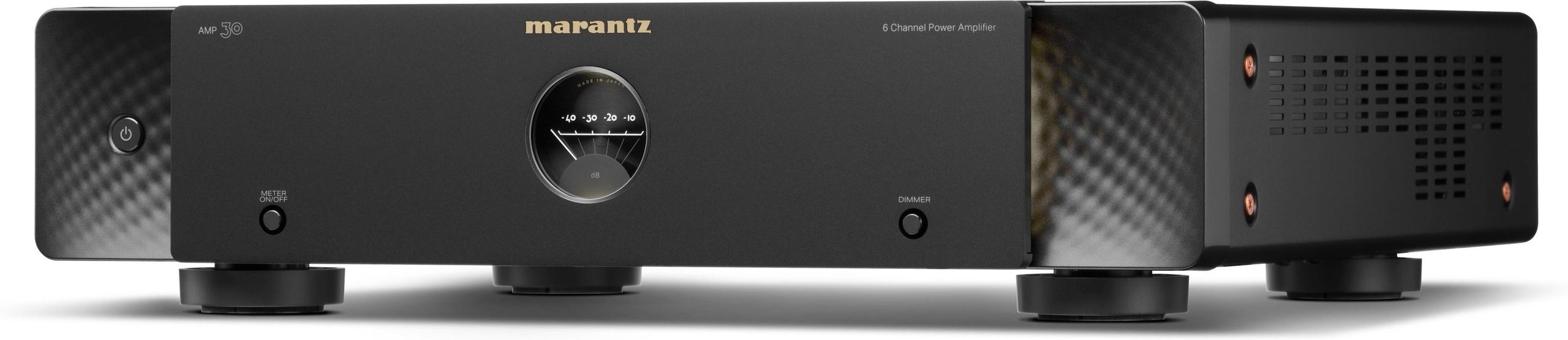
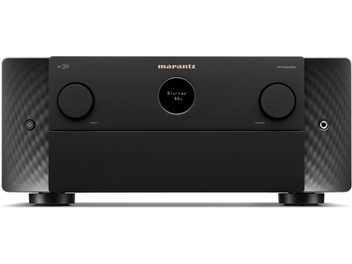
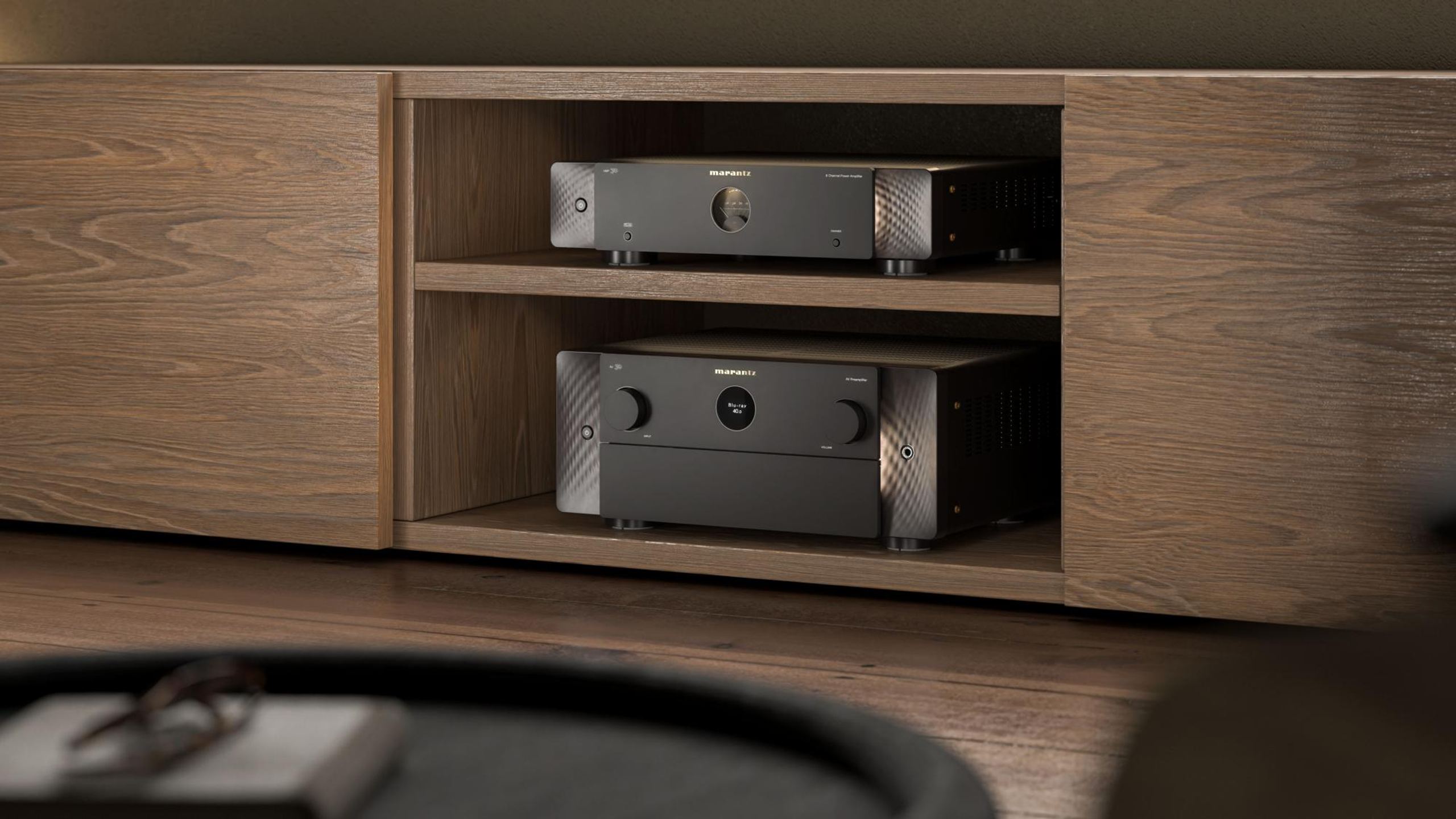
Six channels of pure amplification, with no processing or conversion: the AMP 30 focuses on a single mission—delivering clean power to your speakers. Designed to operate in tandem with a preamplifier or a home cinema processor, this amplifier uses the HDAM technology that Marantz has been developing for several decades. Its compact format and central VU meter immediately recall the brand’s visual signature, while the professional-grade connectivity allows integration into demanding systems.
A fully discrete amplification architecture
The AMP 30 is built around six independent amplification stages, each using HDAM (Hyper Dynamic Amplifier Module) blocks. This proprietary technology replaces conventional integrated operational circuits with selected discrete components assembled on dedicated printed circuit boards. The result is an extended bandwidth and a very short rise time, two parameters that directly influence transient accuracy and treble definition.
The current-feedback amplification used here differs from the more common voltage-feedback topologies. This approach maintains stable behavior regardless of load impedance and reduces intermodulation distortion, particularly with complex musical signals where multiple frequencies interact simultaneously.
Generous power reserves
Each channel delivers 200 W into 8 Ω with total harmonic distortion kept to 0.05% when two channels operate simultaneously. Into 4 Ω, power doubles to 400 W per channel, demonstrating a properly sized power supply and output transistors capable of delivering the current required by difficult loads.
When all channels are working together (typical multichannel soundtrack configuration), each one still provides 200 W into 8 Ω. This consistency prevents drops in dynamics during passages where all speakers are active at the same time. For setups that prioritize raw power over a smaller number of channels, the BTL (bridged-tied-load) mode groups the channels in pairs and produces three outputs of 400 W into 8 Ω.
Balanced and unbalanced connectivity
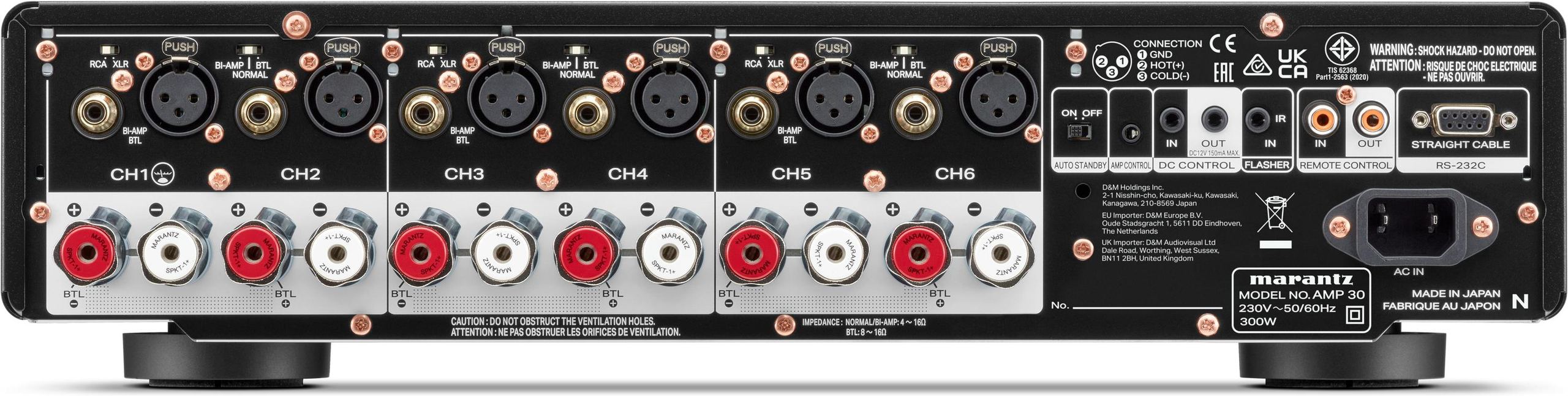
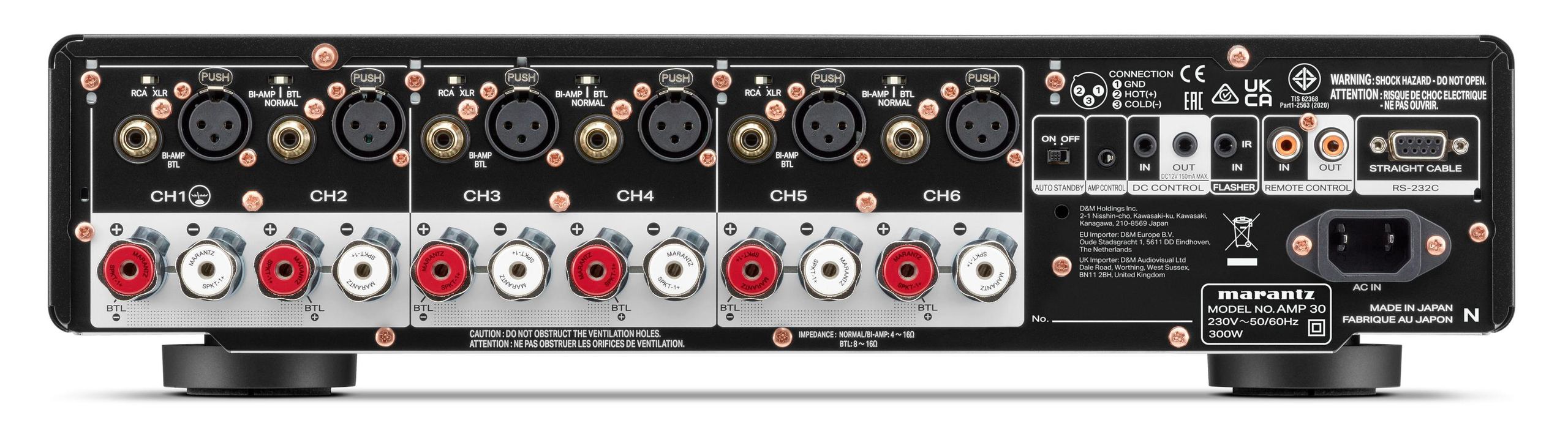
The AMP 30 accepts signals via balanced XLR or unbalanced RCA inputs on each of its six channels. A selector lets you switch between the two connection types; both cannot be used simultaneously on the same channel. Balanced XLR connections offer an advantage in electrically noisy environments or when cables exceed a few meters, as they reject interference picked up along the signal path.
Six pairs of speaker terminals complete the rear panel. Their design allows for passive bi-amping (one pair of channels per speaker, with bass and mid/high separation) or the conventional wiring of a 5.1 system with one channel left available for future use.
Integration into a home automation or multiroom system
Several control interfaces allow the AMP 30 to be integrated into a managed installation. The RS-232 port provides bidirectional communication with automation systems such as Crestron or Control4. The IR Flasher input receives repeated infrared commands from a technical room, while the Marantz Remote bus simplifies interconnection with other devices from the brand.
The 12 V trigger allows the amplifier to turn on or off automatically when a preamplifier or processor sends the corresponding signal. A trigger output is also provided to daisy-chain multiple devices. The auto standby function cuts the power after an extended period of inactivity, reducing standby consumption to just 0.2 W.
A compact format despite its performance
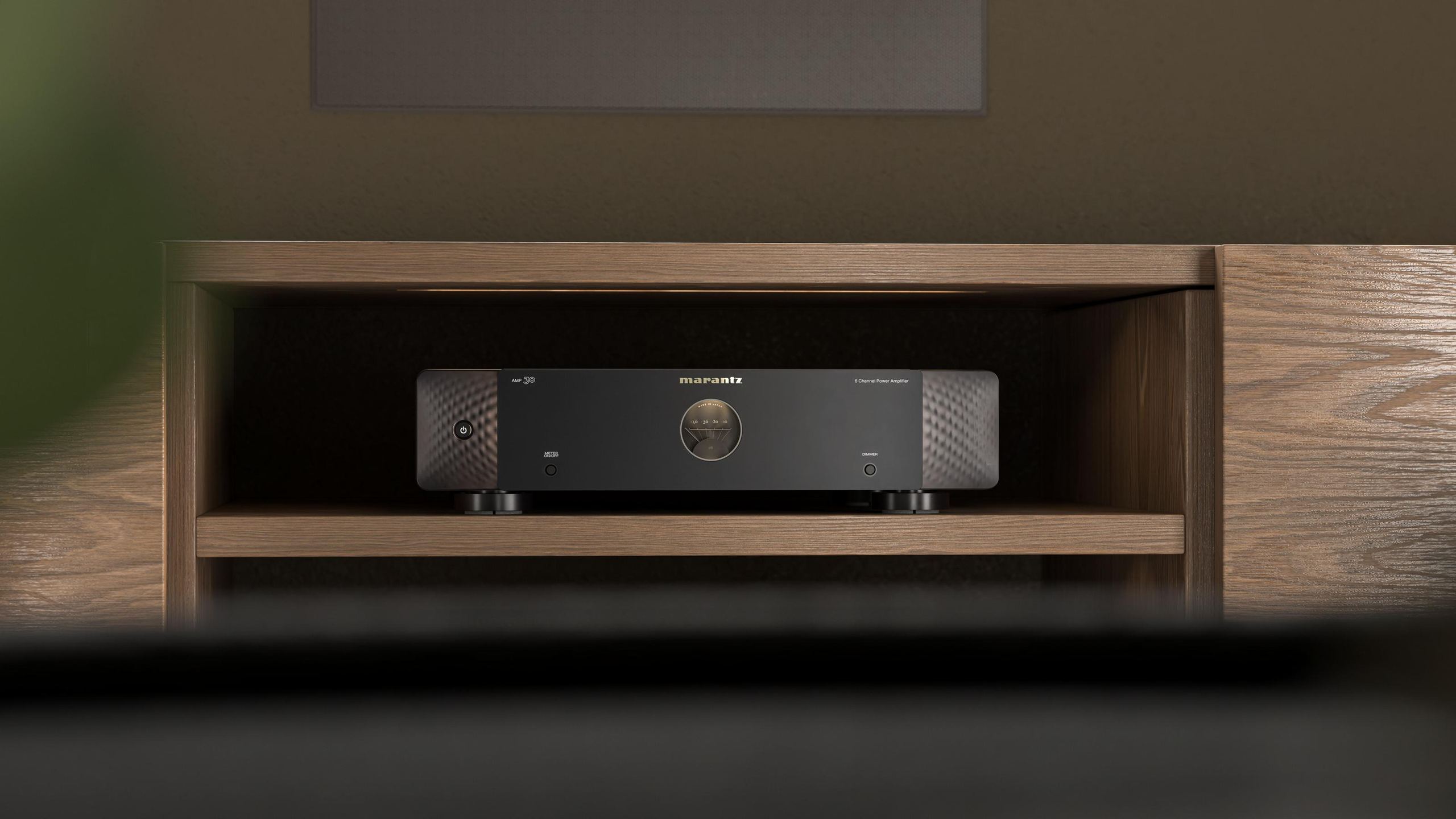
With dimensions of 442 × 442 × 111 mm and a weight of 10 kg, the AMP 30 fits into a standard rack space and easily slides into a hi-fi cabinet. The metal front panel features Marantz’s signature analog VU meter, whose needle reacts in real time to level variations. The side lighting provides a soft glow that highlights the unit’s lines without being harsh on the eyes in a dark room. These aesthetic elements are in keeping with the brand’s amplifier design language since the 1970s.
Idle power consumption reaches 70 W with the eco mode deactivated, indicating a class A/B operation with moderate bias current. Activating ECO mode lowers this consumption without affecting performance during playback.
Documentation
French
Technical specifications
Architecture and design
- 6-channel discrete power amplifier
- Proprietary Marantz HDAM technology
- Current feedback amplification
- Compact chassis with metal front panel
- Central analog VU meter on the front
- Gentle side lighting with Marantz signature
Output power
- 200 W per channel into 8 Ω
- 1 kHz, 0.05% total harmonic distortion, 2 channels driven
- 400 W per channel into 4 Ω
- 1 kHz, 0.7% total harmonic distortion, 2 channels driven
- BTL mode: 3 × 400 W into 8 Ω
- 200 W per channel into 8 Ω
- 1 kHz, 0.7% total harmonic distortion, 5 channels driven
Audio connectivity
- Balanced XLR and unbalanced RCA line inputs
- 6 channels with exclusive XLR / RCA selection
- 6 speaker terminals
- Bi-amping and BTL compatible
Integration and control
- RS232
- IR Flasher input
- Marantz Remote Bus
- 12 V trigger: input / output (1 / 1)
- Auto power off
Power consumption
- Power consumption: 300 W
- Power consumption with no signal (ECO on / off): 70 W
- Standby power consumption: 0.2 W
Dimensions and weight
- Dimensions (W × D × H): 442 × 442 × 111 mm
- Weight: 10 kg
Box contents
- AMP 30 amplifier
- Quick start guide
- Power cord
- Amplifier control cable
- Remote control
Frequently asked questions
Can the AMP 30 drive 4 Ω speakers on all channels simultaneously?
Yes, the amplifier can handle 4 Ω loads on all of its outputs. Available power then increases compared with an 8 Ω load, although distortion is slightly higher (0.7% versus 0.05%). Make sure there is sufficient ventilation around the unit when multiple channels are driving low-impedance loads.
What is the difference between BTL mode and normal operation?
In BTL mode, two channels are combined to form a single channel with doubled power. The AMP 30 thus goes from six 200 W channels to three 400 W channels into 8 Ω. This mode is suitable for setups where only the front channels and center channel require amplification, or for driving low-sensitivity speakers that demand more power.
Do the XLR inputs provide better sound than the RCA inputs?
Balanced XLR connections do not intrinsically change the quality of the signal, but they reject electromagnetic interference more effectively. In a domestic setup with short cables, the difference is often imperceptible. However, if cable runs exceed three or four meters or if the environment is electrically noisy, the XLR input better preserves signal integrity.
Does ECO mode affect sound quality?
This mode reduces power consumption when the amplifier is not receiving a signal or is operating at low levels. During intense musical passages, power reserves remain available without any perceptible delay. The difference is mainly seen in active standby power consumption, not in dynamic performance.
Which preamplifiers are compatible with the AMP 30?
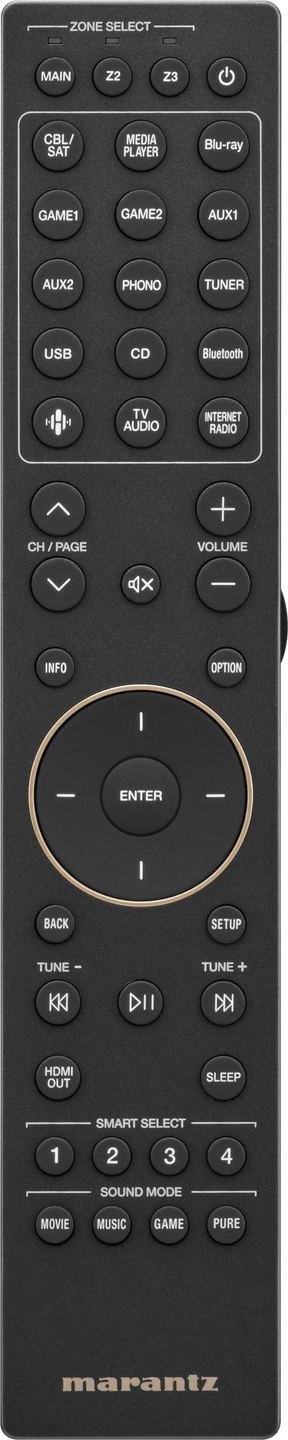
Any preamplifier or home cinema processor with pre-out outputs (RCA or XLR) can drive the AMP 30. Within the Marantz lineup, the AV 30 is the natural partner thanks to its matching connectivity and shared control bus. For more elaborate speaker configurations, multiple AMP 30 units can be combined, or paired with the AMP 20 and AMP 10 models from the same series.
- Eco-contribution of €2.58 included in the sale price.
- Manufacturer reference: AMP30N1B
- GTIN / EAN: 747192145705