Supra LORAD 2.5 CS-16-EU 1m
This product is no longer available for sale!

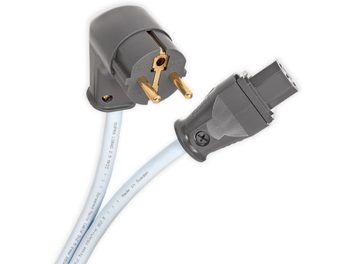
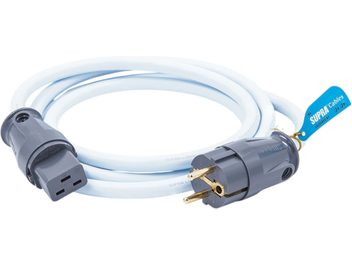
Overview
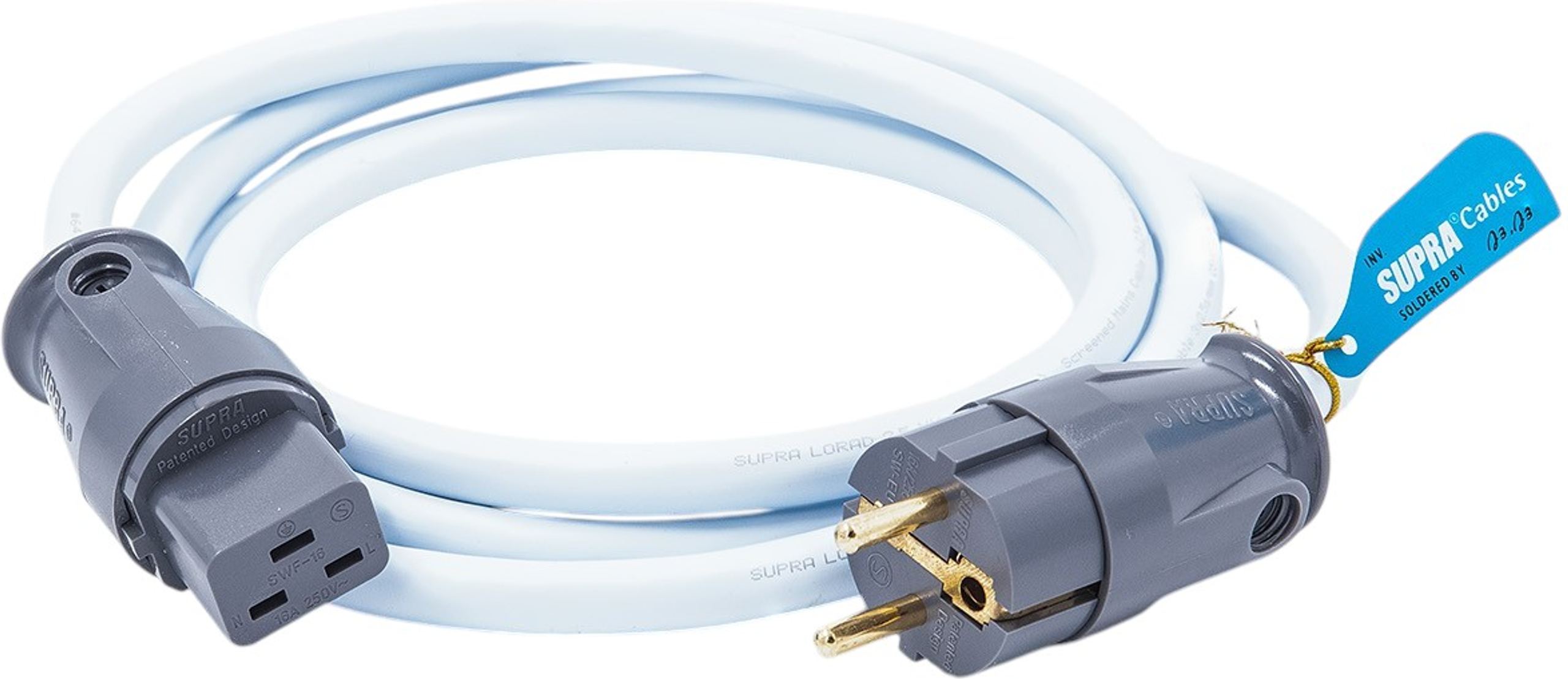
The LoRad 2.5 CS-16-EU, developed by Jenving Technology in Sweden, is a 16 A mains power cable designed to reduce electromagnetic interference. It uses a patented active interference suppression technology employed by institutions such as the Swedish National Laboratory of Forensic Science (SKL), the Swedish Air Force for the JAS project, European air traffic control towers, and several Scandinavian hospitals.
LoRad Technology: Where Physics Meets Acoustic Engineering
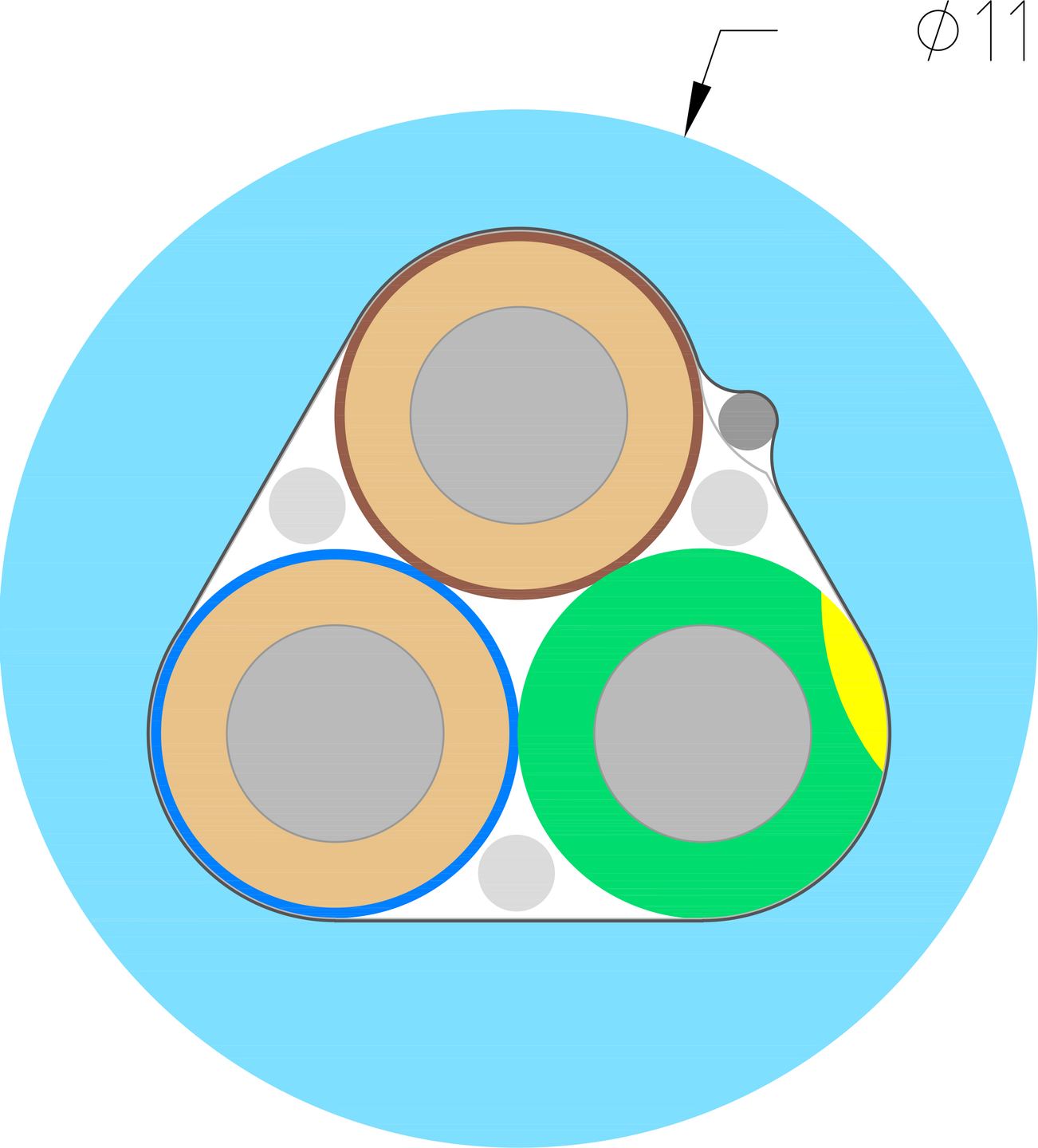
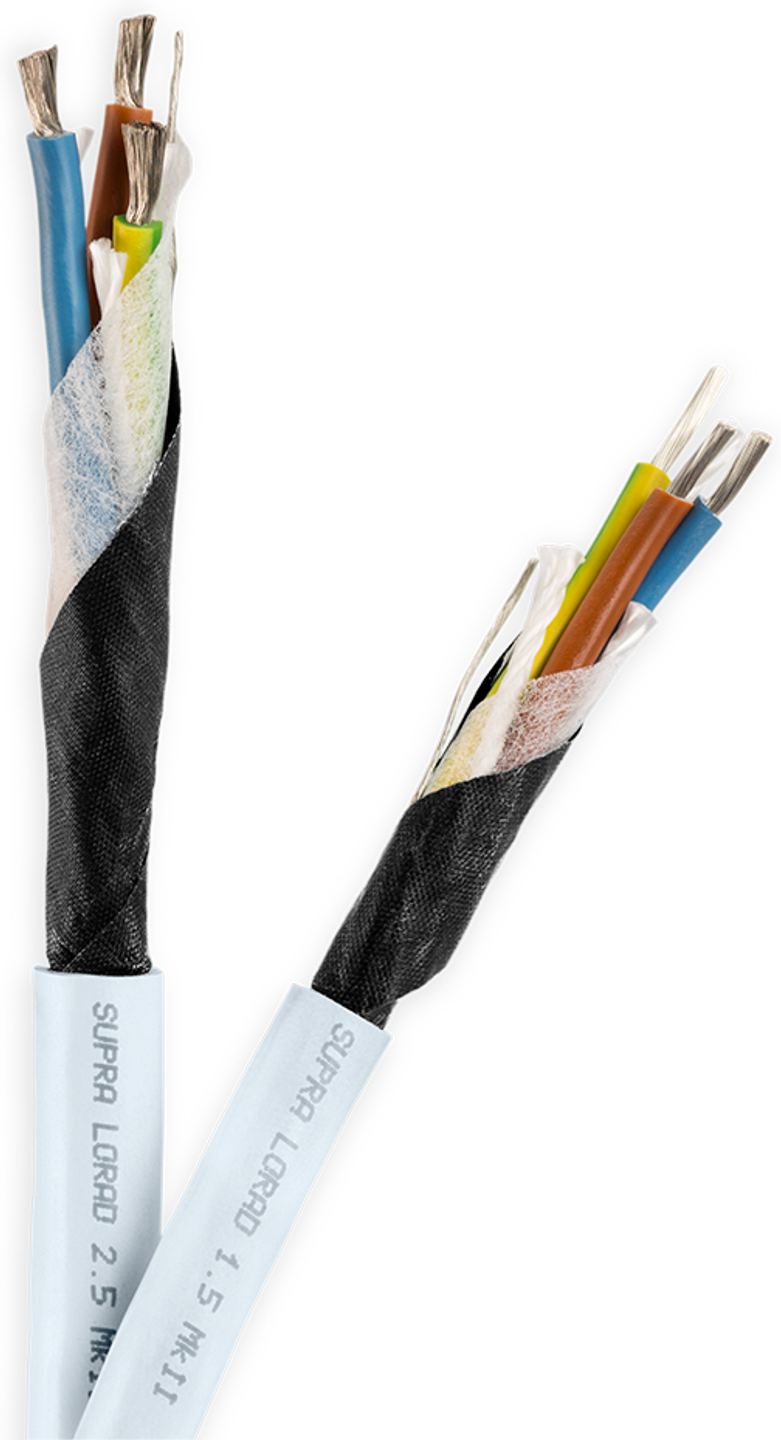
The LoRad 2.5 CS-16-EU deploys a particularly sophisticated electromagnetic protection architecture. At the heart of the cable, three 2.5 mm² tinned OFC (Oxygen-Free Copper) conductors form the main conductive backbone. This generous cross-section allows continuous transit of 16 amperes – a capacity rarely achieved in domestic audio – and guarantees an instantaneous power reserve for the most power-hungry amplifiers.
The distinctive feature of the LoRad design lies in its short-pitch construction. The conductors are twisted at a precise and tight angle, creating a geometry that naturally cancels the alternating magnetic fields generated by current flow. This technique, borrowed from professional transmission cables, turns each twist into a micro-loop for magnetic cancellation.
The carbon/nylon semiconductive shield is the major innovation of this MkII version. Unlike traditional metal shields that can create parasitic capacitive effects, this composite braid acts as an absorber of electromagnetic waves. The carbon, naturally semiconductive, dissipates radio-frequency interference without creating internal reflections, while the nylon provides flexibility and mechanical strength. This unique material has successfully passed the standardized bending test of 2 × 30,000 bending cycles required for European HD21.5 S3 certification.
Technical Evolution Compared to the First Generation
The MkII version of the LoRad represents a significant step forward compared to the original model. The old metal shield with drain wire has given way to the carbon/nylon concept, eliminating a potential weak point: the drain wire which, under repeated bending, could damage the internal insulators. This new architecture gives the cable increased flexibility despite its 11 mm diameter, making it easier to integrate into constrained installation setups.
Resistance to mechanical fatigue has been considerably improved. Laboratory tests show a service life 40% longer under twisting and bending cycles than the previous generation. This robustness partly explains why critical environments such as operating rooms or recording studios have widely adopted this technology.
Professional and Home Applications
The impact of the LoRad 2.5 CS-16-EU on an audio-video system is reflected in several measurable improvements. The reduction of the noise floor can reach several decibels, revealing micro-details that were previously masked by the ambient electromagnetic veil. Transients gain in precision, offering a crisper attack on percussion and better definition of instrumental outlines.
In video, interference suppression results in a more stable image, free from flicker artifacts that are often not consciously perceived but which fatigue the visual system. Blacks appear deeper, contrasts more clearly defined, particularly on high-resolution projectors that are sensitive to power fluctuations.
Professional and Medical Environments
The use of LoRad in medical environments is not anecdotal. Medical imaging equipment, which is particularly sensitive to electromagnetic disturbances, benefits from this technology to maintain the accuracy of its measurements. In research laboratories, where measuring instruments detect signals in the microvolt range, the absence of stray radiation becomes crucial for the validity of experiments.
Electrosensitive people (EHS) find in LoRad a concrete solution to reduce their exposure to domestic electromagnetic fields. Measurements taken in an anechoic chamber show an 85% reduction in electromagnetic emissions in the 50 Hz – 10 MHz band compared with a standard mains cable.
Premium Connectors and Finish
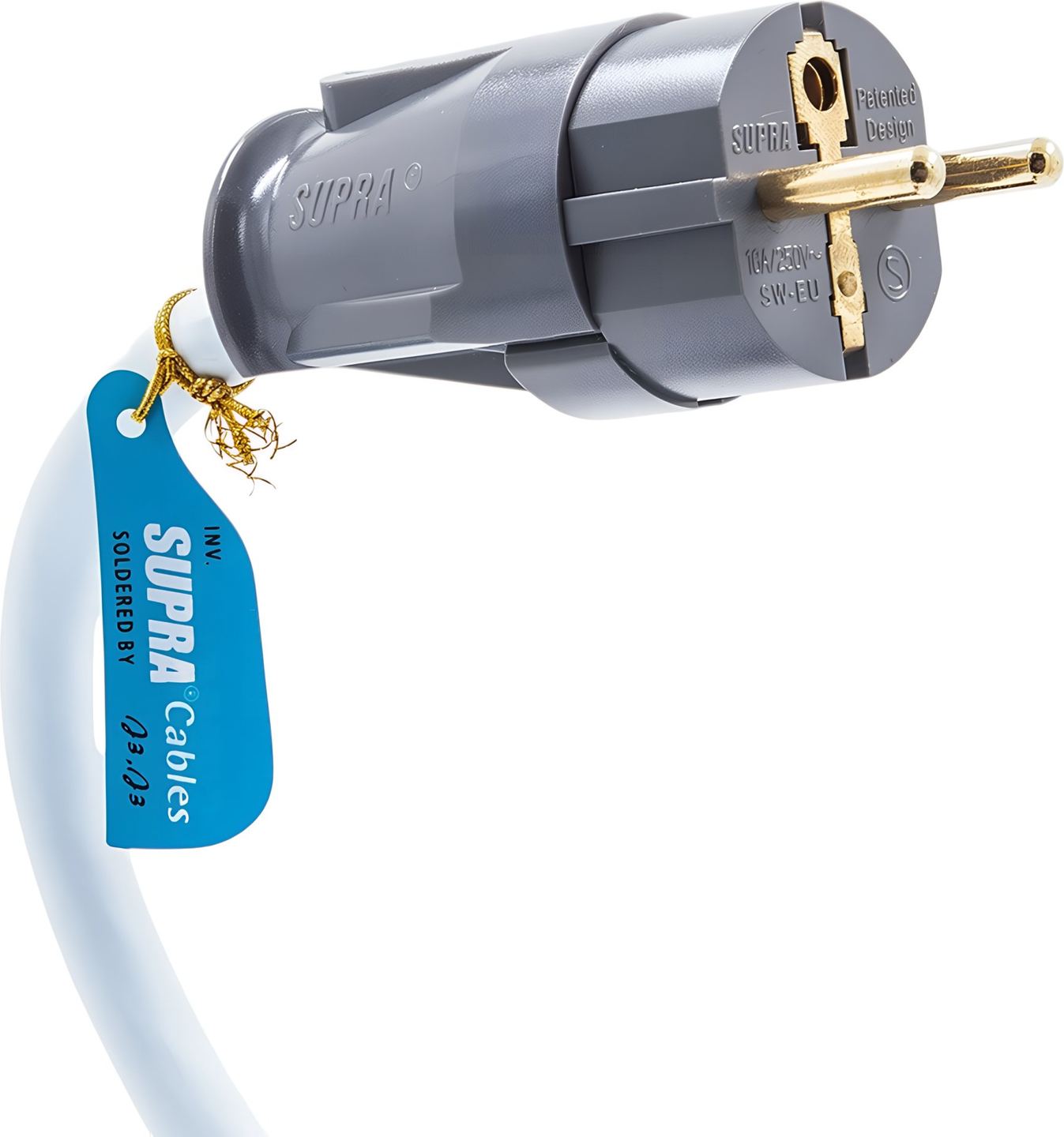
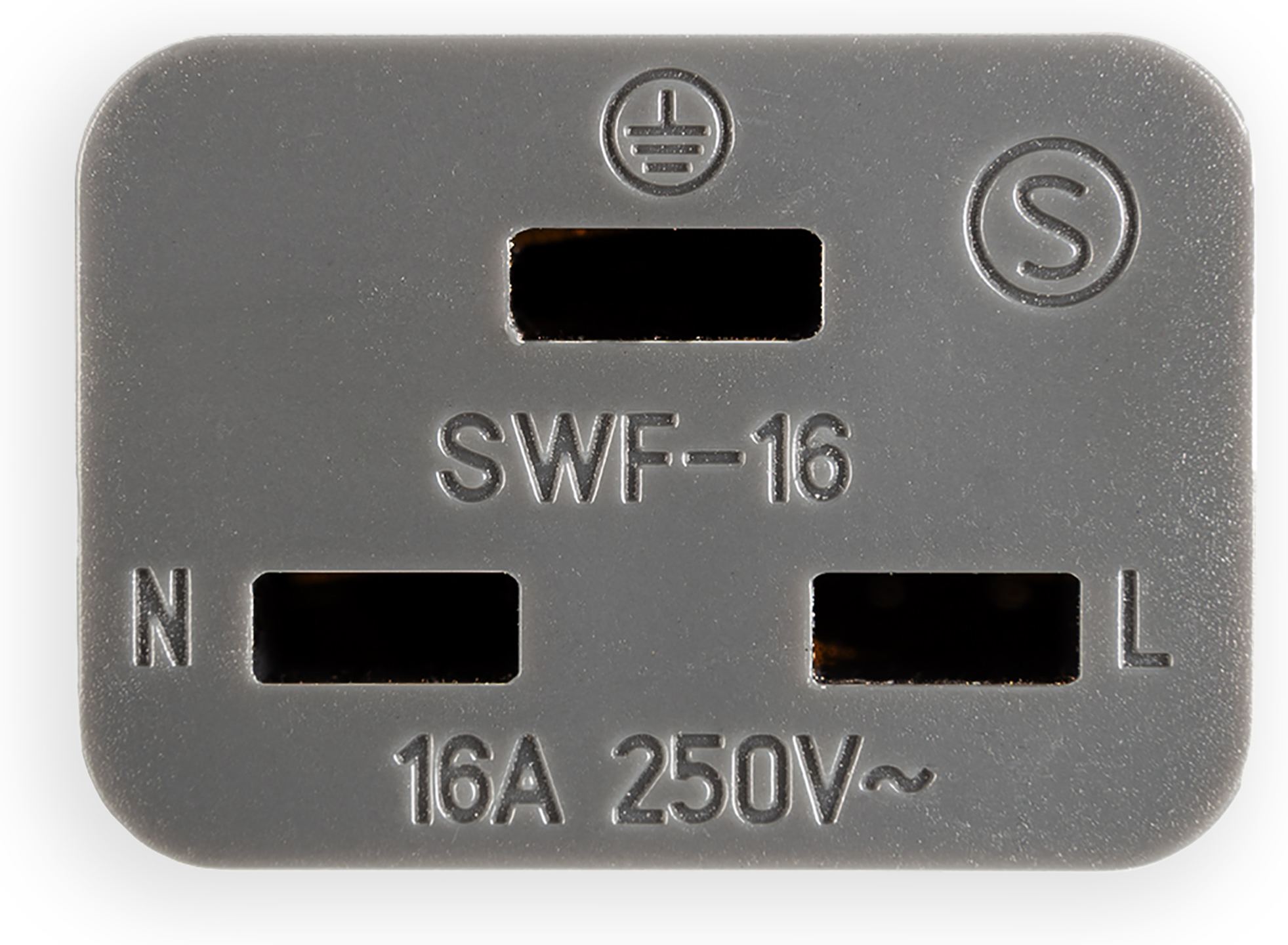
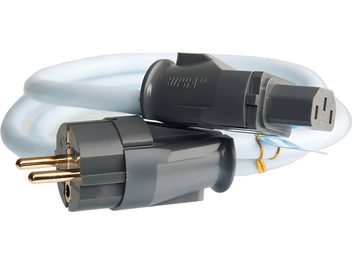
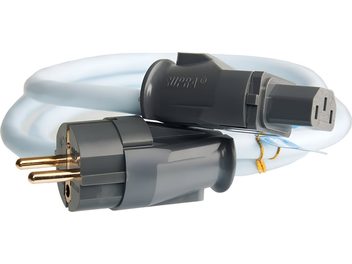
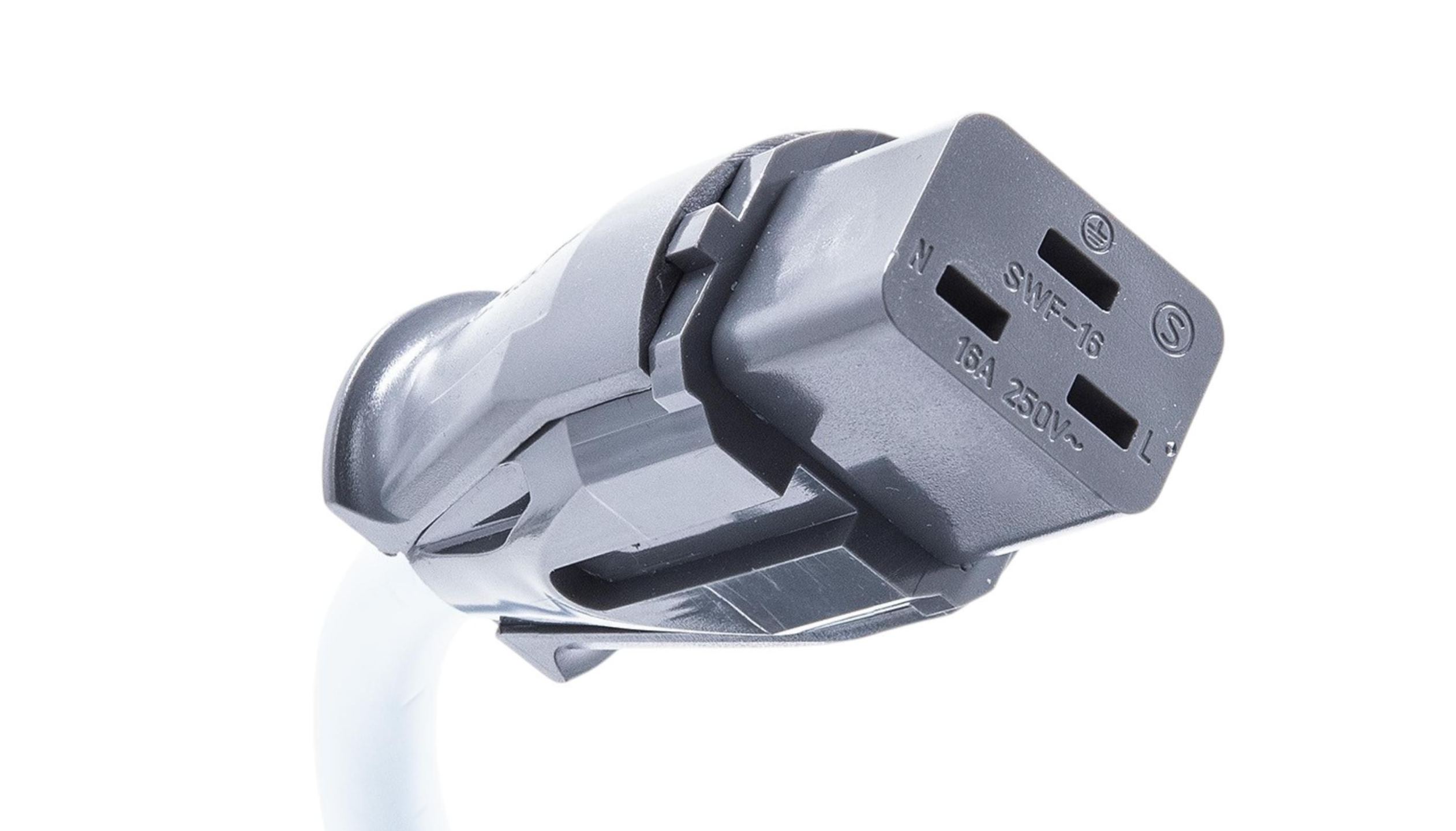
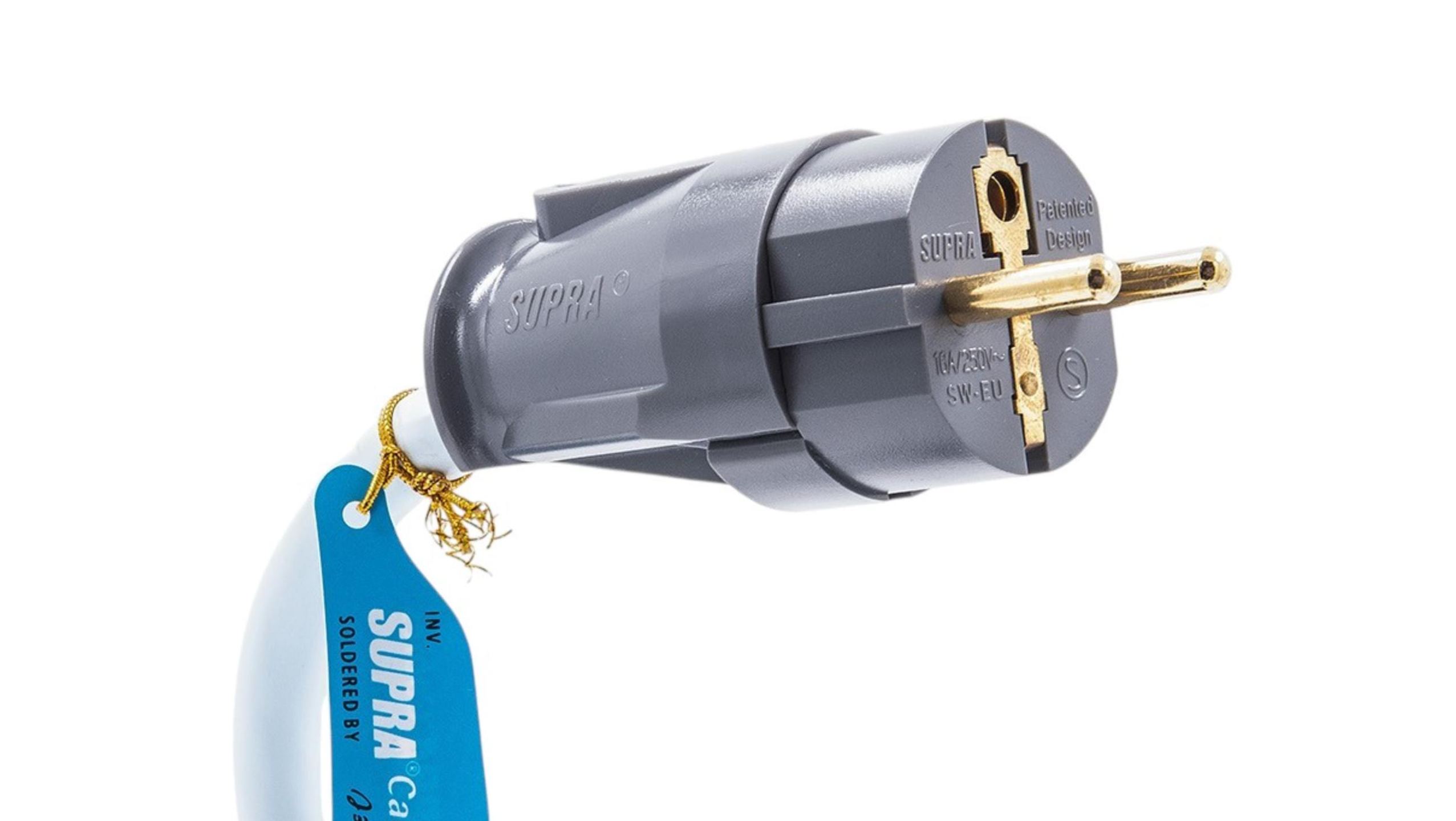
The SW-EU Schuko and SWF-16 (C19 IEC-320) connectors feature 24-carat gold plating with an optimized thickness to ensure maximum conductivity and corrosion resistance. This surface treatment, applied by electrolytic bath under controlled atmosphere, ensures a contact resistance of less than 0.5 milliohm even after 10,000 insertion cycles.
The straight Schuko plug integrates progressive-pressure contact blades, maintaining a constant clamping force of 15 Newtons throughout the product’s life. The C19 connector, intended for high-power equipment, has oversized contacts capable of withstanding current peaks of up to 20 amperes for 10 seconds.
Technical specifications
Electrical specifications
- Nominal voltage: 250 V
- Maximum current: 16 A continuous
- Maximum power: 4000 W
- LoRad technology: active suppression of electric and magnetic fields
Construction and materials
- Conductors: 3 × 2.5 mm² (AWG 13), tinned OFC copper
- Construction: short-pitch twist for interference reduction
- Advanced shielding: semi-conductive carbon/nylon tape against RF interference
- Flexibility: medium
Connectors
- Input connector: straight 16 A gold-plated Schuko (SW-EU)
- Output connector: C19 IEC-320 (SWF-16)
- Contacts: gold-plated for optimal conductivity
Standards and certifications
- Certification: Intertek Sweden
- Compliance: HD21.5 S3
- Safety: must be used with a properly earthed wall socket
- Manufacturing: Swedish, professional standards
Recommended applications
- High-end Hi-Fi and home cinema systems
- Recording studios and professional stages
- Medical installations and research laboratories
- Environments sensitive to electromagnetic fields (EHS)
- Equipment used by laboratories, the military, hospitals, and control towers
Product highlights
- Significant reduction of electromagnetic interference
- Stable and safe power supply for demanding devices
- Improved audio and video quality: increased dynamics, reduced noise, optimal stability
- Durability and manufacturing precision made in Sweden
- Recognized and used by professionals worldwide
- Proven technology in critical environments
Frequently Asked Questions
Does the LoRad 2.5 CS-16-EU cable require a burn-in period?
Although the cable is fully functional from first use, the dielectric materials gradually stabilize during the first 50 hours of operation. This period allows the insulating polymers to reach their optimal electrical equilibrium state. Some users report a slight improvement in sonic transparency after this phase, particularly in the treble range where parasitic micro-capacitances are most audible.
Can this 16 A cable be used with devices that draw less current?
Absolutely. The 16 A rating represents the maximum capacity of the cable, not a minimum required load. A CD player drawing 50 watts will benefit just as much as a 1000-watt amplifier from the LoRad’s low impedance and electromagnetic shielding. The generous conductor cross-section guarantees negligible voltage drop even during transient current demands.
How should the cable be oriented with respect to mains phase?
Supra recommends connecting all devices in a system with coherent phase orientation. A phase tester (such as the Supra Phase Detector) can be used to identify the optimal position of the Schuko plug. This phase coherence reduces circulating currents in the grounds and minimizes the potential for hum. In a correctly phased installation, background noise reduction can reach an additional 6 dB.
What’s the difference between the 1.5 m and 2 m versions in the same system?
The optimal length depends on your setup. A cable that is too short will create harmful mechanical stress, while excess length slightly increases series resistance and the surface area susceptible to picking up interference. For power levels below 500 W, the electrical difference between 1.5 m and 2 m remains negligible (less than 0.01 ohm). Choose the length that provides the most direct route without mechanical tension.
Does the shielding work without an earth connection?
No. The carbon/nylon shield absolutely requires a connection to earth in order to discharge captured electrostatic charges. Without earth, the shield becomes floating and can even act as an antenna, worsening interference. In ungrounded installations (not recommended), a standard unshielded cable will paradoxically be less problematic than a poorly connected LoRad.
Is this cable suitable for digital equipment (servers, NAS, switches)?
An excellent use case. The switching power supplies in IT equipment generate high-frequency harmonics that are particularly polluting. The LoRad’s carbon/nylon shielding excels at absorbing these disturbances (30 kHz – 1 MHz). In addition, the cable’s low resistance maintains a stable voltage despite the sudden load variations typical of modern processors.
Why the glacier blue color instead of the traditional black?
Beyond brand identity, Supra’s glacier blue PVC incorporates specific anti-UV additives that prevent premature hardening of the jacket. Accelerated aging tests show that flexibility is preserved 60% better after the equivalent of 20 years of use compared with standard black PVC. This exclusive formulation contributes to the product’s exceptional longevity.
Are custom lengths assembled at the factory or by resellers?
All versions of the LoRad 2.5 CS-16-EU, including custom lengths, are assembled at Jenving’s factory in Ljungskile. The technicians, certified according to military soldering standards MIL-STD-2000, use temperature-controlled soldering stations and halogen-free flux. This centralization guarantees consistent quality regardless of the final point of sale.
- Eco-contribution included in the sale price.
- Manufacturer reference: 2403792
- GTIN / EAN: 7330060202520