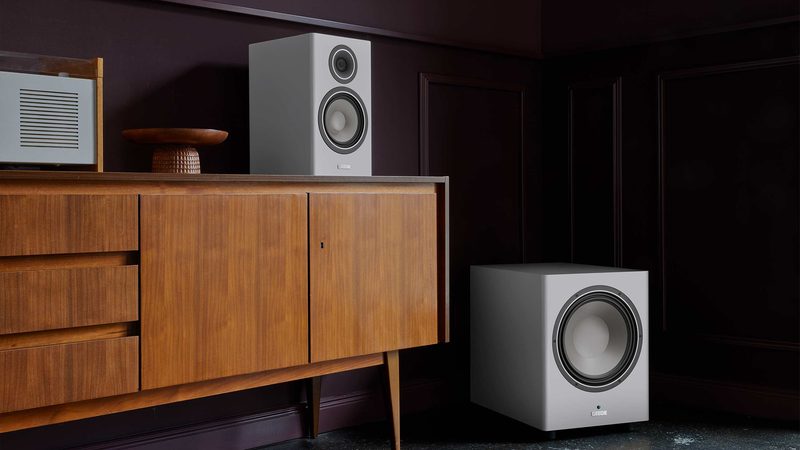
Canton Townus 30 black laquer (pack of 2)




Overview
In 2021, Canton revamped its mid-range lineup with the Townus series, which replaces the Chrono and Chrono SL. The Townus 30, the bookshelf speaker in the catalog, inherits the brand’s in‑house technologies while adopting a more contemporary design. Its positioning places it a notch below the Vento 30, from which it borrows some components.
A cabinet designed as much for acoustics as for looks
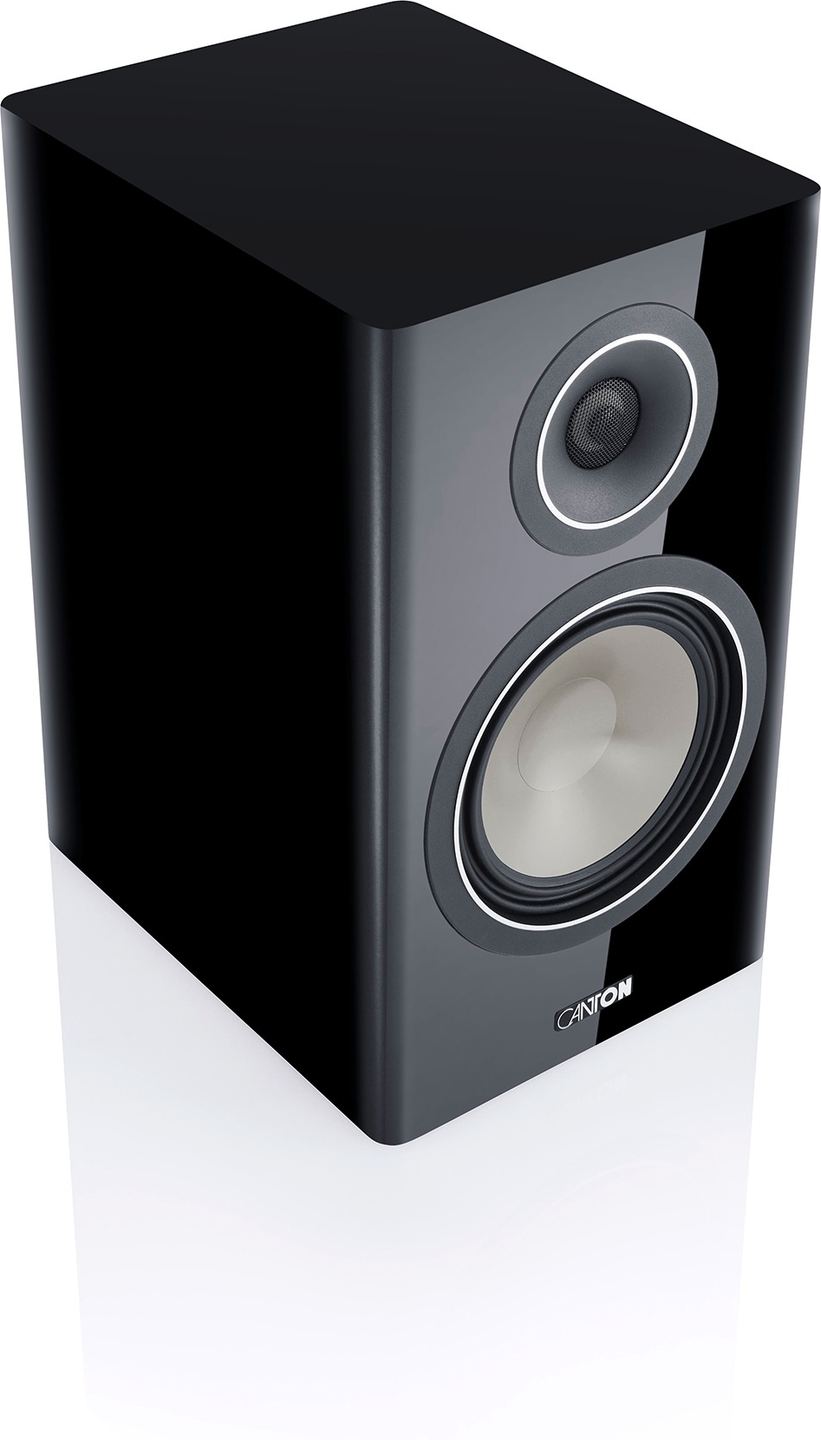
The Townus 30 has unusual proportions for a compact speaker: rather narrow at the front (21 cm), it extends 28 cm in depth. This design choice reduces unwanted reflections on the front baffle and frees up internal volume for bass. The generously rounded edges help to limit edge diffraction, a classic but effective approach.
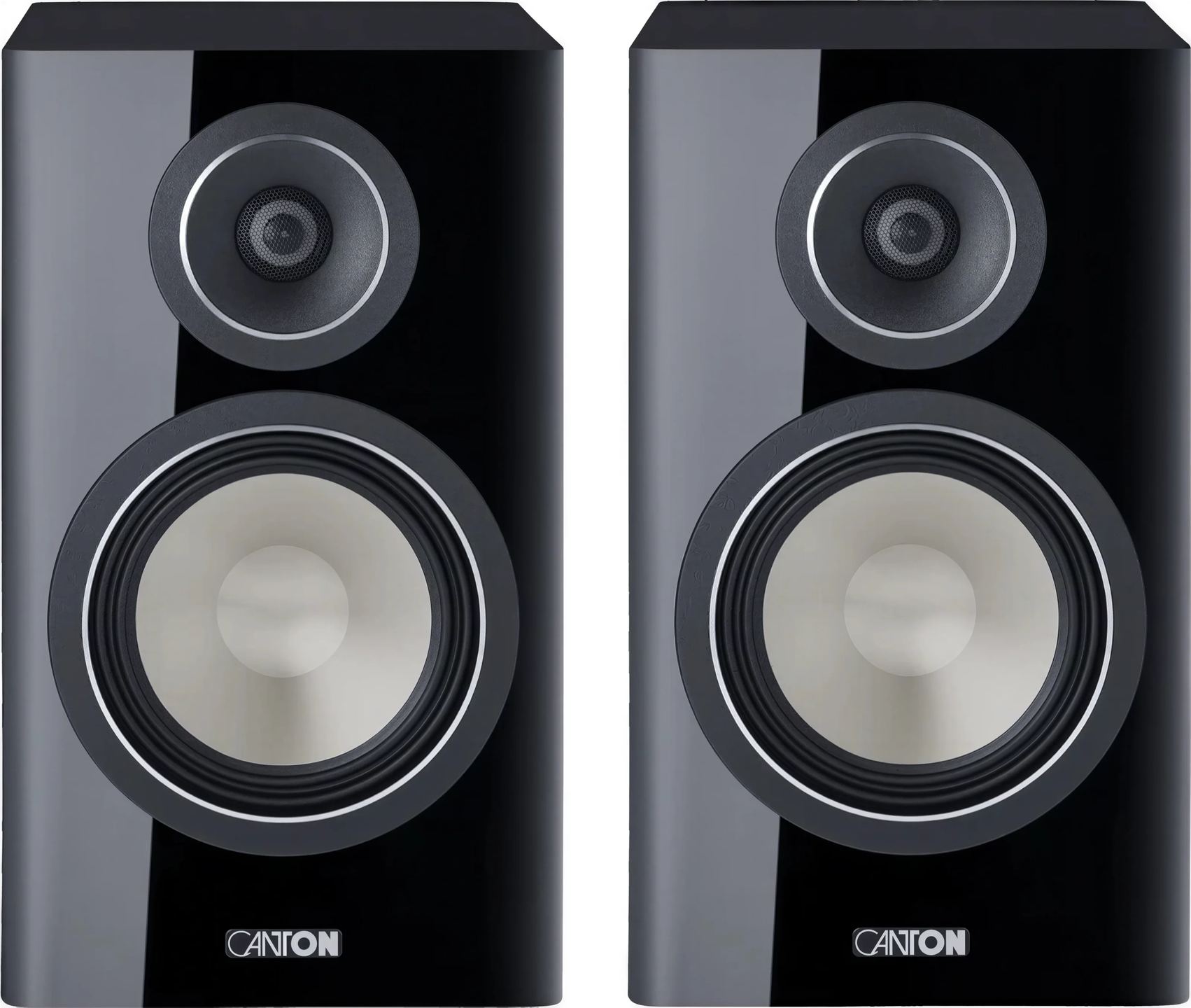
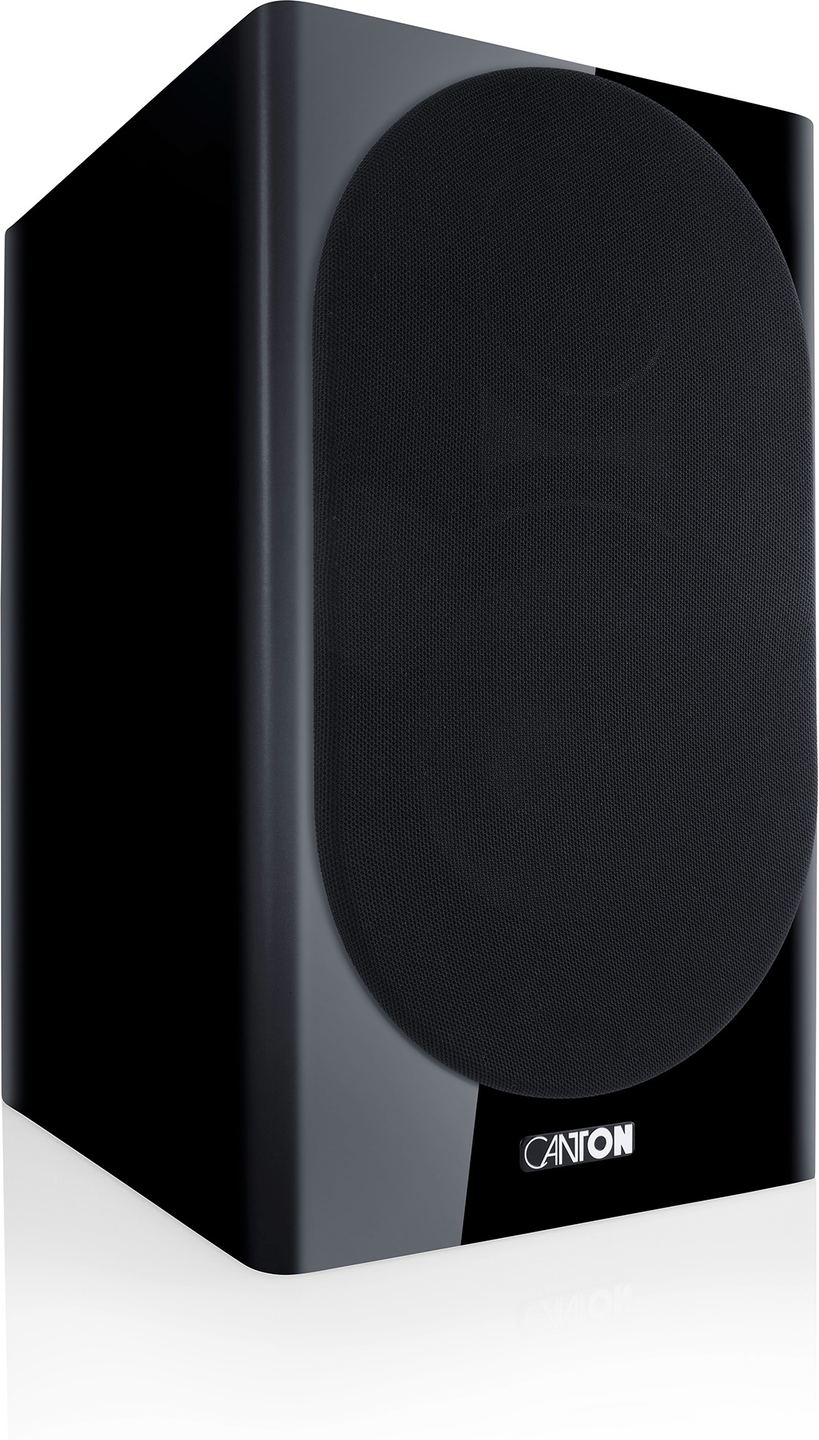
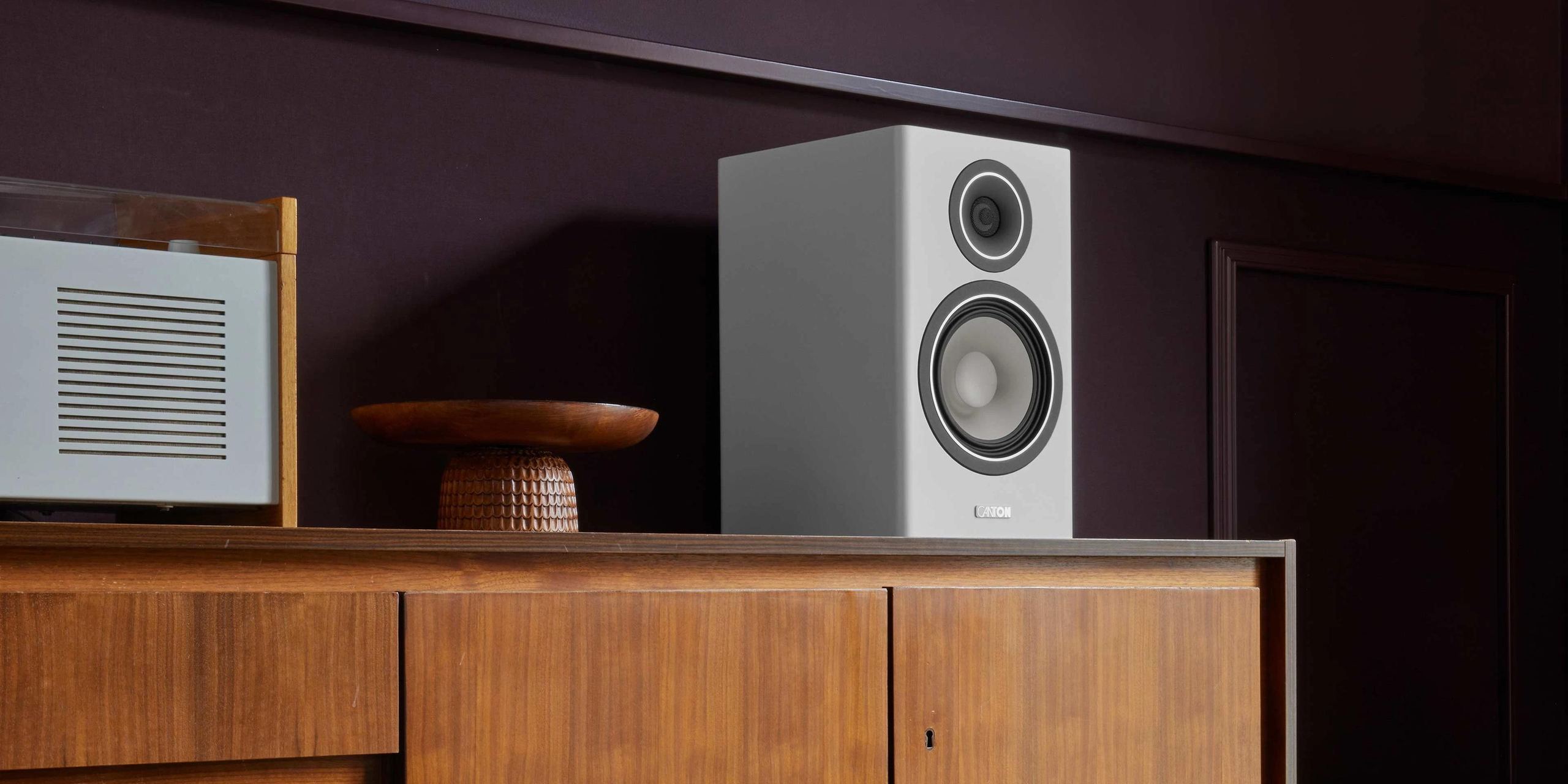
Weighing in at 8.1 kg, this is no lightweight speaker. The cabinet, reinforced with internal bracing, is available in a choice of high‑gloss black lacquer, satin white lacquer, or real walnut veneer. The drivers are rear‑mounted: no screws are visible on the front. Machined aluminum rings surround each transducer, a finish that Canton calls “Seamless Diamond Cut.” The oval fabric grille, held in place by magnets, can be removed effortlessly.
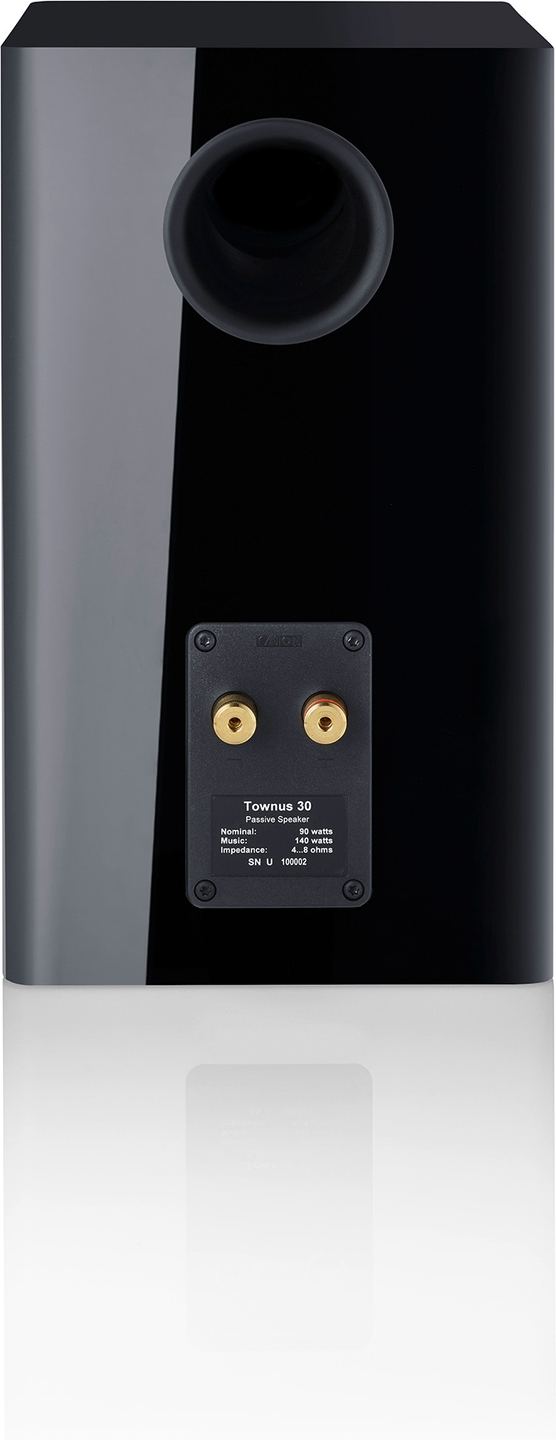
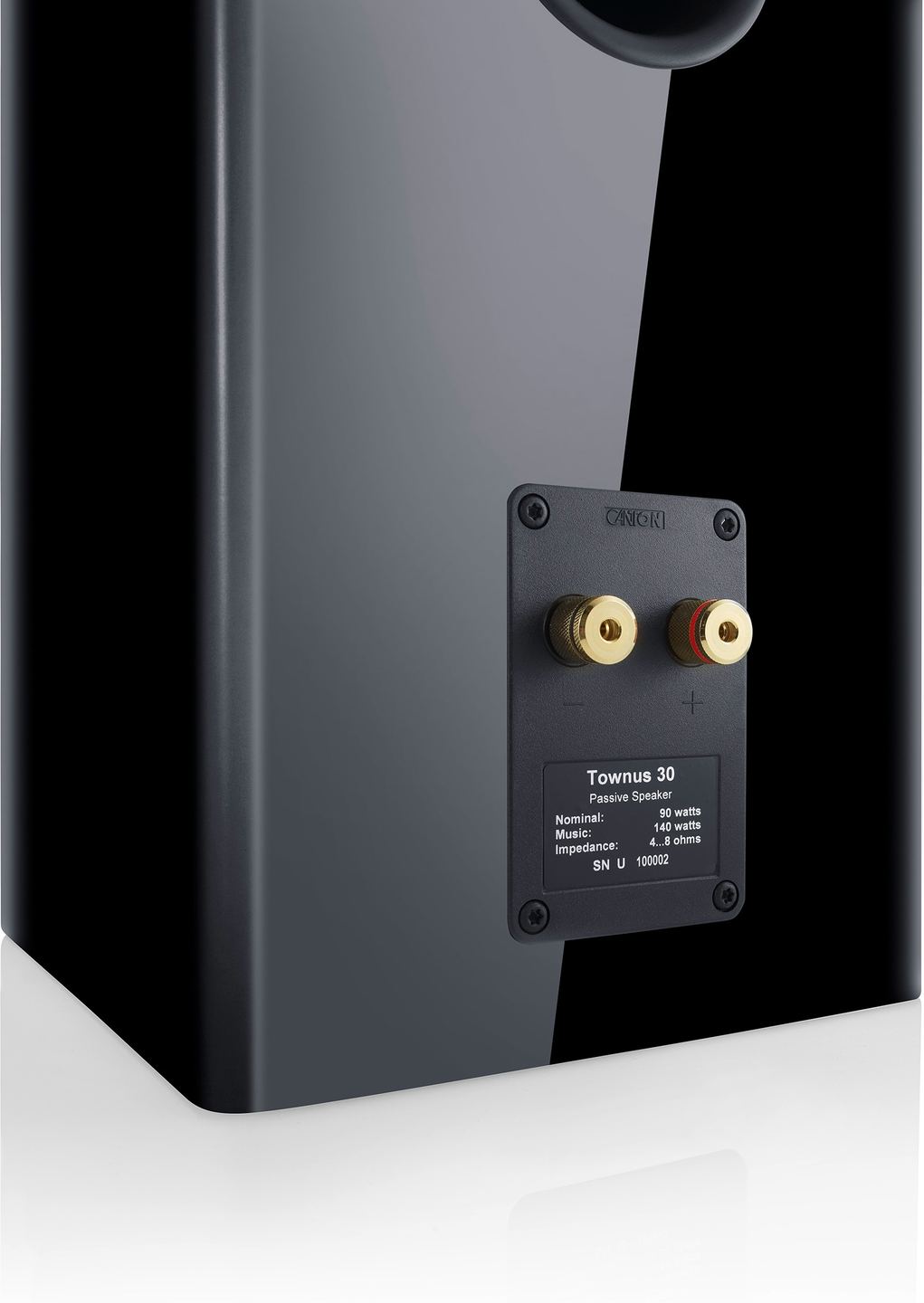
On the back, a single‑wiring terminal accepts cables up to 10 mm² in cross‑section or banana plugs. The gold‑plated connectors and their fine threading ensure clamping that remains stable over time. The rear‑firing, tubular bass‑reflex port requires a minimum distance from the wall: about fifteen centimeters is enough to avoid excessive boom in the low end.
Titanium cone and ceramic dome: in‑house technologies
Canton designs and manufactures its own drivers. The Townus 30 is equipped with a 174 mm woofer/midrange featuring a titanium cone and a “Wave Sicke” multi‑fold surround. This geometry allows for large excursion while limiting distortion at high levels. The brand’s patented DC (Dispersion Control) technology helps maintain tight bass by preventing the cone from bottoming out on demanding signals.
The 25 mm tweeter uses an aluminum‑oxide ceramic dome, a rigid yet lightweight material. A short waveguide improves coupling with the air and broadens horizontal dispersion. Canton claims a response extending up to 40 kHz, providing ample headroom for high‑resolution files. The crossover frequency between the two ways is set at 3000 Hz.
On paper, the response goes down to 38 Hz (−3 dB), an impressive figure for a cabinet of this size. Continuous power handling is rated at 90 W, and musical power at 140 W. Impedance varies between 4 and 8 ohms depending on frequency: an amplifier stable with low‑impedance loads will be a welcome match.
A sound signature focused on musicality
Several comparative listening sessions place the Townus 30 among speakers that favor musicality over analysis. The bass surprises with its fullness and depth, unusual for this format. The more expensive Vento 30 delivers more fine detail and higher resolution, but the Townus wins listeners over with its balance and lack of listening fatigue during long sessions.
The soundstage spreads widely between the speakers. Generous horizontal dispersion tolerates a slightly off‑axis listening position without a significant loss of imaging. The treble, a bit less incisive than on the Vento, avoids any harshness on poorly mastered recordings.
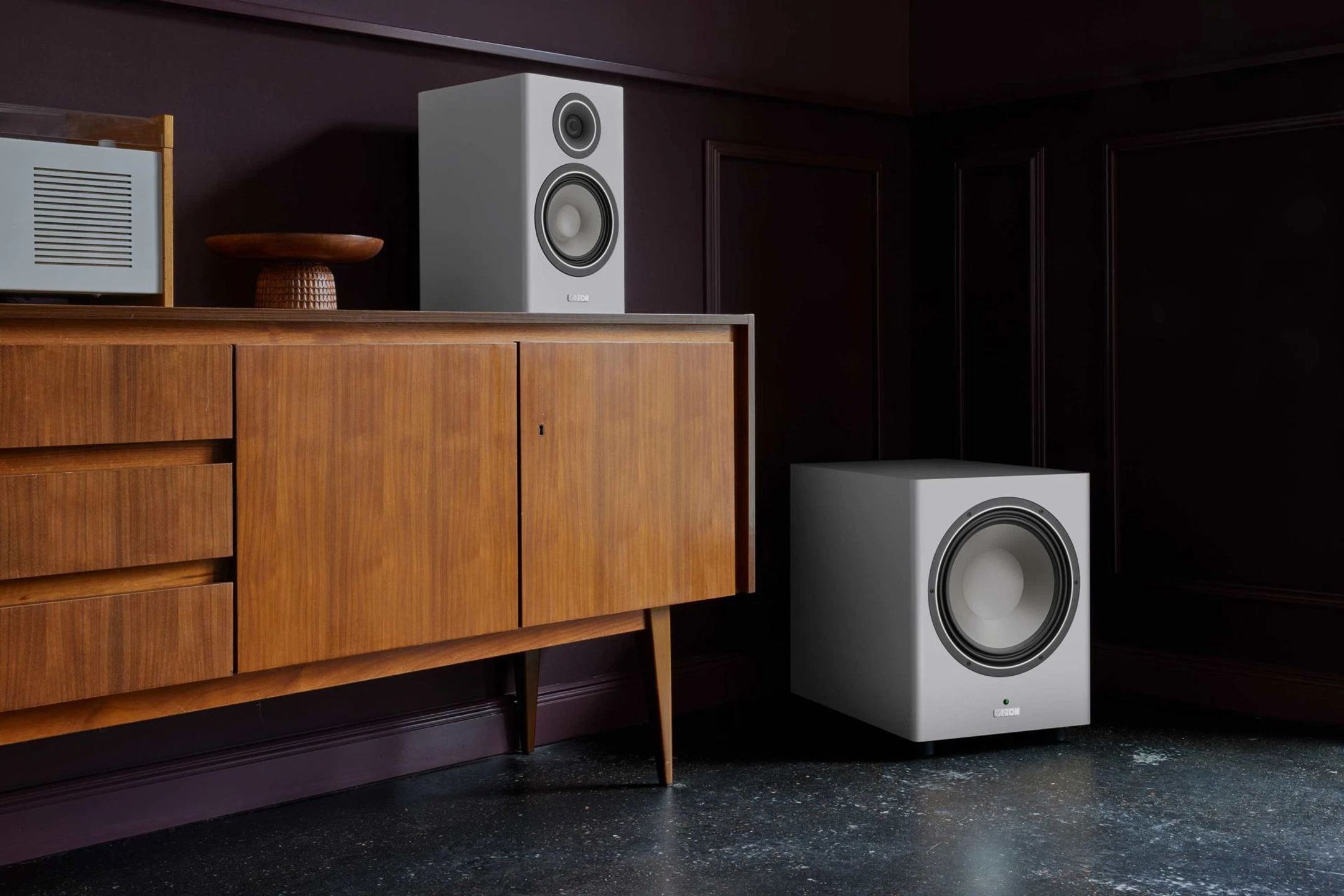
In terms of power, the Townus 30 needs an amplifier capable of delivering solid current. A modest amp will work, but a more robust unit will better reveal the speaker’s dynamic capabilities. In a home cinema configuration, it pairs with the Townus 90 floorstanders, the Townus 50 center, and the Townus Sub 12 subwoofer, all sharing the same titanium and ceramic drivers.
Available finishes and variants
Three finishes are available: high‑gloss black, satin white, and walnut. The walnut version comes at an additional cost. Each finish is supplied with the same black fabric grille.
Canton also offers an active version of this range called Smart Townus 2. It integrates amplification and wireless connectivity, but uses a different tweeter (aluminum‑magnesium instead of ceramic) and a slightly smaller woofer (15 cm instead of 17 cm).
Documentation
Technical specifications
Speaker configuration
- Tweeter
- Number: 1
- Diameter: 25 mm
- Material: ceramic
- Mid / bass driver
- Number: 1
- Diameter: 174 mm
- Material: titanium
Acoustic design
- Type: 2-way bookshelf speaker
- Enclosure: bass-reflex with passive radiator
- Passive radiator orientation: rear (backfire)
Performance
- Nominal power: 90 W
- Music power: 140 W
- Frequency response: 38 Hz – 40000 Hz
- Crossover frequency: 3000 Hz
- Impedance: 4 to 8 ohms
Dimensions and weight
- Dimensions (W x H x D): 21 × 36 × 28 cm
- Weight: 8.1 kg
Frequently asked questions
How far from the wall should the Townus 30 be placed?
The rear bass‑reflex port requires at least 15 cm of space between the speaker and the wall. A greater distance (20 to 30 cm) will help fine‑tune tonal balance and avoid excessive bass reinforcement.
What type of amplifier is suitable for this speaker?
An amplifier that is stable at 4‑ohm loads is recommended. The Townus 30 does not have particularly high sensitivity: plan for at least 50 W per channel, and more if the room is larger than 20 m² or if you listen at high volume.
Can the Townus 30 be used as surround speakers in a home cinema system?
Yes. Canton explicitly positions this speaker as a natural surround option within a Townus setup. Timbre matching with the Townus 90 floorstanders and Townus 50 center is ensured by the use of the same cone materials.
What is the difference compared with the Vento 30?
The Vento 30 uses a more advanced titanium‑graphite cone and offers higher resolution, especially in the midrange. The Townus 30 favors a rounder, less analytical presentation. The price difference between the two models reflects this difference in positioning.
- Eco-contribution included in the sale price.
- Manufacturer reference: 04233
- GTIN / EAN: 4010243042336