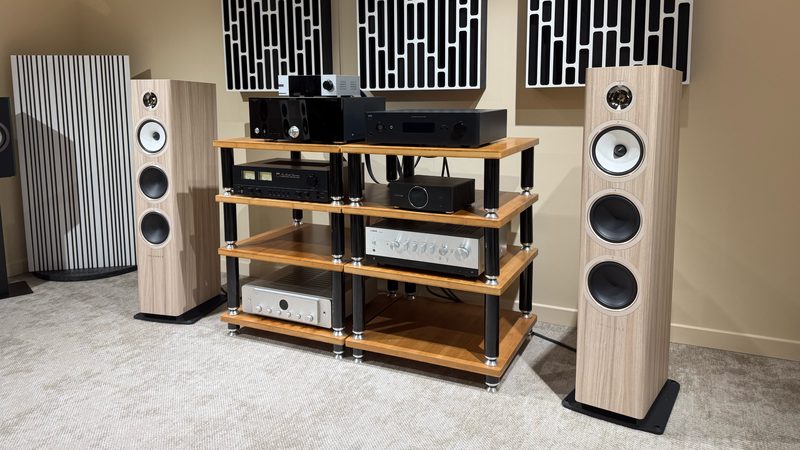
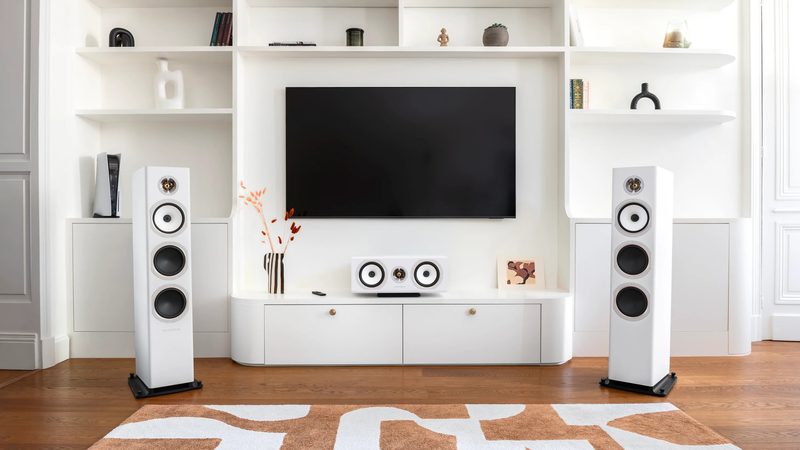
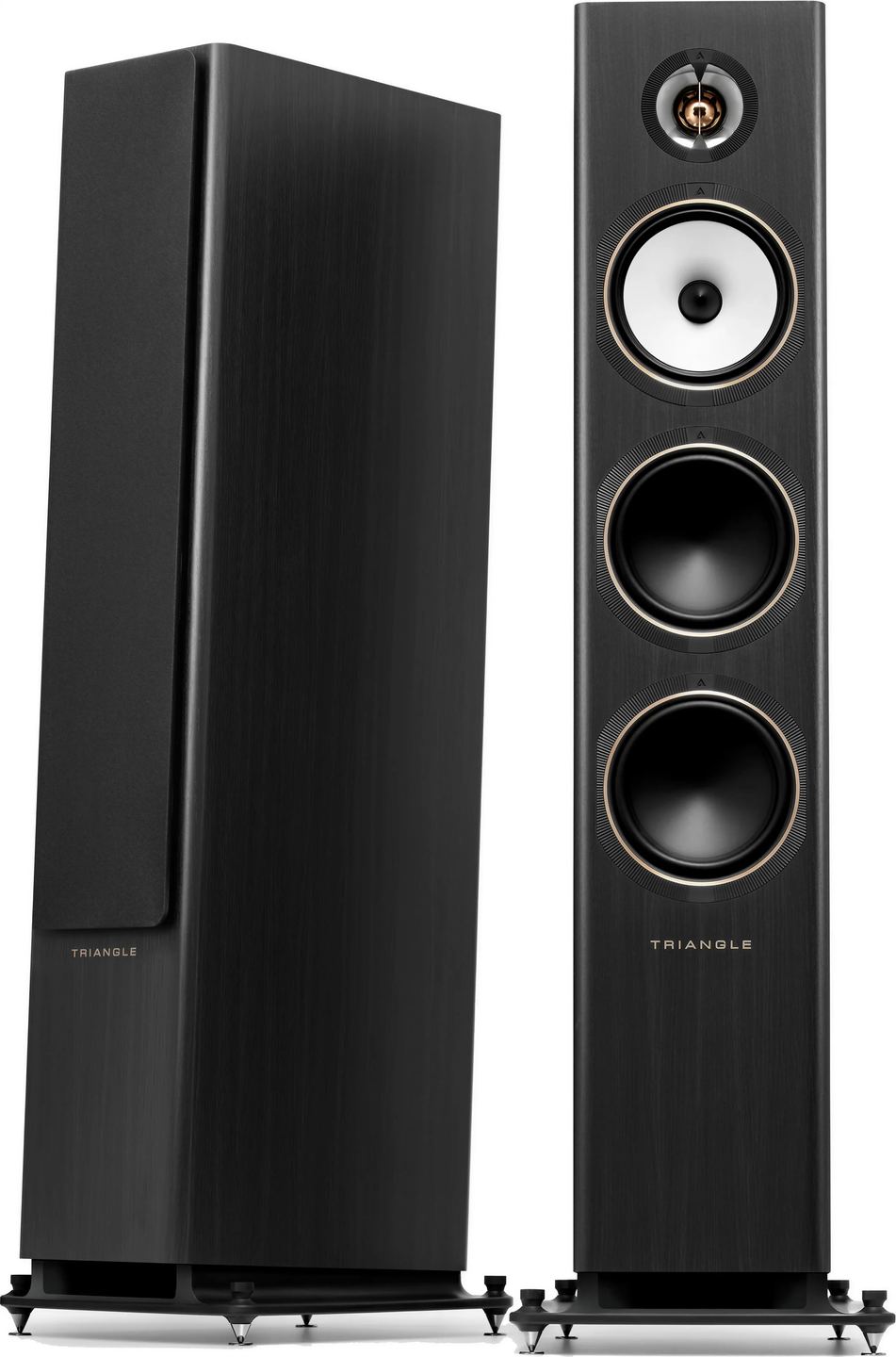
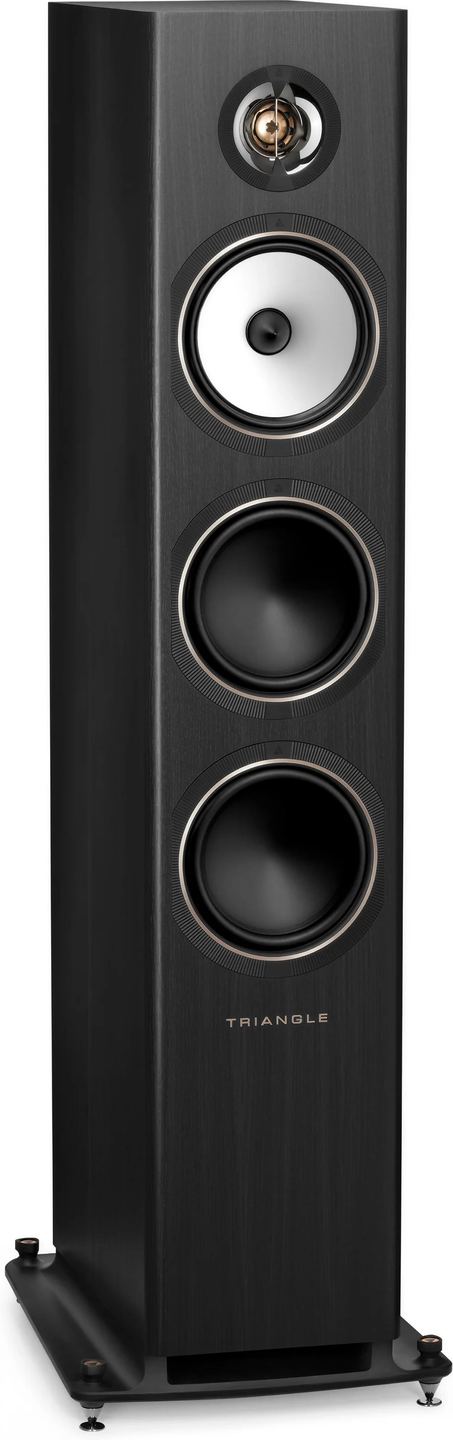
Triangle Solstice 8 ash black (pack of 2)


Awards

Diapason d'Or
The number 1 in classical music and hi-fi. It is a benchmark in the field of classical music and hi-fi, as well as the distinction it awards to the best devices each year
Overview
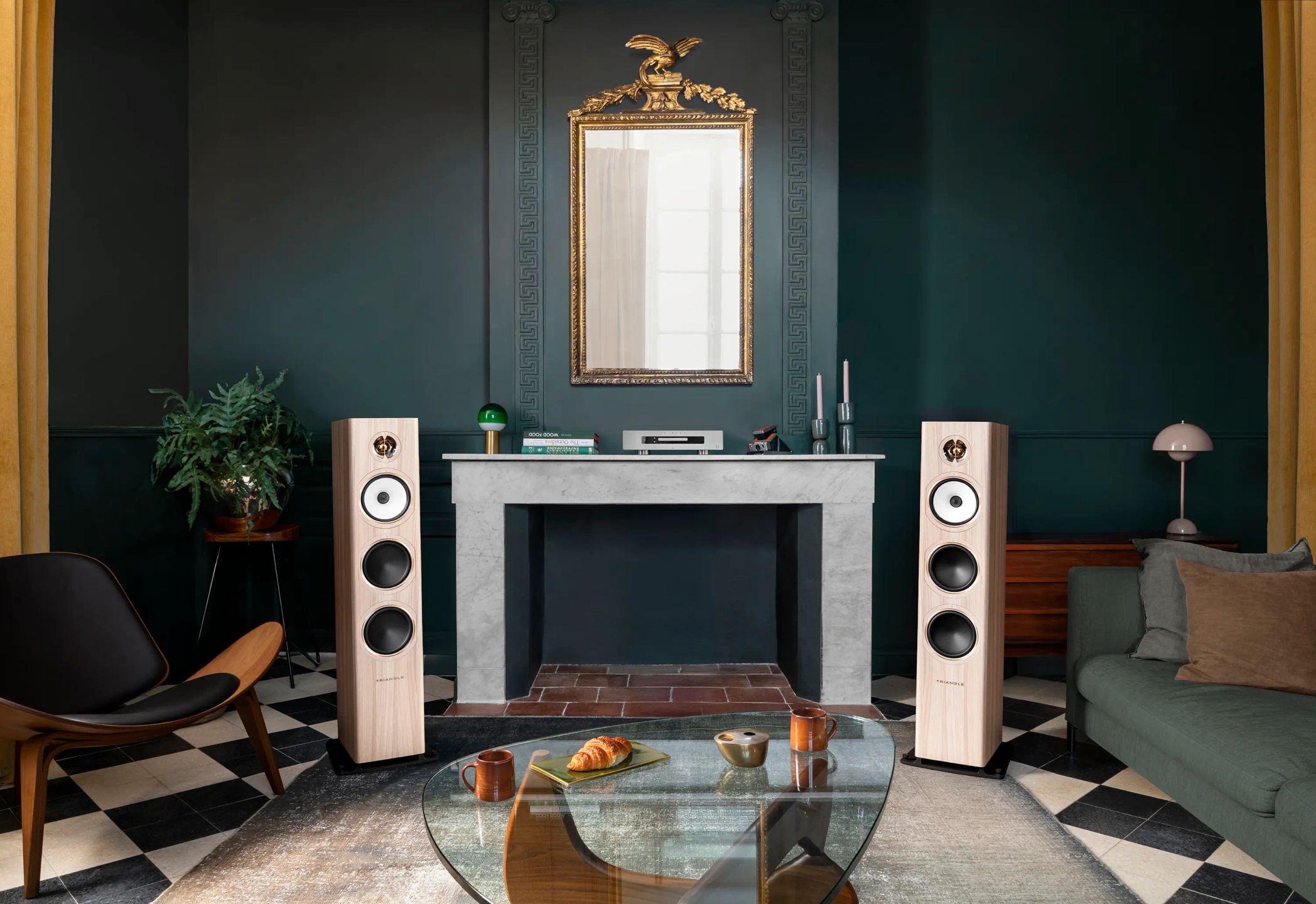
Getting a floorstanding speaker down to 38 Hz without weighing down the midrange or hardening the treble is a delicate balance. The Solstice 8 answers with three-way design, four drivers, and a series of components developed by the French manufacturer in Soissons. It opens the Solstice range, a new evolution of the Esprit line, and applies its technical choices to the most ambitious model: a floorstander just over one meter tall, comfortable in medium to large rooms.
Why a three-way configuration
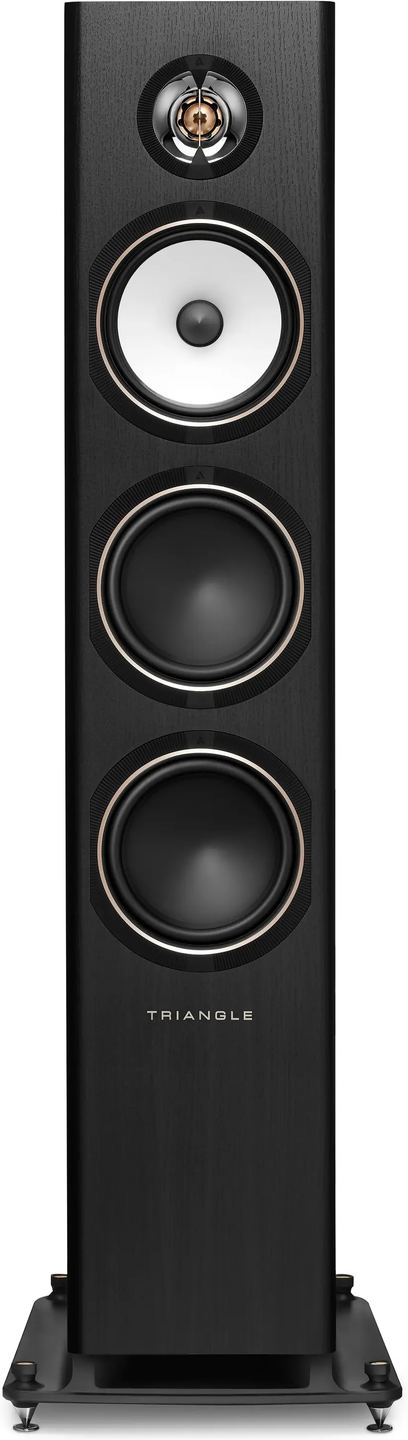
On a two-way speaker, the same driver reproduces the bass and the midrange. The Solstice 8 separates these tasks. The treble is handled by a 25 mm aluminum / magnesium dome tweeter, the midrange by a 16 cm driver with a natural cellulose pulp cone, the bass by two 16 cm drivers with concave cones. The midrange works in its preferred zone, freed from the large excursions of the bass, which clarifies voices and instruments located at the center of the spectrum.
The loading remains bass-reflex: a port extends the low-end extension by exploiting the rear wave of the bass drivers. Triangle has integrated it here into the plinth in a laminar form, a first for the brand, which limits air turbulence and flow noise at high levels.
Treble, horn loading, and phase alignment
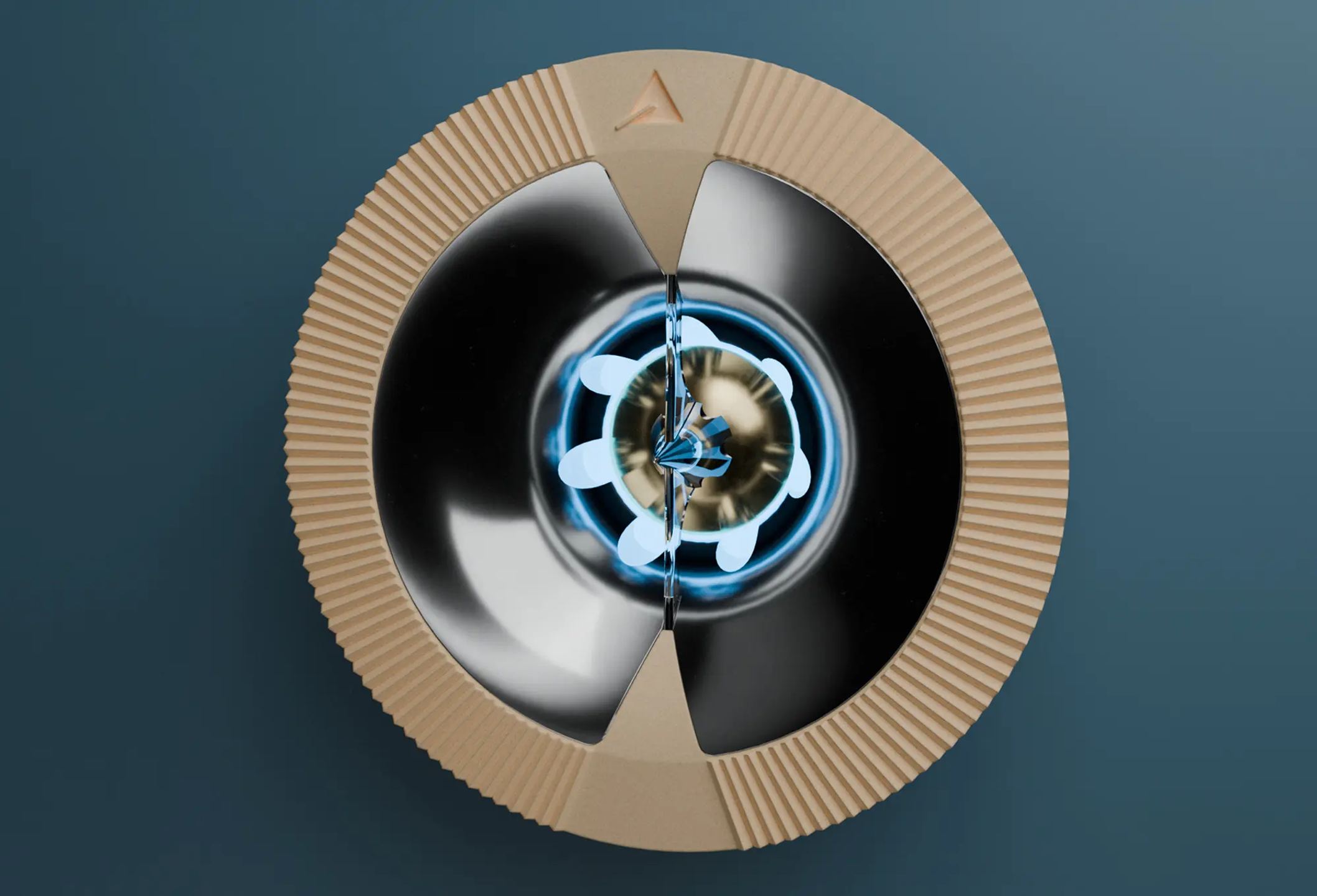
The TZ2540MG tweeter concentrates a good share of the work carried out on the range. Its 25 mm dome combines aluminum and magnesium, a light and rigid alloy that Triangle already uses on its higher-end series, and which is used here to produce fine treble without harshness.
Two elements frame this dome. The horn follows the profile of a waveguide called OS-SEW (Oblate Spheroid Super Elliptical Waveguide), a geometry that distributes high frequencies more evenly throughout the room and stabilizes the stereo image even when moving off the speakers’ axis. At its mouth, a barrel-shaped cut creates volumetric compression at the suspension level, to refine the handoff with the midrange. The phase plug, now injection-molded in a single piece, follows the same barrel logic and evens out off-axis treble dispersion.
The motor is based on a neodymium magnet ring open at its center, combined with an absorbent rear chamber. The latter captures the energy emitted toward the rear of the dome rather than letting it return and interfere with the cone, which reduces distortion.
Bass, midrange, and vibration control
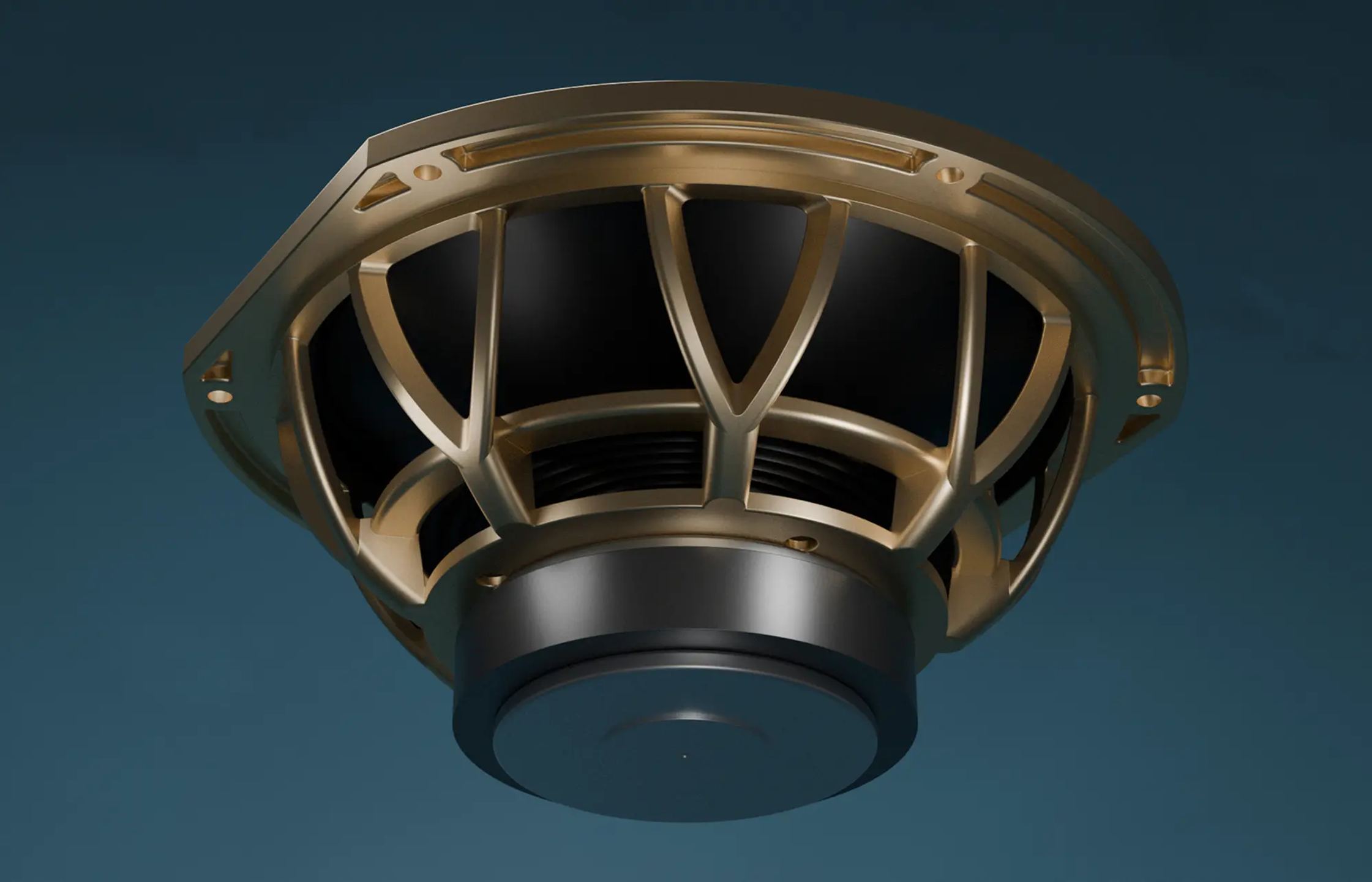
The bass and midrange drivers are built around a new 16 cm die-cast aluminum basket, whose arch structure aims for high neutrality while allowing airflow at high levels. The midrange retains the natural cellulose pulp cone, a material Triangle has worked with for a long time for its warm rendering of voices; a new rear-gluing system increases the radiating surface and improves linearity.
The two bass drivers adopt a concave cone without a dust cap. The absence of a central cap stiffens the cone and limits its deformation under heavy demand, improving precision in the low end; it also gives that smooth, continuous surface that defines the range’s look.
Then there is the mechanical energy transmitted to the cabinet. The internal DVAS (Driver Vibration Absorption System) reinforcement addresses it with a high-density perforated part that braces against the magnet of the drivers via a dense EVA foam gasket. The motor sees its vibrations absorbed before they reach the walls, and the cabinet receives only a residue.
The crossover and internal wiring
Three-way design requires a crossover that distributes the signal among the drivers. On the Solstice 8, the crossover points are around 250 Hz between the bass and the midrange, and 3.7 kHz between the midrange and the treble. The bass is handled with a second-order low-pass, the midrange with a second-order band-pass, the treble with a third-order high-pass, a balance intended to achieve a smooth transition from one register to another.
On the component side, Triangle uses air-core inductors, MKT capacitors, and cement resistors, with internal OFC (oxygen-free) copper wiring. The whole is intended to preserve signal integrity between the binding posts and the cones.
Cabinet, plinth, and decoupling
The cabinet is made from high-density MDF panels, chosen for their inertia: the more rigid and heavy the enclosure, the less it vibrates and colors the sound. The rounded front edges limit diffraction, the phenomenon by which sharp angles re-emit part of the sound and blur the localization of instruments. At 30.4 kg on the scale, the Solstice 8 clearly relies on mass.
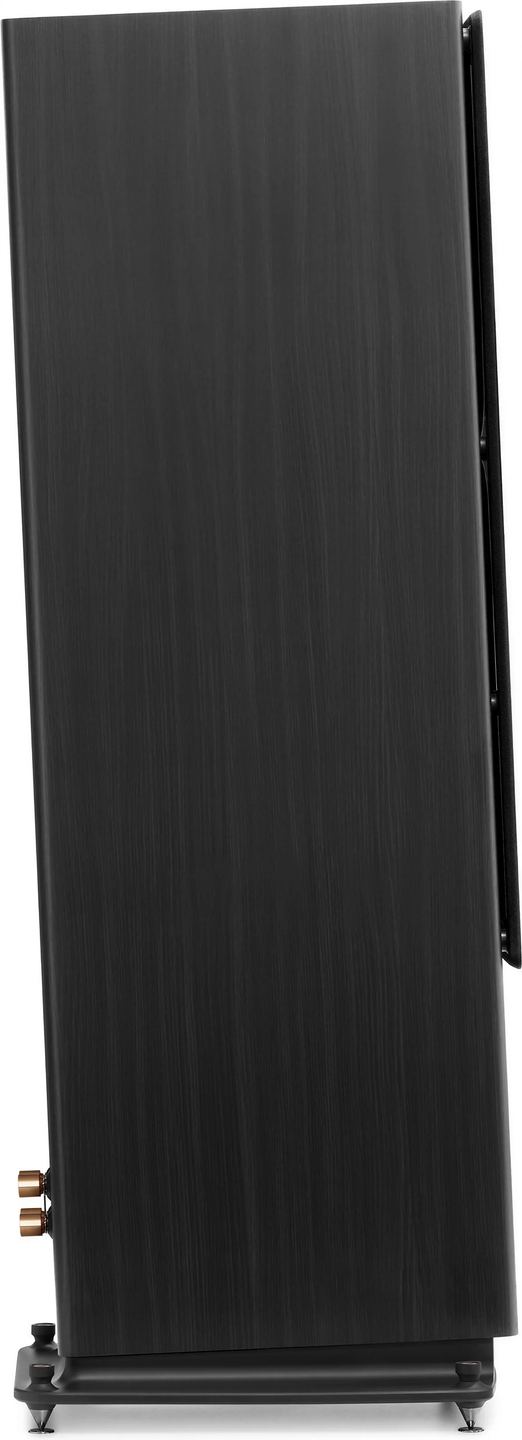
The plinth goes beyond a simple base. Its honeycomb cast-iron structure, covered with a thick layer of silicone, absorbs vibrations and decouples the speaker from the floor. It features a 2-degree tilt that directs the output slightly upward and widens the listening area, and it is also where the laminar port mentioned above is housed. Adjustable metal spikes and their spike shoes come with the speaker to level it on any type of floor; once the adjustment is done, capsules with the Triangle logo conceal the spikes.
Around the drivers, silicone trim rings highlighted by a champagne-tinted aluminum ring are not merely decorative: their sculpted profile helps control the first acoustic reflections on the front baffle.
Connection, amplification, and placement
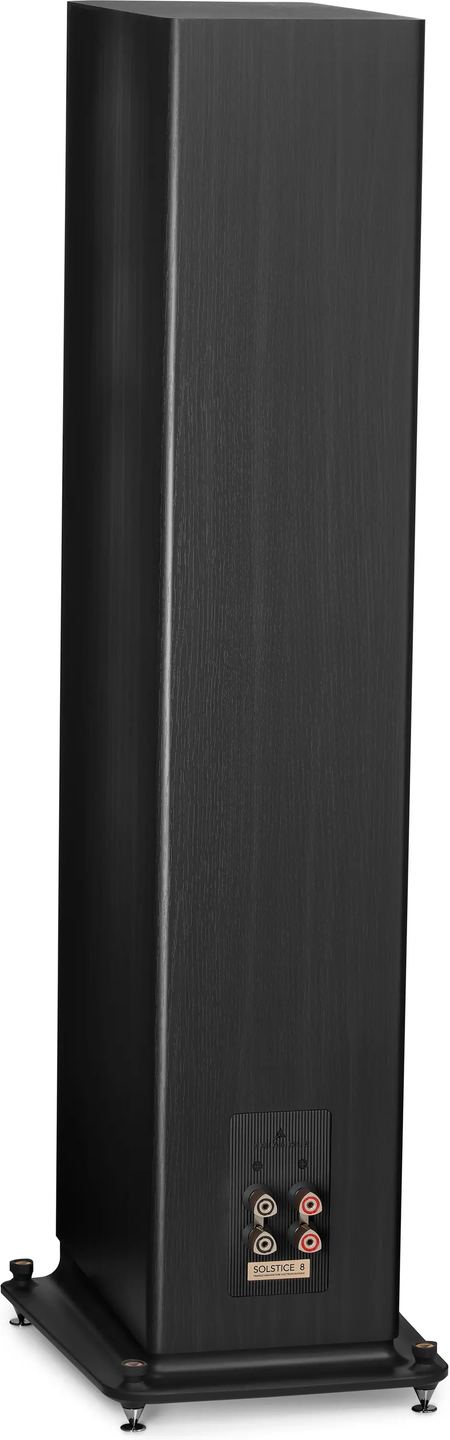
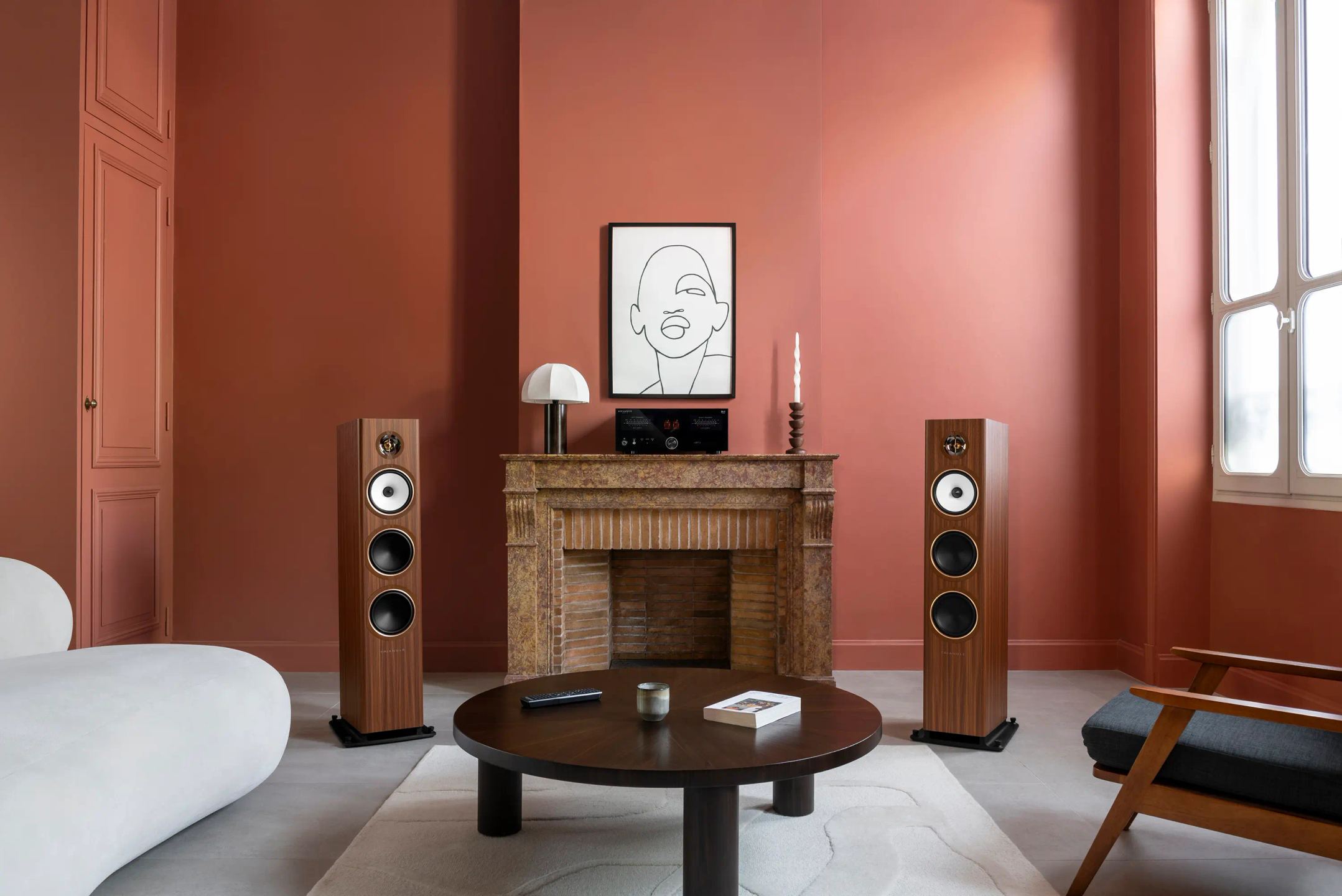
The Solstice 8’s connectivity uses dual binding posts, which separate the bass section from the midrange-treble section and allow both bi-wiring and bi-amplification (the two compact models in the range make do with a single set of binding posts). With a sensitivity of 91 dB, the speaker does not require excessive power and already performs well with a mid-range amplifier. However, its impedance drops to a minimum of 3.6 Ω below the nominal 8 Ω, a load that calls for a stable amplifier, comfortable in the low end, to keep control of the two bass drivers. Power handling reaches 130 W RMS.
Triangle positions the Solstice 8 for rooms between 15 and 50 m², in Hi-Fi stereo as well as front channels in a Home Cinema system. Below that size, placement and bass control become more complicated.
Technical specifications
Acoustic configuration
- Type: bass-reflex floorstanding speaker
- Number of ways: 3
- Drivers
- Tweeter: 25 mm aluminum / magnesium dome TZ2540MG
- Midrange driver: 16 cm with natural cellulose pulp cone
- Woofers: 2 x 16 cm with concave cone
- Laminar bass-reflex port integrated into the base
- Dual binding posts compatible with bi-wiring and bi-amplification
Performance
- Sensitivity: 91 dB
- Frequency response: 38 Hz – 22 kHz (+/-3 dB)
- Power handling: 130 W RMS
- Nominal impedance: 8 Ω
- Minimum impedance: 3.6 Ω
Exclusive technologies
- TZ2540MG horn-loaded tweeter with optimized OS-SEW waveguide
- New “barrel” structure phase plug
- Neodymium magnet motor with damped rear chamber
- Midrange and woofer drivers with new injected aluminum structure
- DVAS internal bracing (Driver Vibration Absorption System)
Cabinet and mechanical design
- High-density low-resonance cabinet
- Rounded edges limiting acoustic diffraction effects
- Dual-material cast iron / silicone base ensuring acoustic decoupling and stability
Recommended use
- Listening area: 15 to 50 m²
- Applications: high-end stereo Hi-Fi and Home Cinema
- Sound reproduction: wide soundstage, deep bass, natural midrange, and detailed treble without harshness
Dimensions and weight
- Dimensions (W x H x D): 308 x 1075 x 394 mm
- Unit weight: 30.4 kg
Frequently Asked Questions
Can the Solstice 8 serve as the front speaker in a Solstice Home Theater system?
Yes. The range includes a sealed-box Solstice C3 center speaker and the Solstice 3 bookshelf speaker, which share the same drivers and the same acoustic signature. By assigning the front channels to two Solstice 8 speakers and the center channel to the C3, you get consistent timbre during pans from one speaker to another, a key concern in both cinema and multichannel music.
How far from the walls should it be installed?
With the port exiting downward into the base, the Solstice 8 is more tolerant of being placed near a rear wall than a speaker with a front- or rear-firing port. A clearance of a few dozen centimeters is still preferable to let the bass breathe. The base’s 2-degree tilt already directs the treble toward the listener; a slight toe-in toward the listening position tightens the center image.
How do you adjust the base spikes?
The supplied metal spikes screw into the underside of the base and are adjusted one by one until any wobbling is eliminated, then locked in place with their counter-spikes. On hard floors, the latter protect the surface. Once leveling is complete, the logo caps conceal the spikes.
Is it suitable for small rooms?
Triangle recommends it for rooms starting at 15 m². Below that, its low-frequency extension becomes difficult to control and placement more delicate. For an area of 10 to 35 m², the Solstice 3 bookshelf speaker from the same range is easier to integrate, on its dedicated S05 stand.
What finishes are available?
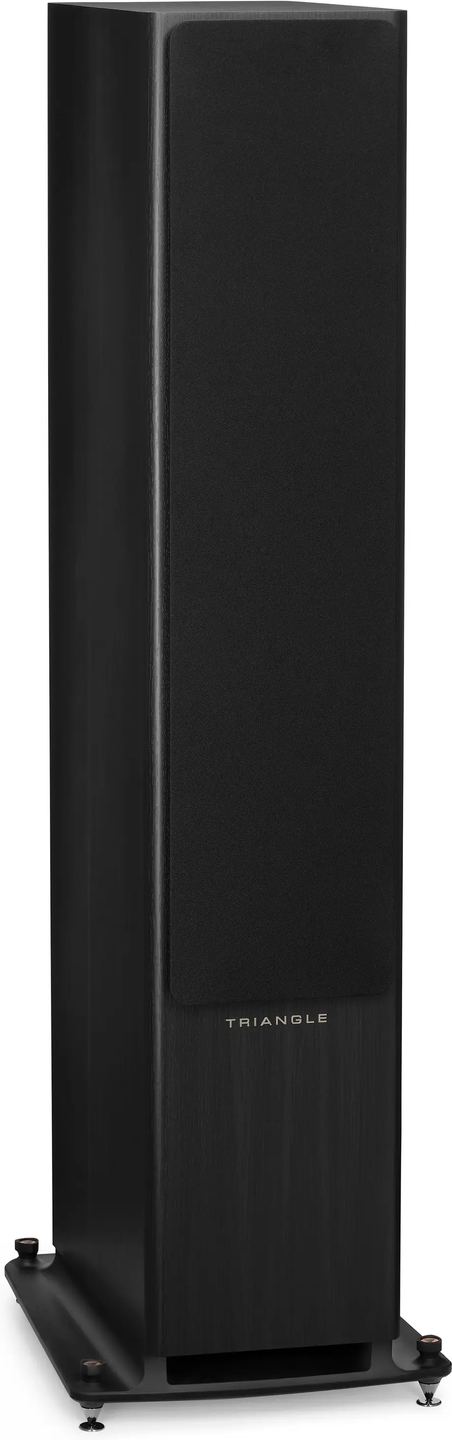
Four: Teak, Birch, White, and Ash Black. The wood finishes feature vertical grain, and each speaker comes with matching magnetic grilles that attach with no visible screws, for those who prefer to conceal the drivers.
What is the difference between bi-wiring and bi-amplification?
The dual binding posts allow both. In bi-wiring, a single amplifier powers the speaker through two separate pairs of cables, one for the bass, one for the midrange and treble, after removing the original jumpers between the terminals. In bi-amplification, two amplifiers or two separate channels each drive one section, for greater control. Without using either method, you keep the jumpers in place and connect a single pair of cables.
- Eco-contribution included in the sale price.
- Manufacturer reference: SOLS-TEC75-B-V1-C
- GTIN / EAN: 3660216018618