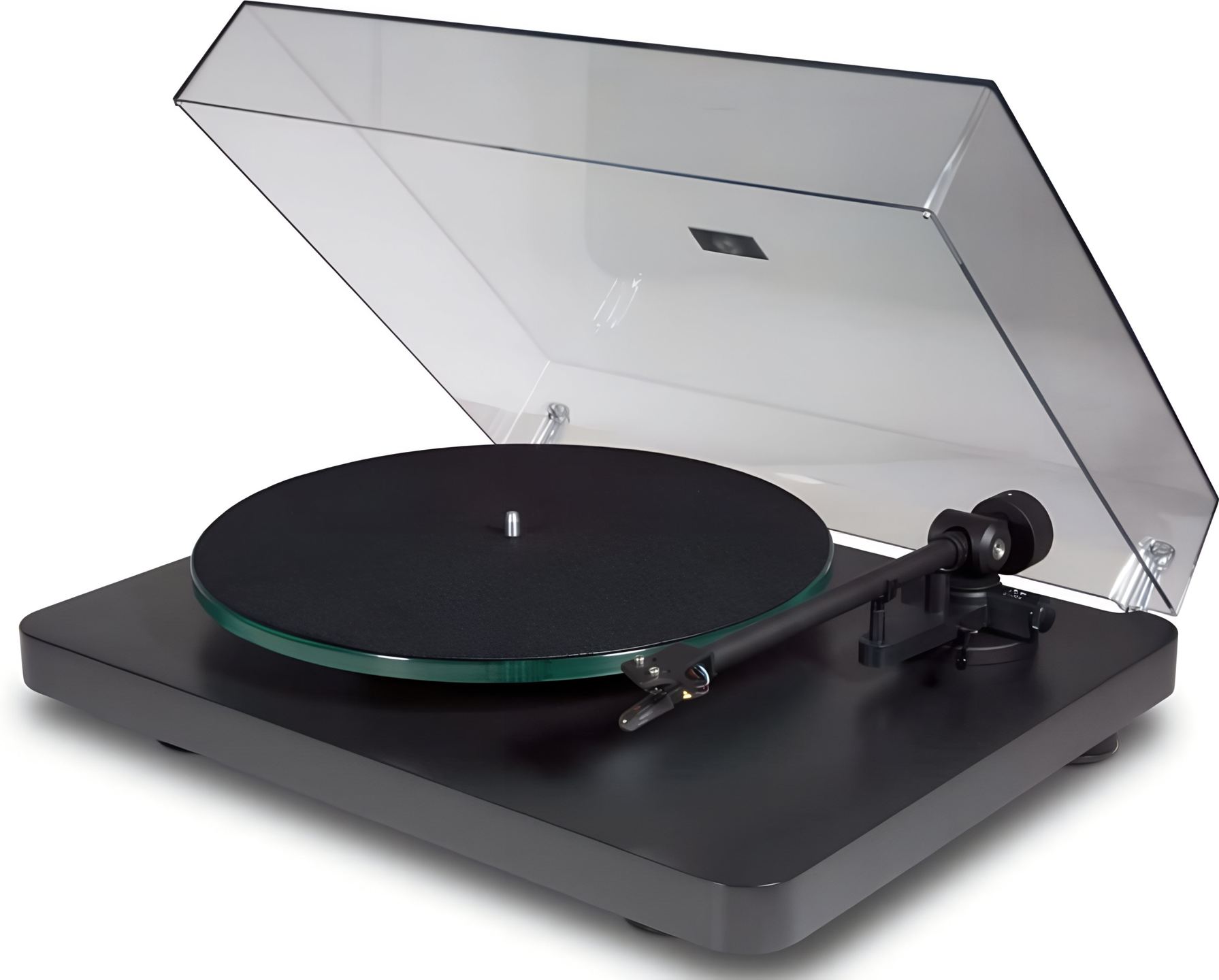
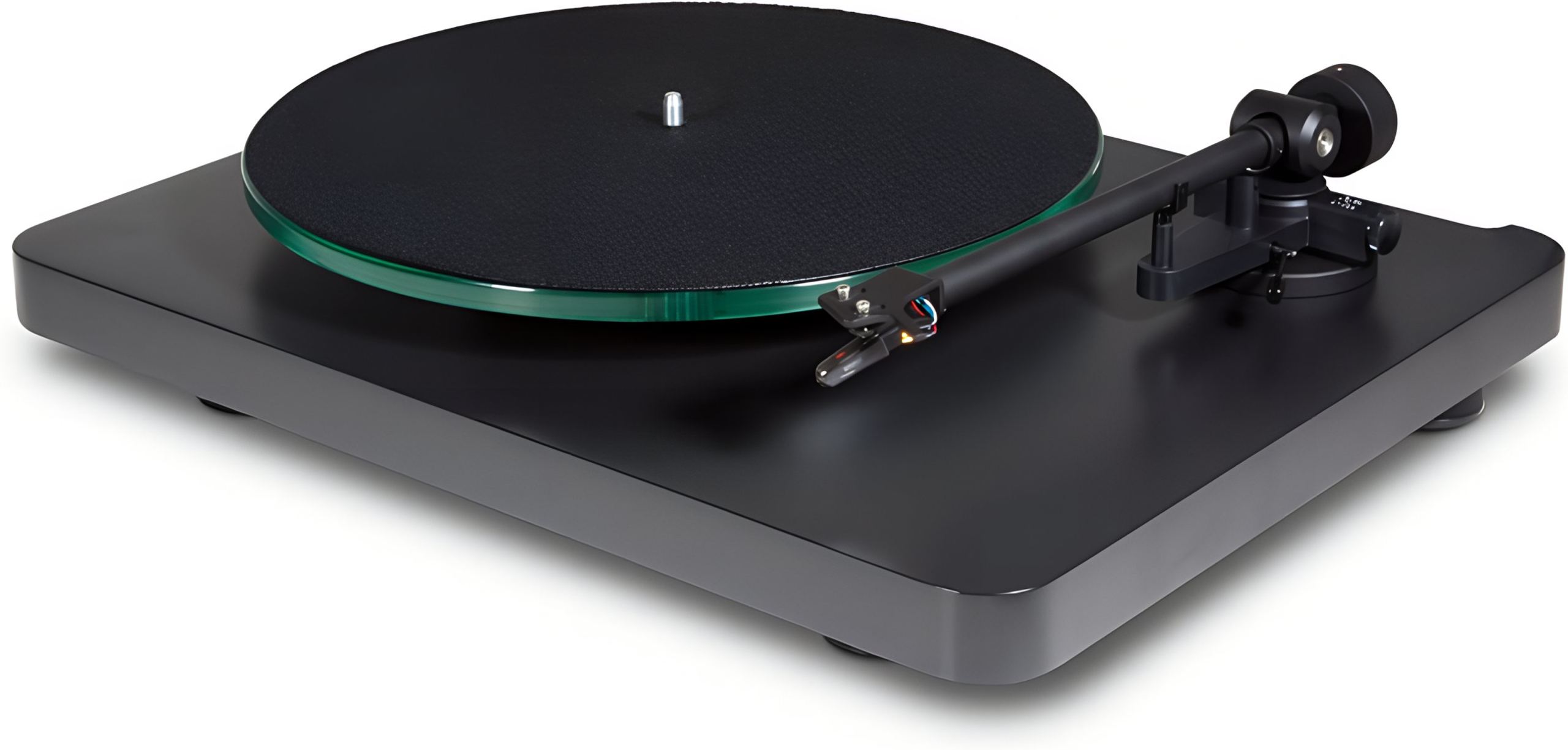
The NAD C558 is a manual, belt-drive turntable positioned in the NAD lineup between the C556 and the C588. Designed in collaboration with Pro-Ject, which manufactures it in the Czech Republic, it combines components selected by NAD with Pro-Ject’s expertise. This partnership aims to ensure consistent build quality while integrating NAD’s acoustic know-how.
Mechanical Construction: The Quest for Perfect Rigidity
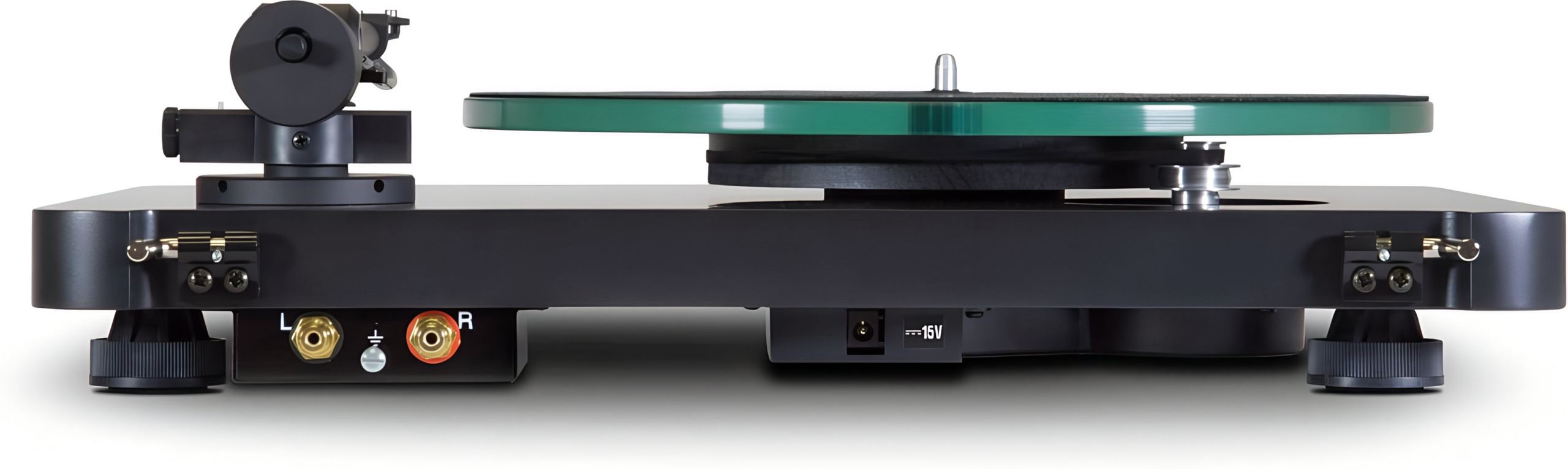
The foundation of the NAD C558 is a solid MDF plinth, CNC-machined for optimal dimensional precision. This material choice, more expensive than the particle board typically used in this price range, offers density and inertia that serve as the first barrier against unwanted vibrations. Specially tuned rubber feet complete this isolation system, providing effective decoupling between the turntable and its support.
The 10-millimeter-thick glass platter is at the heart of the design. Chosen for its inert properties and resistance to resonance, this material ensures remarkably stable rotation. A felt mat dampens residual micro-vibrations while providing a gentle interface for records. The platter and bearing assembly form a coherent system where each element contributes to maintaining a constant rotational speed.
The synchronous AC motor benefits from an isolated power supply that converts mains current into pure DC before regenerating it into perfectly stable AC. This double conversion, a technique usually reserved for more expensive turntables, achieves exceptional rotational accuracy with less than 0.50% variation at 33 RPM. The precision-ground rubber belt drive ensures silent transmission of motor torque while filtering out residual mechanical vibrations.
The Tonearm: Millimetric Precision and Versatility
The straight 9-inch (230 mm) aluminum tonearm is a judicious technical choice for this price range. With an effective mass of 9.5 grams, it offers broad compatibility with various cartridges on the market. Its design prioritizes rigidity and resonance control over extreme lightness, resulting in particularly well-controlled bass reproduction.
Adjustment options go well beyond what is usually expected in this category. Azimuth—a crucial parameter to ensure the stylus is perfectly perpendicular to the groove—can be precisely adjusted. The magnetically calibrated anti-skating device, measured in grams, balances the lateral forces exerted on the stylus during playback. The counterweight, equipped with a rubber gasket to prevent accidental slippage, allows fine adjustment of tracking force between 0 and 30 millinewtons.
The manual cue lever, operated by a side lever, provides controlled and precise lowering of the stylus into the lead-in groove. While this function may seem basic, it reflects particular attention to daily ergonomics. The tonearm base includes a secure rest that firmly holds the tube in the resting position.
Ortofon OM10 Cartridge: The Choice of Musicality
NAD has strategically equipped the C558 with an Ortofon OM10 cartridge, a moving magnet model renowned for its balanced musical qualities. This Danish cartridge, factory-mounted and pre-set, offers an extended frequency response from 20 Hz to 22 kHz with a contained variation of ±2 dB. Its 20-micron elliptical stylus accurately tracks groove modulations while minimizing record wear.
The 4-millivolt output at 1000 Hz ensures optimal compatibility with most phono preamplifiers on the market. The recommended tracking force of 1.25 grams (12.5 millinewtons) represents an ideal compromise between tracking accuracy and record preservation. The cartridge’s construction, with channel separation exceeding 22 dB, ensures a stable and well-defined stereo image.
The OM10’s moving magnet architecture allows for easy stylus replacement without removing the cartridge—a significant practical advantage. Additionally, compatibility with higher-end OM styli (OM20, OM30, OM40) offers interesting upgrade possibilities without changing the cartridge.
Ergonomics and Use: Mastered Simplicity
Changing speed between 33 and 45 RPM requires manual intervention on the belt position. This operation, which involves lifting the platter to move the belt from one step to another on the motor pulley, may seem old-fashioned but ensures mechanical simplicity and long-term reliability. NAD even provides a specially designed plastic tool to facilitate this process.
The non-resonant Perspex dust cover deserves special mention. Its counter-sprung hinges allow stable positioning at virtually any opening angle—a rare feature in this price range. The chosen material, heavier than standard covers, contributes to the turntable’s overall acoustic isolation.
The power switch, located under the chassis, uses a robust rocker format. While this position may be surprising at first, it prevents accidental activation and preserves the turntable’s clean lines. The supplied RCA interconnect cable, with integrated ground wire, reflects attention to practical installation details.
Sound Performance: Balance and Musicality
The C558’s sonic signature is characterized by remarkable tonal balance, with no frequency range dominating the others. The bass stands out for its controlled fullness and physical impact, without heaviness or sluggishness. Bass lines remain articulate even in complex passages, demonstrating the excellent control exercised by the platter-arm-cartridge assembly.
The midrange, crucial for reproducing voices and acoustic instruments, displays appreciable neutrality. Timbres retain their unique character without added coloration, allowing clear distinction between different instrumental textures. Vocal presence remains natural—neither projected nor recessed—with intelligibility preserved even at low volume.
The treble provides the necessary detail without ever becoming harsh or aggressive. The upper harmonics of cymbals, the brilliance of strings, and the breath of wind instruments are rendered with finesse. This natural smoothness of the OM10 perfectly matches the overall character of the turntable.
The soundstage produced by the C558 is surprisingly wide and spatially coherent. Different sound layers are clearly delineated, offering a convincing three-dimensional perception. Instrument localization remains stable and precise, creating a credible stereo image that exceeds legitimate expectations for this price range.