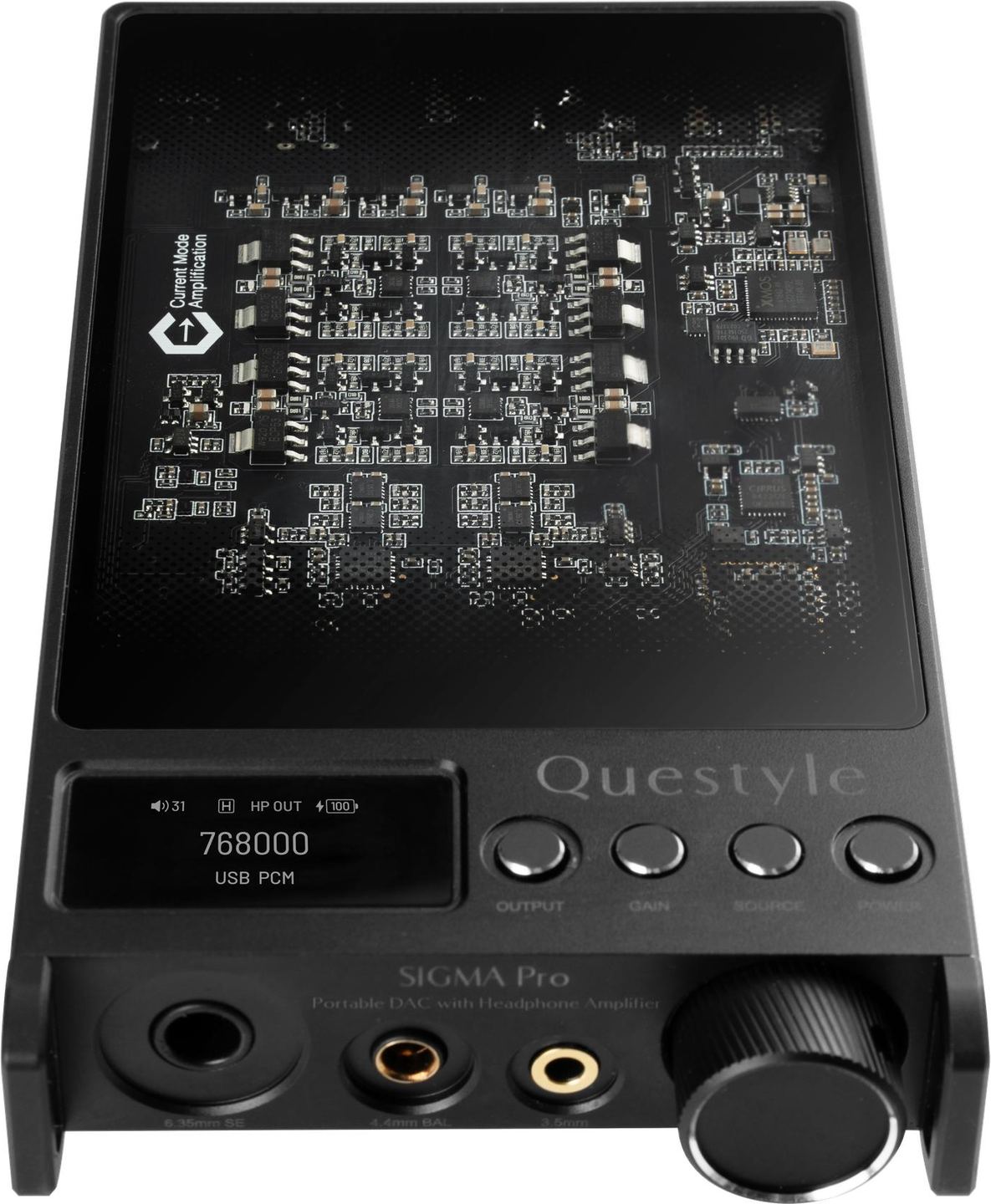
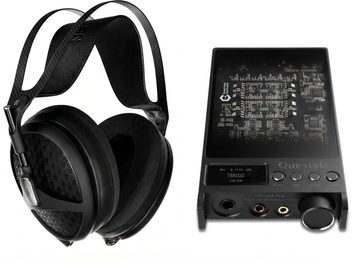
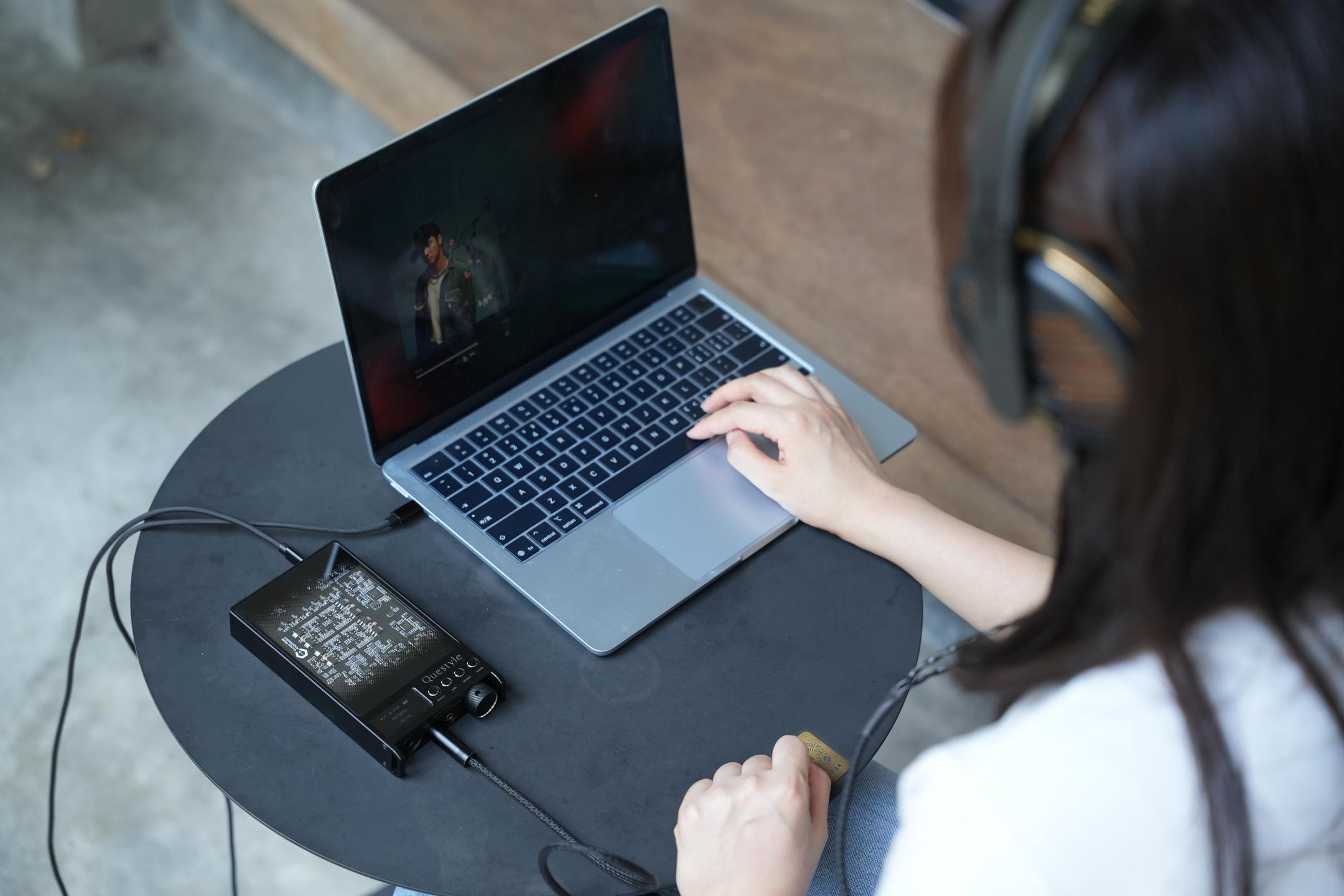
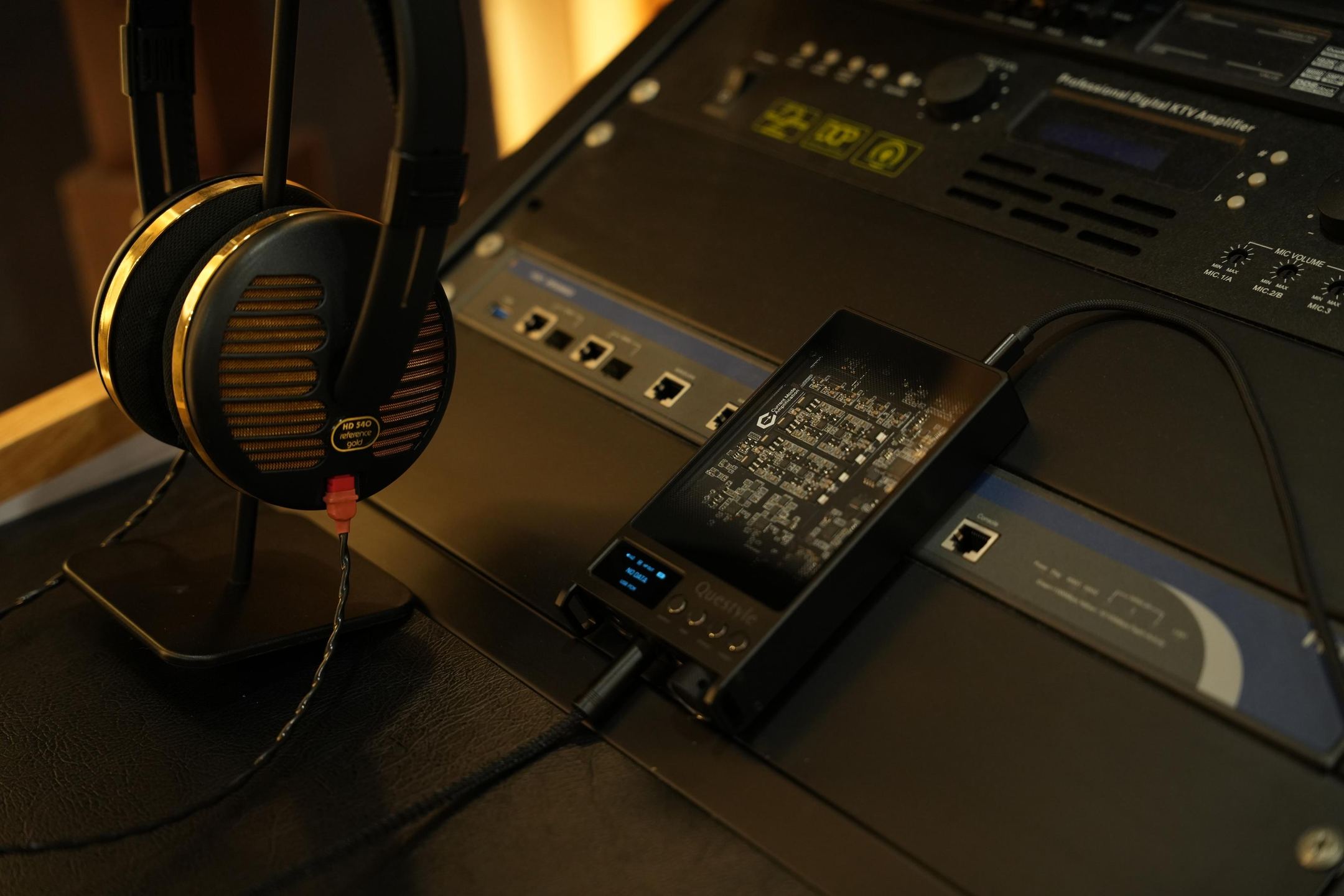
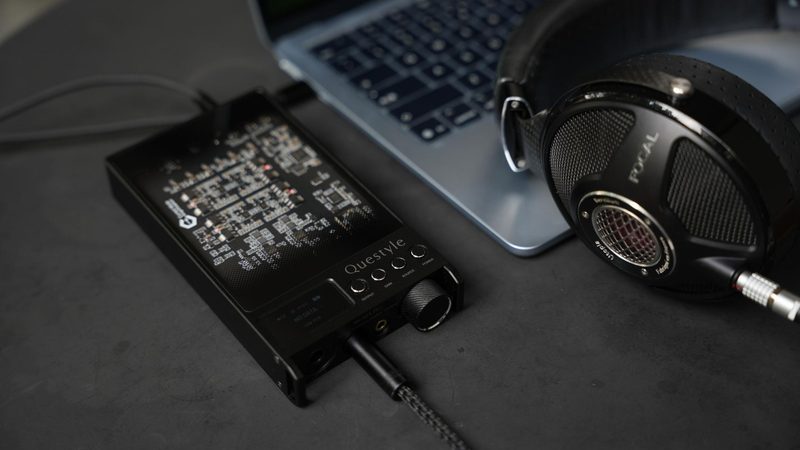
Two years after the CMA18 Portable, Questyle takes things to the next level with the SIGMA Pro. This portable DAC/headphone amplifier concentrates the technical philosophy of the Chinese brand in a hand-sized format, with a clear ambition: to deliver living-room performance in a mobile enclosure. The name SIGMA (Greek letter corresponding to the number 18) evokes both the connection with the CMA18 range and the idea of a sum – the synthesis of the expertise Questyle has accumulated since 2012.
Conversion architecture: dual DAC in dual-mono configuration
The SIGMA Pro houses two ESS ES9069Q chips operating in a dual-mono configuration, each converter handling one channel independently. This approach improves channel separation and reduces crosstalk. Questyle combines these converters with its TTA (Three-Tier Architecture), a three-level decoding system that successively optimizes digital processing, analog conversion, and integration with the amplification stage. The USB interface is based on a 16-core XMOS XU316 controller, capable of handling PCM streams up to 768 kHz/32-bit and native DSD up to DSD512. Full MQA decoding is also supported.
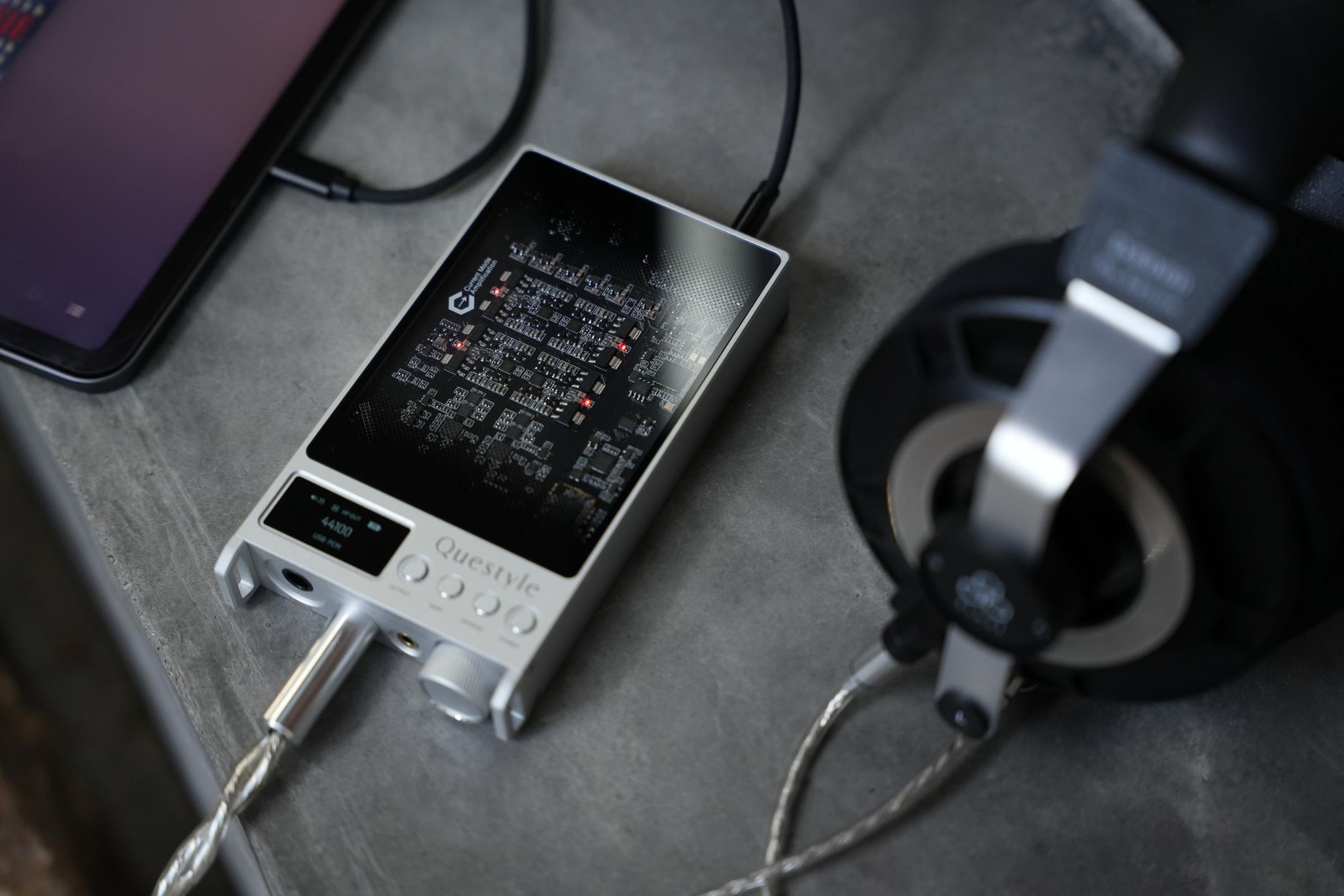
The Current Mode Amplification (CMA) technology, protected by a global PCT patent, sets Questyle apart from most manufacturers. Instead of amplifying the signal as voltage like traditional circuits, this approach works directly on current. The result is an extended bandwidth, faster transients, and distortion measured at 0.0002% according to the manufacturer’s specifications. The SIGMA Pro integrates four discrete amplification stages operating in a fully balanced configuration. This architecture delivers a peak voltage of 25 Vp-p and a peak current of 5 A, with power exceeding 8 W at peak levels – unusual figures for a transportable device. On the 4.4 mm balanced output, the unit delivers 1,200 mW into 32 Ω or 160 mW into 300 Ω, enough to drive both sensitive in-ears and demanding planar headphones.
Connectivity and versatility
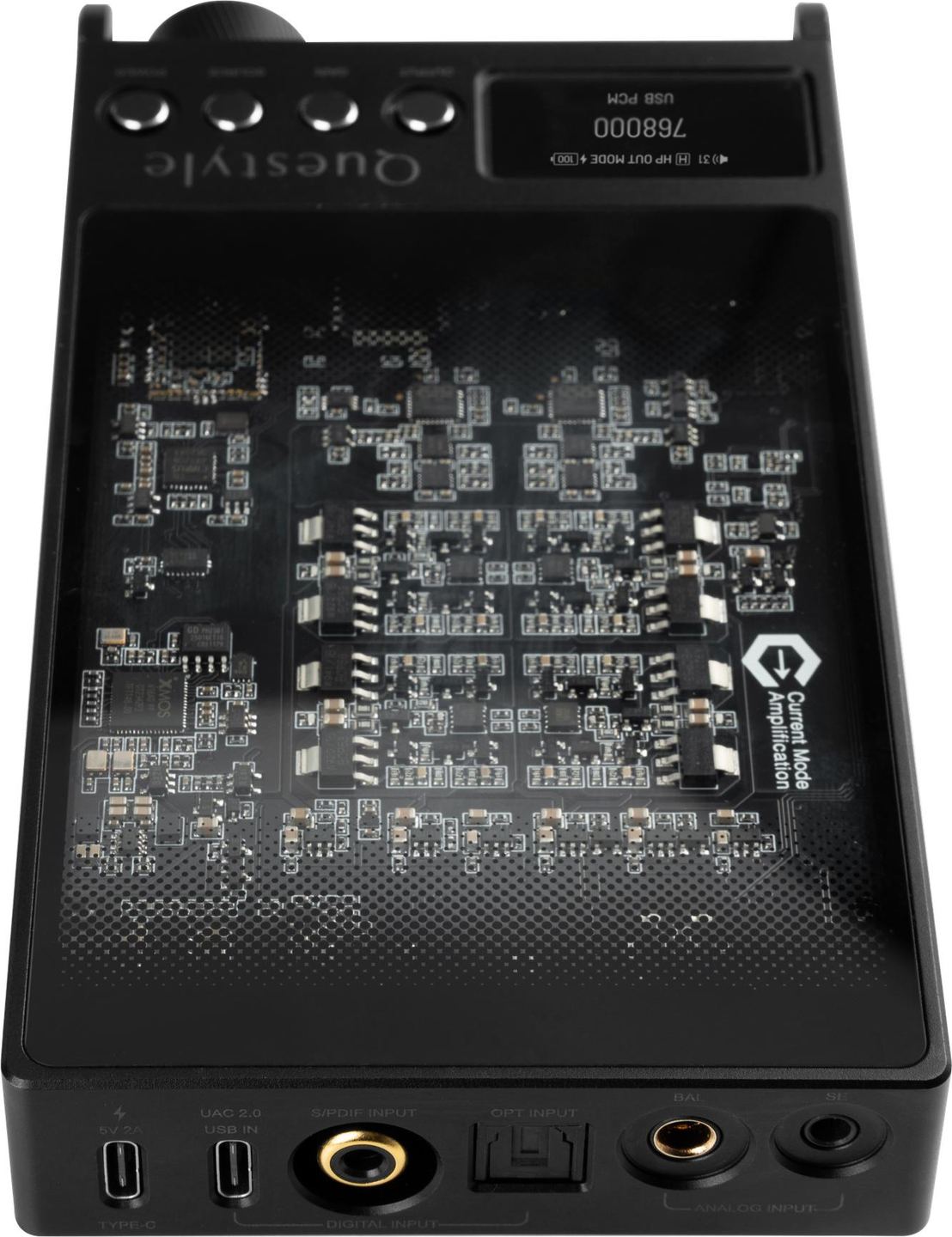
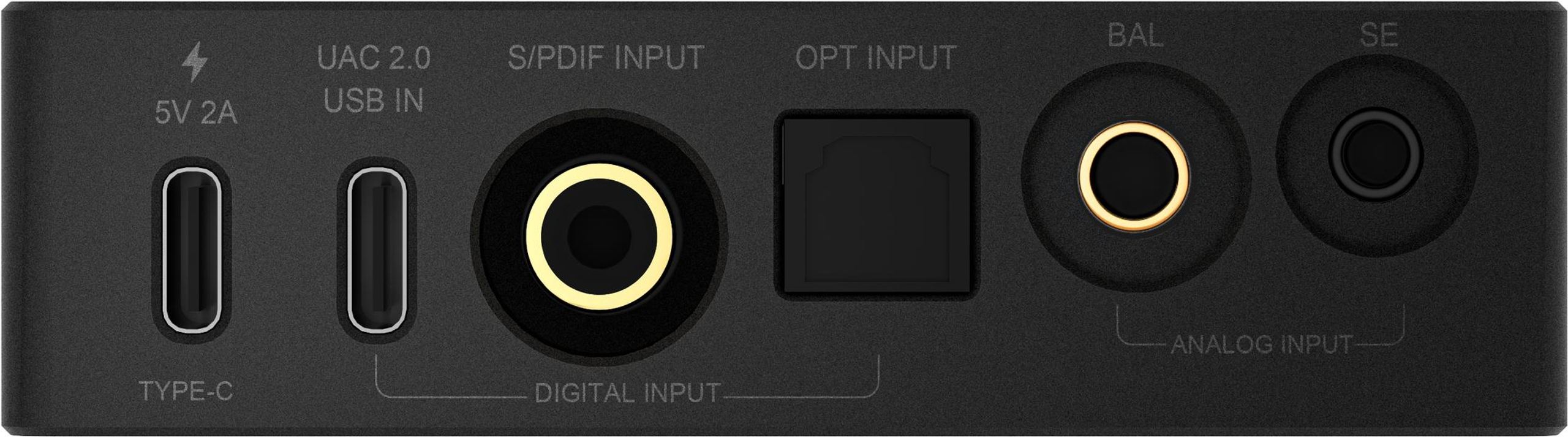
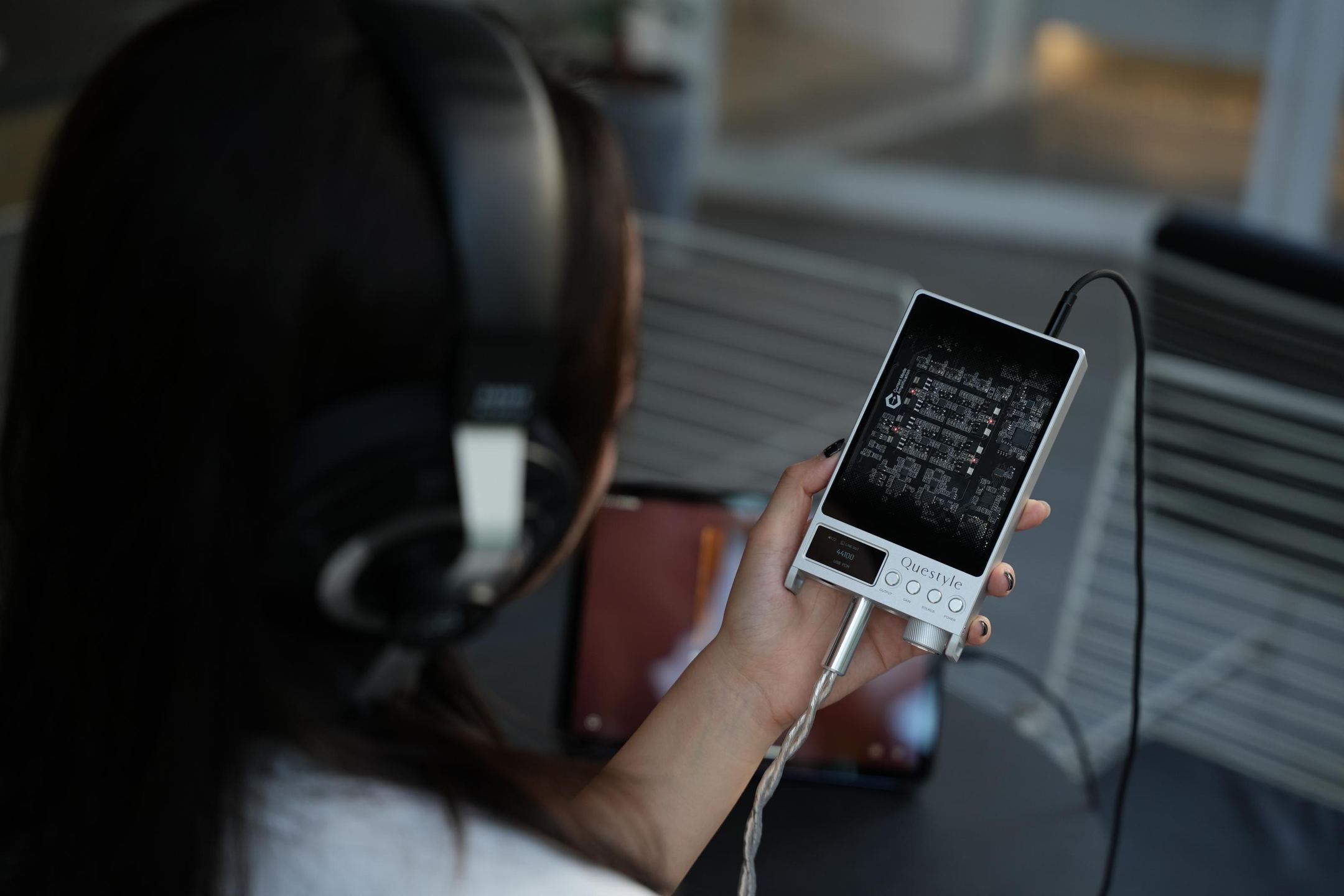
The SIGMA Pro stands out thanks to the richness of its interfaces. On the headphone-output side, three formats coexist: unbalanced 3.5 mm jack, balanced 4.4 mm Pentaconn, and standard 6.35 mm. A gain selector offers three levels (Low, High, Studio) in headphone mode and two levels in in-ear mode, allowing precise adjustment of the output level depending on the equipment used.
Digital inputs include a USB-C port (UAC 2.0), an optical Toslink input, and a coaxial S/PDIF input, the latter two accepting PCM streams up to 192 kHz/24-bit. Bluetooth 5.4 supports SBC, LE Audio, aptX, aptX HD, aptX Adaptive, and LDAC codecs, along with Qualcomm Snapdragon Sound and Sony LDAC certifications.
A distinctive feature of the SIGMA Pro lies in its analog inputs: a 3.5 mm jack (1 Vrms) and a balanced 4.4 mm (2 Vrms) allow connection of analog sources such as a turntable (via phono preamp) or a mic preamplifier. These inputs also enable recording: the analog signal is converted to digital (fixed at 48 kHz/24-bit) and sent via USB to a computer or smartphone, with synchronous monitoring during capture.
Design and materials
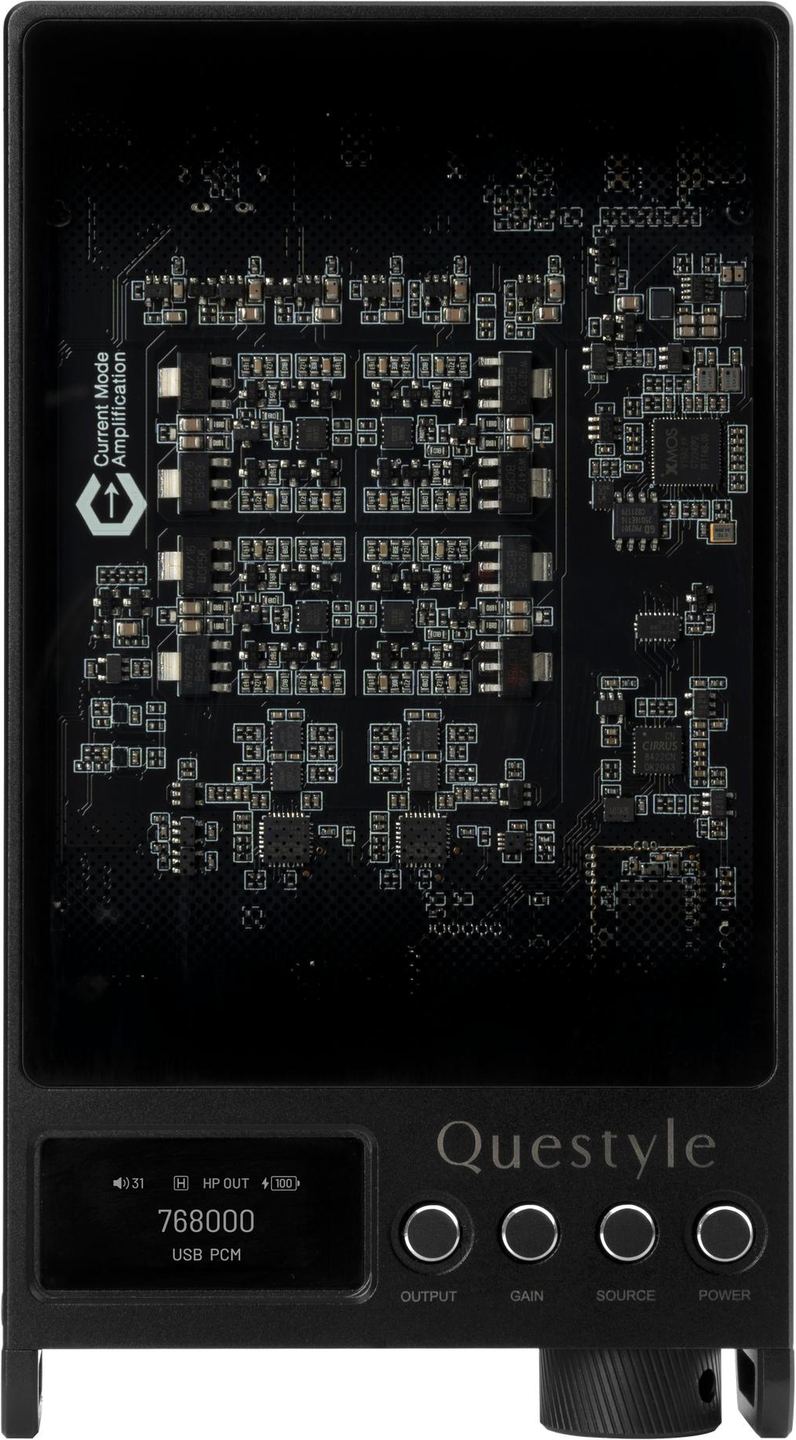
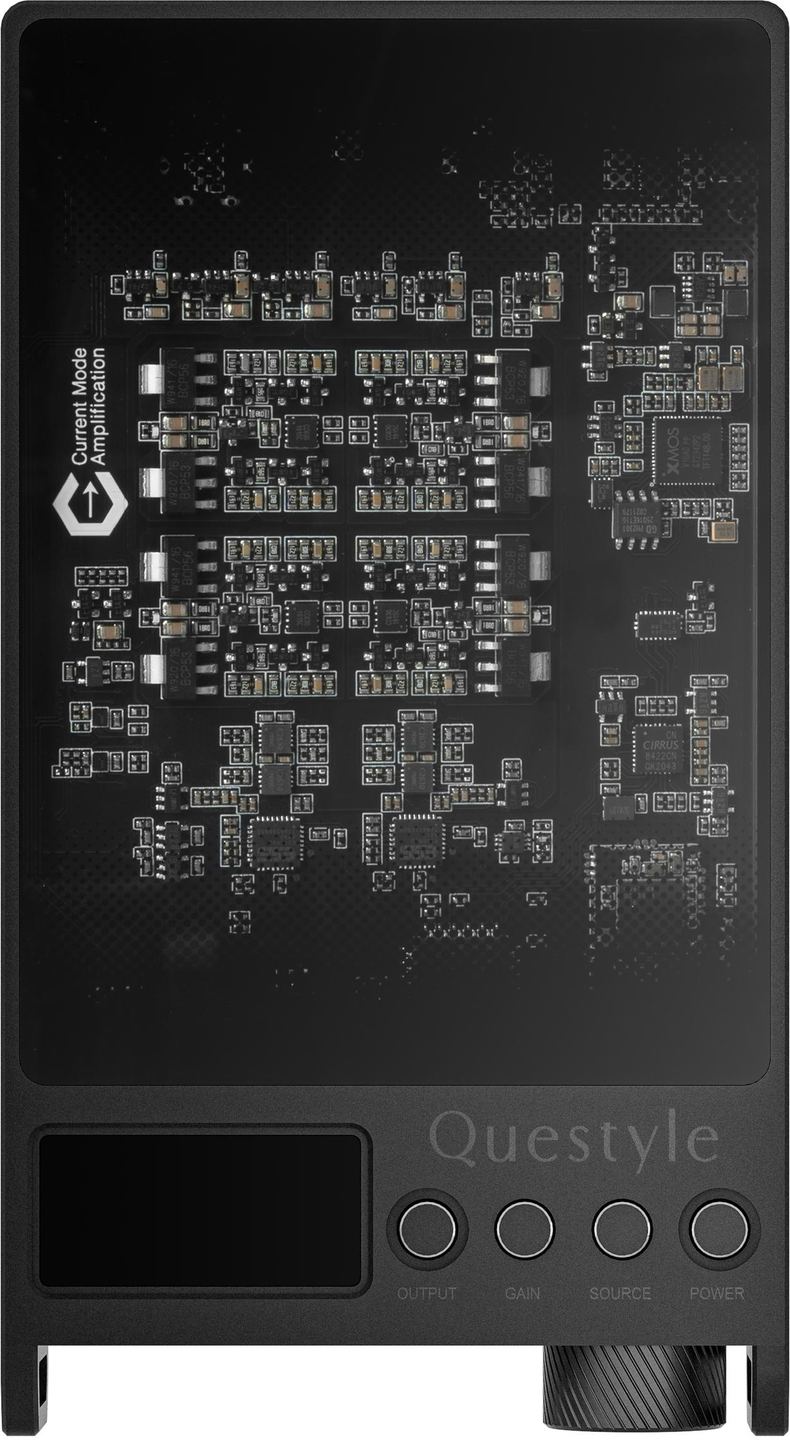
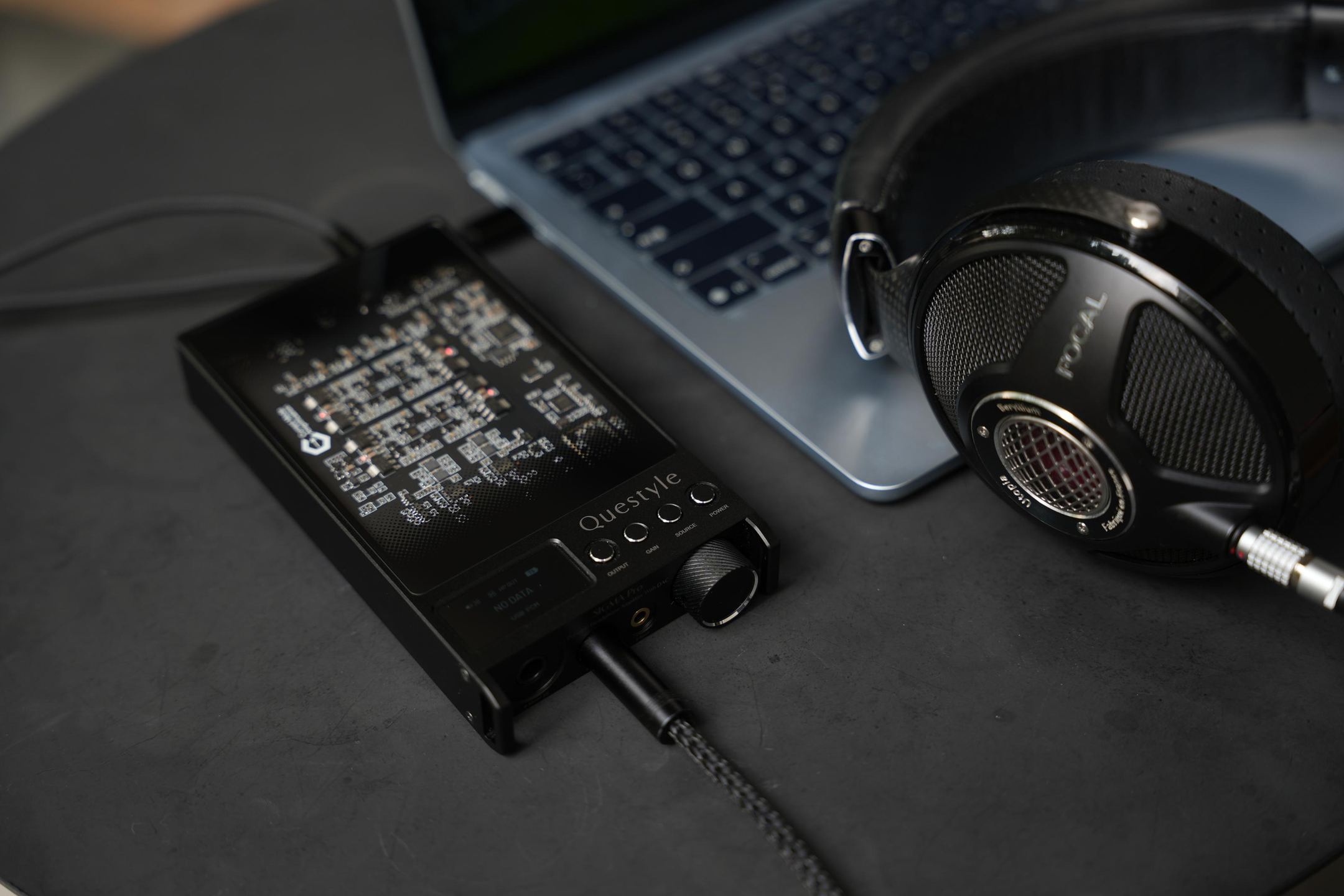
The chassis of the SIGMA Pro, machined from sandblasted aerospace-grade aluminum, adopts the clean lines characteristic of the Bauhaus-inspired aesthetic that Questyle applies across its range. The front and rear panels are protected by Kunlun optical-grade glass, treated with a coating that suppresses RF interference. The transparency of the glass reveals the circuit board and its components – a choice that requires particular attention to internal layout and demonstrates a certain confidence in build quality.
Measuring 155.7 × 85 mm and weighing 330.8 grams, the SIGMA Pro has a footprint comparable to that of an iPhone 16 Pro Max, but is noticeably thicker and heavier. This format makes it more suitable for “transportable” use (desk, hotel room, temporary studio) than for slipping into a jeans pocket.
Power supply and battery management
The SIGMA Pro features two separate USB-C ports: one dedicated exclusively to audio data transfer, the other reserved for charging. This separation prevents electrical interference between power and signal, and more importantly allows you to use the device while charging without drawing on the connected smartphone’s battery. The 4,300 mAh battery offers a claimed battery life of 12 hours; a full charge takes about 3 hours with a 5 V / 2 A power supply.
System compatibility
Apple MFi certification ensures plug-and-play operation with iPhones and iPads. On Android (5.1 and later), HarmonyOS, Windows (10 version 1803 and later) and macOS, the device works in plug-and-play mode without needing any additional driver. Linux is also natively compatible.
Dimensions: 155.7 × 85 mm (comparable to iPhone 16 Pro Max)
Weight: 330.8 g
Materials: sandblasted aerospace-grade aluminum and Kunlun glass
Frequently asked questions
Can the SIGMA Pro be used as an external DAC for a home Hi-Fi system?
+
Yes. The 3.5 mm and 4.4 mm outputs can operate in line-out mode to feed an integrated amplifier or active speakers. The 4.4 mm balanced output, via an appropriate cable to XLR, is particularly suitable for active studio monitors.
What’s the difference compared to the standard SIGMA?
+
The standard SIGMA uses a single AKM AK4493 chip, has no analog or digital (optical/coaxial) inputs, and does not support recording. The SIGMA Pro doubles the DACs with two ESS ES9069Q chips, adds a 6.35 mm output, and offers full connectivity including analog inputs for recording.
How does the recording function work?
+
By connecting an analog source to the 3.5 mm or 4.4 mm inputs, the signal is digitized at 48 kHz/24-bit and sent via USB to the computer or smartphone. Any software compatible with USB audio (Audacity, GarageBand, Logic Pro, etc.) can capture the stream. Monitoring is carried out in real time via the headphone outputs.
Does Bluetooth provide quality comparable to a wired connection?
+
The LDAC codec allows transmission up to 990 kbps, and aptX HD reaches 576 kbps. These bitrates enable playback close to CD quality, but the USB connection remains technically superior for exploiting high-resolution files above 96 kHz.
Can I use very sensitive earphones without background noise?
+
The SIGMA Pro includes a dedicated IEM mode with an optimized signal path and 64-step volume control. The noise floor measured by Questyle reaches -130 dB in a lab environment, allowing use without audible hiss with most sensitive in-ears.
Is a protective case included?
+
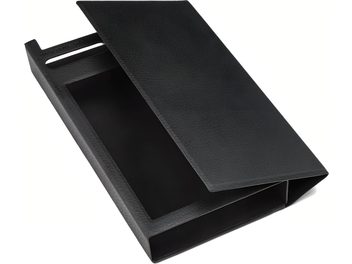
No, the standard packaging does not include a case. Questyle offers an optional leather case. Given the glass surfaces, a carrying case is recommended for regular mobile use.
User reviews
Carlo
To be honest i'm a big fan of Questyle products, it was the CMA400i that got me into this hobby in 2015 and i still have it among my desktop units, I also had the M15i dongle and i also still have the CMA18P all great units and what can i say about the Sigma Pro well
it takes it even one or even two steps further, it's one of the best sounding portable/transportable unit i had so far. The resolution, detail and power it offers is simply amazing, It has become
my daily driver when i'm at the office driving my collection of IEM's with ease and to their full potential. And even with full size headphones it drives them beautifully with one
or two exceptions (really hard to drive headphones, HE-6 & MD Tungsten) . The only downside with this unit it's too big to be pocketable other than that the SIGMA PRO is an
awesome unit considering the asking price. A Big Thanks to the HS Team for a flawless delivery.
Comment from 22 March 2026 — Experience from 5 March 2026
To better understand our visitors, measure marketing effectiveness and personalise ads, we and our partners use cookies and mobile advertising identifiers on your device. This data makes it possible to display personalised and non-personalised ads and measure their performance. Some cookies, which are technically necessary, are exempt from consent. You can accept those that require your consent, refuse them by clicking “Reject”, or customise your choices via “More options”.
To find out how Google uses the data collected once you have given your consent, see Google’s Business Data Responsibility site (opens in a new window).
You can change or withdraw your consent at any time via the “Cookies” link. Your choices will apply on our site for 12 months.