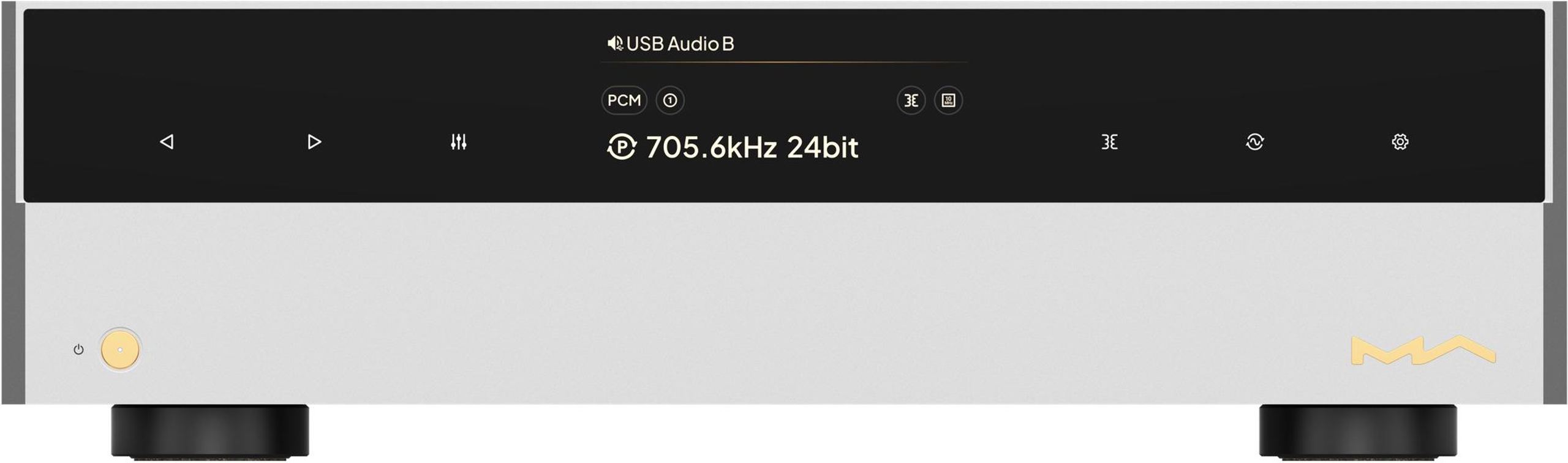
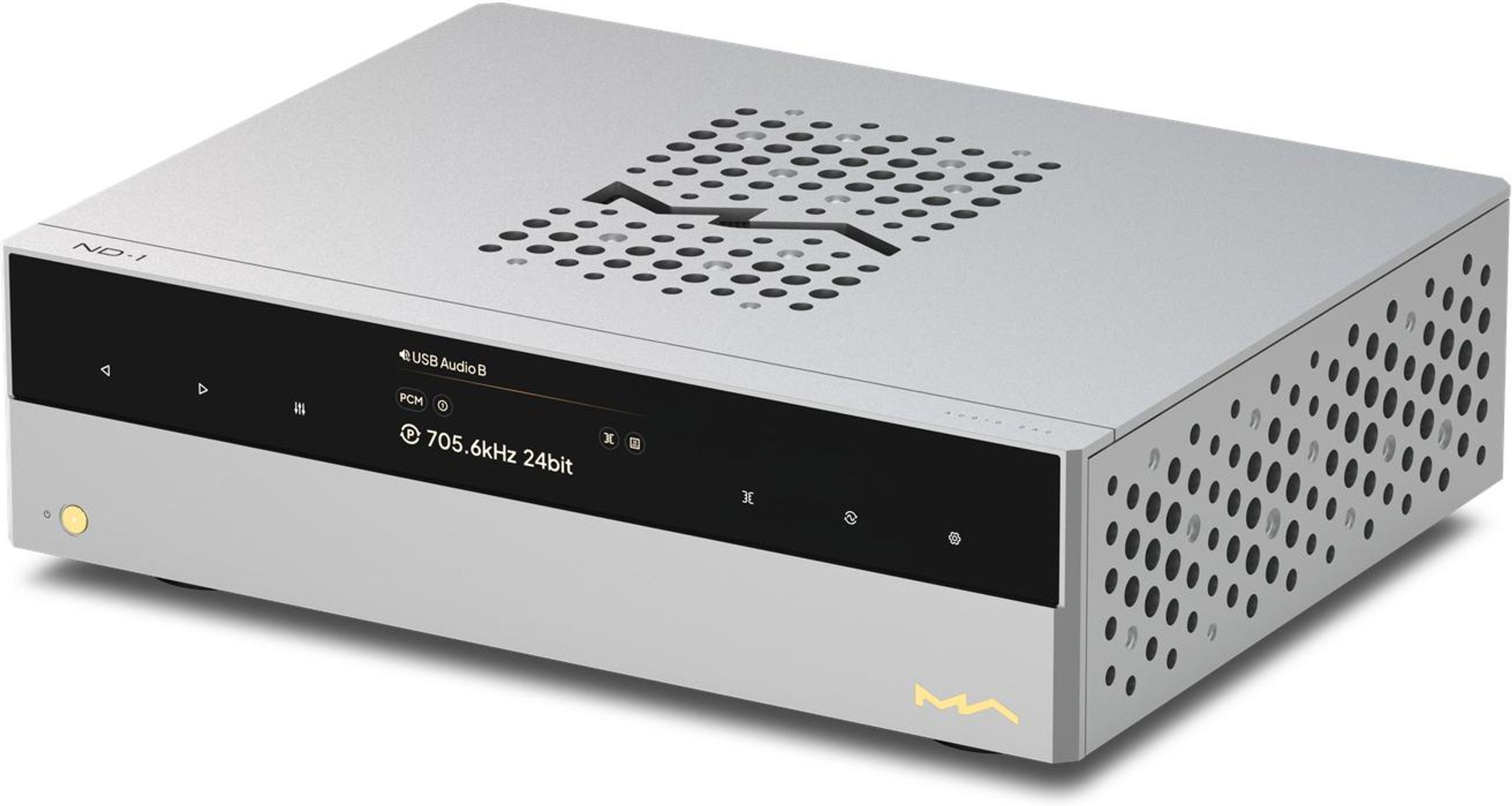
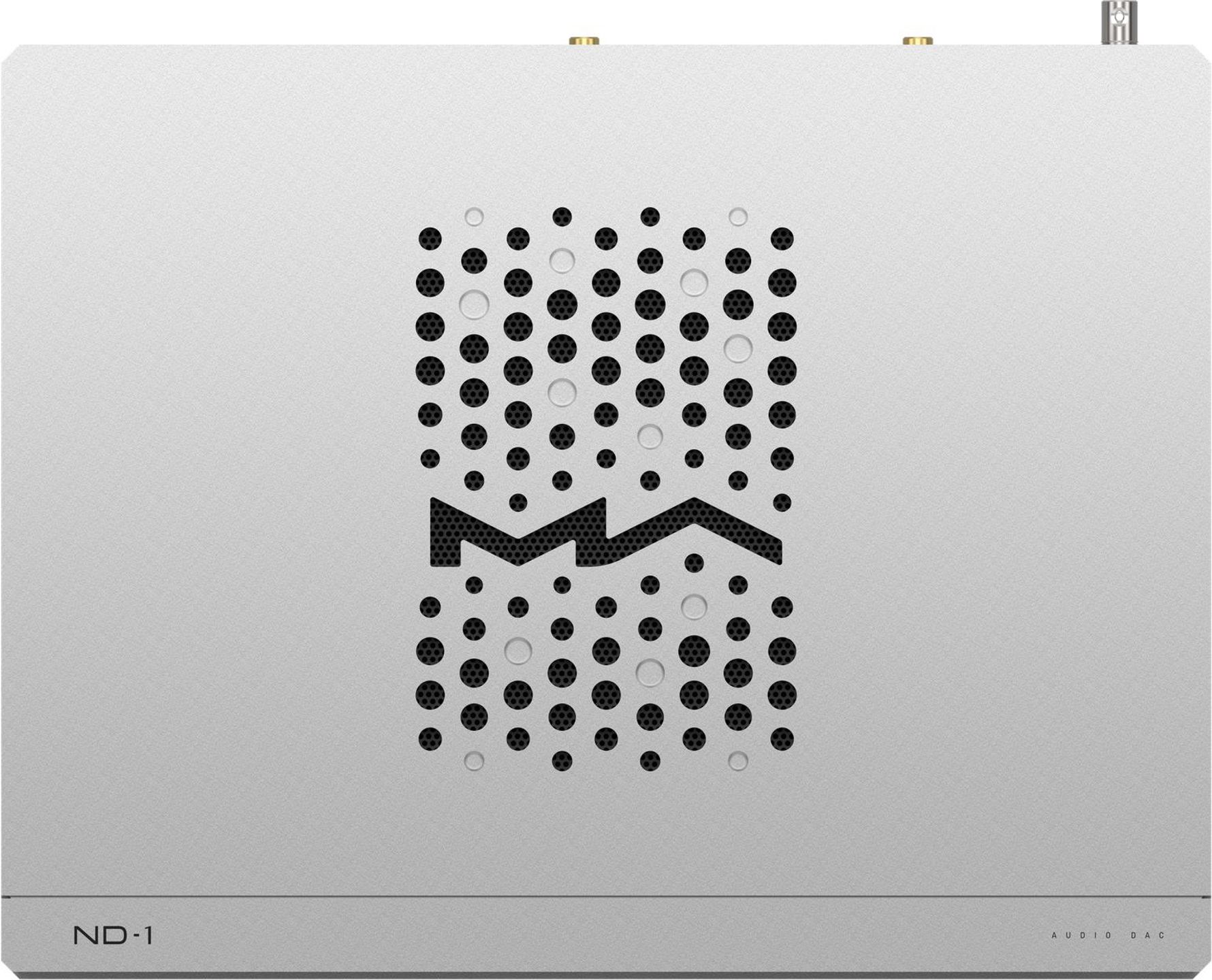
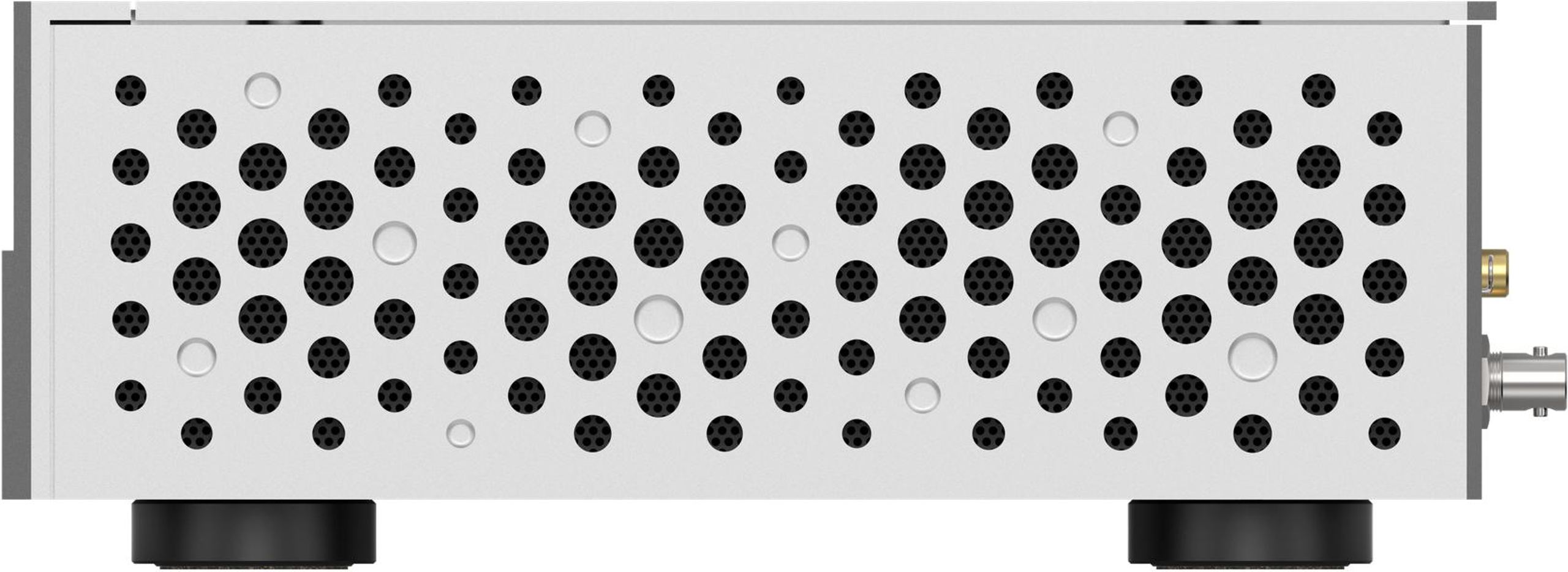
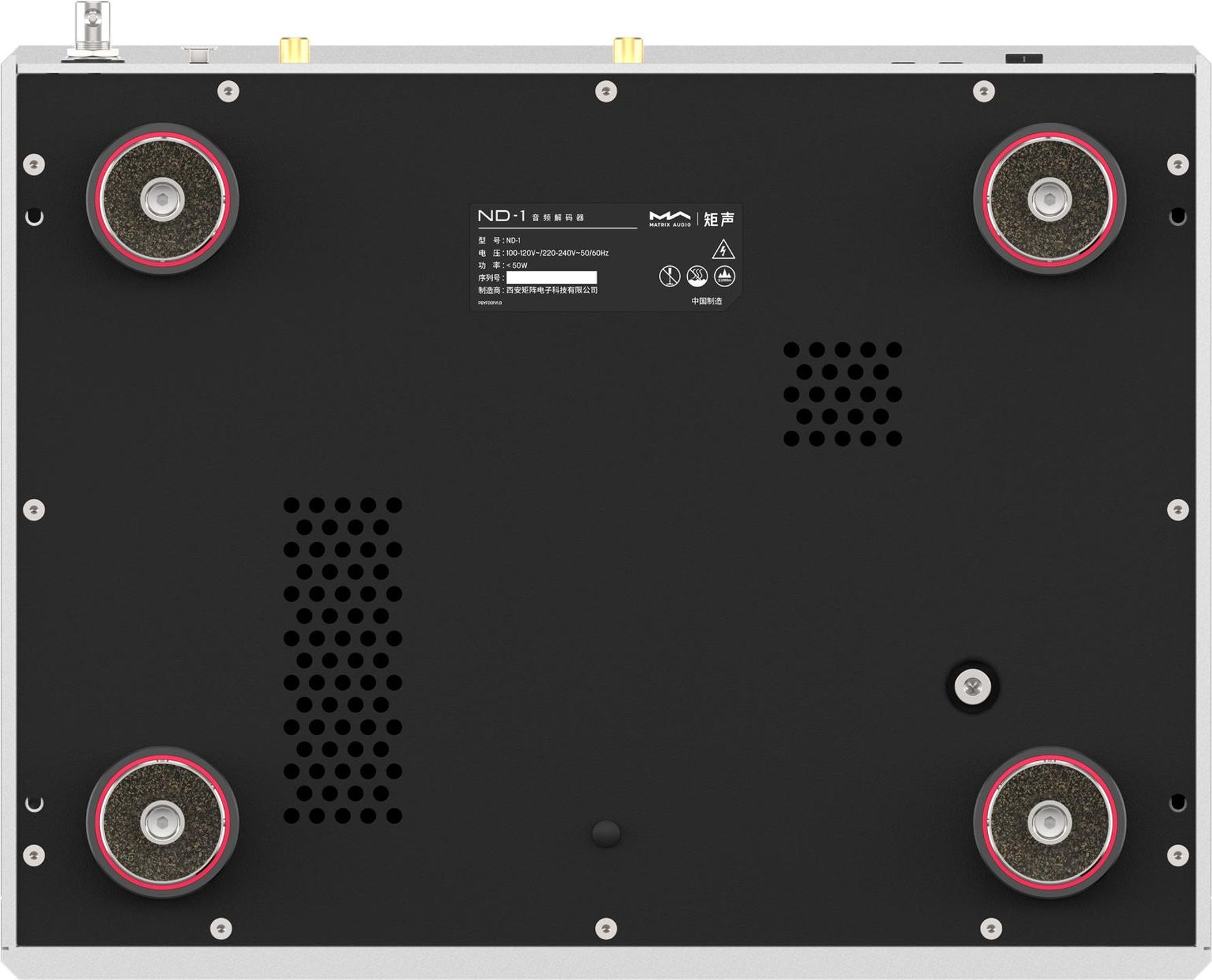
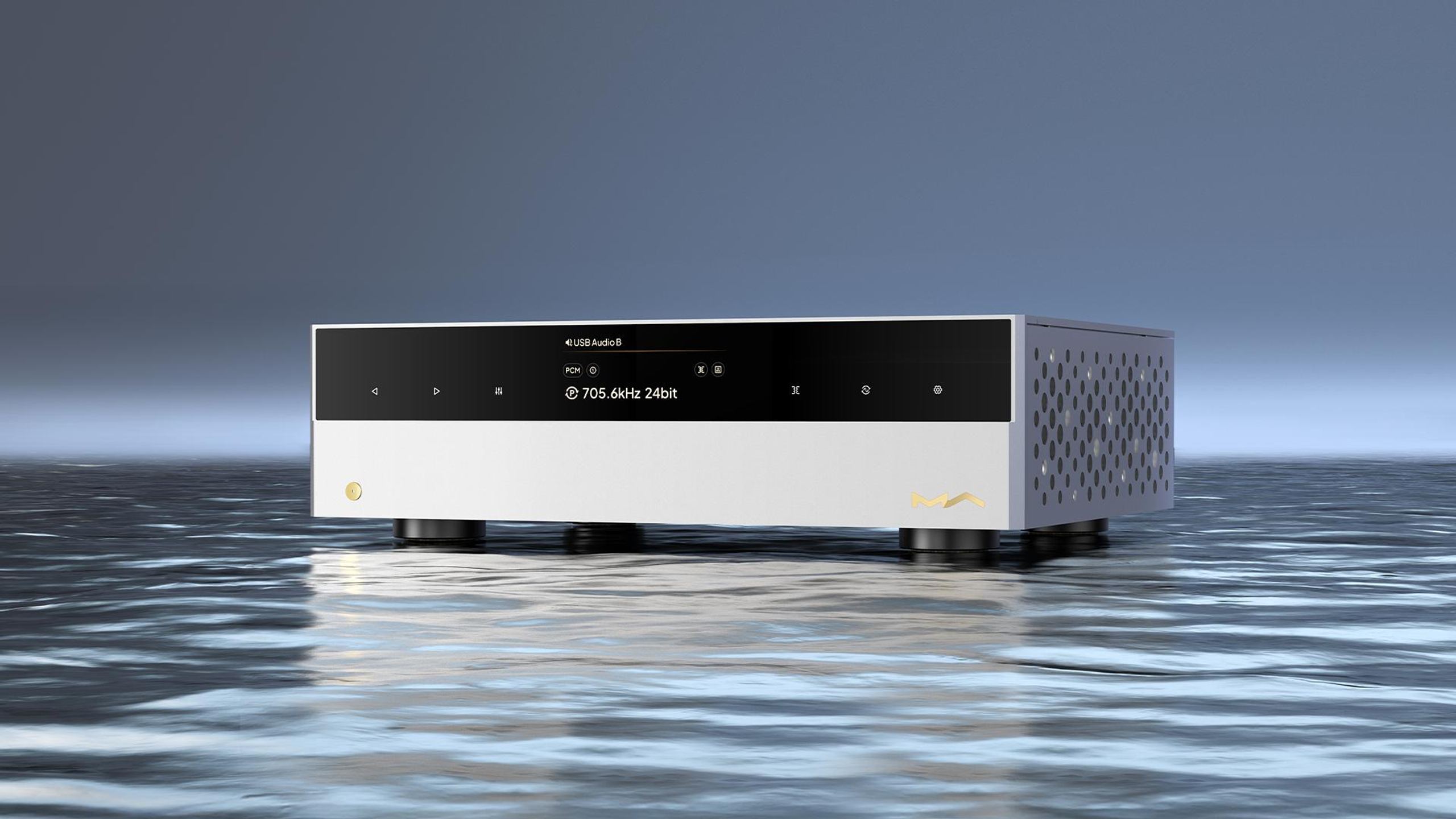
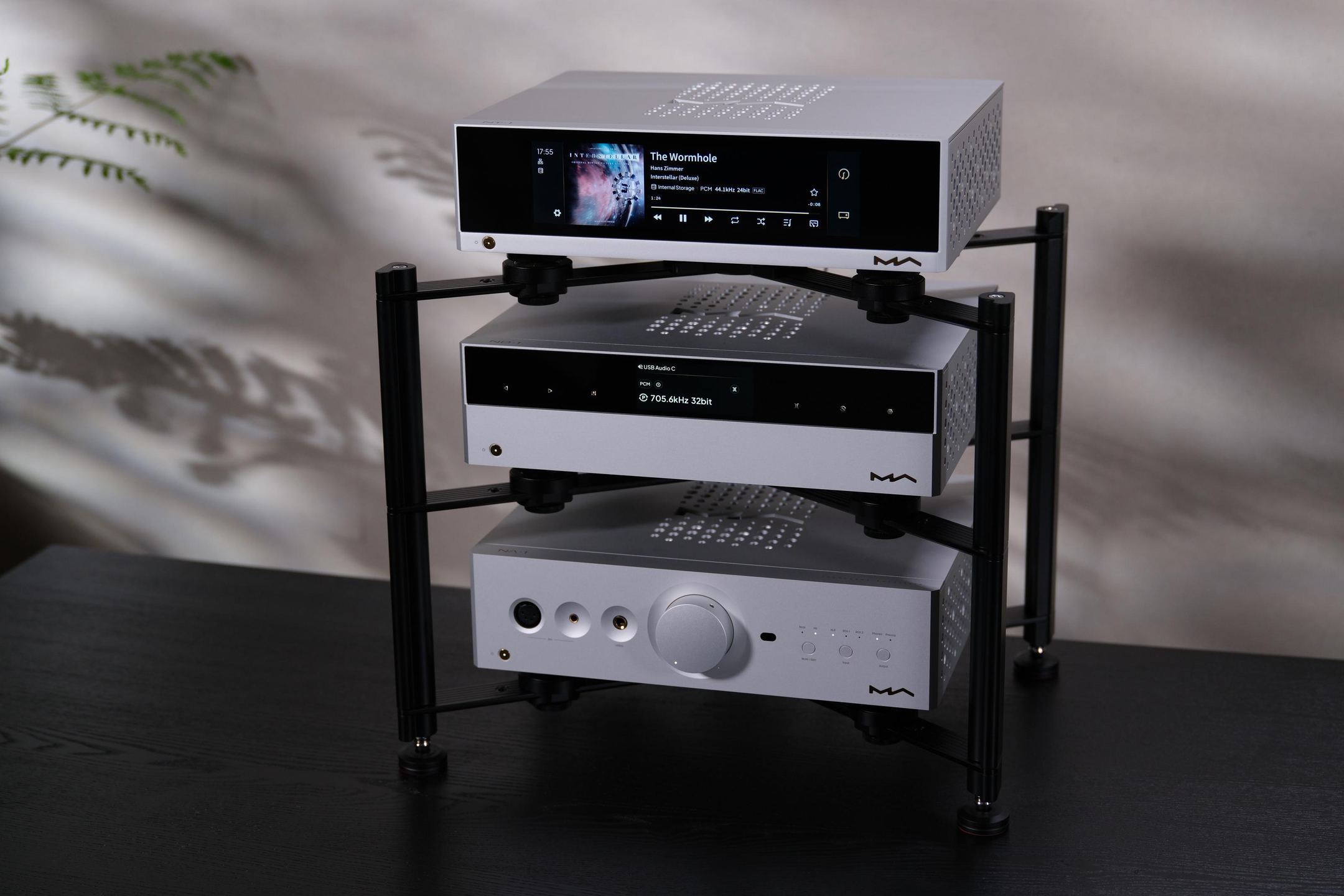
With the N series, Matrix Audio has split its desktop Hi-Fi chain into separate elements, each dedicated to a single function. The NT-1 transport, released in March 2025, handled the source. What it lacked was a conversion partner. The ND-1 fills that role: a pure digital-to-analog converter, with no built-in streaming, no headphone amplification, focused solely on the task of turning a digital stream into an analog signal.
The AKM chip in a “1+2” configuration
The ND-1 is built around AKM’s flagship chip duo: an AK4191EQ delta-sigma modulator paired with two AK4499EX converters, one per channel. Matrix Audio refers to this as a “1+2” topology: the AK4191EQ handles digital processing and reclocking, then distributes the signal to each AK4499EX operating in dedicated mono mode. This physical separation of the left and right channels improves crosstalk (specified at -145 dB on the XLR output in Op-Amp mode) and phase coherence.
The MS-1, the brand’s flagship, also uses these AKM chips, but in a “2+2” configuration with two AK4191 and two AK4499. The ND-1 is not a miniaturized MS-1: it is a different interpretation of the same chipset, in a more compact format and at a distinct price positioning.
Two sound signatures in a single chassis
This is probably the ND-1’s most distinctive feature. The output stage offers two modes, switchable on the fly:
In transformer mode, the signal passes through Lundahl transformers, known for their warm coloration and “analog” texture. Harmonic distortion rises slightly (below 0.02% versus 0.0002% in Op-Amp mode), and bandwidth narrows a bit (-3 dB at 85 kHz instead of 90 kHz), but the signal-to-noise ratio remains identical (above 127 dB in XLR). In Op-Amp mode, the sound gains speed, definition, and transient precision. Two sonic personalities coexist, without the need to change cabling or components.
This choice is not a gimmick. Lundahl transformers are costly components found in high-end studio converters and preamplifiers. Their presence here, alongside a conventional Op-Amp output, provides real flexibility depending on the type of music or the downstream amplification.
Clocking and jitter management
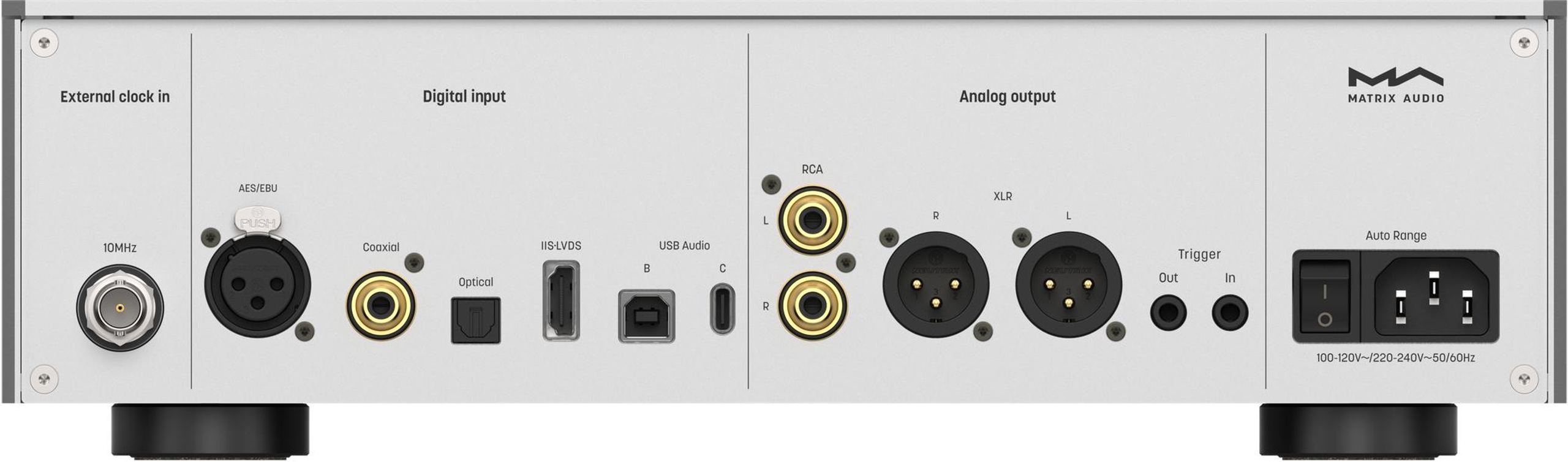
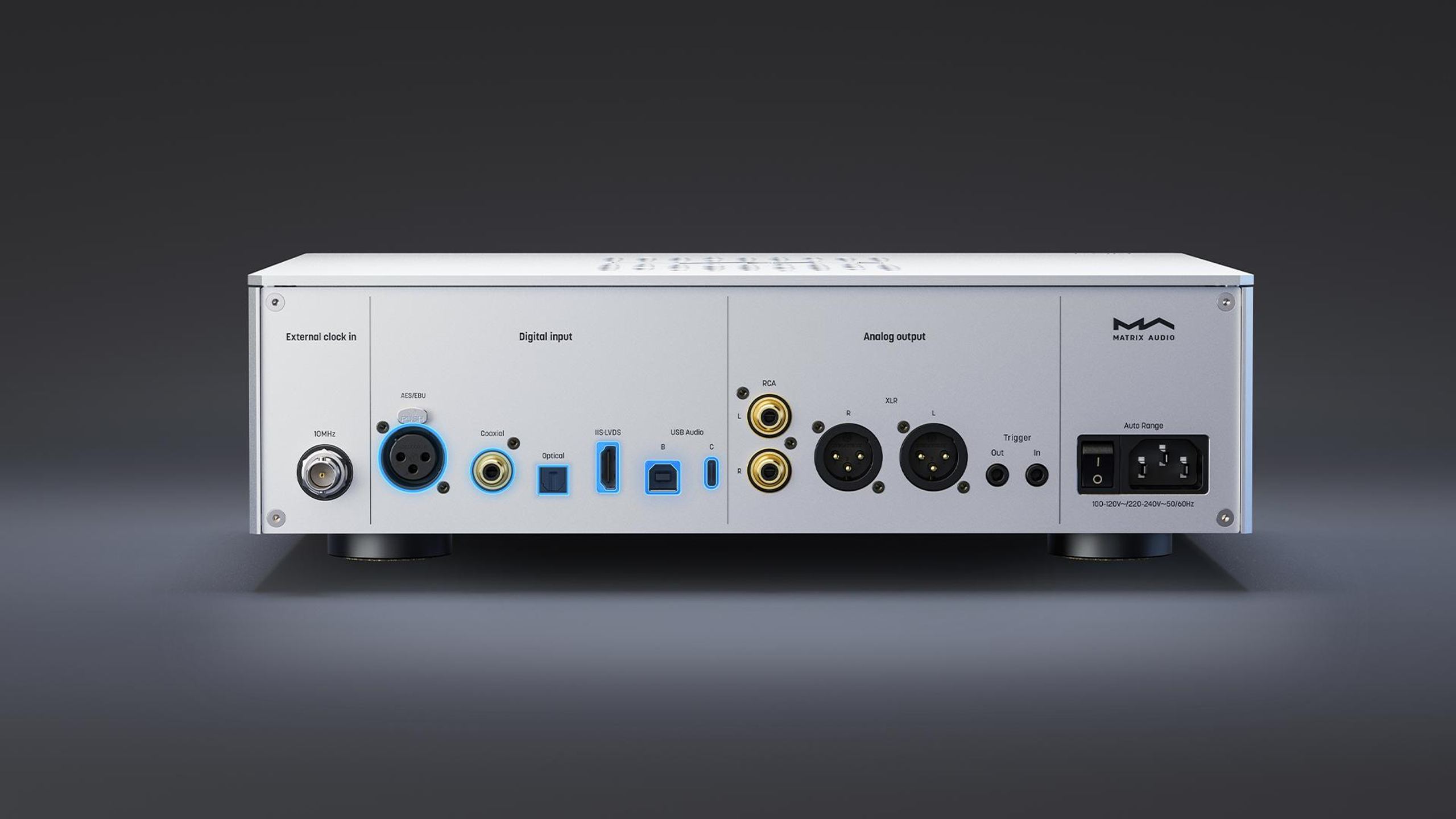
The ND-1 features a femtosecond clock with low phase noise, coupled with a DPLL circuit that Matrix Audio says is inherited from the MS-1. A 10 MHz external clock input (50 Ω, sinewave or squarewave signal) is available on the rear to connect the SC-1, the brand’s reference clock.
The converter also includes an asynchronous upsampling engine and PCM to DSD conversion, with several adjustable configurations. The idea is to reclock the incoming signal to isolate residual jitter before conversion. Conversion settings (PCM or DSD mode, upsampling rate) are accessible from the device.
Six digital inputs, all isolated
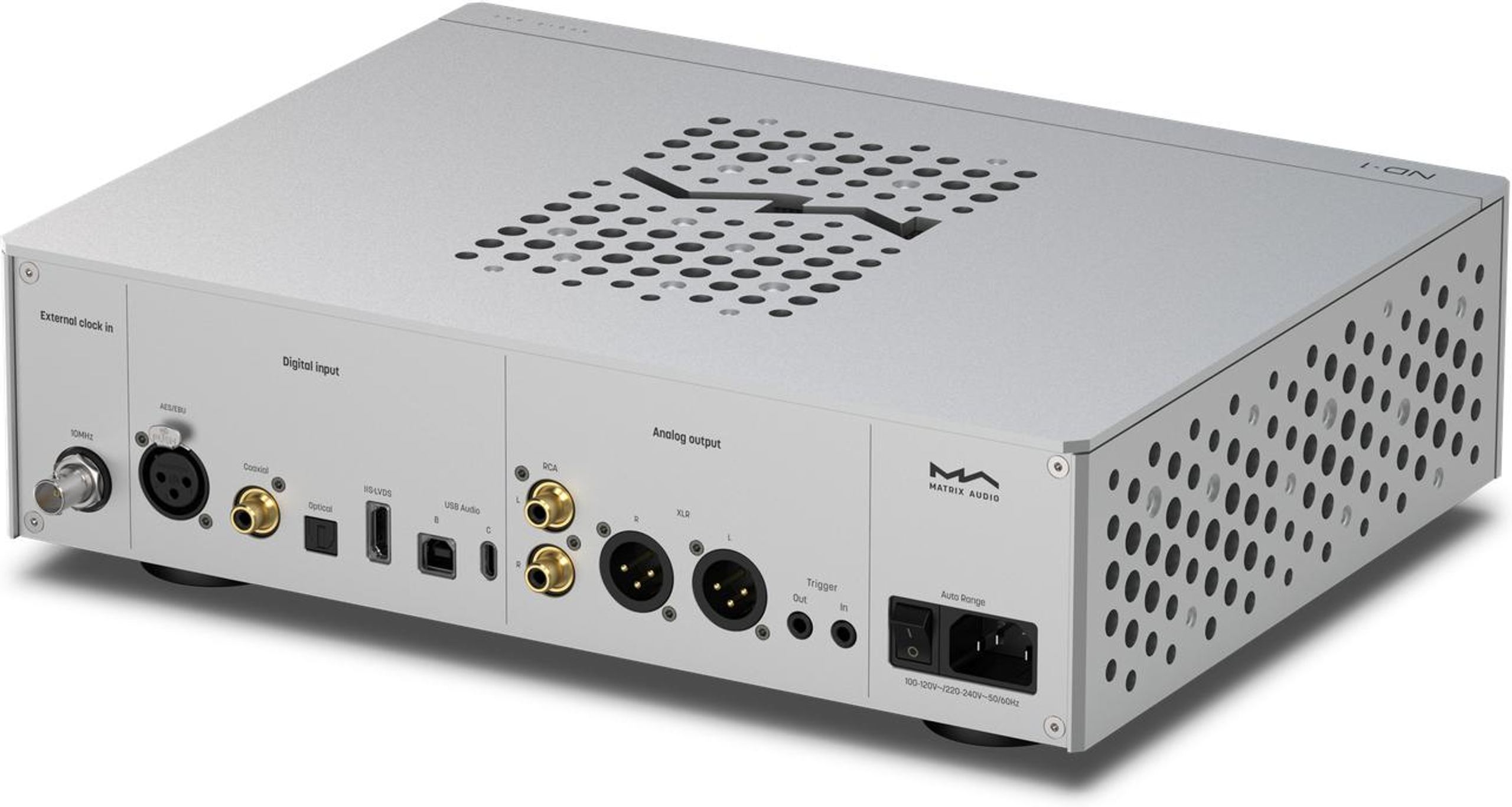
The rear panel groups together six inputs: coaxial S/PDIF, optical Toslink, AES/EBU, IIS-LVDS (via HDMI connector), USB Type B, and USB Type C. All benefit from electrical isolation, a design choice intended to eliminate ground loops and interference between source and converter.
The IIS-LVDS connection, designed primarily to connect the NT-1 transport, carries the I2S signal and supports PCM streams up to 32-bit / 768 kHz and native DSD up to DSD1024 (49.15 MHz). The USB inputs go up to PCM 768 kHz and native DSD512. The S/PDIF and AES/EBU inputs remain limited to PCM 192 kHz and DSD64 via DoP, in accordance with the protocol’s constraints.
The two USB ports (Type B and Type C) allow a computer and a smartphone or tablet to be connected simultaneously, without having to unplug anything.
Analog outputs and volume control
The ND-1 offers one pair of balanced XLR outputs (4.5 Vrms) and one pair of unbalanced RCA outputs (2.25 Vrms). Two alternative output levels are available: 4 Vrms / 4.5 Vrms in XLR, and 2 Vrms / 2.25 Vrms in RCA. This fine adjustment makes it possible to match gain to the sensitivity of the amplifier or connected active speakers, and to avoid input clipping or, conversely, too low a level.
Volume is managed through digital attenuation over 100 steps. This function allows direct connection to a power amplifier, without going through a dedicated preamplifier.
Linear power supply and circuit separation
The power supply is fully linear: a toroidal transformer with multiple windings feeds several independent LDO regulators. The digital and analog circuits are carried on physically separate boards inside the chassis, a standard precaution in high-end Hi-Fi to limit contamination of the analog signal by digital noise.
Construction and anti-vibration feet
The chassis is CNC-machined aluminum. Its dimensions (330 x 267 x 97 mm for 5.6 kg) place it in a generous but reasonable desktop format, consistent with the rest of the N series.
The MA-DAMPER PRO feet, developed in collaboration with Audio Bastion, stack five materials (aluminum, stainless steel, rubber, isolation balls, composite cork) to form a multilayer damping system. This type of mechanical decoupling is intended to reduce vibrations transmitted by the furniture or rack.
A link in a modular ecosystem
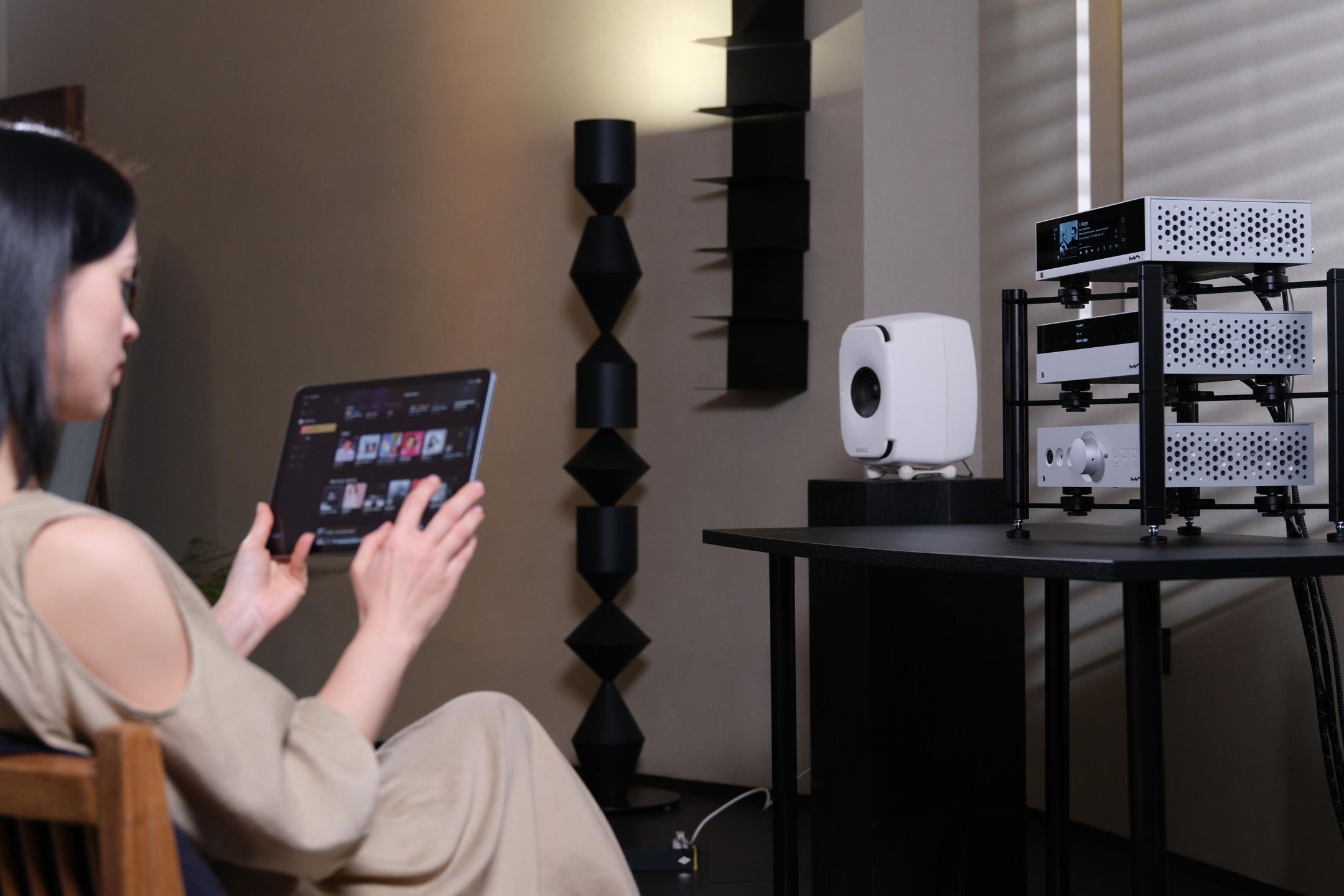
The ND-1 makes full sense within the N series: paired with the NT-1 transport as a source (preferably connected via IIS-LVDS), the downstream NA-1 headphone amplifier, and optionally the SC-1 as a master clock. The trigger connection (6-12 V input, 12 V output) makes it possible to synchronize the power on and shutdown of multiple devices.
It also works just as well on its own, connected to any digital source via one of its six inputs, at the front end of a traditional Hi-Fi system with an integrated or separate amplifier.
Does the ND-1 include a streamer or network function?
+
No. The ND-1 is a pure converter. It has neither network connectivity (Ethernet, Wi-Fi) nor a file player. For streaming, Matrix Audio offers the NT-1 transport, which connects to the ND-1 via IIS-LVDS, USB, or S/PDIF.
Can you switch between Lundahl transformer and Op-Amp modes without interrupting playback?
+
Yes. Switching is done from the device and takes effect in real time, with no interruption to the audio signal and no cable handling required.
Does the digital volume control degrade the signal?
+
Digital attenuation operates over 100 steps. At reasonable listening levels (above around -20 dB), the loss of resolution remains negligible on a 32-bit converter. This volume control makes it possible to do without a preamplifier, but a quality analog preamp may still be preferable in certain configurations.
What is the difference in conversion between the ND-1 and the MS-1?
+
The MS-1 uses a “2+2” configuration (two AK4191 + two AK4499) in full dual mono, with the left and right circuits on separate boards on either side of the chassis. The ND-1 adopts a “1+2” configuration (one AK4191 + two AK4499). The ND-1 does, however, add the Lundahl output stage, which is absent from the MS-1.
User reviews
Steen
An absolutely fabulous DAC. Wonderful sound without any kind of distortion. My warmest recommendation. However, I can't get the power-on function to work.
Comment from 14 July 2026 — Experience from 3 July 2026
Automatically translated — Show original (Danish)
En fuldstændig fabelagtig dac. Pragtfuld lyd uden nogen form for forvrængning. Min varmeste anbefaling.
Jeg kan dog ikke få power on funktionen til at virke.
To better understand our visitors, measure marketing effectiveness and personalise ads, we and our partners use cookies and mobile advertising identifiers on your device. This data makes it possible to display personalised and non-personalised ads and measure their performance. Some cookies, which are technically necessary, are exempt from consent. You can accept those that require your consent, refuse them by clicking “Reject”, or customise your choices via “More options”.
To find out how Google uses the data collected once you have given your consent, see Google’s Business Data Responsibility site (opens in a new window).
You can change or withdraw your consent at any time via the “Cookies” link. Your choices will apply on our site for 12 months.