Mofi Electronics UltraDeck

Overview
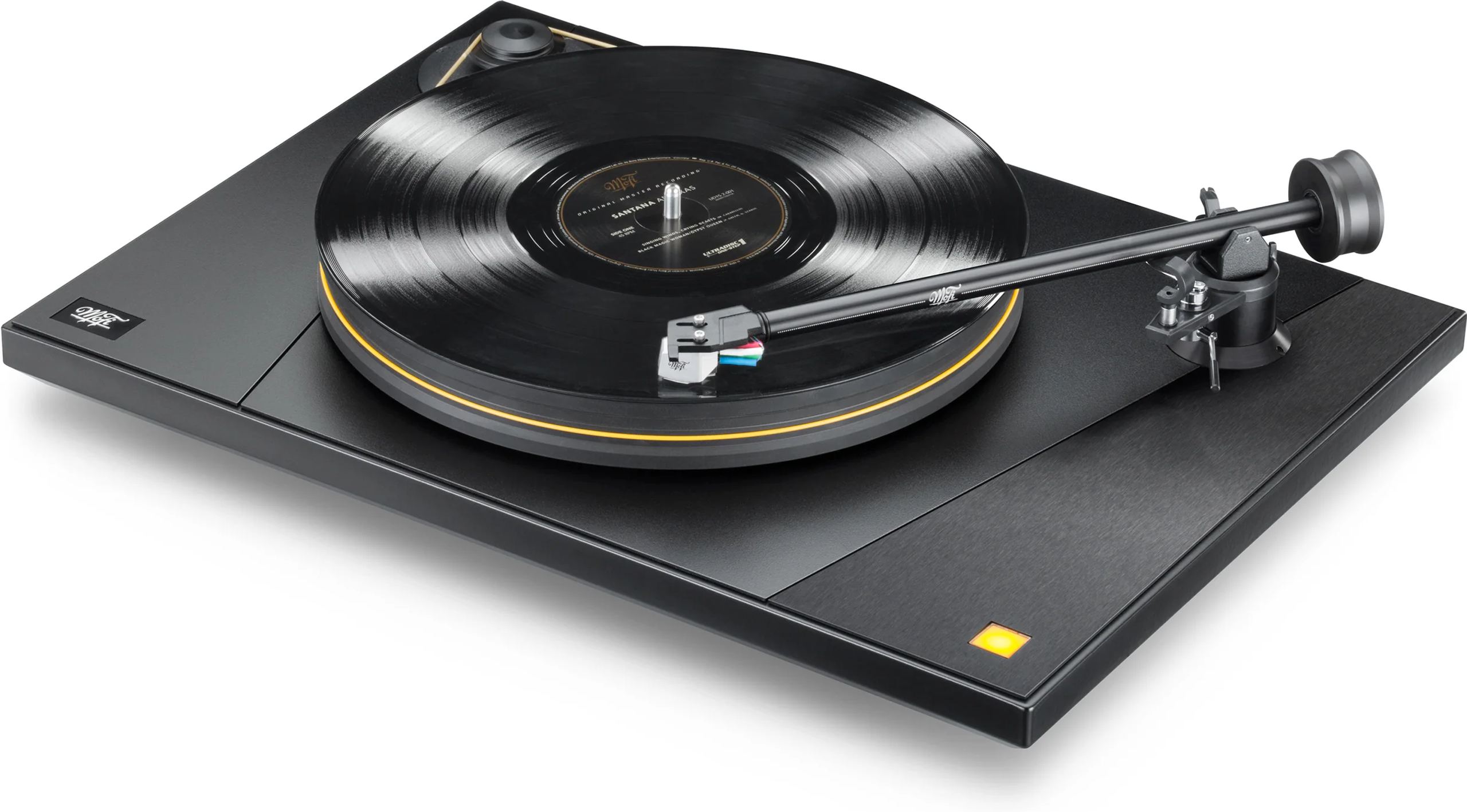
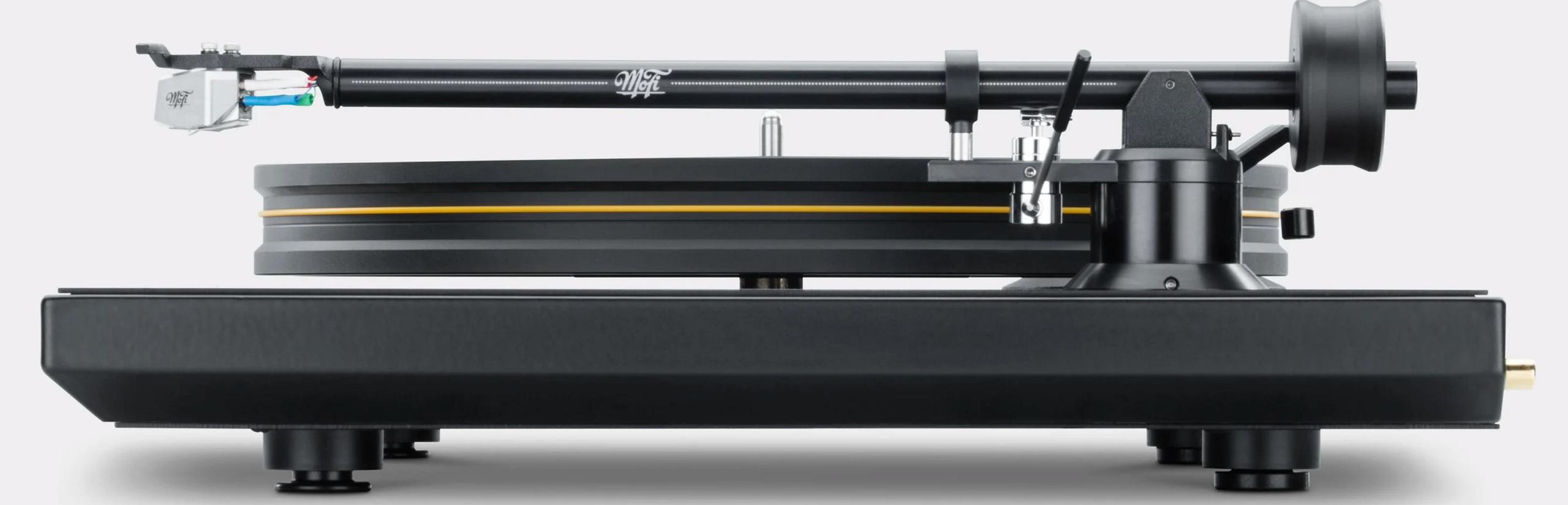
When a vinyl pressing label decides to manufacture its own turntables, you can expect one of two things: a short-lived marketing gimmick, or a product designed by people who listen to records all day long. The UltraDeck clearly leans toward the second option. Designed in the United States with Allen Perkins, founder of Spiral Groove (whose turntables sell for several tens of thousands of euros), this manual belt-drive turntable packs in a level of engineering rarely found at this price point.
A label turned manufacturer
Mobile Fidelity Sound Lab has been cutting records since 1977. The California-based label invented the 12.5 rpm “half-speed” cutting process, which has become a reference in the vinyl industry. Its “Original Master Recordings” pressings are coveted items among collectors around the world. In 2016, the brand took the step into hi-fi hardware by creating MoFi Electronics, with a dedicated factory in Ann Arbor, Michigan. The UltraDeck is the top model in the range, above the StudioDeck.
For this project, MoFi brought in Allen Perkins as technical collaborator and John Schaffer, former owner of Wadia, to head the division. Perkins said he wanted to prove that his design principles could work across all price segments. The result is a turntable entirely manufactured and assembled in the United States, which remains uncommon in the audio industry.
A chassis designed to combat resonance
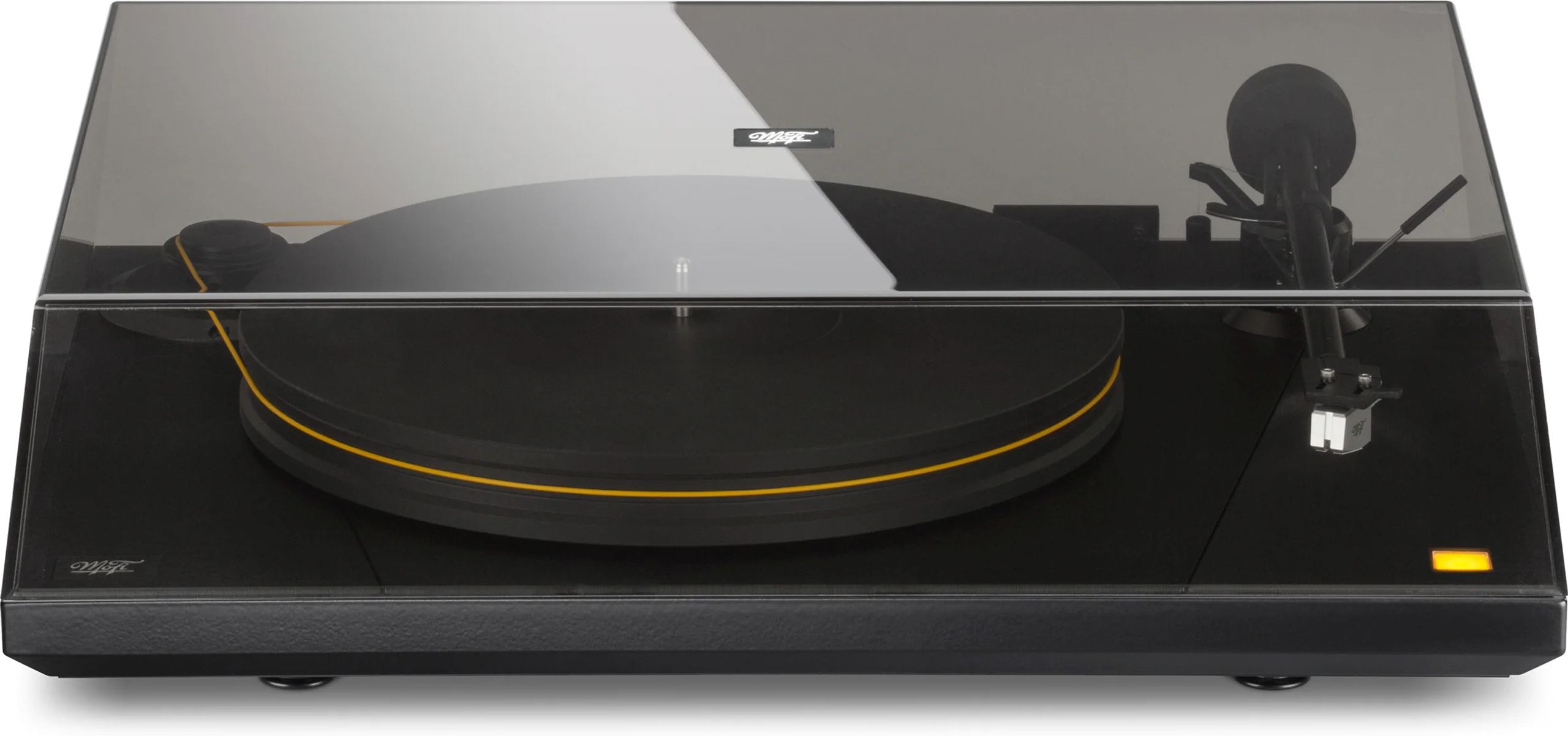
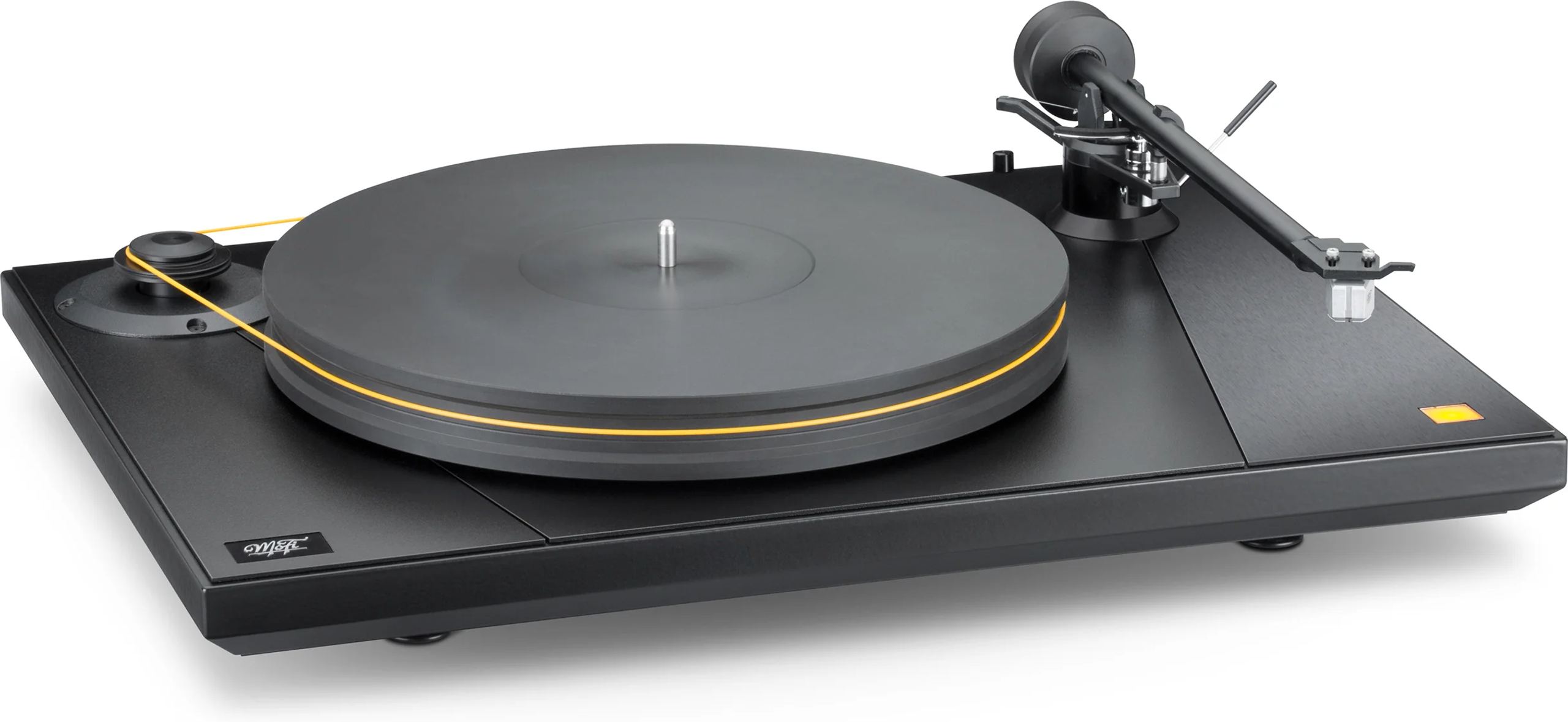
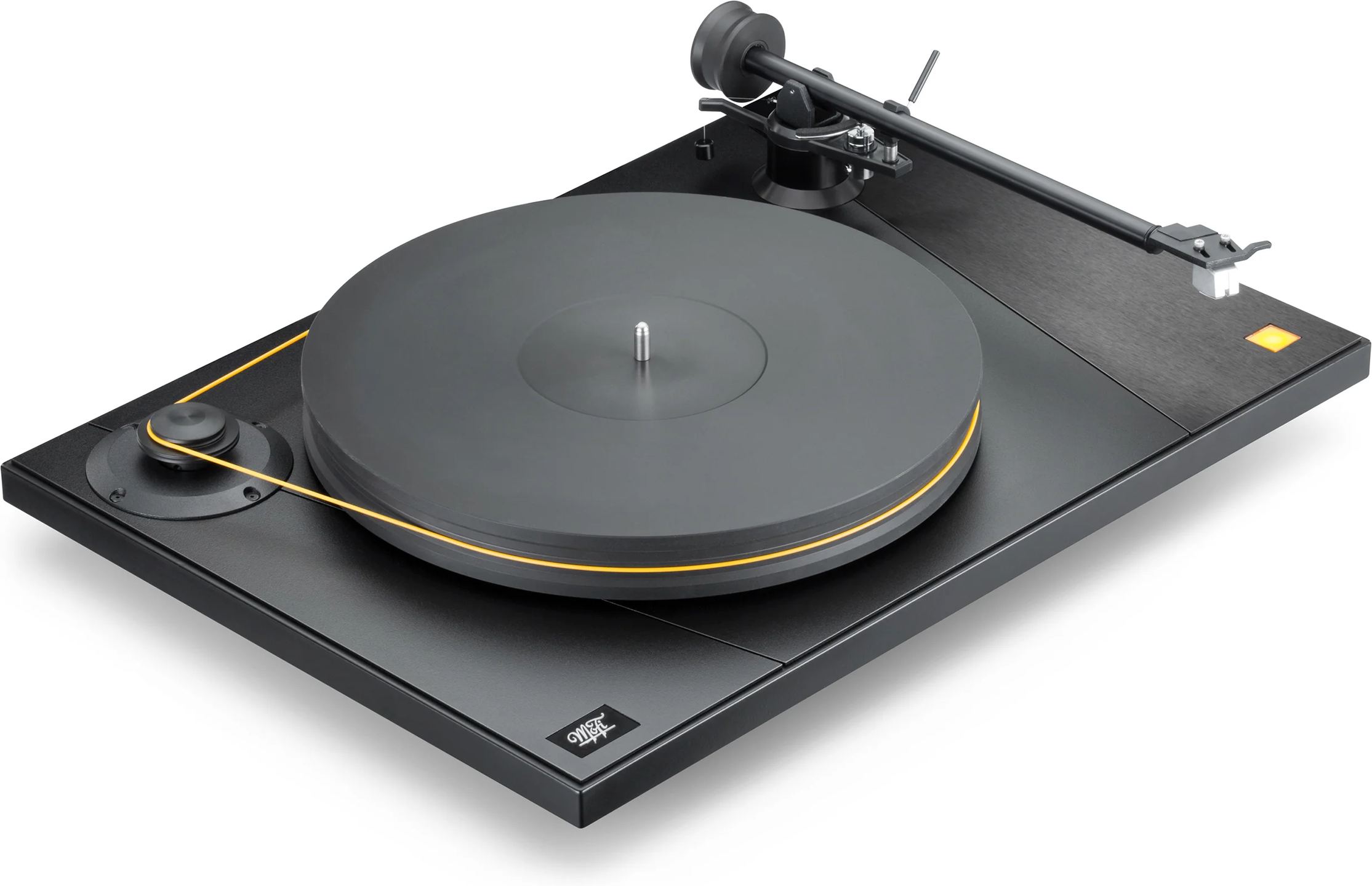
The UltraDeck’s plinth is built around a multi-layer construction called “Constrained Layer Dampening”: three aluminum plates of different shapes and thicknesses are bonded to an MDF core. The goal is twofold: add mass to stabilize the whole structure and eliminate unwanted tonal coloration. Compared with the StudioDeck, which uses only a single aluminum plate, the damping is clearly more advanced.
The four anti-vibration feet were developed in collaboration with engineers from Harmonic Resolution Systems (HRS), a company specializing in vibration isolation for audio equipment. HRS founder Michael Latvis worked directly on this project. These feet decouple the turntable from its support and the floor, reducing unwanted vibrations before they reach the stylus.
The turntable weighs 10.5 kg once assembled. This substantial weight for the category contributes to the overall mechanical stability.
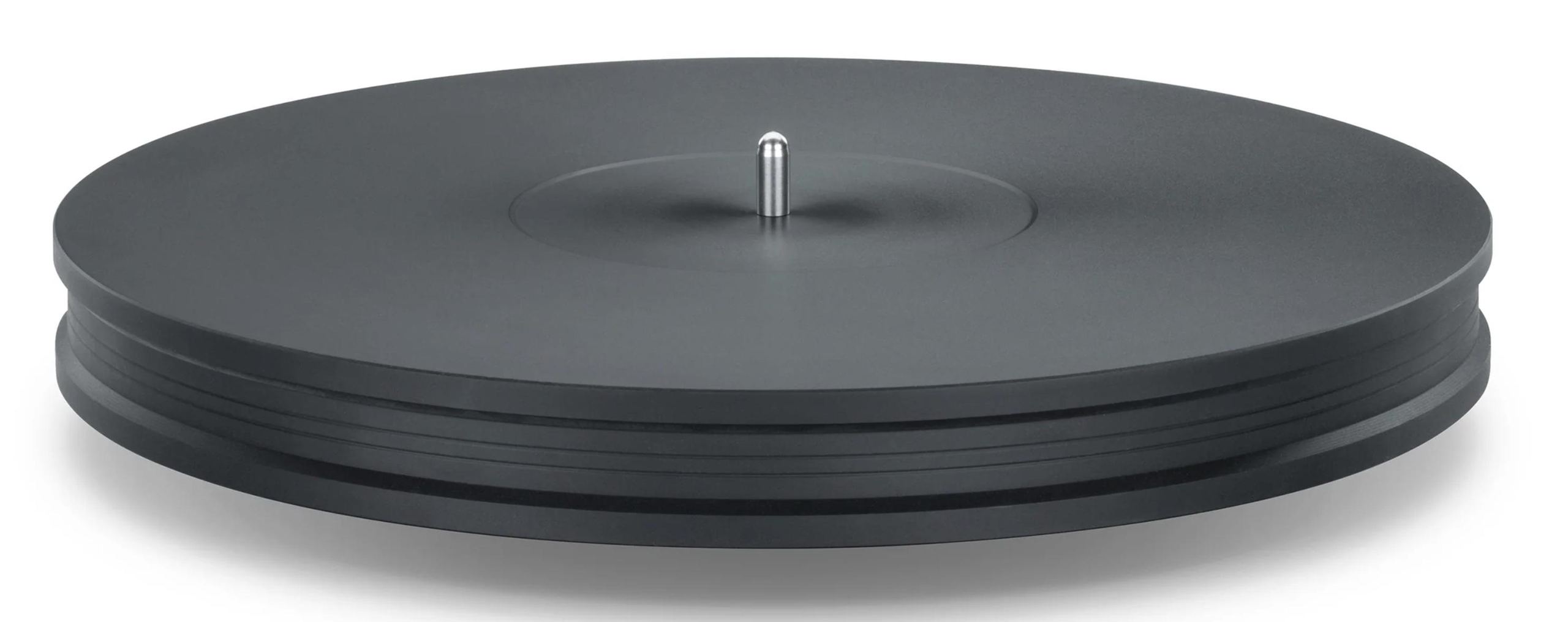
A massive 33 mm Delrin platter
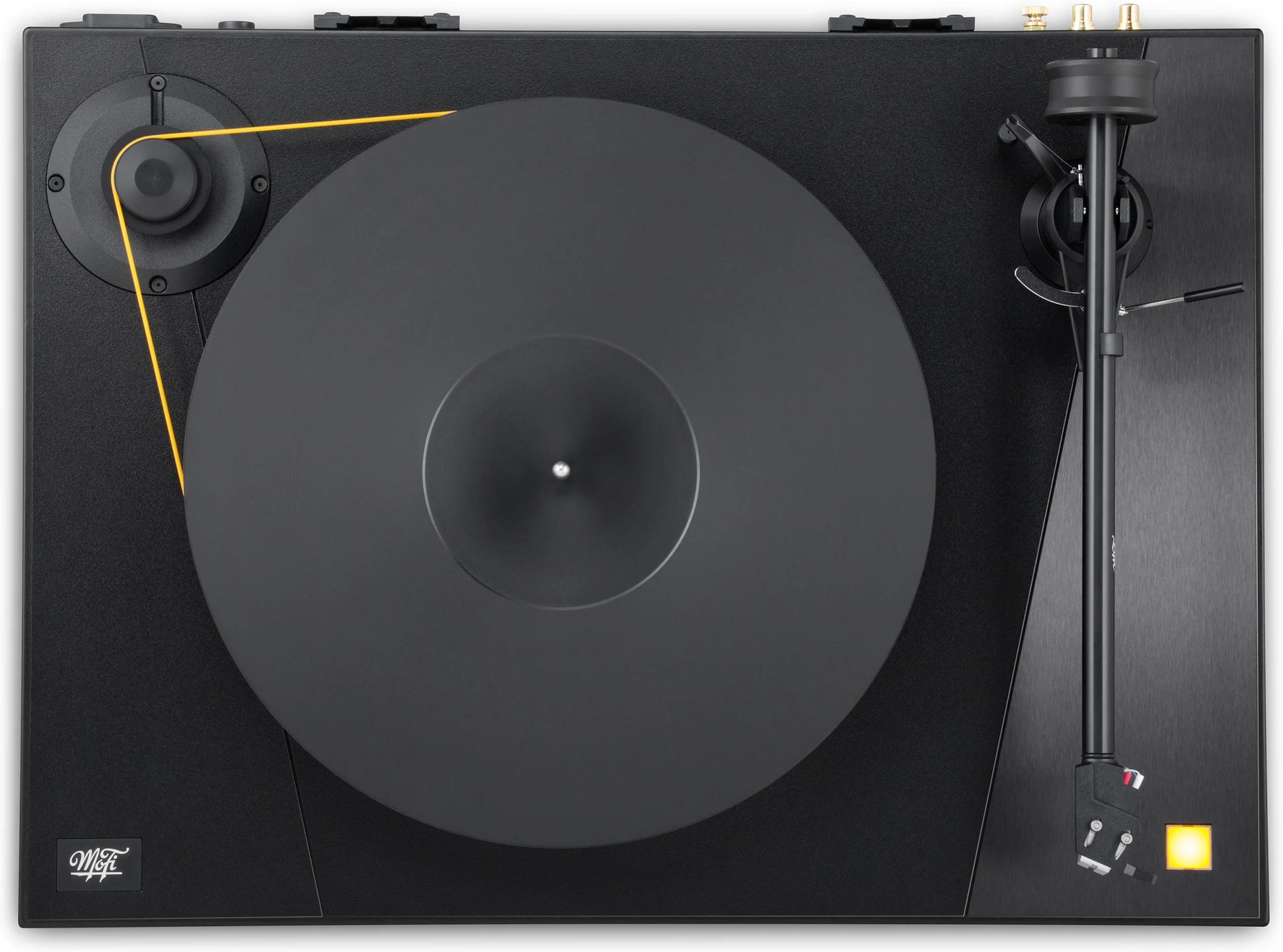
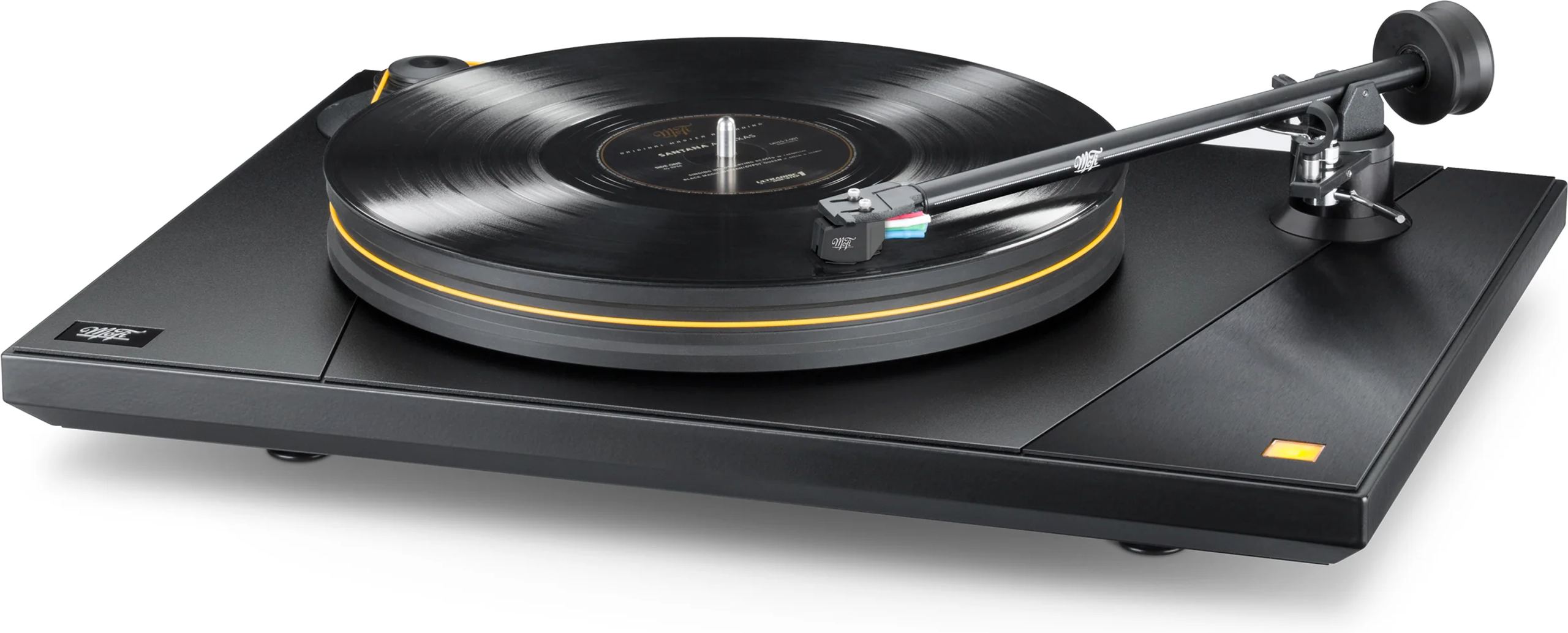
The platter is machined from a block of Delrin (polyoxymethylene), an engineering polymer developed by DuPont. At 33 mm thick and 3.1 kg, it is 75% thicker than the one on the StudioDeck. The choice of Delrin® is no accident: its crystalline structure has a mechanical impedance close to that of vinyl. In practical terms, the energy generated by the contact between the stylus and the groove dissipates into the platter instead of being stored and then released with a slight delay, which would blur the signal.
This high mass produces a very low noise floor. The measured signal-to-noise ratio reaches 74 dB, a figure that translates in listening to deep silence between tracks and an almost total absence of mechanical background noise.
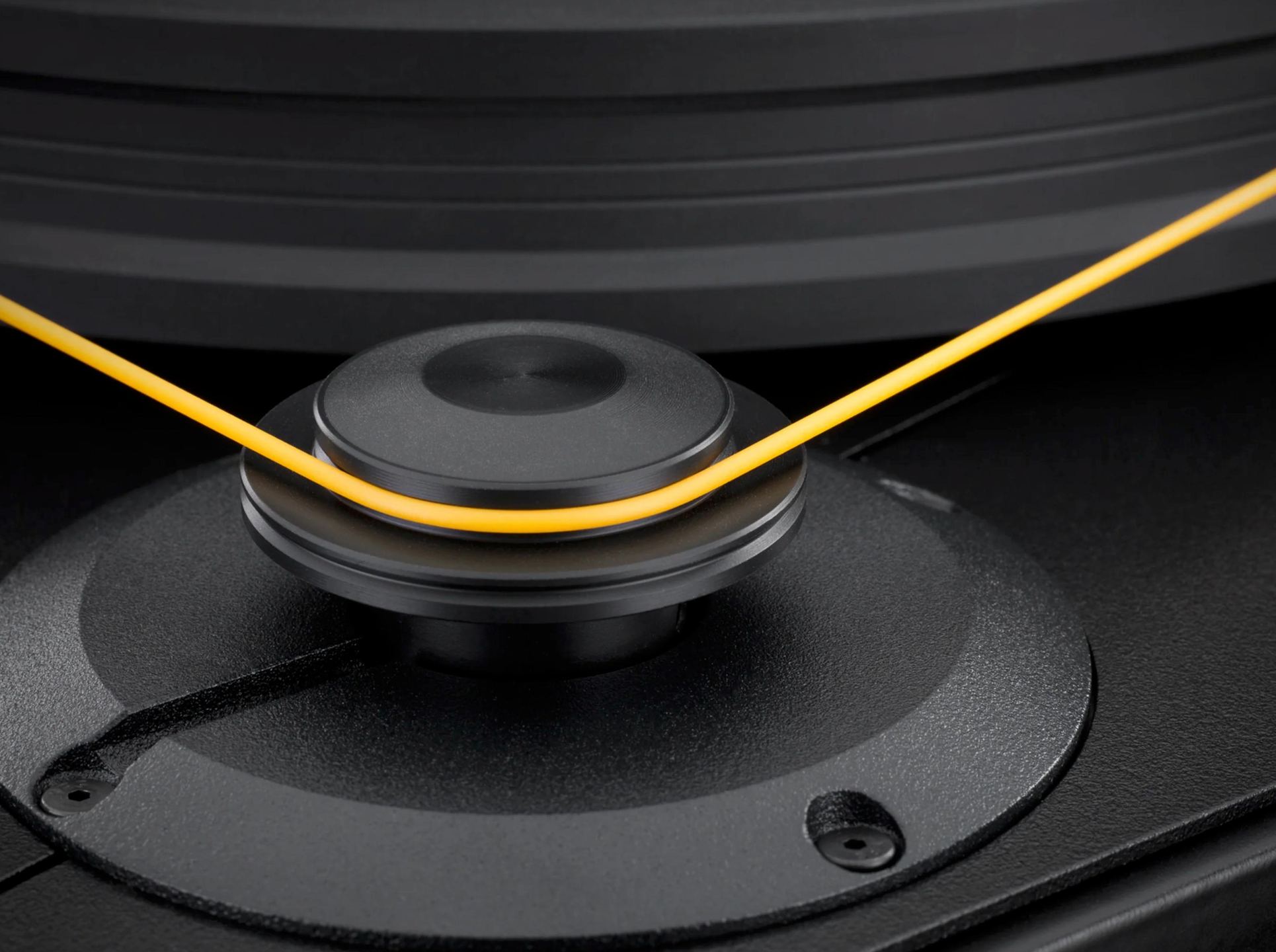
An isolated motor for stable speed
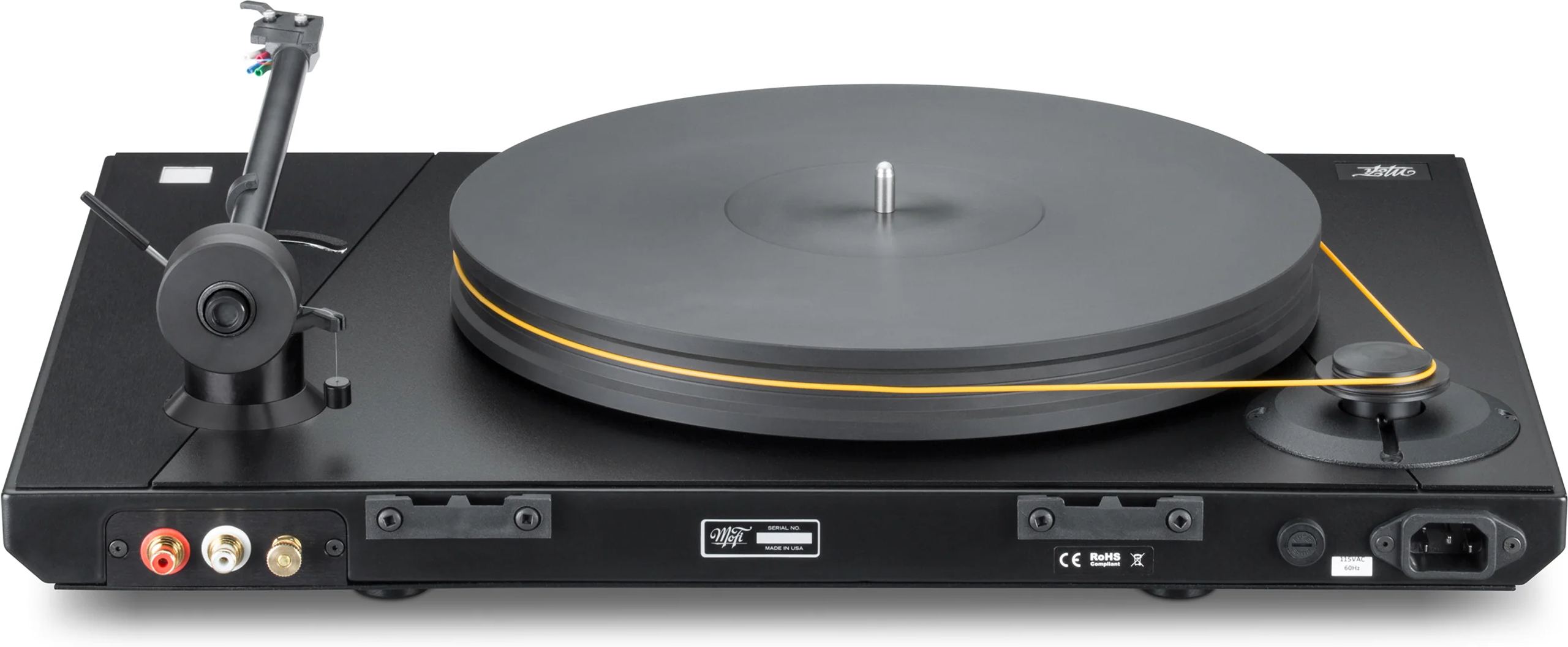
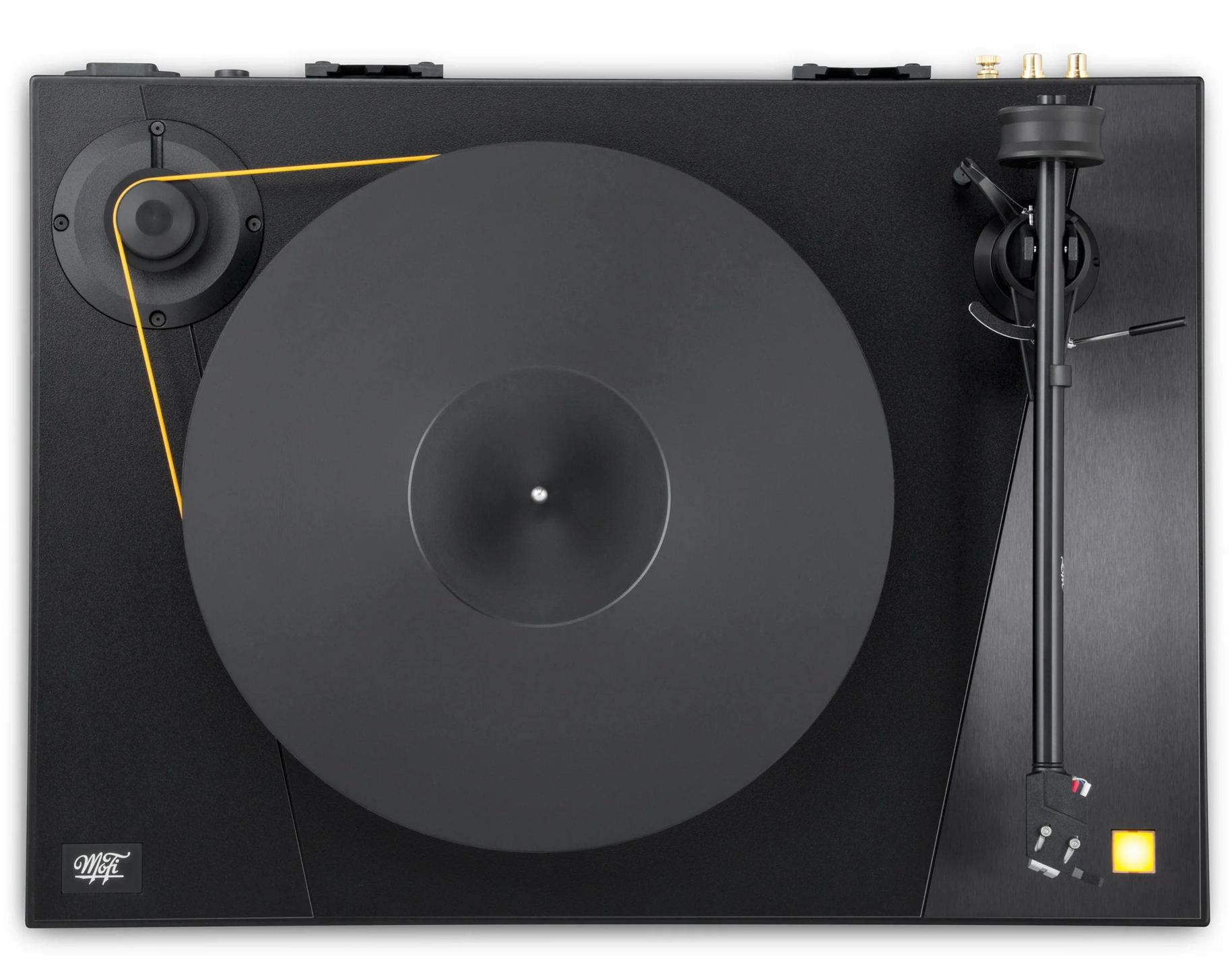
Drive is handled by a 300 rpm AC synchronous motor connected to the platter by a belt. Speed change between 33 ⅓ and 45 rpm is done manually by moving the belt across the two positions on the Delrin pulley.
The distinguishing point: the motor is mechanically decoupled from the chassis by damping materials. Motor vibrations therefore do not propagate to the plinth or the stylus. Wow & flutter remains between 0.017% and 0.025%, values that ensure solid tonal accuracy and rhythmic precision.
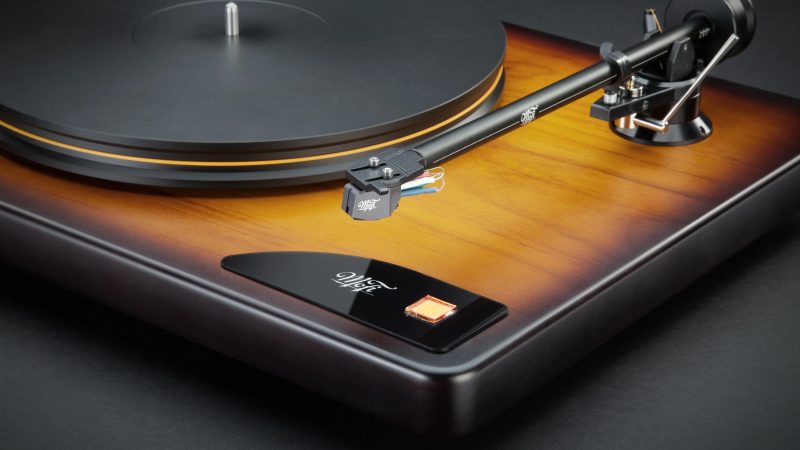
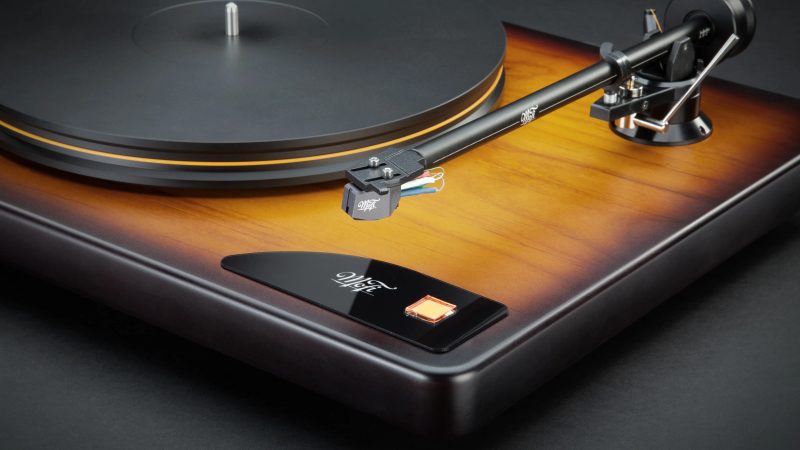
Power consumption remains modest, under 5 W. The power supply is integrated into the plinth, with a standard IEC input at the rear. The power button, a small square backlit in yellow, echoes the style of control keys found on studio tape machines, a nod to the Studer used in MoFi’s mastering studio in California.
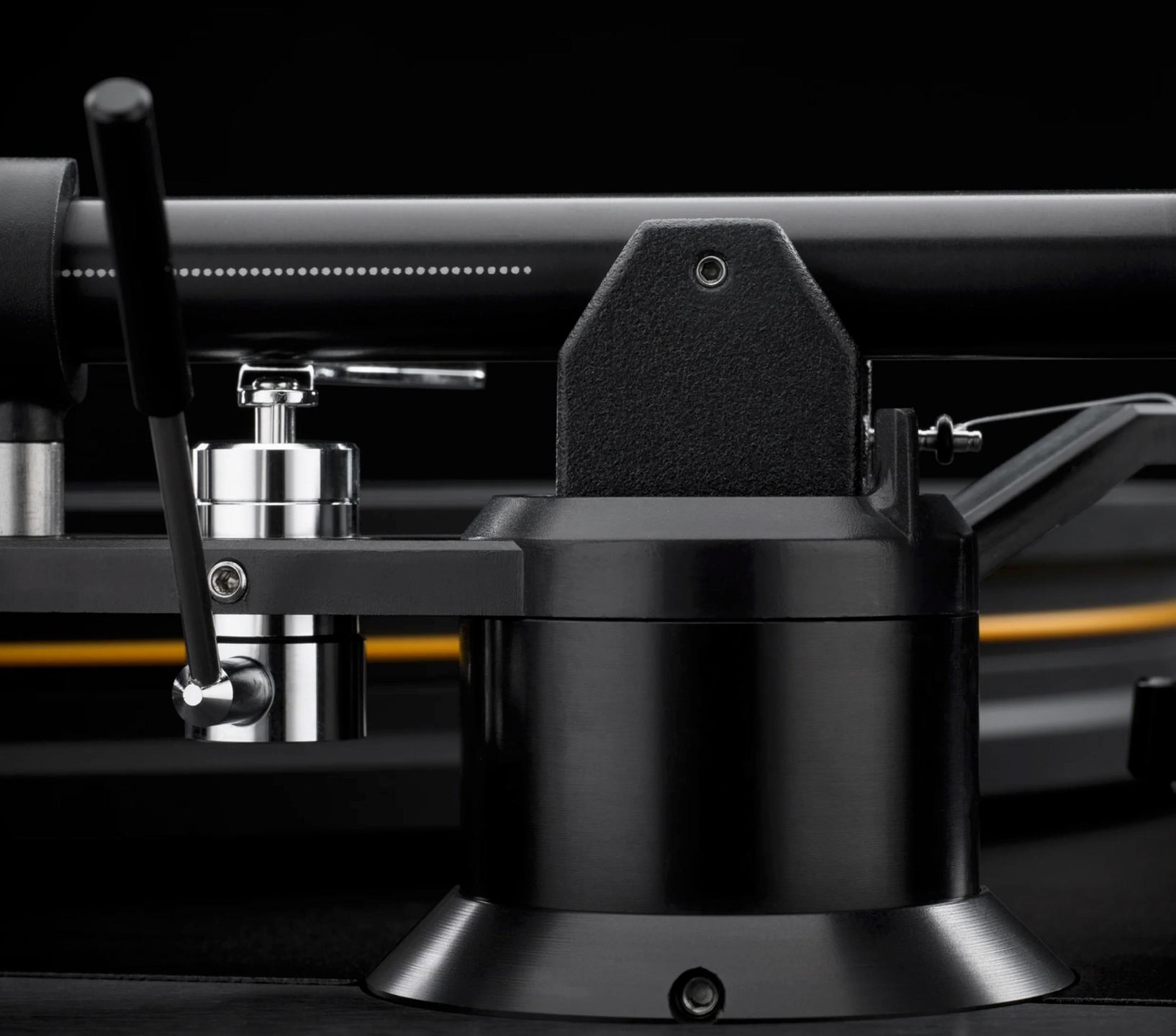
The Ultra Tonearm, 10 inches and Cardas wiring
The tonearm is a proprietary 10-inch (254 mm) model, a long format that reduces tangential tracking error compared with the more common 9-inch arms. It consists of a straight aluminum tube mounted on gimbal bearings fitted with precision ball bearings. Friction, both vertical and horizontal, remains low: the stylus follows groove modulations without perceptible resistance.
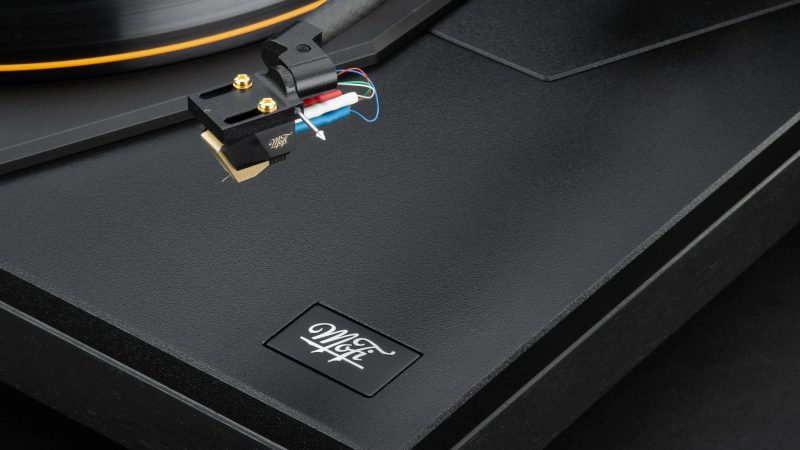
The internal wiring, from the cartridge to the RCA connectors, is by Cardas Audio. This is a notable difference compared with the StudioDeck, whose wiring is standard. The RCA connectors at the rear are gold-plated and protected by copper foil shielding against radio-frequency interference.
The arm’s effective mass is high, around 30 g, making it compatible with cartridges of medium to low compliance, between 5 and 10 g. Available adjustments cover tracking force, height (VTA), azimuth, and anti-skating (via hanging counterweight on thread). The offset angle is set at 22.8°, adjustable by ±2°, for an 18 mm overhang.
An inverted steel-bronze-sapphire bearing
The spindle uses an inverted bearing in hardened steel, paired with a bronze bushing and a sapphire thrust plate. This combination of materials, usually found on more expensive turntables, ensures smooth and quiet rotation over the long term. The grease used is ester-based, chosen for its low viscosity and quiet operation.
Versions and compatible cartridges
The UltraDeck is available without a cartridge, or with a factory pre-mounted cartridge (adjustments completed before shipping). MoFi offers three options: the UltraTracker (MM, nude elliptical stylus), the MasterTracker (MM, Micro Linear stylus, Ohno copper coils), and the UltraGold (MC, boron cantilever, neodymium magnets). These cartridges are handmade in Japan, with an aluminum body machined in the United States. Allen Perkins took part in their acoustic tuning.
The tonearm accepts cartridges from other manufacturers without difficulty, provided their mass remains within the 5 to 10 g range and their compliance is suited to the arm’s high effective mass.
The turntable comes with a removable hinged dust cover, a phono cable, and an IEC power cable.
Sound performance and listening behavior
The UltraDeck delivers a sound characterized by its cleanliness and composure. The very low noise floor allows fine details to emerge in piano passages, and the silences between tracks are remarkably black. The soundstage is wide and stable, with precise placement of instruments in space.
The bass range is fast and articulate, with weight but no overhang. The midrange is detailed, and voices retain a natural quality that never tips into the analytical. The treble remains transparent without aggressiveness. What stands out in the presentation is its rhythmic quality: tempo is maintained with a rigor reminiscent of the best direct-drive turntables, but with the operational silence typical of belt-drive designs.
One point worth noting: because the Delrin® platter is very smooth, the record can slip if you apply an anti-static brush during playback. MoFi offers an optional Super HeavyWeight record weight (367 g) that solves this issue and improves record-to-platter coupling.
Documentation
Technical specifications
Motor and drive system
- Motor: AC synchronous, 300 rpm
- Drive system: belt-driven
- Playback speeds: 33 ⅓ and 45 rpm
- AC motor isolated from the chassis
- Optimal speed stability
- Reduced mechanical vibrations
- Better rhythmic precision
Platter
- Material: solid Delrin
- Thickness: 1.3” (≈ 33 mm)
- Weight: 3.1 kg
- High inertia for stable rotation
- Reduced background noise
- Silent playback
Audio performance
- Wow & flutter: 0.017% – 0.025%
- Signal-to-noise ratio: 74 dB
- Power consumption: < 5 W
Ultra Tonearm tonearm
- 10” straight aluminum tonearm
- Made in the USA
- High-precision low-friction gimbal bearings
- Internal Cardas Audio wiring for lossless transmission
- Gold-plated RCA connectors
- Overhang: 18 mm
- Offset angle: 22.8° (±2° adjustable)
- Compatible cartridges: 5 g – 10 g
Construction and isolation
- High-rigidity multilayer construction (Constrained Layer Dampening)
- Aluminum and MDF multilayer structure
- Elimination of resonances
- Maximum sonic neutrality
- Faithful signal reproduction
- HRS anti-vibration feet (Harmonic Resolution Systems)
- Effective decoupling from the floor
- Reduction of unwanted vibrations
Dimensions and weight
- Dimensions (W × H × D): 50.0 × 15.2 × 36.2 cm
- Weight: 10.5 kg
Sound signature
- Very high precision
- Wide and stable soundstage
- Clean and deep bass
- Highly detailed midrange
- Transparent and natural highs
- Extremely low background noise
Recommended uses
- Advanced audiophile hi-fi systems
- Critical and immersive listening
- Demanding vinyl collectors
- High-end high-resolution systems
Frequently asked questions
Do you need a phono preamplifier to use the UltraDeck?
Yes. The UltraDeck does not include a built-in phono preamplifier. The turntable must be connected to an external RIAA phono preamplifier (or to the phono input of an integrated amplifier) before amplification. MoFi offers two compatible models in its range: the StudioPhono and the UltraPhono.
Is 78 rpm speed available?
No. The UltraDeck plays only at 33 ⅓ and 45 rpm, via the two pulley positions. Playback of 78 rpm records is not possible.
Does the tonearm accept MC (moving coil) cartridges from other brands?
Yes, provided the cartridge mass is between 5 and 10 g and its compliance is compatible with the arm’s high effective mass (around 30 g). Very high-compliance cartridges, typical of some lightweight MM designs, are not suitable.
How do you change playback speed?
The change is done manually. Lift the belt off the motor pulley and move it to the second groove (upper position for 33 ⅓, lower position for 45 rpm). The operation takes a few seconds.
Can the dust cover stay in place during playback?
The hinged dust cover is removable. MoFi recommends removing it during listening, as it can pick up airborne vibrations and transmit them to the chassis. It is mainly intended to protect the tonearm and stylus from dust when the turntable is at rest.
What type of furniture is recommended?
A rigid, heavy, and perfectly level support. Lightweight furniture or flexible wall shelves should be avoided. The HRS feet do a good job of isolation, but they cannot compensate for a support that vibrates. The turntable should be placed far from the speakers, ideally on a different wall.
Is the Super HeavyWeight record weight essential?
It is not included as standard, and the turntable works without it. It does, however, improve coupling between the record and the platter, and prevents the vinyl from slipping during brush cleaning. On slightly warped records, it also helps press the vinyl against the platter.
- Eco-contribution included in the sale price.
- Manufacturer reference: 00032673
- GTIN / EAN: 810062490059