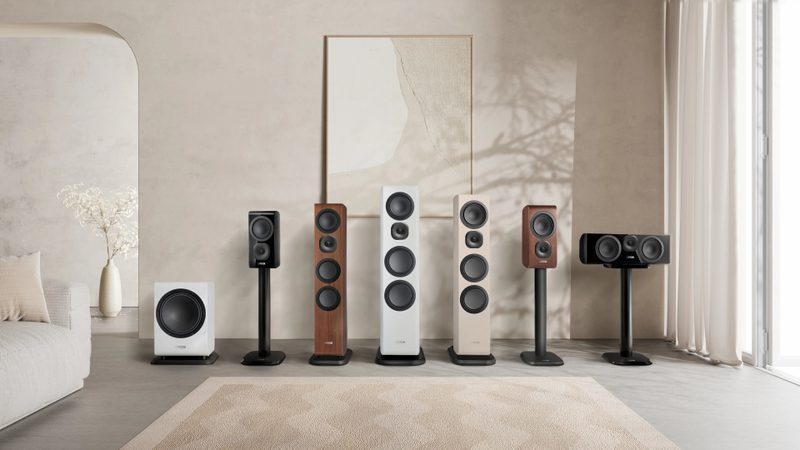
Canton Vento 101 black (pack of 2)


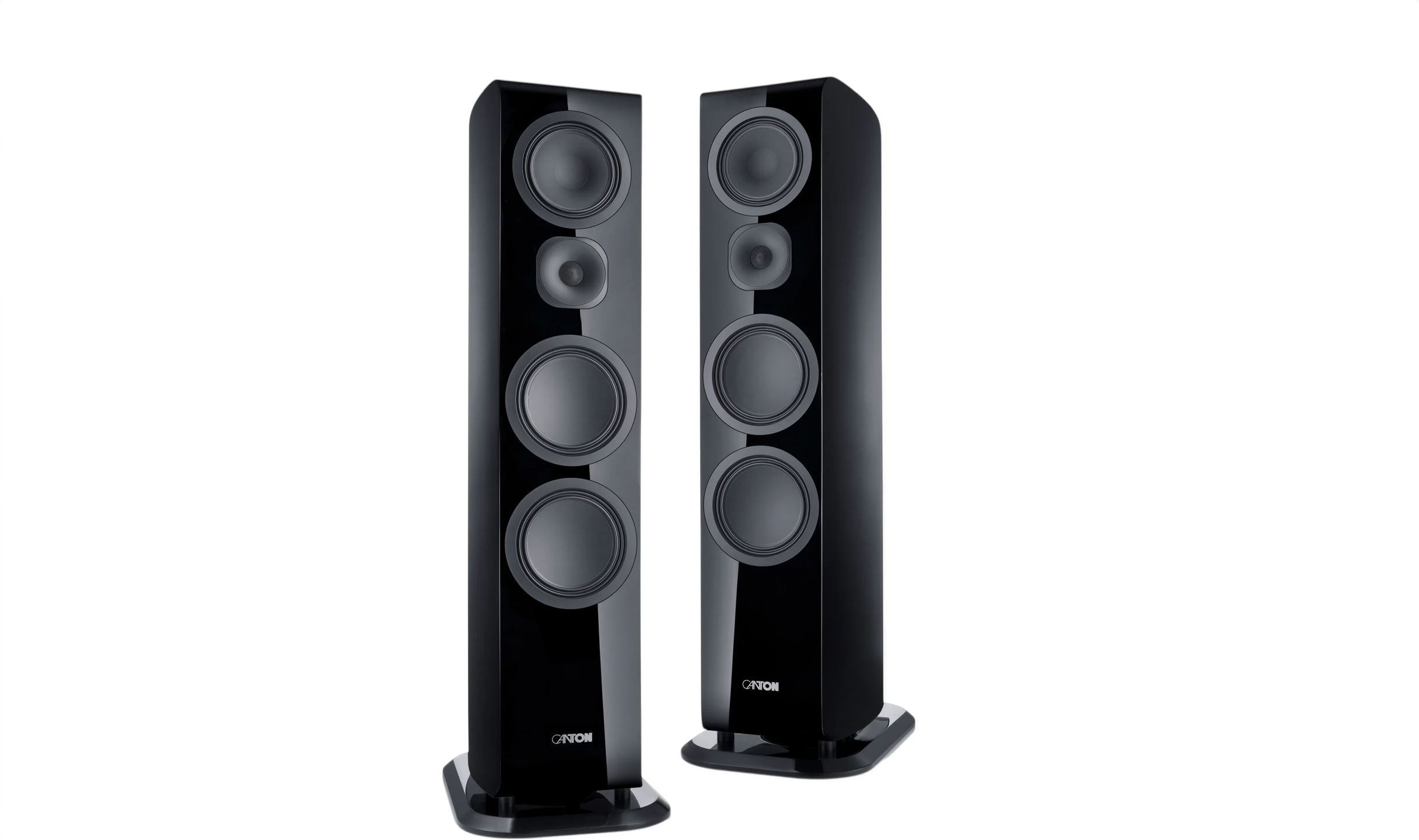
Overview
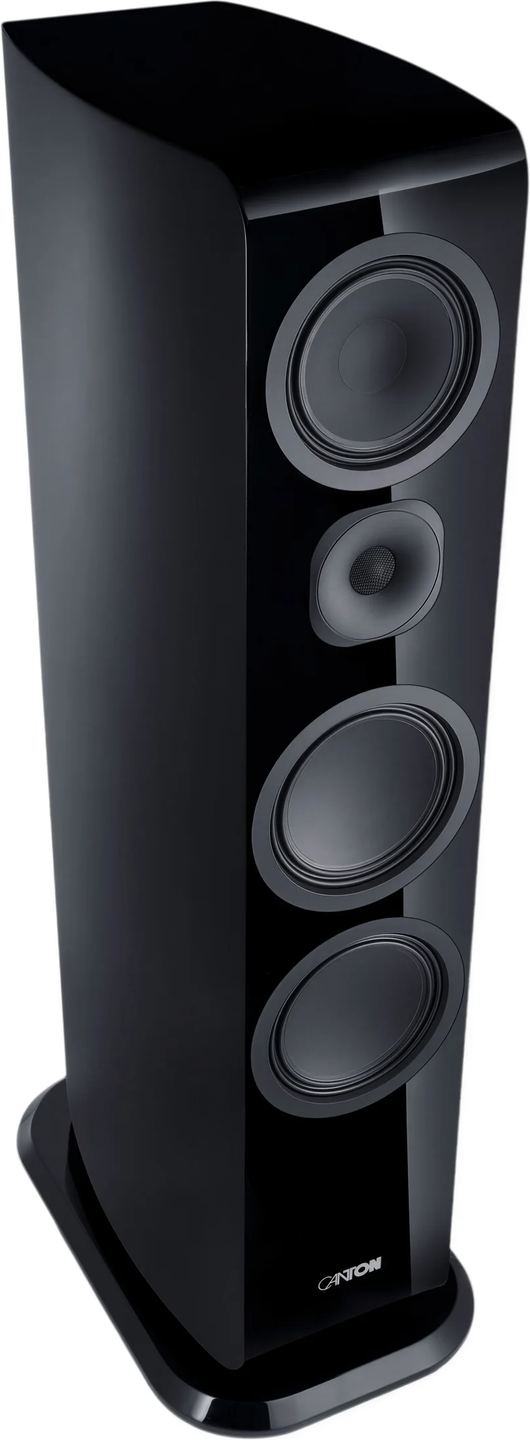
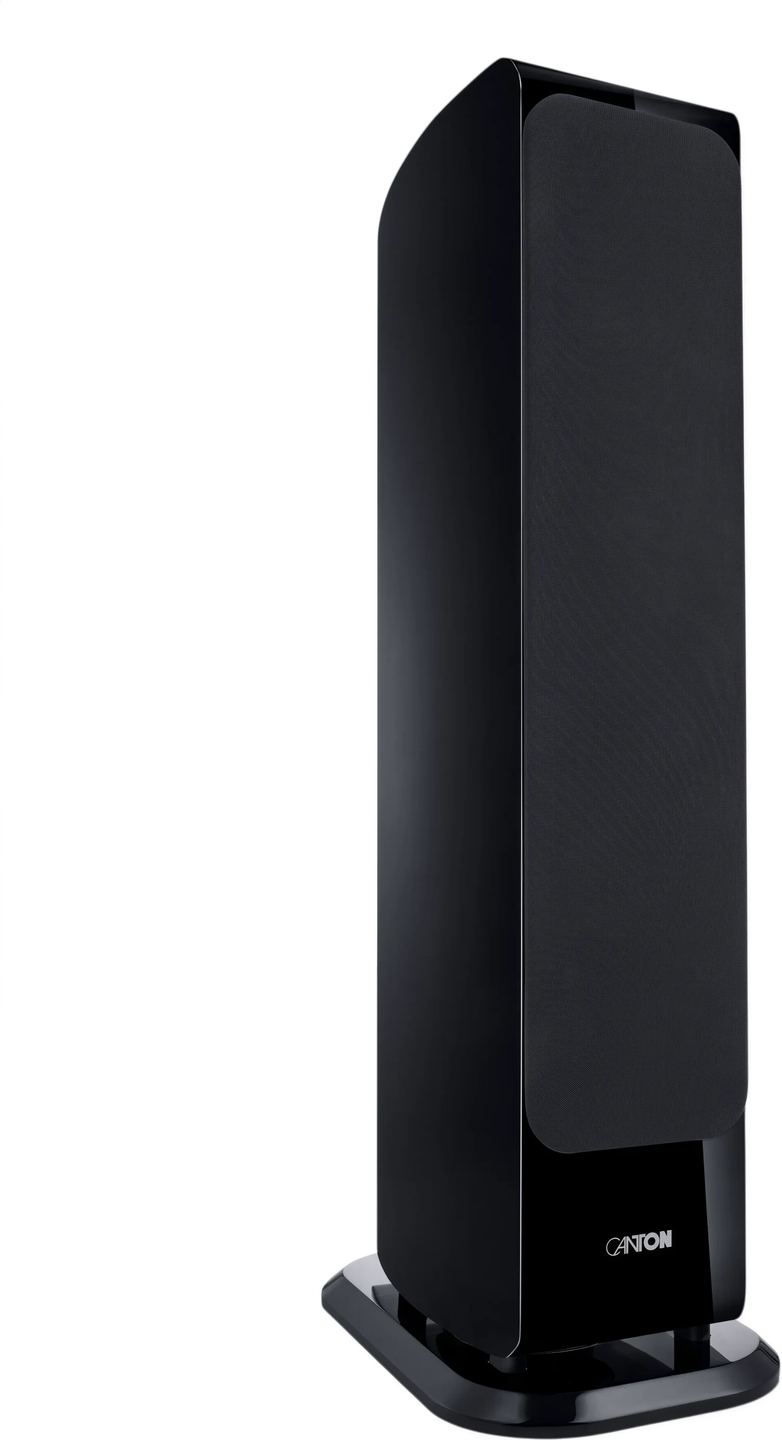
Seventh iteration of a range that Canton has been refining for more than twenty years, the Vento 101 takes over from the Vento 100 with a redesigned cabinet, a new waveguide, and ATB (Aluminium Titan Black) drivers that replace the titanium-graphite diaphragms of the previous generation. Still handcrafted in the Weilrod factory in Hesse, this nearly 40 kg 3-way bass-reflex floorstanding speaker concentrates the German manufacturer’s expertise into a format aimed as much at stereo listening as at home theater.
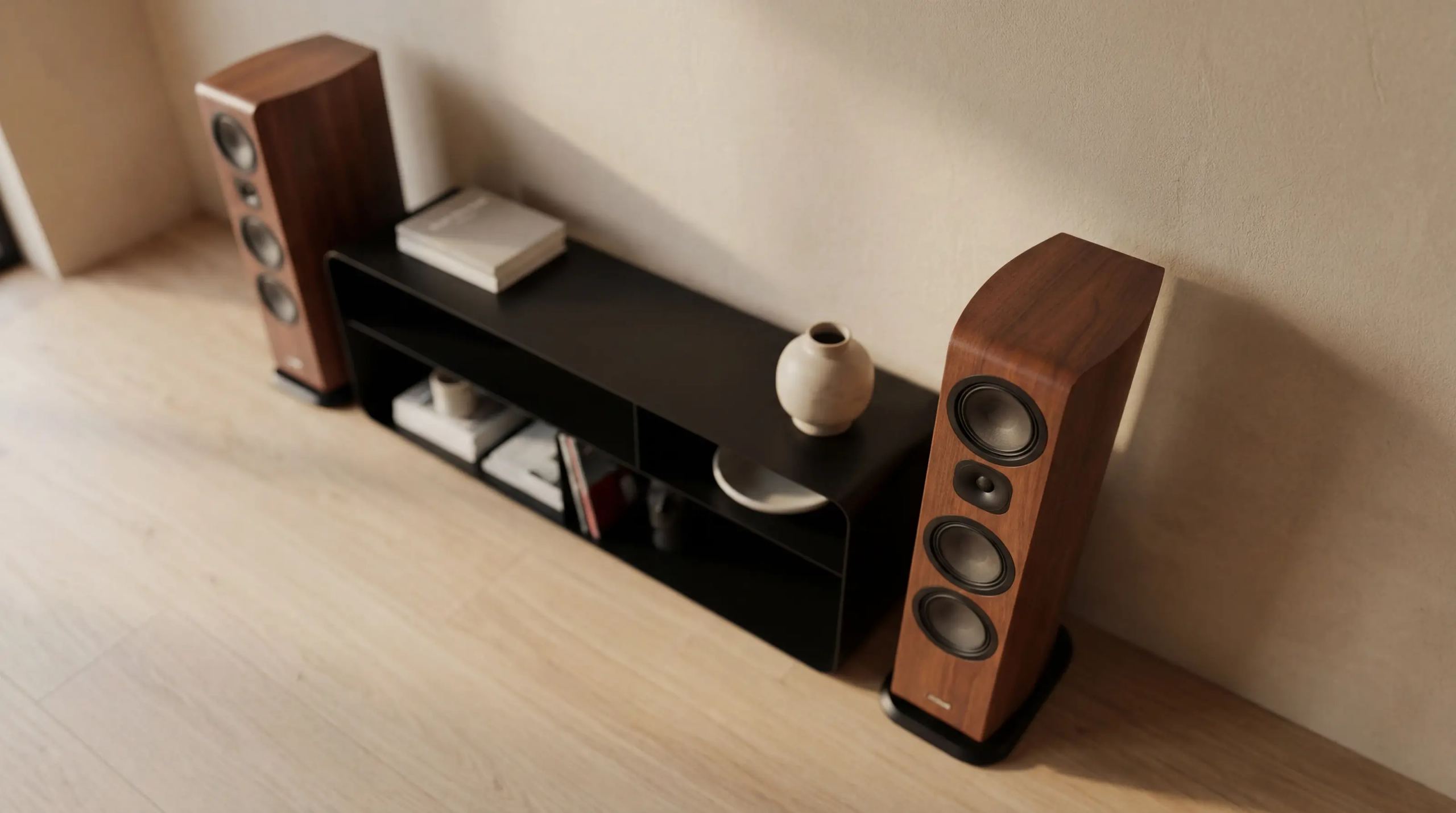
A curved, rigid, and quiet cabinet
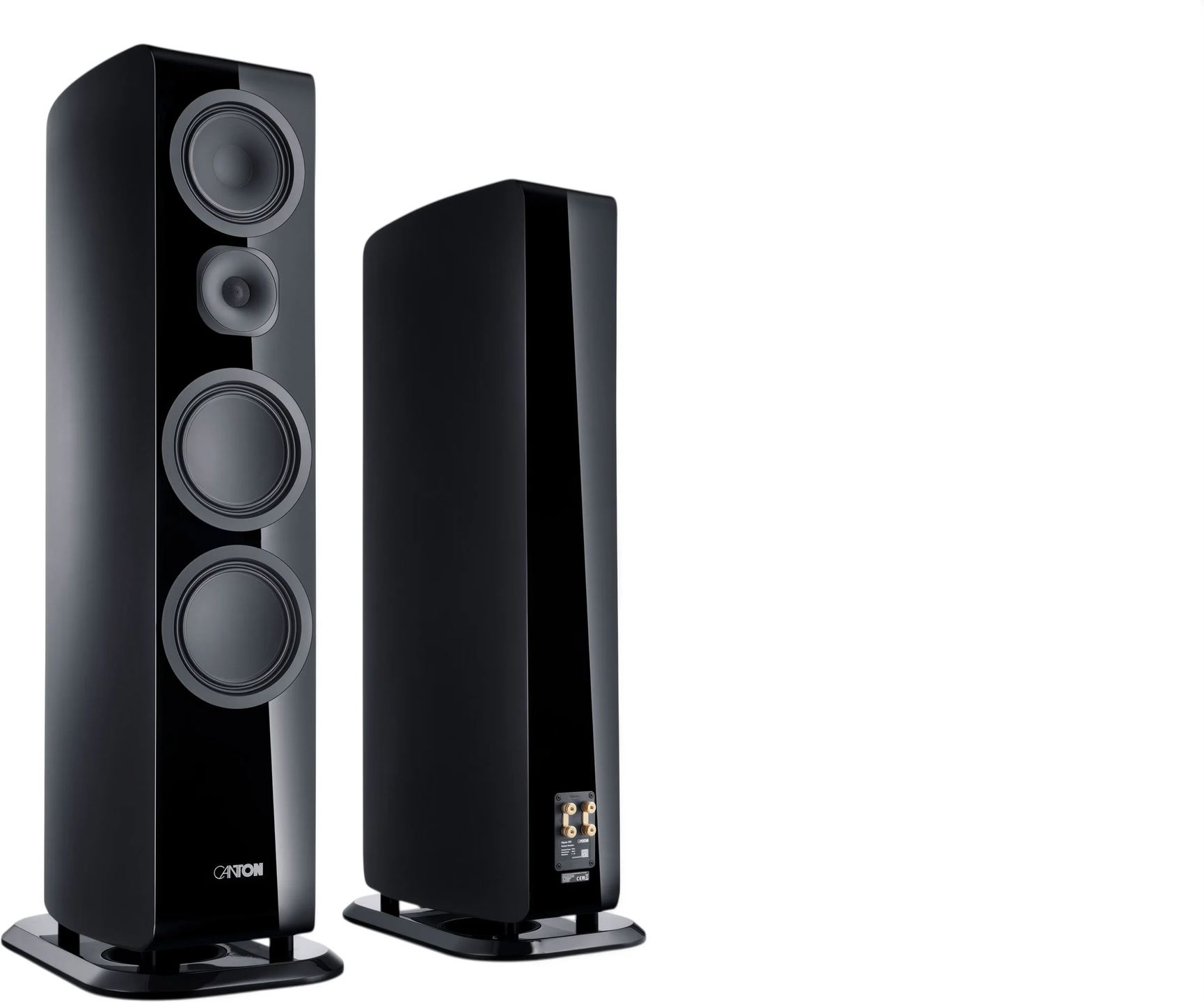
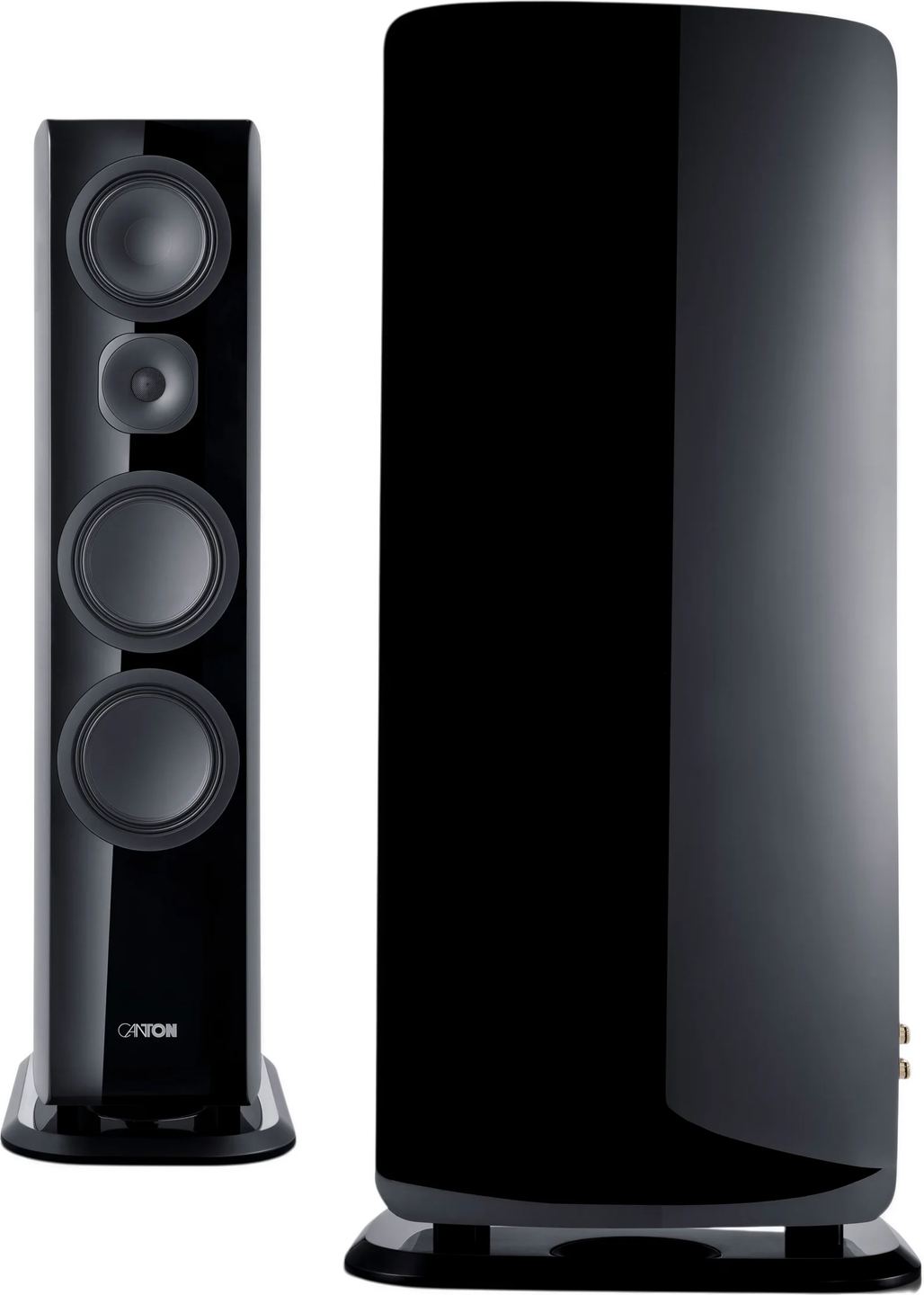
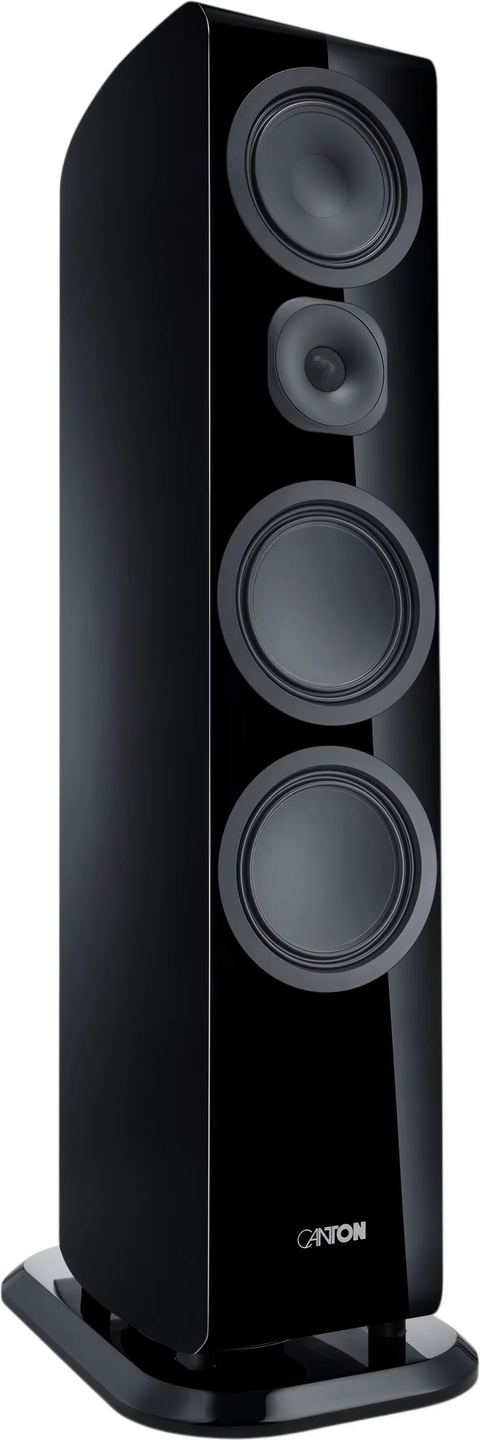
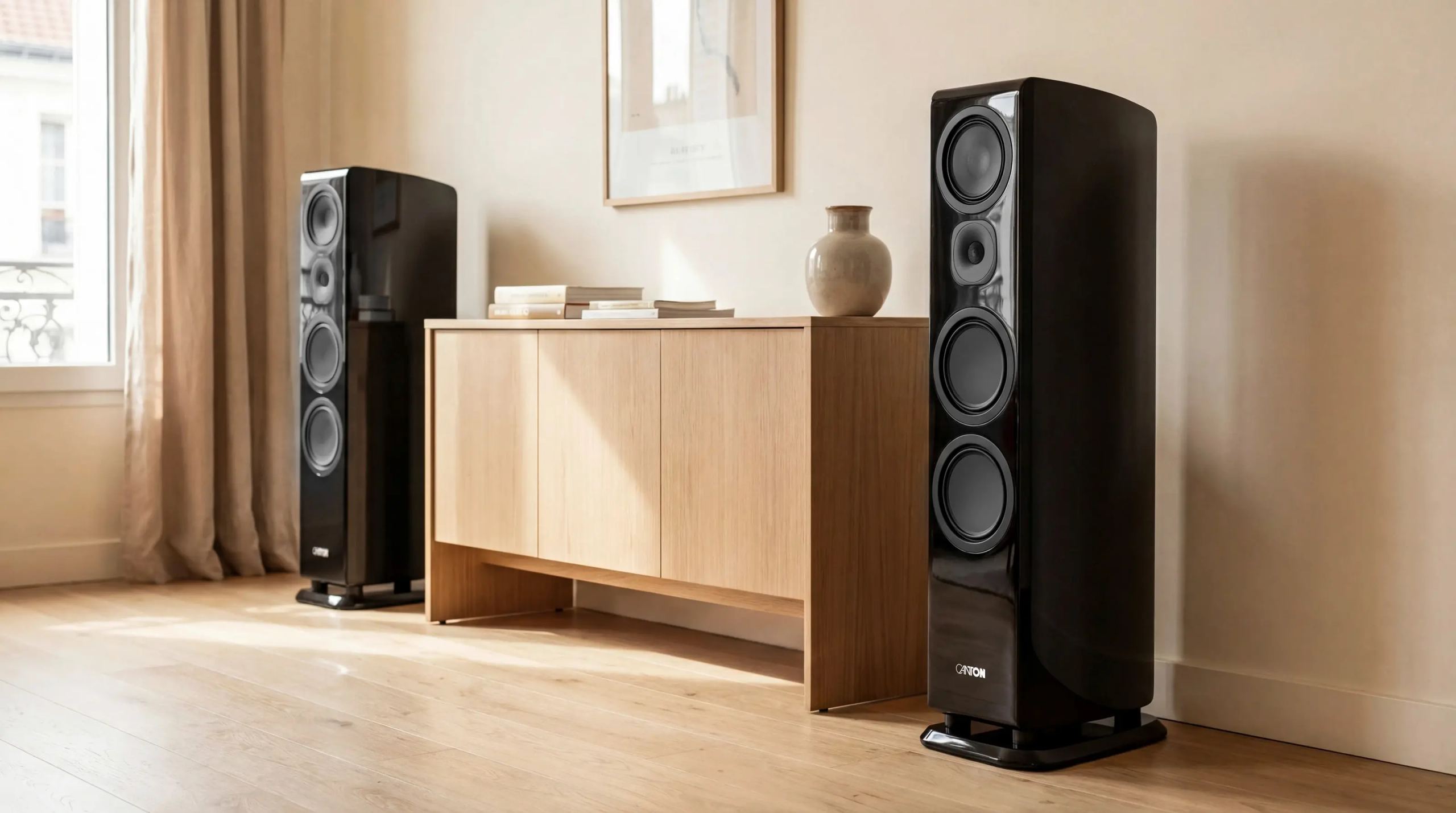
The first encounter with the Vento 101 is physical: 115.5 cm high, 32.5 cm wide, 42 cm deep, 39.2 kg on the scales. The cabinet rests on a plinth that adds 4 cm in width and depth, and 6 cm in height. This plinth, whose spikes have been set back inward, gives the whole unit a floating look that visually lightens the silhouette.
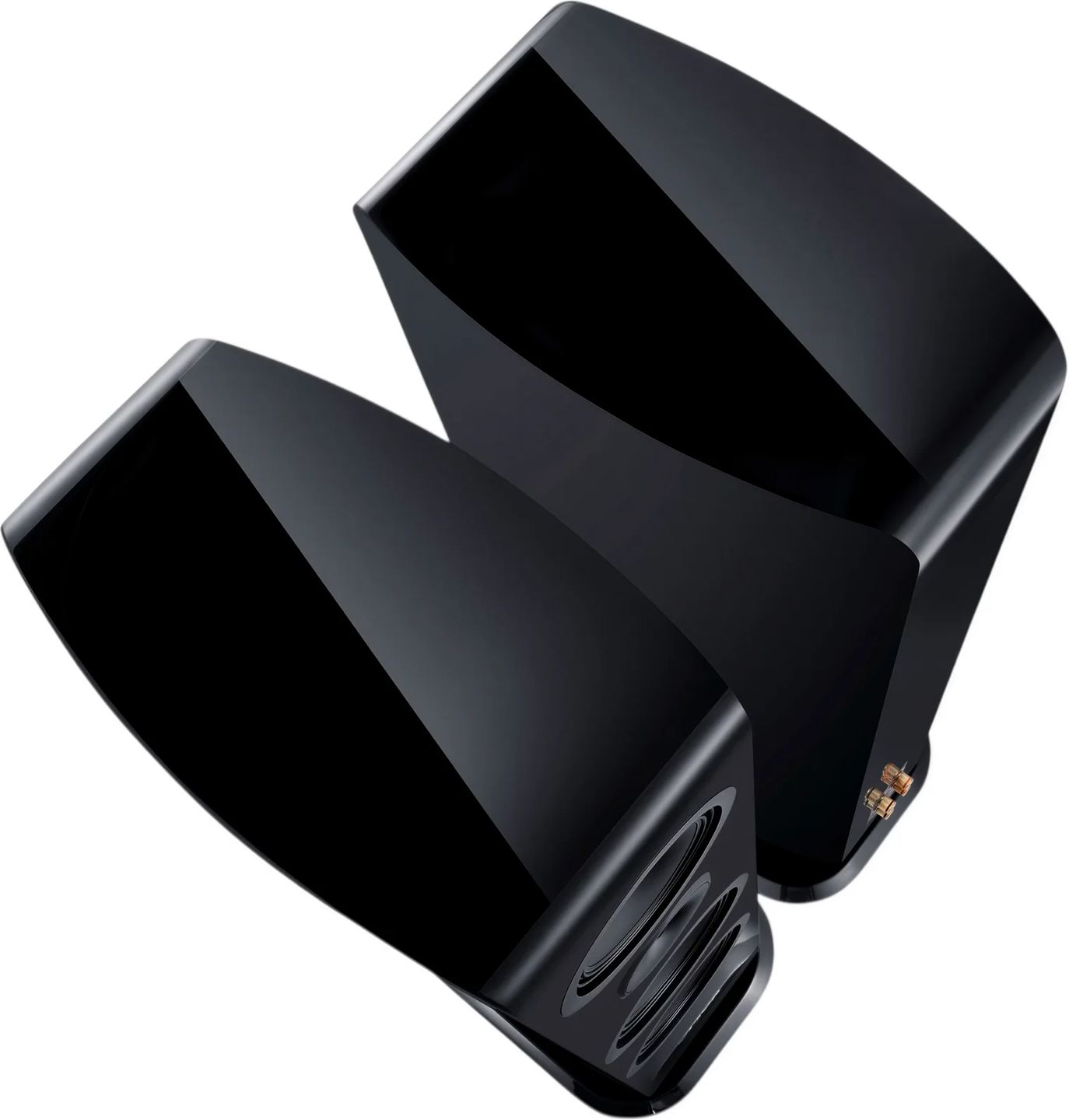
The curved sides are not merely aesthetic. Built from laminated multilayer MDF, they combine two functions: increasing internal volume (and therefore low-frequency bandwidth) while reducing panel resonances across a wide frequency range. The softened cabinet edges limit diffraction around the front baffle, which contributes to more even sound dispersion in the room.
Inside, a system of separate chambers isolates the frequency ranges from one another. The midrange chamber, asymmetrical, reduces the formation of standing waves and the associated coloration. Targeted internal damping completes the design by absorbing stray reflections. The speaker comes prepared for additional absorbers, a detail that leaves room for optimization depending on the room acoustics.
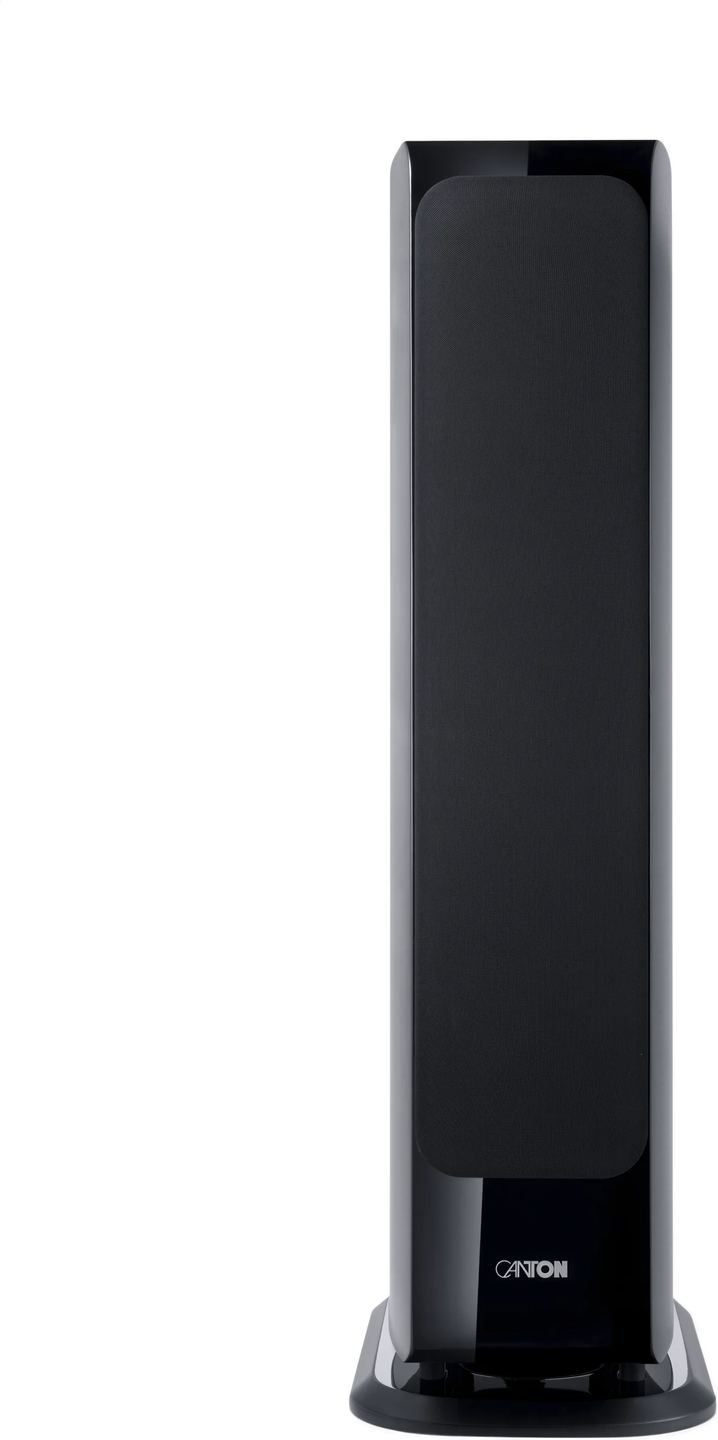
The protective grille, made of acoustically neutral fabric, attaches magnetically. It follows the contours of the cabinet without changing the acoustic behavior.
The Transmission Front Plate, the key element of the high-frequency range
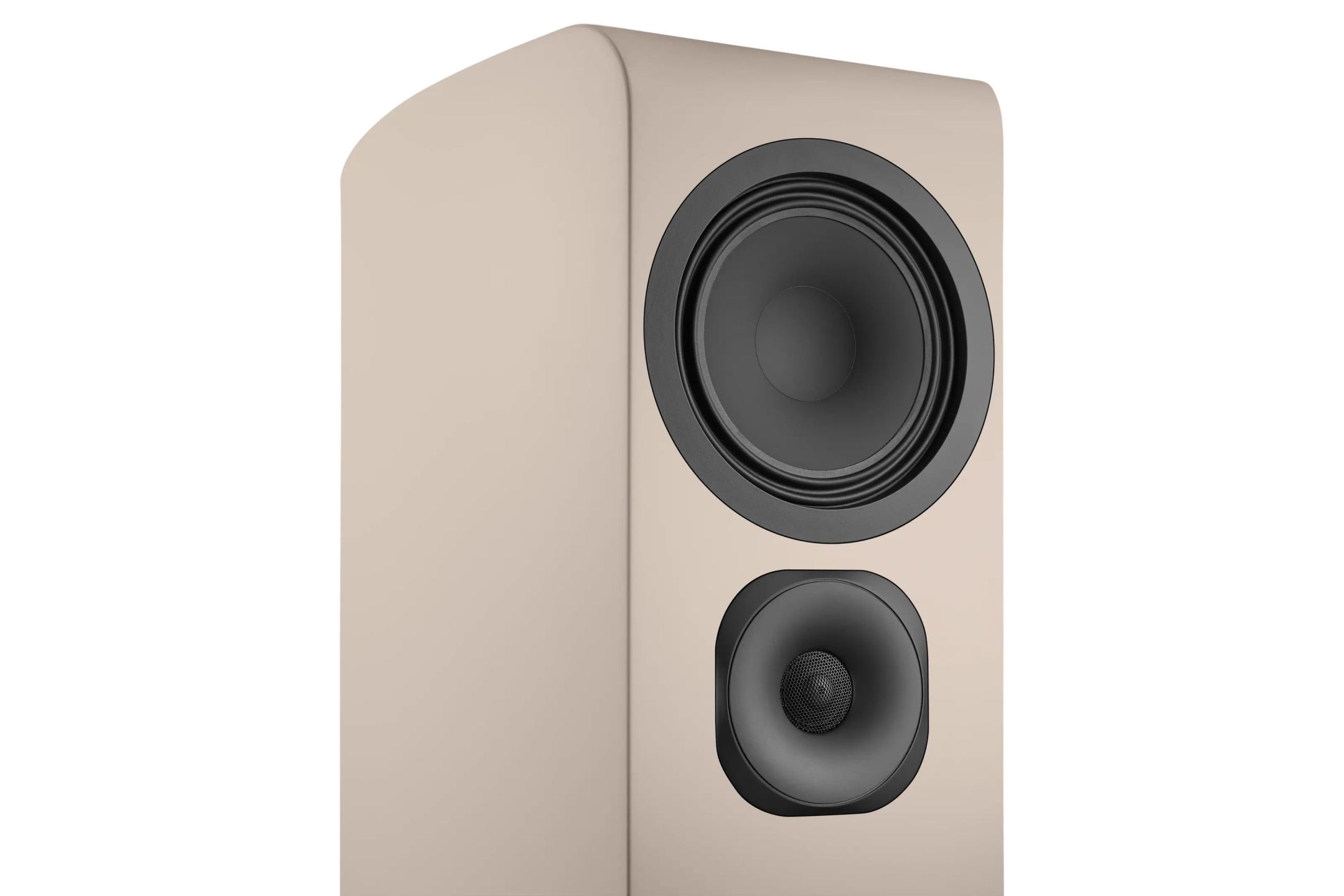
The most visible element of this new generation is the Transmission Front Plate: a front plate with a square outline that frames the 25 mm black ceramic (BC) round-dome tweeter. Canton states that this part, whose design is inspired by the mechanical precision of watchmaking, works as a compact waveguide. Its role is to match the tweeter’s directivity to that of the midrange driver, so that the transition between the two frequency ranges is coherent not only on axis, but also off axis.
According to the manufacturer’s technical data, this waveguide increases speaker sensitivity by up to 3 dB. The tweeter itself comes from the Reference series, with an aluminum oxide ceramic dome whose rigidity and low mass allow a frequency response extended up to 40 kHz.
ATB drivers: rigidity, lightness, control
The Vento 101 features a 174 mm midrange driver and two 220 mm woofers, all three equipped with ATB (Aluminium Titan Black) diaphragms. This material succeeds the titanium-graphite used in the Vento 100. Canton presents it as stiffer and lighter than its predecessor, with optimized internal damping. The goal: for each transducer to operate as a pure piston across its entire useful range, without parasitic partial vibrations in the crossover region.
Two diaphragm technologies coexist in the speaker. The woofers use the Wave Surround suspension, a half-roll surround with a sinusoidal profile that allows large excursions while maintaining linear motion control. The midrange driver uses a Wave Bead surround, a more compact variant of the same principle, suited to the more moderate excursions of the midrange.
The high-end models in the series (Vento 91 and 101) also benefit from two cone technologies specific to Canton. The Double Cone adds a second curvature to the diaphragm to reinforce its structural rigidity. The Triple Curved Cone (TCC) goes further with a profile made up of three successive radii, pushing parasitic vibration modes to frequencies outside the transducer’s useful range. Canton states that this geometry improves dispersion behavior and broadens the driver’s usable bandwidth.
A crossover with DC Switch technology
The passive crossover of the Vento 101 uses DC Switch technology, an evolution of the Displacement Control that Canton has applied to its high-end models for more than twenty years. The principle relies on a high-pass filter integrated into the crossover network, which blocks infrasonic signals before they reach the bass drivers. Without this system, these inaudible frequencies cause unnecessary diaphragm excursions, which generate harmonic distortion in the audible bass range.
In practice, DC Switch allows the woofer to focus on its useful range with less distortion and better power handling. Canton also claims improved low-frequency extension: with equal cabinet volume, the speaker reaches lower than it would without this filtering. The crossover frequencies of the 3-way network are set at 170 Hz and 3,200 Hz, with a nominal impedance of 4 to 8 ohms.
The speaker accepts up to 280 W of nominal power and 500 W of music power. The stated frequency response extends from 20 Hz to 40 kHz. A level adjustment is available to fine-tune the tonal balance according to the room and placement.
Down-firing bass-reflex port
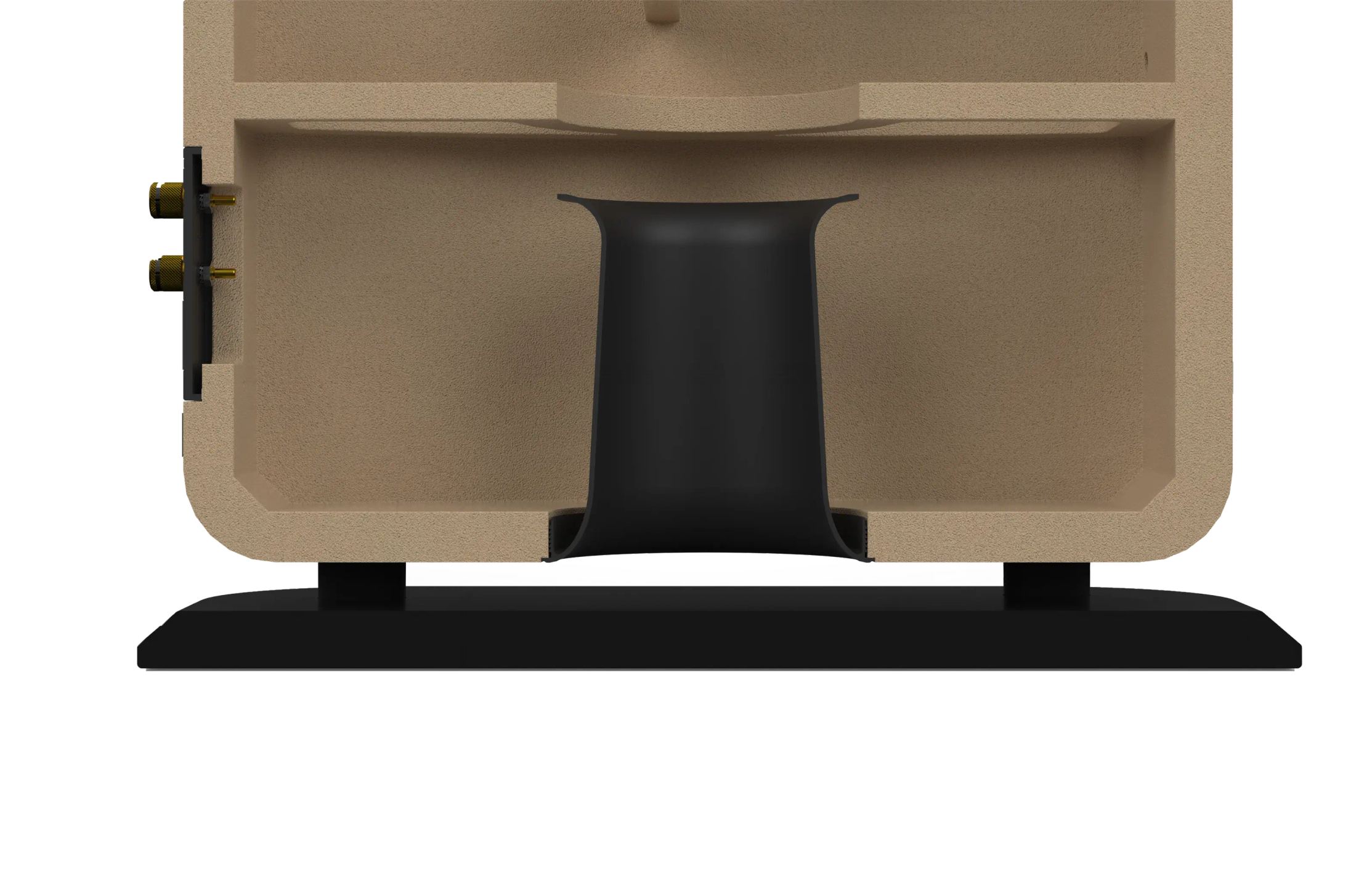
The choice of a bass-reflex design with a down-firing port deserves a closer look. This arrangement offers a significant practical advantage: it makes speaker placement less sensitive to the distance from the rear wall. With a conventional rear port, proximity to the wall can excessively reinforce certain bass frequencies. The downward port, using the floor as a constant reflective surface, offers more predictable behavior regardless of the environment.
Bi-wiring, bi-amping, and connectivity
The gold-plated rear terminals are compatible with bi-wiring and bi-amping. They accept cable cross-sections up to 10 mm² and banana plugs. In bi-wiring, the signal path is separated between the bass section and the midrange/treble section, which can reduce interactions between the two ranges at the cable level. In bi-amping, each section receives its own amplifier: a choice that requires more electronics but offers maximum control over each range.
Integration in stereo and home theater
The Vento 101 is sold individually, which allows a system to be built progressively. In the same series, Canton offers a center channel (Vento 51), compact speakers (Vento 21, Vento 31), a wall/ceiling model (Vento 11), a subwoofer (Vento Sub 1), and a Dolby Atmos module (Vento AR-1). All models share the same sound signature, a point that matters for the consistency of a multichannel system.
For stereo use, the Vento 101 requires an amplifier capable of delivering current stably into a 4-ohm load. Its sensitivity and dynamic capability make it a speaker that works just as well at low volume as at higher levels, but the amplifier must be up to the task.
Documentation
Technical specifications
General design
- Type: 3-way bass-reflex floorstanding speaker
- Bass-reflex orientation: downward-facing (downfire)
- Driver technology: ATB (Aluminium Titan Black)
Drivers
- Tweeter: 1 x 25 mm BC (Black Ceramic)
- Midrange: 1 x 174 mm ATB (Aluminium Titan Black)
- Woofer: 2 x 220 mm ATB (Aluminium Titan Black)
Acoustic performance
- Nominal power: 280 W
- Music power: 500 W
- Frequency response: 20 Hz – 40 kHz
- Crossover frequencies: 170 / 3200 Hz
- Impedance: 4 to 8 ohms
- Level adjustment: yes
Integrated technologies
- DC Switch technology
- Front Plate Transmission
- Wave Surround suspension for woofers
- Wave Bead suspension for the midrange
- Double Cone
- TCC
Connectivity
- Gold-plated bi-wiring / bi-amping terminals
- Banana plug compatibility
- Support for bi-wiring / bi-amplification configurations
Cabinet and mechanical design
- Curved multilayer MDF cabinet
- Internal architecture with separate chambers
- Acoustically neutral grille with magnetic attachment
- Prepared for absorbers
- Base included
- Additional base dimensions (W x D x H): 4 x 4 x 6 cm
Dimensions and weight
- Dimensions (W x H x D): 32.5 x 115.5 x 42 cm
- Dimensions with packaging: 124 x 52.5 x 38.5 cm
- Weight: 39.2 kg
Key points
- Natural and detailed sound reproduction
- Wide and precise soundstage
- Powerful and perfectly controlled bass
- Uniform dispersion thanks to the new waveguide
- High-rigidity cabinet limiting resonances
- Strong dynamic capability for hi-fi and home cinema
- Premium design with modern curved lines
Box contents
- 1 x Canton Vento 101 speaker
- Black magnetic protective grille
- User manual
Frequently Asked Questions
Does the down-firing bass-reflex port impose placement constraints?
On the contrary: it is an advantage. The port under the cabinet makes the speaker less sensitive to the distance from the rear wall than rear-ported models. A reasonable space of 15 to 30 cm from the wall is still recommended, but there is more flexibility.
Can the Vento 101 be used without the supplied plinth?
The plinth is a structural element of the system: it incorporates the decoupling spikes and contributes to the mechanical stability of the whole unit. Canton does not provide for use without the plinth.
What does DC Switch technology bring compared with a speaker without this system?
DC Switch filters infrasonic frequencies that are not audible but cause unnecessary woofer excursions. The result is cleaner bass, less distortion in the lower part of the spectrum, and better power handling. It is not a spectacular effect to the ear, but a gain in precision and control that shows up on dynamic passages and the lowest frequencies.
What are the main differences between the Vento 101 and the older Vento 100?
The drivers move from titanium-graphite to ATB (Aluminium Titan Black) technology. The square waveguide (Transmission Front Plate) is a new feature that changes the tweeter’s dispersion. The cabinet adopts a refined bow shape with more pronounced rounding. TCC (Triple Curved Cone) technology and the Wave Surround/Wave Bead suspensions are additions specific to this new generation. The connectivity has also been revised with a finer thread for more stable contact over time.
- Eco-contribution included in the sale price.
- Manufacturer reference: 04573
- GTIN / EAN: 4010243045733