Projeo PullUP HD 90


Overview
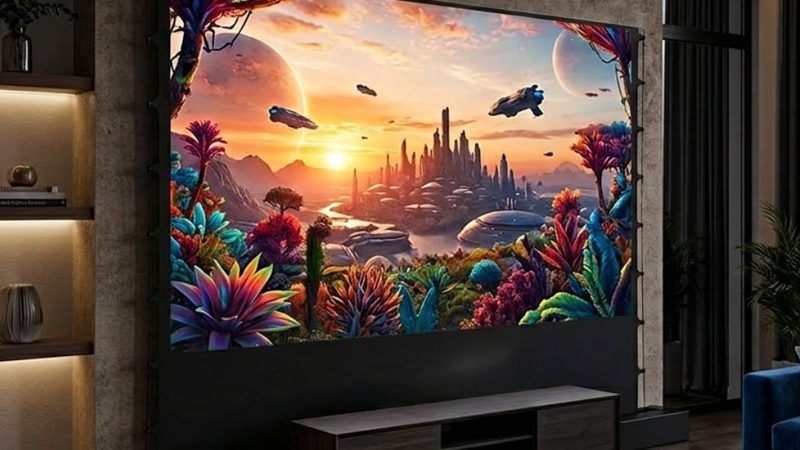
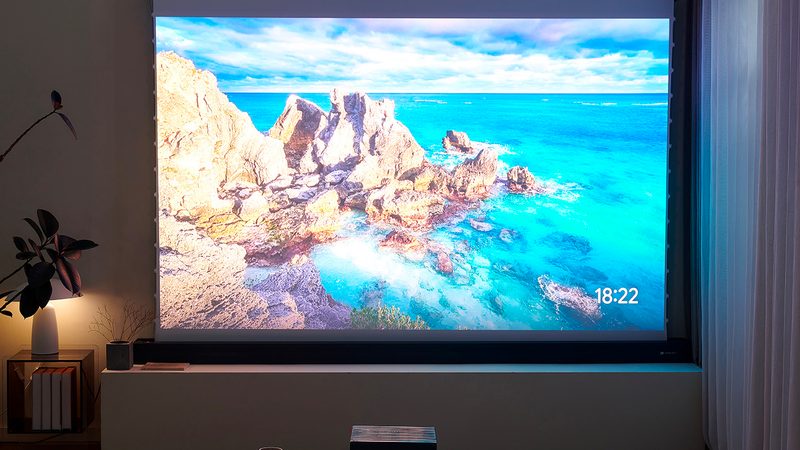
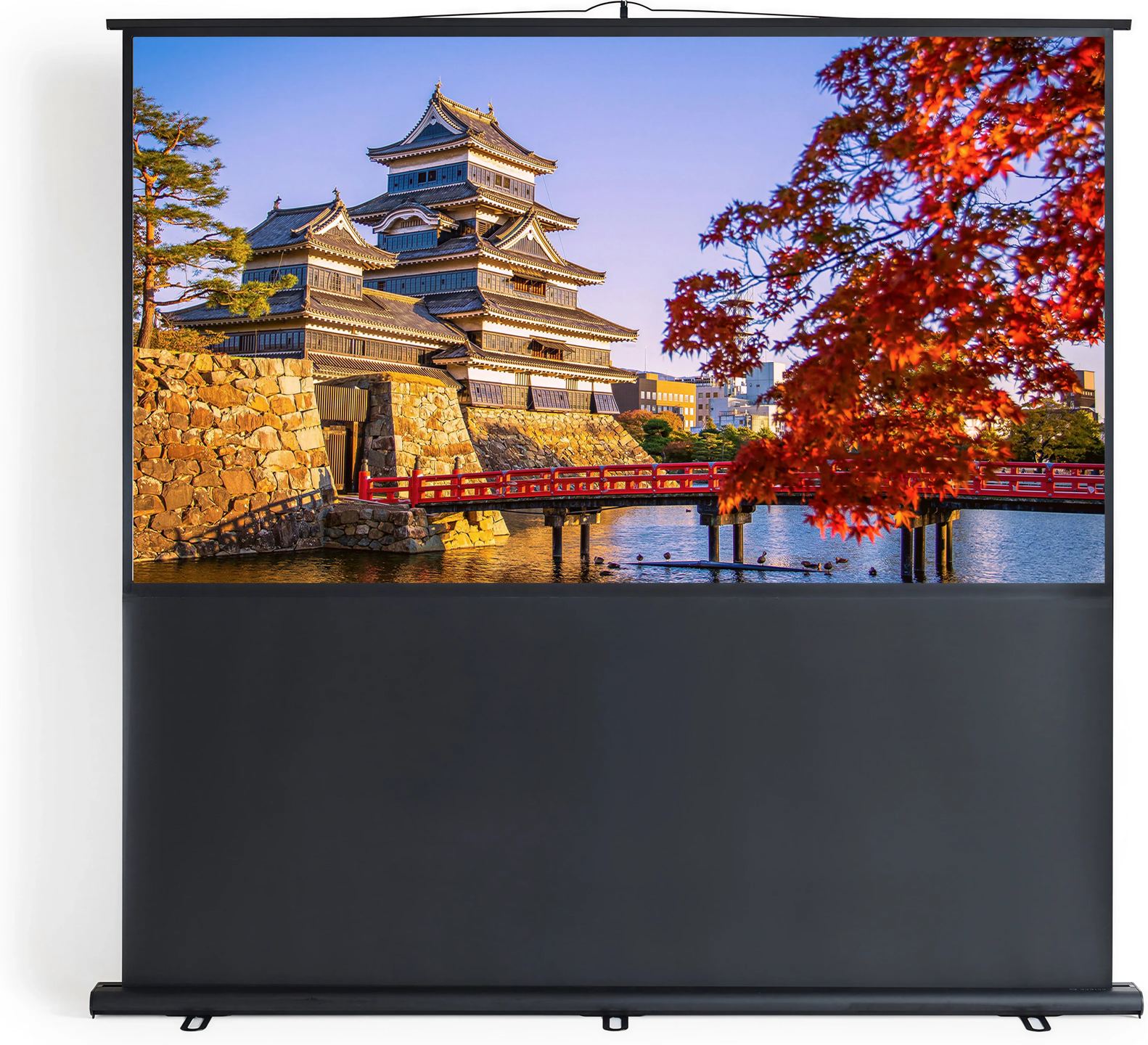
Improvising a movie night in the living room, then putting everything away in just a few seconds once the film is over: that is exactly what a manually deployed floor screen is designed for. Projeo offers here an 89-inch diagonal housed in an aluminum casing that also serves as the floor base. The whole unit can be carried in one hand and set up without tools, where a fixed screen would require a wall and mounting hardware.
Setup in a few seconds, without a single tool
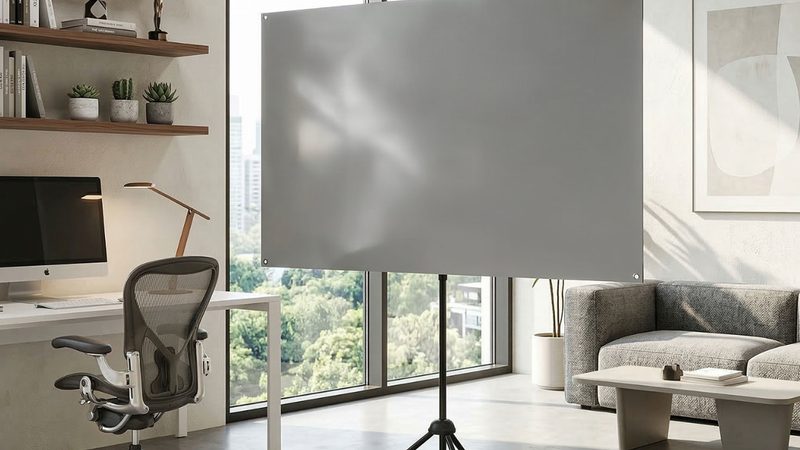
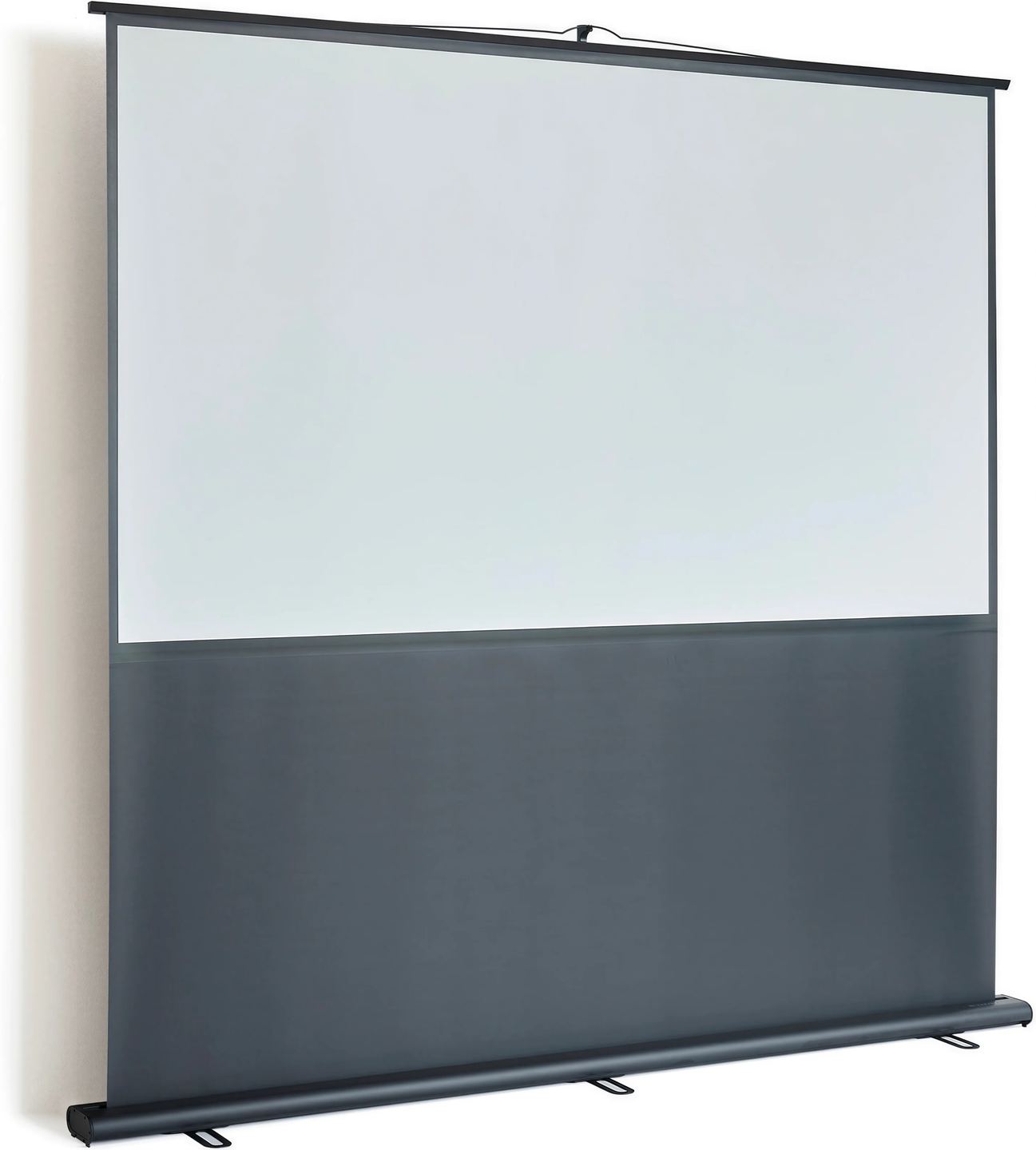
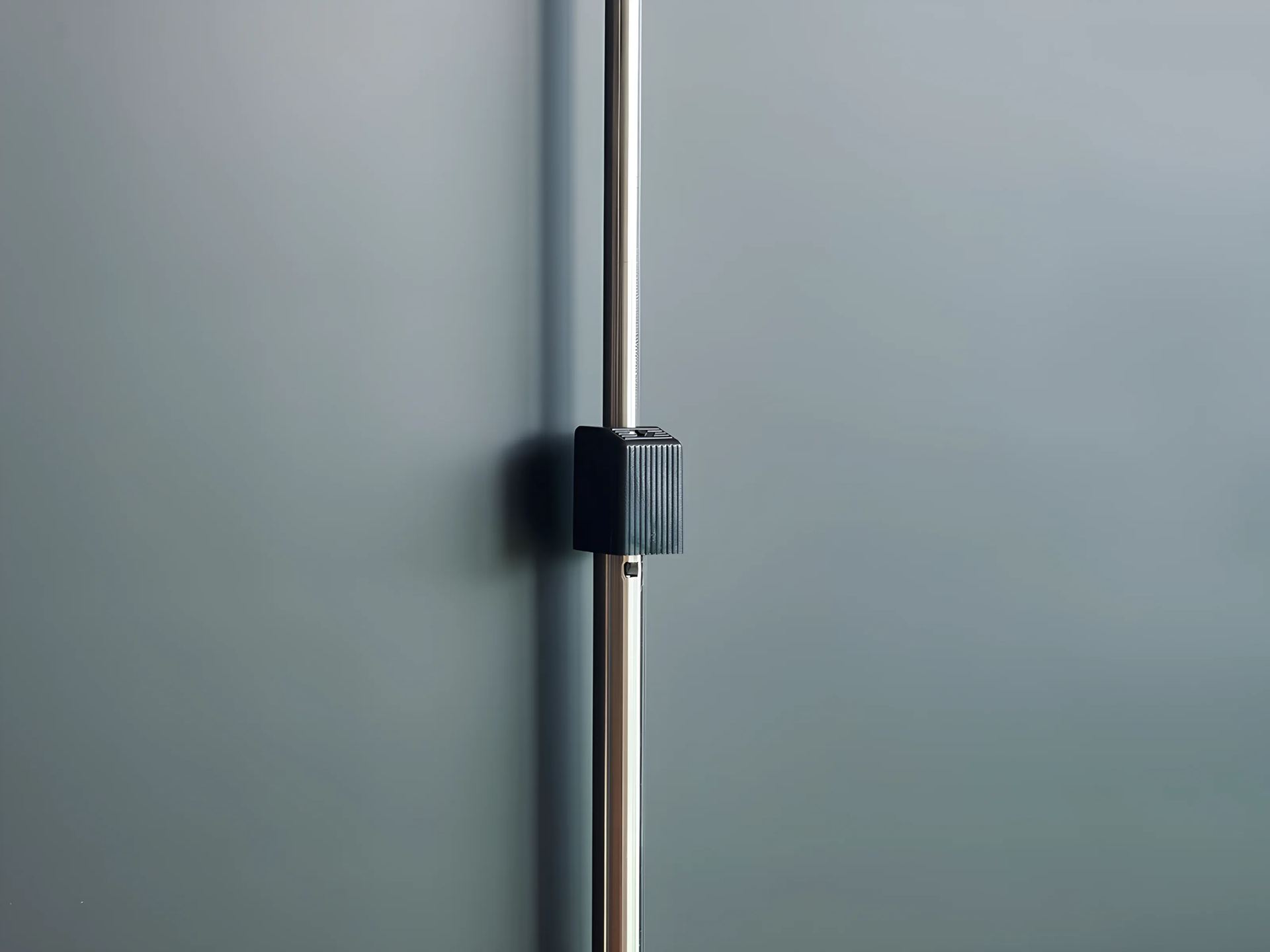
The principle relies on no power supply. The screen rolls up inside the floor-standing casing; to deploy it, you grab the top bar and pull it upward. A telescopic support placed at the rear holds the screen in place once it is raised. There is no motor, no cable, and no remote control, and that is a deliberate choice: fewer parts likely to break down, and the freedom to set up the screen far from a power outlet.
The trade-off is in the handling. Each session requires raising and then folding the screen back down by hand, a quick but repeated action. For fixed daily use, a motorized model remains more comfortable. The PullUp HD 90 is aimed at a different need: occasional projection, moved from one room to another or brought out only in the evening.
The PET screen material and its on-screen behavior
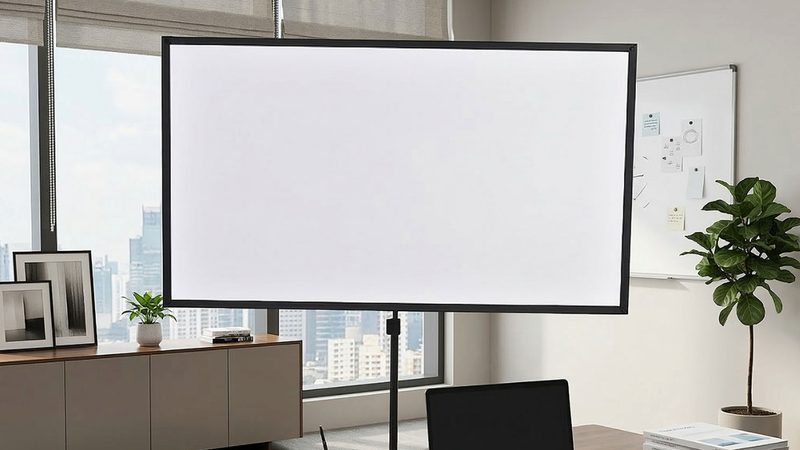
Projeo offers this mechanism in two diagonals: 80 inches for the PullUp HD 80, 89 inches for this HD 90, whose usable image area measures 196 centimeters wide by 110. The projection surface is a white PET film, a stretched plastic that stays flat and reflects light well. Its gain is rated at 1.1. Gain measures the amount of light reflected back toward viewers compared with a reference white surface set at 1.0. At 1.1, the screen therefore returns slightly more light than a neutral surface, which slightly enhances contrast and vividness without distorting colors.
This moderate gain has a direct consequence on the viewing angle. A high-gain screen concentrates light in a narrow cone, directly in front of the screen, and loses uniformity as soon as you move away from center. Projeo specifies a viewing angle of 170 degrees here, meaning an image that remains clear and even even for viewers seated at the sides. In a living room where the sofa is not always centered, this compromise works in the right direction.
Choosing a long-throw projector
This screen is calibrated for long-throw projectors, in other words devices installed at a good distance from the screen, placed on a piece of furniture at the back of the room or mounted on the ceiling. This is the most common type of projector in home cinema.
This detail matters at the time of purchase. Ultra-short-throw projectors, placed just in front of the surface and projecting upward, require a specific screen able to handle that shallow light angle. The PullUp HD 90 does not fall into that category. Paired with a long-throw projector, however, the light reaches the screen at an angle close to perpendicular, which is where white PET performs best.
Why the image sits high on the screen
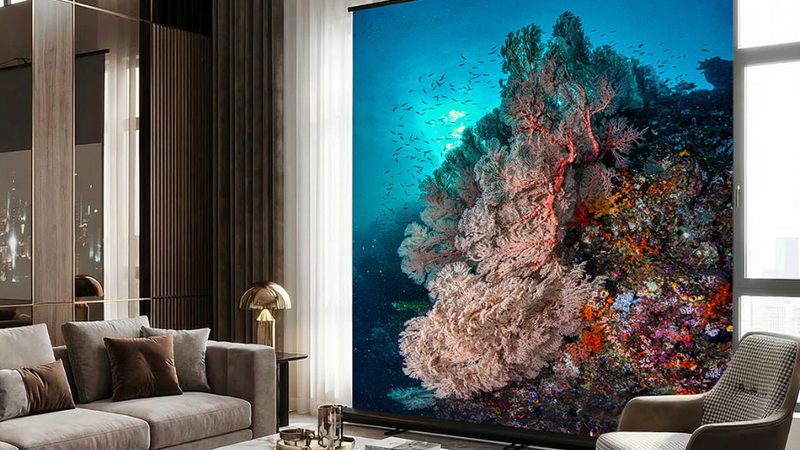
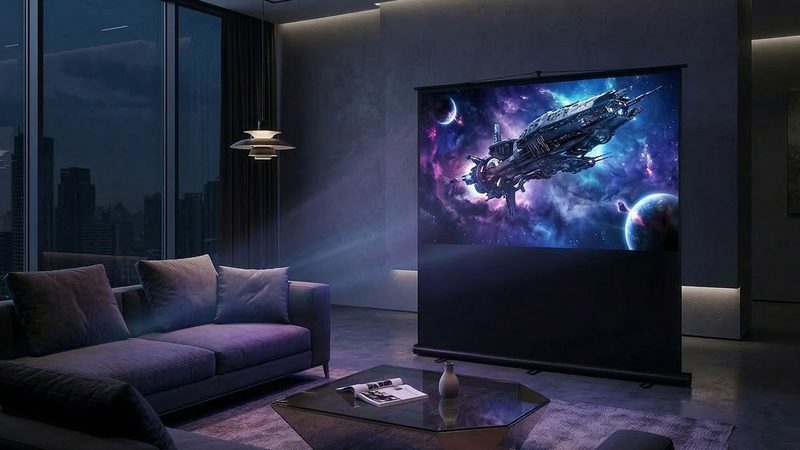
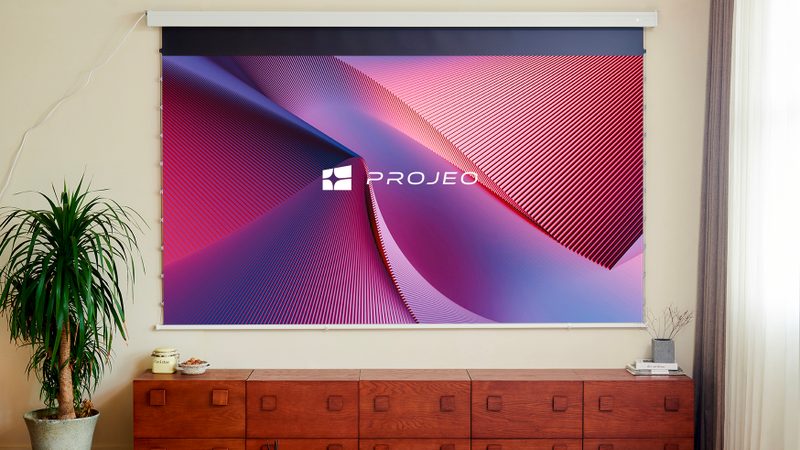
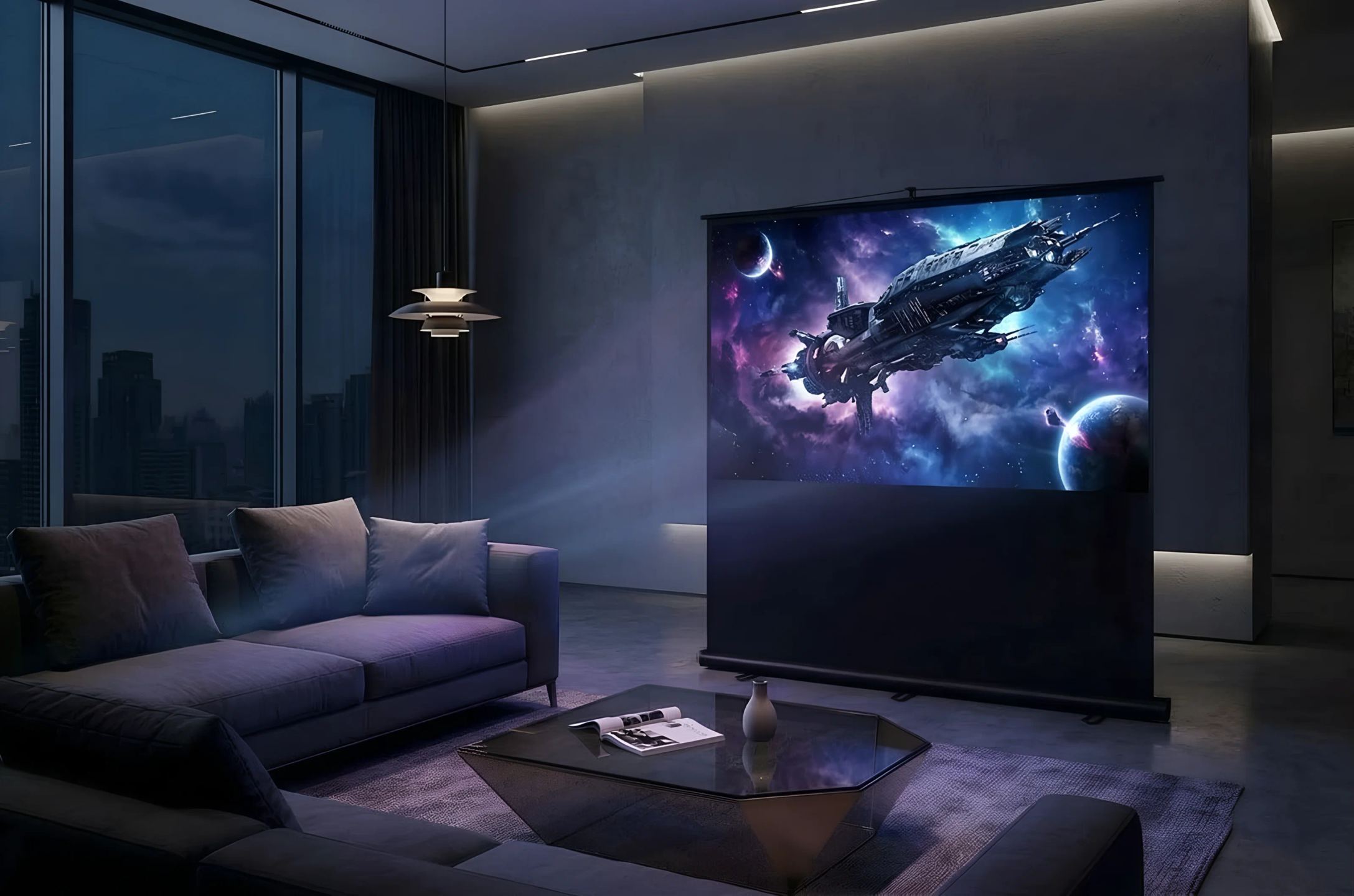
On this type of screen, the image area does not occupy the entire screen surface. A black band sits above it on one side and separates it from the casing on the other, and it is this lower band that determines the height of the image. Since deployment is manual, this adjustment is made at setup: the lower black band can reach nearly 80 centimeters, enough to raise the image clearly above the floor. The benefit is obvious as soon as the room has several rows of viewers or a low piece of furniture placed in front of the screen, since heads and obstacles stop encroaching on the bottom of the projection.
The thin black borders surrounding the image, on the sides and at the top, have another effect. The eye perceives stronger contrast when the image is framed in black, even though the screen reflects no additional light.
Moving the screen and storing it safely
Folded down, the screen forms a bar a little over two meters long, with a section of about 13 centimeters by 5. The black lacquered aluminum alloy casing serves two functions: it encloses the screen and the weighted bar during transport, and acts as a stable base on the floor once the screen is raised. Its length remains its main constraint. Two meters fits in most car trunks and along a hallway, but the object still requires space to move around.
Storage calls for one specific precaution: the screen should be kept horizontally. Stored upright for long periods, the weight of the screen and the weighted bar is concentrated on a single support point and may mark the PET or strain the roll-up mechanism. A shelf, the top of a wardrobe, or the space under a sofa will do. The two-year warranty announced by Projeo covers this use under normal conditions.
Documentation
Technical specifications
Screen type
- Portable manual floor screen (compact mini)
- Compatible projector type: long throw
- Format: 16 / 9
Projection screen fabric
- Projection surface: white PET
- Gain: 1.1
- Viewing angle: 170°
Construction
- Housing: black lacquered aluminum alloy
- Control system: manual
Model
- Pull-Up HD 90
- Diagonal: 89”
- Image area (W × H): 196 × 110.3 cm
- Housing size (L1 × L2 × L3): 210.5 × 12.6 × 5.1 cm
- Top bar size (L4): 206.8 × 2.65 × 1.55 cm
- Black borders: B1 20 mm, B2 800 mm, B3 20 mm
- Foot length (S): 28.36 × 5 × 0.2 cm
- Total product height (F): 202 cm
- Packaging dimensions: 220 × 20 × 12 cm
Frequently asked questions
What throw distance should be planned for the projector?
A long-throw projector intended for home cinema generally requires a throw distance of about 2.5 to 4 meters to fill an 89-inch image, the exact value depending on the projector’s throw ratio. The projector’s technical sheet indicates this distance range. It is best to check it before purchase, because the screen can be placed wherever space allows, whereas the projector must respect a precise distance so that the image covers the entire screen without spilling over.
Is the screen suitable for outdoor use?
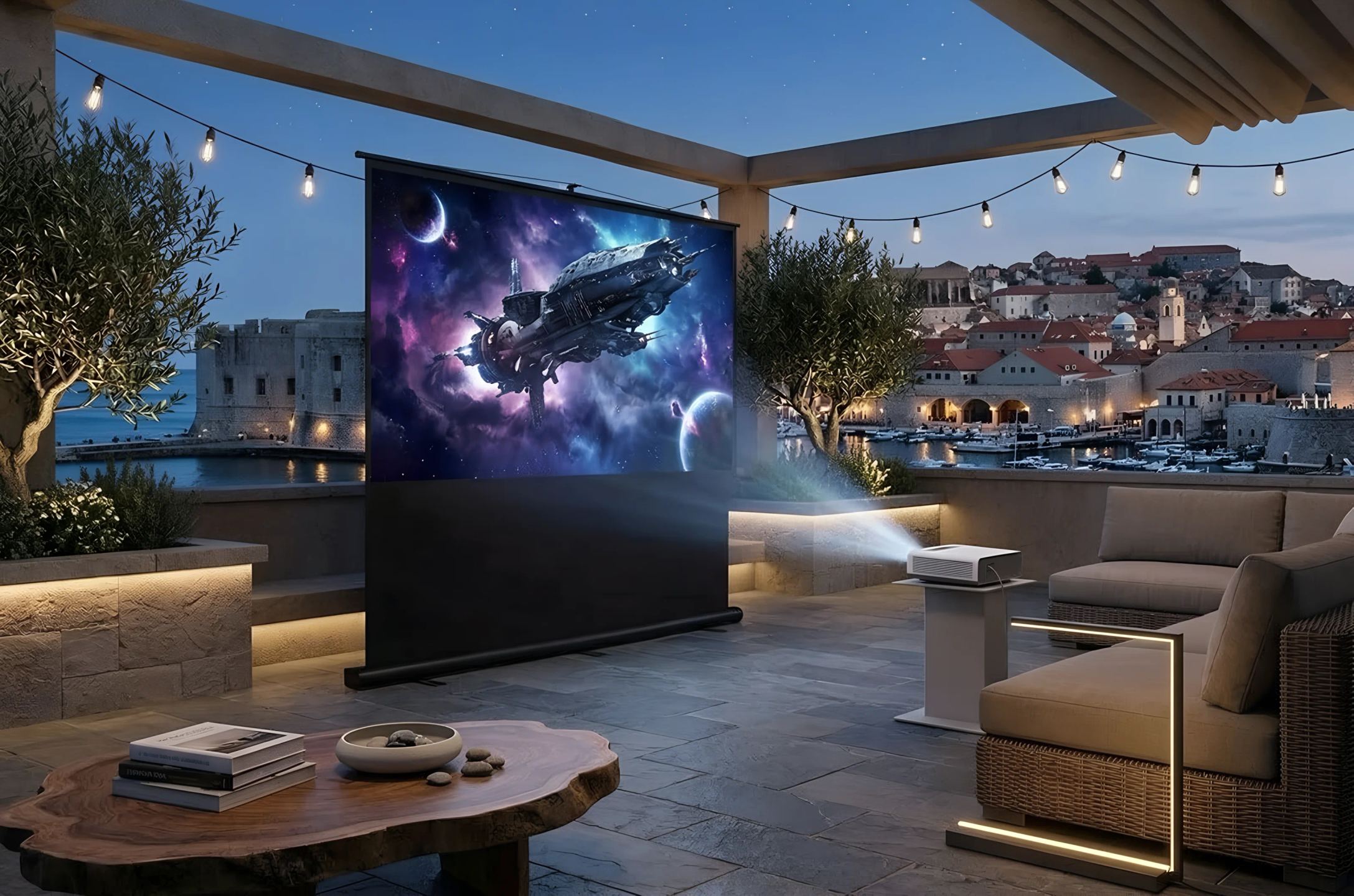
Nothing prevents occasional use for a projection in a garden or on a terrace, provided you remain attentive to two things. First, the wind: a freestanding floor screen presents a large surface area and can be knocked over by gusts. Then humidity: the aluminum casing and the screen are not designed for prolonged exposure to bad weather. Evening use, in calm weather, followed by storage under shelter once the session is over, is the reasonable approach.
Do you need a dark room to get a good image?
A white 1.1-gain screen reflects light without filtering it: it does not distinguish between the projector’s light and ambient light. The darker the room, the more contrast and black depth stand out. An evening projection, with the shutters closed, gives the best result. In daytime or with supplemental lighting, the image remains visible but loses density. For use in a bright room, a gray screen or an ambient light rejecting screen would be more suitable, at the cost of a narrower viewing angle.
- Eco-contribution included in the sale price.
- Manufacturer reference: PROPUL90HD
- GTIN / EAN: 3700795165126