

Samsung HW-LS70H


Specifications and features


Overview
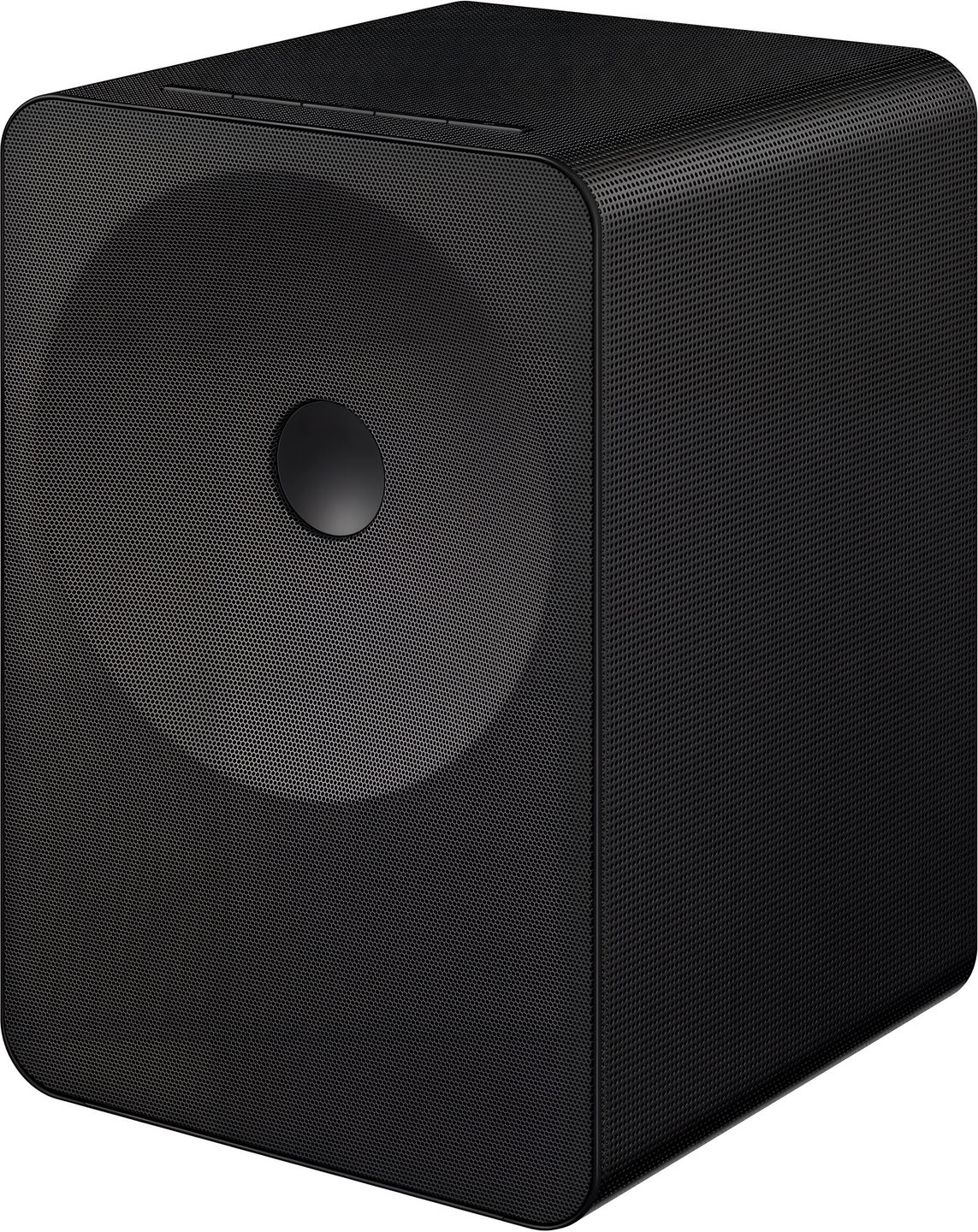
Two oblong shapes topped with a circle: the Music Studio 7 looks unlike anything Samsung has produced in audio until now. Behind this compact 5.6 kg volume lies a 3.1.1-channel Wi-Fi speaker equipped with five drivers, a super tweeter extending up to 35 kHz, and full connectivity including HDMI eARC. It is the Korean manufacturer’s second collaboration with French designer Erwan Bouroullec, after the The Serif television in 2015.
An object signed by Erwan Bouroullec
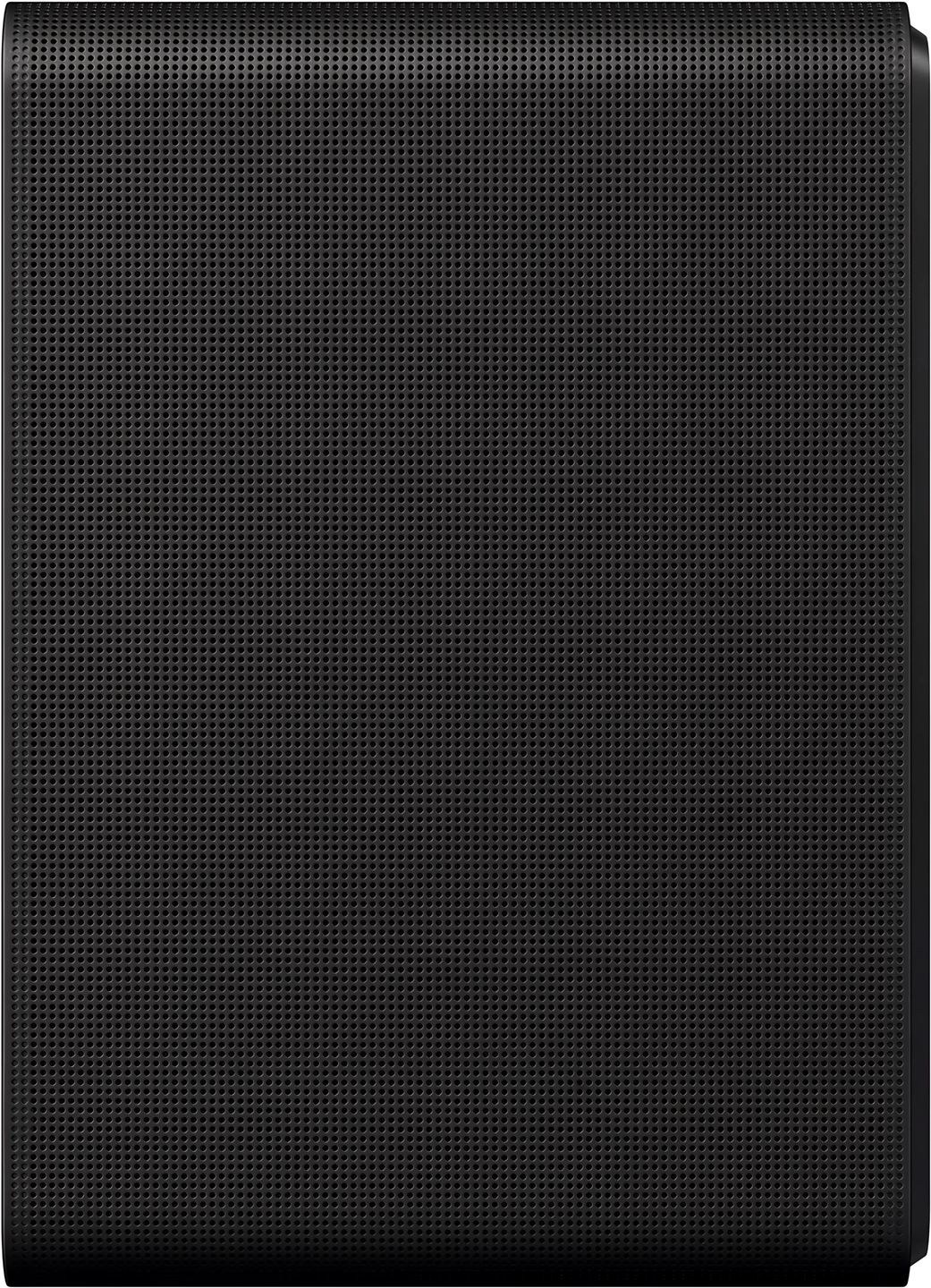
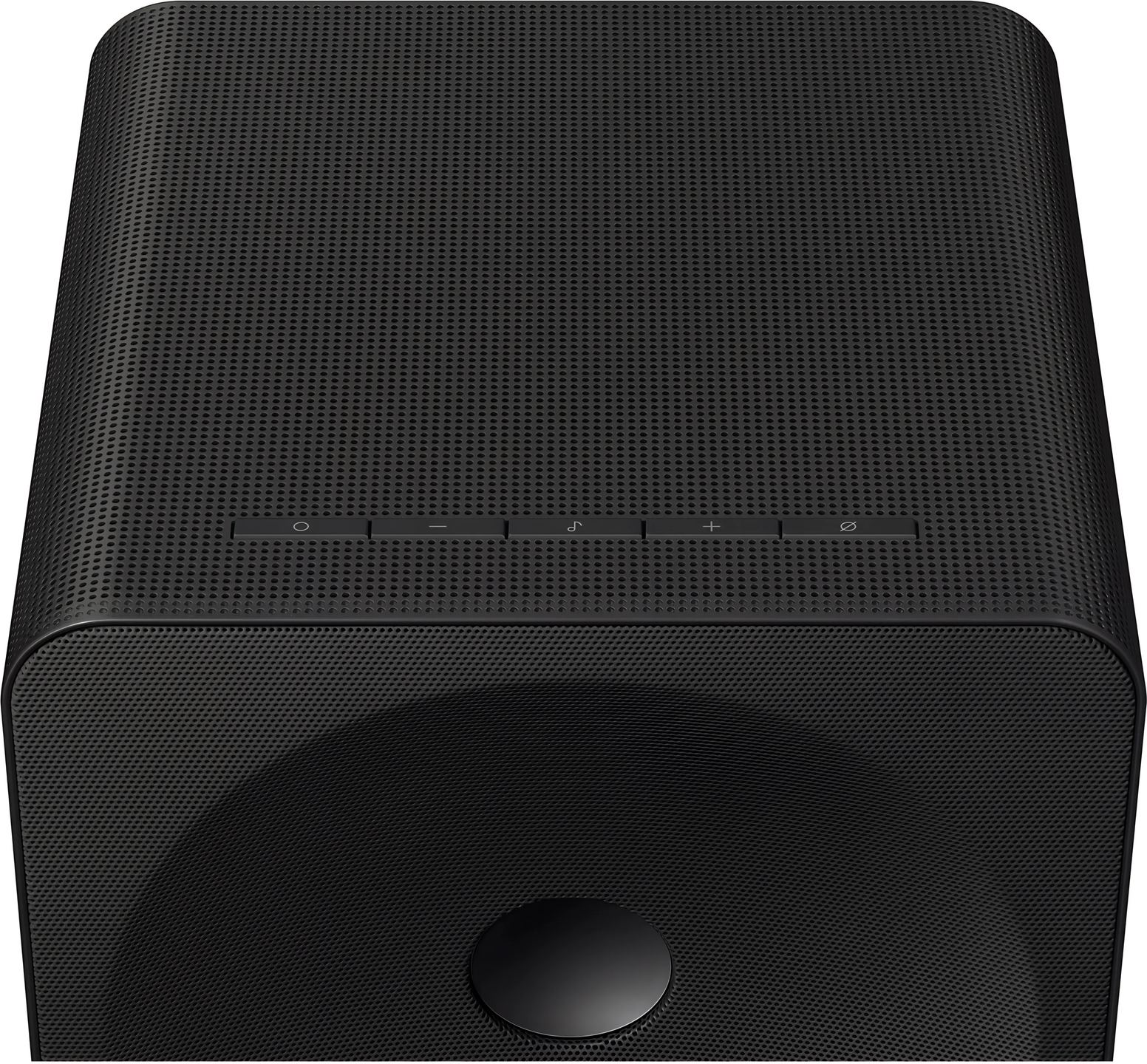
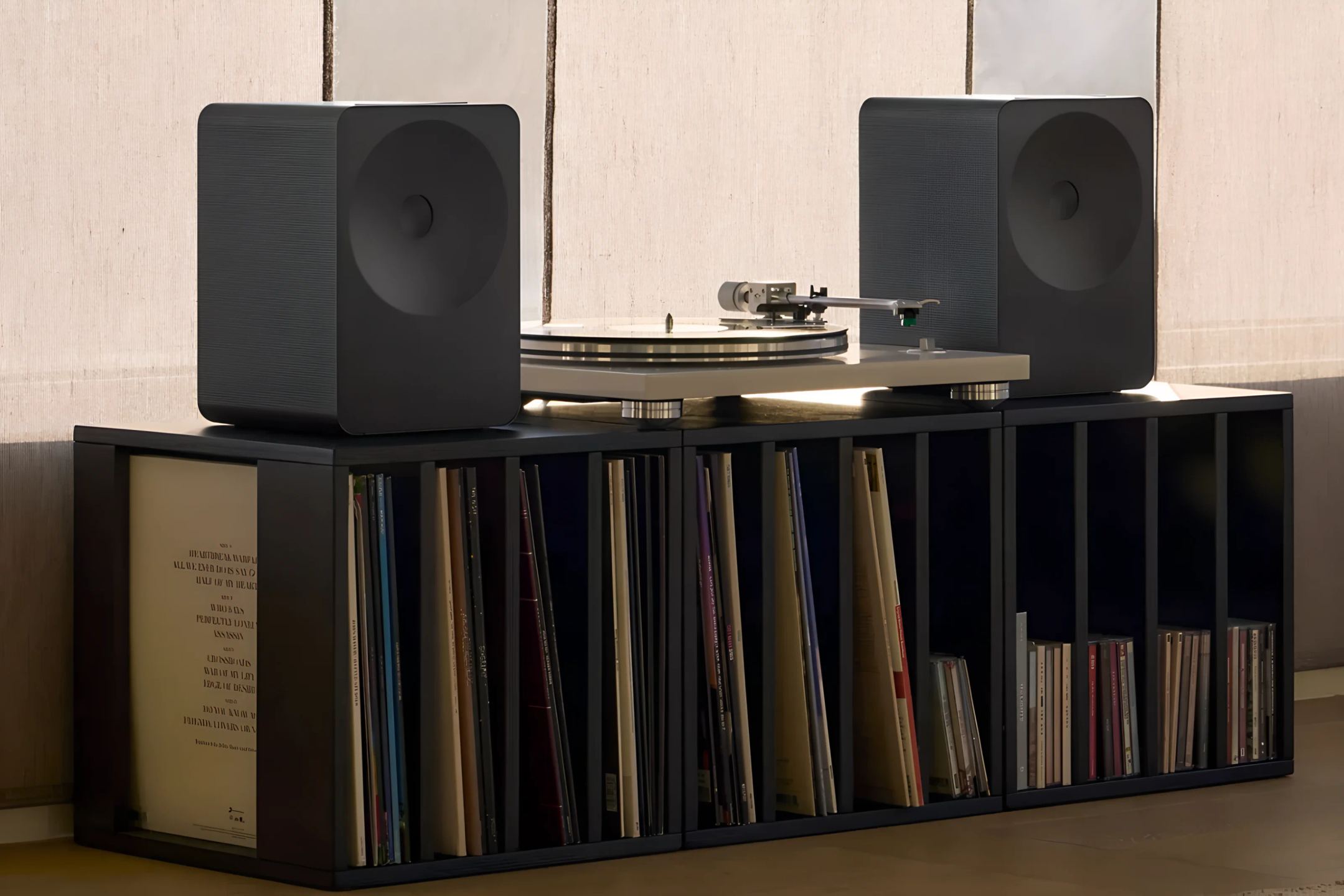
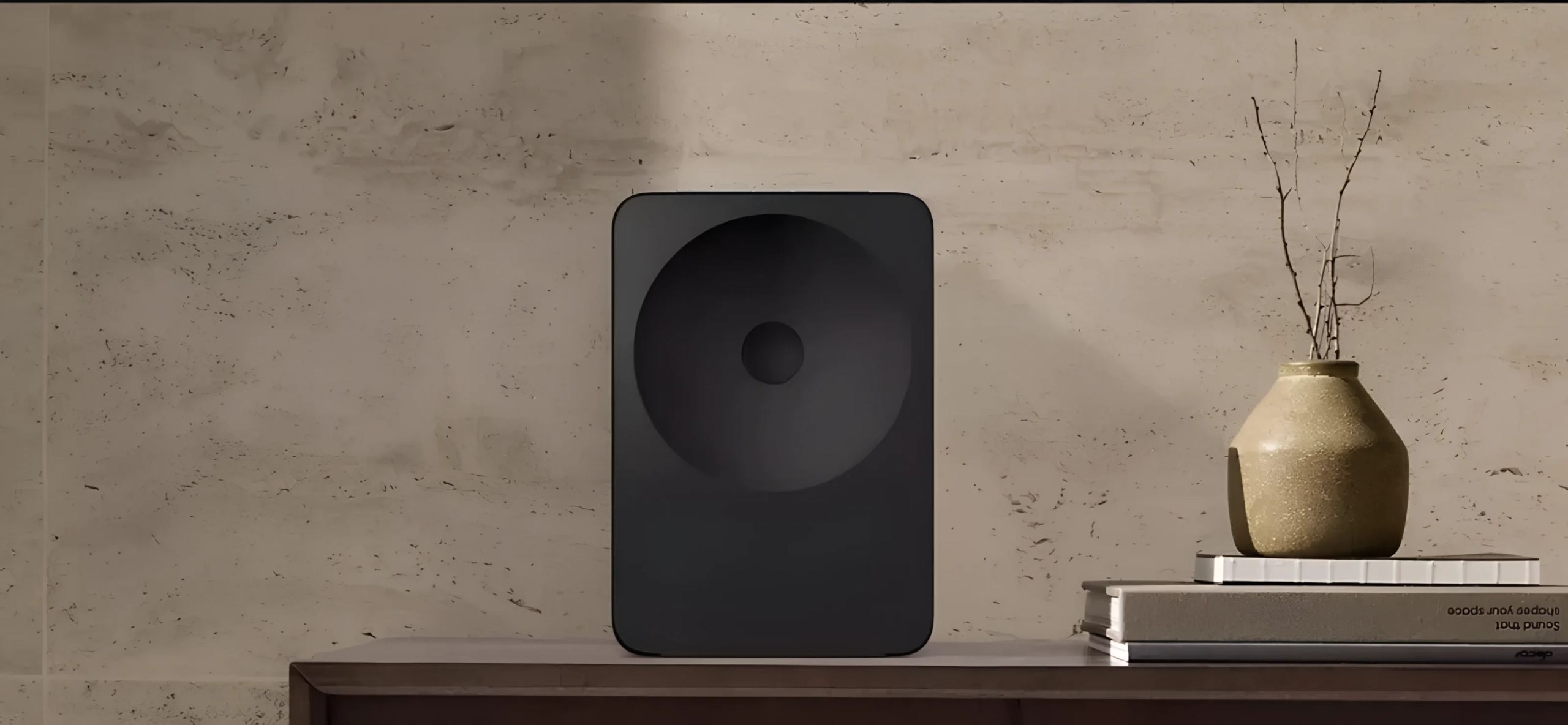
The circular motif decorating the front of the Music Studio 7 is the heart of the project. Bouroullec named it “orb and dot”: a circle evoking the cone of a traditional speaker, reduced to its most essential form. The front is a monolithic metal grille, rigid and understated, which follows the principle introduced by the Music Frame in 2024. The rear of the speaker, deeper than the first prototypes presented at CES 2026, was widened during development to increase the internal volume of the woofer without altering the design of the front. Samsung states that this evolution was carried out jointly by the design and acoustic engineering teams.
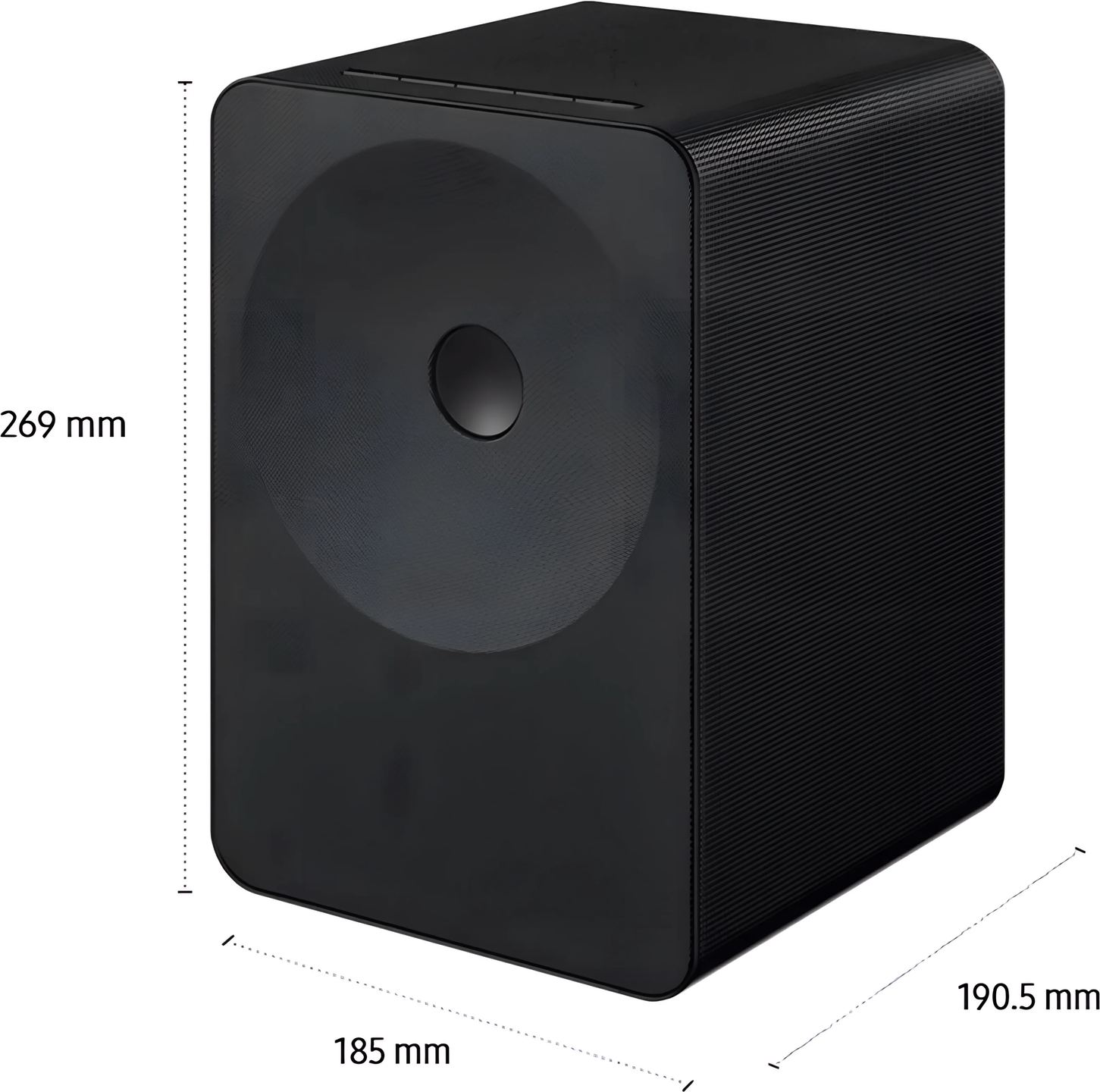
At 185 × 269 × 190.5 mm and weighing 5.6 kg, the Music Studio 7 takes up the space of a small bookshelf object. The internal structure, relatively heavy for this size, stabilizes the components and limits parasitic vibrations. The color delivered here is Samsung Black (a white version exists under reference LS71H).
Five drivers in a compact format
The 3.1.1-channel configuration is based on three tweeters (left, front, right), a central woofer, and an upward-firing speaker. The latter, the super tweeter, extends the frequency response up to 35 kHz, which far exceeds the audible limit (20 kHz) but contributes to the reproduction of harmonics and transients in high-resolution formats. The speaker supports audio decoding up to 24-bit / 96 kHz via Wi-Fi, in FLAC, WAV, AIFF, and ALAC formats.
Samsung has integrated its Pattern Control technology, developed at Samsung Audio Lab in California. Its principle: reduce overlap between the signals emitted by each driver to improve directivity and clarity of the spatial rendering. An integrated waveguide completes the system by dispersing sound more evenly throughout the listening area.
On the bass side, AI Dynamic Bass Control adjusts the behavior of the integrated woofer in real time to limit distortion, including at high volume. This digital processing partly compensates for the physical constraints of a woofer housed in such a reduced volume.
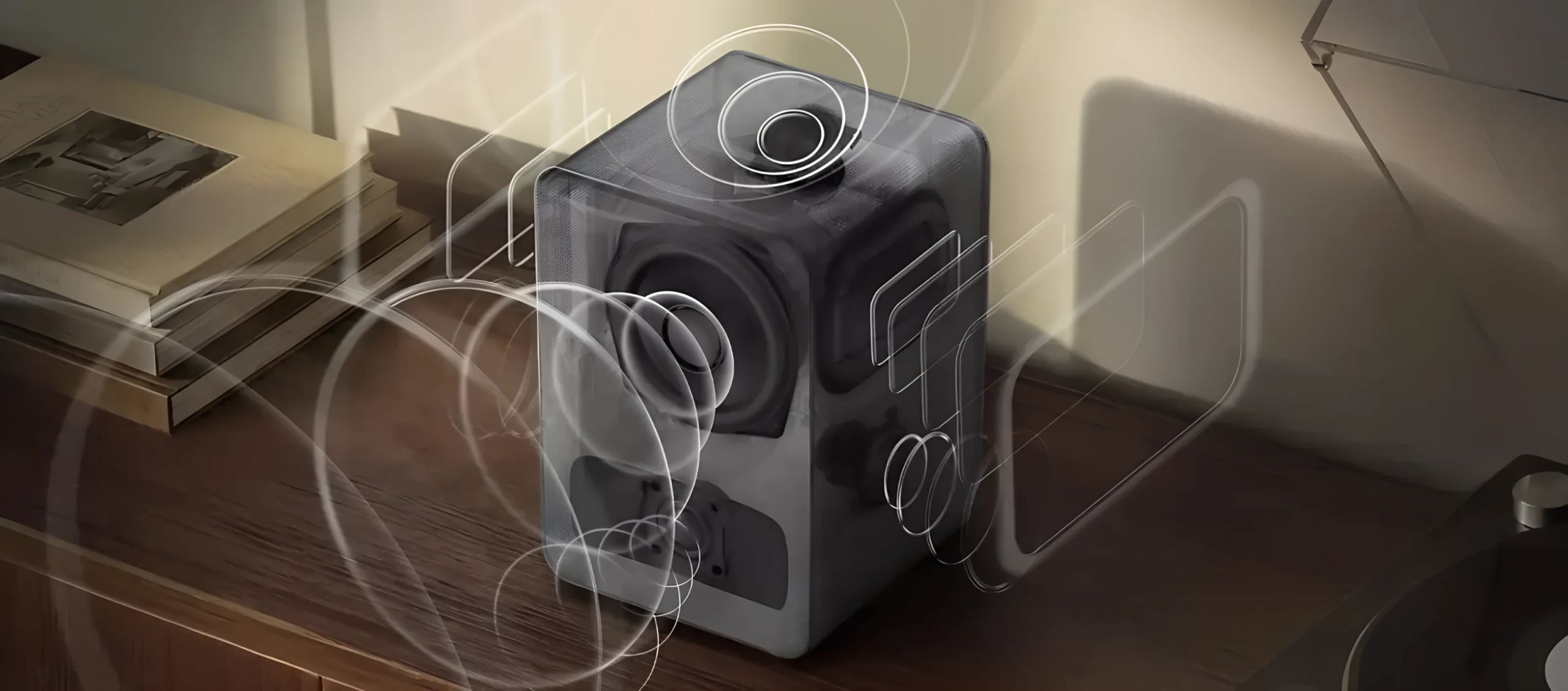
Dolby Atmos, Eclipsa Audio, and digital processing
The Music Studio 7 supports Dolby Atmos in wired mode (via HDMI eARC) and wirelessly (via Wi-Fi with a compatible Samsung TV from the 2022 to 2026 Q80 onward). It also decodes Dolby Digital Plus, Dolby 5.1, and Dolby TrueHD, the latter being absent from the Music Studio 5.
Eclipsa Audio, a royalty-free 3D spatial codec developed by Samsung and Google, is also supported. It targets OTT content and requires connection to a compatible Samsung TV (from the U8005H onward for the 2026 range).
Three audio processing modes complete the software side. AI Adaptive Sound analyzes the type of content currently playing and adapts the settings (two presets: Music and Standard). SpaceFit Sound Pro automatically calibrates playback according to the room’s acoustics. AVA Pro (Active Voice Amplifier Pro) detects ambient noise in the room and on-screen, then boosts dialogue to maintain intelligibility. Finally, the Auto Volume function smooths out sound level differences between different sources.
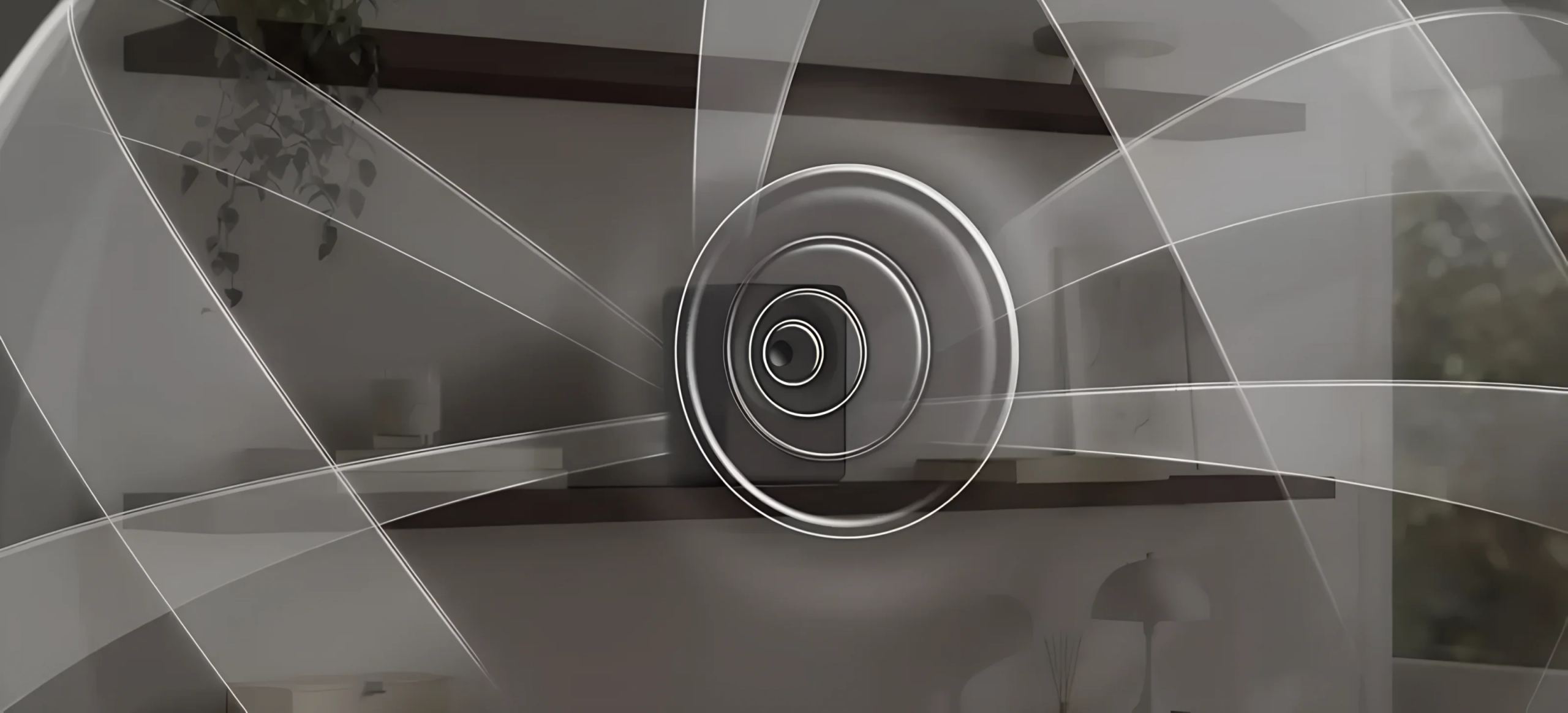
Q-Symphony: the speaker as part of a system
The appeal of the Music Studio 7 is also measured within the Samsung ecosystem. In Q-Symphony, the speaker synchronizes its drivers with those of a compatible Samsung TV to create a wider soundstage. The number of devices connectable in Q-Symphony varies by generation: up to five products if all are from the 2026 range, three for the 2023 to 2025 ranges. Compatible TVs range from the BU8000 (2022) to the U8000H (2026), including The Frame and The Frame Pro models from 2022 to 2026.
AI Q-Symphony, available with TVs equipped with an NPU processor (from the Q70C in 2023, the M80H in 2026), pushes synchronization further: artificial intelligence separates voices from surround effects and distributes them across the system’s different speakers (speaker, soundbar, television) for optimized playback.
Q-Symphony also supports compatible Samsung soundbars (Q-Series 2023 to 2026, B-Series 2025, S-Series 2023-2024) and the Music Frame 2024 (LS60D).
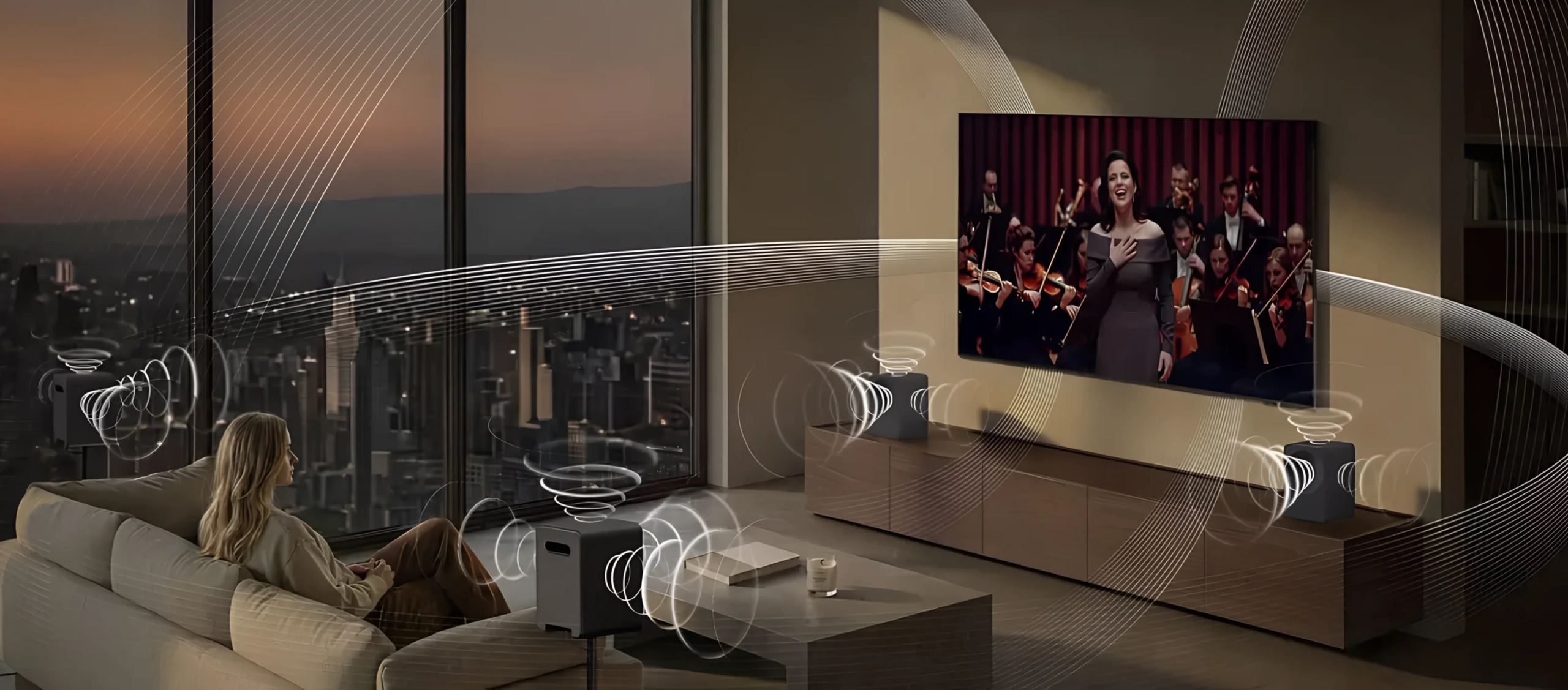
Network connectivity and audio streaming
The speaker features Wi-Fi 6 and Bluetooth 6.0 with the Samsung Seamless Codec, reserved for Galaxy devices. It supports AirPlay 2, Google Cast (Chromecast built-in), and Spotify Connect. A Spotify Tap button lets you instantly resume the last Spotify playback over Wi-Fi, without opening the app on the phone. The speaker is also Roon Ready certified, which integrates it into Roon systems for network audio playback controlled from the Roon software.
Alexa is built in for voice control. SmartThings integration allows the speaker to be controlled within a broader Samsung home automation ecosystem. The Samsung Sound app (Android 12+, iOS 17+) centralizes setup, control, and audio customization. Devices prior to 2023 remain managed by SmartThings.
The Stereo Play function pairs two Music Studio 7 units as a stereo pair on a 5 GHz Wi-Fi network. Group Play wirelessly links up to ten compatible Samsung speakers (Q600H and above, S810D/S811D, S66D/S67D, LS50H/LS51H, LS60D, LS70H/LS71H) for synchronized listening across multiple rooms.
Physical connectivity: the essentials
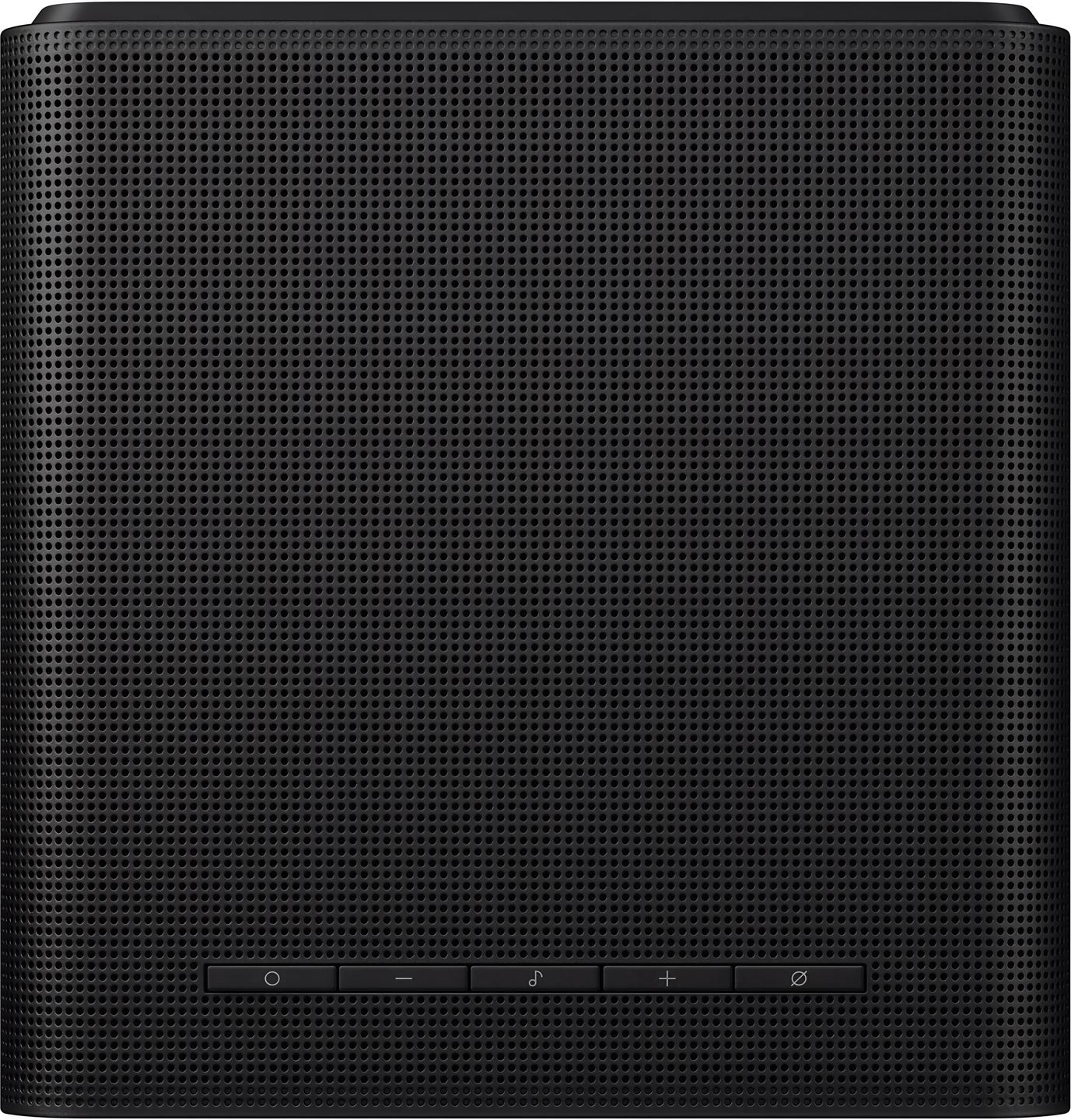
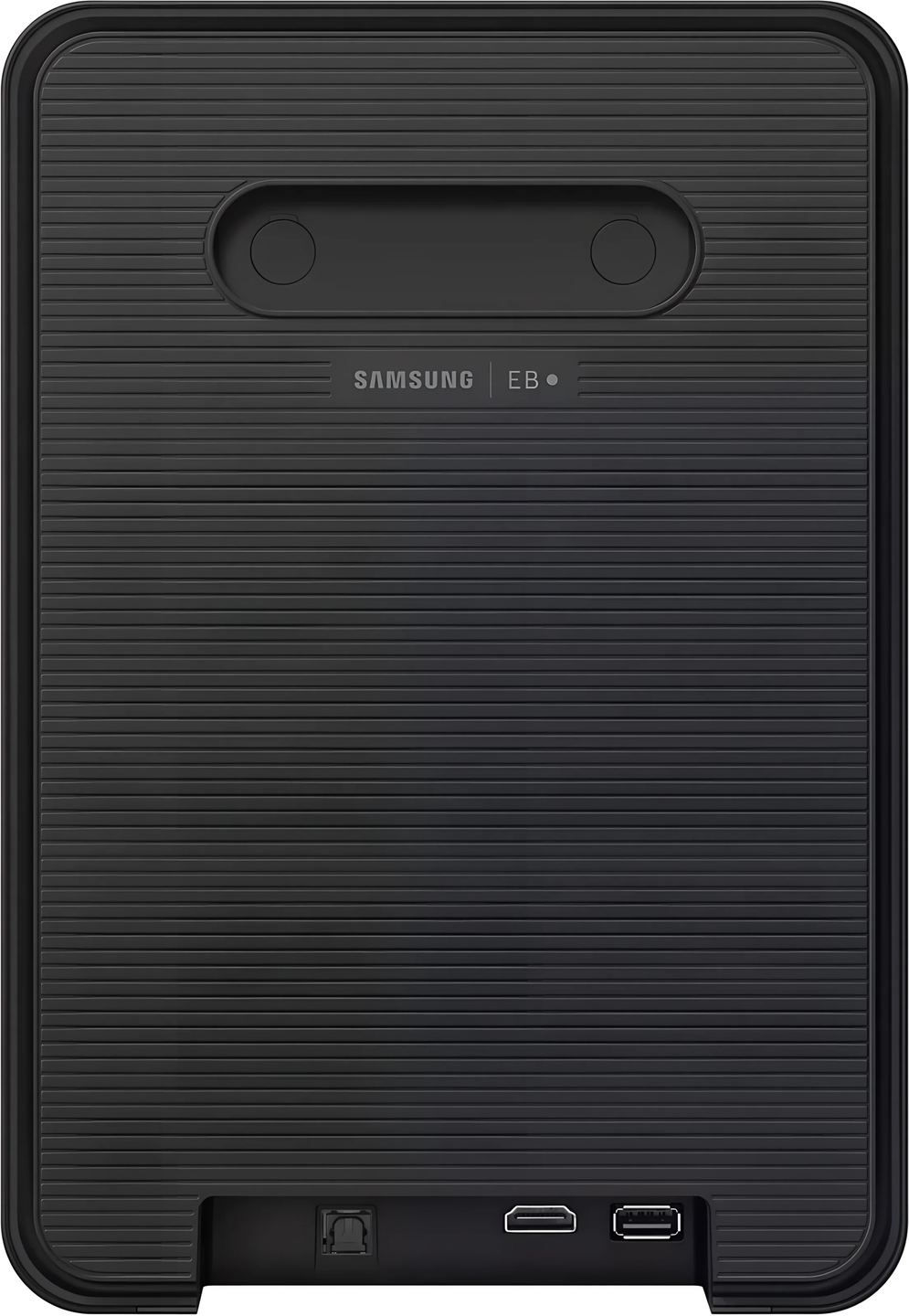
The Music Studio 7 features an HDMI output with eARC and HDMI-CEC, an optical digital audio input, and a USB port reserved for maintenance. No HDMI input, no analog input. The absence of an analog input rules out direct connection of a turntable equipped with a phono preamp, despite the mention of vinyl compatibility in some Samsung presentations (this connection then goes through a Samsung TV connected via HDMI eARC, or via Bluetooth). No cables (HDMI, optical) or remote control are included. Control is handled via the Samsung Sound app, voice commands, or the remote control of the associated Samsung TV (One Remote function).
Compared with the Music Studio 5
The Music Studio 7 moves upmarket on several points compared with the Music Studio 5 (LS50H/LS51H). The configuration goes from 2.0 channels with 3 drivers to 3.1.1 channels with 5 drivers, including a central woofer, a super tweeter, and side/vertical speakers. Dolby TrueHD and the HDMI output with eARC and HDMI-CEC, absent from the Studio 5, are present here. The format is more compact in width but deeper, and the weight increases from 2.4 kg to 5.6 kg.
What the press says
The Samsung is a spacious, expansive listen while managing to be quite well focused at the same time. [...] It can lose the run of itself a little where high-frequency reproduction is concerned – it doesn't need any especially unsympathetic recording to make the Samsung sound just a little splashy and edgy. [...] This is the best Samsung-badged audio product I've heard in… well, I'm not sure how long exactly, but it's quite a while.
Technical specifications
General overview
- Product type: wireless speaker
- Configuration: 3.1.1 channels
- Number of speakers: 5
- Total power: not disclosed
- Design by Erwan Bouroullec
- Color: Samsung black
Audio performance
- Supported Dolby technologies: Dolby Atmos, Dolby Digital Plus, Dolby 5.1ch, Dolby TrueHD
- Wireless Dolby Atmos
- AI Adaptive Sound: Music and Standard modes
- AI Dynamic Bass Control
- SpaceFit Sound Pro
- Q-Symphony
- AVA (Active Voice Amplifier) Pro
- Auto Volume
- Eclipsa Audio
Wireless and network connectivity
- Wi-Fi 6
- Bluetooth 6.0
- AirPlay 2 and Google Cast
- Spotify Connect
- Spotify Tap (via Wi-Fi)
- Roon Ready
- Alexa built-in
- Single remote control
- SmartThings
- Stereo Play: pairing of 2 speakers
- Group Play: up to 10 speakers
Supported audio formats
- Supported formats: MP3, AAC, OGG, WAV, FLAC, AIFF, ALAC
- Maximum Wi-Fi quality: 24-bit / 96 kHz
Wired connections
- HDMI input: none
- HDMI output: 1
- eARC
- HDMI-CEC
- USB: reserved for technical service
- Optical digital audio input: 1
- Analog audio input: no
Dimensions and weight
- Speaker dimensions (W × H × D): 185 × 269 × 190.5 mm
- Speaker weight: 5.6 kg
Power consumption
- In operation: 20 W
- Standby: 0.5 W
Q-Symphony compatibility
- Q-Symphony — compatible Samsung TVs:
- 2022 TVs from the BU8000 onwards
- 2023 TVs from the CU7000 onwards
- 2024 TVs from the DU7000 onwards
- 2025 TVs from the U8000F onwards
- 2026 TVs from the U8000H onwards
- The Frame and The Frame Pro 2022 to 2026
- AI Q-Symphony — compatible Samsung TVs:
- 2023 TVs from the Q70C onwards
- 2024 TVs from the Q70D onwards
- 2025 TVs from the QN70F onwards
- 2026 TVs from the M80H onwards
- The Frame and The Frame Pro 2024 to 2026
Included accessories
- Optical cable: not included
- HDMI cable: not included
- Remote control: not included
Positioning compared to the Music Studio 5 (LS50H / LS51H)
- 3.1.1-channel configuration versus 2.0 on the Studio 5
- 5 speakers versus 3, including central woofer, super tweeter, and side / vertical speakers
- Dolby TrueHD support, absent on the Studio 5
- HDMI output with eARC and HDMI-CEC, absent on the Studio 5
- More compact width but greater depth: 185 × 269 × 190.5 mm
- Heavier weight: 5.6 kg versus 2.4 kg
Frequently Asked Questions
Does the Music Studio 7 work without a Samsung TV?
Yes. In standalone mode, it receives audio via Wi-Fi (AirPlay 2, Google Cast, Spotify Connect), Bluetooth, or optical input. Q-Symphony, SpaceFit Sound Pro, wireless Dolby Atmos, and Eclipsa Audio functions, however, require a compatible Samsung TV.
Can two Music Studio 7 units be used as a stereo pair for a TV?
Yes, via the Stereo Play function on a 5 GHz Wi-Fi network. The two speakers then operate as synchronized left and right channels. This configuration is compatible with Q-Symphony.
Which HDMI cable should be used for eARC?
The HDMI eARC output requires a certified high-speed HDMI cable (High Speed HDMI or Ultra High Speed HDMI). No cable is supplied in the box.
How does Spotify Tap work?
Pressing the Spotify Tap button on the speaker restarts the last Spotify playback without needing to open the app on the phone. The function requires a Wi-Fi connection, the Spotify app on a mobile device, and an initial connection via Spotify Connect.
- Eco-contribution of €0.75 included in the sale price.
- Manufacturer reference: HW-LS70HZF
- GTIN / EAN: 8806099031558




