EarMen L-Amp MK2
Specifications and features


EarMen L-Amp MK2, the portable tube DAC amplifier
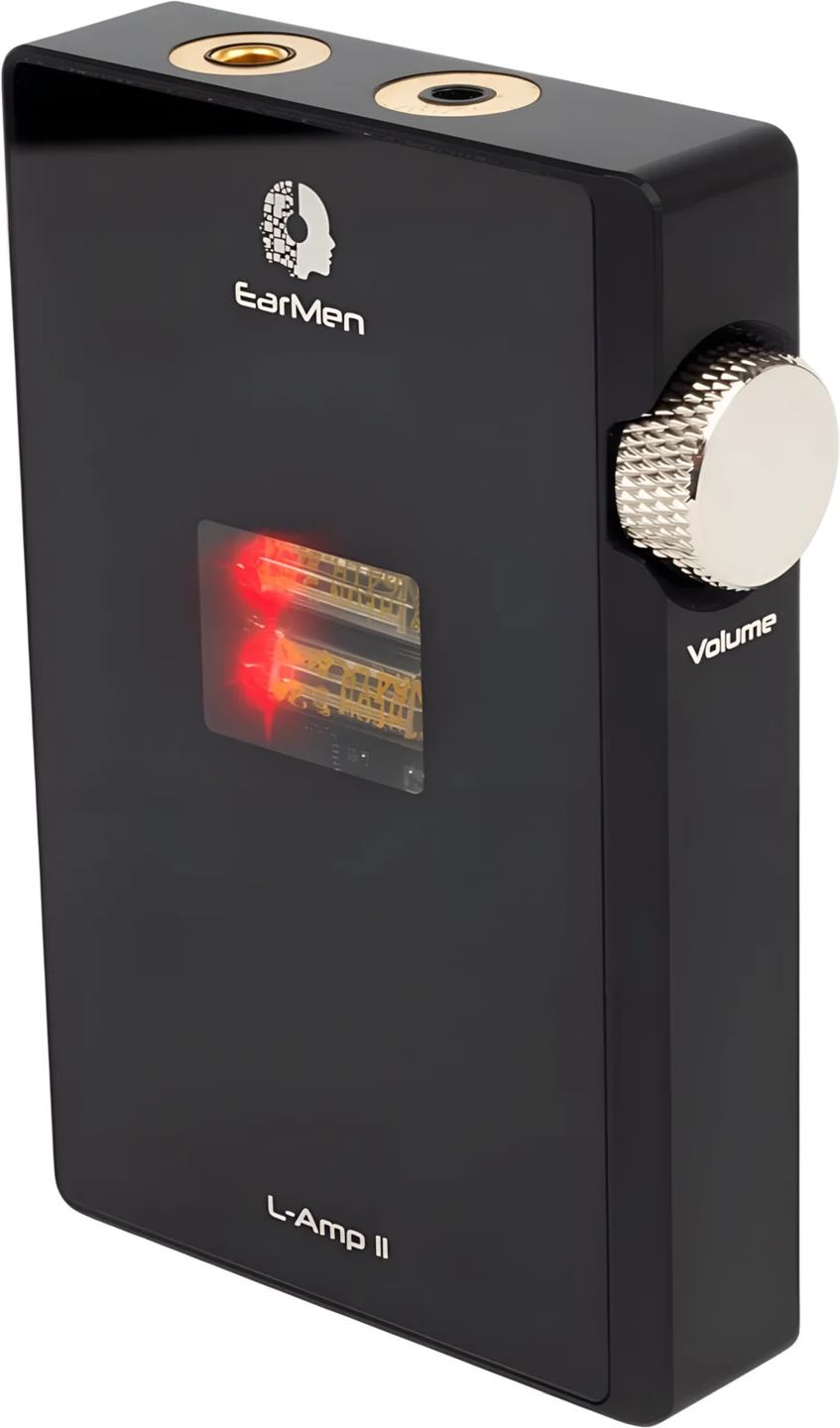
Heating up two vacuum tubes in a case that fits beside a smartphone: the concept remains just as surprising. This second version takes EarMen’s portable tube converter and fixes the teething issues of the first model: power supply hiss and switching noises. On the menu is a hybrid chain combining two NOS tubes with a transistor stage, an analog potentiometer, and 1 watt into 8 ohms to drive both IEMs and full-size headphones.
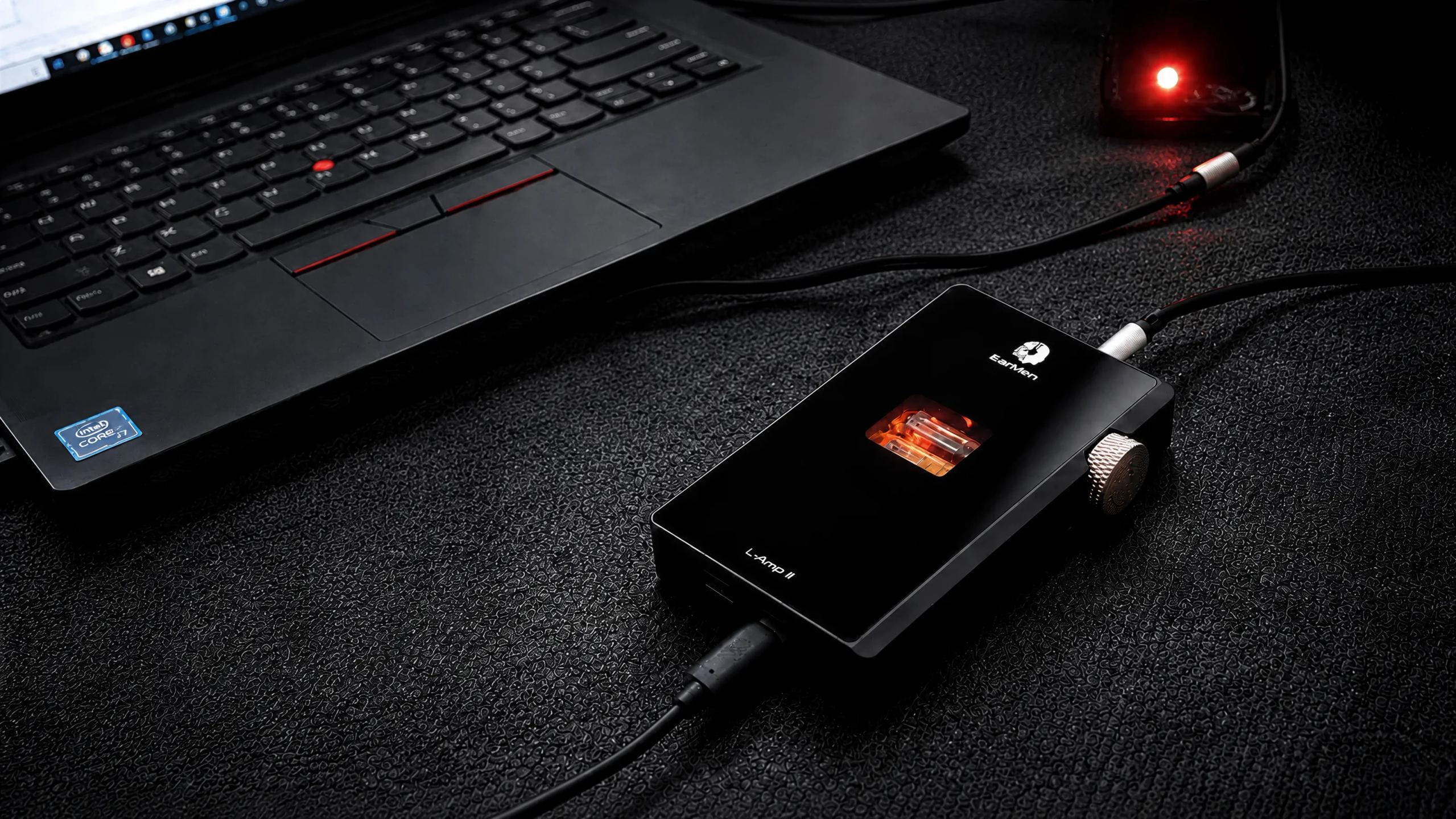
Two vacuum tubes in silicone suspension
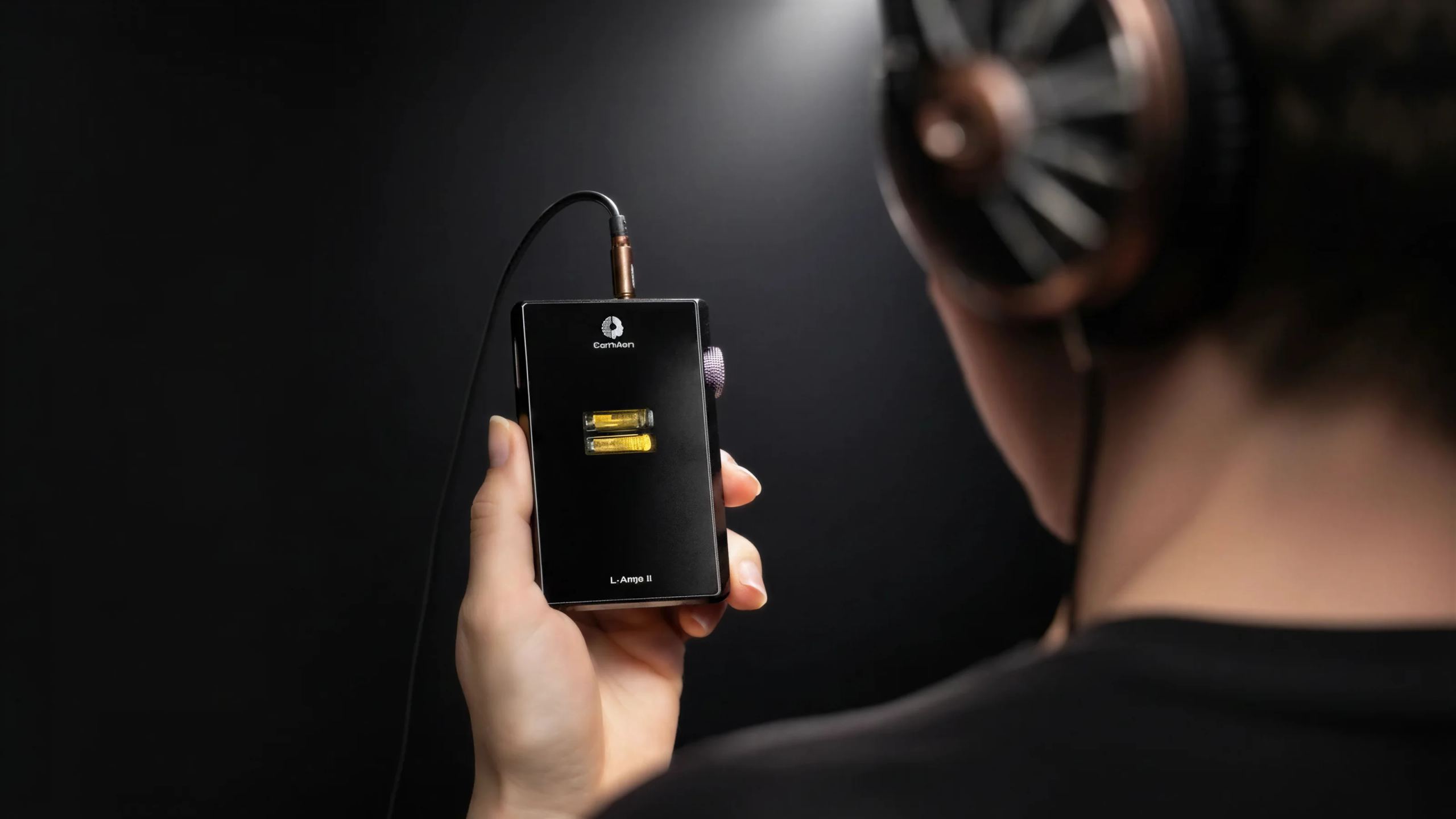
At the heart of the L-Amp MK2 are two NOS (new old stock) JAN6418 subminiature vacuum tubes, military-grade tubes manufactured decades ago and left unused. Their presence in a pocket-sized device presents a familiar issue: microphonics. A tube picks up mechanical vibrations and turns them into audible noise, all the more troublesome when carrying and handling the device. The solution is a four-point silicone suspension that decouples the tubes from the chassis and absorbs shocks. A front window reveals the tubes, illuminated by LEDs. When switched on, allow a few seconds of warm-up before sound comes through: the tubes heat up, as in a home amplifier. If a shock triggers microphonics, simply unplugging and reconnecting the USB-C cable is enough to make it disappear.
A hybrid chain, tubes and transistors
The word hybrid sums up the design: digital and analog share the work. Decoding is handled by an ESS Sabre converter, supporting PCM up to 32-bit/384 kHz and DSD up to DSD128 in DoP. The signal then passes through the tube stage, which provides the harmonic color and texture characteristic of tubes, followed by a Burr-Brown INA1620 SoundPlus op-amp output stage, responsible for power delivery with a very low distortion rate. The entire circuit is fully balanced from end to end.
One technical choice deserves a mention: the L-Amp MK2 operates without feedback. Feedback is a common technique that sends part of the output signal back to the input to correct distortion and stabilize gain. Doing without it preserves the tube harmonics and the natural character of the sound, at the cost of the correction it would have provided. The printed circuit boards and connectors are gold-plated, and each unit is assembled and tested by hand.
One watt for IEMs and full-size headphones
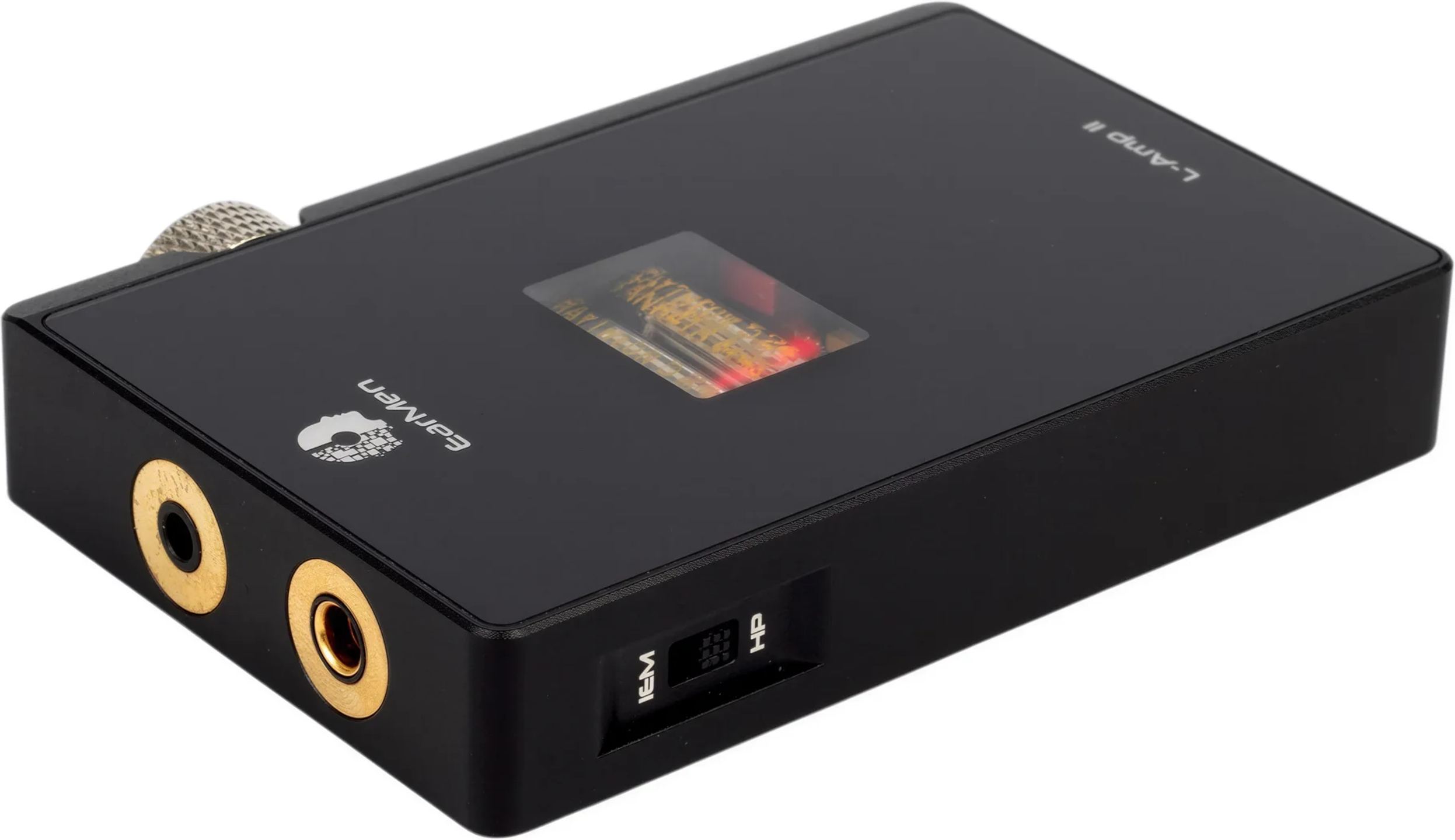
1 watt into 8 ohms is enough to power demanding headphones without running out of headroom. Then there is the case of IEMs, which are sensitive to the slightest hiss: an IEM / headphone gain switch addresses this compromise. In the IEM position, the noise floor remains low for high-sensitivity earphones; in the headphone position, the L-Amp MK2 delivers its full power. Volume is controlled via a logarithmic analog potentiometer, a real dial with consistent tracking between both channels, without digital steps. A Bass Boost (B+) button adds body to the low end, a measured enhancement that is useful with IEMs or headphones that are slightly lean in the lower range, and can be switched off when you want to remain neutral. Automatic overload protection keeps the headphones and circuits safe.
On the output side, the L-Amp MK2 offers a balanced 4.4 mm headphone jack and an unbalanced 3.5 mm jack. These same outputs can be used to feed active speakers or an amplifier: the L-Amp MK2 then becomes a portable converter and preamplifier, with the level adjusted via the dial.
Power via two USB-C ports
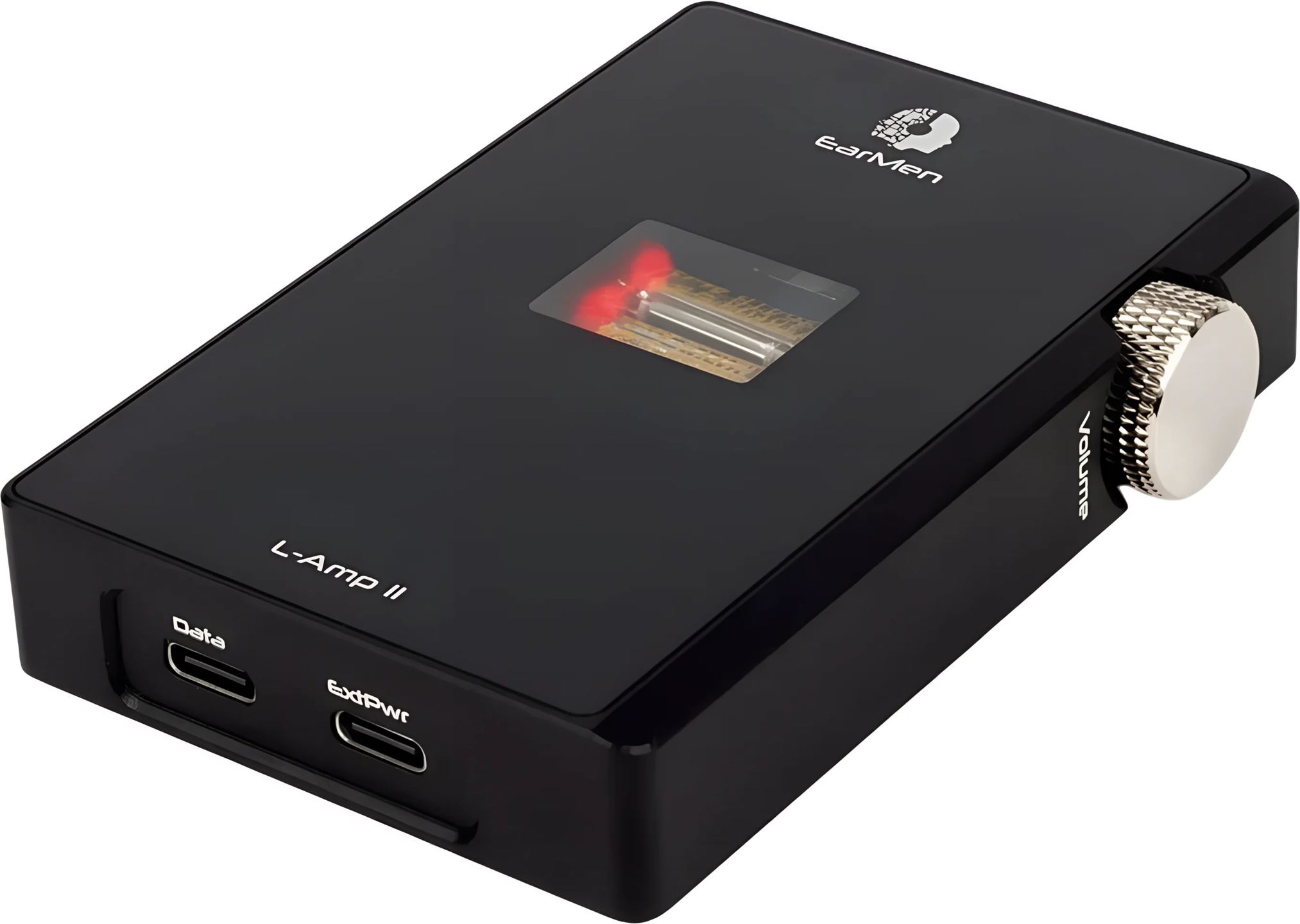
There is no internal battery here: the L-Amp MK2 draws its power from USB-C. The DATA port receives the signal from a smartphone, music player, or computer, and can also provide power. The second port, EXT PWR, is used to connect a portable battery, USB charger, or external power supply, preserving the source battery during long listening sessions.
One useful detail before putting together your travel kit: the EXT PWR input expects a 5-volt USB-A source, connected via a USB-A to USB-C cable. USB-C PD (Power Delivery) power supplies are not supported on this port. In short, a charger or battery with USB-C PD output only will not work for external power; a 5-volt USB-A output is required.
Improvements over the first version
The first L-Amp paved the way for portable tube sound, albeit with some limitations: power supply-related background noise, “pops” and “clicks” when plugging in and switching on, and less refined volume control. This second version retains the same sonic character while refining its implementation. Power supply control has been redesigned to lower the noise floor. Powering on and off is now silent, with no switching noise. The logarithmic analog potentiometer replaces the former control and offers smoother operation and better channel balance. Tube isolation has been reworked with the four-point silicone suspension. In return, the L-Amp MK2 is larger and thicker than the original to accommodate the tubes, and the playback/pause function of the first model has been removed.
Technical specifications
Design
- Portable tube DAC, headphone amplifier, and preamplifier with hybrid architecture
- Two NOS JAN6418 vacuum tubes
- Four-point silicone suspension for mechanical vibration isolation
- Burr-Brown INA1620 SoundPlus op-amp amplification stage
- Fully balanced circuit
- Zero-feedback design
- Automatic overload protection
- Pop-free power on and off
- Gold-plated PCBs and connectors
- Hand-assembled and tested
- Logarithmic analog potentiometer
Converter and audio formats
- ESS Sabre converter
- PCM up to 32-bit / 384 kHz
- DSD up to DSD128 via DoP
Power
- 1 W into 8 ohms
Connectivity
- Inputs
- 1 USB-C audio input for the signal (DATA)
- 1 USB-C input dedicated to external power (POWER)
- Outputs
- 1 balanced 4.4 mm jack headphone output
- 1 unbalanced 3.5 mm jack headphone output
Controls
- Analog volume knob
- Bass Boost (B+) button
- IEM / headphone gain switch
Power supply
- No internal battery
- USB-C powered
- Compatible with portable battery packs, USB chargers, or external power supplies
- Tube warm-up of a few seconds at power-on
Physical specifications
- Dimensions (W × H × D): 48.5 mm × 19 mm × 86.5 mm
- Weight: 113 g
- Enclosure: CNC-machined aluminum
Frequently asked questions
Is the L-Amp MK2 compatible with an iPhone or an Android phone?
Yes, via the USB-C DATA port. Recent USB-C iPhones and Android smartphones connect directly with a USB-C cable; Lightning iPhones require an adapter. The L-Amp MK2 then draws a small amount of power from the phone: to preserve its battery life during extended listening sessions, connect a power supply to the EXT PWR port.
Is it mandatory to use the EXT PWR port?
No. The DATA port is sufficient to operate the L-Amp MK2: it carries the signal and powers it from the source. The EXT PWR port is an addition, useful for preserving the battery of a phone or music player, or for stable power during stationary use.
What does “DSD128 over DoP” mean?
DoP (DSD over PCM) is a method that carries a DSD stream over a connection designed for PCM by encapsulating it in PCM frames. The L-Amp MK2 reads DSD files this way up to DSD128, namely DSD64 and DSD128. This is the DSD format used for SACDs and many high-resolution downloads.
Do tubes wear out, and can you replace them yourself?
Subminiature tubes of this type have a very long service life under normal use. They are mounted on the four-point silicone suspension and integrated into the circuit board: unlike the large tubes in a living-room amplifier, these are not tubes you replace yourself whenever you feel like it.
What is the difference between the 3.5 mm and 4.4 mm outputs?
The 3.5 mm jack is single-ended, ideal for IEMs and most headphones. The 4.4 mm jack is balanced: it separates the left and right channels on independent lines and delivers the device’s full power, generally providing better stereo separation. A balanced cable with a 4.4 mm termination is required to benefit from it.
Why does the sound take a few seconds to come on after switching on?
Vacuum tubes must warm up before operating correctly. This warm-up period of a few seconds is normal for all tube equipment, including home audio systems. During this brief moment, sound may be absent or reduced, then comes in once the tubes are warm.
Is there another version of the L-Amp MK2?
Yes. Alongside the standard model, EarMen offers a Gold Signature Edition made to order in a very small production run: a hand-polished gold-plated exterior and the owner’s name engraved on each unit. The standard L-Amp MK2 is itself a limited edition, called Miki’s Signature.
- Eco-contribution included in the sale price.