

Elipson Classic Sub 10

Overview
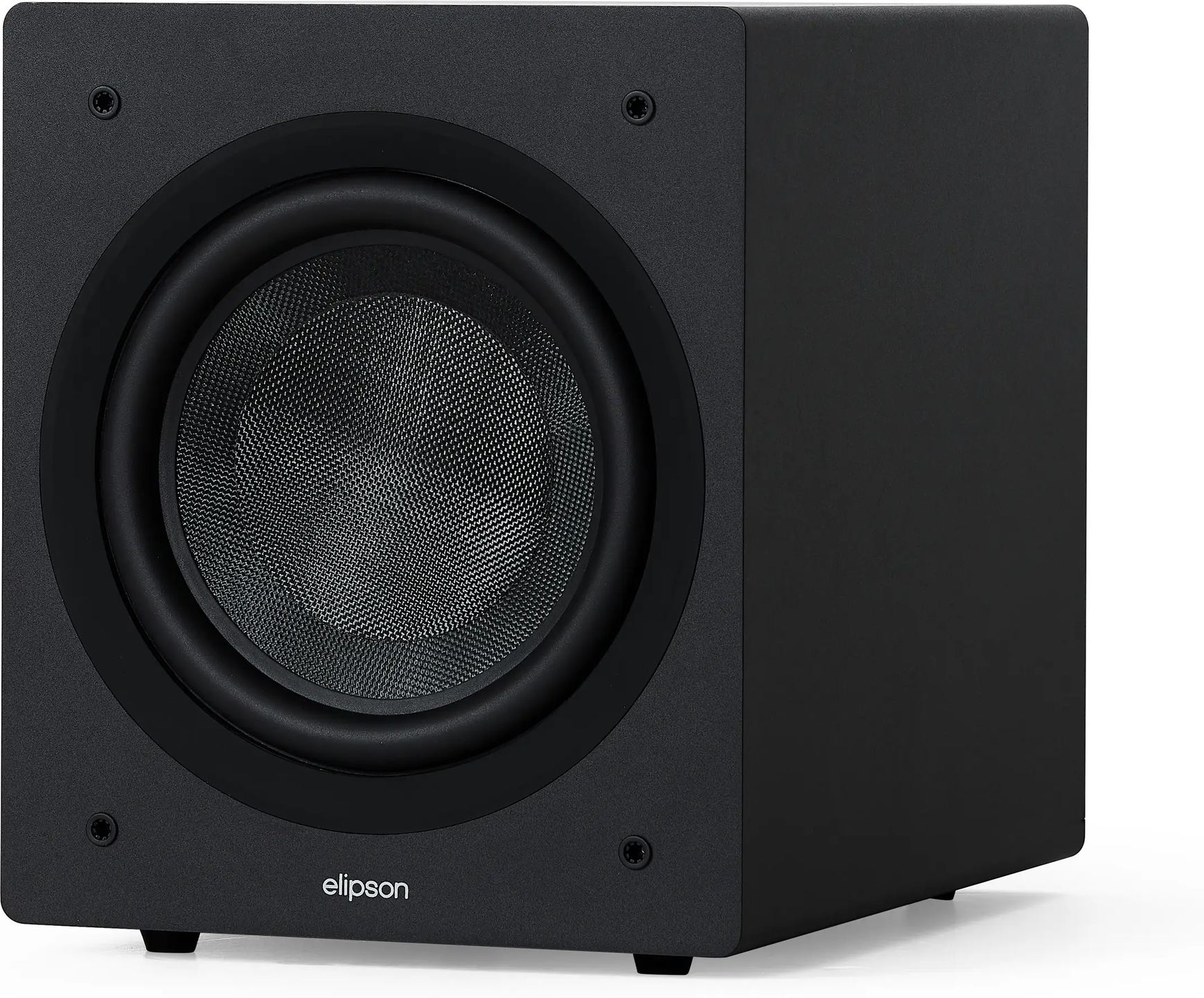
The mid-range model in Elipson’s Classic Sub range, this subwoofer features a larger driver and more powerful amplification than the series’ smaller model: 25 cm and 200 W, for extension down to 29 Hz. Its cabinet, just over 30 cm wide, fits into a medium-sized living room, with bookshelf or floorstanding speakers. Its settings allow it to work equally well with a stereo amplifier or a home theater receiver.
A fiberglass driver in a bass-reflex enclosure
Bass is handled by a 250 mm driver with a fiberglass cone, a rigid, lightweight material. In a subwoofer, the cone needs to move a lot of air without deforming. If it flexes, bass becomes muddy and distortion increases as soon as the volume rises. Fiberglass helps the cone move back and forth as a single unit, like a piston, whether reproducing an explosion in an action film or a sustained double bass line.
The cabinet uses a bass-reflex design: it has a port, an opening tuned to a specific frequency, which makes the air inside work with the driver. The low end gains output and extension compared with a sealed cabinet of the same volume and power. The trade-off: below the tuning frequency, efficiency drops quickly and the cone is no longer restrained by the air inside the cabinet. The subsonic filter addresses this problem.
200 W of Class D power and boosted bass around 33 Hz
The built-in amplifier delivers 200 W of Class D power. This type of amplification is highly efficient: it generates little heat and takes up little space inside the cabinet, leaving more room for the driver. Frequency response extends from 29 to 160 Hz at ± 3 dB, meaning the level stays within 3 dB of its average value across this entire range. It covers the lowest notes of instruments and most bass effects in soundtracks.
A 25 cm driver in a compact cabinet naturally loses output as it approaches 30 Hz. Elipson compensates for this roll-off with a 6.3 dB boost centered on 33 Hz, maintaining weight in the lowest bass. The boost is generous, since 6 dB means roughly four times as much power is required from the amplifier in this region. In a large room and at high volume, this is therefore where the 200 W reaches its limits first. In a medium-sized living room, the walls already reinforce the bass, so it is more important to watch the subwoofer’s level to keep the low end from becoming overpowering.
The subsonic filter removes everything below 22 Hz, with a slope of 12 dB per octave. These frequencies, found on some recordings or in handling noise, are barely audible but cause substantial cone movement. Cutting them protects the driver and reserves power for frequencies that are actually audible.
Settings to match speakers or a home theater receiver
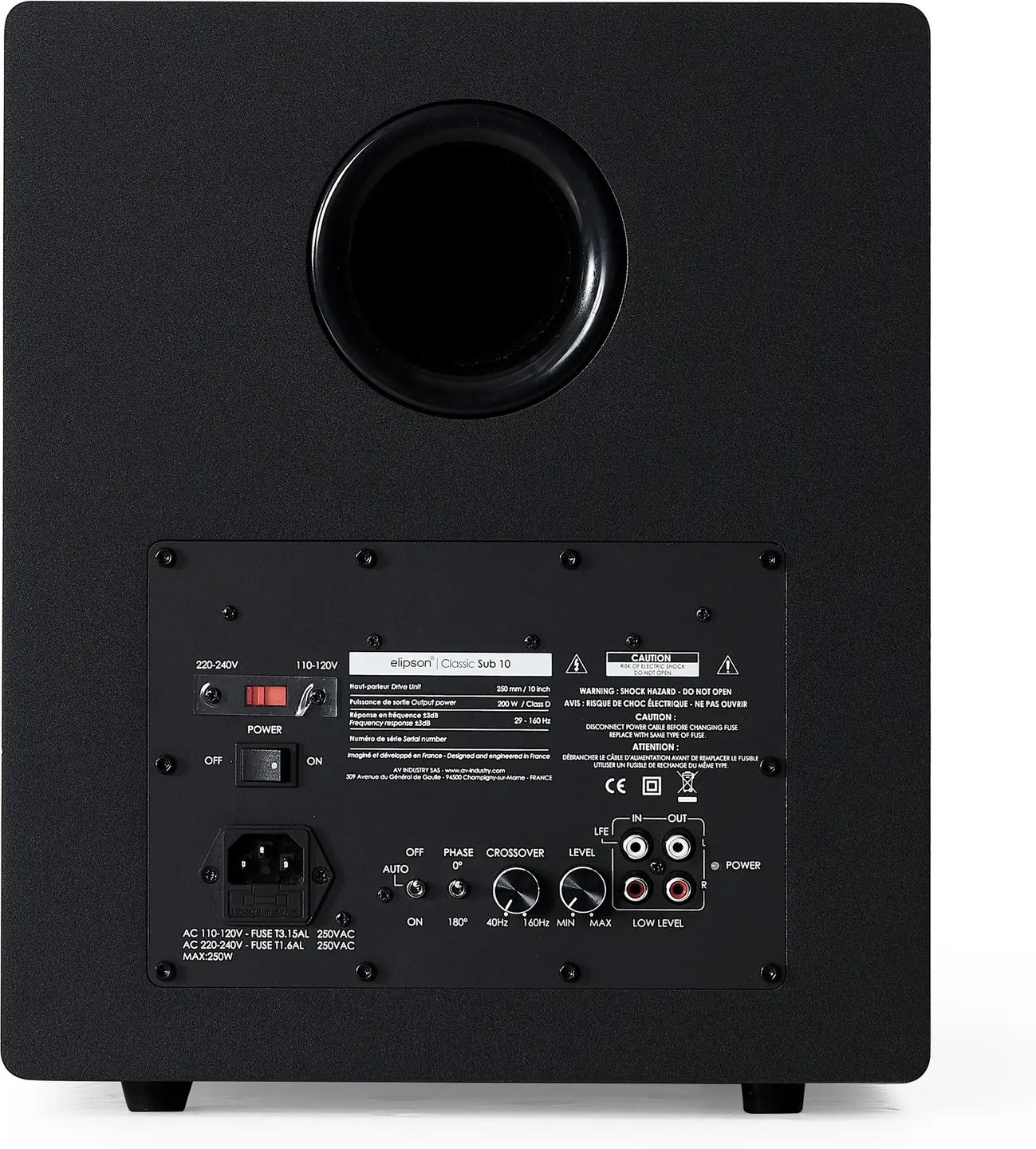
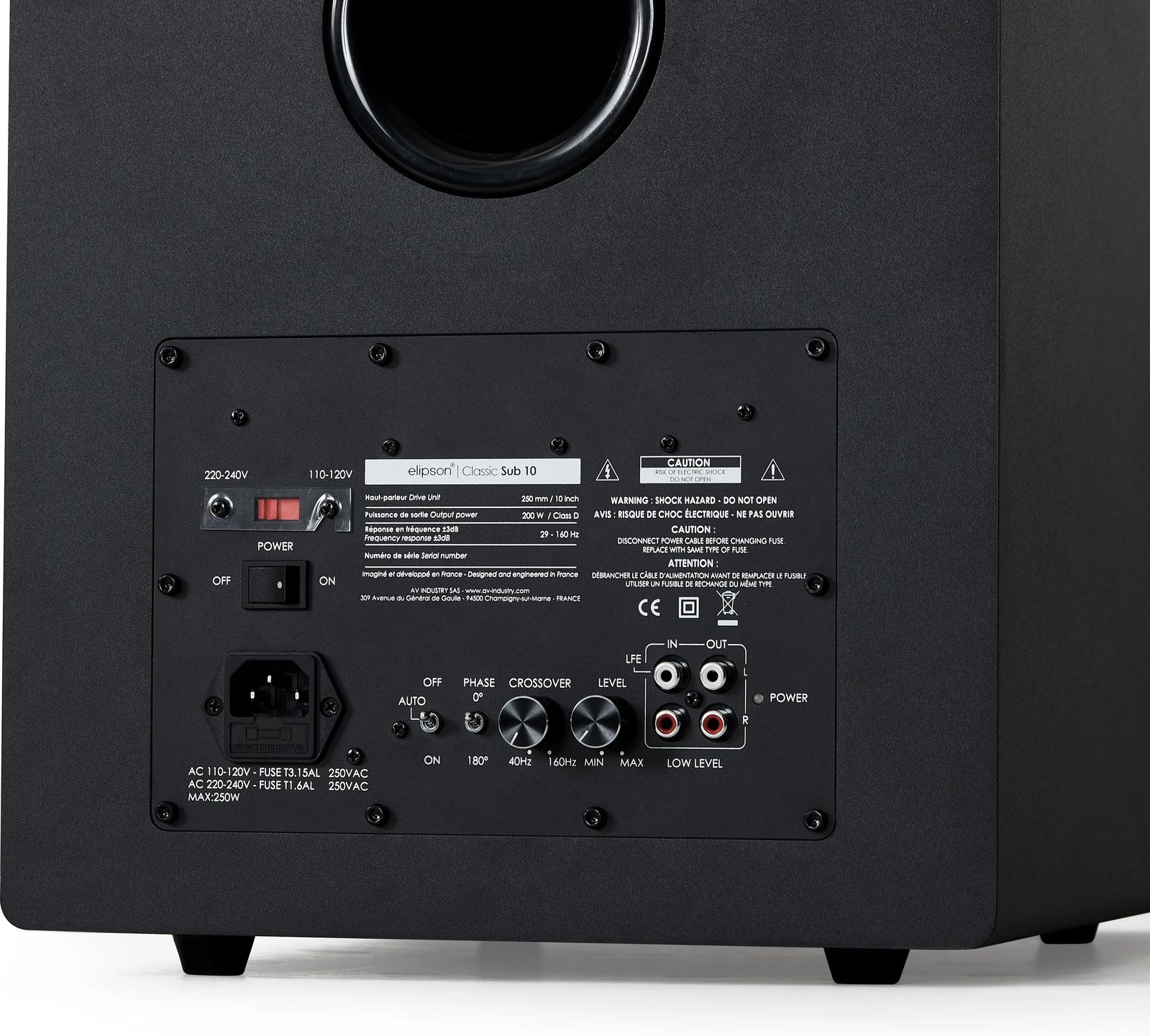
The crossover frequency is adjustable from 40 to 160 Hz. This is the point where the subwoofer takes over from the main speakers. A pair of small bookshelf speakers with limited bass extension calls for a crossover set around 80 to 100 Hz. Floorstanding speakers that already reach deep into the bass work well with a lower crossover, with the subwoofer then supplementing only the lowest bass. With a home theater receiver, the receiver distributes bass between the speakers and the subwoofer: set the Classic Sub 10’s crossover to its maximum to avoid overlapping two filters.
The phase switch, set to 0° or 180°, aligns the cone’s movement with that of the speakers. When the subwoofer is far from the speakers or placed in a corner, its sound waves can arrive out of phase and create a dip in the crossover region. The correct setting is chosen by ear from the listening position: it is the position that delivers the fullest bass around the crossover frequency. Automatic standby switches the amplifier off when there is no signal and turns it back on as soon as playback resumes.
Line-level connections and a modest footprint
Connectivity consists of left and right line-level inputs and outputs on RCA sockets. The inputs receive the signal from a home theater receiver’s subwoofer output or a stereo amplifier’s preamp output. The outputs pass this signal on to another device. The subwoofer has no high-level inputs, the terminals that connect to an amplifier’s speaker outputs. A device without a subwoofer output or preamp output therefore cannot drive it directly.
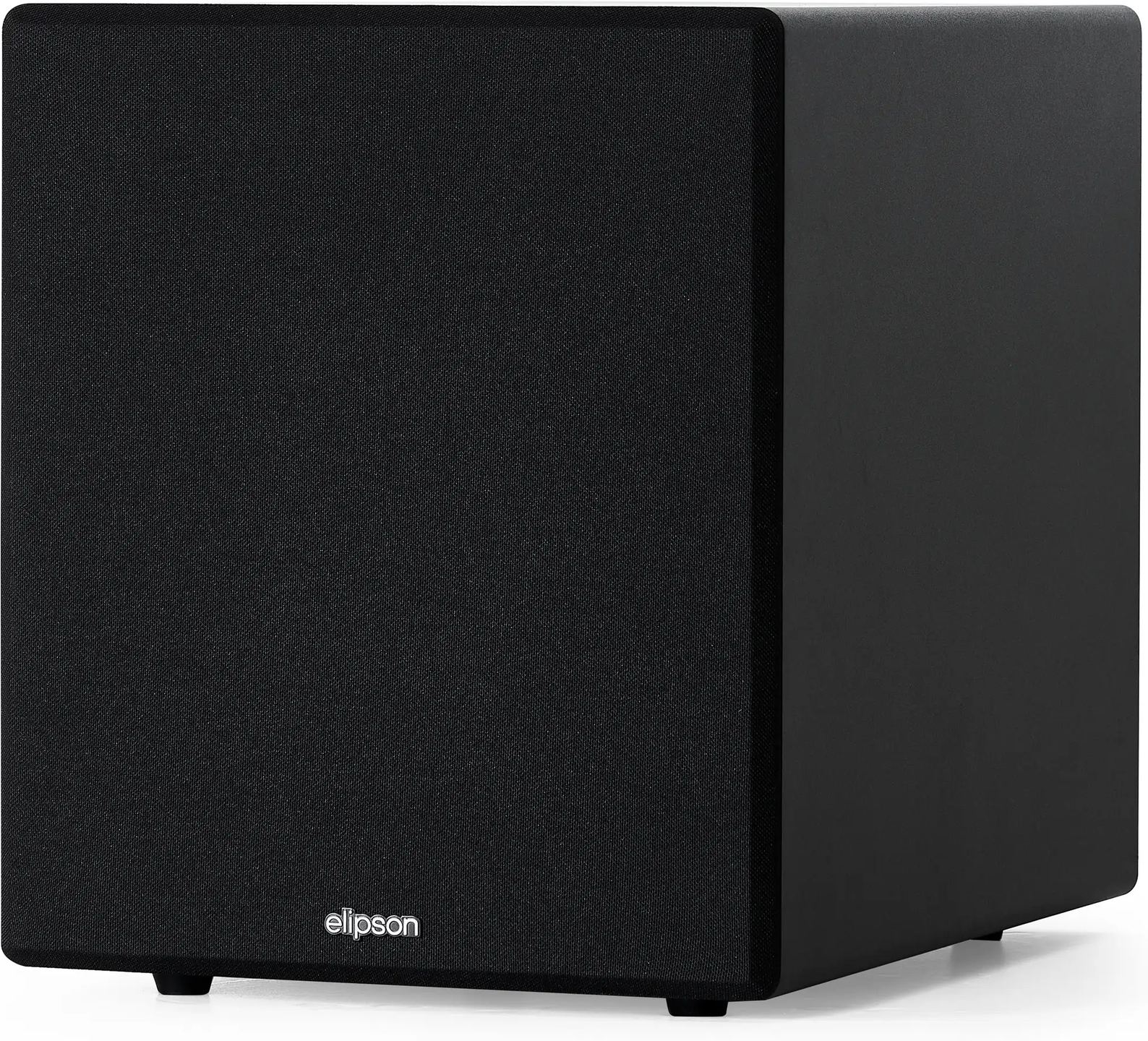
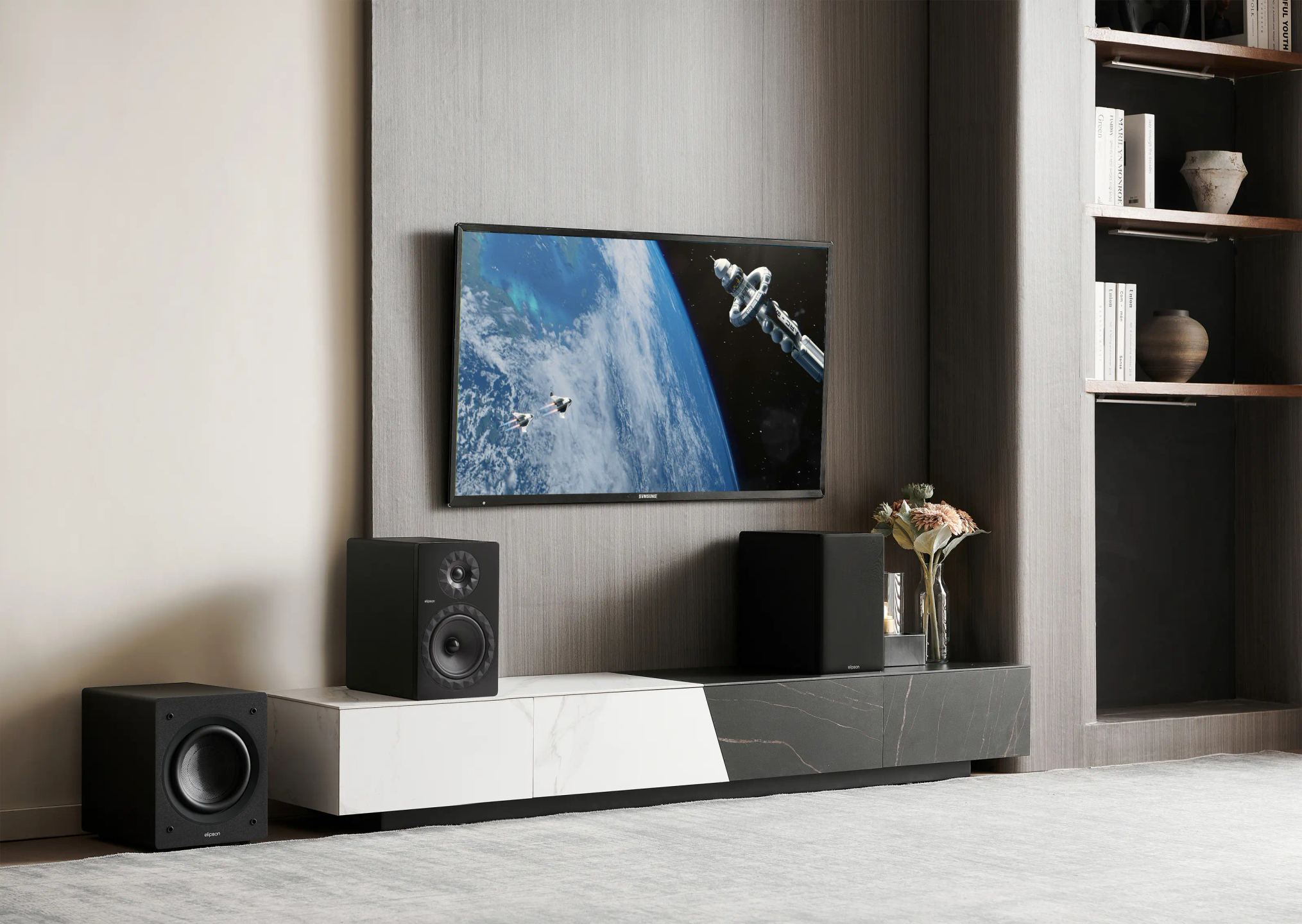
The cabinet, in a black finish, measures 306 × 372 × 410 mm without the grille, and the grille adds 14 mm to the depth. At 15.4 kg, the subwoofer is easy to move while searching for the best position, a step that often has more impact on the result than any setting.
Documentation
French
Technical specifications
Design and amplification
- Type: active bass-reflex subwoofer
- Amplification: 200 W, Class D
- Driver: 250 mm diameter, fiberglass cone
Acoustic performance and settings
- Frequency response: 29 – 160 Hz (± 3 dB)
- Subsonic filter: 22 Hz, 12 dB/octave slope
- Crossover frequency: variable from 40 to 160 Hz
- Bass boost: +6.3 dB at 33 Hz
- Phase: 0° / 180°
- Standby: automatic
Connections
- Inputs: left / right line-level, low-level
- Outputs: left / right line-level, low-level
Dimensions and weight
- Dimensions (width × height × depth)
- Without grille: 306 × 372 × 410 mm
- With grille: 306 × 372 × 424 mm
- Net weight: 15.4 kg
- Gross weight: 18 kg
Frequently Asked Questions
Can the Classic Sub 10 be connected to a stereo amplifier without a subwoofer output?
Yes, if the amplifier has a preamp output (pre-out): its line-level signal feeds the subwoofer’s RCA inputs directly. Without a subwoofer output or preamp output, connection is not possible due to the lack of high-level inputs.
Do you need one or two RCA cables?
With a home theater amplifier, a single cable is enough. The amplifier’s subwoofer output carries a mono signal, which is connected to one of the inputs. With a stereo amplifier equipped with left and right preamp outputs, two cables allow the subwoofer to receive bass from both channels, which are not always identical on a recording.
What's the difference compared to Elipson's Premium Sub 10?
The Premium Sub 10 increases power to 300 W, reaches down to 27 Hz and up to 200 Hz. Its front slot-shaped port incorporates an internal deflector that reduces air turbulence. Its digital processing applies a more moderate boost of 3 dB at 30 Hz. It is also bulkier: 360 mm wide and 18 kg, compared with 306 mm and 15.4 kg for the Classic Sub 10.
Can two Classic Sub 10 units be paired?
Yes, in two ways: by connecting each subwoofer to one of the two subwoofer outputs on a home theater amplifier, or by using the line outputs on the first subwoofer to feed the second. Two subwoofers placed in different locations reduce the bass dips and peaks caused by the room. They also share the workload, leaving headroom for the boost around 33 Hz.
Where should the subwoofer be placed in the room?
A corner increases the bass level but often accentuates room resonances, causing notes to linger. A simple method is to place the subwoofer at the listening position and play a bass-heavy track. Then move along the walls at floor level: wherever the bass sounds most even is the right spot for the subwoofer. It is best to avoid placing it inside an enclosed cabinet, which makes the enclosure resonate.
Why does the cutoff go up to 160 Hz?
Above around 100 to 120 Hz, the ear starts to locate the source of the bass, revealing the subwoofer’s position. Going up to 160 Hz mainly provides headroom: it allows very small speakers with limited bass extension to be complemented, and the filter to be left wide open when a home cinema amplifier handles the crossover itself.
- Eco-contribution included in the sale price.
- Manufacturer reference: ELICLASUB10BK
- GTIN / EAN: 3700795194812