T+A Solitaire S430 lacquered black (pack of 2)


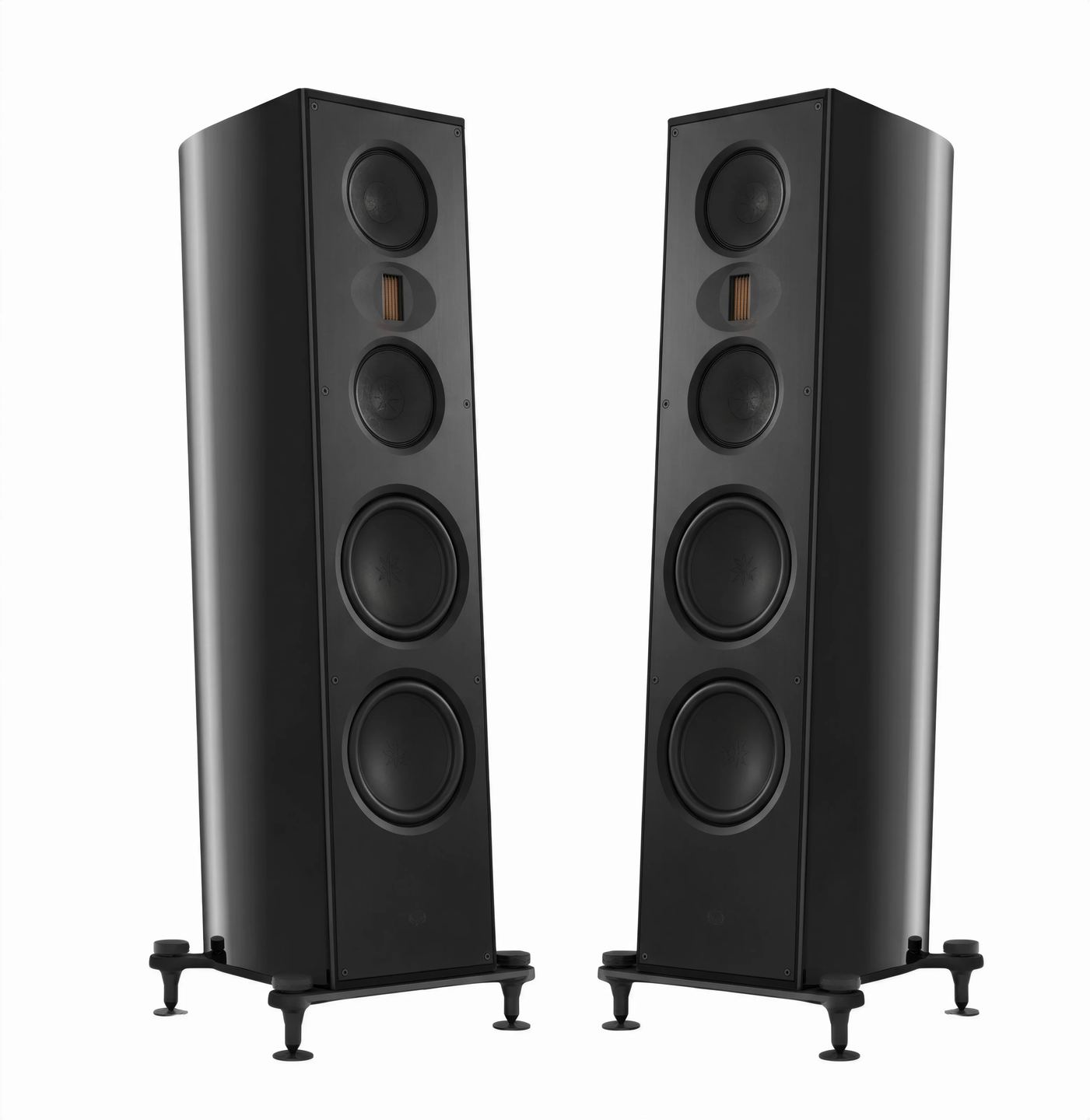
T+A Solitaire S 430: the magnetostatic floorstander from Herford
A five-centimetre magnetostatic tweeter, handmade in Herford, flanked by two 15 cm midrange drivers: the most compact of the Solitaire S floorstanding speakers is built around this trio. Its larger siblings rely on long line sources. It retains the shape of a conventional speaker, with a solid aluminium front panel and two 22 cm bass drivers, but pursues the same goal: reducing the room’s influence on what you hear.
A miniature magnetostatic driver from the Herford workshops
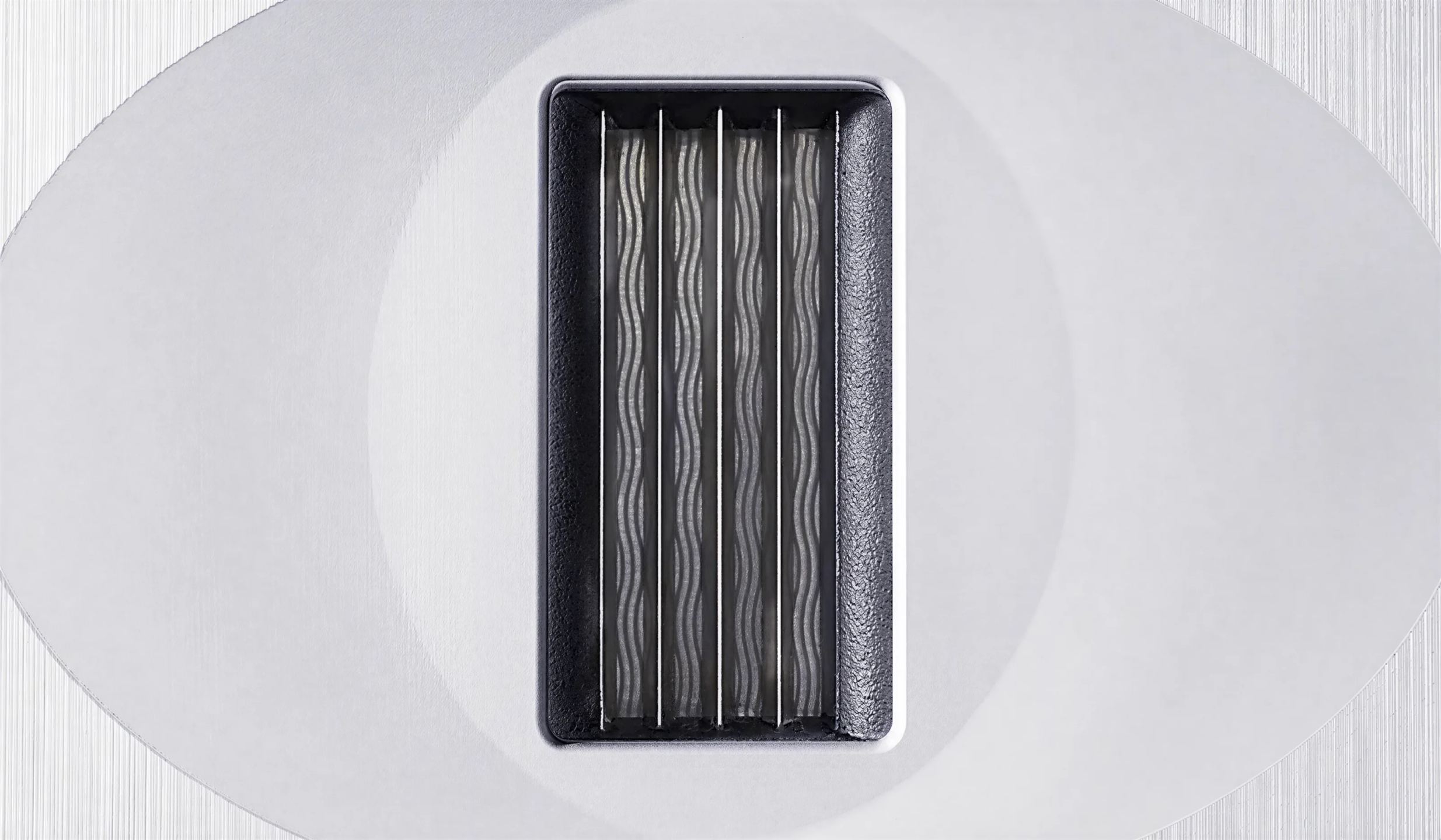
The tweeter, named Mag50, is nothing like a dome. Its very thin diaphragm carries an aluminium conductor etched onto a supporting film using a photochemical process. Positioned opposite ten magnets arranged in two rows, it is driven across its entire surface as soon as current flows through it, whereas a conventional tweeter is driven by a coil attached around its edge. This distributed drive delivers the speed and delicacy of an electrostatic driver, without the high-voltage power supply it requires: the speaker remains entirely passive.
The conductor pattern, called WaveArray, follows a slightly wavy line, calculated to prevent the resonances that arise along straight tracks. Deliberate modulation of the magnetic field and internal absorbers address the distortion that typically affects small magnetostatic drivers. The Mag50 is derived from the TPM 3100 and TPM 2500 transducers used in Solitaire headphones. It borrows an airflow management system (Draft Control) from the Solitaire P-SE, adapted to the speaker to limit turbulence around the magnets. At 50 mm long, it is the shortest of the planar drivers that T+A has been developing since the 1980s, and its response extends up to 45 kHz.
Two symmetrical midrange drivers to keep the walls at bay
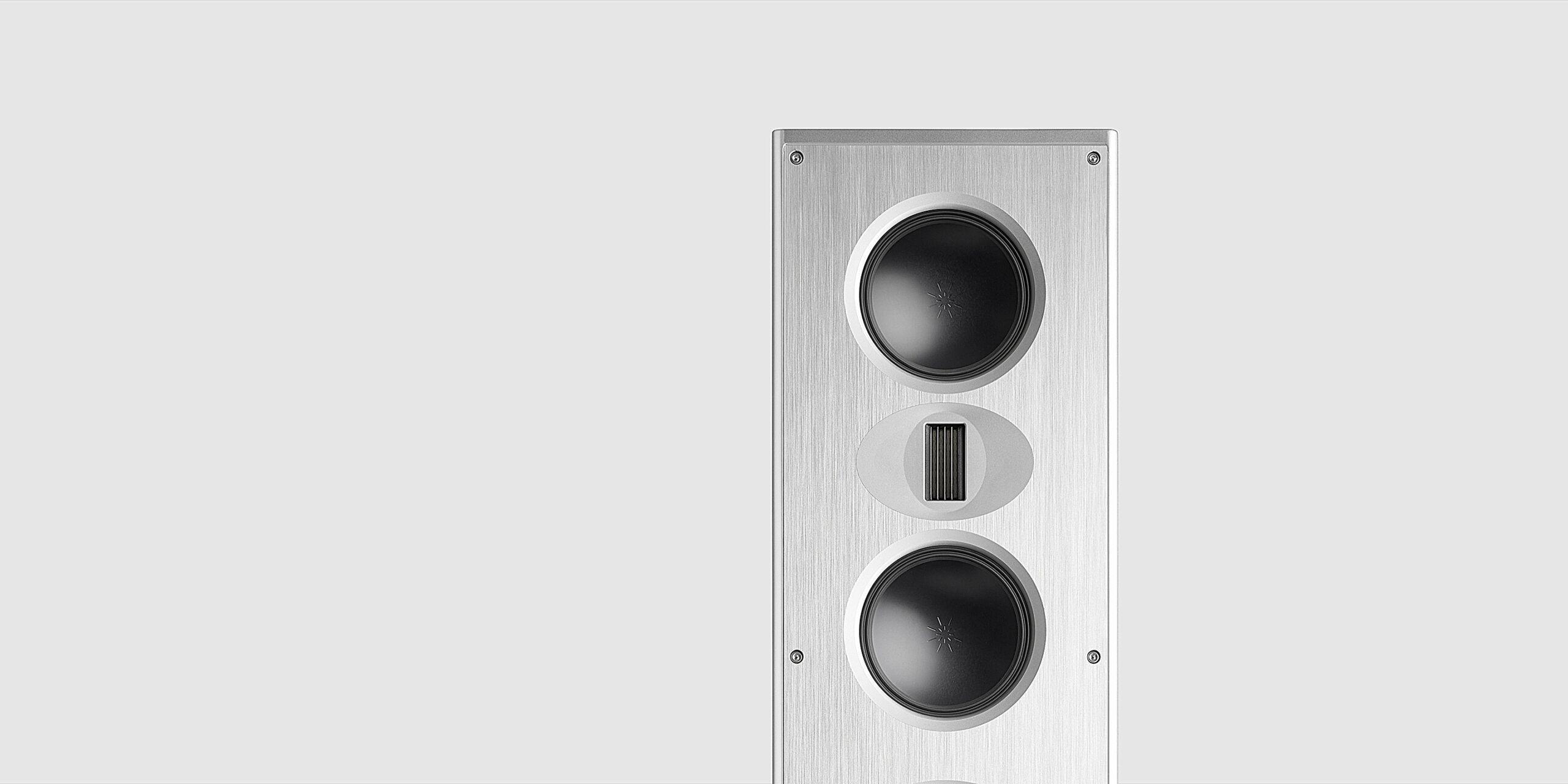
The two 15 cm midrange drivers are positioned above and below the magnetostatic driver. T+A calls this arrangement Symmetric Directivity. Precisely controlled by the crossover, the two drivers narrow vertical dispersion: less energy is directed towards the ceiling and floor, whose reflections blur the positioning of instruments. Direct sound dominates at the listening position, the soundstage gains depth and each voice stays in place.
Sharing the workload has another benefit. For the same sound level, each midrange driver moves half as far as a single driver would, reducing distortion. The aluminium diaphragms feature Star Stabilizer reinforcement, which pushes their natural resonances higher and delays the point at which the diaphragm stops moving as a single unit. With crossover points at 200 Hz and 2,200 Hz, this pair covers the entire range of the human voice without a crossover transition in the middle.
The Solitaire S 530 and S 540 achieve this dispersion control with an 85 cm line source and seven aligned midrange drivers. The S 430 achieves it with a much more compact arrangement, and is the entry point to the Solitaire S range.
Aluminium bass reaching down to 29 Hz
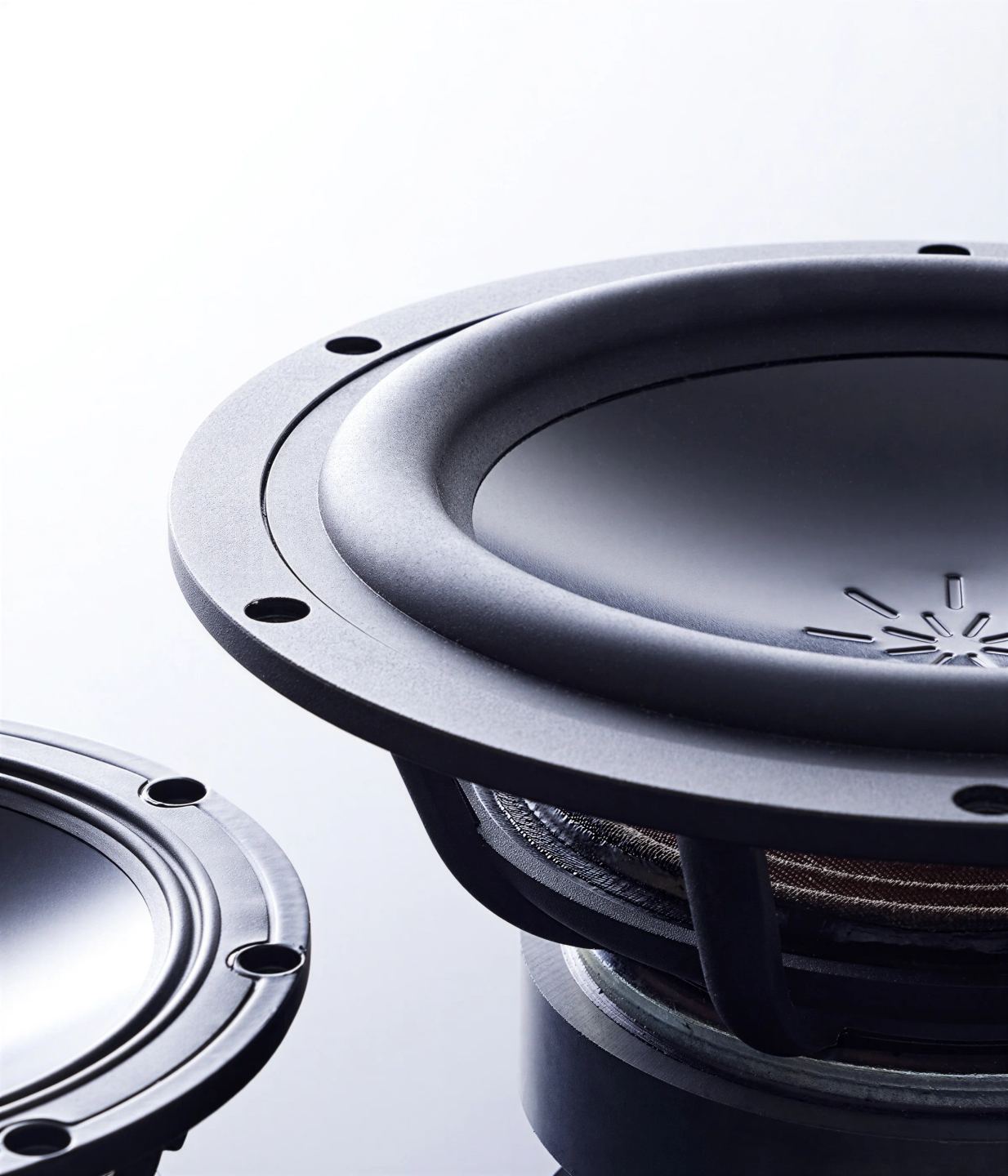
The lower end of the spectrum is handled by two 22 cm long-excursion drivers, also made of aluminium and protected by Star Stabilizer reinforcement, even when their diaphragms move substantially. Their moving assemblies and motors remain linear up to high output levels. They operate in a bass-reflex enclosure: a wide-section port, tuned to the cabinet volume and driver parameters, extends bass output. The speaker reaches down to 29 Hz, a rare figure for a 118 cm floorstander.
This type of enclosure responds to nearby walls, which reinforce the bass. A dedicated selector on the rear panel compensates for this effect (see below).
A two-board crossover ready for bi-amping
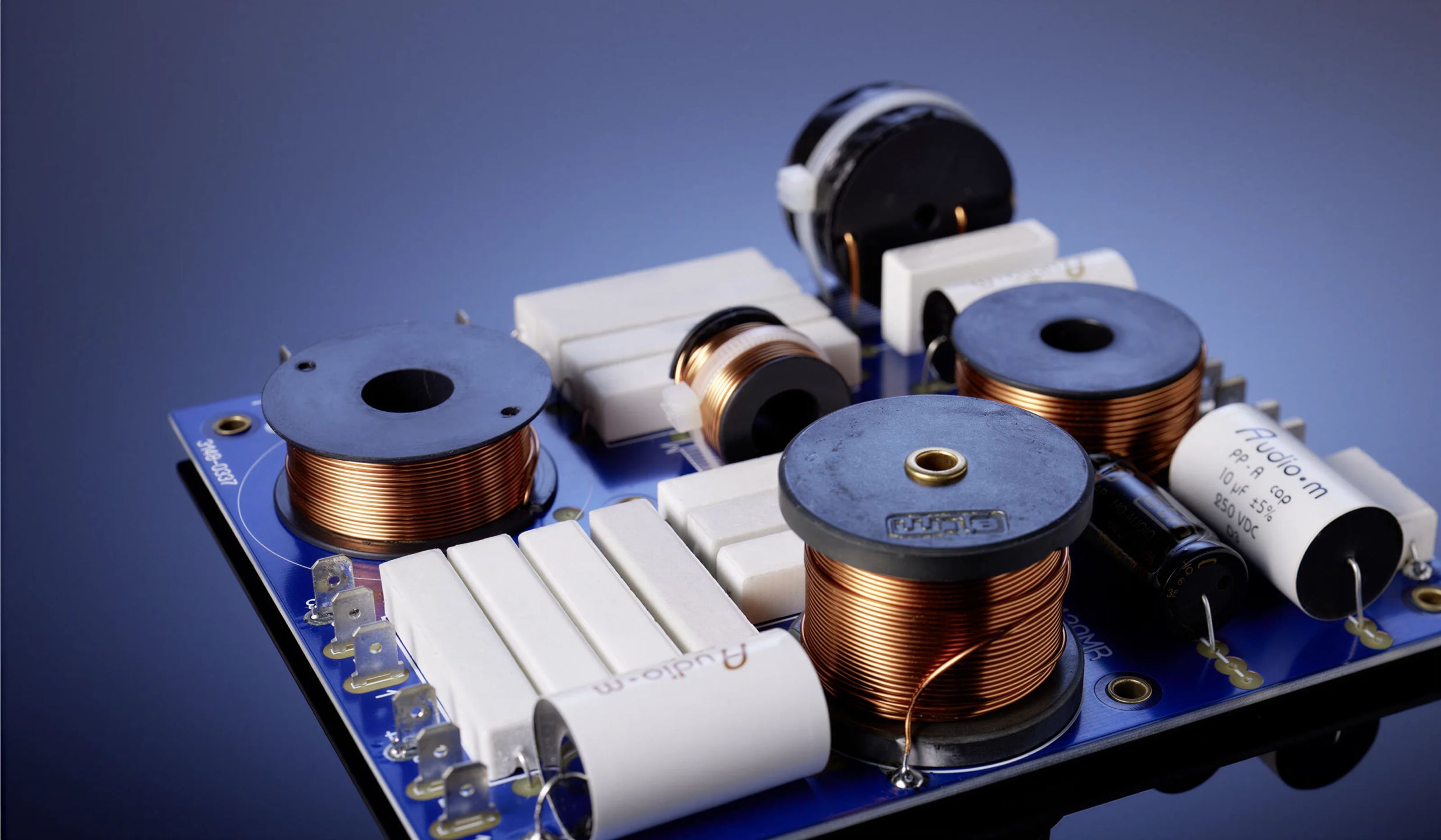
The three-way FSR (Fast Signal Response) crossover is built on double-sided printed circuit boards. An entire layer is dedicated to ground, allowing high currents to flow without distortion. The crossover stages are optimised for phase and propagation time, so that all three bands remain time-aligned. Inside, the drivers are connected by an in-house coaxial cable, capable of transmitting without loss the frequencies beyond 50 kHz that the magnetostatic driver can reproduce.
The bass and midrange/treble sections each have their own board. The dual binding posts on the rear panel accept three connection options: a single cable with the supplied jumpers, bi-wiring (two cables per speaker) or bi-amping (two amplifiers, one for the bass and the other for the midrange/treble).
In terms of amplification, the 86 dB sensitivity and 4 Ω impedance primarily demand current. An amplifier that is stable into 4 Ω and capable of delivering more than 10 A is required. Power handling is rated at 200 W nominal and 250 W on musical peaks.
Three selectors and a few placement rules
Three switches on the rear panel adjust the bass, midrange and treble up or down by 1.5 dB, or leave them in the flat position. The bass setting depends on placement: +1.5 dB for a speaker more than 1.5 m from the walls, flat near a wall, and −1.5 dB in a corner, where bass builds up. The midrange and treble settings adapt to the acoustics: −1.5 dB in a reverberant room with hard surfaces, and +1.5 dB in a living room heavily damped by rugs, curtains or a large sofa.
Placement follows simple rules. The two speakers and the listener form a roughly equilateral triangle, the midrange drivers and tweeters are at ear height, and nothing obstructs them: furniture or a curtain in front of the speaker dulls the treble. The minimum listening distance is 2 m, which requires at least 2 m between the speakers. A comfortably sized room is therefore needed.
A machined aluminium front panel and 55 kg to install
The front panel is machined from a block of aluminium. Its Art Deco-inspired curves visually slim the cabinet, while its understated design recalls the first Solitaire models. This design introduces what T+A calls “classic modernity”. The cabinet has a high-gloss lacquer finish in three colours: black, Macassar wood or arctic silver. The grilles attach magnetically, aligning with the edges of the front panel without any visible fasteners.
At 55 kg per speaker and measuring 118 × 26 × 44 cm including the base, installation requires preparation. A base plate screws onto the underside of each speaker. Eight castors with integrated brakes, fitted by hand without tools, allow the floorstanders to be moved and angled into the ideal position. Distances and angles are then noted, before replacing the castors with four height-adjustable spikes resting on cups that protect the floor and centre each spike. The speakers are factory-matched and supplied as a pair.
Documentation
Technical specifications
Overview
- Model: T+A Solitaire S 430
- Type: passive 3-way floorstanding speaker
- Range: Solitaire
- Bass loading: bass-reflex
- Packaging: factory-matched pair
- Manufacturer: T+A elektroakustik, Herford (Germany)
Drivers and crossover
- Tweeter: 1 × 50 mm, magnetostatic
- Midrange drivers: 2 × 150 mm
- Bass drivers: 2 × 220 mm
- Crossover frequencies: 200 Hz, 2200 Hz
Acoustic and electrical performance
- Frequency response: 29 to 45000 Hz
- Sensitivity: 86 dB
- Impedance: 4 Ω
- Nominal power handling: 200 W
- Music power handling: 250 W
Acoustic adjustments
- Three rear-panel selectors: bass (BASS), midrange (MID), treble (TREBLE)
- Three positions per selector: +1.5 dB, flat, −1.5 dB
- Bass adjustment according to placement:
- +1.5 dB for a speaker positioned more than 1.5 m from walls
- Flat near a wall
- −1.5 dB in a corner
- Midrange and treble adjustment according to room acoustics:
- −1.5 dB for a reverberant room
- +1.5 dB for a heavily damped room
Amplification and connection
- Recommended amplification: amplifier stable into 4 Ω, current capacity above 10 A
- Binding posts: dual, compatible with bi-wiring and bi-amping
Installation
- Recommended listening distance: 2 m minimum
Included accessories and components
- 2 speakers
- 2 magnetic grilles
- Attach to the aluminium front panel
- 2 base plates and 8 M8 × 25 screws
- Each base plate secured with 4 screws
- 8 transport castors
- Tool-free screw attachment, integrated brake
- Moving and positioning the speaker before final installation
- 8 spikes with locknuts
- 4 spikes per speaker
- Height adjustment to compensate for uneven floors
- 8 plastic washers for locknuts
- 8 centring cups for floor protection
- Place under the spikes
- Jumpers for single-wiring
- Place between the bass and midrange-treble inputs
- 2 Allen keys
- 4 pairs of gloves
- Manual
Dimensions and weight
- Dimensions (height × width × depth, including base): 118 × 26 × 44 cm
- Weight: 55 kg per speaker
Frequently Asked Questions
How does it differ from the Solitaire S 530 and S 540?
The two top models use an 85 cm long Mag850 magnetostatic driver, powered by 64 magnets and paired with seven 90/60 mm midrange drivers aligned vertically. Together, they produce a cylindrical wave that focuses the sound between the speakers. Their crossover points are set at 180 Hz and 1,800 Hz. The S 530 retains two 22 cm bass drivers in a bass-reflex design, standing 128 cm tall and weighing 60 kg. The S 540 steps up to four bass drivers in a sealed enclosure, extends down to 20 Hz with a sensitivity of 88 dB, and measures 148 cm tall for 80 kg.
How do I connect speakers for bi-amping?
The bass and midrange/treble are separated before the amplifiers. One stereo amplifier powers the bass sections of both speakers, while a second stereo amplifier powers their midrange/treble sections. The jumpers between the BASS and MID / HIGH terminals must be removed for both bi-amping and bi-wiring. For bi-wiring with an amplifier with a single output, the two cables from each speaker are connected in parallel to that output. If the amplifier has A and B outputs, one is used for the bass and the other for the midrange/treble.
Which speaker cables should I use?
All cables in the system must be the same length, both from one speaker to the other and between the bass and midrange/treble sections when bi-wiring. T+A offers its own range of cables, matched to the characteristics of its speakers.
Should you listen with the grilles on?
The grilles are optimized to have minimal impact on the sound, but it is best to remove them while listening. They mainly protect the drivers when the speaker is not playing, for example when children or pets are around. To remove them, simply pull them gently forward.
How do unpacking and assembly work?
The box is placed upright and the speaker is lifted out vertically, before being laid on its protective foam supports placed on a rug. The base plate is secured with four M8 × 25 screws, the castors are fitted with their brakes engaged, then the speaker is brought upright, taking care around the edges of the plate. Each step requires two people, and gloves are supplied for handling. After transport in cold weather, wait for the speaker to return to room temperature before plugging it in, allowing time for any condensation to evaporate. Keep the original packaging for any future move.
Could the spikes damage the parquet flooring?
They are very sharp and would mark parquet or tiled flooring. The supplied cups must therefore always be placed underneath. Installation is carried out one side at a time: one person tilts the speaker slightly while the other replaces the front castors with the spikes, then the process is repeated at the rear. Make sure the speaker does not slip on the cups, then screw or unscrew each spike until the tower stands firmly without rocking.
- Eco-contribution included in the sale price.