

TAD A1000D: the A1000 integrated amplifier gets a Reference-grade digital section
September 11, 2026

Contents
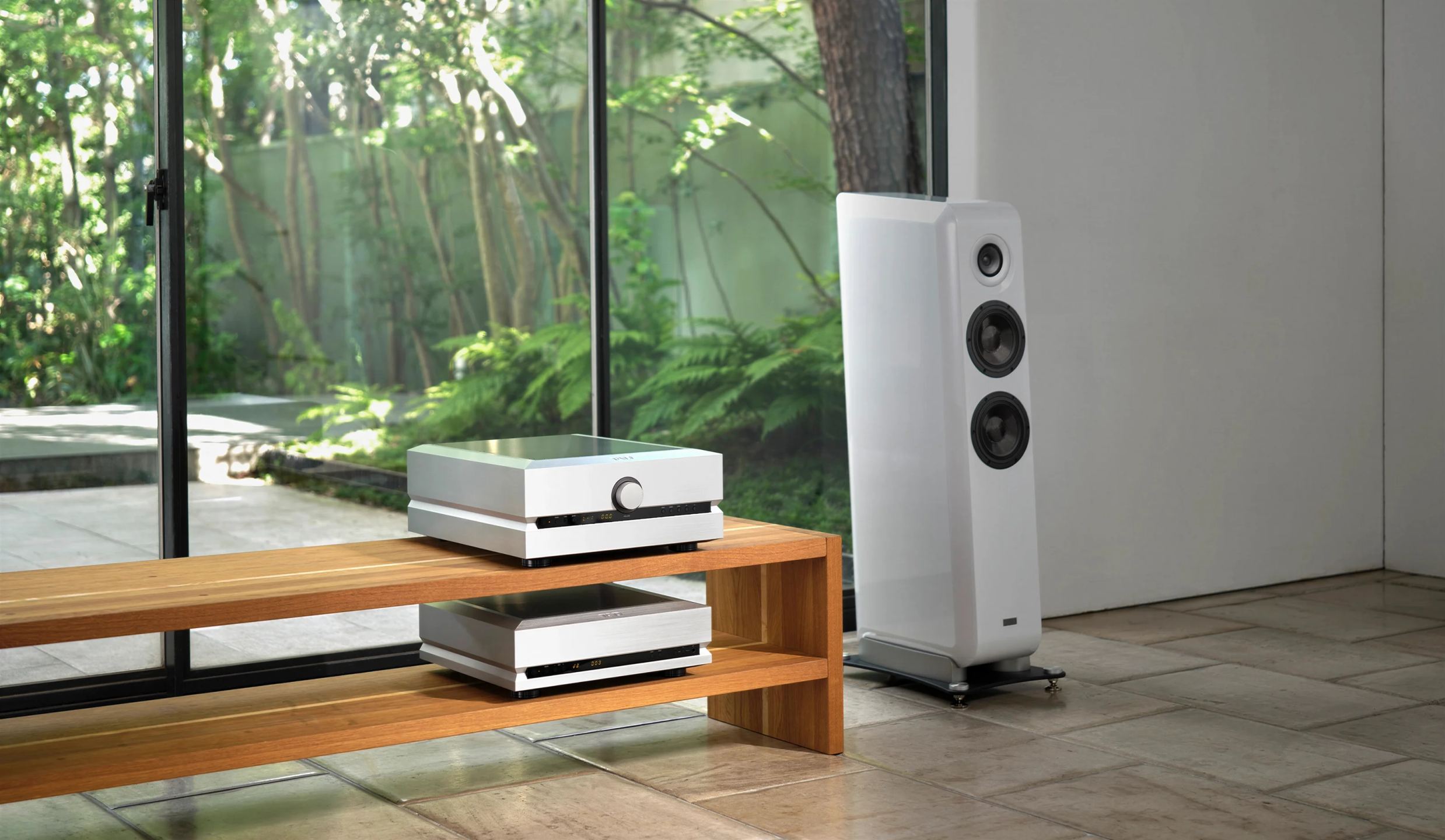
While part of the market is removing the converter from its integrated amplifiers to offer purely analog versions, TAD is taking the opposite route at the top of its range. The Japanese manufacturer, born from a Pioneer project in 1975 and an independent company since 2007, is expanding its first integrated amplifier, the A1000 launched in 2025, with an A1000D model featuring a complete digital section. Not an add-on module: a master clock and digital-to-analog conversion drawn from the Reference series, the brand’s most expensive range, housed in a dedicated compartment.
→ Discover integrated hi-fi amplifiers
The A1000’s analog foundation
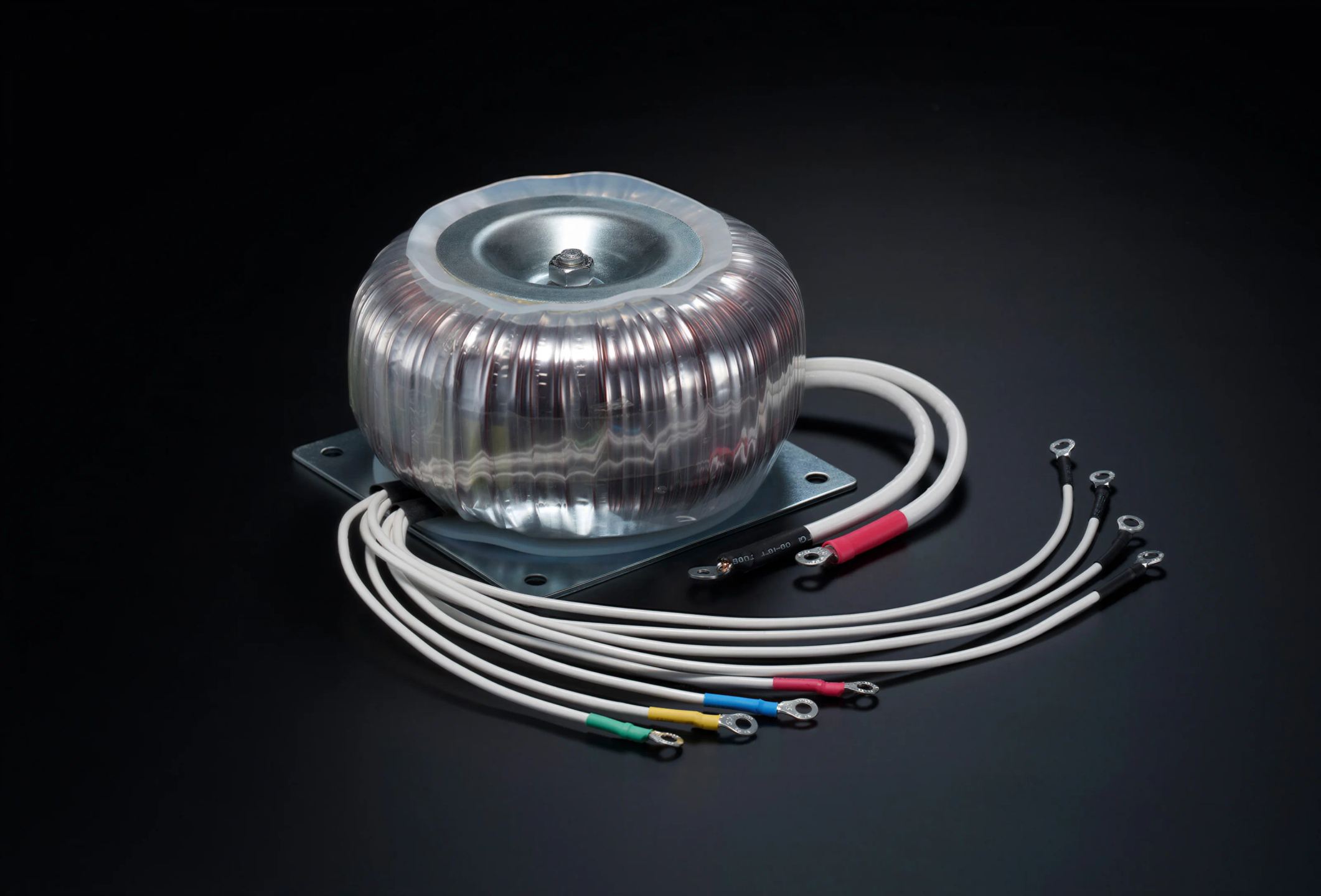
The A1000D retains the A1000’s amplification section unchanged. The circuit remains fully balanced, bridged (BTL, for bridge-tied load), from the input signal to the output: the positive and negative channels are mirror-imaged, while the transformer windings and the rectification, smoothing and regulation circuits are separated channel by channel. Output power is also unchanged, at 250 watts into 4 ohms at 1 kHz, with stated compatibility for speakers from 4 to 16 ohms. The output stage operates in Class D, but is supported by a suitably sized analog power supply, far removed from the compact units this technology sometimes allows. Its weight is a reminder: 29 kg for the international version, measuring 440 × 200 × 553 mm.
The preamp also adopts solutions from the Reference series. Its single-stage current-feedback flat amplifier comes from Reference preamplifiers. TAD measures each field-effect transistor (FET) and matches components on the positive and negative sides to balance the circuit. Volume is controlled by an in-house electronic switched-resistor ladder attenuator, rated for distortion below 0.0005% at 1 Vrms. The large central knob rotates on precision ball bearings.
A Reference-grade digital section
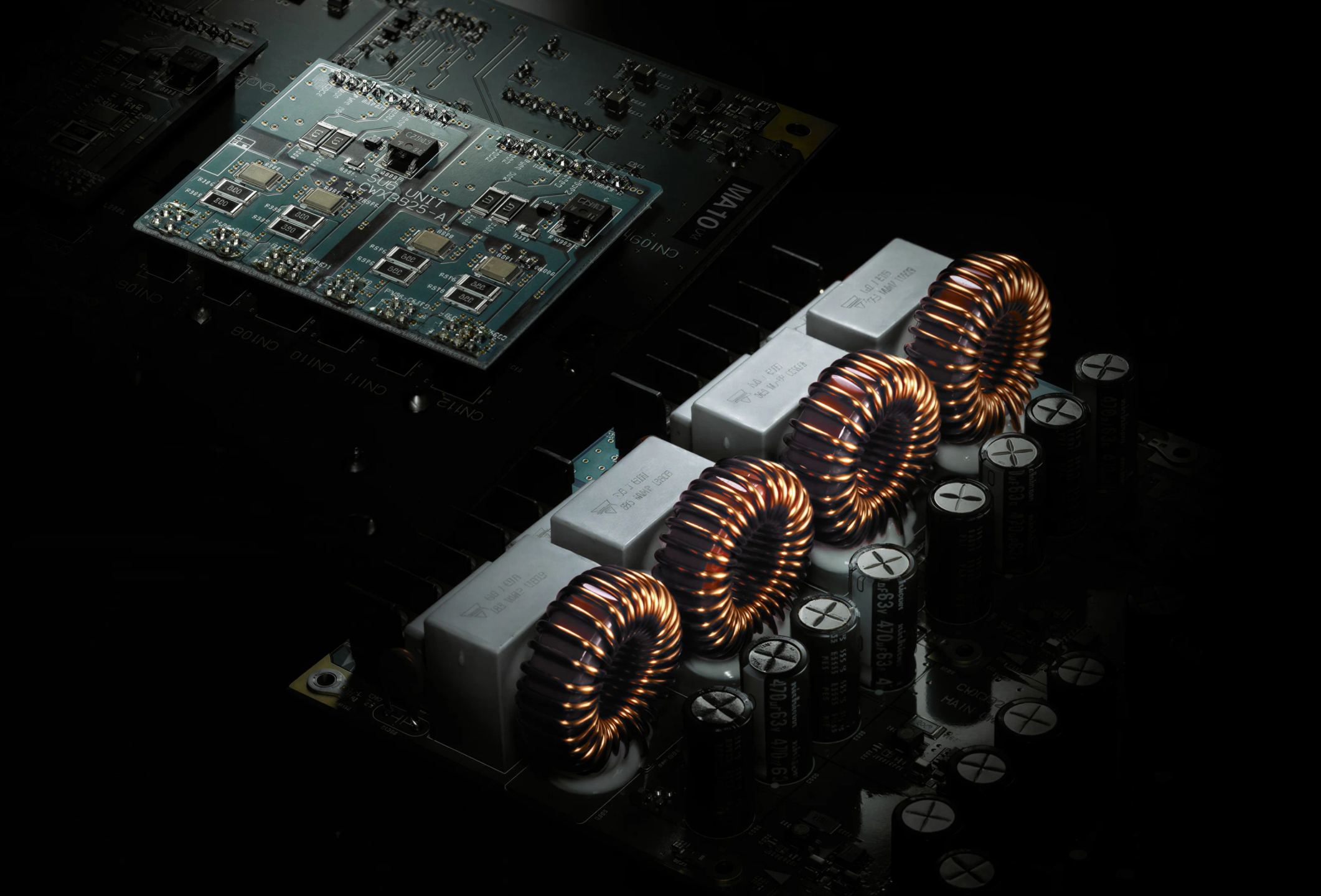
Everything happens upstream of the amplification stage. At the heart of the digital section is a third-generation UPCG master clock (Ultra-High-Precision Crystal Generator), the same one developed for the Reference series D700 CD/SACD player, released in 2023. Rather than pursuing clock accuracy alone, TAD works on its carrier-to-noise ratio and reduces phase noise around the center frequency. The quartz crystal used is cut in SC orientation, known for its stability in the face of temperature variations.
USB conversion is also developed in-house. TAD uses asynchronous USB transfer processed in an FPGA, a reprogrammable logic circuit, to limit operating delays and low-level distortion. Combined with the UPCG clock, this USB input supports PCM up to 384 kHz and DSD up to DSD256 (11.2 MHz). The balanced digital (AES/EBU) and coaxial inputs support up to 192 kHz, while the optical input supports up to 96 kHz.
After conversion, the signal passes through a TAD-specific current-feedback current-to-voltage (I/V) stage. The current from the conversion chips is retained as is, without modification, lowering impedance and improving noise immunity before entering the analog preamp. The aim is to treat this digital input as a full-fledged high-end source, rather than as an auxiliary converter slipped into an integrated amplifier for convenience.
No streaming, a deliberate choice
The A1000D includes no network streaming platform. No Qobuz, no TIDAL, no built-in Roon library. Digital connectivity is limited to AES/EBU, coaxial, optical and USB inputs, alongside the analog inputs: three balanced XLR pairs at 100 kΩ (one fewer than on the A1000, with the space taken by the digital section) and two unbalanced RCA pairs at 50 kΩ. To play music over a network, it must be paired with a separate network player.
The choice is defensible. A streaming component ages quickly, following the pace of apps, services and protocols. Conversion and amplification, on the other hand, become outdated much more slowly. By leaving networking to a separate component, TAD avoids locking an integrated amplifier of this level into software obsolescence, and keeps the A1000D focused on what it does best: converting and amplifying.
A fifth internal compartment
Adding digital circuitry required revisiting the internal isolation. Where the A1000 divided its circuits into four physical compartments (preamp, power amp, transformer, control), the A1000D has five, with a separate housing for the digital input section. This digital stage also has its own grounding point, separate from those of the preamp and power amp, to prevent its interference from feeding back into the analog circuits.
The rest of the construction remains true to TAD’s approach. The power supply relies on four custom-made 33,000 µF filter capacitors, with non-magnetic capacitors and resistors and gold-plated oxygen-free copper connections in sensitive analog signal paths. The chassis rests on three feet with integrated inverted spikes, which limit the transmission of vibrations from the floor. The speaker terminals are taken from the Reference series power amplifiers.

Finishes, price and availability
The A1000D is available in two finishes: silver (A1000D-S), the standard version, and black (A1000D-K, with K standing for kuro, “black” in Japanese), made to order. A silver aluminum remote control is supplied in both cases.
The brand announces a Japanese release in late October 2026 and international availability in mid-November 2026. The European price will be set for that launch. It will sit above that of the analog A1000, listed at €26,000 in Europe, with the digital section justifying the difference. Both models will remain in the catalog simultaneously: the A1000 for an entirely analog system already equipped with a good converter, and the A1000D when a transport, computer or network player needs to connect directly to the integrated amplifier.
Popular products

You may also like to read
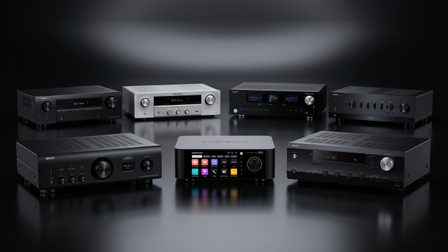 The best integrated amplifiers under €1,000: 2026 comparisonComparisons and buying guides
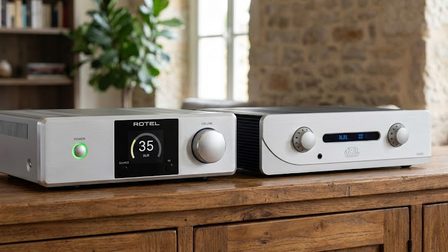 Atoll or Rotel: comparative guide to choosing the right integrated amplifierComparisons and buying guides
 Marantz vs Denon comparison: how to choose the right integrated amplifier for your needsComparisons and buying guides
 Network player, streamer or transport: what are the differences?Comparisons and buying guides
 The best network music players in 2025: buying guide and comparisonComparisons and buying guides
 Network Streamer or CD Player: Is Physical Playback Still Worth It?Comparisons and buying guides




