

Wattson Audio Madison Phono: RIAA equalization goes digital
September 14, 2026
Contents
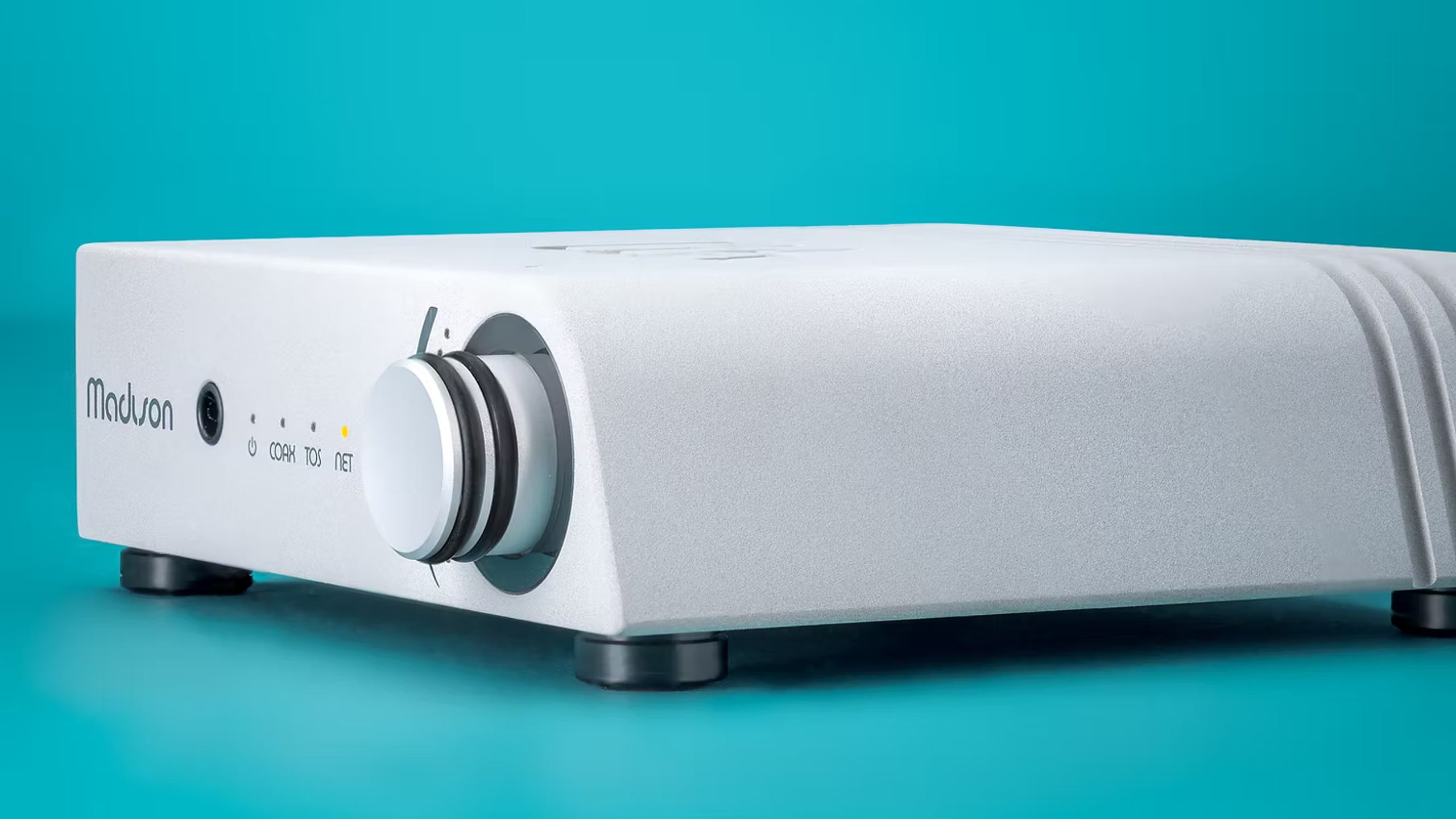
Correcting the RIAA curve is the core task of a phono preamp. Most models handle it with a network of resistors and capacitors, entirely in the analog domain. Wattson Audio’s Madison Phono takes the opposite approach: it first amplifies the cartridge’s weak signal without altering it, digitizes it, then applies correction and filtering once the signal is digital. The Swiss manufacturer, a sister company of CH Precision, uses it to complete the Madison range, which until now lacked a vinyl component.
RIAA correction goes digital
A vinyl record cannot have bass engraved at its actual level, otherwise the grooves would be too wide, nor treble without making surface noise more apparent. During cutting, bass is therefore attenuated and treble boosted according to the RIAA curve. During playback, the phono preamp performs the reverse operation while also amplifying the cartridge signal, which outputs only a few millivolts. This dual task—gain and curve flattening—defines the phono stage.
When performed in analog, correction relies on precise component values. Yet real-world resistors and capacitors have tolerances, and their characteristics drift over time. This can result in slight deviations from the target curve and phase errors. The Madison Phono retains a simple linear analog gain stage, with no equalization network, no switching contact, and no large passive component in the weak signal path. The amplified signal is then digitized at 32-bit/384 kHz, in the DXD format used in studio mastering, before correction and filtering are applied through digital processing.
This choice aims for precision and repeatability: curves are applied to within ±0.1 dB. It also opens the door to several equalization standards. In addition to RIAA, the Madison Phono handles Columbia, Teldec, EMI and Decca curves. Before RIAA became the standard in the mid-1950s, labels cut their records according to their own curves; these settings restore the original tonal balance of older pressings.
An input card for each cartridge type
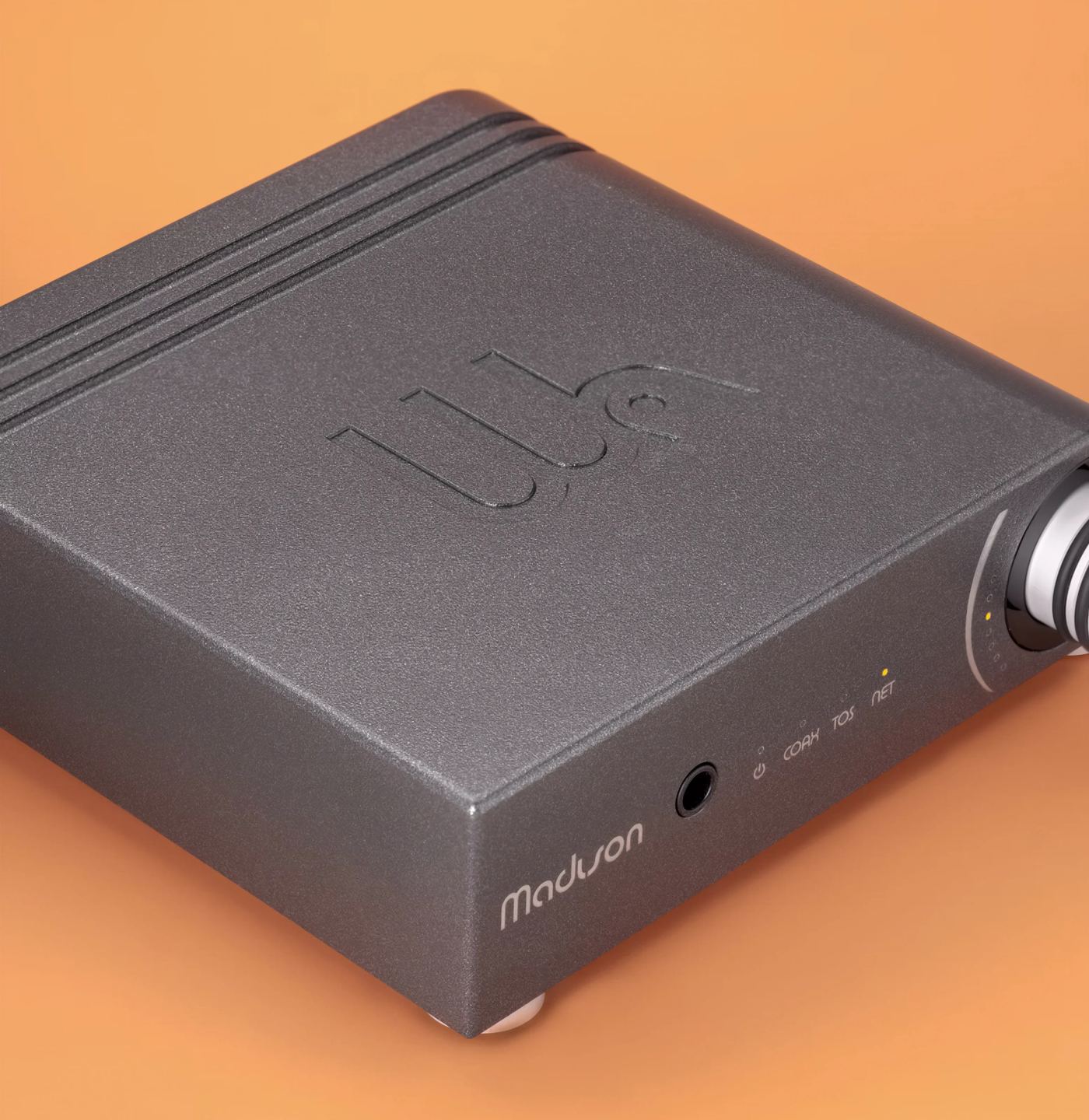
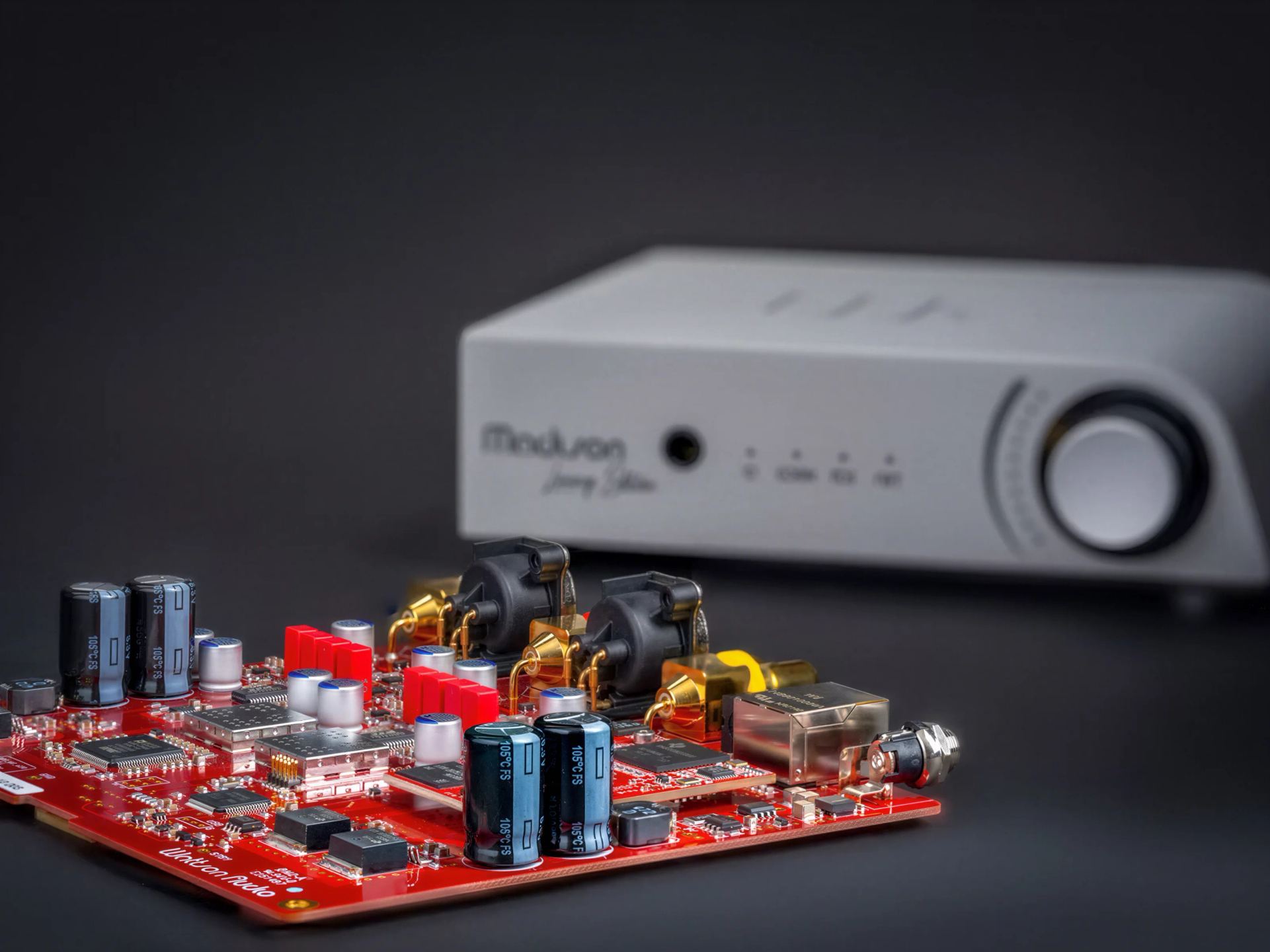
The input stage, the preamp’s most sensitive section, is mounted on an interchangeable card. The Madison Phono accepts only one at a time, selected when ordering and replaceable later if the turntable or cartridge changes. Three cards are available, each tailored to the electrical behavior of a cartridge type.
The voltage card handles moving magnet (MM) cartridges and high-impedance moving coil (MC) cartridges. Its two-stage gain circuit automatically adjusts gain and loading, with four predefined settings. It is the card supplied as standard.
The current card is designed for low-impedance MC cartridges, those with the lowest output level. Rather than reading voltage across a load resistor, as most preamps do, it uses an active transimpedance amplifier derived from CH Precision technology and exclusive to Wattson Audio: it directly reads the current delivered by the cartridge. The design becomes less sensitive to cable characteristics, loading interactions and impedance variations.
The optical card supports DS Audio photoelectric cartridges. These cartridges replace the magnet and coil with a light source and sensor: stylus movement modulates a beam of light, without the magnets or coils of a conventional cartridge. They normally require a dedicated power supply and separate decoder unit. The Madison Phono’s optical card combines this power supply and signal processing within the same chassis.
Network-controlled settings
Gain, loading and the equalization curve are adjusted from the network interface. The Wattson Music app detects the Madison Phono on the local network and provides access to a web control interface; settings can remain adjustable during playback. The RJ45 Ethernet port also serves for firmware updates, keeping processing algorithms up to date.
Analog and digital outputs
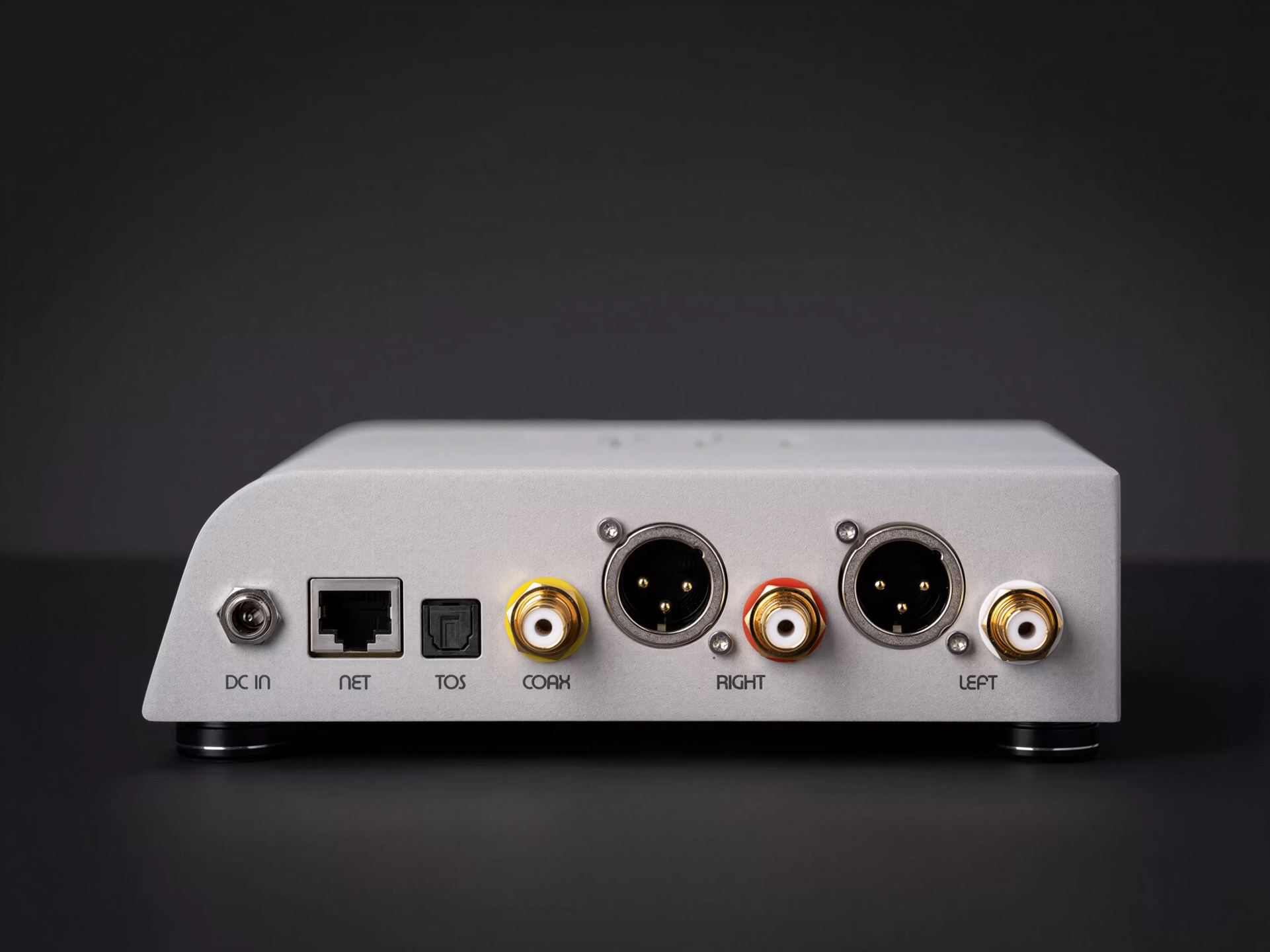
In terms of connectivity, the Madison Phono offers balanced XLR and unbalanced RCA analog outputs, for connection to a preamplifier or an integrated amplifier. It also provides S/PDIF digital outputs, coaxial and optical Toslink, at 192 kHz with optional downsampling to 96 kHz. Since the signal is already digital internally, these outputs send the stream as is to a Madison network player or converter, or to a converter from another brand, without converting back through analog.
The chassis is CNC-machined from a block of aerospace-grade aluminum, in the format already used by the other Madison components. Like them, the Madison Phono accepts the Power S external power supply, which lowers the noise floor and increases dynamic headroom. Combined with the Madison network player/converter, Madison amplifier and this power supply, it completes an all-Wattson Audio system.
Price and availability
The Madison Phono is available at a price of €5,240 including VAT, with one input card of choice specified when ordering. Additional cards cost €500 each, with only one installable at a time. It remains manufactured in Switzerland, in Préverenges.
Its appeal is clear in a system already geared toward streaming and digital conversion: it brings vinyl into the setup without adding a separate analog RIAA stage, and saves owners of DS Audio optical cartridges from needing the usual decoder unit.
Popular products


You may also like to read
 The best phono preamps under €500Comparisons and buying guides
 MM or MC phono cartridge: understanding the technical and sonic differencesConcepts and technologies
 Best Audio-Technica VM Phono Cartridges: Buying Guide and ComparisonComparisons and buying guides
 Turntable and speaker package: our best combinations under €1,000Comparisons and buying guides
 Which turntable to start with without making a mistakeComparisons and buying guides
 Which turntable should you choose for under €700? (Pro-Ject, Rega, Dual, Audio Technica)Comparisons and buying guides




