MM or MC phono cartridge: understanding the technical and sonic differences
April 14, 2025
Contents
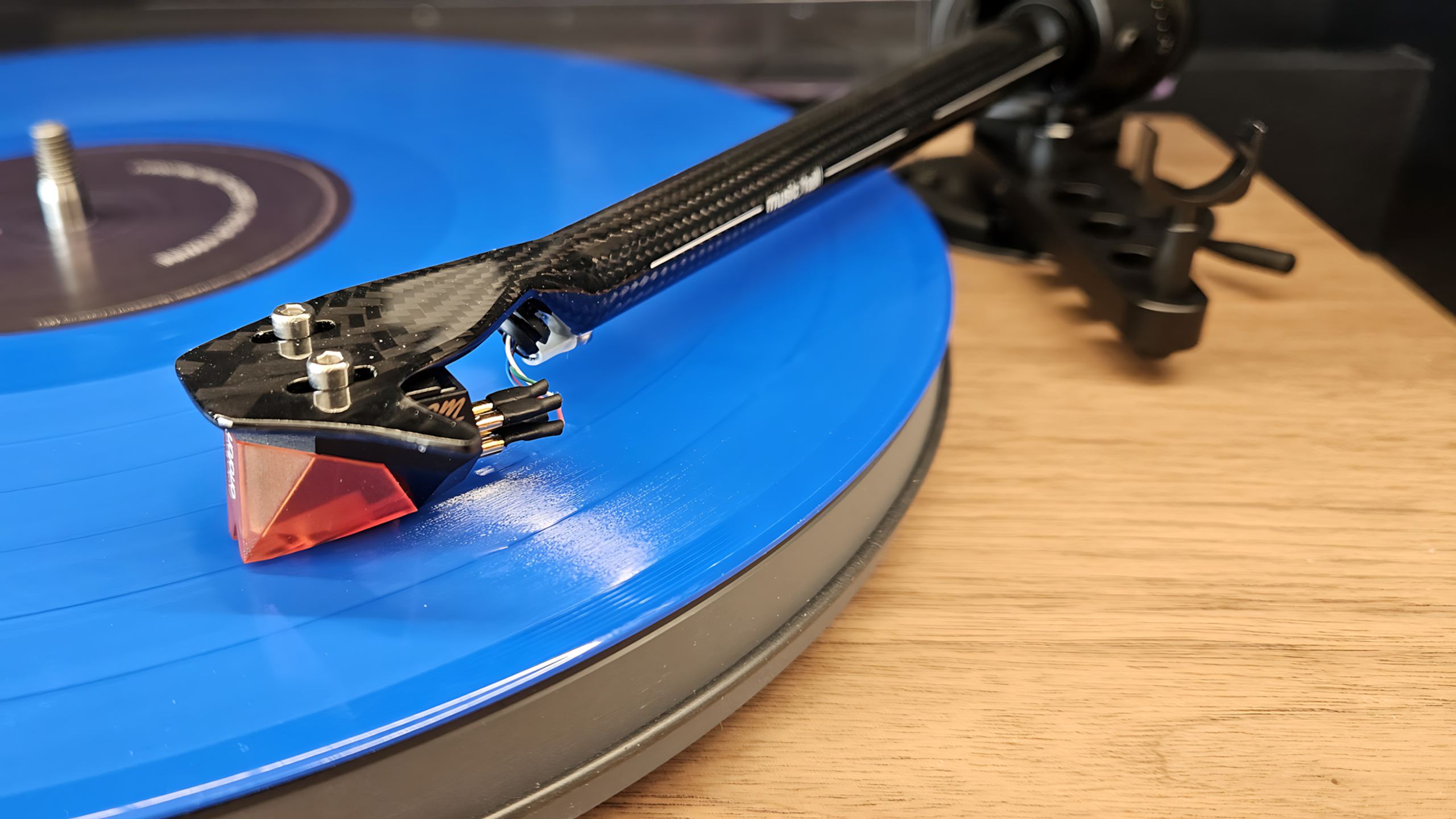
The phono cartridge is an essential component in any turntable. This small part converts the mechanical vibrations of the grooves into an electrical signal, the very foundation of analog sound reproduction. Two main technologies have shared the market for decades: moving magnet (MM) and moving coil (MC) cartridges. Their technical differences significantly affect sound quality, cost, and practical use.
→ Explore our cartridges for turntables
Basic operating principles
Phono cartridges work according to the principle of electromagnetic induction discovered by Faraday. When relative motion occurs between a magnet and a coil, an electrical current is generated.
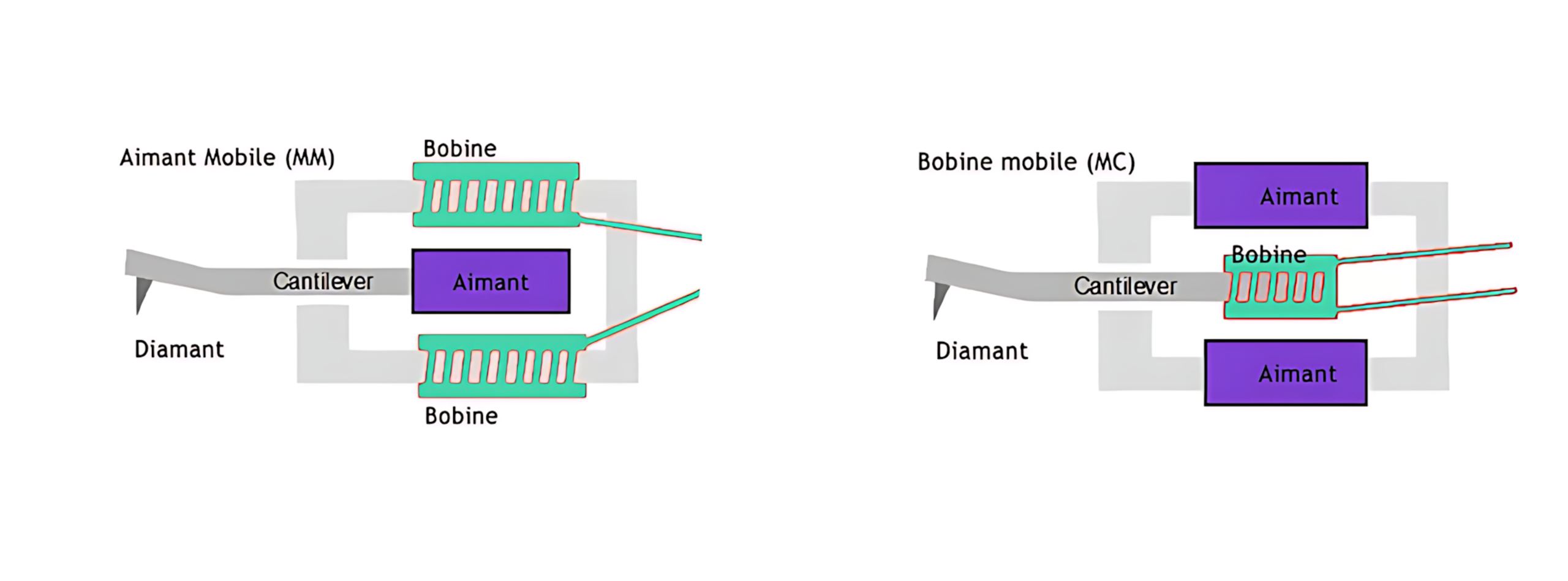
In an MM cartridge, a small magnet is fixed to the end of the cantilever (the rod that carries the stylus). When the stylus tracks the record’s grooves, the magnet moves inside fixed coils, thereby creating the electrical signal.
For an MC cartridge, the configuration is reversed. The miniature coils are attached directly to the cantilever and move within the field of a fixed magnet. This fundamental difference leads to several important technical consequences.
MM cartridges produce a relatively strong electrical signal (3–6 mV), while MC cartridges generate a much weaker signal (0.2–0.5 mV), requiring dedicated amplification.
Internal architecture and structural differences
The moving mass is the most significant technical difference between these two designs. In an MM cartridge, the cantilever carries a magnet whose mass is relatively substantial. This mass affects the agility of the system.
MC cartridges, by contrast, use extremely lightweight microscopic coils, greatly reducing inertia. This low moving mass allows more accurate tracking of the complex modulations cut into the vinyl, especially for fine details and high frequencies.
The materials used also differ between the two technologies. MM cartridges generally use aluminum cantilevers, while high-end MC models employ more sophisticated materials such as boron, beryllium, or even diamond, influencing vibration transmission and tonal coloration.
Amplification requirements
The interface between the cartridge and the preamplifier is a crucial aspect of any vinyl playback system.
MM cartridges operate with a standard 47 kOhm impedance, compatible with virtually all phono preamps on the market. This universality largely contributes to their popularity.
MC cartridges impose stricter constraints. Their low impedance (typically between 100 and 1000 Ohms) and tiny output signal require either a preamplifier specifically designed for MC cartridges or the addition of a step-up transformer. This added complexity increases the overall cost of the system.
Noise sensitivity is another important distinguishing factor. The low signal level of MC cartridges makes the signal-to-noise ratio more critical, demanding high-quality electronic design to avoid any sonic degradation.
Sound characteristics
Beyond technical specifications, the two technologies offer distinct sonic characteristics.
MM cartridges generally provide a warmer sound presentation with particularly rich midrange reproduction. Their stereo imaging tends to be expansive, and their overall sound is often described as musical and engaging. These qualities are especially well suited to genres such as rock, jazz, or acoustic music.
MC cartridges stand out for their transparency, precision, and resolution of micro-details. They excel at reproducing subtle dynamic nuances and spatial accuracy. These qualities are particularly appreciated for listening to classical, contemporary, or sophisticated audiophile productions.
This distinction should be nuanced by the quality factor. A high-end MM cartridge can outperform an entry-level MC in terms of overall performance. Design quality is often more decisive than the underlying technology itself.
Practical considerations and durability
Economic aspects and durability are decisive factors for many users.
MM cartridges have a major practical advantage: the stylus is generally replaceable independently of the cartridge body. This modularity allows you to preserve your initial investment while replacing only the wear-prone part, at a moderate cost (around €50 to €150).
MC cartridges are generally designed as inseparable assemblies. Once the stylus is worn out (typically after 1,000 to 2,000 hours of use), the entire cartridge has to be replaced, which represents a significant outlay for high-end models.
Robustness is another distinguishing aspect. MM cartridges, being mechanically simpler, tolerate clumsy handling better. MC cartridges, with their microscopic coils made of extremely fine wire, are more vulnerable to accidental damage.
Selection criteria
Several factors should guide your choice between these two technologies:
The available budget is an obvious first criterion. For under €300, MM cartridges generally offer the best value for money. Between €300 and €1,000, both technologies offer viable options. Above that, MC cartridges generally dominate the high-end segment.
Existing equipment also plays a decisive role. A turntable fitted with a light tonearm pairs better with an MM cartridge, while a heavy and precise arm makes better use of an MC’s qualities. The presence of an MC-compatible preamplifier also strongly influences the decision.
Listening habits and the type of music you play also guide the choice. For occasional use or records of variable quality, an MM cartridge offers a more forgiving experience. An audiophile with a well-maintained collection will be better positioned to appreciate the refinement of an MC cartridge.
Recent innovations
The field of phono cartridges is currently experiencing a resurgence of innovation, gradually blurring the traditional distinctions between MM and MC.
Hybrid designs such as moving iron (MI) cartridges or high-output MC models aim to combine the advantages of both approaches. At the same time, improved materials allow contemporary MM cartridges to reach performance levels previously reserved for MC designs.
The development of phono preamplifiers with adjustable settings (impedance and capacitance) makes it easier to integrate MC cartridges into more accessible systems, broadening their potential audience.
The digitization of vinyl collections via USB turntables introduces new technical considerations where MM cartridges, with their stronger signal, often make the analog-to-digital conversion process easier.
The choice between moving magnet and moving coil cartridges reflects both technical considerations and personal listening preferences. MM cartridges stand out for their accessibility, ease of use, and warm sound. MC cartridges deliver higher precision and transparency, sought after by demanding audiophiles, at the cost of greater complexity and expense.
This technological diversity enriches the vinyl experience, allowing each listener to find the solution that best matches their system, budget, and sonic expectations.
Popular products


You may also like to read
 Beginner’s Vinyl Guide: How to Get Properly Equipped in 2026Tutorials and practical guides
 Why Choose a Rega Turntable: Benefits and Buying TipsComparisons and buying guides
 Transrotor Turntables: Complete Comparison of Models and PerformanceComparisons and buying guides
 Vertere Acoustics DGX: modular, innovative, and upgradeable turntableHi-fi and home cinema news
 Nagaoka MP Series: the Japanese phono cartridge that combines precision and musicalityHi-fi and home cinema news
 DUAL CS Series Turntables: Complete Guide to Manual and Automatic ModelsComparisons and buying guides