Freddy
Very well made, good value for money, stylish, perfect!
Comment from September 22, 2025 — Experience from September 11, 2025
Automatically translated — Show original (French)
Très belle fabrication , bon rapport q/p ,esthétique , parfait !
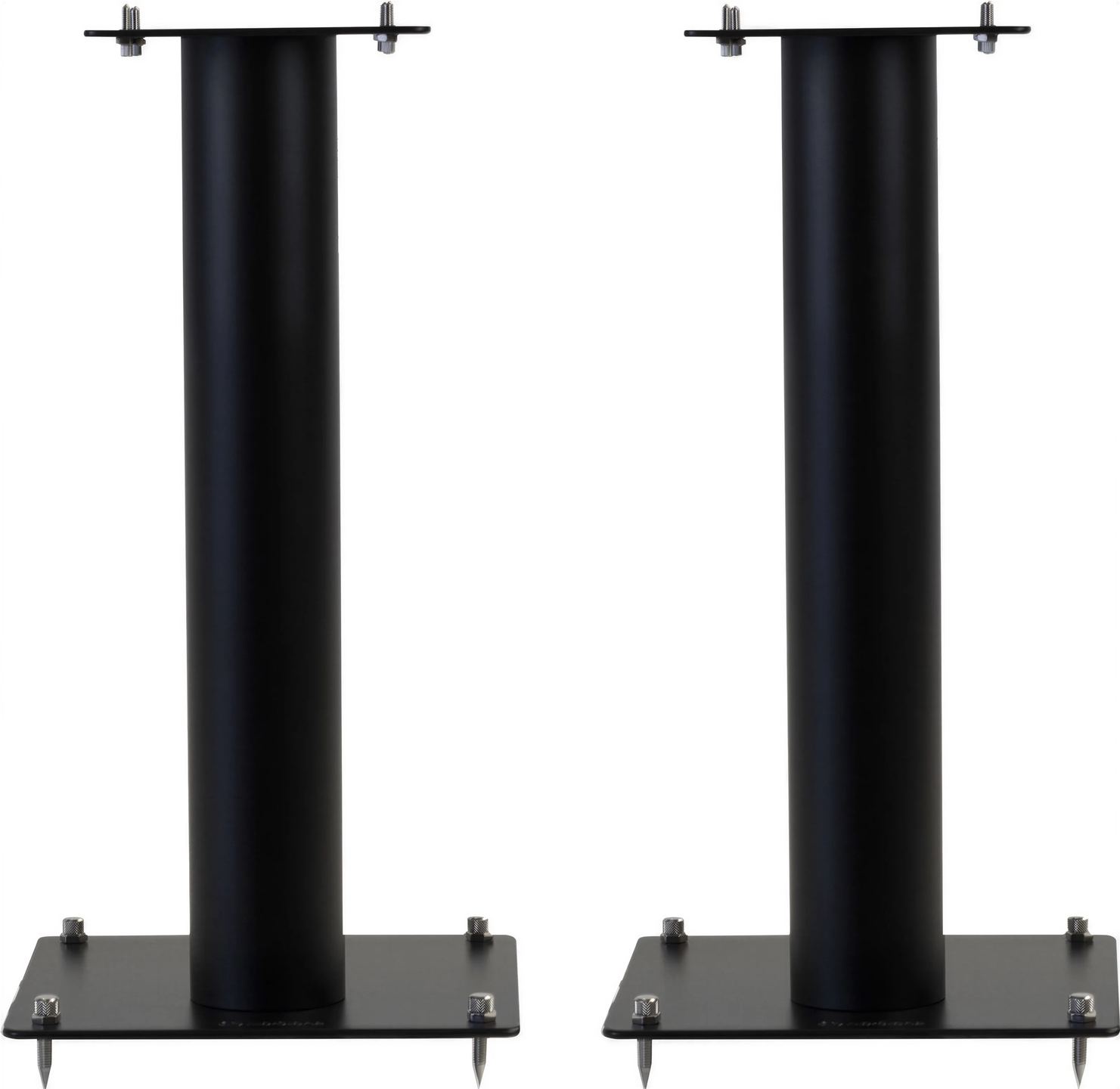
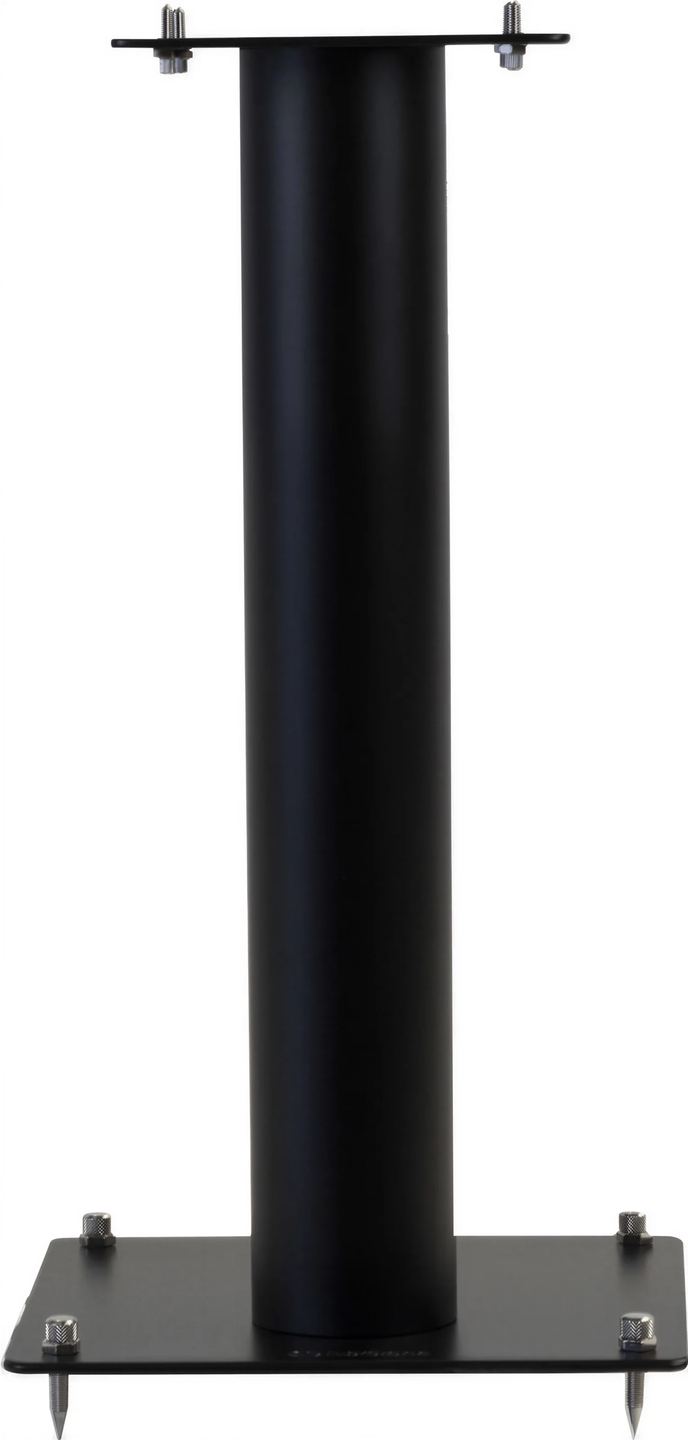
Placed on a cabinet or shelf, a bookshelf speaker transmits its vibrations to the surface supporting it and often ends up too low, too close to the wall or wedged between two objects. A stand solves these issues in one go: it decouples the speaker, raises it and lets you freely choose its position in the room. With its steel structure and 50 cm height, the Stylum 1 fulfils this role for the vast majority of compact models.
A speaker stand must first and foremost remain still. When the woofer pushes air, it also pushes the cabinet in the opposite direction, and a support that flexes allows the speaker to sway slightly: the bass loses definition and the stereo image becomes less precise. NorStone has chosen an all-steel structure built around a tube with an asymmetrical cross-section that stiffens the assembly between the base and the top plate.
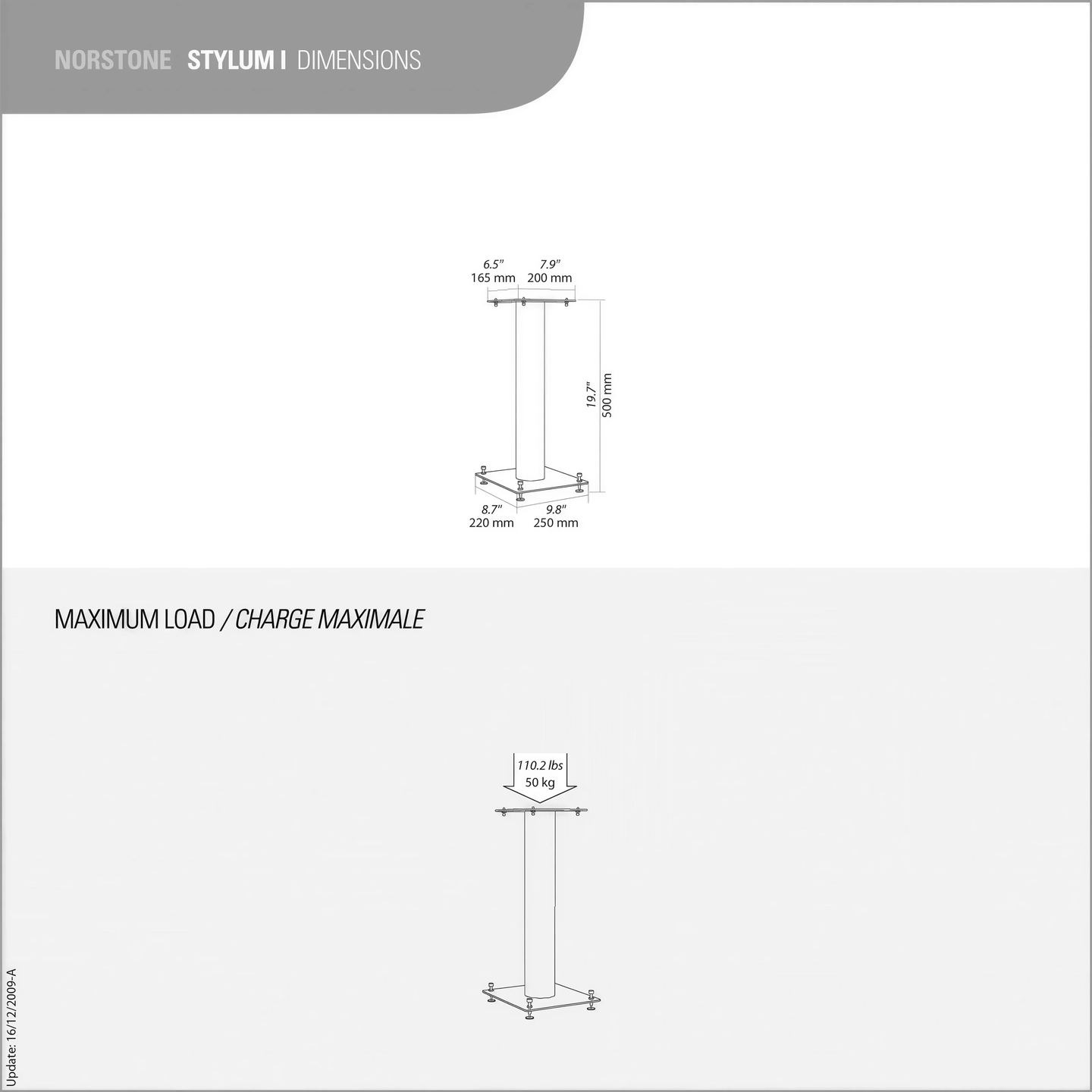
The 220 × 250 mm base extends beyond the 165 × 200 mm top plate, lowering the centre of gravity and making the stand difficult to tip over. The stated maximum load is 50 kg per stand, providing a comfortable margin: most bookshelf speakers weigh between 4 and 12 kg, and even large compact models remain well below this limit.
Under the base, decoupling spikes reduce contact with the floor to just a few points. On a rug or carpet, they pass through the fibres to rest on the hard floor and stabilise the stand where a flat base would float. On parquet or tiles, the supplied protective caps prevent marks on the flooring. The spikes are height-adjustable, allowing you to compensate for an uneven floor and eliminate any rocking.
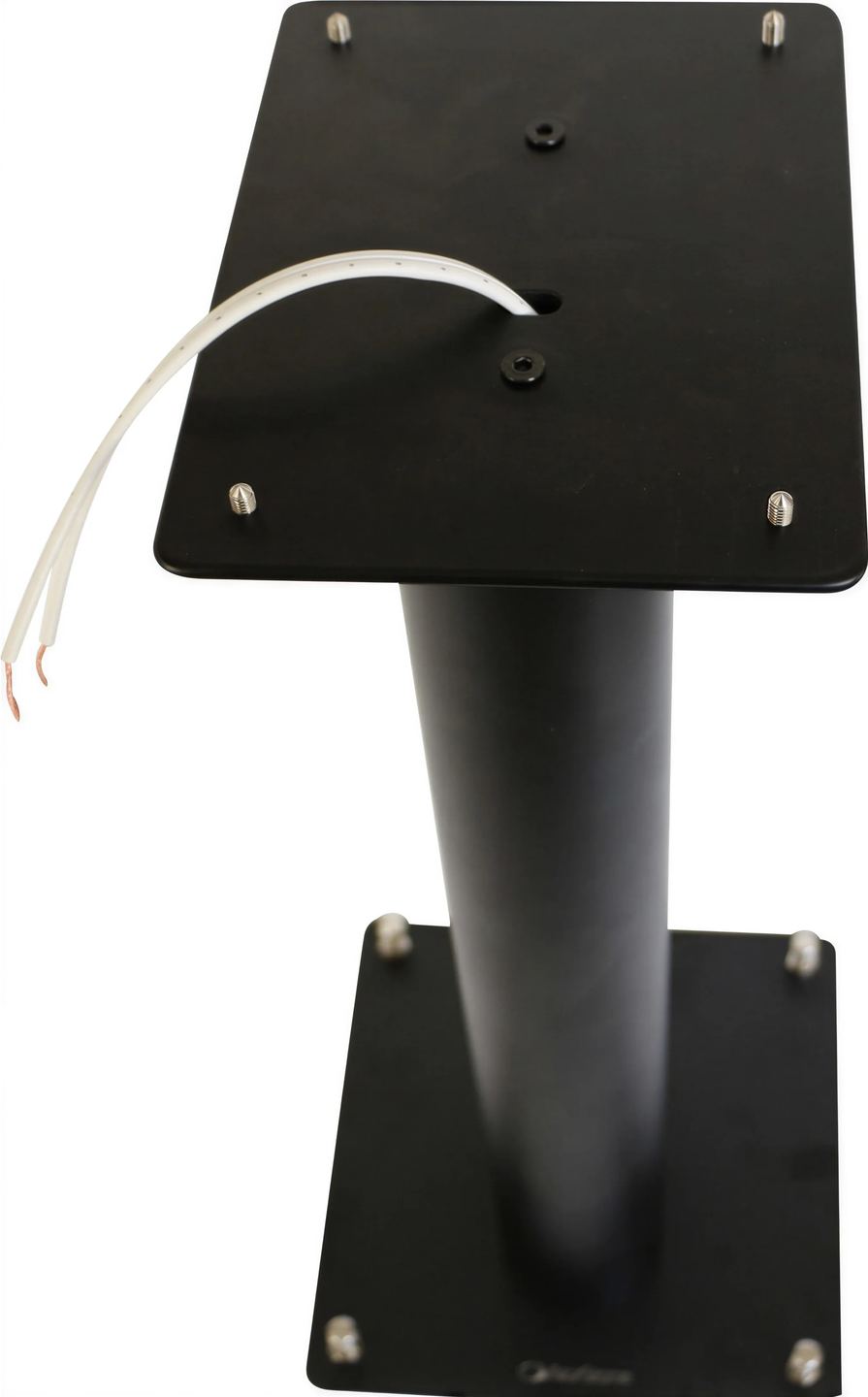
The top plate offers two options. The spikes can be turned towards the speaker to support it on a few contact points, an effective solution that can, however, mark the underside of a veneered or lacquered cabinet. The softer non-slip pads protect the speaker’s surface and prevent it from sliding. In both cases, the speaker simply rests on the stand: no mechanical fastening is provided.
When seated, your ears are generally around a metre above the floor, a little lower in a deep sofa. The tweeter, which reproduces high frequencies and has the most directional dispersion, benefits from being at this height or just below it. A 50 cm stand is the right height for a speaker whose tweeter sits 40 or 50 cm above its base, which is the case for many large bookshelf speakers, or for a low listening position.
A smaller speaker, with its tweeter 25 or 30 cm above the bottom of the cabinet, ends up slightly below ear level. The difference remains acceptable in many rooms, but if the listening position is high, the Stylum 3 from the same range reaches 80 cm. The Stylum 1 also fits beside a low TV cabinet when the front speakers need to stay close to the screen without extending above it.
The speaker cable runs inside the tube through the integrated cable guide, leaving only its exit visible at the foot of the base. The stand thus maintains clean lines once the speaker is in place, with no wire hanging down the upright.
The stand arrives unassembled, with the screws, instructions and necessary tools. Assembly simply involves connecting the base, tube and top plate, then adjusting the spikes once the stand is in its final position.
It is supplied as a pair, which corresponds to a standard stereo setup.
A slight overhang is not a problem as long as the bottom of the speaker rests flat and its centre of gravity is above the platform. For a very deep or rear-heavy speaker, it is best to check that it does not tip backwards before leaving it in place.
Simply adjust the height of the spikes one by one until the stand no longer wobbles, then lock each spike in place with its nut. Ideally, make the adjustment without the speaker, then check it once the speaker is in place.
It depends on the speaker. A rear-ported model needs space behind it, often a few tens of centimetres, otherwise the bass can sound boomy and sluggish. A sealed or front-ported model can be placed closer to the wall. The speaker’s manual generally gives a starting distance, which can be fine-tuned by listening.
For the front channels, yes, especially next to a low TV stand. For side and rear surround speakers, placement recommendations generally put them at ear level or slightly above: 50 cm is often too short, and a taller stand like the Stylum 3 is better suited.
The supplied non-slip pads already reduce slipping. For a firmer hold, repositionable adhesive putty or double-sided tape between the speaker and the platform prevents the speaker from moving, which is useful when children or pets are around.
The easiest way is to slide the cable into the tube during assembly, before attaching the top plate, leaving enough length protruding at the top to reach the speaker terminals and at the bottom to reach the amplifier.
Based on reviews from customers who purchased this product, summarised by AI
Freddy
Very well made, good value for money, stylish, perfect!
Comment from September 22, 2025 — Experience from September 11, 2025
Patrice
Excellent product, very well finished and sturdy.
Comment from May 06, 2025 — Experience from April 25, 2025
Bernard
Perfect stands for bookshelf speakers. Easy to assemble.
Good finish.
Comment from April 01, 2025 — Experience from February 28, 2025