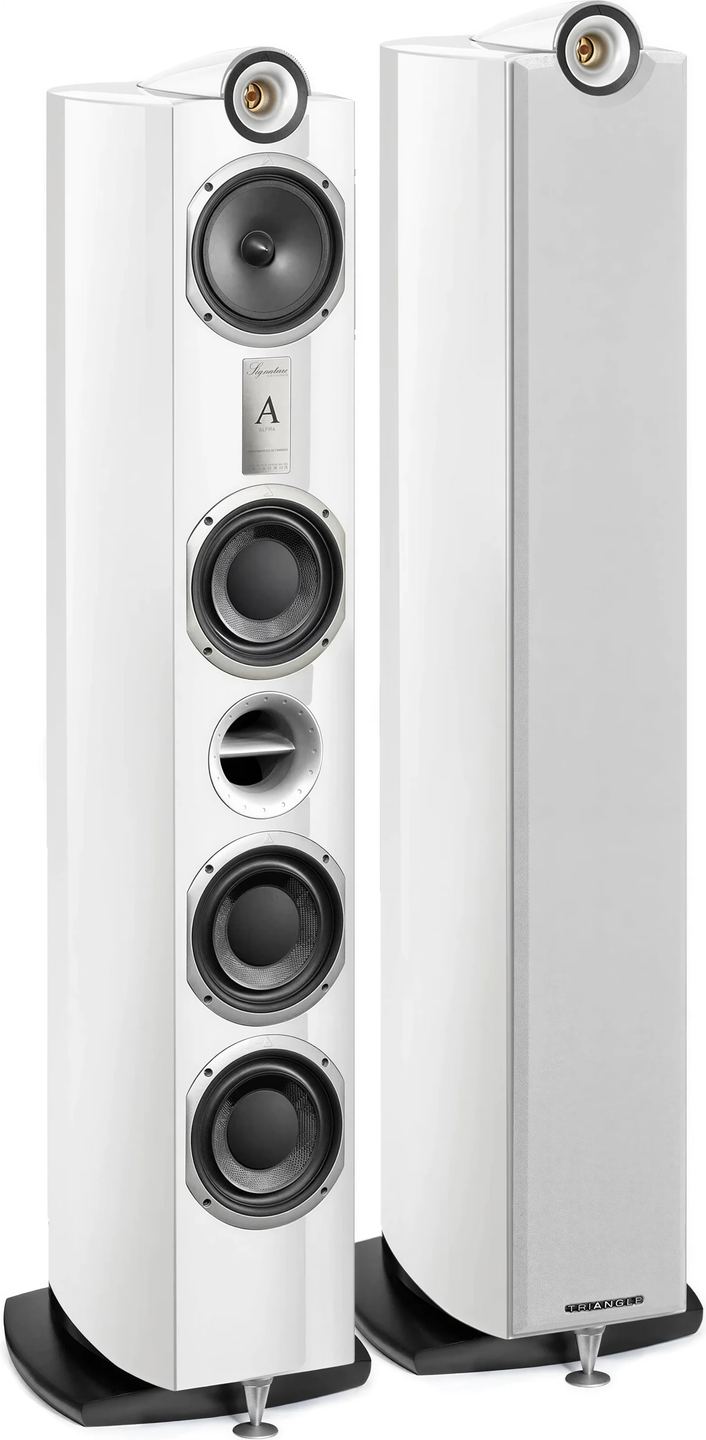
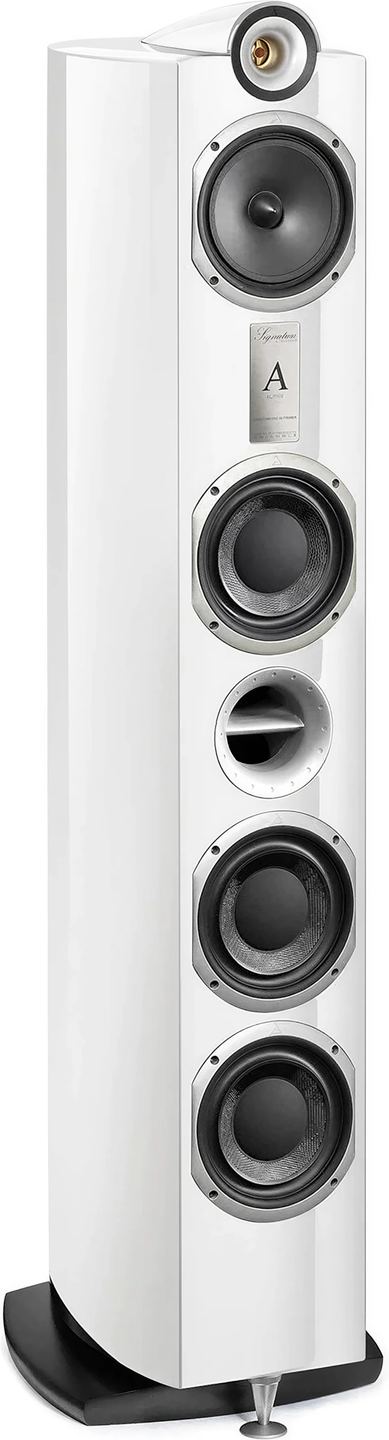
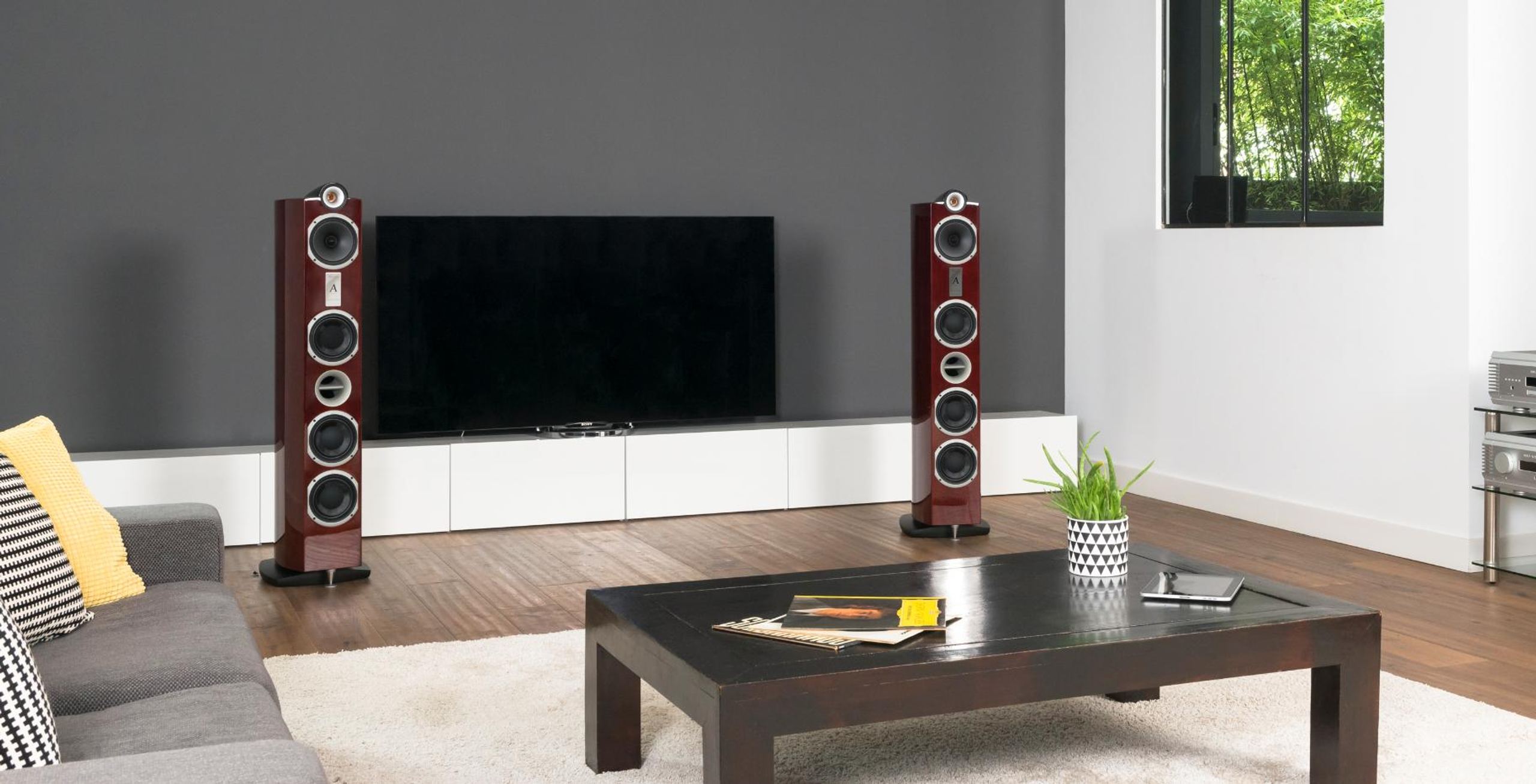
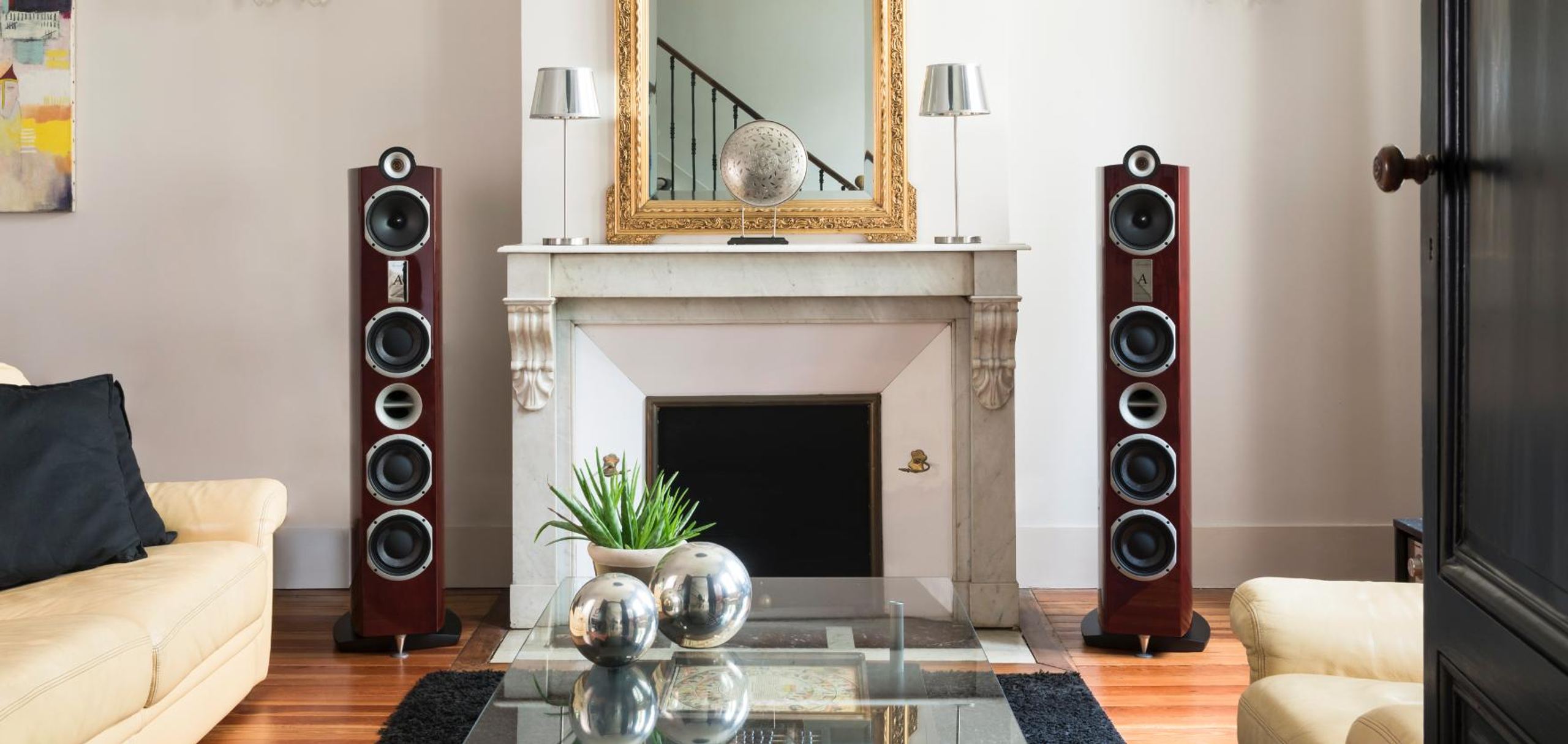
Imposing 1.30-meter column, handmade in Triangle’s Soissons workshops. Five drivers, piano lacquer finish applied in seven to ten coats, internal Kimber Kable wiring. The Signature Alpha carries over the research done on the Magellan range and adapts it to a format suited to large listening spaces, from 30 m² upwards. It sits at the top of the Signature range, above the Delta floorstanders and the compact Theta models.
A curved HDF cabinet pressed for three weeks
The enclosure is not just a simple assembly of flat panels. Seven 3 mm high-density fiberboard (HDF) sheets are stacked and pressed into a curve for three weeks to reach a final thickness of 21 mm. This process eliminates any internal parallel surfaces and reduces unwanted vibrations. The front baffle is reinforced to 25 mm.
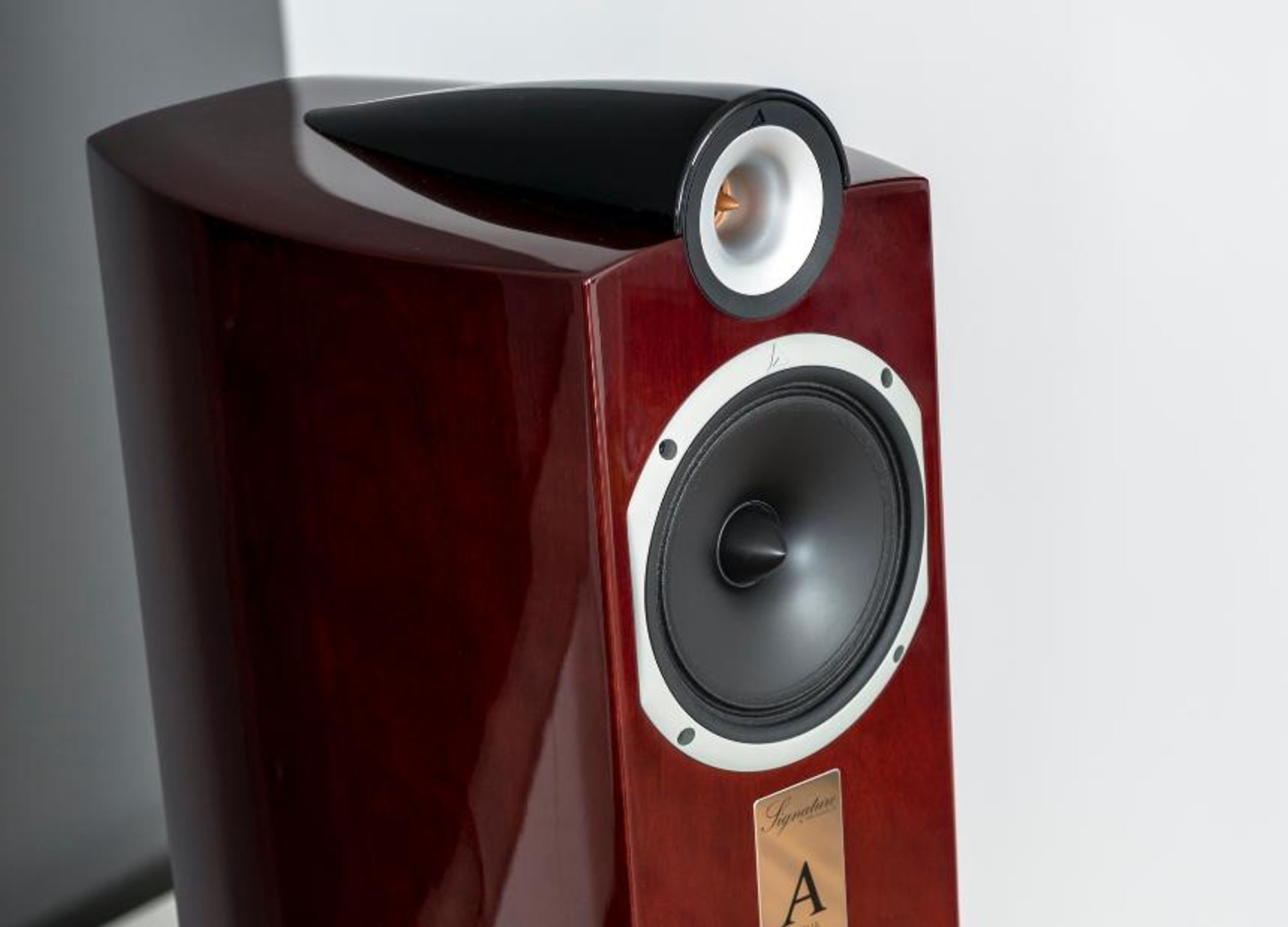
The piano lacquer finish requires considerable work: between seven and ten coats of paint with meticulous polishing between each application to eliminate the slightest imperfection. Three finishes are available: black lacquer, white lacquer, and varnished mahogany. The top of the cabinet features a 5° bevel that softens the lines and plays with the light.
Semi-baffled horn tweeter, paper midrange, fiberglass woofers
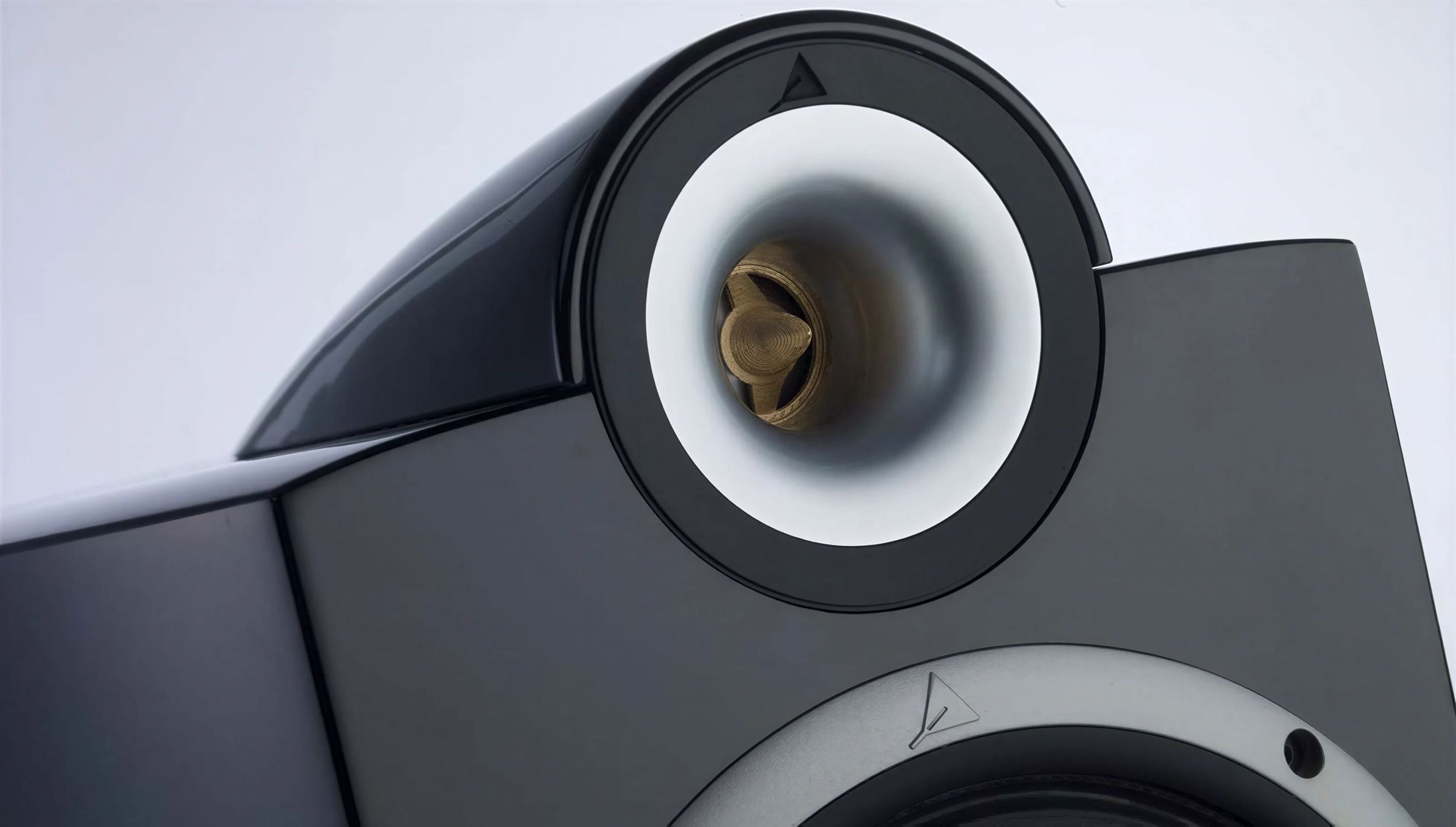
The TZ2550 tweeter comes directly from the Magellan R&D program. Its 25 mm titanium dome is mounted in an injected aluminum horn that widens high-frequency dispersion. The rear cavity has been enlarged to prevent the back wave from returning to the dome, resulting in less distortion and greater delicacy in high-frequency harmonics. The “semi-baffled” mounting (the upper half of the horn protrudes from the front baffle) remains a recognizable visual signature of Triangle floorstanders.
The 16.5 cm midrange uses a treated paper cone mounted on a small-pleat surround that precisely controls excursion. The 185 mm injected aluminum basket improves ventilation of the dual-layer voice coil. This driver reproduces voices and instruments over the 290 Hz to 2,600 Hz range.
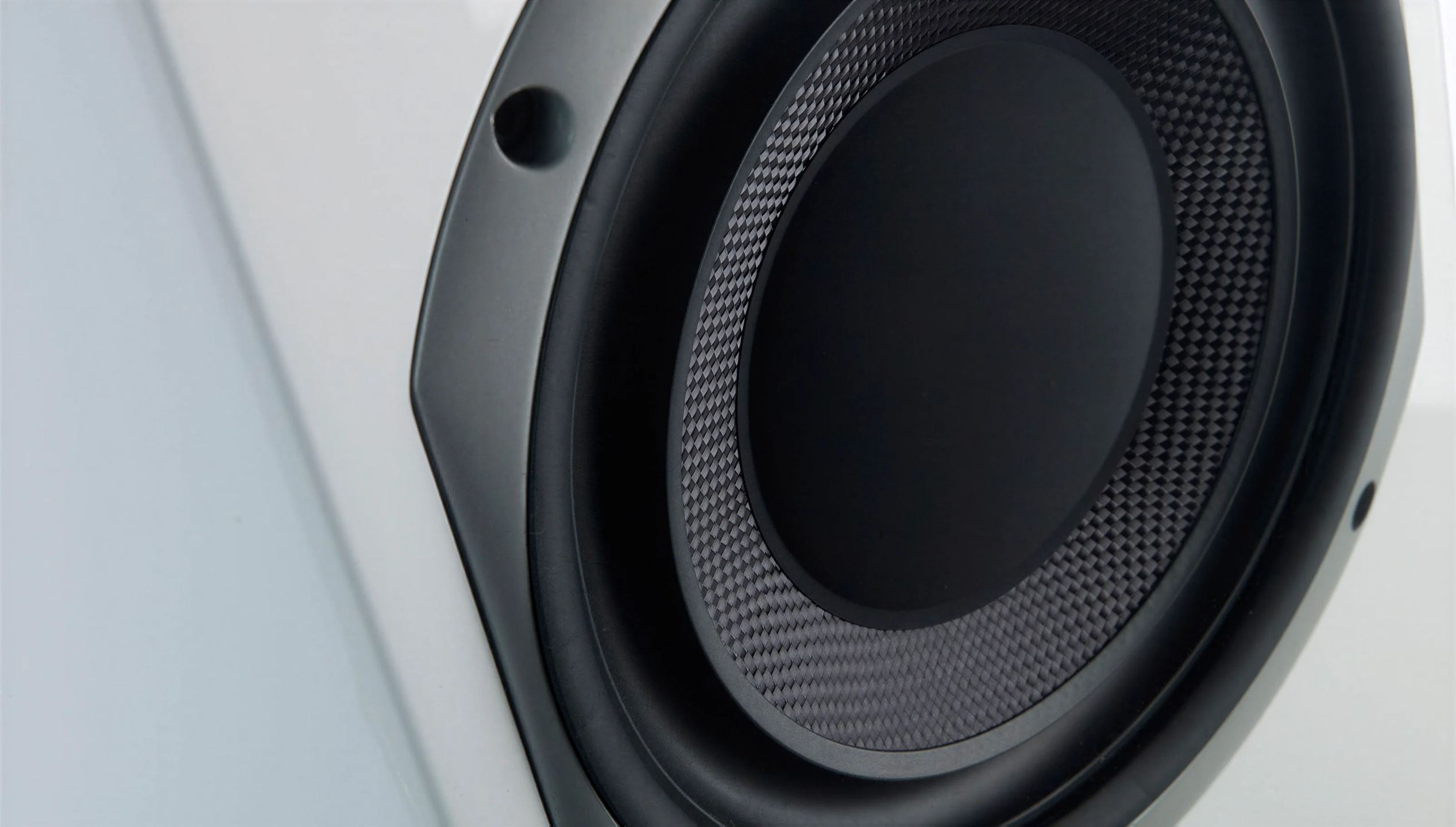
The three 16.5 cm woofers feature fiberglass cones with aluminum dust caps. Their dual-ferrite motor and dual-layer voice coil allow wide and fast excursions. The inverted rubber surround (half-roll) contributes to fast attack. These drivers go down to 32 Hz, a solid figure for a living-room loudspeaker.
Twin Vent: one port, two ducts, three isolated drivers
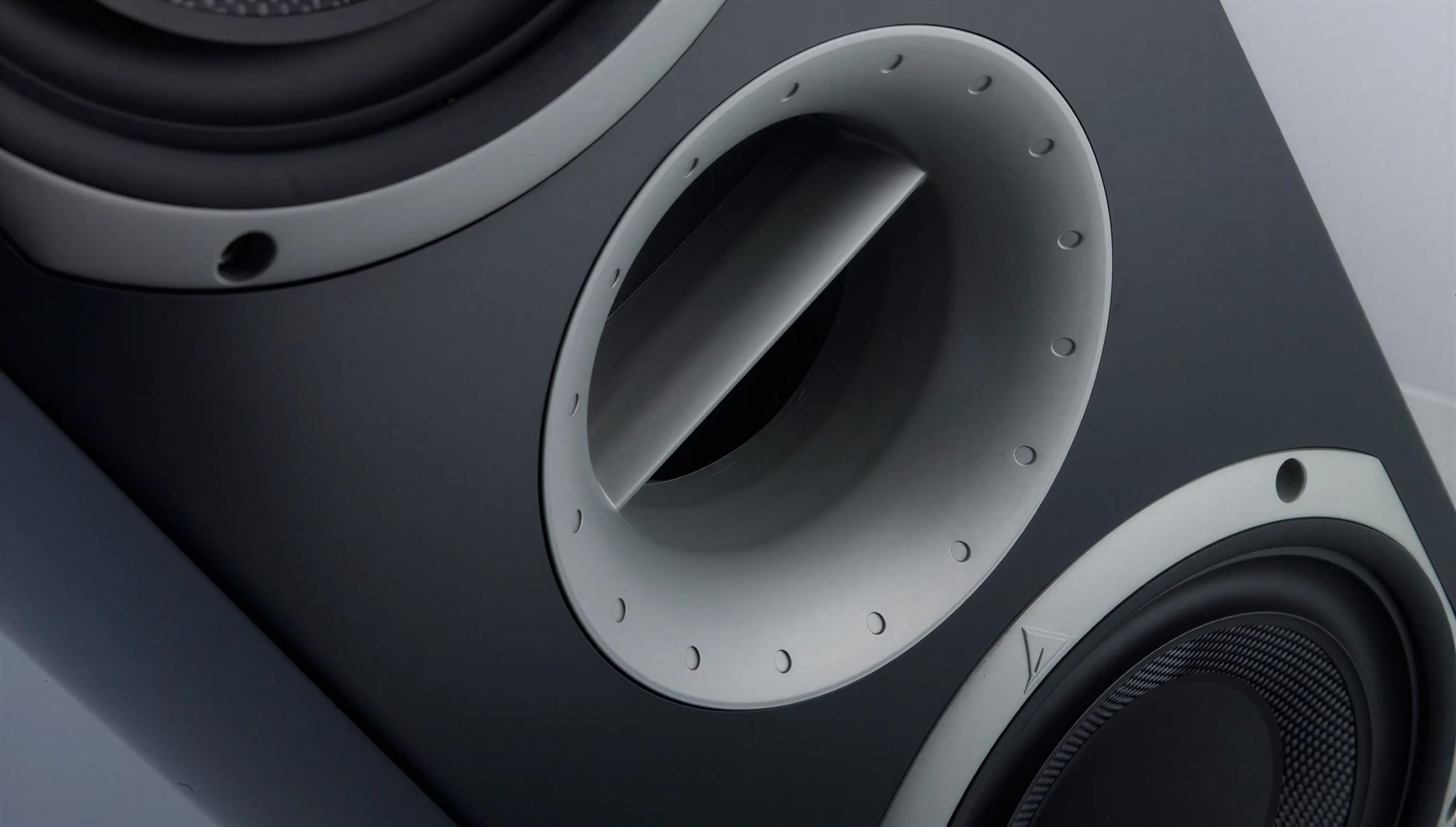
Each woofer has its own compartment inside the cabinet, but they all share a single front-firing port divided into two ducts. This technology, patented by Triangle, acoustically isolates the bass drivers from each other: when the volume goes up, tonal balance remains stable and distortion stays low. The front placement of the port makes installation easier, as the speaker can be placed closer to the rear wall than a rear-ported model.
Separate crossover and Kimber Kable wiring
The crossover physically separates the bass section from the midrange/treble section to avoid electromagnetic interference between components. Triangle has reduced the number of components in the signal path by optimizing the drivers upstream, which preserves transparency.
The internal wiring is by Kimber Kable, a specialized American manufacturer. Triangle selected this cable for its clarity in the mid/treble and its firmness in the bass. The rear terminal block, made of high-conductivity copper alloy, accepts cables up to 5 mm² and banana plugs. It supports bi-wiring or bi-amping.
Aluminum base and SPEC system
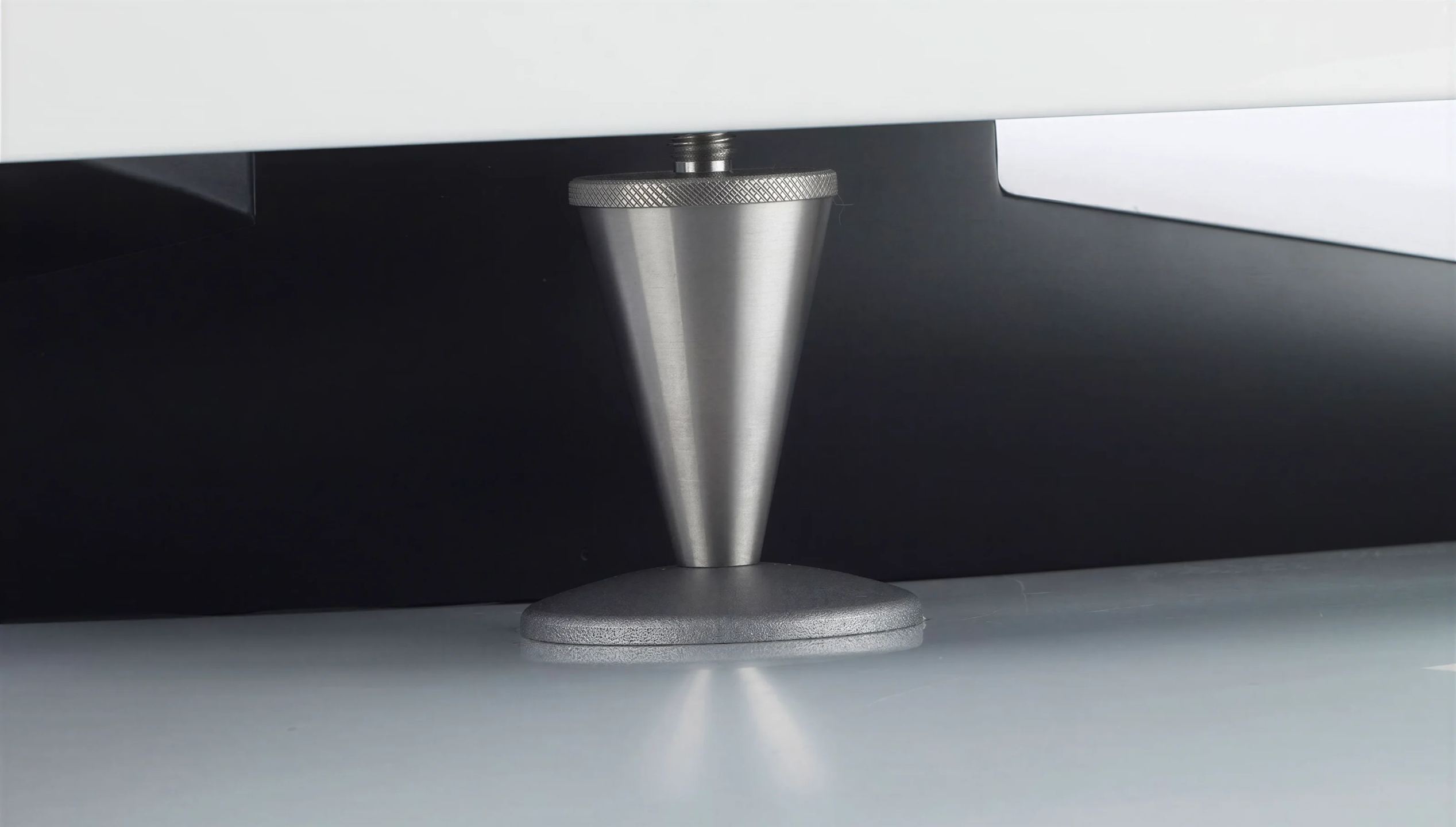
The metal base is not just for looks. It incorporates the SPEC system: a decoupling spike located under the front of the cabinet evacuates vibrational energy into the floor. Two sets of feet are supplied: steel spikes for carpet and rubber pads for hardwood or tile.
High sensitivity, installation in large spaces
With 92 dB sensitivity, the Signature Alpha is not demanding in terms of power. An amplifier delivering 60 watts per channel into 8 ohms is sufficient to drive it under normal listening conditions. Triangle approves amplifiers up to 500 watts, provided volume is kept around 70% of maximum travel to protect the drivers (continuous power handling is 140 watts RMS).
The nominal 8-ohm impedance drops to 3.3 ohms in the bass, which remains compatible with most hi-fi and home-cinema amplifiers on the market. A break-in period of a few dozen hours noticeably improves listening smoothness.
For positioning, Triangle recommends a room of at least 30 m² and a slight toe-in of the speakers toward the listening position. The horn tweeter’s dispersion allows for some flexibility, but the best results are obtained with some space behind and to the sides.
Home-cinema integration
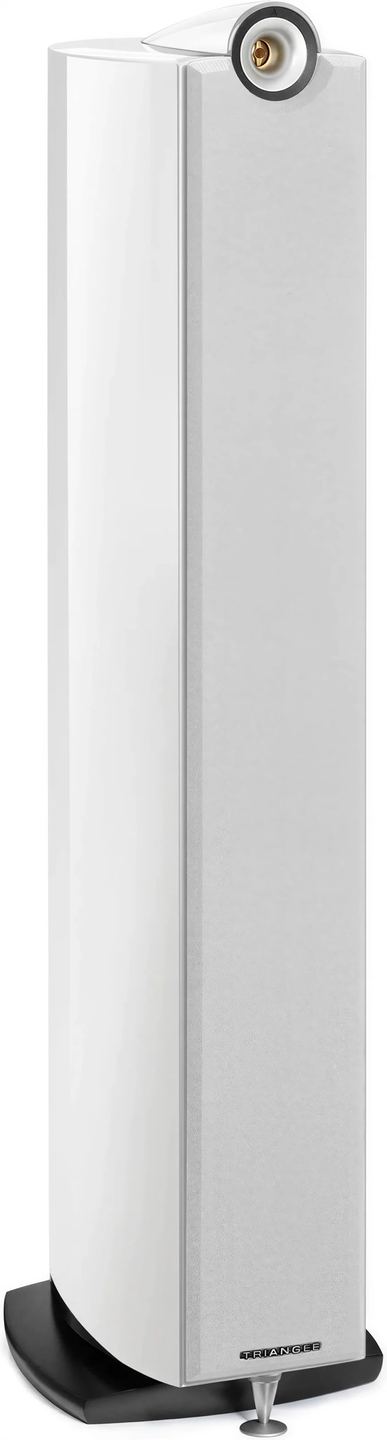
The Signature range includes the Gamma center speaker and the compact Theta models, which can be used as surrounds. A complete 5.0 setup is possible, with sonic coherence ensured by drivers from the same family. The two magnetically attached fabric grilles cover the entire front baffle and help unify the visual appearance of the system.
Type: 3-way bass-reflex floorstanding speaker with front-firing port
Sensitivity: 92 dB
Nominal impedance: 8 Ω
Minimum impedance: 3.3 Ω
Drivers and crossover
Tweeter: 25 mm aluminum/titanium horn
Midrange: 16.5 cm paper cone with small-roll surround
Woofers: 3 x 16.5 cm with dual ferrite magnet, fiberglass cone
Crossover frequencies: 290 Hz - 2600 Hz
Electrical performance
Power handling: 140 W RMS
Recommended amplifier power: 60 - 500 W per channel into 8 Ω
Compatibility: Hi-Fi and home cinema amplifiers (minimum impedance > 3 Ω)
Construction and finish
Cabinet: 7 high-density HDF panels, final thickness 21 mm
Twin Vent technology: internal bracing for greater bass transparency
Luxurious piano finish: meticulous polishing between 7 and 10 coats of paint
Manufacturing: 100% French
Dimensions and weight
Speaker only: 233 x 1270 x 372 mm
With base: 340 x 1330 x 372 mm
Weight with base: 34.5 kg
Packaging dimensions: 510 x 1500 x 390 mm
Packaged weight: 42.8 kg
Connectivity and accessories
Dual binding posts for bi-wiring / bi-amping
2 magnetically attached fabric grilles
Steel spikes for carpet
Rubber feet for hard floors
Recommended use
Room size: > 30 m²
Type of amplification: passive Hi-Fi
Usage advice: a more powerful amplifier can be used if the volume is limited to 70%. An underpowered amplifier can cause distortion and damage the drivers.
Frequently Asked Questions
Which amplifier should I choose for the Signature Alpha?
+
A quality integrated amplifier from 60 watts per channel upwards is suitable for typical home listening. More powerful electronics (up to 500 watts) provide extra dynamic headroom on peaks, but you then need to keep an eye on the volume to stay below the continuous 140 watts RMS handling. Give priority to an amplifier that is stable with low-impedance loads (3–4 ohms).
How long does the break-in take?
+
Cones and surrounds become more supple after 30 to 50 hours of use. The first listening sessions may sound a bit closed-in; this is normal. Let the speakers run at moderate volume for a few days before forming an opinion.
Do the grilles affect the sound?
+
The acoustic fabric lets most of the signal through. Some prefer listening without grilles to free the tweeter, others keep them on to protect the drivers. The difference remains subtle in most setups.
Can the Signature Alpha be used close to a wall?
+
The front-firing port facilitates integration, but a gap of 20 to 40 cm from the rear wall is still preferable to avoid excessive bass reinforcement. Experiment according to your room’s acoustics.
Does bi-amping provide an audible improvement?
+
Separating bass amplification from mid/treble amplification can improve definition and dynamics, especially with amplifiers of different character. The benefit depends on the quality of the electronics. With simple bi-wiring (one amplifier, two pairs of cables), the improvement is less pronounced.
User reviews
Review highlights
Unanimously rated 5/5, these floorstanding speakers delight their buyers, several of whom call them a work of art or their best hi-fi purchase.
The vast majority praise their beauty and lacquered finish, describing them as elegant and of the highest quality.
Their sound is just as highly praised: spacious, clear and precise, and described as exceptional by most.
Several customers highlight the remarkable treble and midrange, both controlled and transparent.
Some also note excellent dynamics, with no distortion even at high volume.
Based on reviews from customers who purchased this product, summarised by AI
D'Antonis
Truly unique speakers ... unbeatable value for money...a work of art
Comment from April 24, 2026 — Experience from April 18, 2026
Automatically translated — Show original (Italian)
Diffusori veramente unici ... rapporto qualità prezzo imbattibile...un opera d'arte
Vincenzo
There are no limits to how beautiful these speakers are, excellent sound and even at full power I hear no distortion.
Comment from February 09, 2026 — Experience from January 29, 2026
Automatically translated — Show original (Italian)
Non ci sono limiti per la bellezza di questi diffusori, ottimo audio e anche a piena potenza non sento distorsioni.
Didier
They’re big, but they’re worth it: fullness, powerful sound, punchy – it definitely feels different from the Antal ES, which were already doing the job. Here we’re on a whole different level. For your information, this is my home cinema package.
Comment from January 15, 2026 — Experience from September 18, 2025
Automatically translated — Show original (French)
elles sont imposantes mais elles le valent bien , rondeur , son volumineux , percutantes ,forcement ca change des antal es qui déjà faisaient le job , là on est plus dans la même dimension .
Pour info c'est mon pack home cinema
Eco-contribution of €0.75 included in the sale price.
To better understand our visitors, measure marketing effectiveness and personalise ads, we and our partners use cookies and mobile advertising identifiers on your device. This data makes it possible to display personalised and non-personalised ads and measure their performance. Some cookies, which are technically necessary, are exempt from consent. You can accept those that require your consent, refuse them by clicking "Refuse", or customise your choices via the settings screen.
To find out how Google uses the data collected once you have given your consent, see Google’s Business Data Responsibility site (opens in a new window).
You can change or withdraw your consent at any time via the "Consent and cookies" link. Your choices will apply on our site for 12 months.