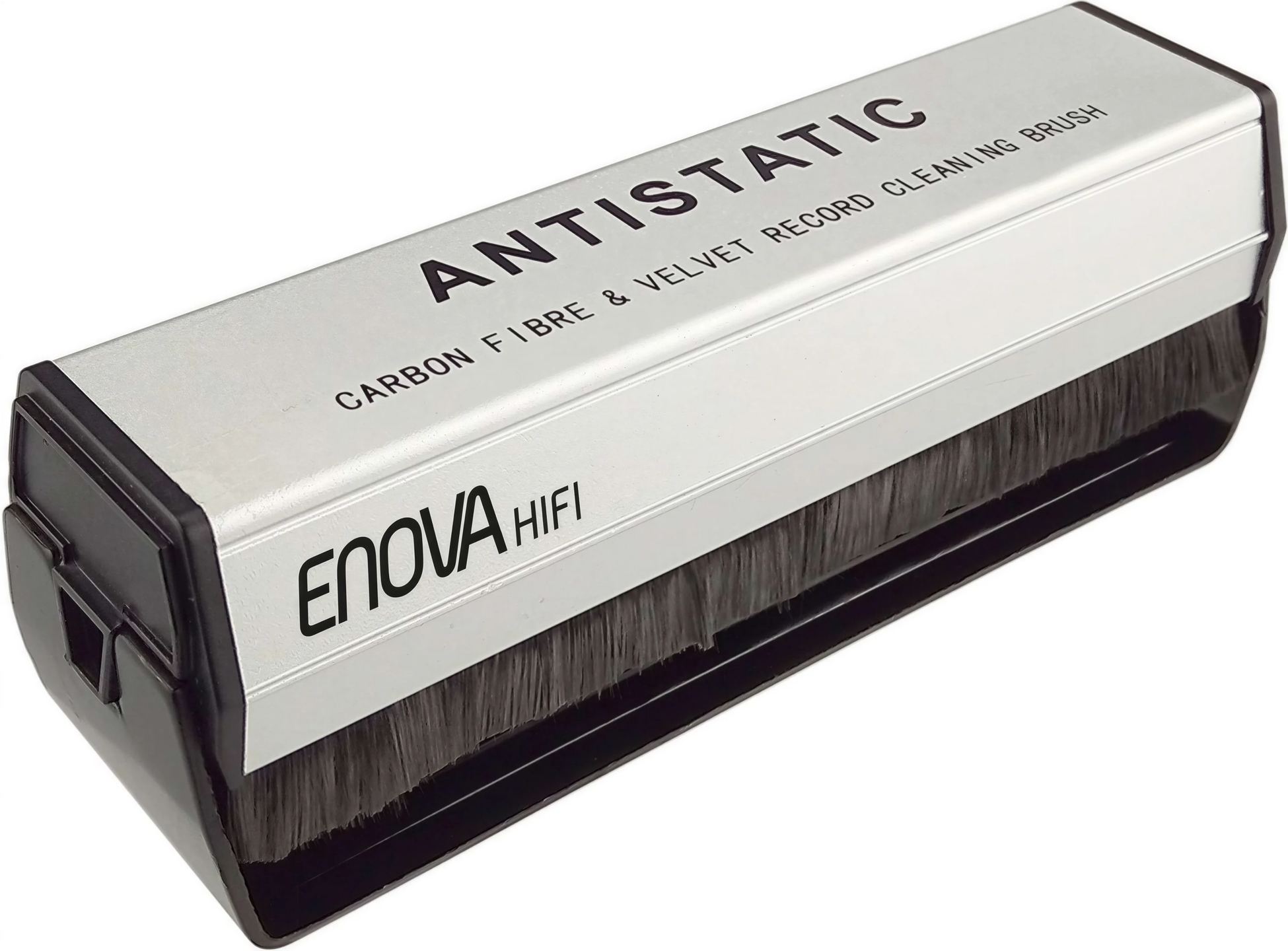
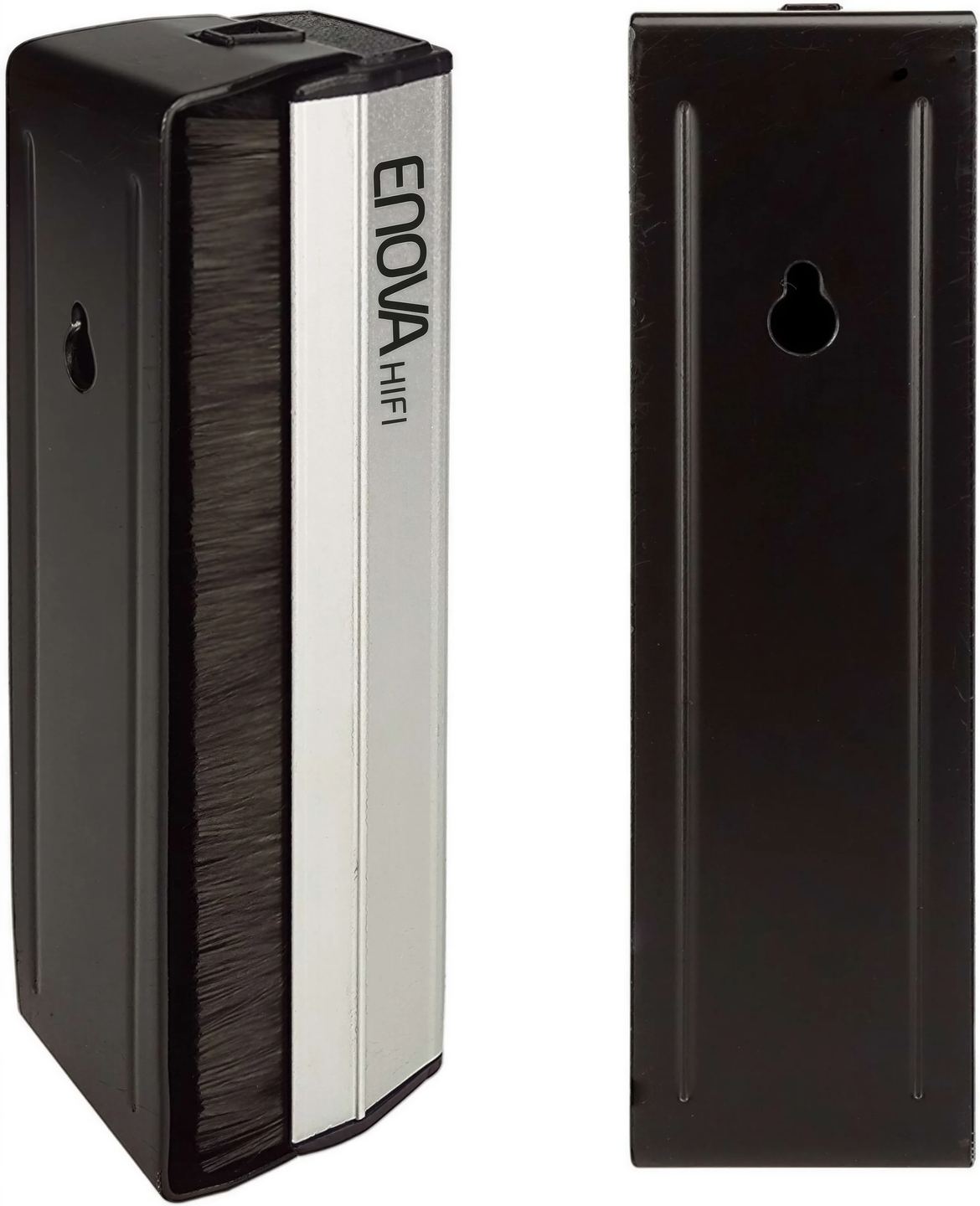
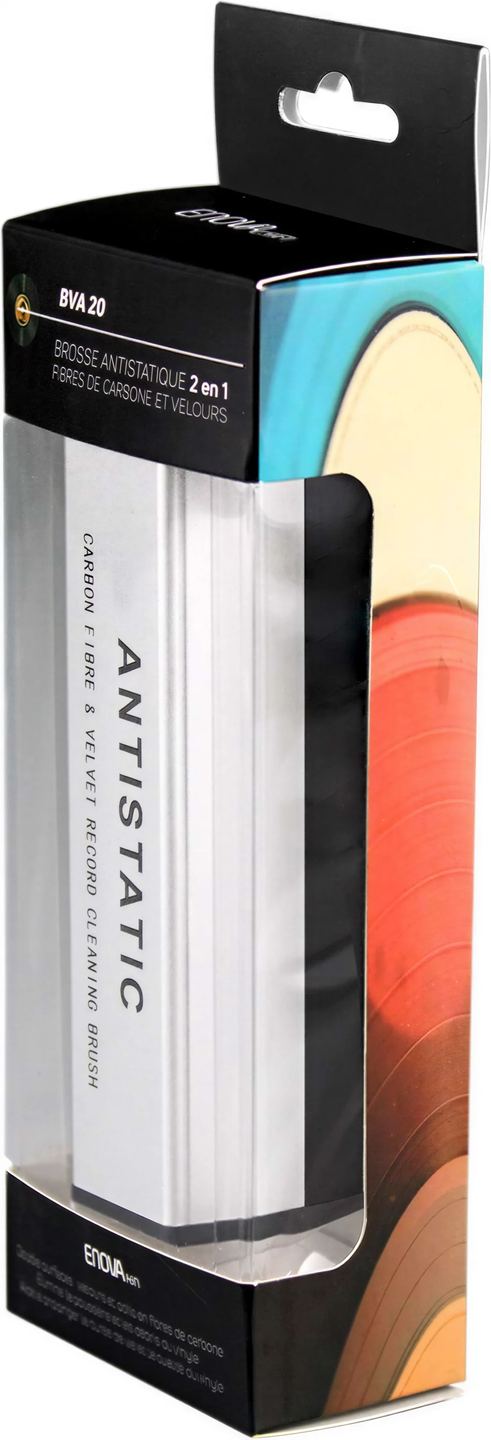
A record freshly removed from its sleeve attracts dust almost immediately: friction against paper or plastic charges its surface with static electricity, and every airborne particle sticks to it. Brushing before listening to each side reduces crackles and slows stylus wear. This 2-in-1 model combines two materials in a single body, carbon fibres on one side and velvet on the other, in a format that fits in the palm of your hand.
Carbon fibres and velvet, two distinct roles
Carbon fibres are very fine and antistatic. They remain parallel to one another when in contact with the record, allowing them to reach the bottom of the grooves to dislodge dust and small impurities. The electrical charge holding these particles is neutralised in the process. Without this discharge, the loosened dust settles back onto the surface as soon as the brush moves away.
Velvet works more on the surface. Its dense pile captures debris loosened by the carbon and picks up textile fibres or fine dust left on the vinyl. Combining both on a single brush avoids switching between two accessories for each side. Enova HIFI also sells single-material brushes, with carbon only or velvet only, for those who prefer to keep the steps separate.
A size suited to the grooves of a 30 cm record
The 11.5 cm width has a practical advantage: on a 30 cm 33 rpm record, the grooved area extends less than 9 cm between the edge and the label. Placed across the record, the brush covers this entire band at once, without needing to be moved during rotation. On a 17 cm 45 rpm record, the grooved band is narrower still, and the brushing motion is the same.
Weighing 56 g and measuring 1.5 cm thick, the BVA 20 can sit beside the turntable or slip into a record storage bin. Its light weight also matters during cleaning: the brush should skim the vinyl, and pressing firmly does not clean any better. It crushes the fibres and can mark the surface if a hard particle is trapped underneath.
The right technique on a rotating platter
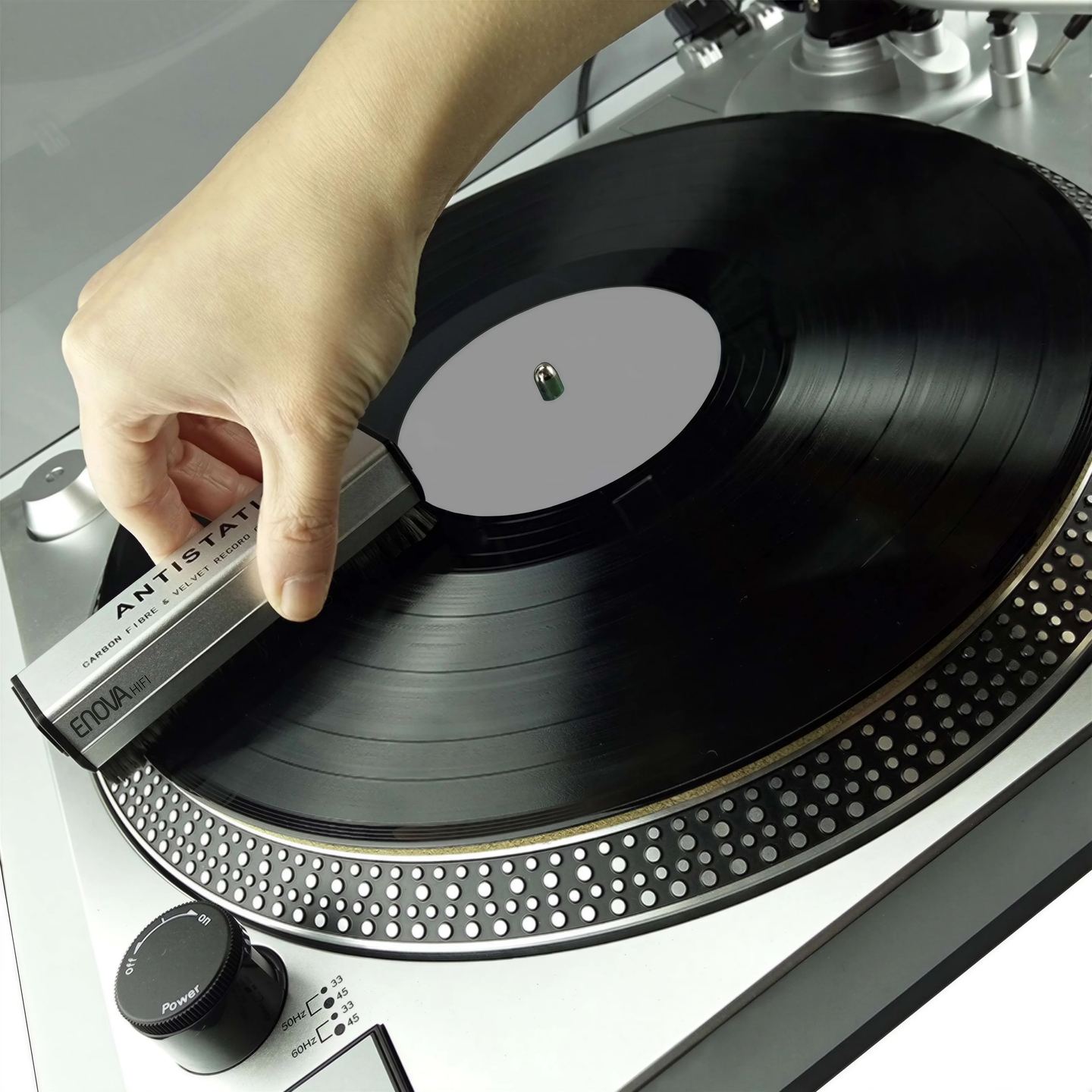
The simplest approach is to place the record on the spinning platter, at 33 or 45 rpm. Lay the carbon side flat across the grooves, using only the weight of your hand. After one or two revolutions, tilt the brush slightly and slowly slide it towards the outer edge: dust collects along the edge of the fibres and leaves the record with them, rather than being pushed towards the label. A second pass with the velvet side picks up what remains on the surface.
This cleaning is still dry maintenance, to be repeated before each side. It removes fresh dust and static charge, but cannot tackle greasy fingerprints, mould or ingrained grime on a poorly stored second-hand record. These cases require washing with a liquid cleaner, which the brush then complements for everyday use.
Keeping the brush clean between listening sessions
A dust-laden brush deposits that dust onto the next record. After each session, tap the carbon side against the edge of a table or run it over a clean surface to shake off the particles collected along the edge. Remove dust from the velvet by rubbing it against the pile with a clean, dry cloth, then smoothing it in the direction of the pile.
Storage matters just as much: left face up on a piece of furniture, the brush becomes covered in dust within a few days. A drawer, a box or a closed storage bin keeps it ready for use.