Cabasse iO3 in-ceiling
Overview
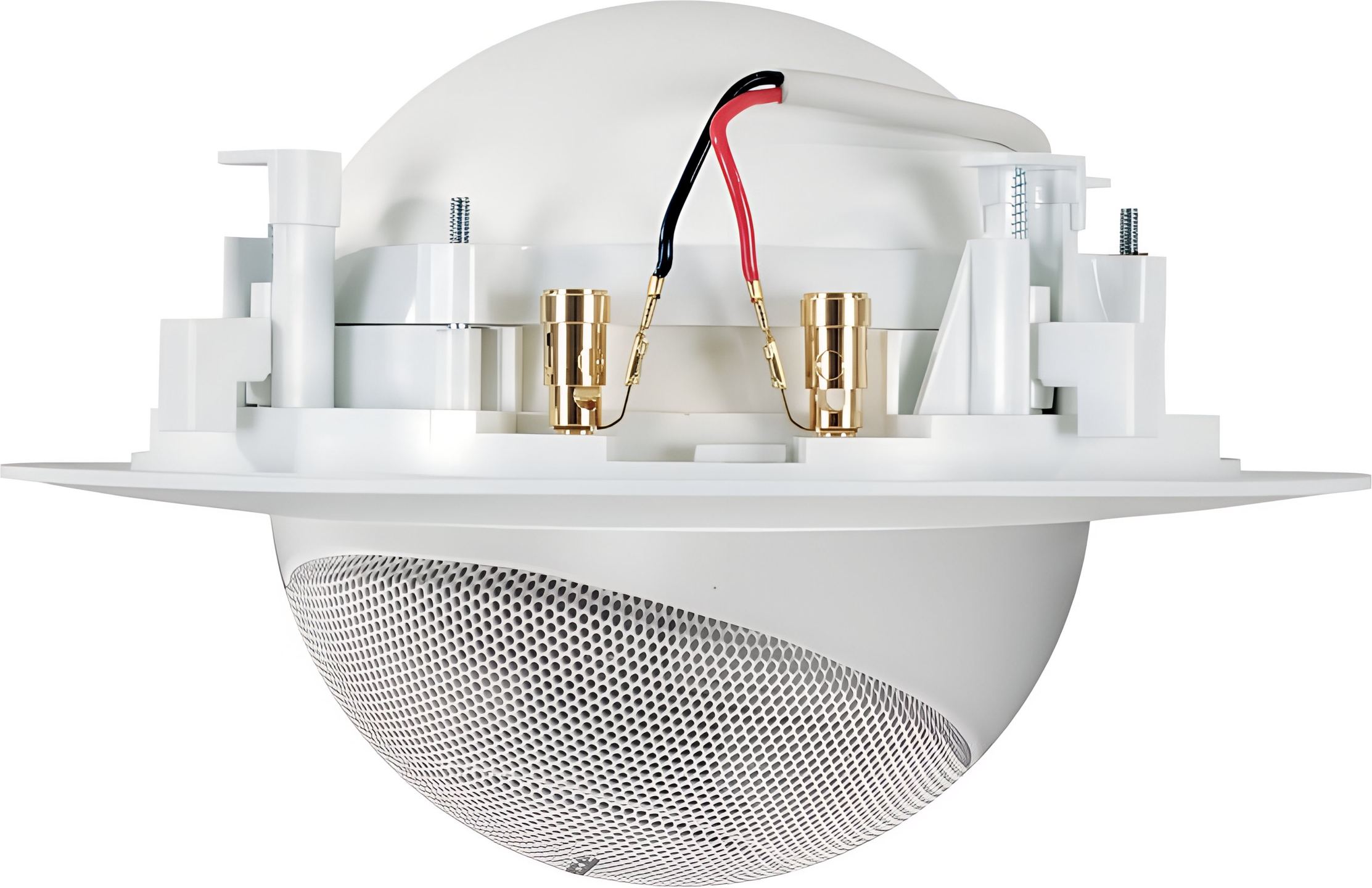
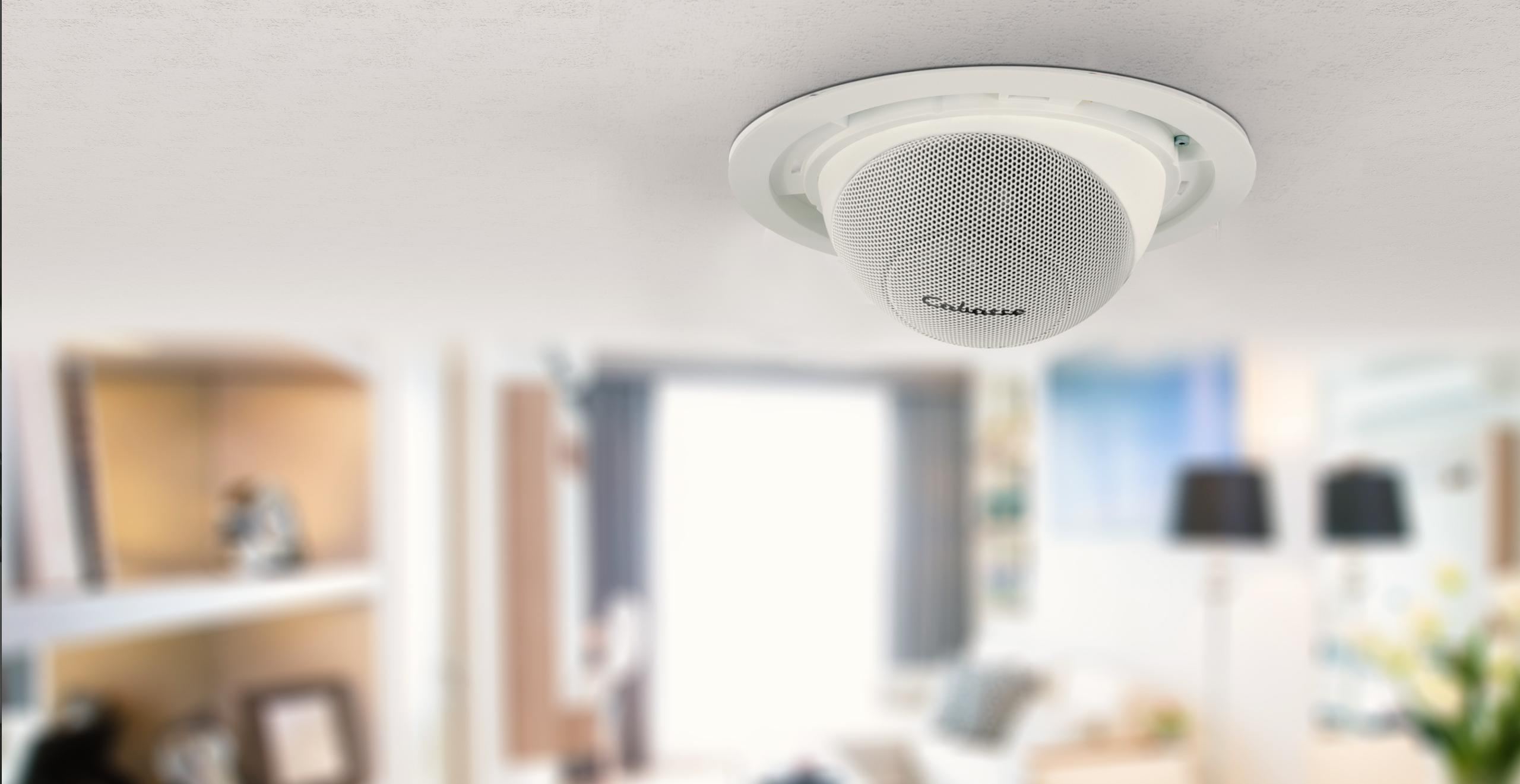
The Cabasse iO3 in-ceiling built-in speaker is designed for ceiling installation. Inspired by the Baltic models, it is a 2-way coaxial speaker with a diameter of 26 cm. It features a 13 cm coaxial driver with a Duocell diaphragm and a 2.7 cm Kaladex dome tweeter. It delivers a nominal power of 80 W and a sensitivity of 93 dB. Its adjustable installation allows you to fine-tune the direction of sound dispersion.
Coaxial technology and high-performance diaphragms
At the heart of the iO3 in-ceiling is a 13 cm coaxial driver that places all transducers on the same axis, forming a portion of a pulsating sphere according to the SCS (Spatially Coherent Source) principle. This configuration ensures that all frequencies originate from the same point source, providing temporal and spatial coherence that preserves the stability of the soundstage regardless of the listening position.
The mid-bass uses a 13 cm Duocell diaphragm, a material developed exclusively by Cabasse since 1985. This diaphragm has its origins in Rohacell, a high-performance foam used in aerospace. Cabasse robots shape this foam with an exponential profile and variable thickness, creating a honeycomb-like architecture reminiscent of bone structure: internal lightness with a rigid outer surface. This exceptional stiffness-to-mass ratio gives the diaphragm immediate responsiveness while maintaining optimal internal damping. Each diaphragm takes around twenty minutes to manufacture, compared to a few seconds for a conventional diaphragm.
At the center, a 2.7 cm Kaladex dome tweeter reproduces treble up to 22,000 Hz. This material offers controlled rigidity that preserves mechanical integrity at high frequencies while avoiding resonance peaks. The 2,700 Hz crossover places the mid-treble transition in a range where the human ear is particularly sensitive, demanding perfect acoustic coherence that only the coaxial configuration can guarantee.
The 93 dB sensitivity means that with just 1 watt input, the speaker produces 93 decibels at one meter. This efficiency, characteristic of Cabasse designs, allows comfortable listening levels with modestly powered amplifiers. The nominal impedance of 8 ohms with a minimum of 3.8 ohms makes it easy to pair with most amplifiers.
Adjustable installation and discreet integration
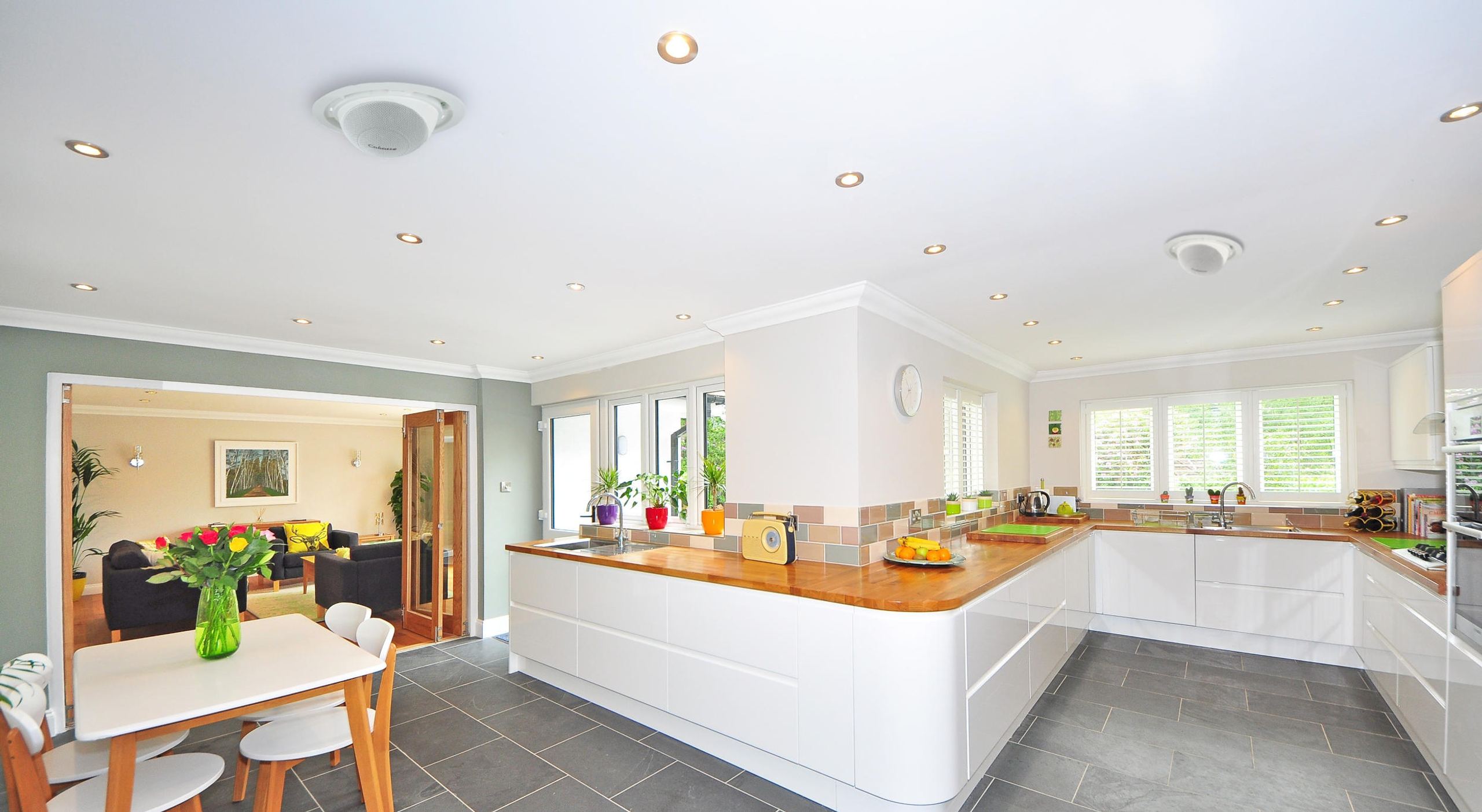
The iO3 in-ceiling requires a specific adapter for ceiling installation. Once mounted, only the white grille with a 26 cm diameter reveals the speaker’s presence. This grille can be painted to blend with the surrounding décor.
A standout feature of this system is its orientability. Unlike traditional in-wall/in-ceiling speakers, the iO3 can be aimed in virtually any direction after installation. This flexibility lets you adjust the dispersion axis toward the main listening area, compensating for architectural constraints that sometimes dictate a suboptimal location.
This adjustability is particularly valuable in multichannel home theater setups. For Dolby Atmos height/effects speakers, fine-tuning the angle helps achieve the ideal reflection point. For stereo applications, orientation ensures coherent sound projection toward the listening position.
With a frequency response of 150 to 22,000 Hz, the iO3 is intended to be paired with a subwoofer for full-spectrum audio reproduction. The 150 Hz low cutoff aligns with standard recommendations for multichannel systems where a subwoofer handles the deepest frequencies.
The low weight of 1.9 kg makes handling easy but requires verifying the ceiling’s strength and the quality of the mounting. The required depth remains modest thanks to the compact acoustic sphere, allowing integration even in drop ceilings with limited plenum space.
A coherent range for every configuration
The iO3 in-ceiling is part of a range that adapts to different uses. The same coaxial driver is found in the iO3 on a base and the iO3 on a stand, enabling a homogeneous home theater system combining built-in speakers with stand-mounted speakers. For a center channel, the iO3 on a base offers the same sonic signature, ensuring the timbral coherence essential for realistic dialogue and panoramic effects.
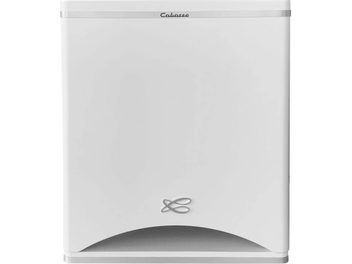
This modular approach addresses varied architectural constraints. Compatibility with The Pearl Sub subwoofer extends the system’s low-frequency capabilities. This connected subwoofer features DEAP technology, which applies a specific acoustic profile for iO3 speakers, optimizing the crossover via the StreamControl app.
For multi-room installations, iO3 speakers can be combined with connected speakers from The Pearl range, all sharing the same control app. This versatility positions the iO3 as an acoustic building block adaptable to various scenarios, from discreet home cinema to distributed music listening.
Despite its compact form factor and installation constraints, the iO3 upholds the core principles of Cabasse designs: linear response, temporal coherence, preserved dynamics, and a stable soundstage.
Technical specifications
Configuration
- Type: 2-way
- Drivers:
- 1 × 2-way coaxial, 13 cm Duocell
- 1 × dome tweeter, ∅ 2.7 cm Kaladex
Audio performance
- Power:
- RMS: 80 W
- Peak: 580 W
- Sensitivity 1 W / 1 m: 93 dB
- Crossover frequency: 2,700 Hz
- Frequency response: 150 to 22,000 Hz
- Impedance:
- Nominal: 8 Ω
- Minimum: 3.8 Ω
Physical characteristics
- Type: in-wall/in-ceiling
- Dimensions: ∅ 26 cm
- Weight: 1.9 kg
Frequently Asked Questions
Can the iO3 in-ceiling be installed in a wall instead of the ceiling?
Technically, the adapter allows wall installation, but the design primarily targets ceiling mounting. The adjustable orientation partially compensates for this flexibility. For a dedicated in-wall setup, ensure the cavity depth in the partition comfortably accommodates the entire system.
What surface does the iO3 in-ceiling grille cover, and is it magnetic?
The circular grille measures 26 cm in diameter. The magnetic mounting system allows easy removal for access to orientation adjustments or maintenance. This grille accepts water-based acrylic paint, making it easy to match the surrounding ceiling.
How many iO3 in-ceiling speakers are needed for a Dolby Atmos setup?
A 5.1.2 Atmos configuration requires two ceiling speakers, while a 5.1.4 system needs four. Position the speakers according to Dolby recommendations: for 5.1.2, place them slightly in front of the listening position, spaced similarly to the front speakers. The adjustability compensates for deviations from ideal theoretical positions.
What amplifier power is recommended to drive a pair of iO3s?
With 93 dB sensitivity, modest power is sufficient. A 50-watt-per-channel amplifier already delivers comfortable levels. To fully leverage the 80 W nominal power handling and enjoy the dynamics, aim for 80 to 100 watts per channel. The stable 8-ohm impedance makes pairing easy with most amplifiers, even those with less robust power supplies.
- Eco-contribution included in the sale price.
- Manufacturer reference: ENC1566 + ACC1306