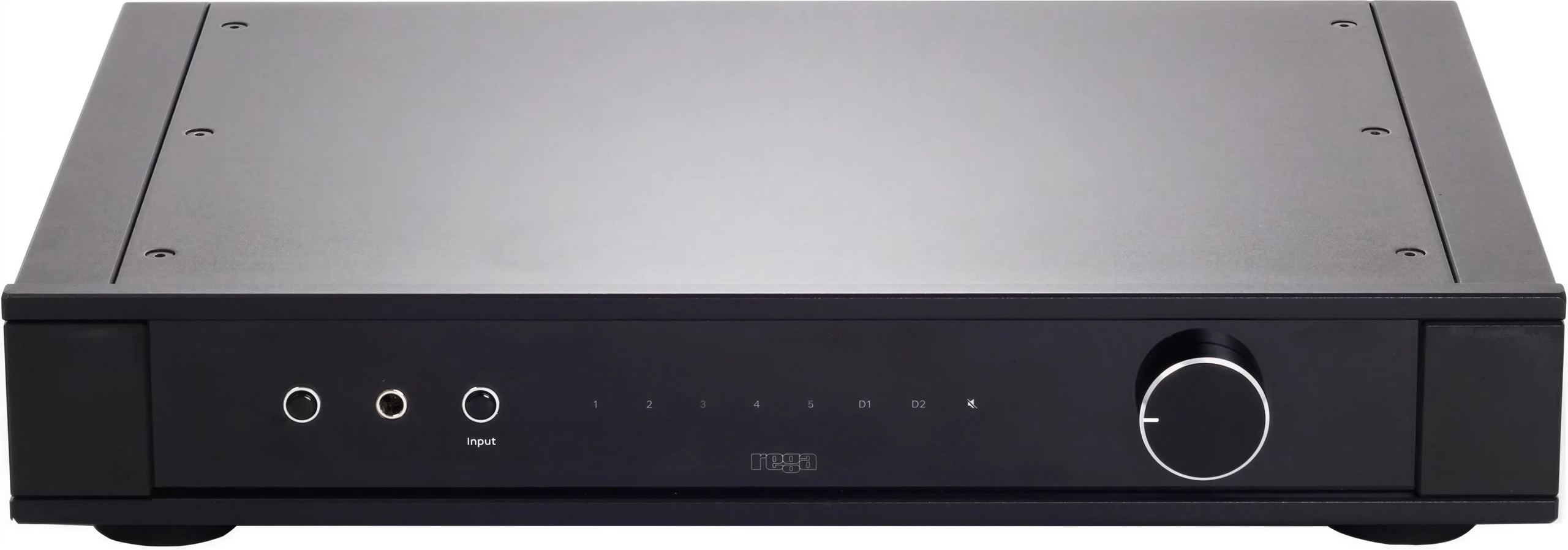
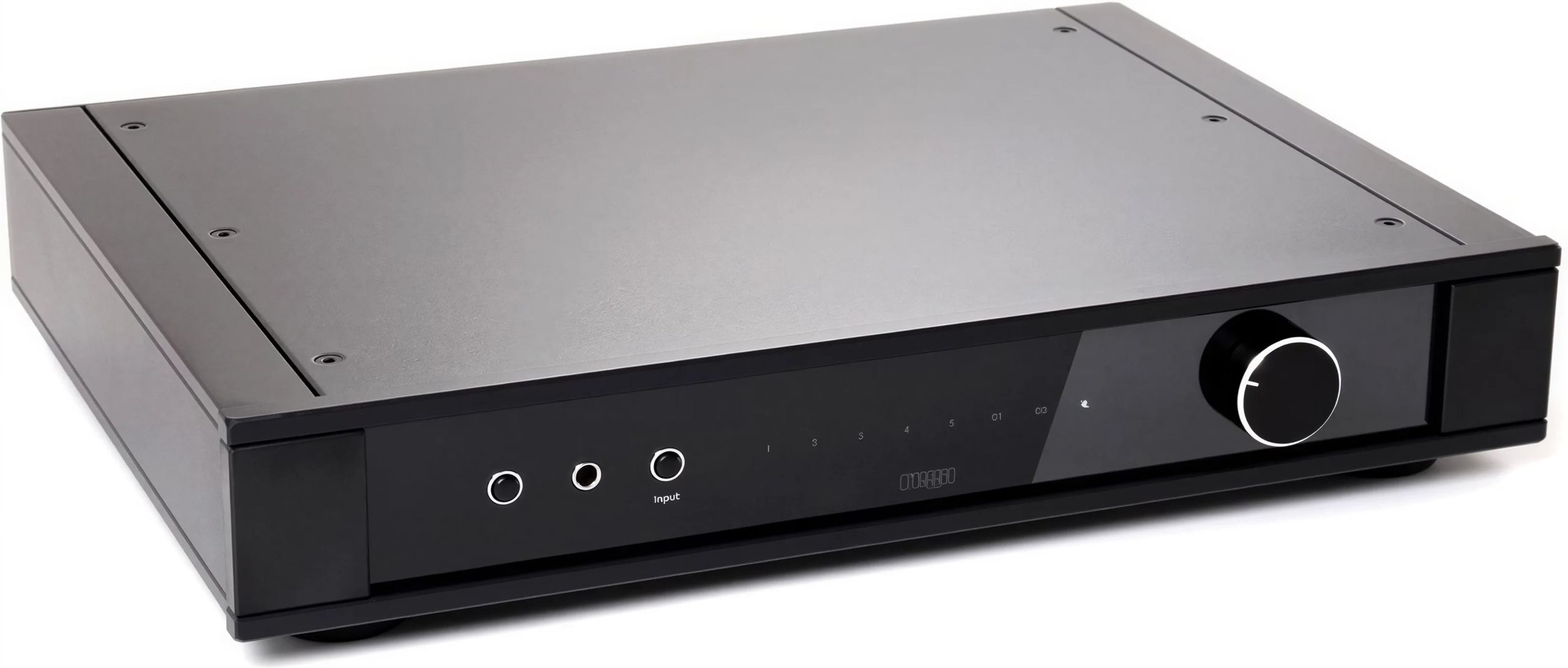
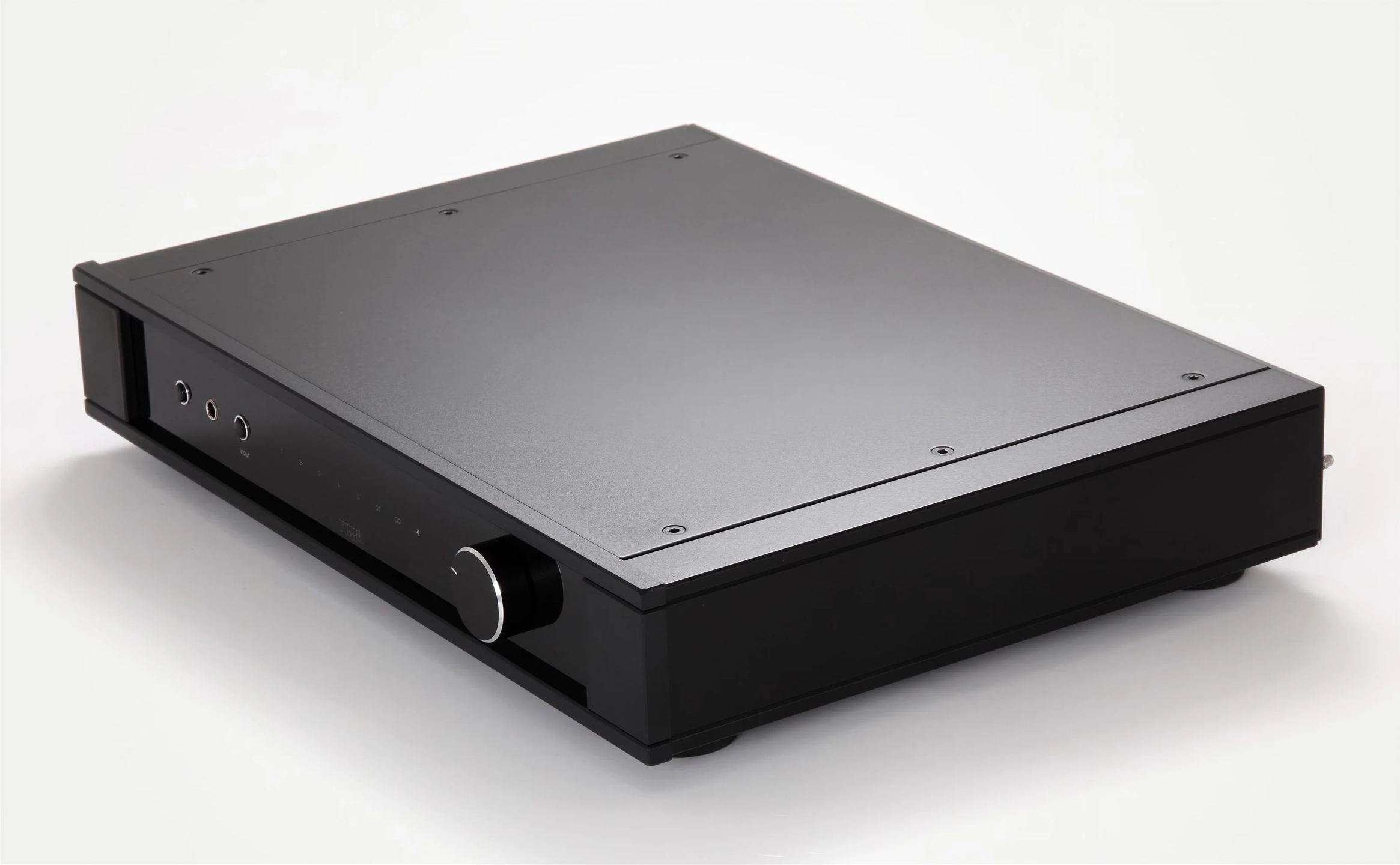
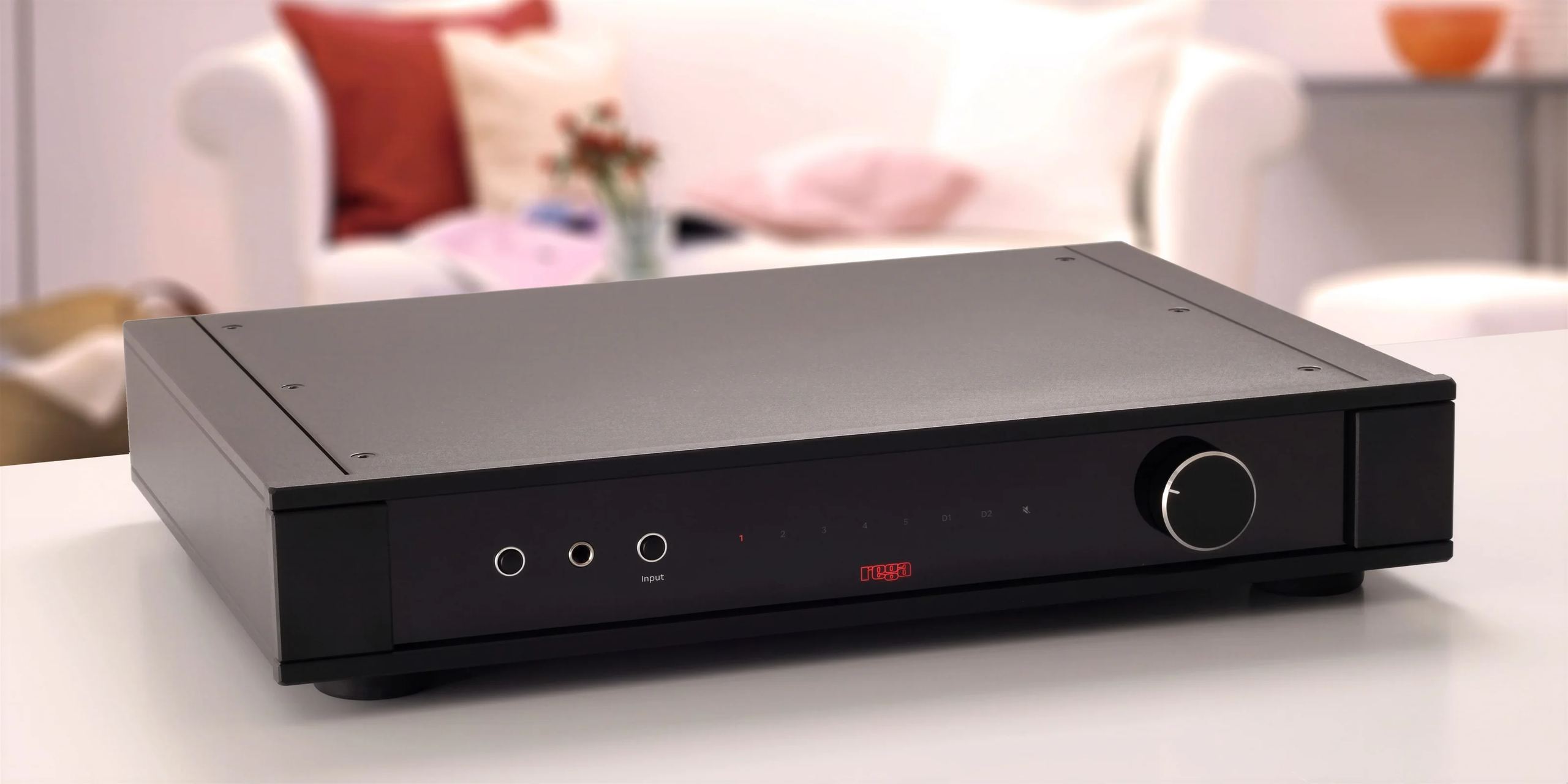
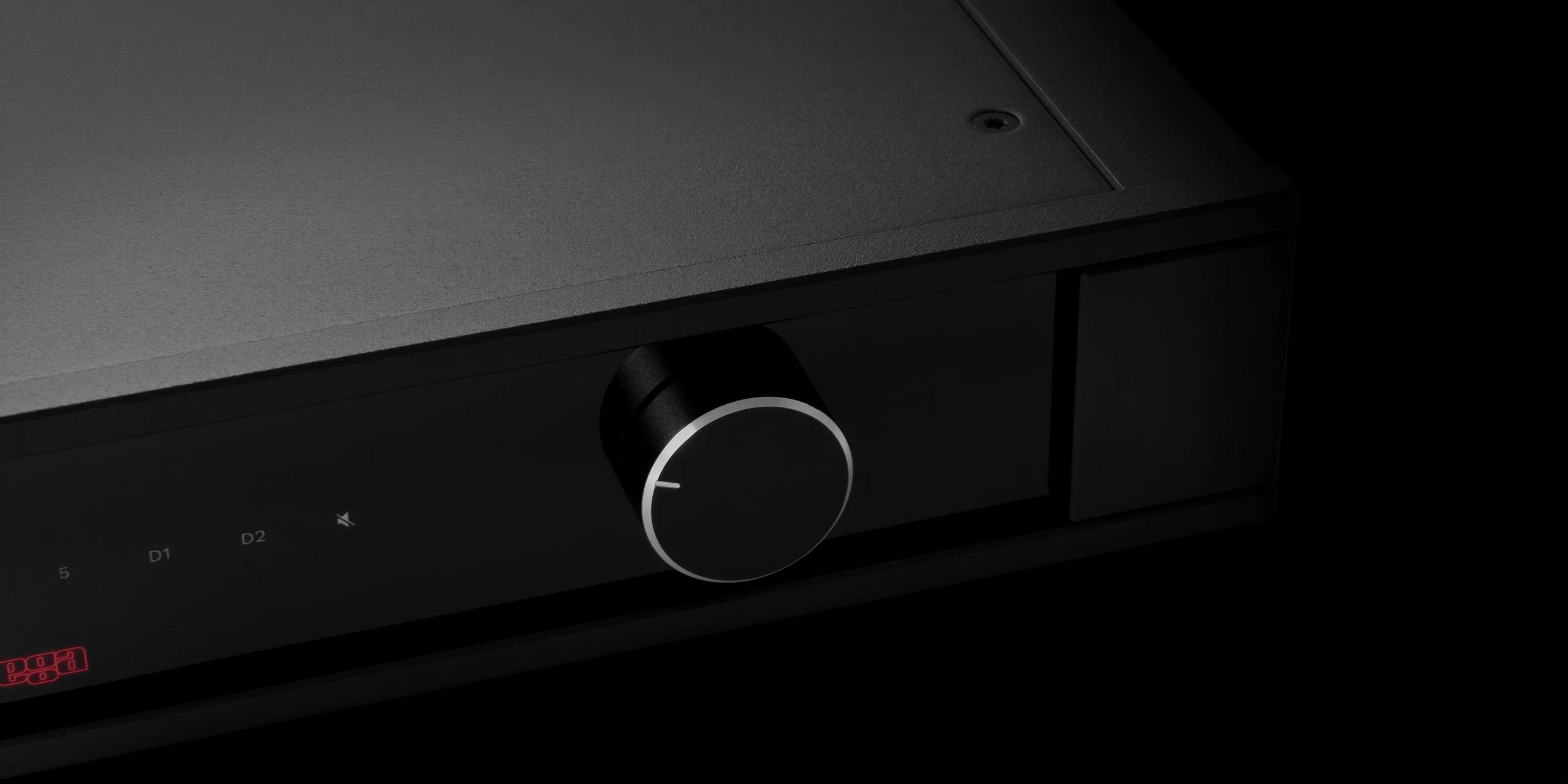
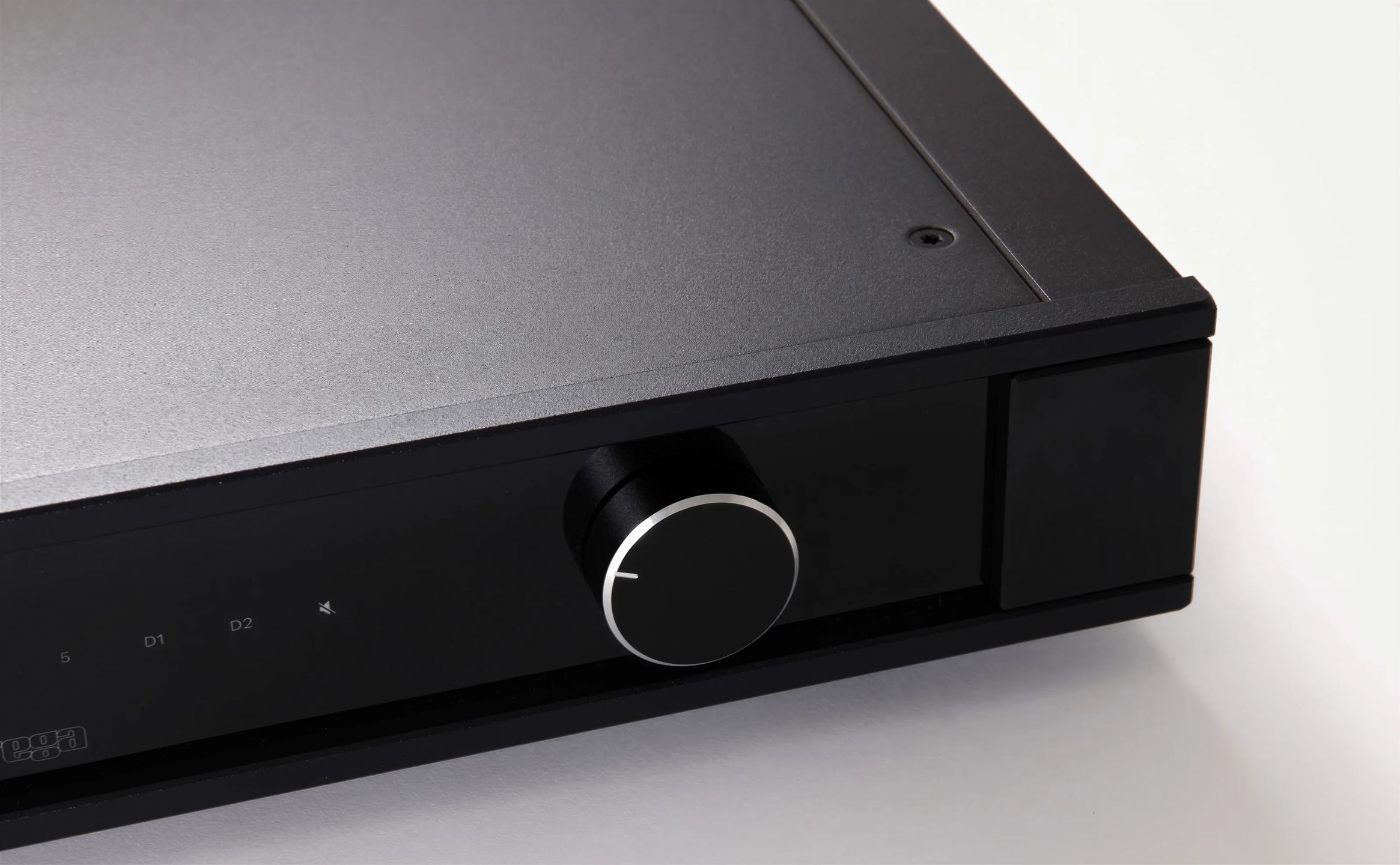
Thirty-four years after the first Elex model launched in March 1991, Rega unveils the fourth generation of its midrange integrated amplifier, the MK4. It preserves the brand’s sonic philosophy while integrating a digital section for the first time. The amplifier delivers 72 W per channel into 8 ohms, features a 24-bit/192 kHz Wolfson converter, and includes a headphone output. This version modernizes the Elex while retaining its analog character.
Redesigned PCB and retained class AB amplification
The Southend-on-Sea engineers have completely reworked the printed circuit board for this fourth generation, optimizing the signal path to minimize interference. Amplification remains faithful to the class AB topology that Rega uses across its lineup, with differences mainly in power supply size depending on the model.
Output power reaches 72 watts per channel into 8 ohms and climbs to 90 watts into 6 ohms. Rega does not publish figures for 4-ohm loads, instead warning about the device’s thermal limits with low impedances. This technical transparency typifies the brand’s approach, favoring realistic specifications over flattering numbers obtained under unrepresentative conditions.
The stated total harmonic distortion of 0.005% puts the Elex MK4 in line with current standards for its price class. Frequency response extends from 10 Hz to 65 kHz on line inputs, and from 15 Hz to 65 kHz on the phono input—more than sufficient to cover the entire audible spectrum with comfortable headroom.
Separate power supplies for the analog and digital sections underscore the care taken to preserve signal purity. This galvanic isolation prevents digital circuits from polluting the analog section—an understandable concern when integrating a converter into an amplifier that has traditionally been fully analog.
Integration of a Wolfson digital-to-analog converter
The major new feature in this generation is the addition of a digital section, borrowing the circuit from the brand’s standalone DAC-R. At its heart is a Wolfson WM8742 chip capable of handling PCM signals up to 24-bit/192 kHz. The chosen architecture appears to employ a dual-DAC configuration, although Rega remains discreet about precise technical details.
Two digital inputs are provided: one optical Toslink and one coaxial RCA S/PDIF. The absence of a USB input or Bluetooth connectivity may surprise in 2025, but reflects Rega’s choices, which consider these interfaces either too costly to implement properly or sonically insufficient. The Wolfson S/PDIF receiver ensures optical and galvanic isolation of the digital inputs, while a discrete Rega-designed output stage handles the final conversion to analog.
This digital section, identical to that of the Elicit MK5, the next model up, is a strong argument for the Elex MK4’s value for money. Users thus benefit from quality conversion to connect network players, CD players without analog output, or TVs, without needing an external converter.
Phono preamplifier and preserved analog connectivity
The moving-magnet (MM) phono input retains pride of place in the first input position. This phono preamplifier uses a two-stage RIAA equalization to minimize component interaction. Polyester capacitors in the signal path and polypropylene in the RIAA EQ circuits ensure faithful reproduction of vinyl grooves. With a sensitivity of 1.6 mV at 47 kOhms, this preamp suits most MM cartridges on the market.
Four RCA line inputs round out the analog connectivity, allowing you to connect various sources such as a CD player with analog output, a tuner, or an external converter. The Record Out, a fixed line-level output unaffected by the volume control, preserves the ability to record the input signal. The Pre-amp Output, which does follow the volume control, allows you to add an external power amplifier or an active subwoofer, a flexibility absent on the lower-tier Brio and Io models.
Gold-plated screw speaker terminals optimize electrical contact and accept thick-gauge cables, banana plugs, and spades. This universal compatibility eases integration into existing systems without constraining the choice of speaker cables.
Headphone output: a welcome addition
The addition of a 6.35 mm front-panel headphone jack is the second notable evolution compared to the Elex-R. The signal comes directly from the power stage, with automatic muting of the speaker outputs when a headphone is inserted. The specifications indicate an output voltage of 2.4 V into 32 ohms, 3.6 V into 54 ohms, and 8.1 V into 300 ohms—ample values to properly drive a wide range of headphones, from easy loads to more demanding references.
This feature meets a growing demand for headphone listening, whether by choice or necessity. It avoids the need for a separate headphone amplifier and lets you enjoy Rega’s sonic signature in a more intimate listening context.