Laurent
Excellent cartridge, a real improvement over the Blue.
Comment from June 10, 2025 — Experience from December 12, 2024
Automatically translated — Show original (French)
Excellente cellule un vrai plus par rapport à la blue

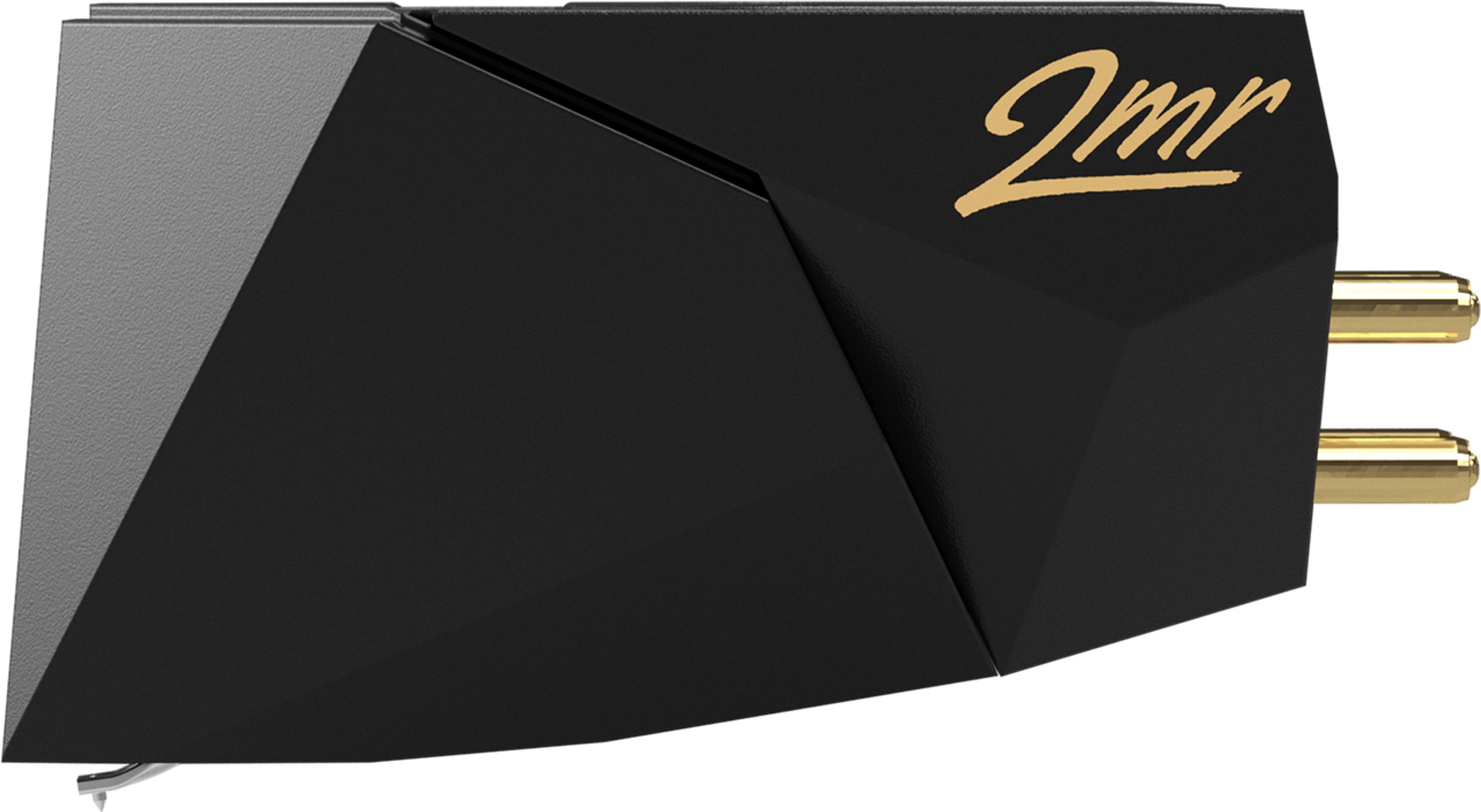
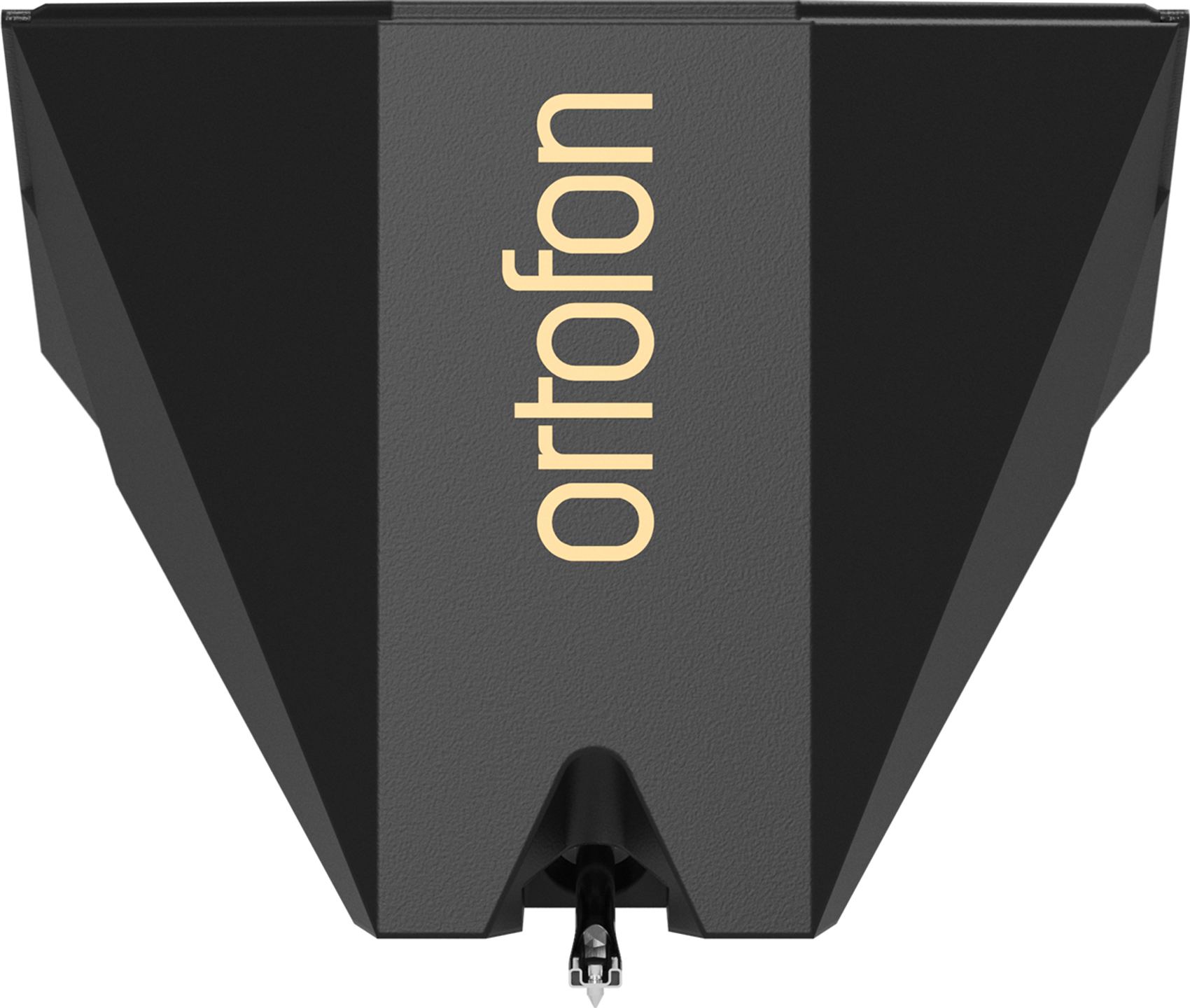
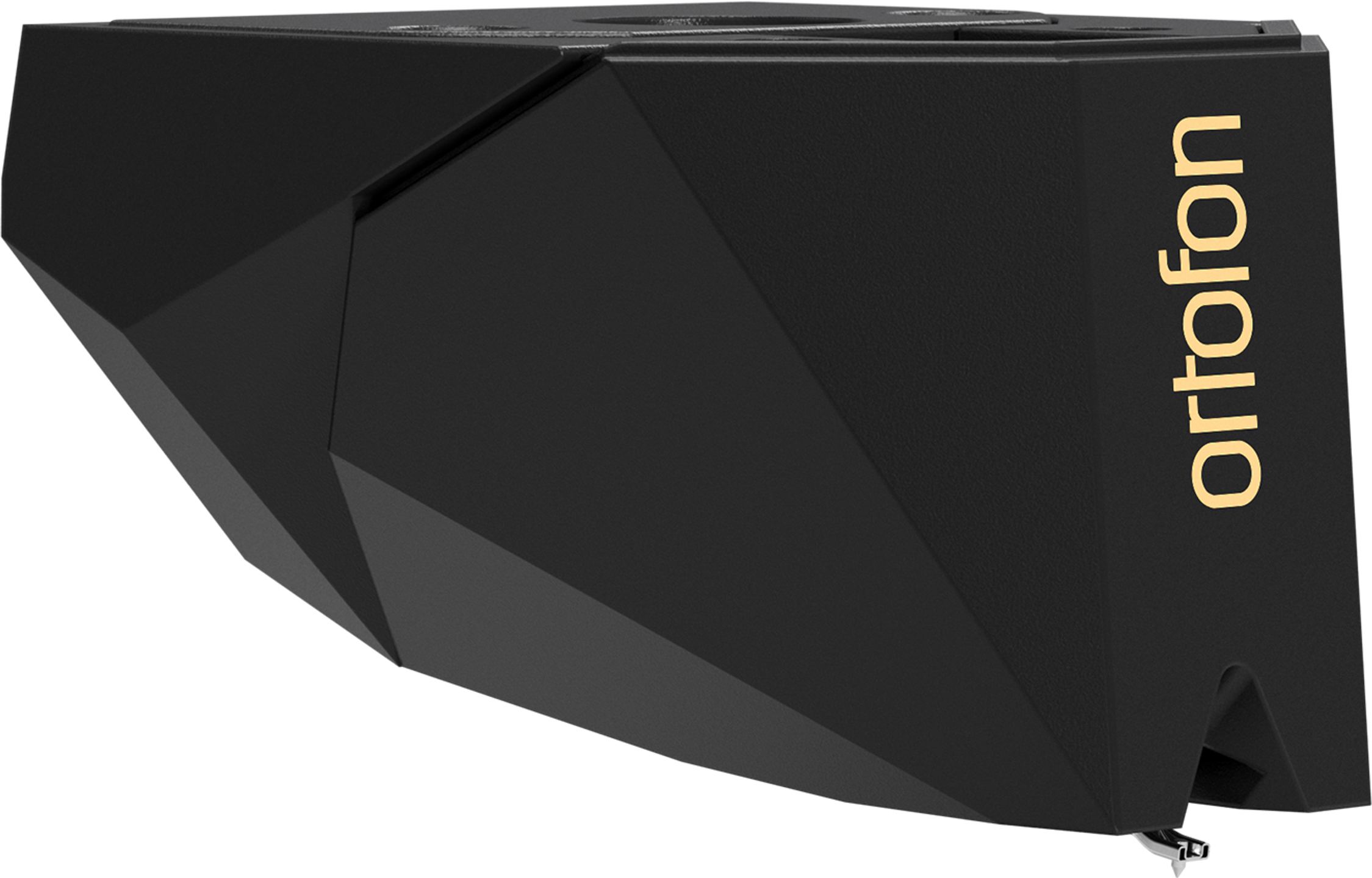
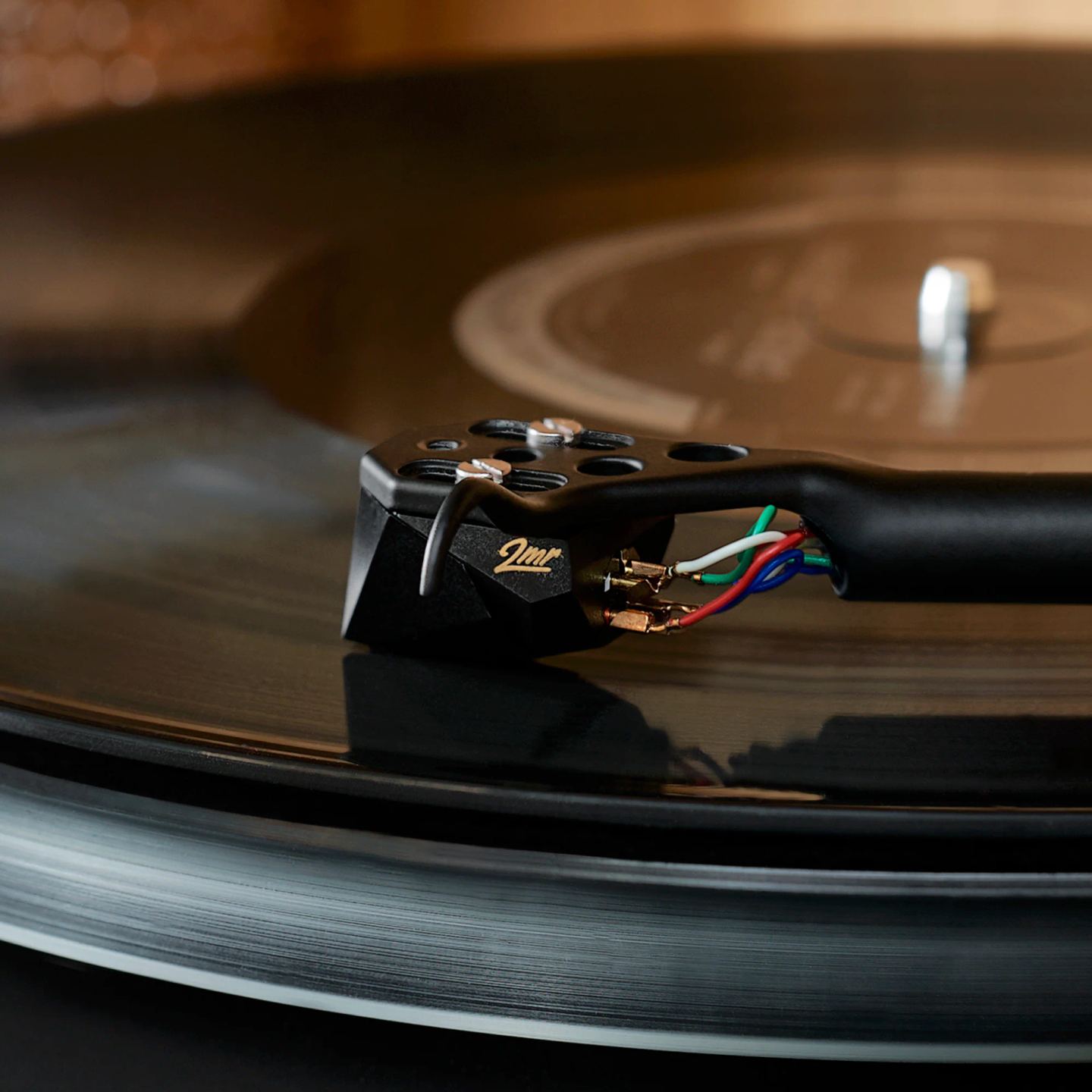
The Ortofon 2MR Black cartridge is a moving magnet (MM) model designed for turntables that require a low mounting height. It measures 15 mm in height versus 18 mm for the standard 2M version. It features a nude Shibata diamond mounted on an aluminum cantilever and uses a four-coil motor with split pole pins, a technology developed by Ortofon.
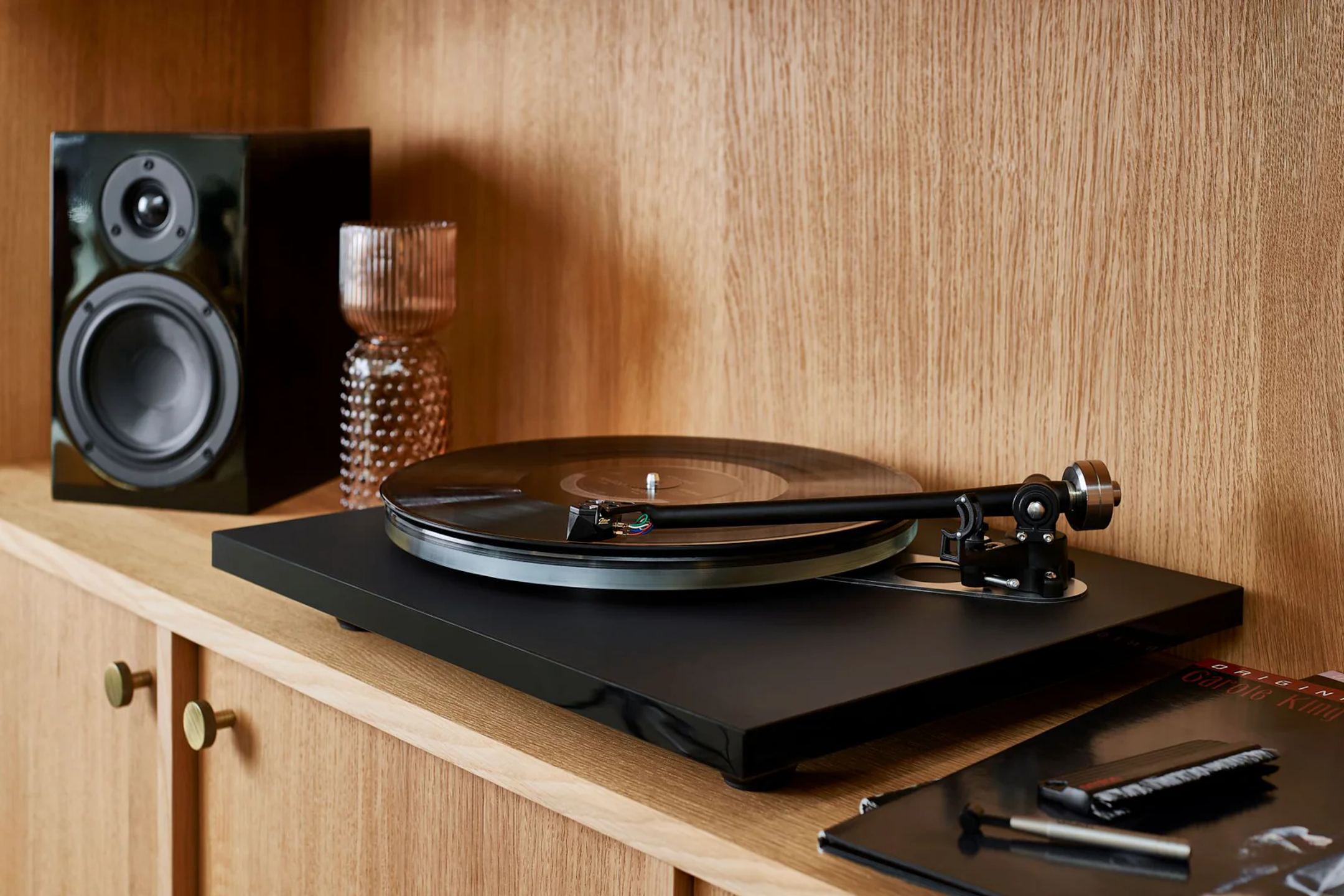
The 2MR series was born from a simple yet crucial observation: many turntables, notably those from the British manufacturer Rega, are equipped with tonearms set at a fixed height with no vertical adjustment. While this design choice is common and valued for its mechanical simplicity, it complicates installing cartridges taller than 15 or 16 millimeters. Yet to achieve faithful sound reproduction, the cartridge body must be perfectly parallel to the record surface when the stylus tracks the grooves at the recommended tracking force.
With its 15-millimeter height (measured from the stylus tip to the top surface), the 2MR Black definitively eliminates the need for spacers—those added shims that, while useful, can compromise precise overhang and zenith adjustment. The body is 3 millimeters slimmer than the standard 2M Black, enabling an optimal vertical tracking angle (VTA) without modifying the tonearm or adding accessories. This reduced height also brings significant weight savings: the cartridge weighs just 6 grams, versus 7.2 grams for the standard version, promoting an optimal resonance frequency with the medium effective-mass arms typical of Rega turntables.
Mounting is disarmingly simple with just two screws, allowing a quick and secure installation. This ease of setup does not sacrifice precision: alignment remains as critical as with any high-end cartridge, especially with an advanced stylus profile like the Shibata.
At the heart of the 2MR Black’s outstanding performance lies its nude Shibata stylus, a sophisticated profile originally developed in the 1970s for playing four-channel records. This technical origin explains its ability to reproduce frequencies well beyond the standard audible spectrum—a trait that now shines in high-fidelity playback of modern pressings and audiophile reissues.
The Shibata profile stands out for its complex, highly polished shape, offering a significantly enlarged contact area with the groove walls. Unlike a traditional elliptical stylus with two radii of curvature, the Shibata adopts a more elaborate geometry with radii of 6 and 50 micrometers (r/R 6/50 μm). This particular configuration lets the stylus conform to groove modulations with unparalleled precision, especially in the high frequencies where the subtlest information is encoded.
The “nude” construction of the stylus is another major asset. Rather than a small diamond chip bonded to a metal shank, it is a solid diamond piece mounted directly on the cantilever. This approach—more costly but technically superior—greatly reduces moving mass and improves the transmission of vibrations from the groove to the generator system. The result is faster transient response, lower distortion, and exceptional tracking ability reaching 80 micrometers at 315 Hz.
A Shibata stylus can last up to 1,000 hours of listening with proper care, though its complex shape can be more sensitive to poor setup or dust in the grooves. Systematic record cleaning before playback and precise cartridge alignment are therefore essential to preserve its exceptional qualities.
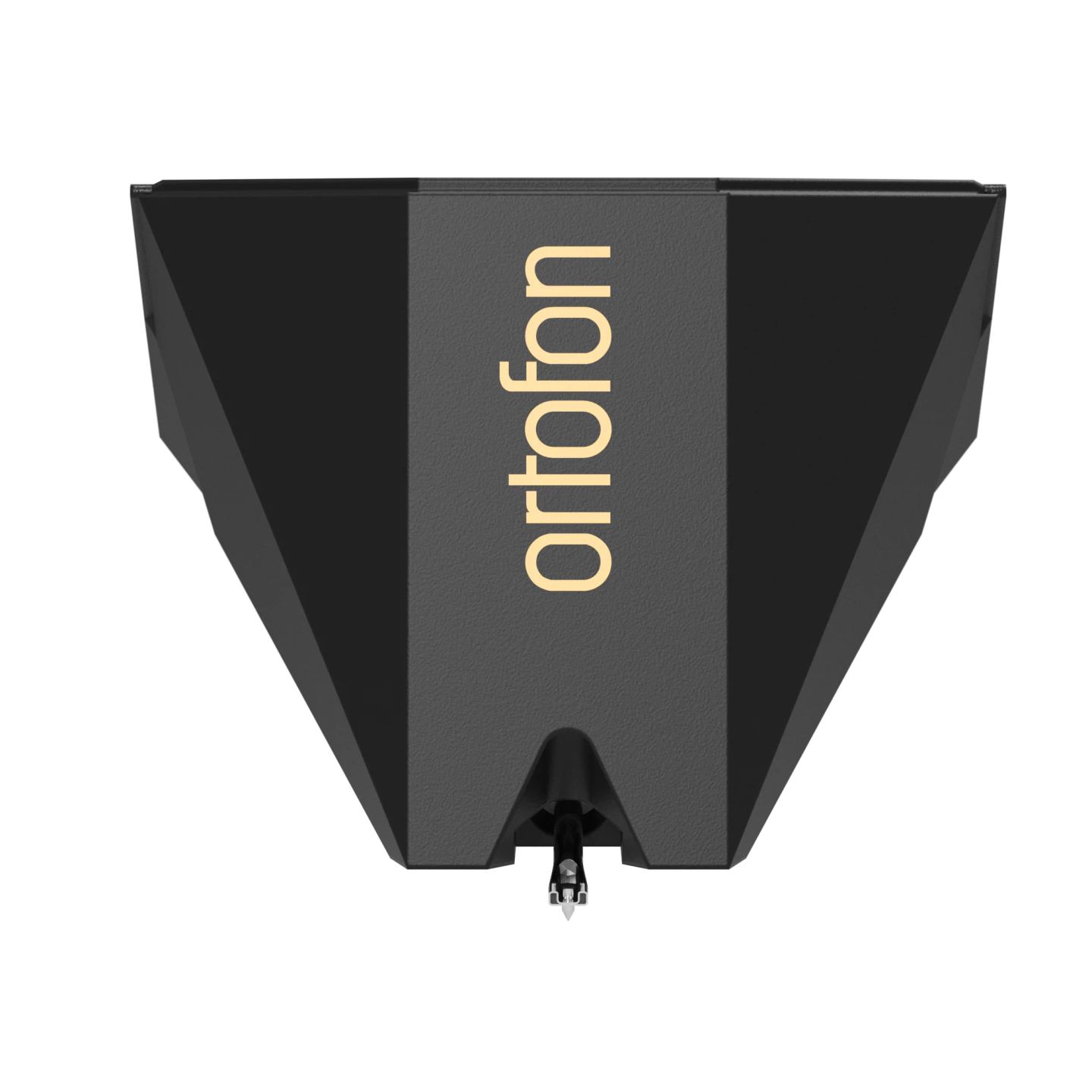
The 2MR Black’s motor system incorporates several technical innovations developed and patented by Ortofon over decades of expertise. At the center of this architecture is the four-coil system paired with split pole pins, an Ortofon invention dating back to the 1980s and refined ever since.
Split pole pins represent a major technical advance in moving magnet cartridge design. This technology significantly reduces eddy current losses at high frequencies, a physical phenomenon that typically limits the frequency response of MM cartridges. By splitting the magnetic poles and using silver-plated copper for the coils, Ortofon achieves a linear frequency response from 20 Hz to 20 kHz (+2/-0 dB), rivaling the performance of far more expensive moving-coil cartridges.
The four-coil system significantly improves channel balance and stereo separation. With separation of 26 dB at 1 kHz and 15 dB at 15 kHz, the 2MR Black creates a precise, stable stereo image, allowing each instrument to be located in the soundstage with remarkable accuracy. Channel balance within 1 dB guarantees a symmetrical and coherent reproduction of the musical message.
A generous 5 mV output voltage ensures optimal compatibility with the vast majority of MM phono preamplifiers on the market. This high output also helps maintain a favorable signal-to-noise ratio, preserving micro-details and the most subtle ambience cues in recordings.
Like the entire 2M series, the 2MR Black is the result of collaboration between Ortofon’s engineers and Danish industrial designer Møller Jensen. This approach yielded a design inspired by the facets of a diamond, creating a poetic visual parallel with the cartridge’s function. Angular lines and a matte black finish give the cartridge understated elegance that harmonizes with the clean aesthetics of modern turntables.
The cartridge body is made from Lexan DMX Piano Black composite, a high-tech polycarbonate offering exceptional rigidity while minimizing parasitic resonances. This material choice is no accident: body rigidity plays a crucial role in faithfully transmitting the vibrations captured by the stylus, while internal damping prevents unwanted colorations that could alter the musical signal.
Each cartridge is hand-assembled at Ortofon’s workshops in Nakskov, Denmark, where the company has maintained its headquarters and production facilities for decades. Local manufacturing enables rigorous quality control at every stage, from motor assembly to final stylus mounting. Danish technicians, heirs to a know-how passed down since 1918, bring meticulous attention to detail that makes the difference between a good cartridge and an exceptional one.
One of the major strengths of the 2MR series lies in its perfect compatibility with all replacement styli from the 2M range. This gives users remarkable flexibility and progressive upgrade paths according to their needs and budget.
The 2MR Black naturally accepts the standard 2M Black replacement stylus, but also the 2M Bronze and 2M Black LVB 250 styli. The latter is a particularly compelling upgrade, with its boron cantilever and carbon nanotube suspension—technologies usually reserved for top-tier moving-coil cartridges. Switching to the LVB 250 effectively transforms the cartridge, delivering greater transparency, more explosive dynamics, and even higher resolving power.
For users wishing to explore different sonic signatures, compatibility even extends to styli from Ortofon’s OM and Super OM series, though the pairing may look visually unusual. This versatility lets you tailor the cartridge to different music or recordings—from intimate jazz requiring delicate nuance to symphonic works demanding boundless dynamics.
Note that while all 2M styli are physically compatible, optimal performance is achieved when respecting the pairings intended by the manufacturer. The Bronze and Black styli are designed to take advantage of the improved motor found in the Bronze and Black cartridge bodies, with their silver-plated copper coils and optimized construction.
While spacers can adapt a standard cartridge to your turntable, they introduce several compromises. Adding material between the headshell and the cartridge can create parasitic resonances and complicate precise alignment. The 2MR Black removes these intermediaries, offering a more direct mechanical connection and thus purer signal transmission. In addition, its reduced weight of 6 grams optimizes compliance with Rega arms, potentially improving tracking and reducing distortion.
Yes, all styli in the 2M series are fully compatible with 2MR bodies. This total interchangeability allows you to use 2M Black, Bronze, or even Black LVB 250 styli on your 2MR cartridge. The only difference between the 2M and 2MR series lies in the cartridge body height; the motor and electrical characteristics remain identical.
The 2MR Bronze uses a Fine Line stylus that already offers excellent resolution, but the 2MR Black with its Shibata stylus goes further in extracting detail. The Shibata particularly excels in reproducing high frequencies and upper harmonics, creating a sense of presence and air around instruments. The Black also better reveals subtle textures and micro-dynamics, making listening more immersive and emotionally engaging.
Unlike some cartridges that favor certain genres, the 2MR Black stands out for its neutrality and versatility. Its ability to faithfully reproduce the entire sonic spectrum makes it just as convincing on a string quartet as on a progressive rock album. The Shibata stylus excels on complex recordings where instrument separation and timbral clarity are essential, but it also elevates intimate recordings by revealing interpretive subtleties.
The 2MR Black works with any standard MM phono preamplifier offering a 47 kΩ input impedance and a load capacitance between 150 and 300 pF. Its generous 5 mV output ensures a comfortable signal level with most preamps. However, a quality preamplifier will allow you to fully exploit the cartridge’s exceptional resolving potential.
Paradoxically, the Shibata stylus, thanks to its enlarged contact area, better distributes pressure on the groove walls, potentially reducing wear compared to a lower-quality elliptical stylus. The key is precise setup: correct tracking force (1.5 g) and perfect alignment are essential. A poorly set Shibata can indeed cause more damage, hence the importance of careful installation.
Laurent
Excellent cartridge, a real improvement over the Blue.
Comment from June 10, 2025 — Experience from December 12, 2024