Oehlbach Bi-Tech 4 B (2 x 3m)
Overview
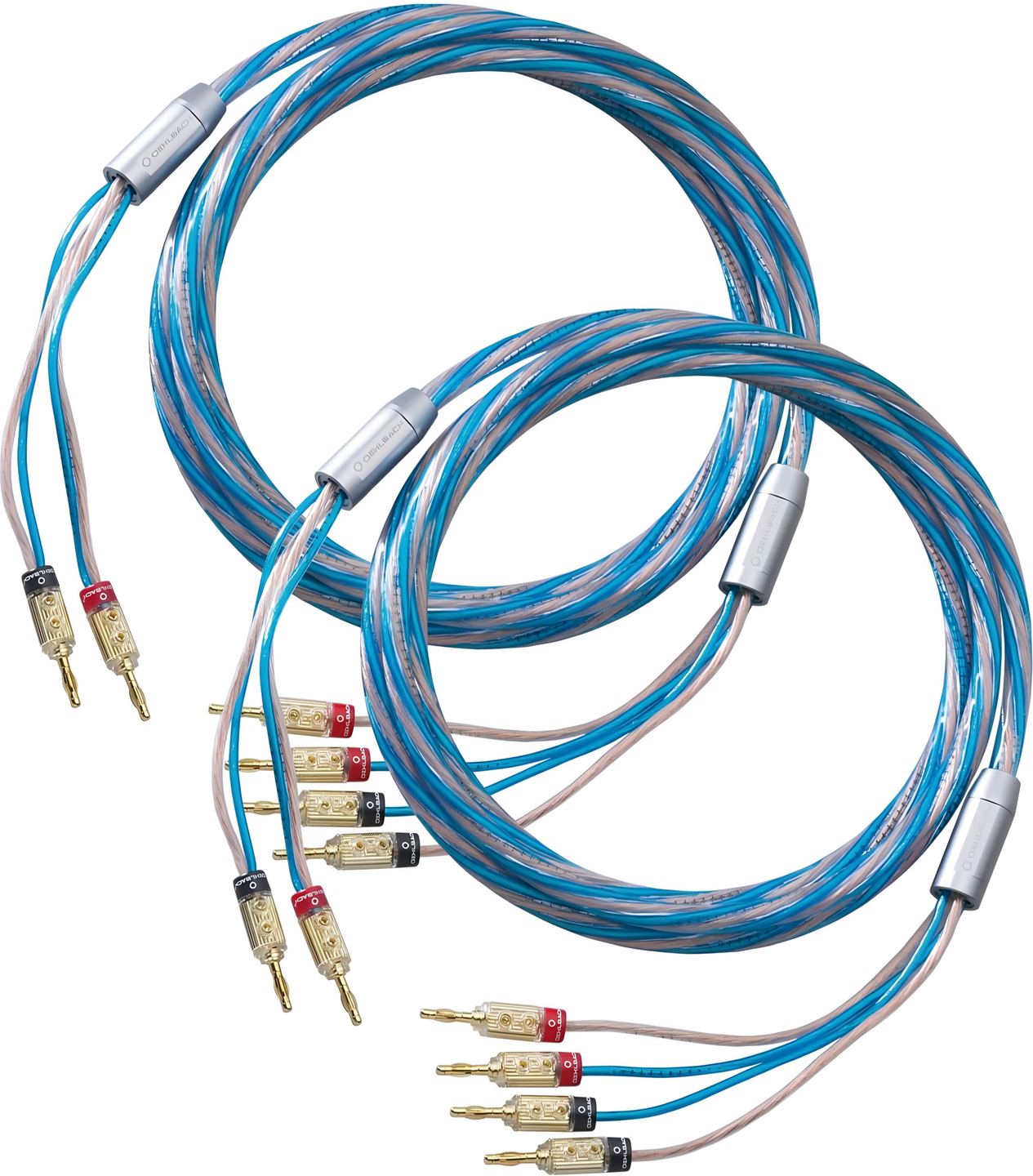
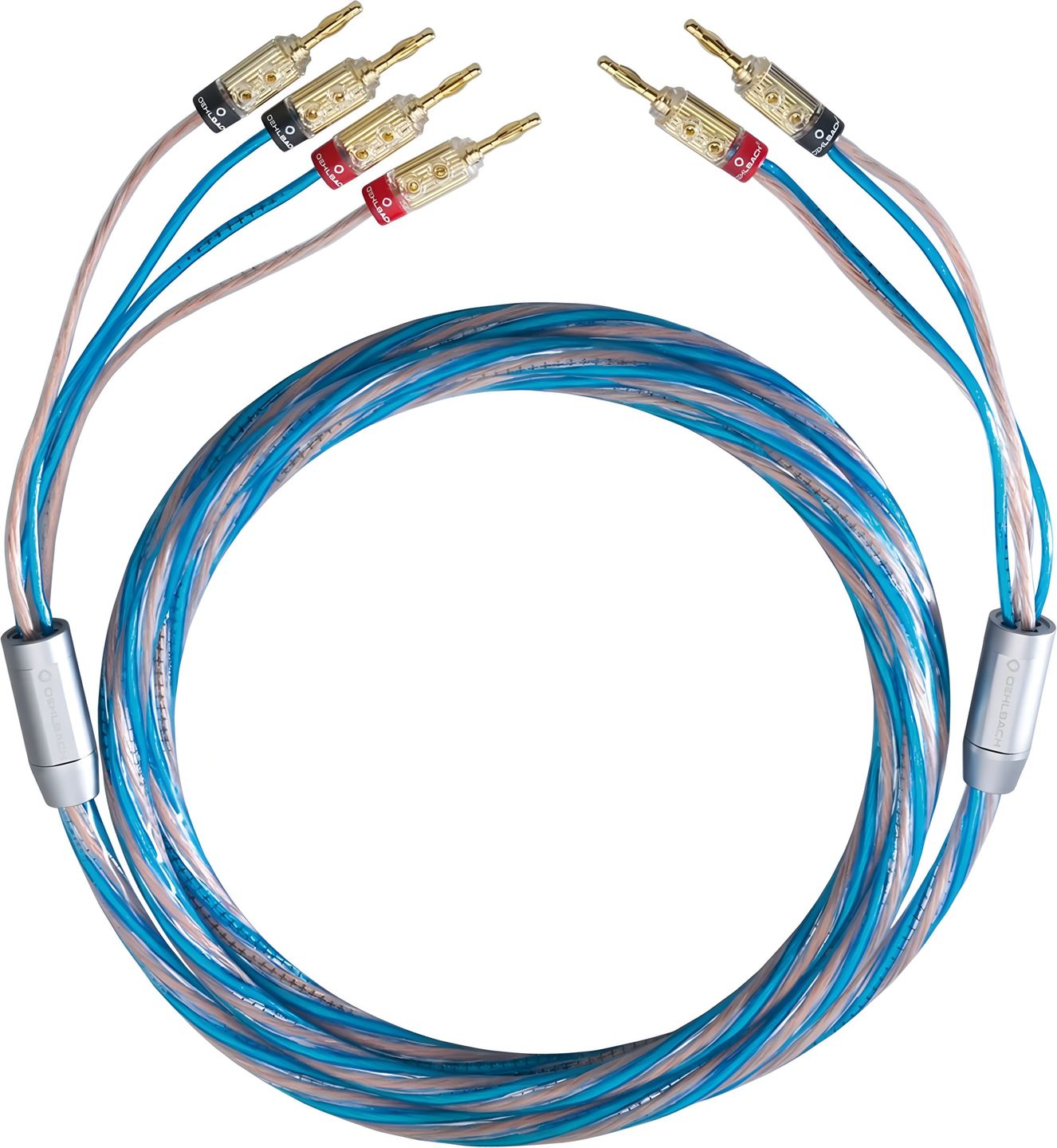
The Oehlbach Bi-Tech 4B stands out for its asymmetrical architecture, using specialized conductors according to the frequency ranges to be transmitted. Designed for amplifiers delivering up to 350 watts per channel, it is aimed at owners of speakers equipped with dual binding posts who are seeking a significant improvement in sound reproduction.
Differential Technical Architecture of the Conductors
The technological core of the Bi-Tech 4B lies in its asymmetrical design, using two types of conductors with distinct characteristics. For mid and high frequencies, the cable integrates 2 x 2.5 mm² OFC copper conductors plated with silver (SPC). This silver plating takes advantage of the skin effect, a physical phenomenon whereby high frequencies travel mainly along the surface of the conductors.
For low frequencies, Oehlbach has chosen larger-section conductors (2 x 4 mm²) made of pure OFC copper, without plating. This difference in section meets the distinct energy requirements: low frequencies need more current to effectively drive the bass transducers, while high frequencies prioritize transmission quality over quantity.
This technical approach allows for targeted optimization: high-purity OFC copper minimizes interactions between crystalline grains, reducing distortion in the lows, while the silver plating facilitates the transmission of fine details in the highs.
Quality Materials and German Manufacturing
Oehlbach’s German manufacturing is evident in the choice of premium materials. The OFC (Oxygen-Free Copper) used is of high purity, ensuring optimal conductivity and long-term structural stability. The silver plating on the conductors dedicated to high frequencies is a smart compromise: it offers the conductive advantages of solid silver while keeping production costs under control.
The connectors also benefit from this attention to detail. The banana plugs are made entirely of solid metal and coated with a layer of 24-carat gold. This gold plating protects the connectors from oxidation while ensuring a stable electrical connection over time. The mechanical design of the plugs guarantees a firm contact with the speaker and amplifier terminals.
The transparent outer sheath, made of flexible polymer, makes installation easier while providing effective protection against electromagnetic interference. This transparency offers a practical advantage: it allows for quick identification of the different conductors during the complex connections inherent to bi-wiring.
Installation and System Compatibility
Bi-wiring requires speakers equipped with dual binding posts, separating the connections for low and high frequencies. This configuration, found on many quality hi-fi speakers, allows you to bypass the internal passive crossover for certain frequencies, reducing interactions between the different drivers.
Installing the Bi-Tech 4B requires careful attention to polarity and conductor identification. The 2 x 4 mm² conductors connect to the bass terminals, while the 2 x 2.5 mm² conductors feed the treble terminals. Be sure to remove the metal jumpers present on the speakers before connecting, as these are replaced by the cable’s separate connections.
Documentation
French
Technical Specifications
Conductors and Materials
- Midrange / treble conductors: 2 x 2.5 mm² oxygen-free silver-plated copper (SPC)
- Bass conductors: 2 x 4 mm² oxygen-free copper (OFC)
- Conductor material: oxygen-free copper (SPC / OFC)
- Geometry: round
- Outer sheath: plastic
Connectors and Interface
- Connector material: solid metal, 24K gold-plated contacts
- Connector type: 2 and 4 banana plugs
- Signal: bidirectional (IN / OUT)
Electrical Characteristics
- Maximum power: up to 350 W amplifier
General Information
- Color: blue / copper
- Manufacturing: made in Germany
- Warranty: 30 years
Frequently Asked Questions
What is the fundamental difference between bi-wiring and traditional wiring?
Bi-wiring uses two separate pairs of conductors to power the bass and treble drivers of a speaker, partially bypassing the internal passive crossover. This theoretically reduces interactions between the different transducers and improves frequency separation, whereas a traditional cable carries the entire audio signal over a single pair of conductors.
Can my 200-watt amplifier use this cable rated for 350 watts?
Absolutely. The 350-watt specification represents the maximum power the cable can transmit without degradation. An amplifier with lower power will work perfectly with this cable, which will even provide extra safety margin and reduced resistance for better signal transmission.
How do I identify which conductor to connect to which terminal on the speaker?
The larger-section conductors (2 x 4 mm²) are intended for the bass terminals (usually marked “LF” or “Woofer”), while the smaller-section conductors (2 x 2.5 mm²) feed the treble terminals (marked “HF” or “Tweeter”). The transparent sheath makes this visual identification easier during installation.
What is the difference compared to the Bi-Tech 4.4B model?
The Bi-Tech 4.4B is designed for bi-amplification, using two separate amplifiers for bass and treble. It therefore requires four connectors on the amplifier side, compared to two for the 4B. Bi-amplification is a more complex and costly approach than bi-wiring, reserved for very high-end setups.
- Eco-contribution included in the sale price.
- Manufacturer reference: D1C10813
- GTIN / EAN: 4003635108130