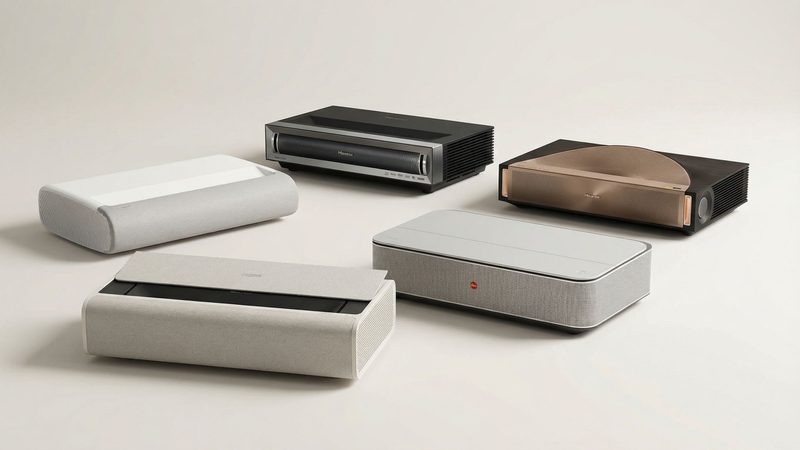
Hisense L9Q
Complementary products
Specifications and features


Awards

IF Product Design Award
The iF Design Awards, created in 1953, represent one of the world's leading design competitions. Each year, it attracts over 1,800 participants from 30 different countries. The jury, composed of globally renowned designers, not only examines and selects the chosen products but also adheres to stringent requirements to maintain a high-quality label.
Overview
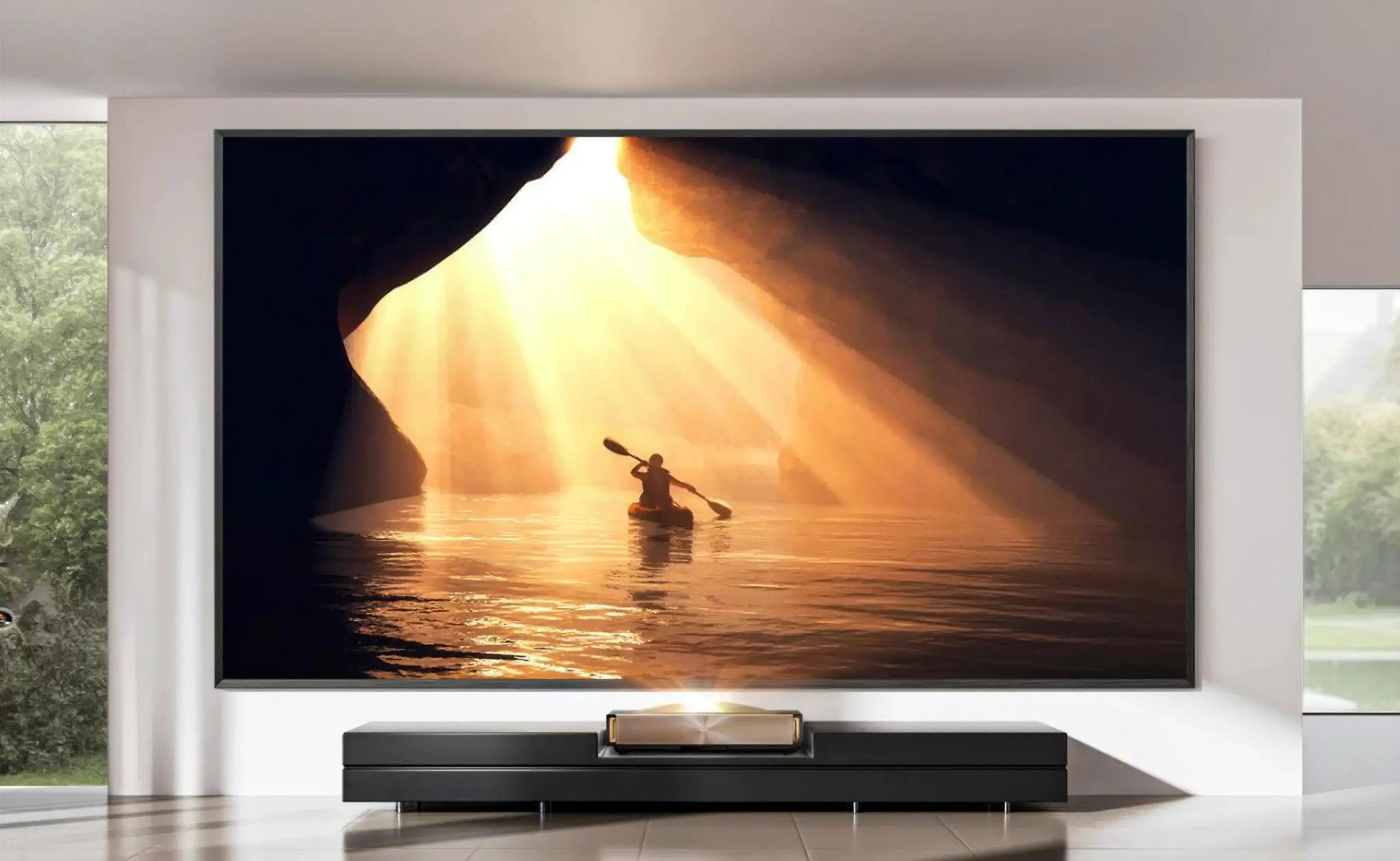
The Hisense L9Q is an ultra-short-throw laser projector, also known as a Laser TV. Placed on a low cabinet, just in front of the wall, it projects an image from 80 to 200 inches diagonally. Its triple red, green and blue laser source delivers 5,000 ANSI lumens, with a native contrast ratio of 5000:1. Its 6.2.2 audio system was developed with Devialet and calibrated with the Paris National Opera. It runs on VIDAA U7, Hisense’s operating system, and receives terrestrial TV, cable and satellite thanks to its dual tuner.
A triple laser source driven by the LPU 2.0 engine
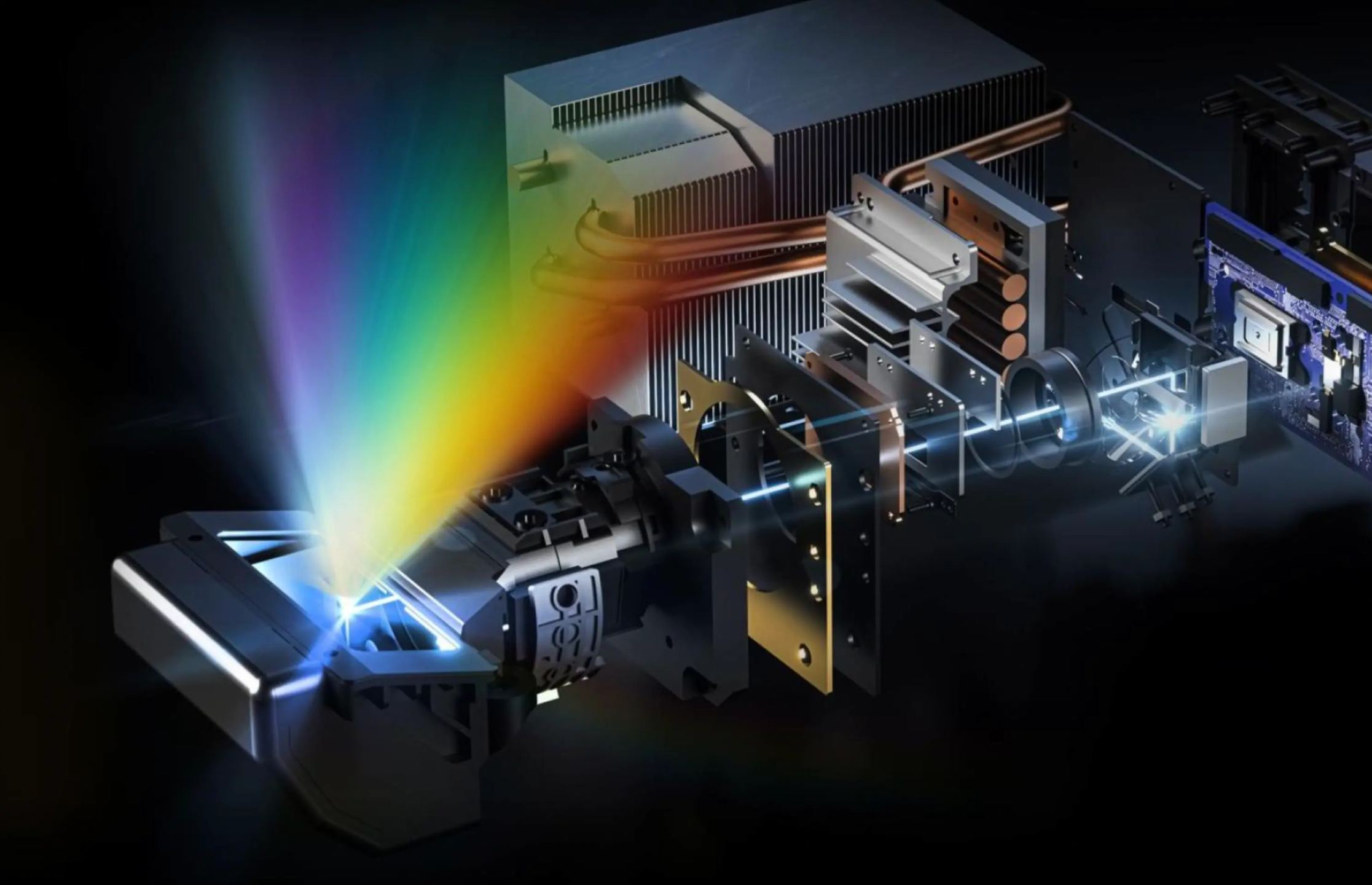
At the heart of the L9Q is the LPU 2.0 (Laser Processing Unit) digital laser source, a proprietary Hisense technology that combines three separate lasers for red, green and blue. Many projectors start with white light filtered through a colour wheel, a rotating disc of coloured filters. The L9Q instead produces the three primary colours directly. No light is lost through a filter, and each colour retains a high degree of purity.
Pro AI algorithms analyse the image in real time. They adjust brightness, refine contrast and reduce digital noise, the grain visible in compressed or dimly lit images. 4K scaling, or upscaling, recalculates lower-definition programmes so that they fill the full native resolution of 3840 x 2160 pixels. HDR optimisation adapts high dynamic range content to the device’s capabilities.
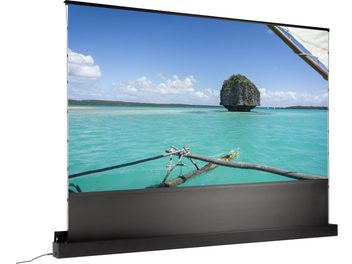
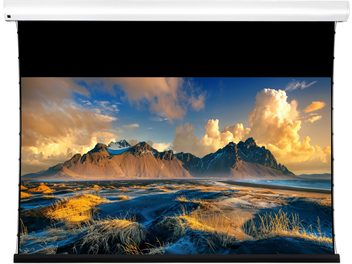
The 5,000 ANSI lumens, a standardised measurement of projected light output, allow you to watch a programme in a lit room. Combined with an ALR screen (Ambient Light Rejecting), which reflects the projector’s light toward the viewer while rejecting light from the ceiling or windows, the L9Q maintains vivid colours and strong contrast up to 200 inches.
Certified colours and visual comfort
The L9Q is Pantone Validated and Pantone SkinTone Validated certified. It reproduces more than 99% of the colours in the Pantone colour chart, the reference standard in the graphic arts and printing industry, as well as natural skin tones. Colours and complexions remain faithful to the image creator’s intent.
The 5000:1 native contrast ratio expresses the difference between the brightest white and the deepest black the device can display. Precise laser control adds depth to dark scenes and detail to bright areas. For HDR (High Dynamic Range, images with a wider brightness range), the L9Q supports HDR10, HDR10+ and HLG formats. The latter is used for 4K television broadcasts, such as France 2 UHD on terrestrial TV.
IMAX Enhanced certification guarantees reproduction meeting IMAX requirements for certified content, in both picture and sound. The L9Q also supports 3D with DLP Link active glasses. TÜV-certified for low blue light thanks to a hardware solution, it reduces harmful blue light linked to eye strain without degrading the image. An ambient light sensor completes the package.
Sound developed with Devialet and the Paris Opera
The L9Q audio system is an edition created with Devialet, the French manufacturer of high-end audio equipment, and calibrated to the sound requirements of the Paris National Opera.
The 6.2.2 configuration refers to six main channels, two subwoofers and two height channels. It brings together 10 precisely tuned speakers. Upward-firing drivers reflect sound off the ceiling to reproduce Dolby Atmos height effects, a format that places sounds around and above the viewer. Everything works without additional speakers or complex setup. DTS sound accompanies the IMAX Enhanced certification, and an equaliser lets you adjust playback to suit the room and individual preferences.
With the Hi-Concerto function, the L9Q speakers work in tandem with a compatible Hisense soundbar. The two devices divide the audio channels between them and operate as a single system. To go further, the eARC-compatible HDMI 3 port and optical output connect the L9Q to a home cinema amplifier or a soundbar from another brand.
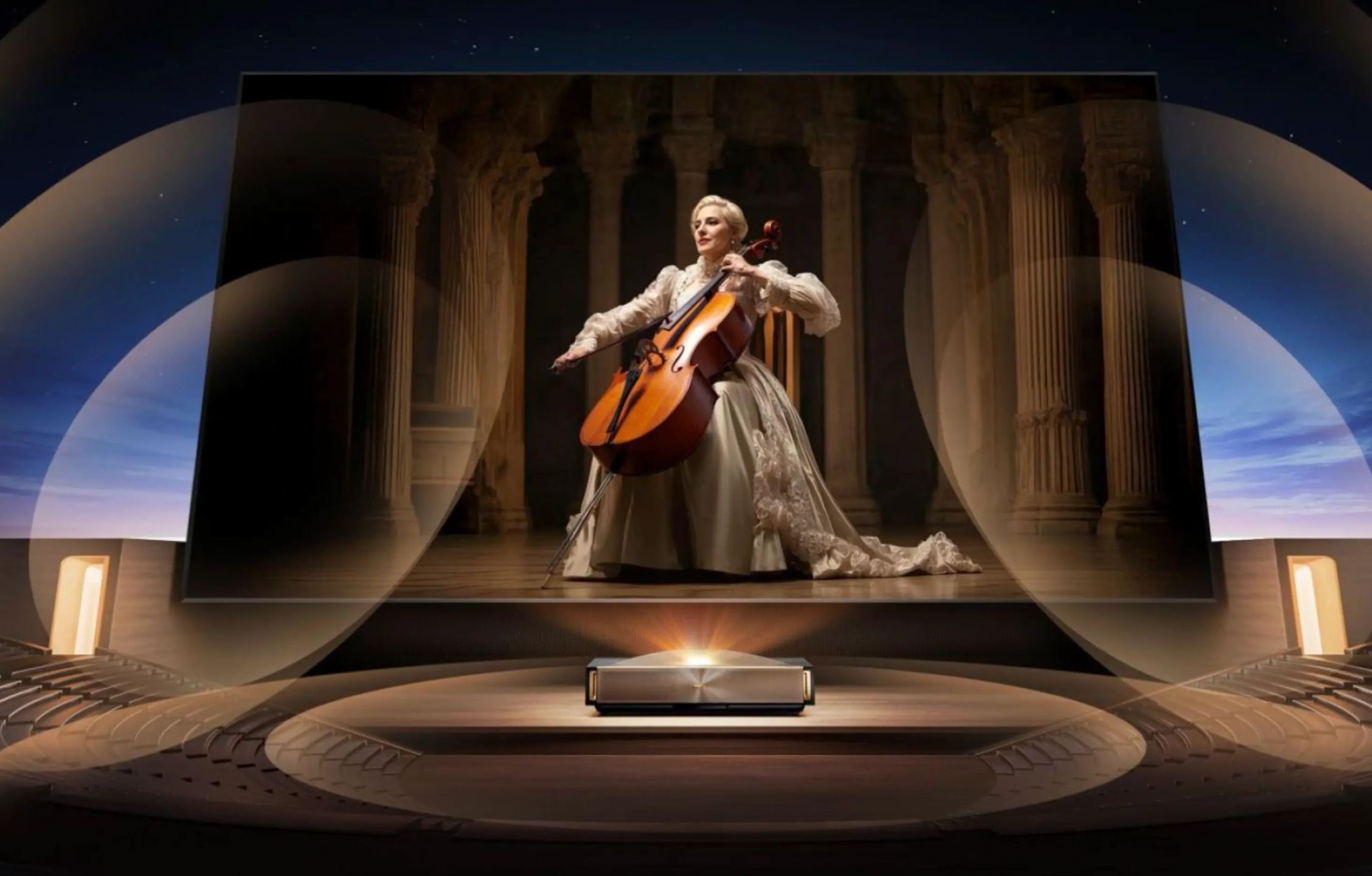
An award-winning design inspired by opera houses
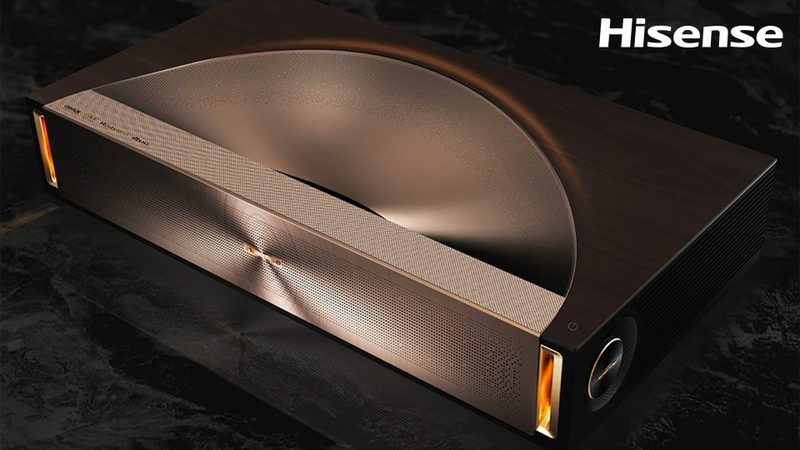
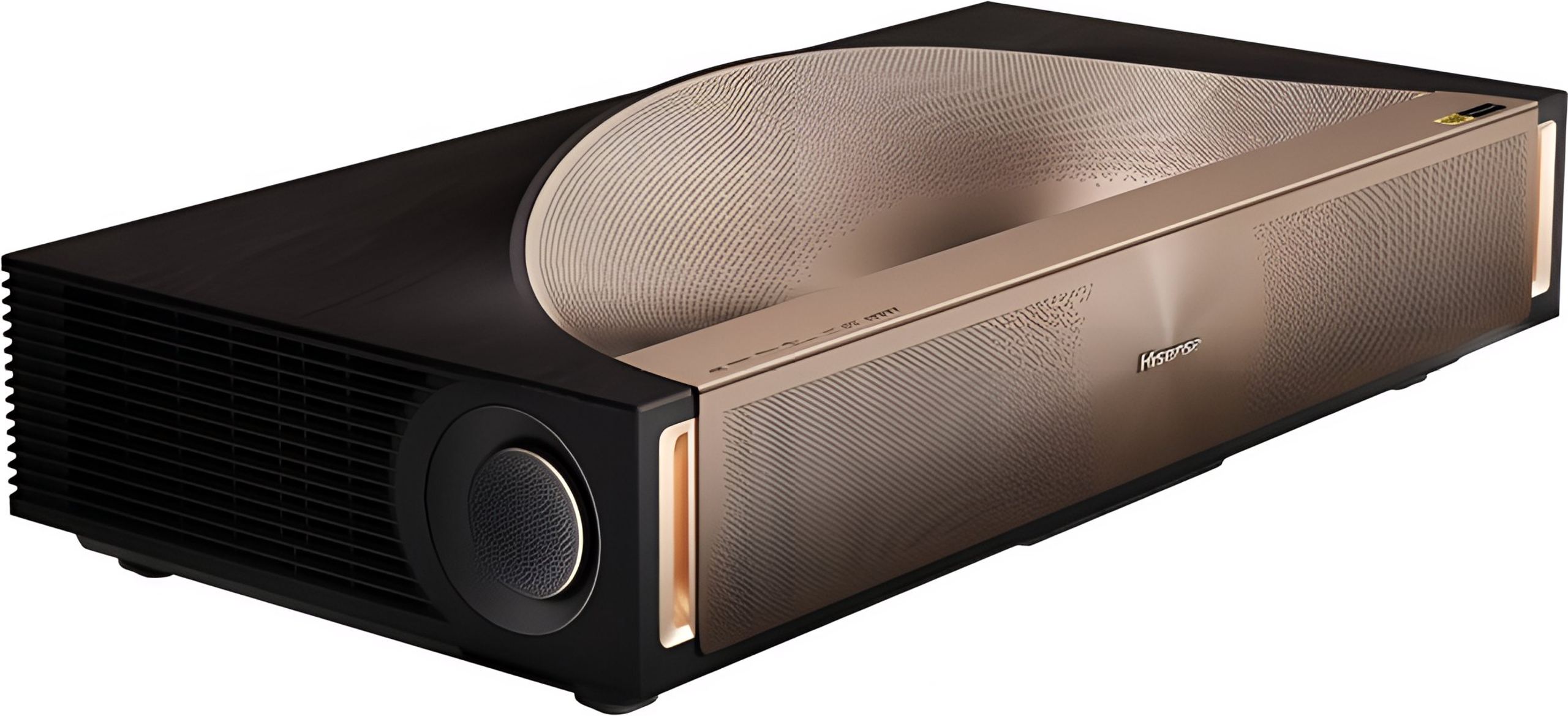
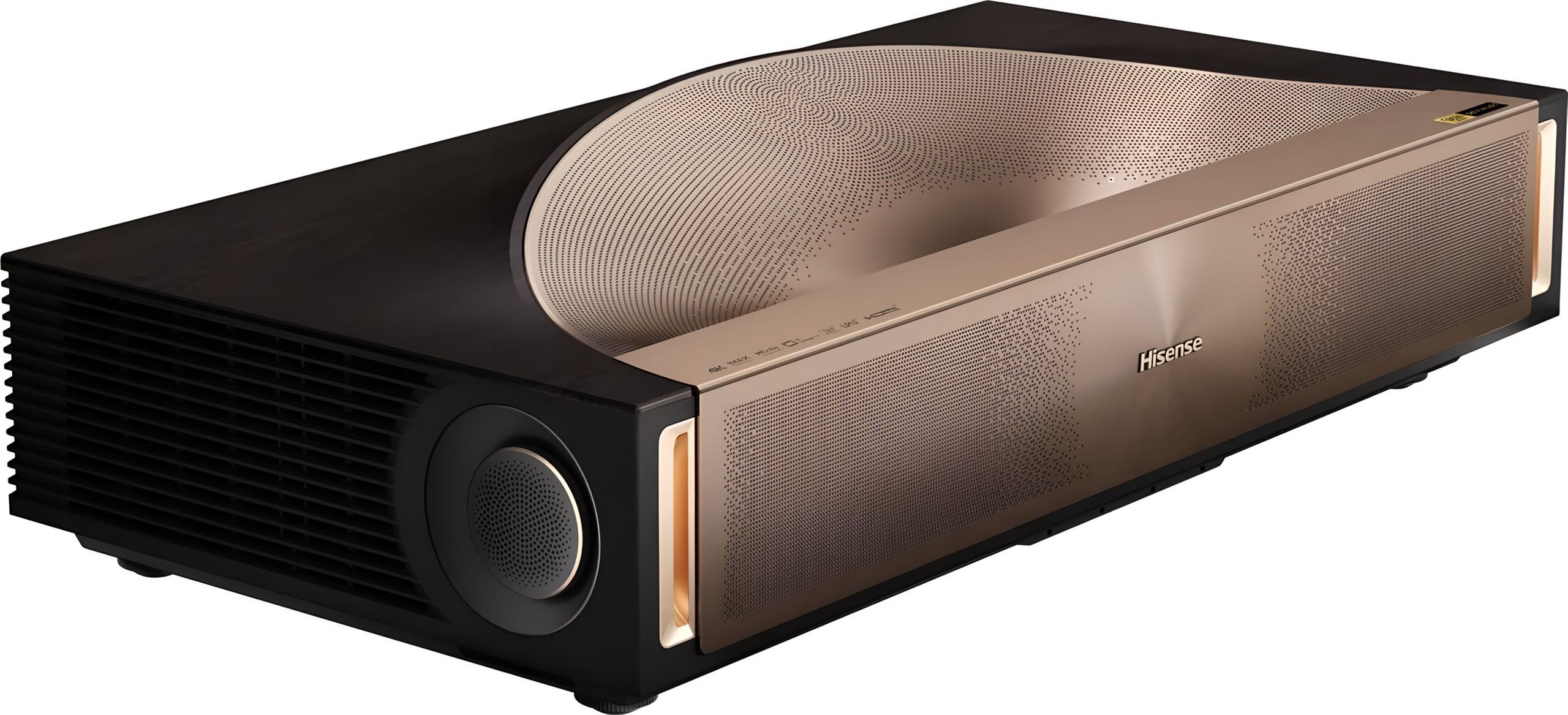
The L9Q breaks with the usual appearance of video projectors. Its copper and gold front recalls the gilding of opera houses and conceals the speaker grille. Its design combines the luminous circular shape of the Royal Opera House with the principle of acoustic resonance found in ancient Roman amphitheatres. This work earned it the Red Dot 2024 award and the iF Design 2025 award.
The enclosure measures 624 x 317 x 166 mm (width x depth x height) and weighs 12.9 kg. The 0.18:1 throw ratio corresponds to the projection distance divided by the image width: the lower it is, the closer the device can be placed to the screen. The L9Q can therefore be placed on a low cabinet, with no ceiling installation or cable to run across the room. No one passes between the beam and the screen, eliminating cast shadows.
Automatic alignment and smart home integration
The automatic alignment function (Auto Screen Fit) relies on built-in cameras that detect the edges of the screen. Simply position the L9Q: the device adjusts the image geometry to fit the frame. This function is available for screens up to 120 inches. Beyond that, adjustment is manual, with the help of keystone correction, which straightens a distorted image when the device is not perfectly facing the screen. Autofocus ensures a sharp image without intervention.
The L9Q synchronises with Control4 and URC home automation systems. From a centralised interface, it becomes possible to control channels, volume, inputs and even the room lighting.
Gaming performance and low latency
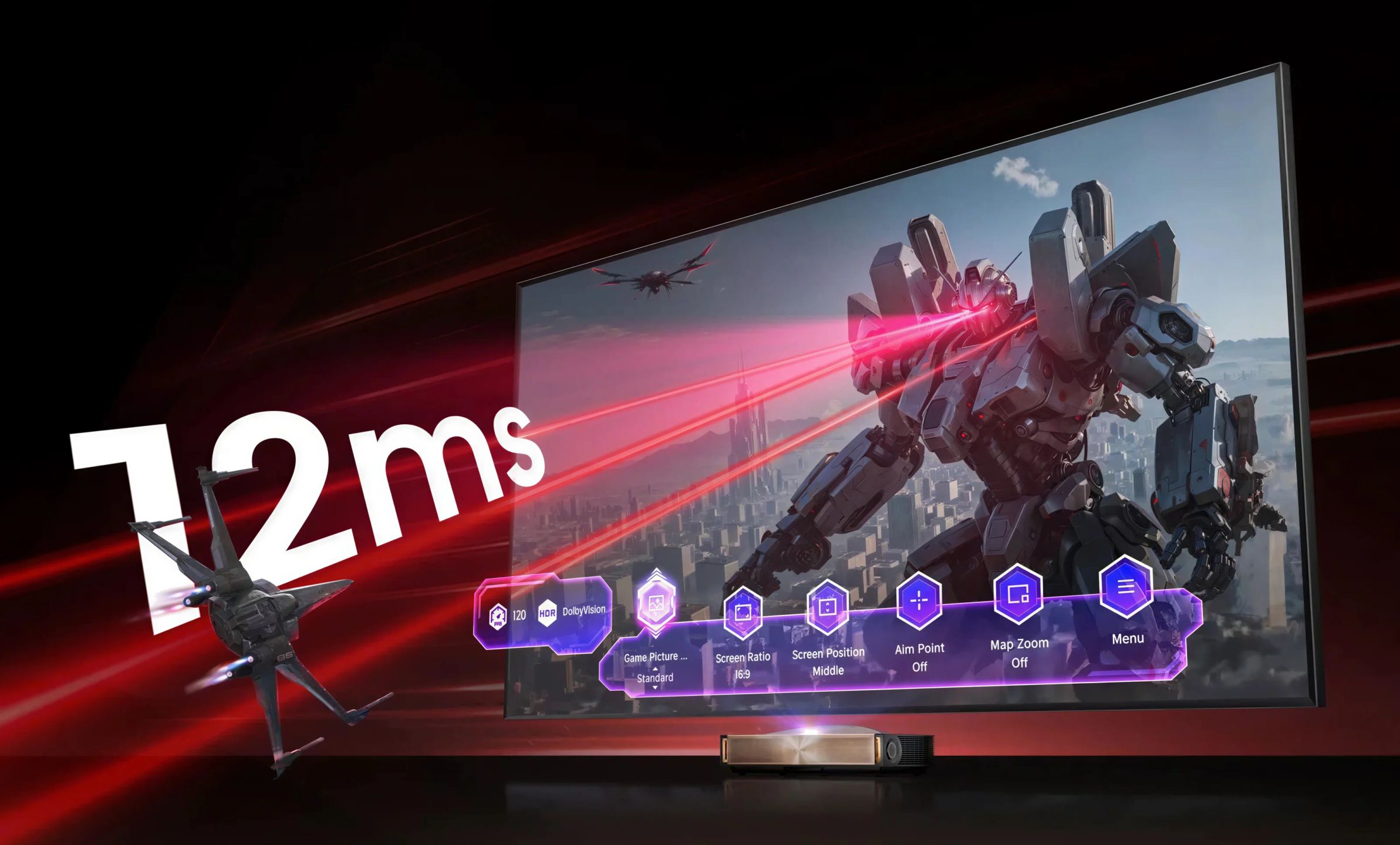
In game mode, input latency—the delay between an action on the controller and its effect on screen—drops to as little as 12 ms and remains below 20 ms. Turbo mode refines fast movements, while the Game Bar keeps essential settings within reach without leaving the game.
The high refresh rate reaches up to 240 Hz in 2K (HSR 240): the image is refreshed up to 240 times per second, for smoother movement in fast-paced games. ALLM (Auto Low Latency Mode) detects the start-up of a compatible console and automatically switches to game-optimised settings.
VIDAA system and comprehensive connectivity
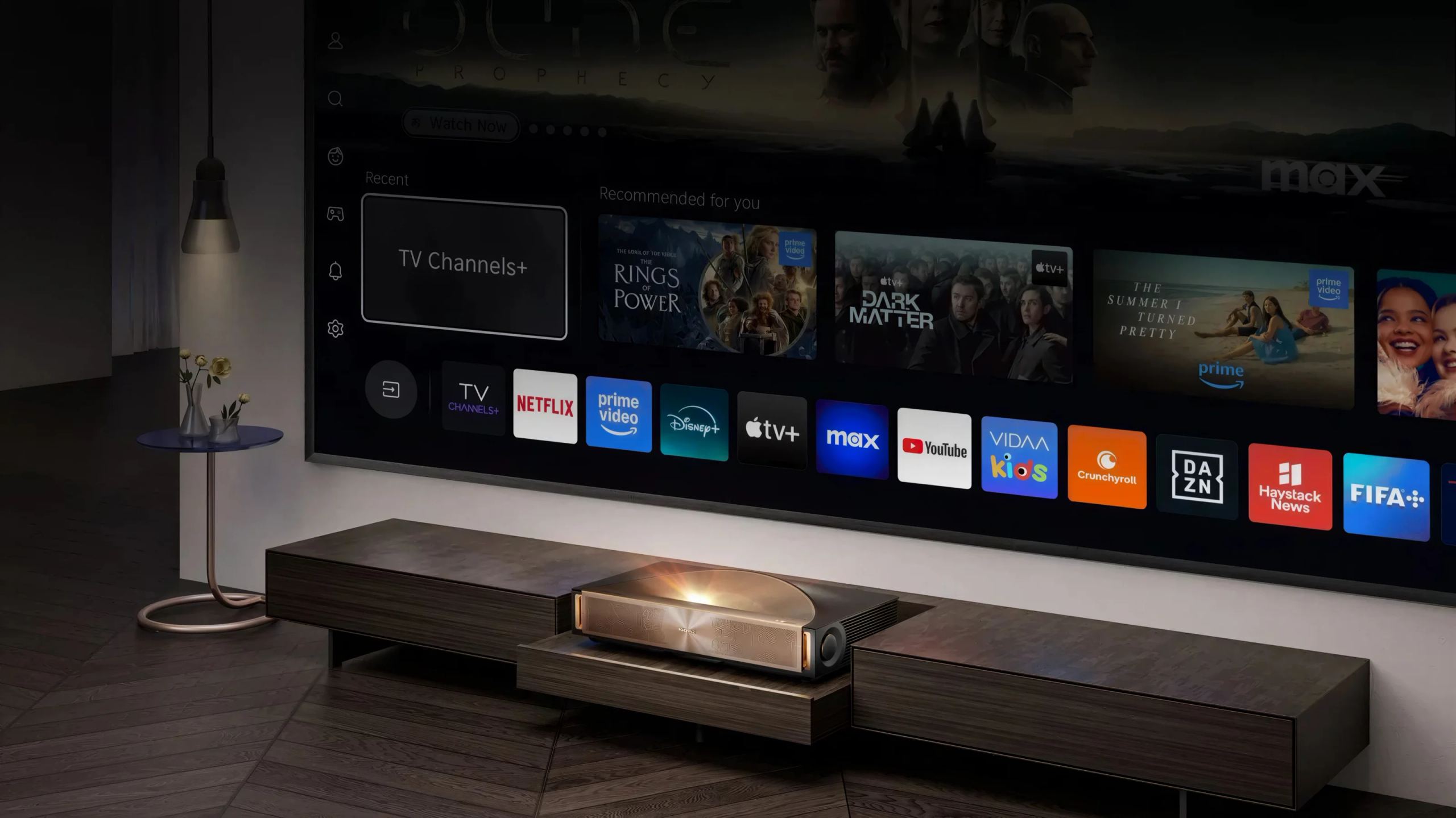
The L9Q runs on VIDAA U7, the operating system developed by Hisense. Fast and secure, it learns viewing preferences to highlight suitable programmes. Netflix, Disney+, Prime Video, YouTube and FIFA+ are available. AirPlay 2 lets you stream videos, music and photos from an iPhone, iPad or Mac, and screen sharing works with compatible smartphones. The media player plays video, audio and photo files from a USB drive or hard drive, while DLNA content sharing provides access to files stored on the local network.
The L9Q offers four HDMI inputs. HDMI 1 and 2 comply with the 2.1 standard, for recent consoles. HDMI 3 and 4 comply with the 2.0 standard, with HDMI 3 supporting eARC, an enhanced audio return channel that transmits multichannel sound, including Dolby Atmos, to an amplifier or soundbar. Also included are a USB-C port, a USB 3.0 port, a USB 2.0 port, an optical audio output, an Ethernet port, Wi-Fi and Bluetooth.
The dual DVB-T2, DVB-C and DVB-S2 tuner receives terrestrial TV, cable and satellite, allowing you to watch television without an external decoder. The CI+ module reader accepts an operator card, for example Fransat. Programme recording (PVR) and live pause (Time Shift) rely on an external USB storage device.
Technical specifications
Image
- Type: 4K ultra-short-throw Smart Laser TV
- Resolution: 4K Ultra HD 3840 x 2160
- Aspect ratio: 16:9
- Projection size: 203 to 508 cm (80 to 200 inches)
- Throw ratio: 0.18:1
- Light source: triple red, green, blue laser (LPU 2.0)
- Brightness: 5000 ANSI lumens
- Native contrast: 5000:1
- Refresh rate: 50 Hz, 60 Hz; HSR up to 240 Hz in 2K
- HDR: HDR10, HDR10+, HLG
- Wide color gamut
- AI 4K upscaling
- 3D: compatible, active DLP Link glasses
- Brightness sensor
- Certifications: IMAX Enhanced, Pantone Validated, Pantone SkinTone Validated, TÜV low blue light
Sound
- System: 6.2.2 channels, 10 speakers including 2 subwoofers
- Audio formats: Dolby Atmos, DTS (IMAX Enhanced)
- Calibration: Devialet and Paris National Opera
- Equalizer
- Hi-Concerto
Gaming
- Latency in game mode: as low as 12 ms (20 ms maximum)
- ALLM (Auto Low Latency Mode)
- Turbo Mode and Game Bar
System and features
- Operating system: VIDAA U7
- Pre-installed apps: Netflix, Disney+, Prime Video, YouTube, FIFA+
- AirPlay 2
- Screen sharing
- Content sharing: DMP / DMR
- Media player: video, audio, photo
- Automatic screen alignment: up to 305 cm (120 inches)
- Parental controls
- Home automation: Control4, URC
TV reception
- Tuner: dual, DVB-T2 / T, DVB-C, DVB-S2 / S
- Common interface: CI+ V2.0 and V1.4
- PVR recording
- Time Shift (live TV control)
Connectivity
- HDMI:
- 2 x HDMI 2.1 (HDMI 1 and 2)
- 2 x HDMI 2.0 (HDMI 3 eARC, HDMI 4)
- USB:
- 1 x USB-C
- 1 x USB 3.0
- 1 x USB 2.0
- Digital audio output: 1 x optical (S / PDIF)
- Ethernet: 1 x RJ45
- Wi-Fi: 2.4 and 5 GHz
- Bluetooth
Supported formats
- Video: AVI, MP4, MKV, FLV, WMV, MOV, 3GP, MPG, MPEG, VOB, OGM
- Video codecs: HEVC / H.265, H.264, MPEG4, MPEG2, VC1, MVC, VP9
- Audio: WAV, AAC, MP3, MP2, FLAC, WMA
- Image: JPEG, BMP, PNG, GIF
Power supply
- Voltage: 120-240 V
Dimensions and weight
- Projector (W x D x H): 62.4 x 31.7 x 16.6 cm
- Net weight: 12.9 kg
- Packaging (W x D x H): 75.1 x 47.8 x 30.4 cm
- Gross weight: 17 kg
- Rear material: plastic
Frequently asked questions
What distance is needed between the L9Q and the wall to get a 100-inch image?
The L9Q requires about 30 centimeters between the back of the device and the wall to project a 100-inch diagonal image. For 120 inches, plan approximately 37 cm, and up to 60 cm to reach the maximum size of 200 inches. These particularly short distances result from the 0.18:1 throw ratio, among the shortest on the market.
Can the L9Q replace a TV for daytime everyday use?
With its 5,000 ANSI lumens, the L9Q produces a perfectly visible image even in broad daylight in a normally lit room. Using an ALR (Ambient Light Rejecting) screen further improves contrast in bright conditions. The built-in TV tuner and Google TV make it a credible alternative to traditional televisions for everyday use.
How does the audio calibration by Devialet and the Paris Opera work?
The calibration reproduces the acoustic characteristics of the Palais Garnier by applying specific response curves and calculated delays between the different drivers. Devialet engineers analyzed the Paris hall’s sonic signature to transpose its diffusion and spatialization qualities into the L9Q’s 6.2.2-channel system.
What are the main differences between the L9Q and the previous L9G/L9H models?
The L9Q brings a 67% increase in brightness (5,000 vs. 3,000 lumens), a reduced throw ratio (0.18:1 vs. 0.25:1), the next-generation LPU 2.0 engine, gaming latency reduced to 12 ms, and a completely revamped design with a bronze finish. The audio system also jumps from 40 W to 116 W with a 6.2.2-channel configuration versus a simple soundbar on earlier models.
Does the L9Q need a special screen, or can it project onto a white wall?
While the L9Q can technically project onto any flat, light-colored surface, an ALR screen specifically designed for UST projectors significantly improves image quality. These screens reject ambient light coming from above while efficiently reflecting the projector’s light toward viewers, increasing perceived contrast by 50 to 70%.
What is the lifespan of the L9Q’s laser light source?
Hisense claims over 25,000 hours of operation for the L9Q’s laser system, which equates to about 8 hours per day for eight and a half years. Unlike traditional lamps that quickly lose brightness, lasers maintain consistent brightness for most of their lifespan before gradually degrading at end of life.
Is the L9Q compatible with 3D content?
The L9Q does support 3D content via frame packing, side-by-side, and top-and-bottom formats. Compatible DLP-Link active 3D glasses are required (sold separately). The projector’s high brightness partially compensates for the inherent light loss in 3D viewing, maintaining a comfortable image even with glasses.
- Eco-contribution of €0.75 included in the sale price.
- GTIN / EAN: 888143023823