iFi Audio USB 3.0 type C to C cable
This product is no longer available for sale!


Similar products from iFi Audio
Overview
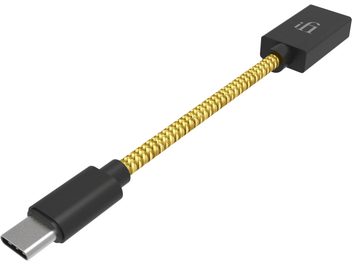
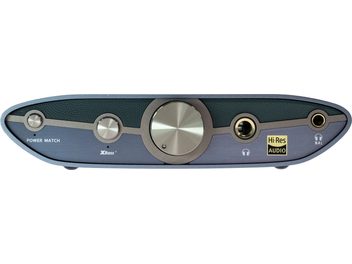
This OTG (On-The-Go) cable from iFi Audio turns your smartphone or tablet into a true digital audio control center. Designed with a 90° angled connector, it solves clutter issues in tight spaces while preserving faithful digital transmission between your mobile device and your DAC.
Technical construction and selected materials
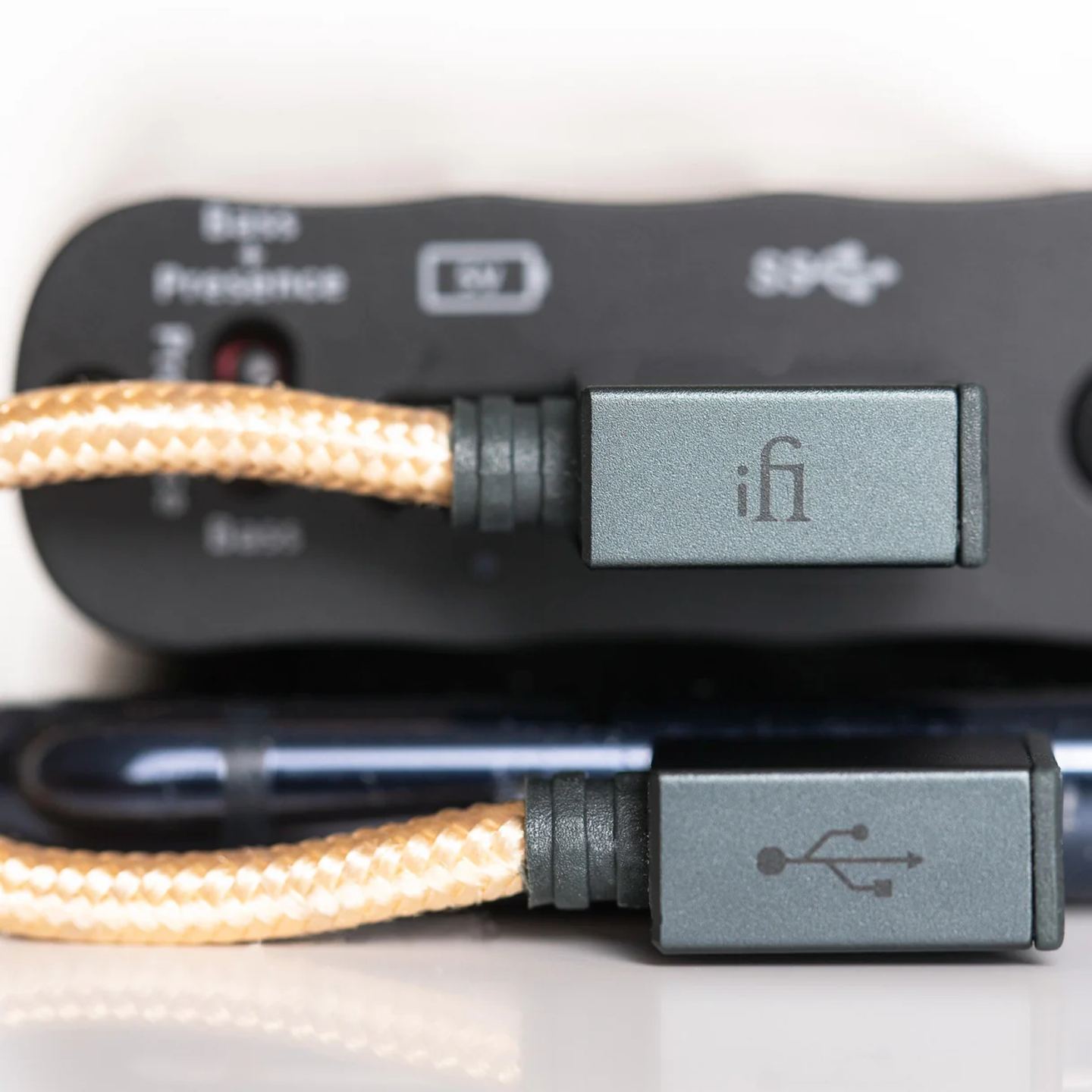
The design of this cable is based on OFHC (Oxygen-Free High Conductivity) copper conductors, a continuous casting technology that ensures optimal conductivity for the digital signal. This manufacturing method virtually eliminates any trace of oxygen in the conductive material, thereby reducing micro-breaks that could degrade the audio data flow.
The cable sports a distinctive ceramic finish, characteristic of the iFi Audio range. Beyond its refined appearance, this finish protects the cable from daily mechanical wear and contributes to its longevity. The braided sleeve around the conductors provides additional protection against electromagnetic interference, which is particularly prevalent in urban environments saturated with radio waves.
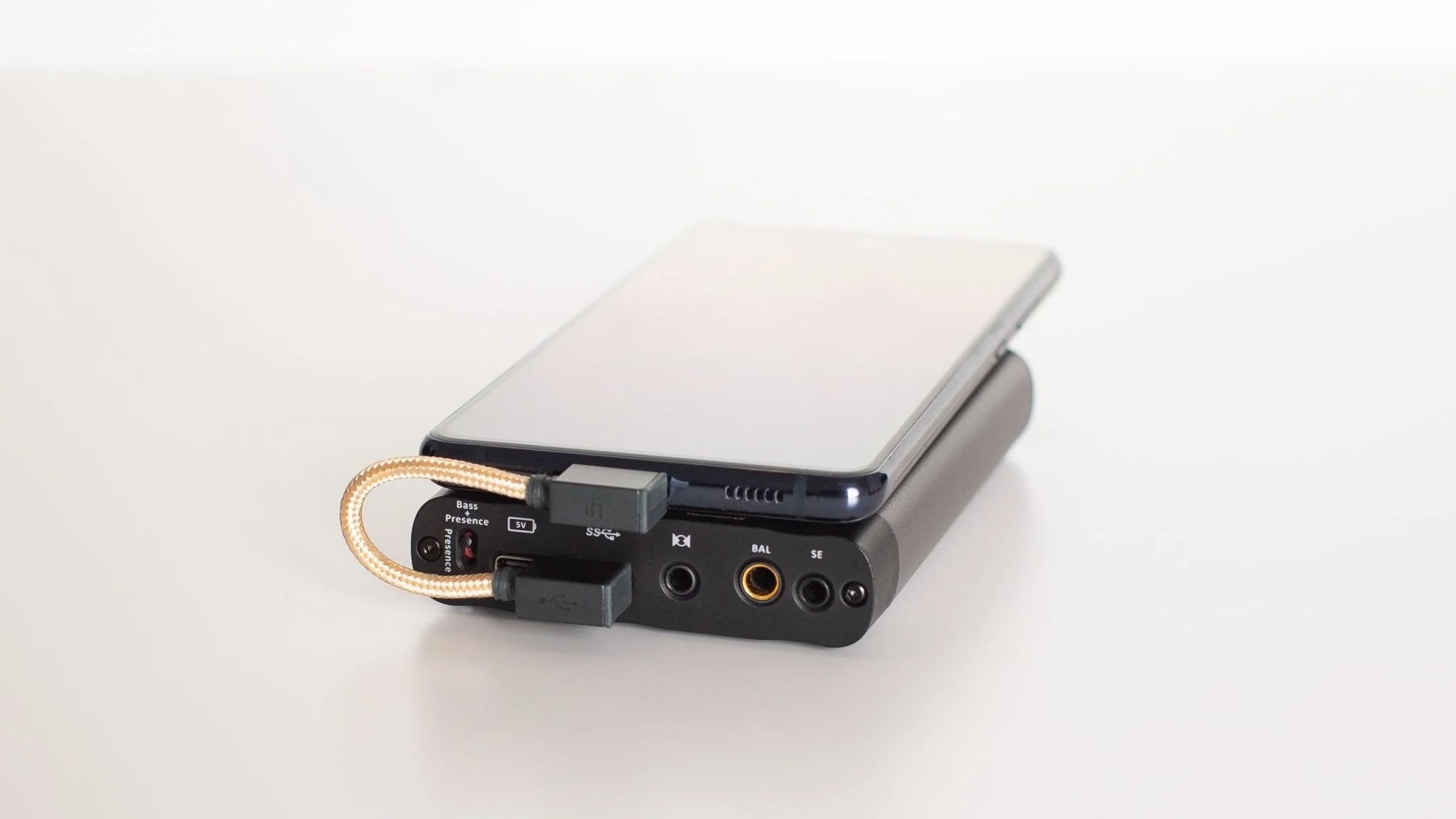
The 90° angle is the major asset of this model. This ergonomic feature helps reduce strain on USB-C ports, a recurring issue with conventional straight cables that stick out to the side and create mechanical stress points. In setups where space is at a premium—carry pouches, smartphone mounts, cluttered desktop installations—this angled design greatly simplifies integration.
OTG operation and broad compatibility
The OTG standard fundamentally changes the behavior of mobile devices. Technically, a resistor built into the cable shorts specific pins on the USB connector, signaling the device to switch to host mode. This transformation allows the smartphone or tablet to power and control external peripherals, reversing their usual role as mere storage devices.
For Apple devices equipped with a USB-C port, compatibility is straightforward and requires no special configuration. Recent iPad Pro, iPad Air, and iPhone 15/16 models work immediately with this cable. On Android, the situation requires more attention: your device must support USB host mode to extract the digital signal. Most recent Android smartphones include this feature natively, but some models require manual activation of the OTG option in system settings. On Pixel devices in particular, you may need to access OTG storage settings to enable the feature.
The cable complies with the USB 3.0 standard, offering a theoretical bandwidth of 5 Gbps. This transfer capacity far exceeds the needs of high-resolution audio, even for the most demanding formats such as DSD512 or PCM 32-bit/768 kHz. This headroom ensures congestion-free, low-latency transmission, which is crucial for maintaining the temporal integrity of the digital audio signal.
Integration into your portable audio chain
The primary use of this cable is connecting a mobile device to a portable DAC/amp. In this configuration, the smartphone or tablet sends a pure digital stream to the DAC, which handles the analog conversion with its optimized circuitry. This approach completely bypasses the built-in audio circuits of mobile devices, which are often designed for power efficiency rather than sonic fidelity.
The female USB-A connector at the cable’s end is particularly robust mechanically. This feature, often overlooked by other manufacturers, ensures a stable connection even during repeated mobile use. iFi portable DACs like the iDSD nano Black Label and micro iDSD Black Label feature flat USB-A ports specifically designed for this direct connection.
The 90° angle proves especially useful in on-the-go listening scenarios: on public transport, the cable naturally follows the contour of the device without creating an awkward protrusion. On a desk, it lets you position the DAC parallel to the smartphone without the cable forming an unsightly loop or taking up valuable space.
Technical specifications
Design and connectivity
- 90° angle: comfortable, ergonomic connection, ideal for tight spaces
- Digital transmission: faithful transfer of the smartphone signal → DAC
- Stable, reliable connection for your DAC
Compatibility
- Apple devices: works with all Apple devices equipped with a USB-C port
- Android devices: your phone must support USB host mode so the OTG cable can transmit the digital signal
- Compatible with a wide range of Apple and Android devices
Technical construction
- OFHC conductors: made from pure continuous OFHC copper, an excellent conductor for a clean, stable signal
- Enhanced durability: designed to withstand frequent on-the-go use while maintaining optimal sound quality
Benefits
- Suitable for situations where conventional straight cables are cumbersome
- Clean, faithful digital sound
- Ideal solution for mobile audio setups
Frequently Asked Questions
My Android phone doesn’t recognize the cable. What should I do?
First, verify that your device supports USB host mode. Download an OTG test app from the Play Store to confirm compatibility. On some models, especially Pixel smartphones, go to Settings > OTG Storage and enable the option. If your phone doesn’t natively support OTG, unfortunately no workaround will make the cable function.
Does the 90° connector cause issues with protective cases?
A right-angle connector can indeed interfere with certain thick or rigid cases. The connector must align perfectly with the port to establish a connection, which can be difficult with bulky protections. In such cases, you may need to temporarily remove the case or opt for a slimmer case around the USB-C port area.
What’s the difference between this OTG cable and a standard USB-C cable?
A regular USB-C cable doesn’t include the resistor needed to signal OTG mode. Without this resistor that shorts pins 4 and 5, your mobile device remains in peripheral mode and cannot power or control an external DAC. The OTG cable literally turns your smartphone into a host computer capable of managing USB peripherals.
Does this cable work with USB-C MacBooks?
Technically yes, but it’s not the optimal use case. MacBooks don’t need OTG since they always operate in host mode. For these computers, a standard USB cable is sufficient. This OTG cable remains usable, but its 90° angle and mobile-focused design offer no particular advantage on a laptop.
Can I charge my phone while using this OTG cable?
No, this cable doesn’t allow simultaneous charging. When your device operates in host mode via OTG, it supplies power to the connected peripheral (the DAC) and cannot receive a charge at the same time. Some special OTG adapters with external power exist for this function, but that’s not the case with this model.
Does the USB 3.0 standard really bring benefits for audio?
For pure audio transmission, even USB 2.0 provides sufficient bandwidth. However, USB 3.0 enforces stricter construction standards: better connectors, reinforced shielding, tighter mechanical tolerances. These structural improvements contribute to a more stable and durable connection, which is particularly important for repeated mobile use.
How do I know if my DAC is compatible with this cable?
Most modern portable DACs with a female USB-A input will work with this cable. iFi Audio models like the iDSD nano and micro Black Label are optimized for this connection. For other brands, check that your DAC accepts USB signals from mobile devices (some older DACs only recognize computers as a source).
Does OFHC copper really make an audible difference?
OFHC copper minimizes micro-resistances and discontinuities in the signal path. While the audibility of these improvements remains debated within the audiophile community, OFHC construction objectively ensures a more stable and predictable digital signal transmission, reducing transmission errors that might otherwise require downstream software correction.
- Eco-contribution included in the sale price.
- Manufacturer reference: IFI0033
- GTIN / EAN: 5060738787326