

Rose RW800 AIR Lite

Complementary products
Specifications and features


Rose RW800, dual-mode network streaming module
Adding network streaming to an existing Hi-Fi system often means replacing an entire component. Rose tackles the problem from the opposite angle with a small box that connects via USB-C to one of its streamers, or works on its own with an amplifier or active speakers. Depending on the chosen connection, the RW800 changes function: extension module on one side, full-fledged network player on the other.
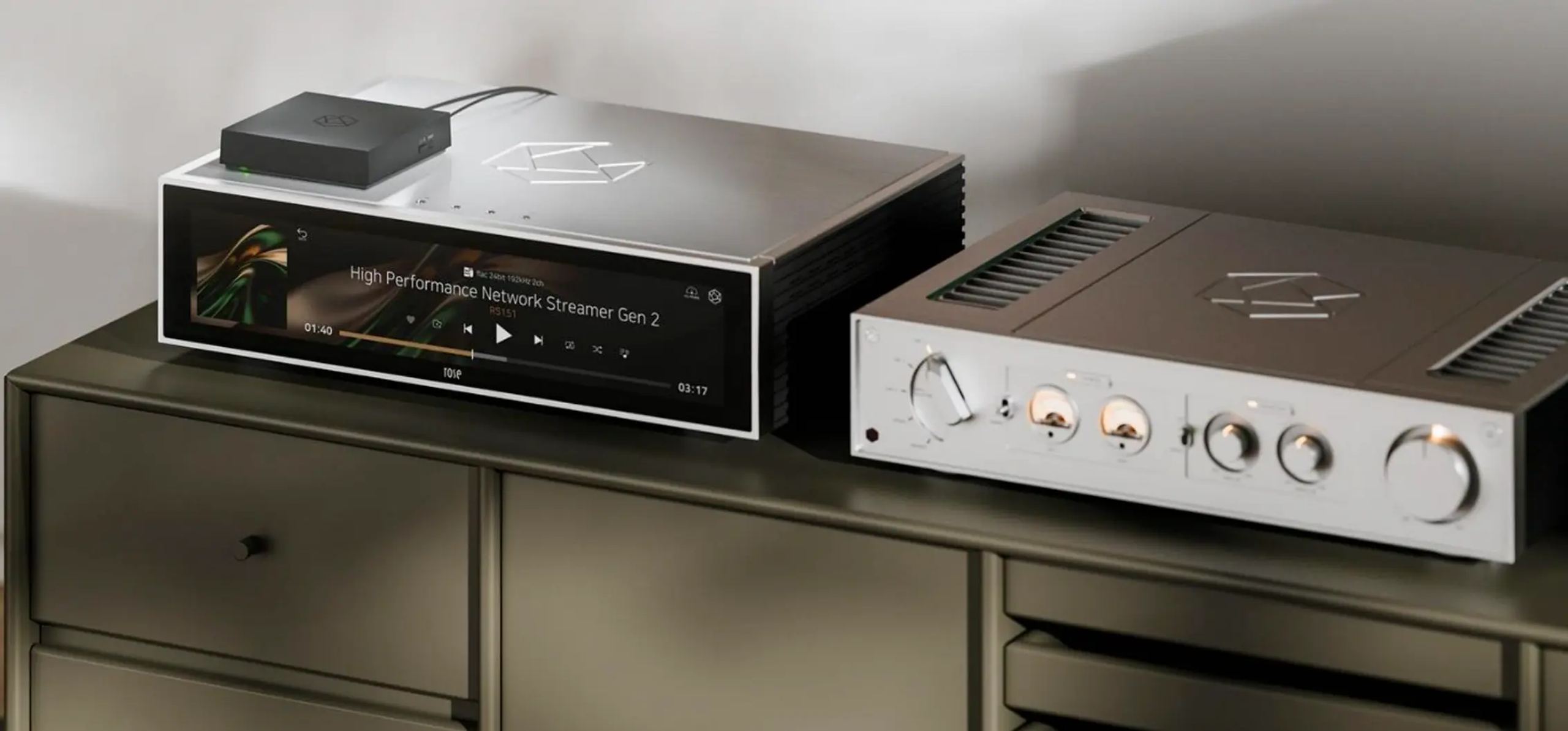
Two modes in a single box
The RW800 does not perform the same function depending on what it is connected to. Connected via USB-C to a Rose streamer, it acts as a network expansion module: Rose calls this operation Expansion mode, or CH. Connected via RCA or optical to another device, it becomes a network player that works without any Rose product around it: this is Standalone mode, or SA. Switching between the two depends solely on the type of cabling, with no specific settings to adjust.
As an extension for a Rose streamer
In Expansion mode, everything goes through a single USB-C cable. The RW800 draws its power directly from the Rose streamer it is connected to, with no power supply block or separate configuration. Playback data, album artwork, and track title are displayed identically on the host device’s screen, and the digital audio is sent up to the streamer’s built-in converter at 384 kHz / 32 bits, without recompression.
The connection works both wired and wireless. The RW800 automatically detects the host and maintains stable synchronization with it, which Rose refers to as Host Sync. In practical terms, an RS151 or RS520 owner can add recent streaming services to their system without changing streamer or dismantling their setup.
As a standalone network player
In Standalone mode, the RW800 manages without a single Rose device. It connects via RCA to an integrated amplifier, via optical to a television or external converter, and is then powered by a 5 V / 1.5 A USB-C power adapter, to be provided separately. Control is handled from the Rose Air app.
Three scenarios arise. Paired with an older analog amplifier, the RW800 gives it the digital input and streaming capabilities it lacked. Connected to active speakers, it alone takes on the role of converter and network player. In front of a high-end converter, it simply transmits the digital stream, as a pure transport. It is in this mode that its own ES9280 converter comes into play, whereas Expansion mode relied on the host’s converter. Nothing requires you to stay with Rose, but the brand suggests pairing it with its RD160 converter and RA180 or RA280 amplifiers.

Electronics that separate the signal paths
The internal design separates two worlds that often interfere with each other: network data processing on one side, audio signal conversion on the other, each on its own chips. The goal is to limit interference from one to the other and achieve cleaner sound.
The LS10 module serves as the control center for networking and combines dual-band Wi-Fi, Bluetooth 5.2, and Ethernet. Conversion is handled by the ES9280 DAC, which claims a signal-to-noise ratio of 119 dB and distortion (THD+N) of 0.0008%. Between the two, the SRC4382 processor handles signals up to 192 kHz / 24 bits with no added latency.
Supported resolutions and formats
The figures depend on the output used. Over USB, the RW800 carries PCM up to 384 kHz / 32 bits losslessly. The optical input and output top out at 192 kHz / 24 bits, one step below, which still far exceeds CD quality. The analog RCA output delivers a maximum of 2 Vrms, with THD+N specified below -102 dB, or 0.0008%.
For local file playback, the RW800 goes up to PCM 384 kHz / 32 bits and handles DSD up to DSD128 (5.6 MHz). Format compatibility is broad: FLAC, ALAC, WAV, AIFF, APE, MP3, AAC, Opus, and OGG Vorbis are among the main ones.
Streaming, platform by platform
On the services side, the RW800 is Roon Ready and reaches 384 kHz / 32 bits in this framework via RAAT transport. Tidal Connect and Qobuz Connect go up to 192 kHz / 24 bits, Google Cast to 96 kHz / 24 bits. AirPlay 2 operates at 48 kHz / 24 bits losslessly, from an iOS device or a Mac, and enables multiroom playback. Spotify Connect runs at 44.1 kHz / 24 bits, also losslessly. Bluetooth 5.2 (A2DP 1.4, AVRCP 1.6.2) completes the package for sources without a network connection, in receive-only mode.
Connecting to the network, wired or wireless
Network connection supports both wired and wireless. In Ethernet, the port is 10/100 BASE-T, to which Rose recommends connecting a shielded category 6 cable at minimum. As soon as an Ethernet cable is plugged in, it takes priority over Wi-Fi. Throughput remains limited to 100 Mbit/s, sufficient for audio, even in high resolution.
Four setups are provided depending on the installation. The RW800 can connect via Wi-Fi and use the host Rose device’s Internet sharing, combine Wi-Fi on the RW800 side with Ethernet on the host side, connect both via Ethernet for maximum stability, or serve as a wired bridge. It is up to each user to choose the layout that matches their available space and the quality of their wireless coverage.
Control from the Rose Air app
Everything is set up from the Rose Air app, on Android as well as iOS. It detects the RW800 on its own and configures Wi-Fi via Bluetooth, which avoids blind entry. Play, pause, track seeking, and shuffle are controlled through the same interface, as are OTA firmware updates, settings, and factory reset.
A Bluetooth remote control is available to operate the RW800 without a phone, but it is sold separately and is not included in the box.
Technical specifications
General overview
- High-performance USB streaming module that adds the latest streaming features to HiFi ROSE systems
- Connection to a HiFi ROSE streamer via a simple USB-C cable, with no complex setup
- Standalone operation possible by direct connection to an amplifier or active speakers
- Unique solution offering two distinct operating modes depending on the type of connection
Construction and design
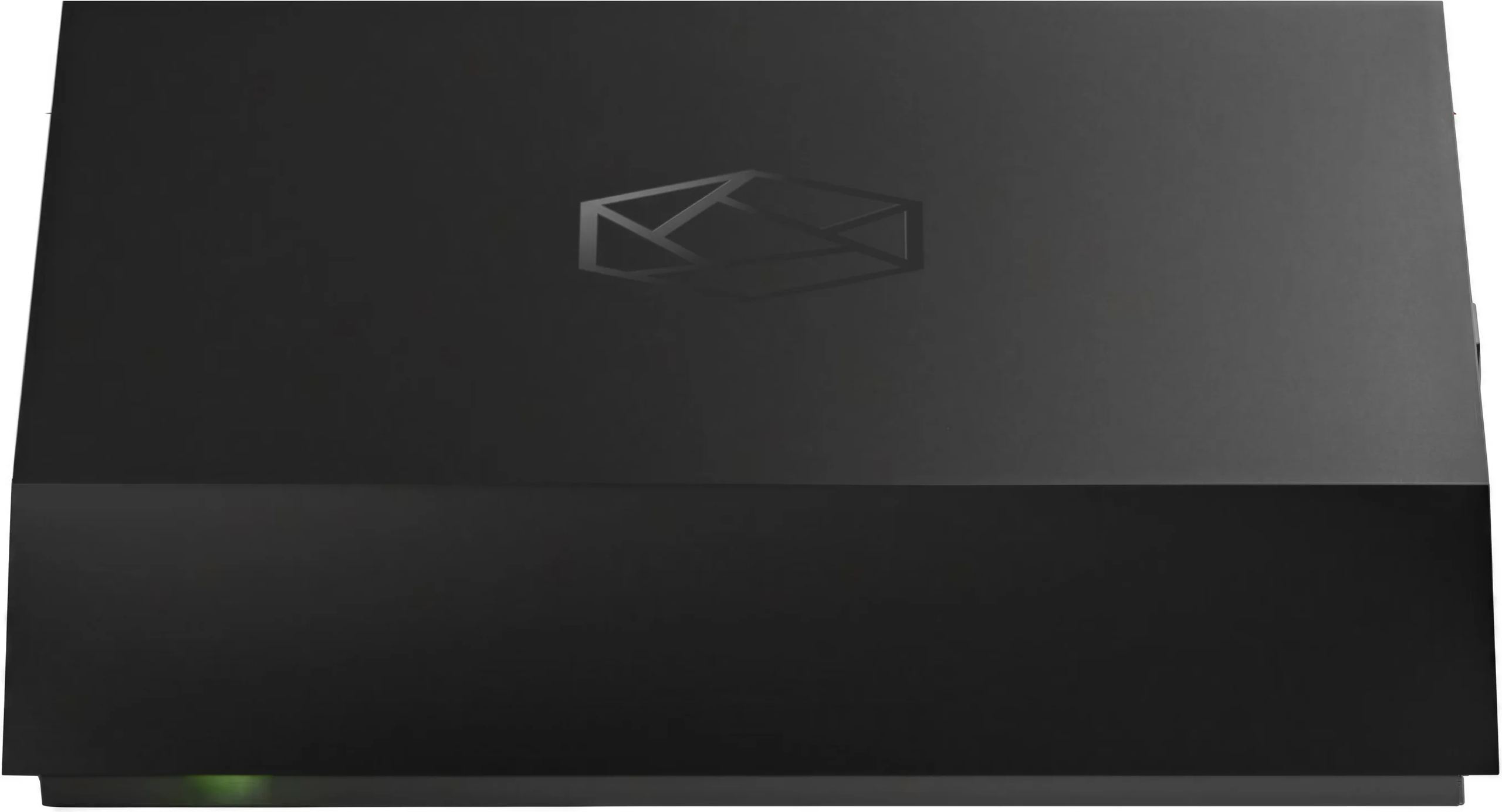
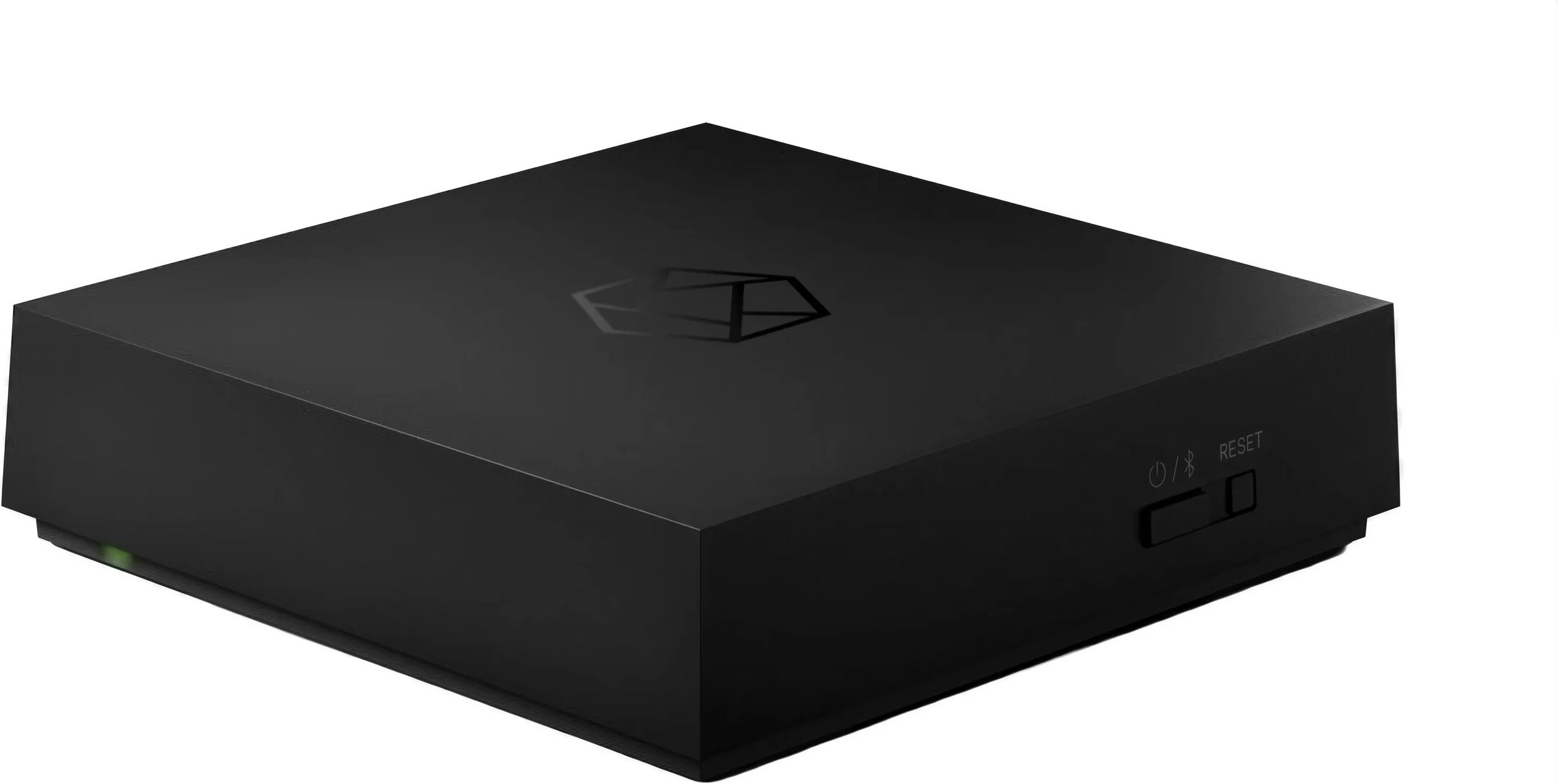
- Compact format that fits into any high-end audio rack
- Minimal dimensions optimizing space requirements
- Glossy ROSE logo on the top panel reinforcing the brand identity
- Indirect LED diffuser on the lower section for a non-intrusive visual experience during listening
- Minimalist interface offering intuitive connectivity
Structural elements
- Top cover: PC + ABS material with black finish and glossy ROSE logo
- Bottom cover: dark gray finish with anti-vibration silicone feet
- Status indicator: indirect LED diffuser on the lower section displaying the device status
- Input / output panel: intuitive analog and digital interface
Operating modes
Expansion mode (CH mode)
- Function: streaming network expansion module
- Compatible devices: HiFi ROSE devices
- Connection method: single USB-C cable
- Power supply: provided by the host device via USB-C
- Control: HiFi ROSE devices and dedicated ROSE AIR app
- Compatible HiFi ROSE devices: RS151, RS130, RS250A, RS451, RS150B, RS201E
Standalone mode (SA mode)
- Function: fully standalone streaming player
- Compatible devices: third-party integrated amplifiers, active speakers, external DACs (all brands)
- Recommended system: RD160 DAC, RA180 / RA280 integrated amplifiers
- Connection method: RCA (analog), optical input / output + USB 5 V power
- Power supply: USB-C power adapter required (5 V / 1.5 A)
- Control: dedicated ROSE AIR app
Expansion mode (CH) features
- Transparent power supply: power drawn directly from the ROSE device with no additional setup
- Data synchronization: transparent link with the host device and perfect synchronization of playback status (album cover, artwork, track title) on the ROSE device screen
- Lossless transport: direct transmission of digital audio up to 384 kHz / 32 bits to the integrated DAC of the ROSE device
- Automatic device discovery and stable synchronization with the host (Host Sync), in wired or wireless environments
- Full integration with various ROSE products (RS151, RS520, etc.) to form a unified audio system
Standalone mode (SA) features
- Connection to an integrated amplifier: digital upgrade for existing analog amplifiers
- Connection to active speakers: operation as a standalone DAC / streamer
- Connection to a high-end external DAC: pure transport function
Audio hardware architecture
- Architecture separating data processing and audio signal conversion on independent chips
- Effective blocking of interference between functions for more refined and purer sound
Key components
- LS10 module: core of network processing, integrating dual-band Wi-Fi, Bluetooth 5.2, and Ethernet
- ES9280 DAC: high-precision I2S conversion, 119 dB SNR, 0.0008% THD+N
- SRC4382 processor: signal processing up to 192 kHz / 24 bits with no latency
High-resolution specifications
- Digital output (USB): PCM 32 bits / 384 kHz
- Digital input / output (optical SPDIF): up to 192 kHz / 24 bits
- Analog output (RCA L / R): guaranteed 2 Vrms maximum
- THD + N below -102 dB (extremely transparent sound quality, 0.0008%)
- High-resolution local audio: PCM 32 bits / 384 kHz and DSD 128
Compatible streaming platforms
- TIDAL Connect and Qobuz Connect: 192 kHz / 24 bits
- Roon Ready: 384 kHz / 32 bits, RAAT transport
- Spotify Connect: 44.1 kHz / 24 bits, lossless
- Apple AirPlay 2: 48 kHz (lossless) / 24 bits, iOS / Mac
- Google Cast: 96 kHz / 24 bits, Hi-Res Audio certified
- Bluetooth 5.2: A2DP 1.4, AVRCP 1.6.2
- Optical input / output: 192 kHz / 24 bits
Network configurations
- Wireless bridge method: RW800 (Wi-Fi) → ROSE host (Internet sharing), for simplified installation
- Hybrid method: RW800 (Wi-Fi) ↔ ROSE host (Ethernet), for effective expansion
- Wired Ethernet method: RW800 (Ethernet) ↔ ROSE host (Ethernet), for maximum stability
- Wired bridge mode: RW800 (Ethernet) ↔ ROSE host (Internet sharing), for wired expansion
ROSE AIR app
- Availability: Android and iOS
- Quick and intuitive setup: automatic device detection and Wi-Fi configuration via Bluetooth
- Complete playback control: play, pause, search, shuffle, and other functions from a single interface
- Intelligent system management: OTA updates, device settings, factory reset, and other functions
Connectivity
- USB-C port: simultaneous transmission of power and data in CH mode
- RCA analog output: connection to an integrated amplifier, 2 Vrms maximum, THD+N below -102 dB guaranteed
- Optical output: connection to a television or an external DAC
- Ethernet 10 / 100 BASE-T port: stable wired network
- Power input: 5 V / 1.5 A power adapter in SA mode
Line output specifications
- Impedance: 10 Ω
- Output level: 2 Vrms
- THD+N: 0.0008% (1 kHz, 2 Vrms)
- Signal-to-noise ratio: 119 dB
- Dynamic range: 120 dB
- Stereo crosstalk: 130 dB
- Frequency response: 10 Hz – 50 kHz (± 1 dB)
Sampling frequencies
- PCM: 8 kHz – 384 kHz (24 / 32 bits per sample)
- DSD: up to DSD128 (5.6 MHz)
Supported file formats
- Audio: MP3, MP4, AAC-LC, AAC-HE, AAC-LTP, HE-AACv1, HE-AACv2, LPCM, AIFF, AMR-NB, AMR-WB, FLAC, OGG-Vorbis, WAV, ALAC, Opus, APE
Inputs and outputs
- Optical digital input: PCM 32 bits / 192 kHz
- Optical digital output: PCM 32 bits / 192 kHz
- Analog output: unbalanced
Network connectivity
- Ethernet: 10 / 100 BASE-T (1 port)
- Wi-Fi: dual-band 802.11 a / b / g / n / ac
- Bluetooth: V5.2 (A2DP 1.4, Sink, AVRCP v1.6.2)
Operating frequencies (maximum power)
- Wi-Fi 2.4 GHz: 2412 – 2472 MHz (13.9 dBm)
- Wi-Fi 5 GHz: 5150 – 5350 MHz (13.36 dBm)
- Wi-Fi 5.8 GHz: 5725 – 5875 MHz (7.52 dBm)
- Bluetooth: 2402 – 2480 MHz (8.6 dBm)
Streaming protocols
- Bluetooth, GC4A, AirPlay 2, DLNA / UPnP, Roon Ready, Spotify Connect
Power supply and consumption
- Input voltage: 5 V DC, 1.5 A
- Network standby: below 1.6 W
- Idle: below 2.0 W
- Playback: below 2.5 W
Environmental conditions
- Operating temperature: 0 °C – 40 °C
- Storage temperature: -10 °C – 50 °C
Physical characteristics
- Dimensions: 110 (w) × 115.5 (d) × 27 (h) mm
- Weight: 245 g
- Material: PC / ABS blend
- Finish: matte black
Frequently Asked Questions
Which Rose devices are compatible with Expansion mode?
Rose cites the streamers RS151, RS130, RS250A, RS451, RS150B and RS201E. In all cases, the connection is made using the USB-C cable, which provides both power and audio transmission.
Is a power adapter necessary in Standalone mode?
Yes. In Expansion mode, the RW800 is powered by the host streamer; in standalone mode, it requires its own source: a 5 V / 1.5 A USB-C adapter, or a USB port capable of supplying that current.
Does the RW800 accept Dolby Digital or DTS streams on its optical input?
No. The optical input only handles linear PCM. Rose advises against sending it a Dolby Digital, DTS, or AAC signal: the result would be noise, with a risk to the speakers. For a source of this type, the transmitting device must be set to PCM output.
Should you take any precautions before connecting the RW800 to a power amplifier?
Yes. Before connecting the cable, Rose recommends muting the sound or lowering the volume below level 5. Connecting it while music is playing loudly can produce a sudden popping sound in the speakers.
Does the RW800 support multiroom playback?
Yes, via AirPlay 2 and Google Cast. AirPlay 2 streams the same content to multiple compatible devices, and Google Cast allows you to create speaker groups from the Google Home app.
How are updates carried out?
They are done via OTA, automatically, once the network configuration is complete. The LED flashes orange during the operation, then the RW800 restarts on its own. Never cut the power during an update.
- Eco-contribution included in the sale price.








