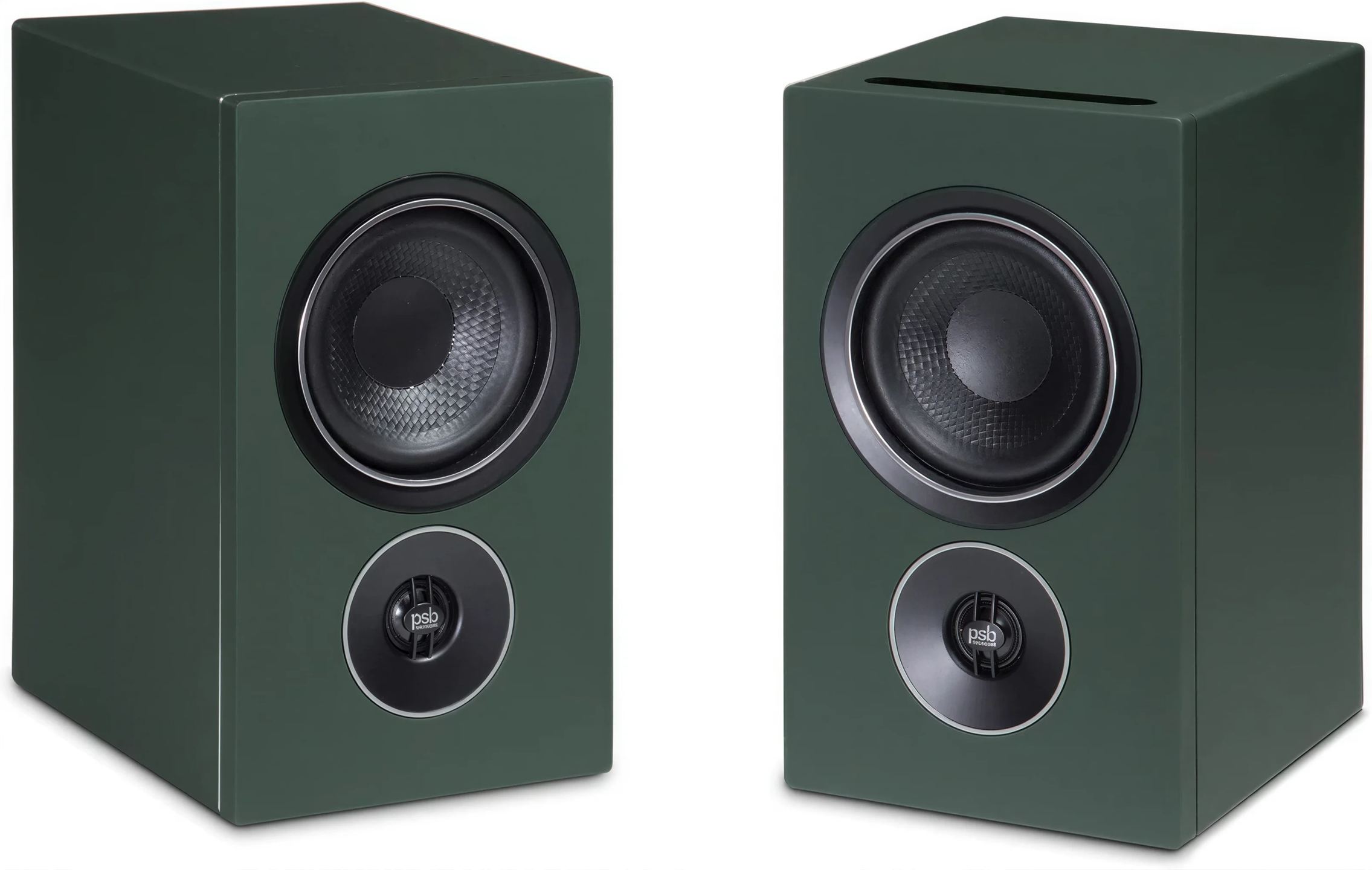
PSB iQ2 boreal green (pack of 2)


Specifications and features


Overview
Two speakers, one app, and nearly an entire hi-fi system fits on a shelf. PSB takes the formula introduced by the Alpha iQ in 2022 a step further: a pair of active speakers that do without any cable between them, handle streaming, television, and vinyl, and deliver true left-right stereo. The iQ2 version adds the wireless link between the two cabinets and seven finishes.
Stereo without a cable between the speakers
This is the difference that justifies the model’s name. On the iQ2, the left speaker and the right speaker communicate via a low-latency radio link. No wire connects one to the other; only mains power goes to each cabinet. You place the two speakers exactly where they fit best, on a shelf, console, or desk, without having to calculate the length of a linking cable.
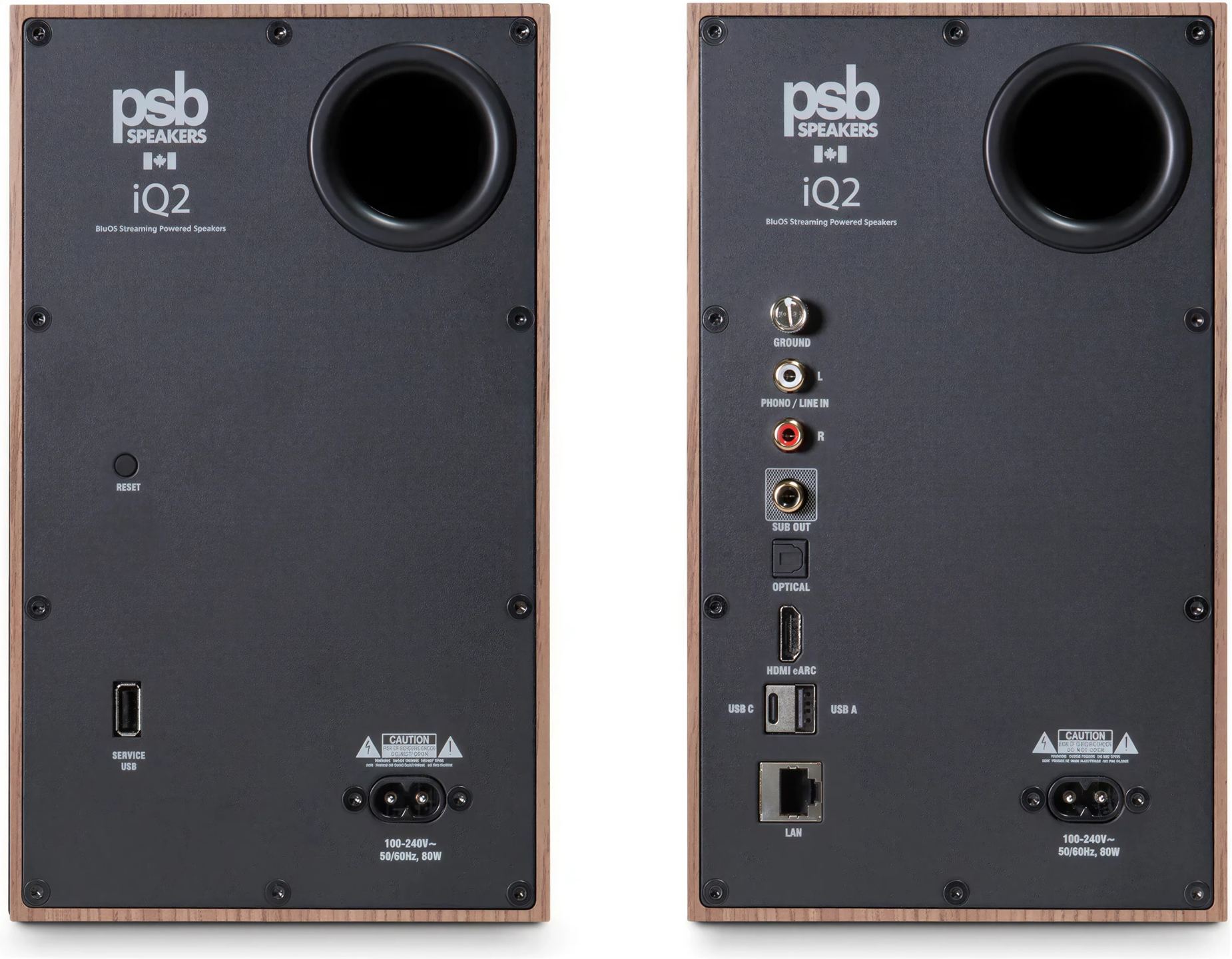
Each cabinet has its own amplification and its own converter, which delivers two truly separate channels rather than widened mono. Voices stay centered, instruments are positioned in space, and the soundstage extends beyond the physical width of the speakers. All connections are located on the main speaker, configurable as left or right during setup; the second receives only mains power and a reset button.
More watts in a compact format
The iQ2s retain the acoustic foundation of the Alpha iQ but change the engine. The new Texas Instruments Class-D amplification platform delivers 270 W in total, compared with 180 W for the Alpha iQ. The details matter: each woofer gets a dedicated 90 W, and each tweeter its own 45 W block. One amplifier per driver, after the crossover, therefore, which is the logic of a truly active speaker.
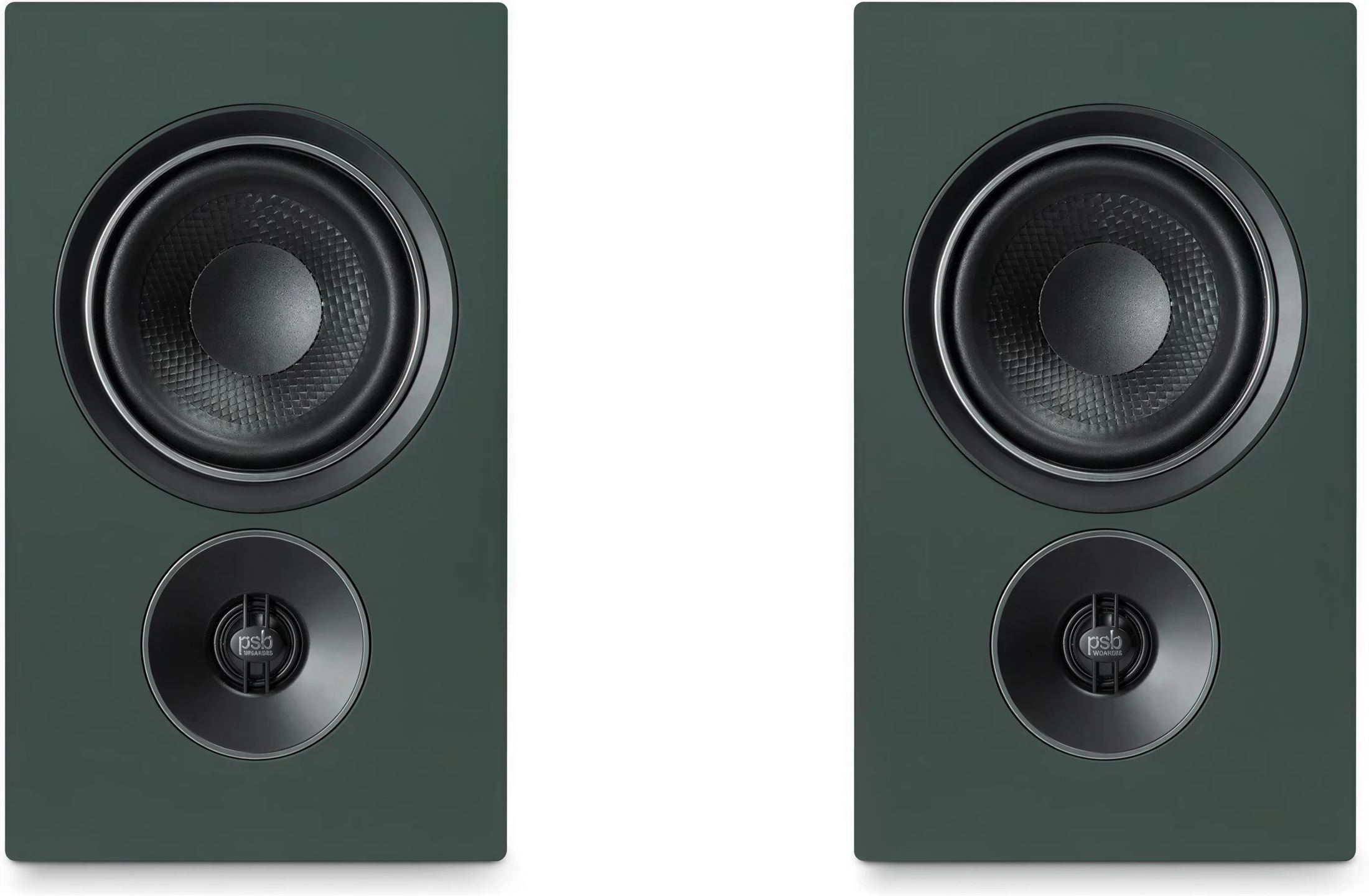
On the driver side, the 19 mm aluminum dome tweeter combines a neodymium magnet and ferrofluid cooling, while the 100 mm polypropylene woofer is built on a steel chassis with a rubber surround. The crossover is handled by a digital active crossover (DSP), and the bass-reflex loading relies on a tuned port extended by DSP processing. True to the Alpha line, PSB places the tweeter below the woofer: the balance between the two drivers remains consistent whether you are sitting or standing.
The response covers 64 Hz to 20 kHz at plus or minus 3 dB, with measured extension down to 35 Hz at the -10 dB threshold. A 100 mm woofer in a cabinet 24 cm high will not go as low as a floorstanding speaker; that is the trade-off of the compact format. PSB embraces this and provides a dedicated subwoofer output, with high-pass and low-pass filters managed by the DSP, for anyone who wants more low-end foundation or to fill a larger room with sound.
TV, turntable, and other sources
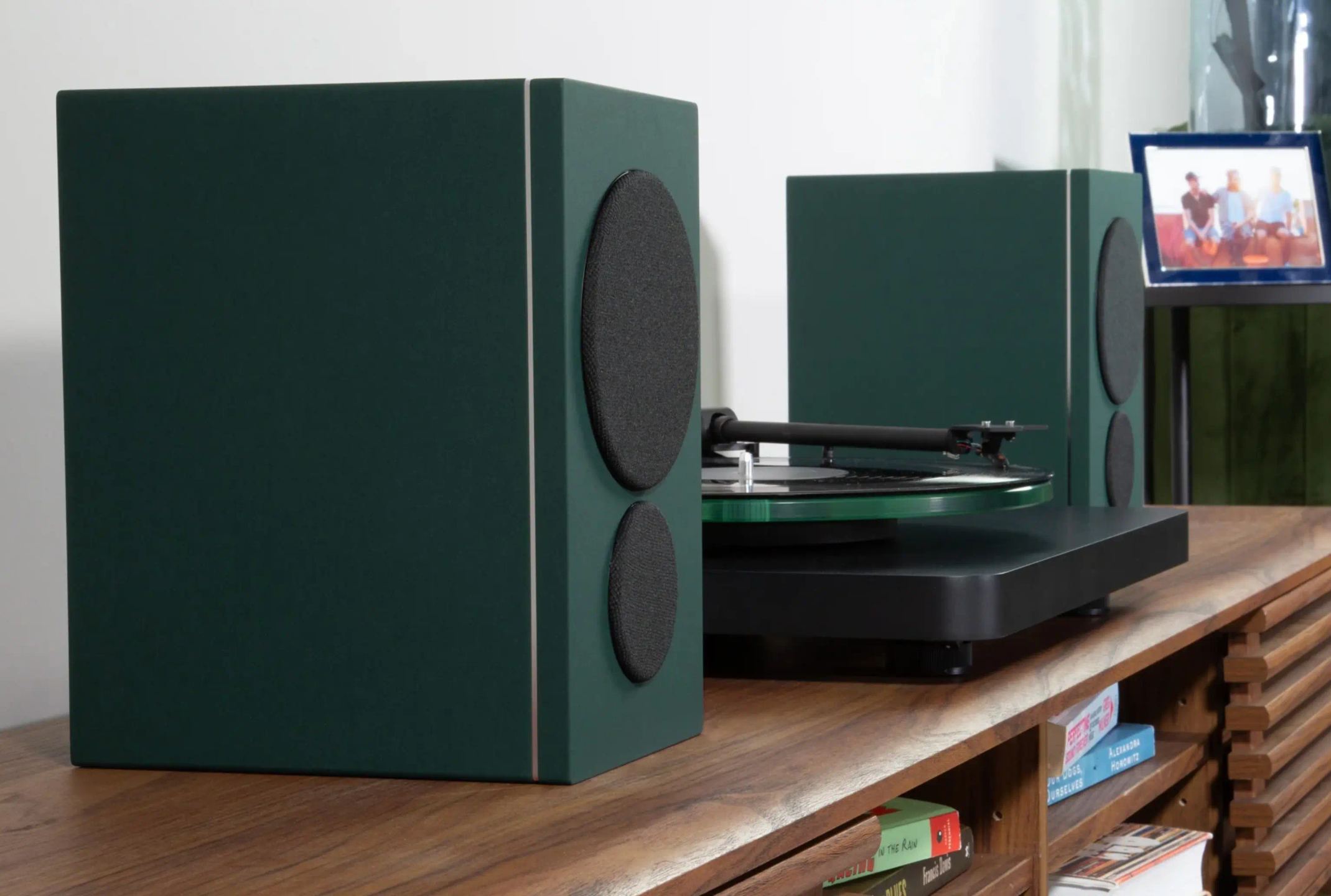
The iQ2 is not reserved for streaming. The rear panel of the main speaker includes an HDMI eARC socket for TV sound, an optical input, a USB-C port for a digital source (computer, smartphone), and a USB-A port for reading a storage drive. For vinyl, the phono input includes a moving magnet (MM) preamp, bypassable from the BluOS app when the source already outputs at line level, such as a CD player or a turntable with a built-in preamp. The network connection works via Ethernet or Wi-Fi depending on your setup.
HDMI eARC deserves a mention for anyone considering these speakers as a replacement for a soundbar: the low-latency link between the two cabinets avoids the delay between picture and sound, a classic weak point of wireless pairs connected to a TV.
BluOS at the heart of listening
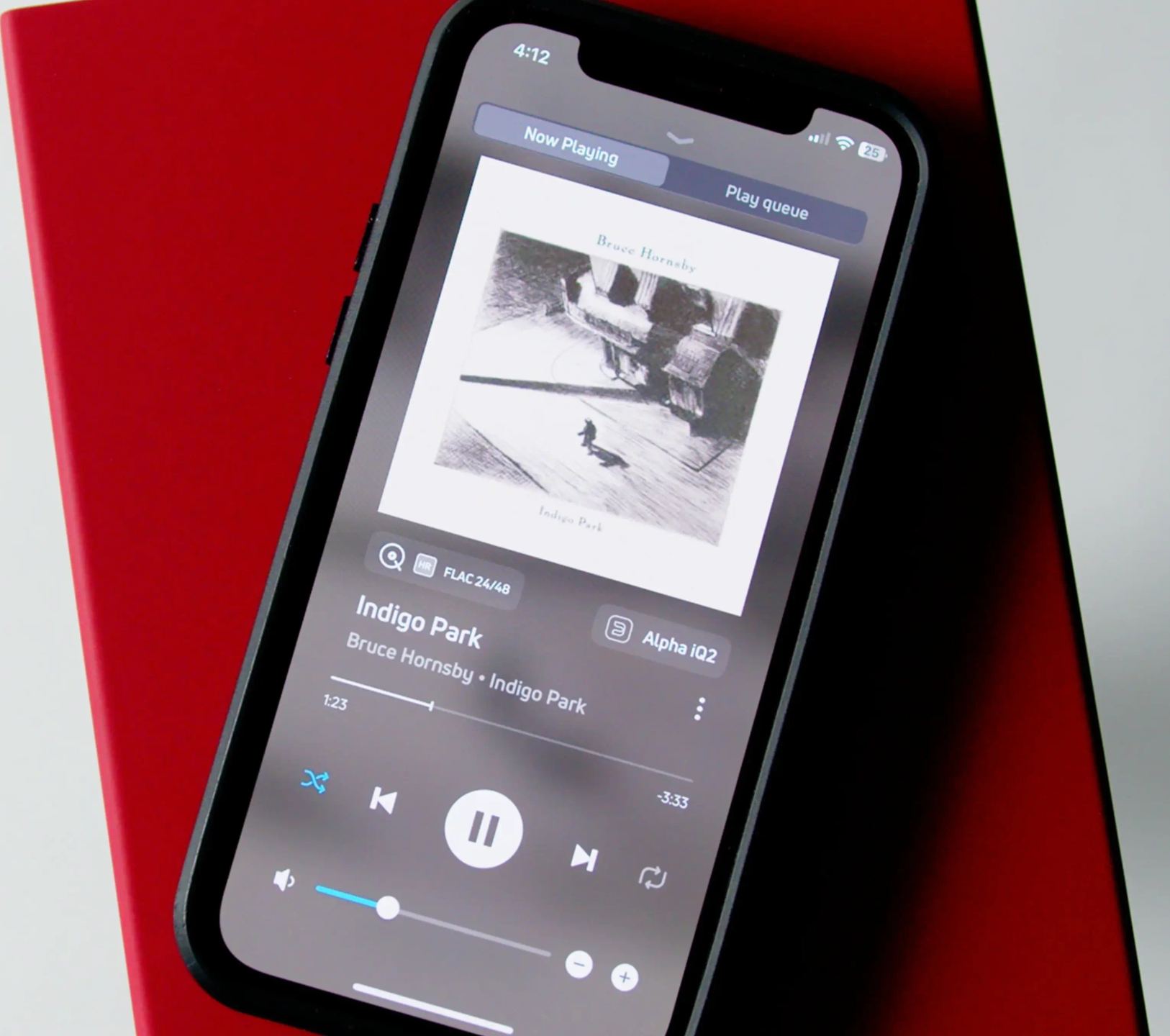
The system runs on BluOS, Lenbrook’s platform also found in Bluesound and NAD products. In practical terms, you get access to more than twenty streaming services, in lossless and high-resolution quality, from a single app available on Android, iOS, macOS, and Windows. The internal converter handles files up to 24-bit and 192 kHz. AirPlay 2, Spotify Connect, and Tidal Connect are all included, and Bluetooth supports the aptX Adaptive codec for direct streaming from a phone.
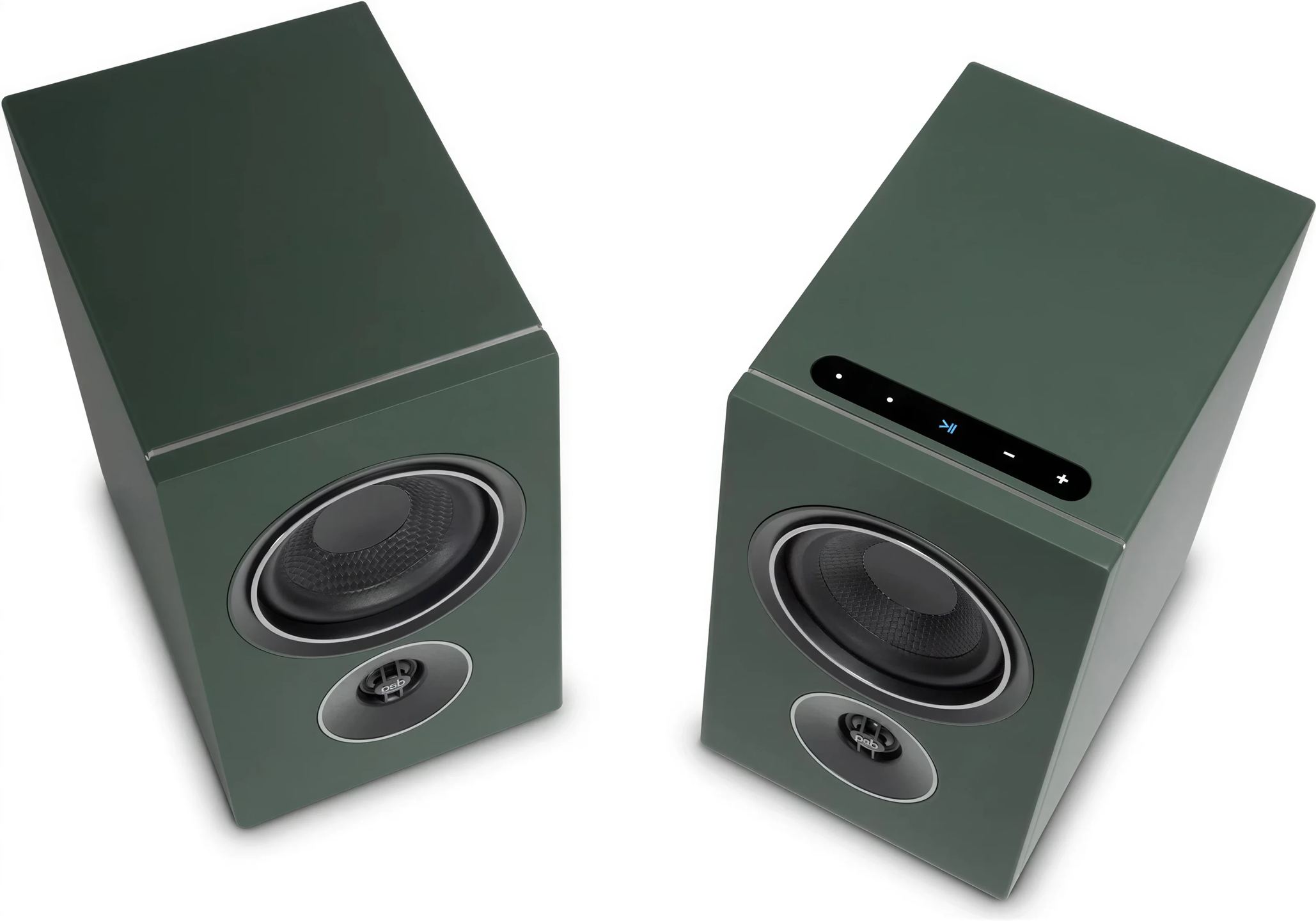
Multi-room allows streaming to 63 other BluOS devices spread throughout the home. On top of the main speaker, touch controls provide access to volume, playback, and two presets (a station, a playlist, or a service at your fingertips). Voice control works via Alexa, Google Assistant, and Siri (through AirPlay 2), and home automation integration covers Control4, Crestron, ELAN, RTI, and URC, with infrared code learning for universal remotes.
Seven finishes and a compact cabinet
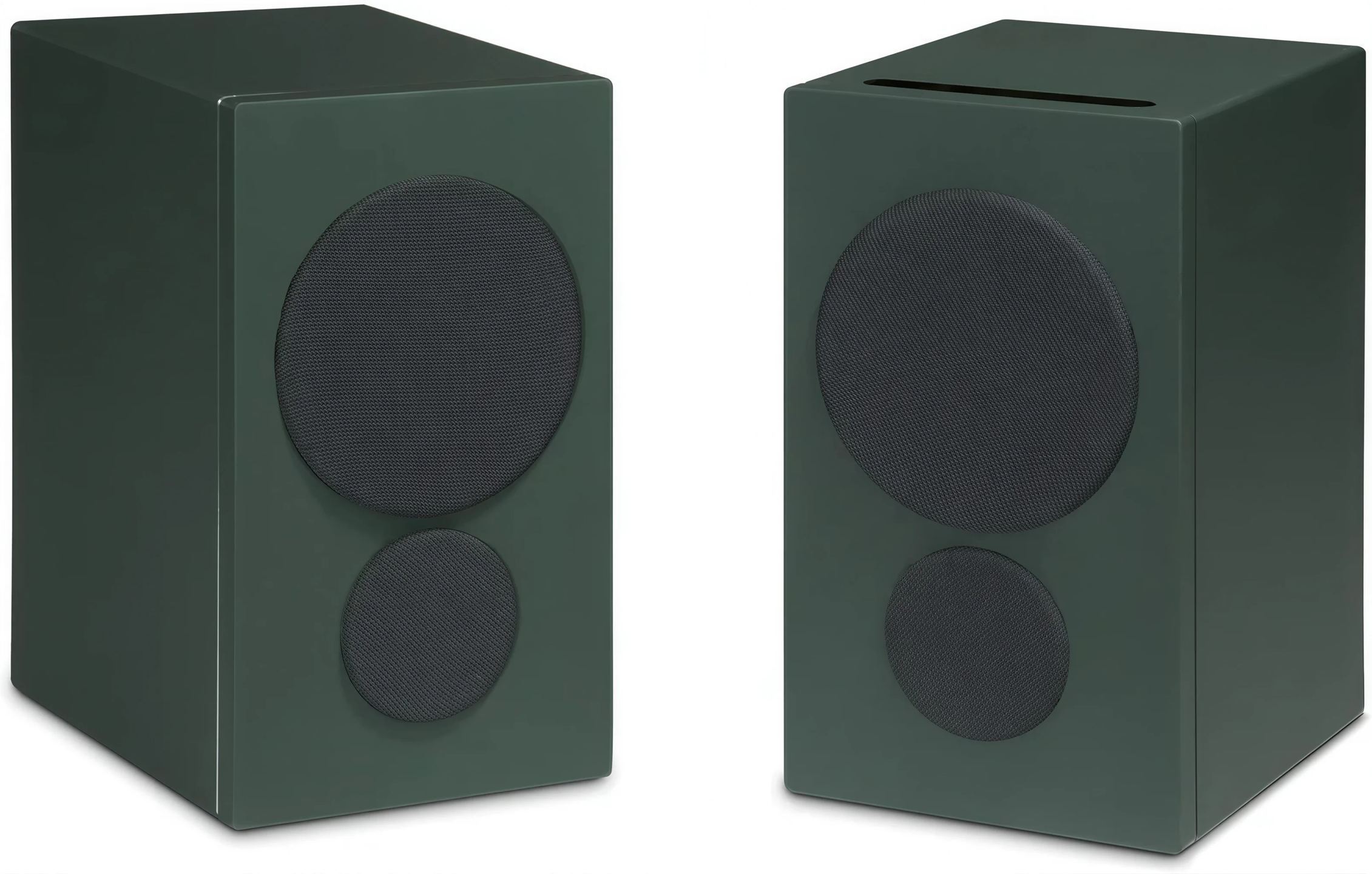
The cabinet combines MDF, a front baffle in MDF over aluminum, and an aluminum rear baffle, a combination intended to provide rigidity without making the whole unit heavier. Fabric grilles are included. PSB applies an anti-fingerprint treatment to the finishes, an appreciable detail in everyday use on a speaker placed within hand height.
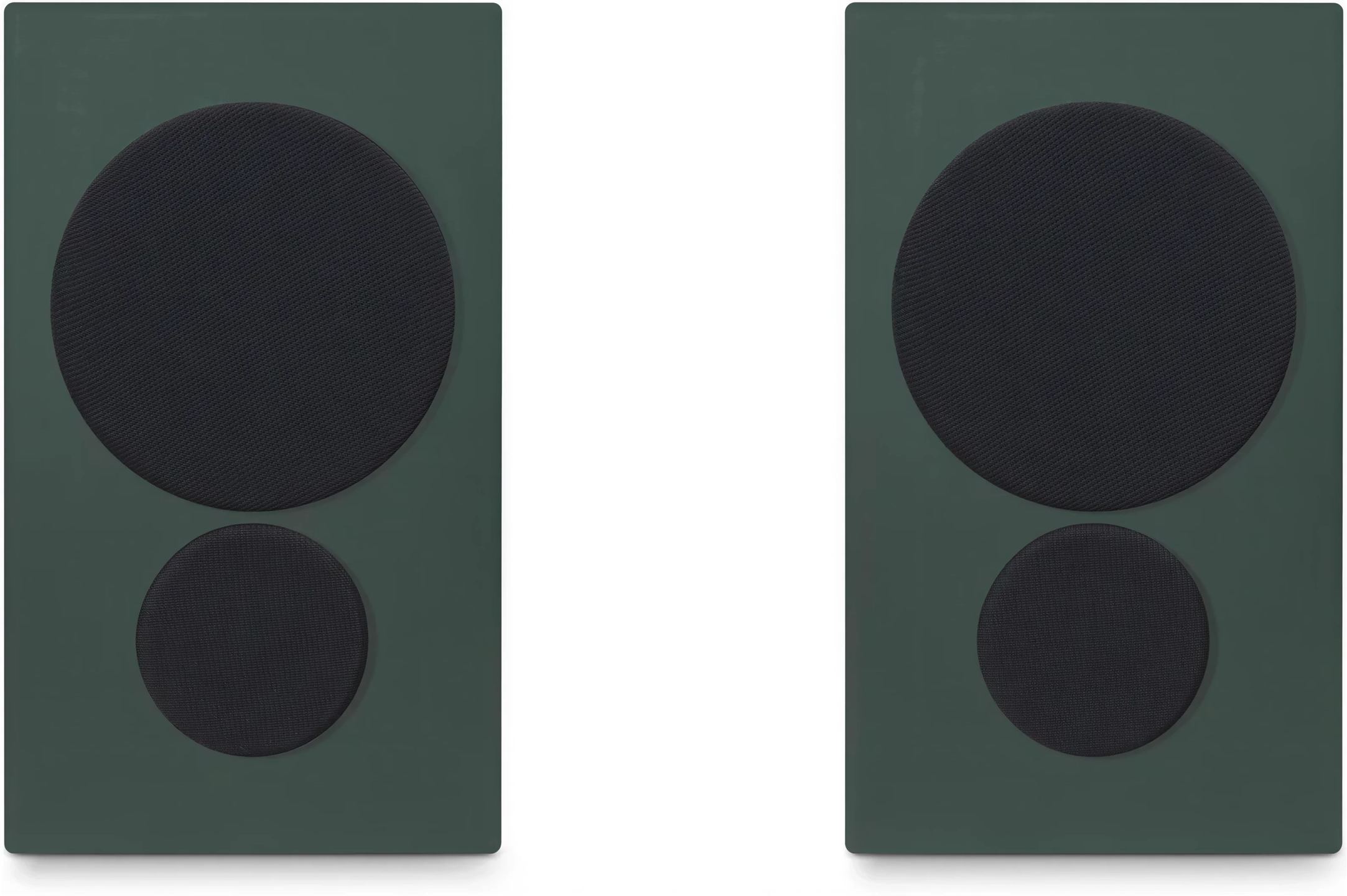
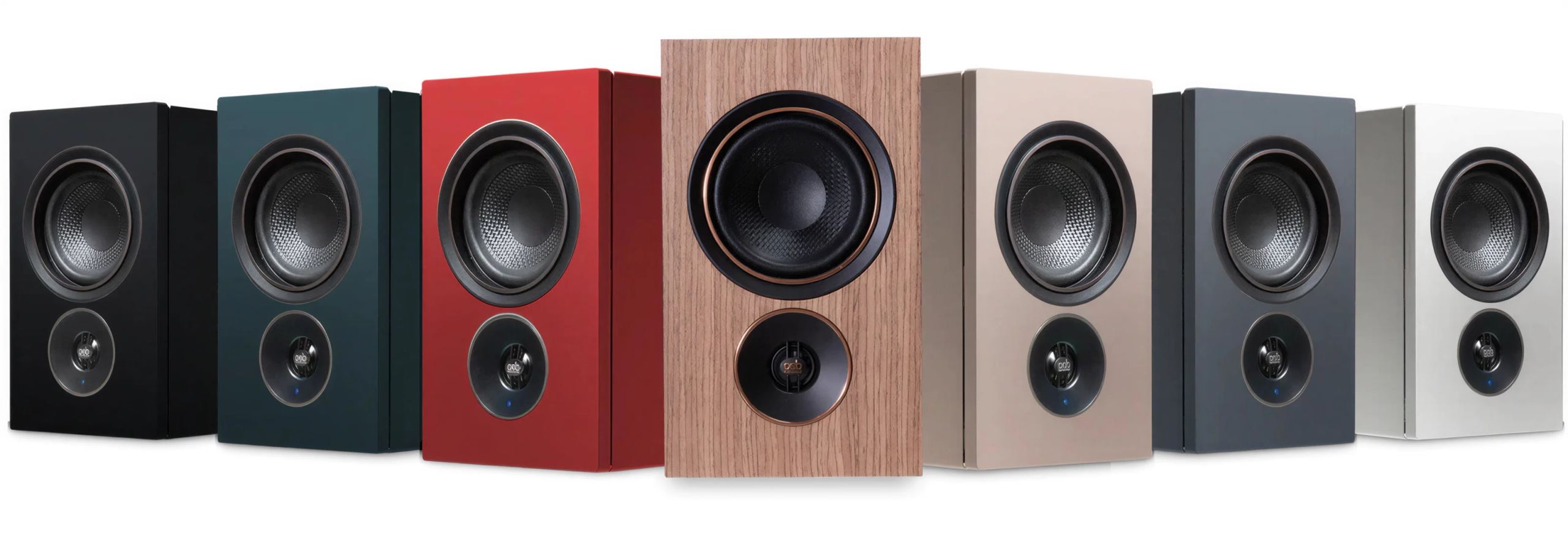
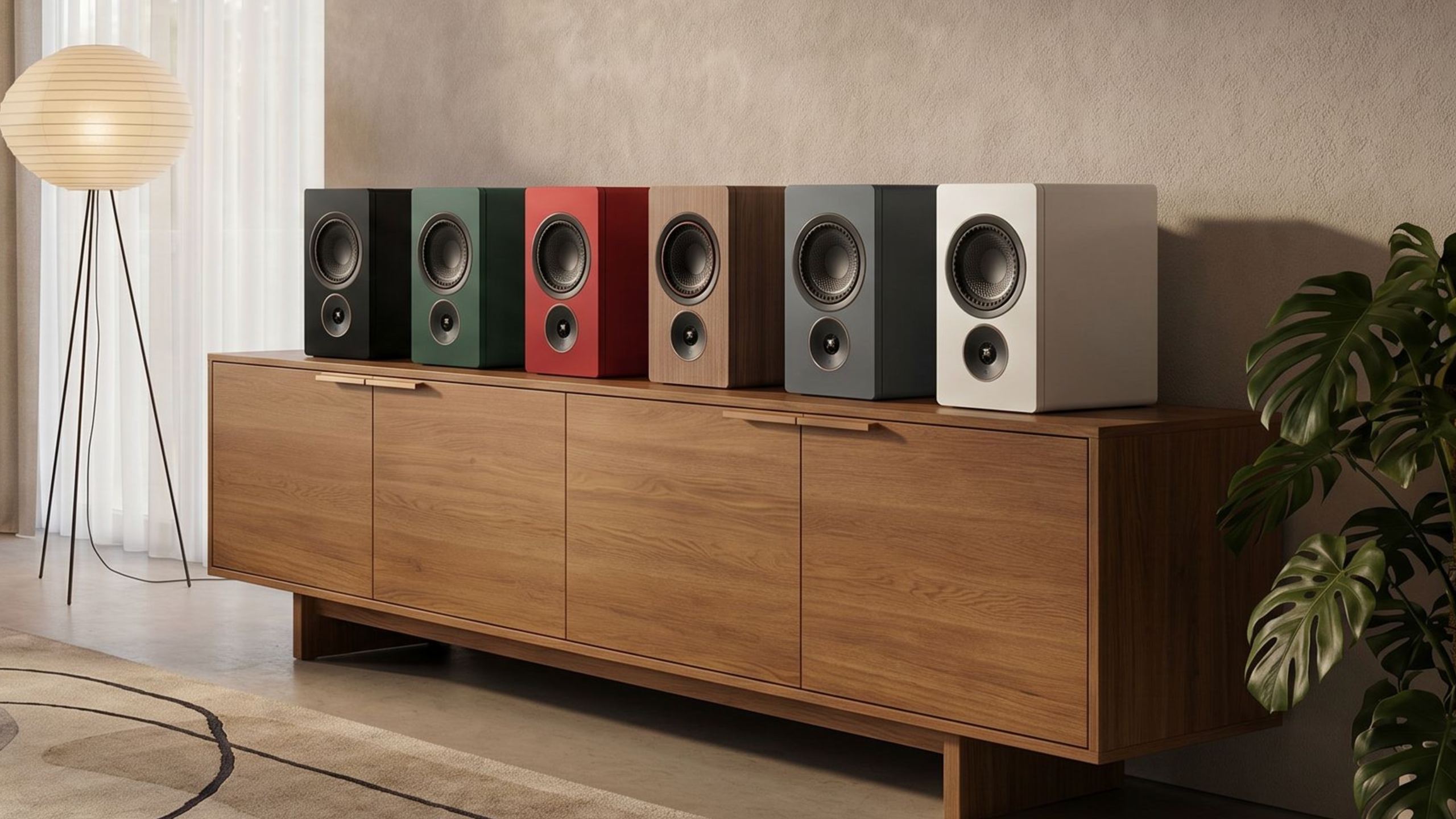
The iQ2 comes in seven finishes: black, white, ember red, boreal green, granite gray, sandstone beige, plus a walnut veneer accented with copper tones. The dimensions remain compact at 145 x 246 x 192 mm per speaker, with the pair weighing 7.36 kg. Enough to find a place in a small or medium-sized room, on a low cabinet as well as on a bookshelf.
What the press says
During the review period, the PSB iQ2 reveals a sound character that is remarkably mature, transparent and exceptionally balanced. For a loudspeaker with such compact dimensions, the overall sound is surprisingly grand and spacious. [...] Naturally, the physical dimensions impose limits on the very deepest bass; if you genuinely prefer low frequencies and use monitors like these in somewhat larger listening rooms, you can of course consider an optional subwoofer. [...] All things considered, PSB delivers an extremely successful active monitor with the iQ2. It is a well-conceived complete package that not only integrates effortlessly into the interior, but also treats the listener day after day to a lively, accurate and immersive musical presentation.
Automatically translated — Show original (Dutch)
Documentation
Technical specifications
Frequency response
- On-axis response at 0° (± 3 dB): 64 Hz to 20 kHz
- Low-frequency cutoff (-10 dB): 35 Hz
Amplification
- Power per speaker
- Tweeter: 45 W
- Woofer: 90 W
- Total system power: 270 W (dual power supply)
- Amplification platform: Class-D (TI-based)
Acoustic design
- Tweeter: 19 mm aluminum dome, ferrofluid, neodymium magnet
- Woofer: 100 mm polypropylene cone, rubber surround, steel chassis
- Crossover: active DSP crossover
- Enclosure type: bass-reflex (tuned port, DSP extension)
Connectivity
- Analog: MM phono
- Digital: HDMI eARC, optical, USB-C (playback), USB-A (storage)
- Network: Ethernet, Wi-Fi, BluOS
- Wireless: Bluetooth aptX Adaptive
- Output: subwoofer (DSP low-pass and high-pass filters)
Streaming and features
- Platform: BluOS multiroom, more than 20 services (lossless and high-resolution)
- Converter: high-resolution DAC up to 24-bit / 192 kHz
- Compatibility: AirPlay 2, Spotify Connect, Tidal Connect
- Multiroom: streaming to 63 additional BluOS devices
- Phono preamp: built-in MM, bypassable for line-level sources
- Home automation: Control4, Crestron, ELAN, RTI, URC, IR learning
- Voice control: Alexa, Google Assistant, Siri (via AirPlay 2)
- Speaker-to-speaker link: low-latency wireless stereo
Construction
- Cabinet: MDF
- Front baffle: MDF on aluminum
- Rear baffle: aluminum
- Grilles: fabric, included
Available finishes
- Black, white, ember red, boreal green, granite gray, sandstone beige, walnut veneer
Dimensions and weight
- Net dimensions (W x H x D): 145 x 246 x 192 mm
- Packaging dimensions: 268 x 402 x 385 mm
- Net weight: 7.36 kg per pair
- Gross weight: 8.27 kg per pair
Frequently asked questions
What is the real difference between the iQ2 and the iQ1?
Three differences. The iQ1 links its two speakers with a supplied cable; the iQ2 does so wirelessly. The iQ1 shares a 45 W two-channel amplifier for the tweeters; the iQ2 dedicates an independent 45 W block to each tweeter. Finally, the iQ1 is limited to black and white, while the iQ2 offers seven finishes, including walnut veneer.
Can a subwoofer be added?
Yes. A subwoofer output is provided, with high-pass and low-pass filters controlled by the DSP. This option makes sense to gain deeper bass or to fill a room larger than what the original format is designed for.
Which Bluetooth codec is supported?
Bluetooth supports aptX Adaptive, which adjusts the bitrate according to the quality of the connection. For serious listening, the network (Wi-Fi or Ethernet) via BluOS remains preferable, with Bluetooth used mainly for occasional sources.
Which home automation ecosystems can the iQ2 be integrated into?
Via BluOS, the iQ2 connects to Control4, Crestron, ELAN, RTI and URC, with the added ability to learn infrared commands to control the system from a universal remote.
- Eco-contribution included in the sale price.