Hisense 50U7SE 2026
Specifications and features



Overview
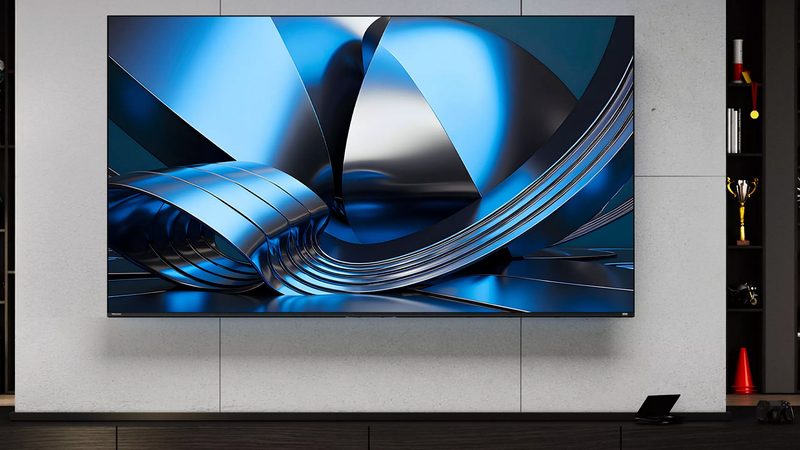
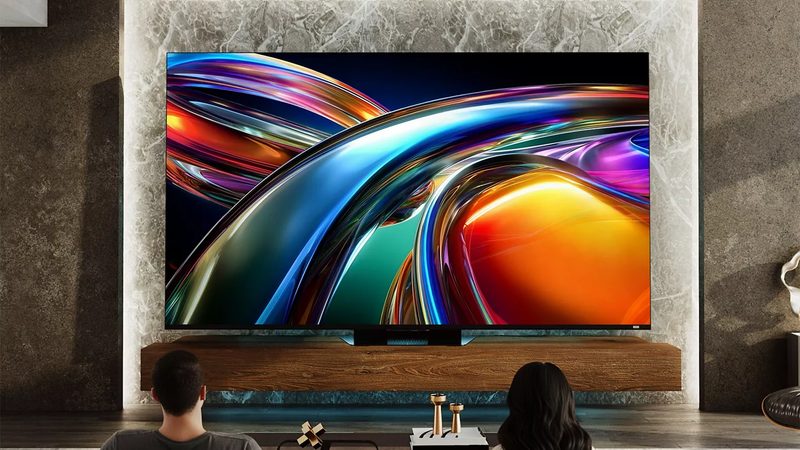
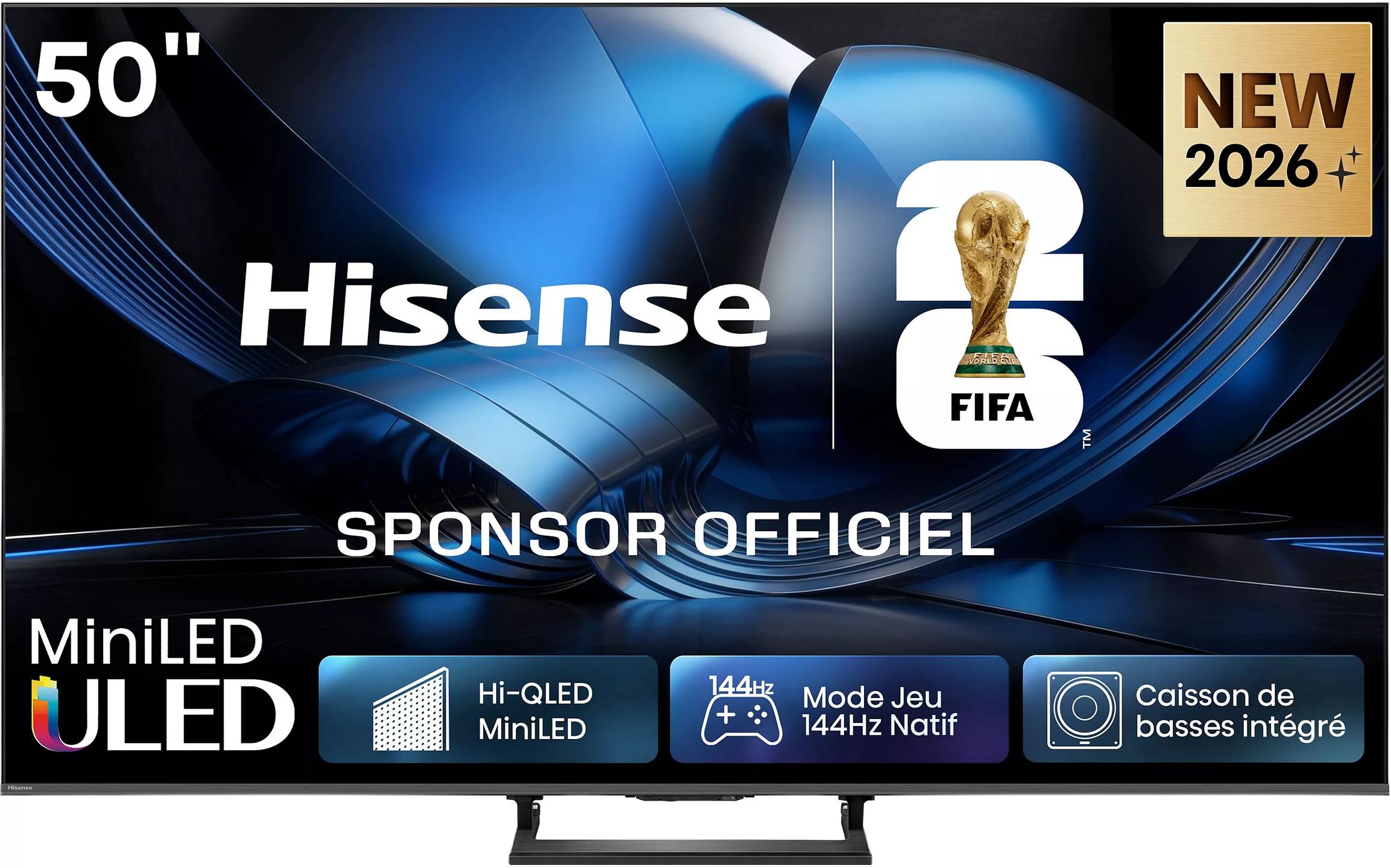
50-inch screen sizes rarely inherit the technologies reserved for larger formats. Mini LED backlighting is an exception this year at Hisense, which equips its U7SE series with zone-based brightness control and a native 144 Hz panel. Enough to set up a compact living-room TV without giving up contrast, fast gaming, or the most widespread HDR formats.
Mini LED comes to the 50-inch format
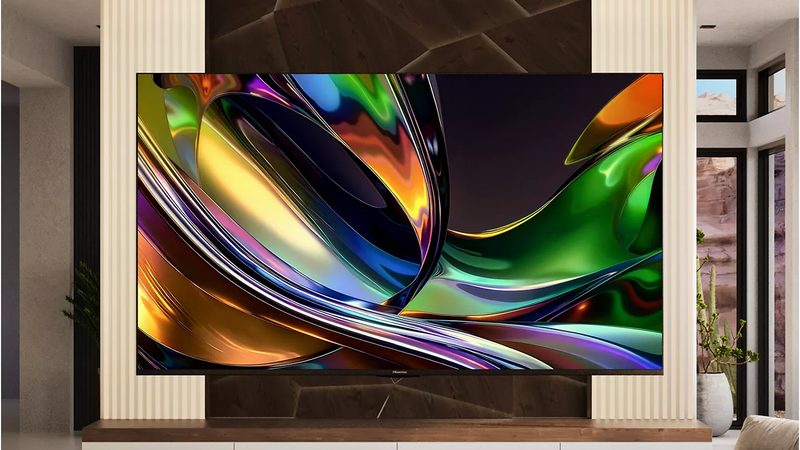
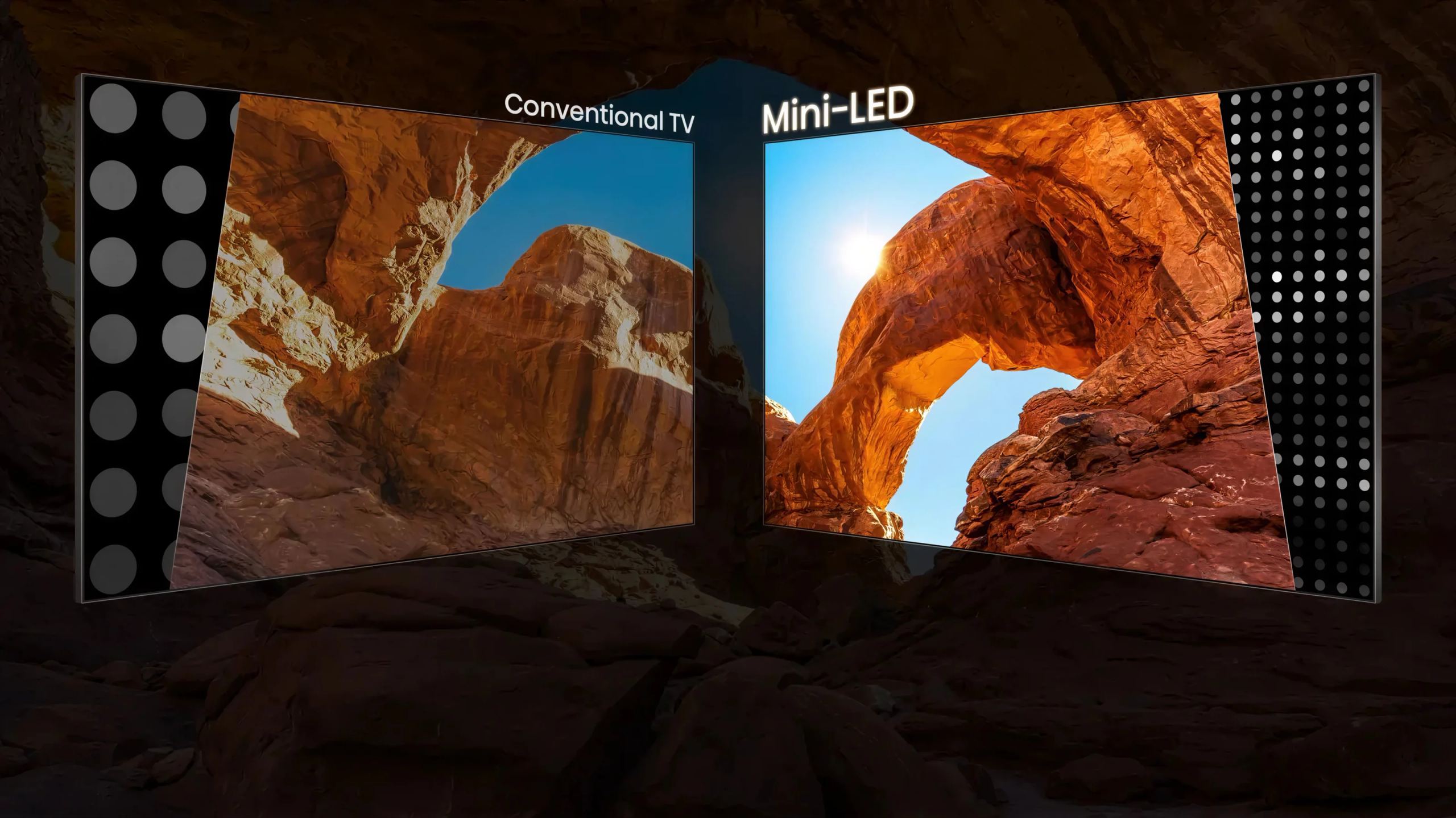
The panel combines Mini LED backlighting with a quantum dot layer. The diodes handle the light, the quantum dots handle the color, with a wide color gamut as a result. Local dimming turns off or dims groups of diodes according to the dark areas of the image, deepening blacks without crushing highlights.
Hisense does not disclose the number of dimming zones, even though that information heavily affects the precision of the control. A light halo may remain around a bright object on a black background, especially with white subtitles. The stated native contrast ratio of 4000:1 places the panel in the upper mid-range of LCD technologies, and local dimming handles the rest. The 178-degree viewing angle remains a theoretical value: on a panel of this type, colors wash out when you move significantly off-axis.
A sensor measures ambient light and continuously adjusts the backlighting. Useful in a sunlit room, less relevant if you want a stable setting: Filmmaker mode sets it aside.
All HDR formats, including Dolby Vision IQ
Few TVs decode both HDR10+ and Dolby Vision. The 50U7SE does, in their adaptive versions that take into account the ambient light measured by the sensor. HLG covers live TV broadcasts, HDR10 covers the rest of the sources.
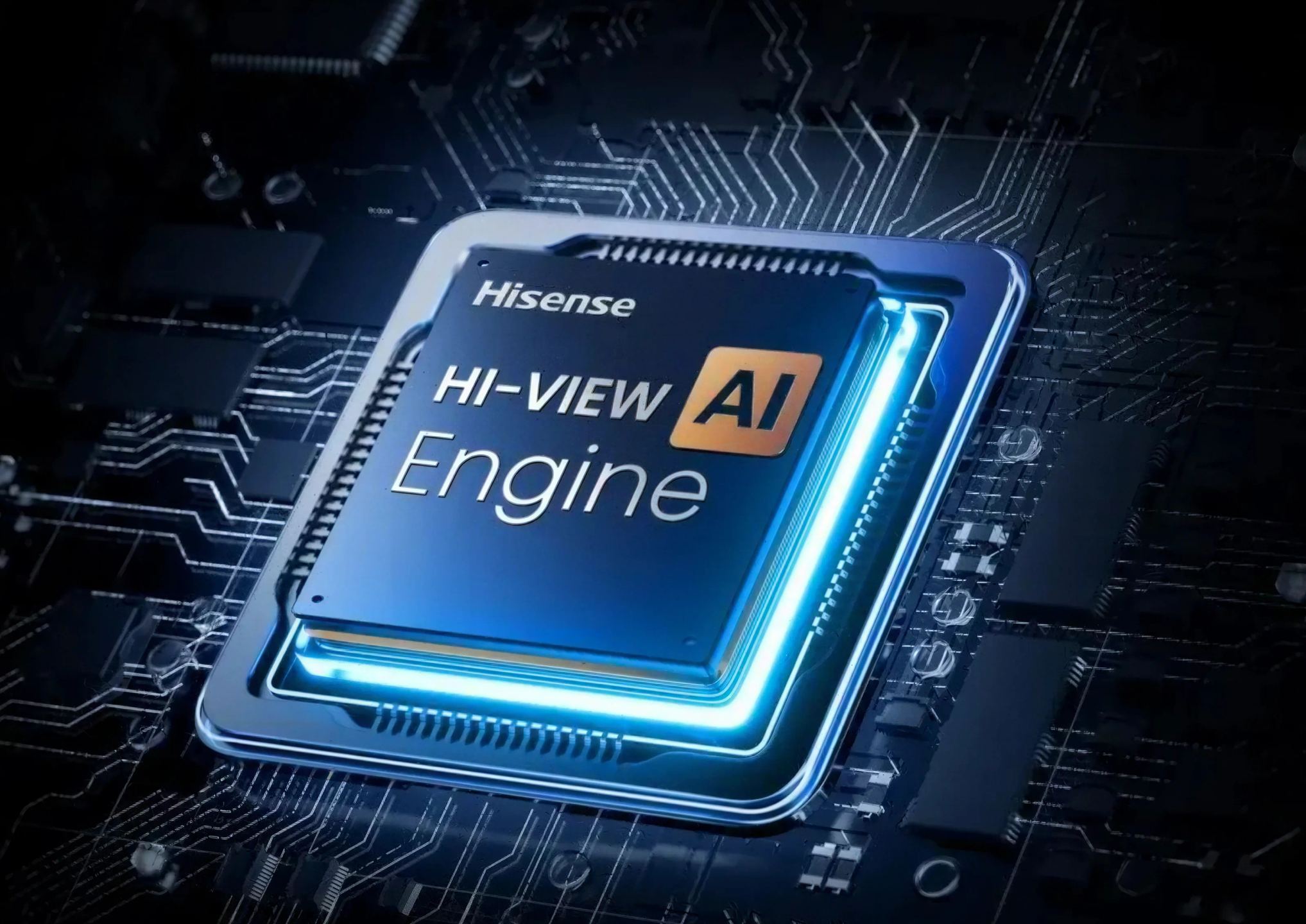
The Hi-View AI Engine processor handles 4K upscaling and scene analysis. AI HDR Upscaler stretches the dynamic range of SDR content to bring it closer to HDR rendering: it is an interpretation, not a restoration, and the result depends heavily on source quality. On a heavily compressed digital terrestrial channel, MPEG noise reduction and the 3D digital filter do more for image clarity than any HDR processing.
MEMC technology inserts calculated frames between real frames. It smooths the fast motion of a match, but it also creates that video-like look that gives away a film shot at 24 frames per second. Filmmaker mode disables the entire processing chain in one step, and it is the preferred setting for movies.
Native 144 Hz, but only two ports
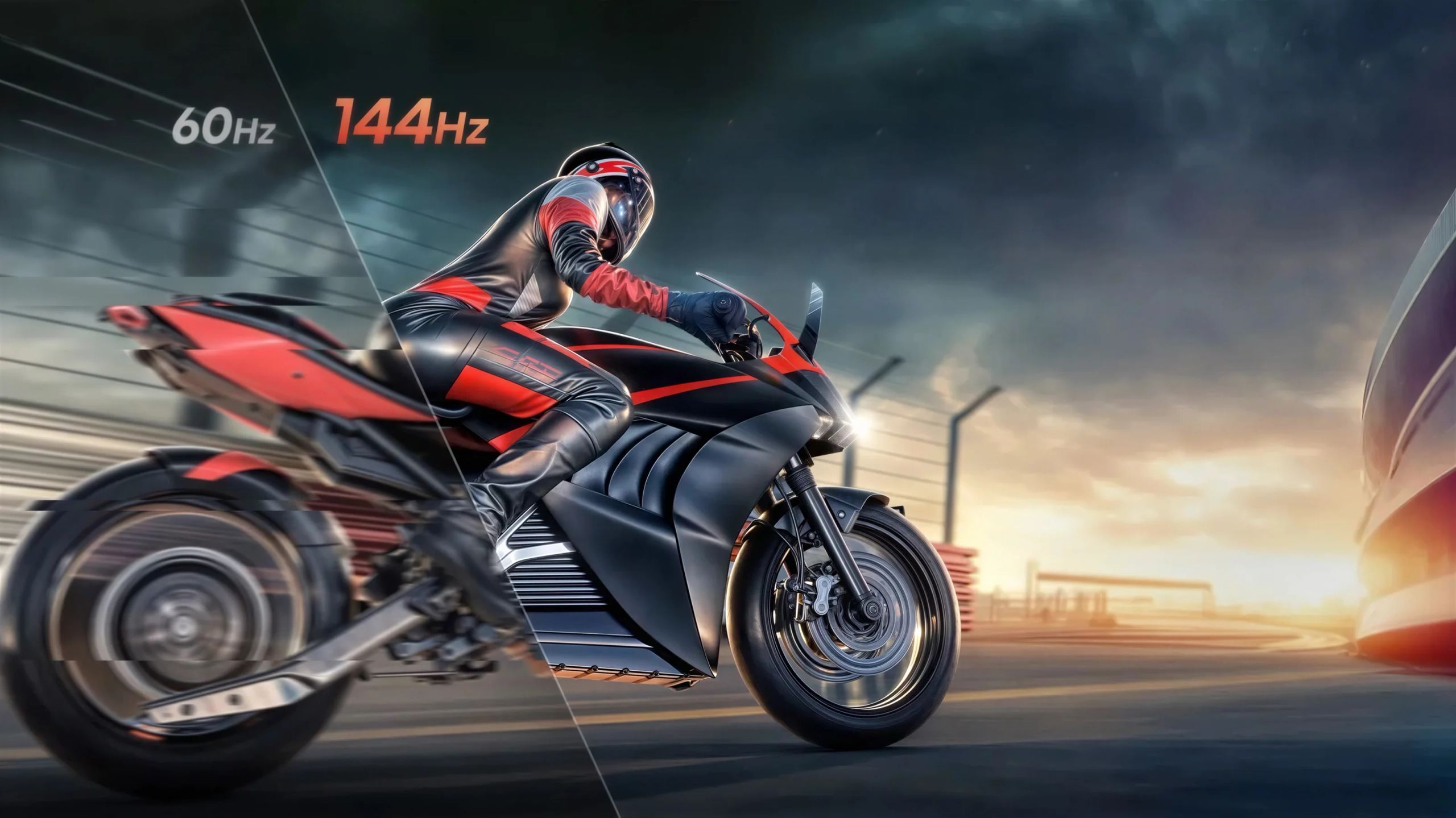
Game Mode PRO makes use of the panel’s 144 Hz with stated input lag below 7 ms in 4K 120 Hz. All four HDMI 2.1 ports support ALLM, which automatically switches the TV to game mode as soon as a console becomes active.
Variable refresh rate, however, follows a less convenient hierarchy. HDMI 3 and HDMI 4 support VRR up to 144 Hz. Ports 1 and 2 are limited to 60 Hz. Yet port 3 also provides the eARC output to an amplifier or soundbar. Connect your audio there and only one 144 Hz port remains: the calculation happens before installation, not after.
The rest of the gaming arsenal is found in the Game Bar, an overlay that displays the frame rate, active HDR format, and VRR status without leaving the game. HDR10+ Gaming and Dolby Vision Gaming complete the picture for compatible games.
A subwoofer in the chassis
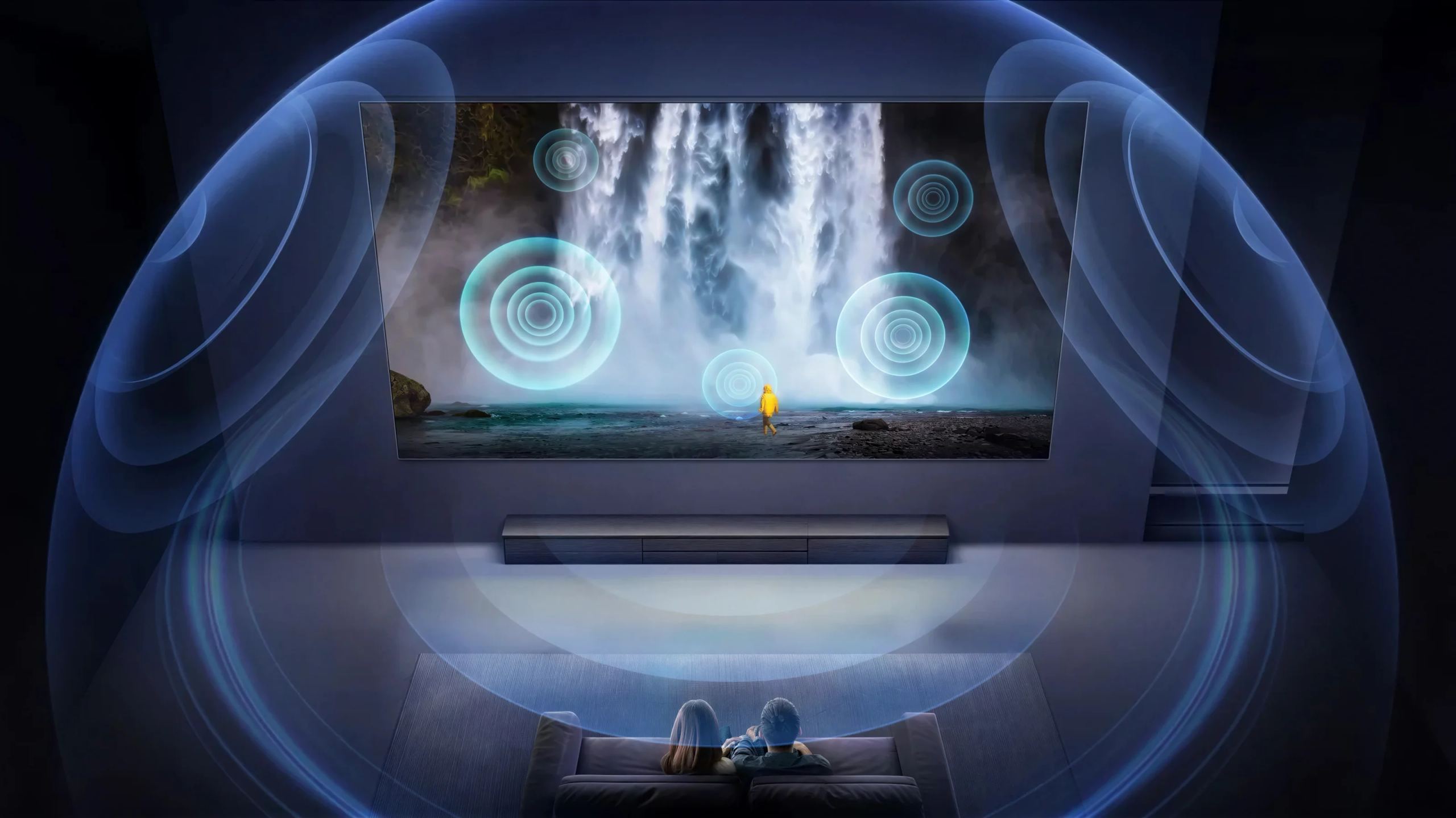
The audio system splits 2 x 10 W across the main channels and 20 W to a subwoofer built into the chassis. Forty watts in total, half of it dedicated to bass: explosions and bass lines gain more body, which remains rare on a TV of this screen size.
Dolby Atmos and DTS Virtual X decoding are included. No speaker is aimed at the ceiling, so height effects come from signal processing rather than real projection. Dialogue remains the usual point to watch on speakers housed in a thin chassis.
A Hisense soundbar extends the system via Hi-Concerto: the TV speakers continue playing alongside the soundbar instead of falling silent. The EzPlay protocol brings the soundbar settings back to the screen. For any other equipment, the eARC output on HDMI 3, the optical S/PDIF output, and the headphone output cover the standard cases.
VIDAA, AirPlay 2, and satellite reception
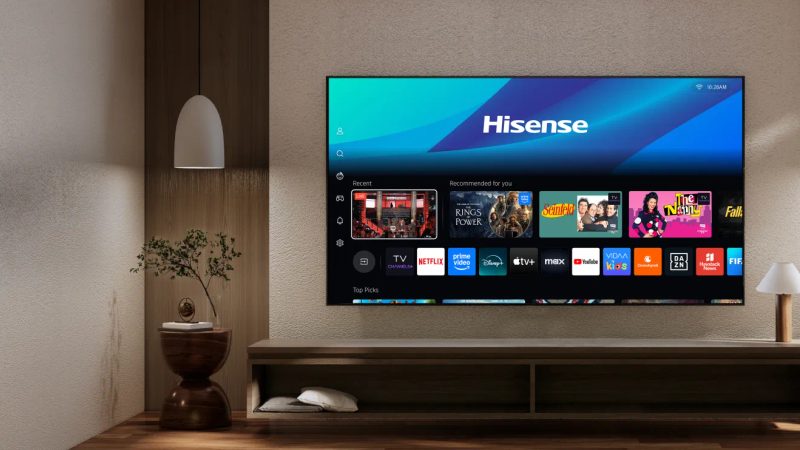
The VIDAA system manages the interface, apps, and hands-free voice control, which can be used without pressing the remote. Check that your streaming and catch-up TV services are available in the VIDAA store before purchase: the catalog remains more limited than that of the most widespread platforms.
Screen sharing, DMP/DMR compatibility, and AirPlay 2 cover sending content from a phone or computer. Wi-Fi stops at the 802.11ac standard on the 2.4 and 5 GHz bands, with no Wi-Fi 6. Sufficient for a 4K stream, less comfortable in a crowded apartment building, where the Ethernet port regains the advantage.
On the reception side, the tuner covers terrestrial, cable, and satellite. Two RF tuners mean two separate antenna inputs, without having to unplug anything to switch from digital terrestrial TV to a satellite dish. The CI+ V2.0 module accepts operator cards, and recording and live control functions depend on the market where it is sold.

Wall mounting or central stand
The TV measures 1111 mm wide by 647 mm high and 78 mm thick, with a 12.9 mm lower bezel. The central stand, measuring 400 x 288 mm, fits on a narrow piece of furniture without requiring a full-width surface. Its height is not adjustable: a somewhat thick soundbar placed in front may overlap the bottom of the image or block the infrared receiver.
The unit’s 13 kg can be handled by two people for wall mounting, using the VESA 300 x 200 standard according to the provided technical sheet. Cable routing is built into the stand. Maximum power consumption reaches 160 W, with 0.5 W in standby, and the energy efficiency classes are E in SDR and G in HDR.
Documentation
FrenchUser manual
FrenchTechnical data sheet
FrenchDurability index
FrenchEnergy label
French
Technical specifications
Display
- Diagonal: 50 inches (126 cm)
- Panel: ULED MiniLED, Quantum Dot
- Resolution: 4K Ultra HD, 3840 x 2160 pixels
- Display ratio: 16:9
- Refresh rate: 144 Hz
- Response time: 6 ms
- Viewing angle: 178°
- Contrast: 4000:1
- Local Dimming
- Wide color gamut
- Light sensor
HDR formats and image processing
- Supported HDR formats: HDR, HDR10, HDR10+, HDR10+ Adaptive, 4K HDR Immersive, Dolby Vision IQ, HLG
- Hi-View AI Engine processor
- Ultra HD upscaling
- AI HDR Upscaler
- MEMC technology, AI Smooth Motion
- 3D digital filter
- MPEG noise reduction and ambient noise reduction
- Filmmaker Mode
Gaming
- PRO Game Mode 144 Hz
- Input lag: ≤ 7 ms in 4K 120 Hz
- HDMI 2.1 with ALLM and VRR
- HDR10+ Gaming and Dolby Vision Gaming
- Game Bar
Sound
- Power: 2 x 10 W + 20 W
- Built-in subwoofer (1)
- Dolby Atmos
- DTS Virtual X decoded
- Equalizer
- Hi-Concerto
- EzPlay
- Hisense TV Sound Companion
Operating system and smart features
- VIDAA Smart OS
- Hands-free voice control
- Screen sharing, DMP / DMR
- AirPlay 2
- Media player: audio, image, video
Wireless connectivity
- Wi-Fi IEEE 802.11 a / b / g / n / ac, 2.4 GHz and 5 GHz
- Bluetooth
Connections
- HDMI 1: HDMI 2.1, ALLM, VRR 60 Hz
- HDMI 2: HDMI 2.1, ALLM, VRR 60 Hz
- HDMI 3: HDMI 2.1, eARC, ALLM, VRR 144 Hz
- HDMI 4: HDMI 2.1, ALLM, VRR 144 Hz
- 1 USB 3.0 port
- 1 USB 2.0 port
- 1 S / PDIF output
- 1 headphone output
- 1 L / R audio input
- 1 composite AV input
- 1 Ethernet RJ45 port
- 2 RF tuners
- Common Interface CI+ V2.0
TV reception
- DVB-T2 / T / C / S2 / S tuner
- PVR and Time Shift function depending on location
- Parental control
Supported formats and codecs
- Video: WEBM, MOV, WMV, FLV, TS, MKV, MP4, AVI
- Audio: WAV, MP3, FLAC, WMA
- Image: JPEG, BMP, PNG, GIF
- Decoders: AV1, VP9, VC1, MPEG2, MPEG4, H.264, HEVC / H.265
Power consumption and supply
- SDR energy efficiency class: E
- HDR energy efficiency class: G
- Maximum power consumption: 160 W
- Standby power consumption: 0.5 W
- Voltage: 100-240 V
Dimensions and weight
- TV without stand: 1111 x 647 x 78 mm
- TV with stand: 1111 x 712 x 288 mm
- Bottom bezel width: 12.9 mm
- Net weight: 13 kg
- Gross weight: 16 kg
- Central stand: 400 x 288 mm, non-adjustable
- VESA compatibility: 300 x 200
- Cable management
Design and materials
- Color: black, black stand
- Materials: metal / plastic frame, plastic back, metal / plastic stand
Frequently Asked Questions
Does the 50U7SE really have two separate antenna inputs?
Yes. The two RF tuners correspond to two physical connectors: one receives the terrestrial or cable signal (DVB-T2/T/C), the other the satellite signal (DVB-S2/S). You can leave a satellite dish and a rooftop antenna connected permanently and switch from one to the other from the sources menu.
Can you record programs to an external hard drive?
The recording and live pause/control functions are offered depending on the country of sale and the software version. When they are active, they require a dedicated USB storage device, which the TV formats in its own way. A mechanical hard drive powered by the USB 3.0 port is better suited than a USB flash drive for continuous recording.
What video files does the media player support?
MKV, MP4, AVI, MOV, TS, WMV, FLV, and WEBM containers are supported, along with AV1, VP9, HEVC/H.265, H.264, VC1, MPEG2, and MPEG4 codecs. On the audio side, the player supports FLAC, WAV, MP3, and WMA, and displays images in JPEG, PNG, BMP, and GIF. The USB 3.0 port is recommended for large 4K files.
Is the television suitable for use as a computer monitor?
The native 144 Hz, VRR on HDMI 3 and 4 ports, and the stated latency below 7 ms put the 50U7SE in the right range for PC gaming. Hisense does not document support for 4:4:4 chroma subsampling, which determines text sharpness on colored backgrounds: something to verify if you plan to use it for office work. At 50 inches and at less than one meter away, reading comfort is debatable anyway.
How do I connect headphones to this television?
Three options are available: the analog headphone output on the rear panel, Bluetooth for wireless headphones, and the optical S/PDIF output to a headphone amplifier. Bluetooth introduces a slight delay between image and sound on some headphone models, which can be corrected in the TV’s audio settings.
Does the 50U7SE accept operators' CI+ modules?
Yes, the Common Interface slot complies with the CI+ V2.0 standard. It accepts access modules and cards for satellite packages and paid DTT offers. The TV’s parental control remains independent of the module’s.
- Eco-contribution of €9.26 included in the sale price.
- Spare parts available for 7 years
- Manufacturer reference: 20015613
- GTIN / EAN: 6942351433486