Hisense 65U7SE 2026

Specifications and features



Hisense 65U7SE, 65-inch MiniLED at 144 Hz
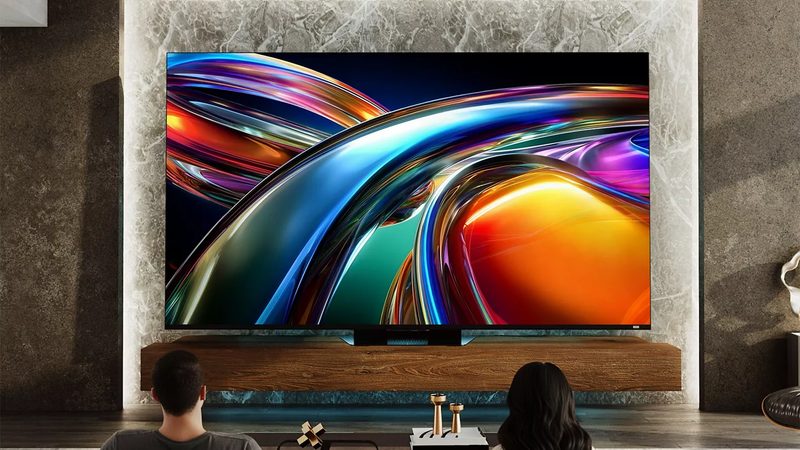
MiniLED backlighting is now moving into the middle of the ranges, where most purchasing decisions are made. Hisense’s U7 series holds that position in 2026, with two versions, of which the SE is the more affordable. Zone-based light control, a fast panel capable of keeping up with recent consoles, and a subwoofer built into the chassis define the specifications of this 65-inch model with the S suffix, which succeeds the Q models.
260-zone backlighting
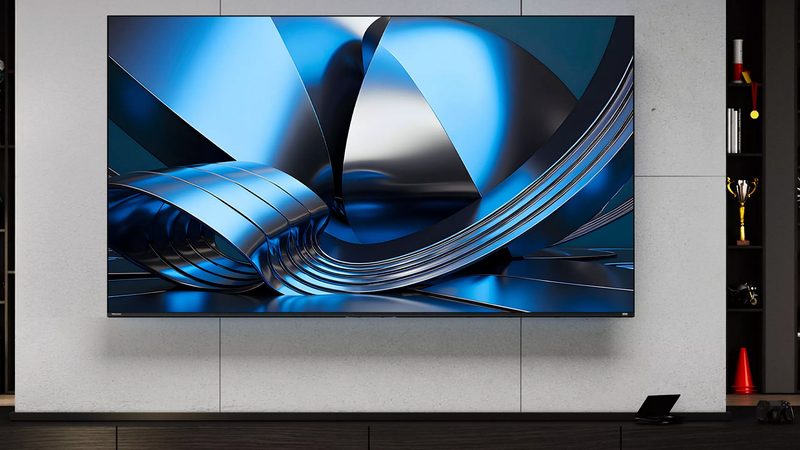
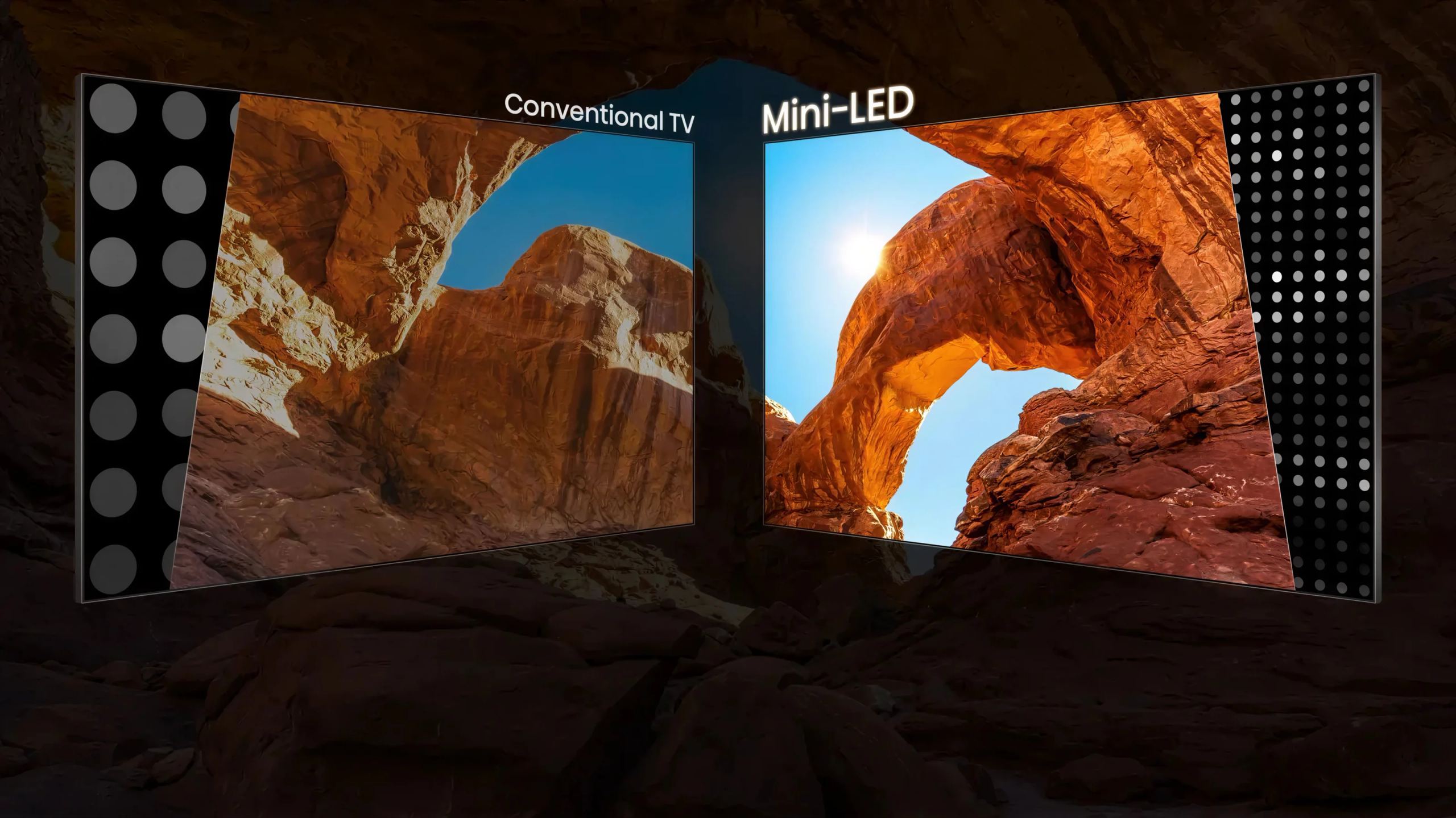
MiniLED replaces the traditional backlight diodes with much smaller chips, numerous enough to be grouped into zones that the television controls separately. The 65U7SE has 260 of them. Each one can turn off completely or rise toward the claimed 1,400-nit peak depending on what the image requires. On white credits scrolling over a black background, or on a car’s headlights in a nighttime street, this local dimming deepens contrast where an edge-lit backlight illuminates the entire panel uniformly.
The compromise is easy to calculate: 260 zones spread across 8.3 million pixels comes to around 32,000 pixels per zone. An isolated white subtitle in the middle of a dark scene therefore remains surrounded by a slight halo, especially visible in a room plunged into darkness. That’s the price of this category, and it costs less as soon as the room is lit.
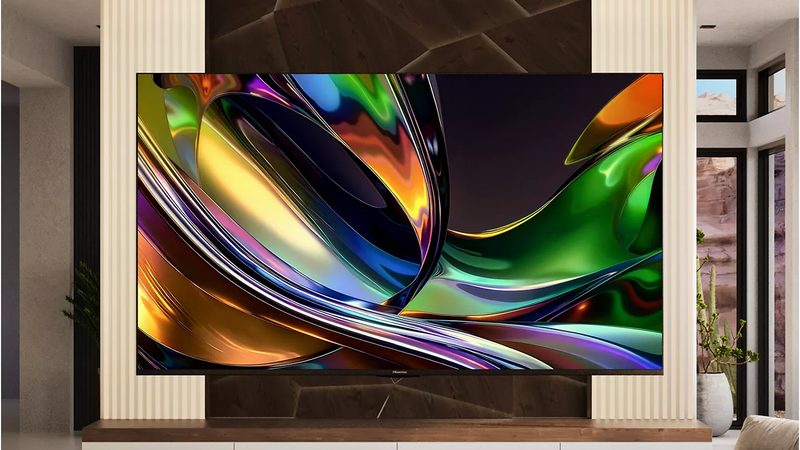
The quantum dot layer covers 90% of the DCI-P3 color space, the one used as a reference for HDR film grading. The panel works in 8 bits combined with FRC, a technique of rapid alternation between two neighboring shades that simulates 10-bit depth. Large gradient areas, such as a sky at dusk, may reveal fine banding on the most demanding content, without affecting everyday viewing.
Dolby Vision and HDR10+ on the same panel
Few televisions support both families of dynamic metadata. This one decodes Dolby Vision as well as HDR10+, with their Dolby Vision IQ and HDR10+ Adaptive variants, which rely on the built-in brightness sensor to adapt the tone curve to the room’s lighting. A dark scene watched in broad daylight keeps its shadow detail without needing to touch the settings. HDR10 and HLG complete the list, the latter being used for live TV broadcasts.
The MT9618 quad-core processor handles the upscaling of sources below Ultra HD, MEMC motion compensation, and picture modes. Filmmaker mode disables added processing and respects the original frame rate of films, while cinema mode allows a little more latitude. Motion compensation, pushed too high, gives feature films that video soap-opera look that many people hate: it can be adjusted finely or even turned off. IMAX Enhanced certification and the Calman Ready designation complete the picture on the fidelity side.
Gaming at native 144 Hz
The panel refreshes at 145 Hz and delivers a 4 ms input lag in game mode, the lowest value in the entire U7SE series. Current consoles get what they need with VRR, which synchronizes the display to the game’s variable frame rate, and ALLM, which switches the television to game mode as soon as a controller takes over. AMD FreeSync Premium Pro certification mainly concerns Radeon graphics cards and living-room PCs, with synchronization maintained in HDR.
An HSR mode pushes the display to 280 Hz through a particular panel driving method. The video input itself, however, remains capped at 144 Hz: the gain concerns motion rendering, not the frame rate accepted by the HDMI ports.

Four HDMI ports, two bandwidth levels
The port layout deserves attention before plugging in anything. Only HDMI 3 and 4 accept 4K at 144 Hz and handle VRR. HDMI 1 and 2 are limited to 4K at 60 Hz with ALLM. However, HDMI 3 is also the one that carries eARC, meaning the audio output to a soundbar or amplifier. So two high-frame-rate consoles and a separate audio system are competing for the same ports: the setup needs to be planned in advance, even if that means routing one console through the amplifier.
The rest of the connectivity covers standard uses, with one USB 3.0 port and one USB 2.0 port for drives and flash sticks, an optical S/PDIF audio output, a headphone jack, two antenna inputs, and an Ethernet port. Wi-Fi remains on the 802.11ac standard on the 2.4 and 5 GHz bands, without moving to Wi-Fi 6: a wired connection retains its value for high-bitrate Ultra HD streams. Bluetooth 5.4 handles headphones and controllers, AirPlay 2 handles streaming from an iPhone or a Mac, and screen sharing from PC, tablet, and mobile sources.
A subwoofer in the chassis
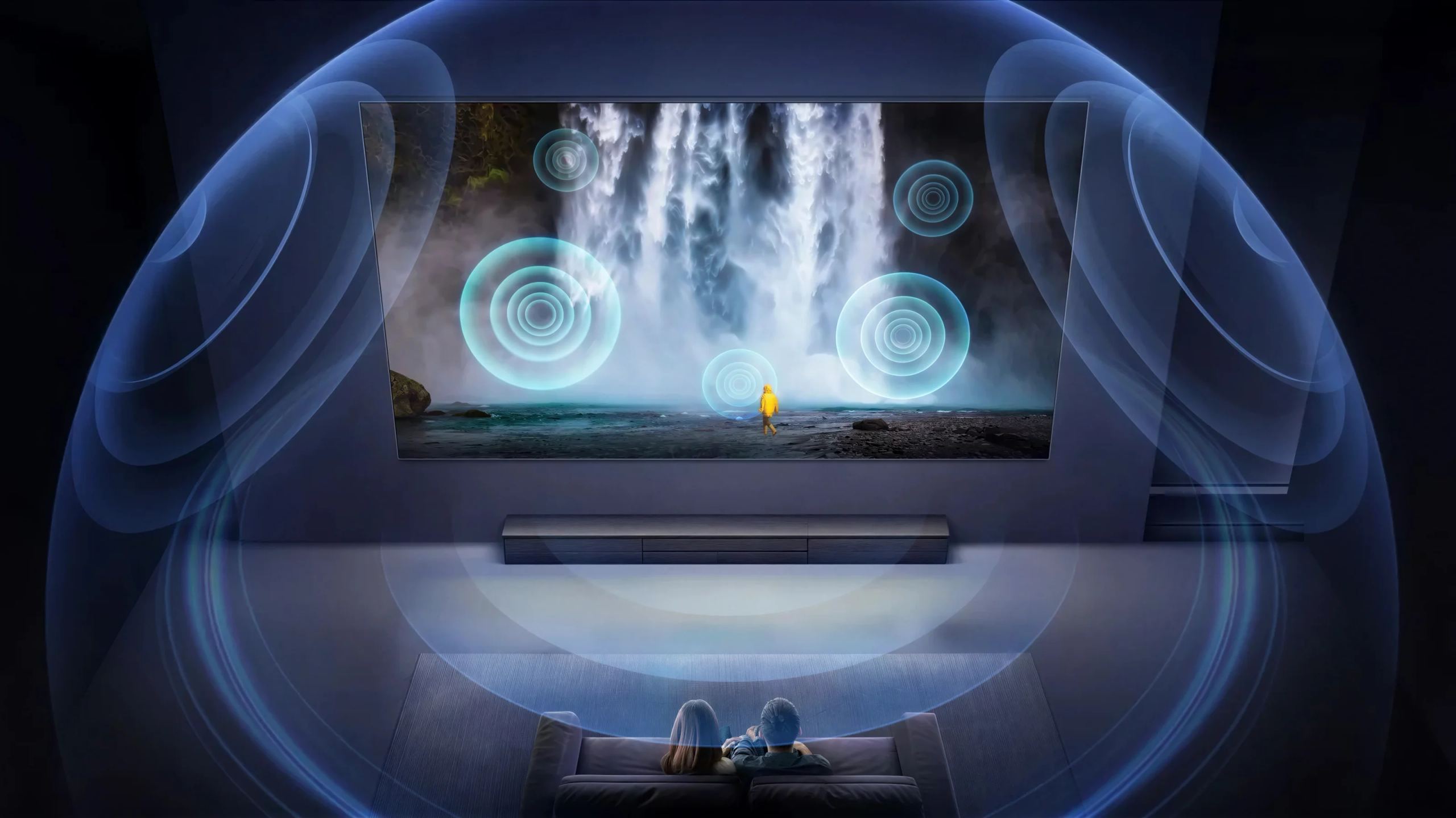
Forty watts are split between two 10 W channels and a 20 W subwoofer built into the back of the screen. The tuning was entrusted to Devialet, and the difference is heard first in the low end: explosions and musical pads gain a foundation that slim televisions almost never have. The Room Fitting Tuning function adjusts the sound reproduction according to the television’s placement, against a wall or inside a closed cabinet.
Dolby Atmos is decoded, with the limitations imposed by a 2.1 configuration: without speakers aimed at the ceiling, the height channels are recreated through processing, and the perceived height remains modest. To go further without cables, WiSA SoundSend compatibility allows sound to be sent to WiSA-certified speakers. The equalizer provides access to advanced settings, which remains rare at this level.
The VIDAA U9 interface in everyday use
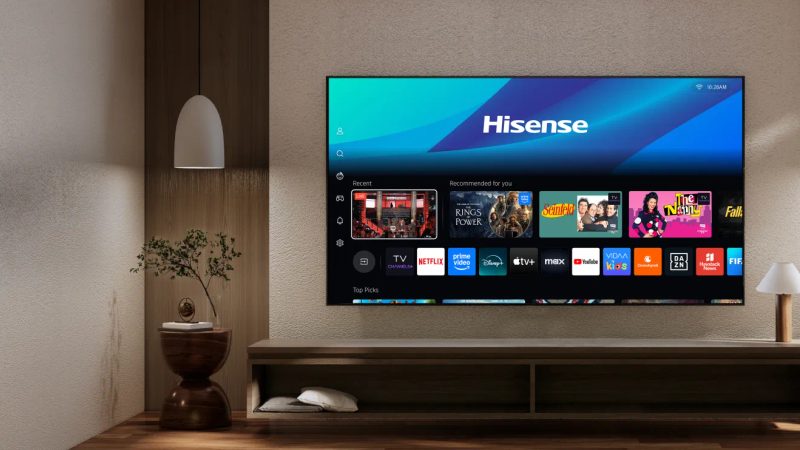
VIDAA U9 brings together the major video-on-demand platforms and offers its own app store, less extensive than Google’s but sufficient for ordinary use. The ERF2W38H voice remote includes direct-access buttons to the main applications, as well as a microphone for Vidaa Voice. Alexa is built into the television, with no extra box, and controls compatible connected devices.
An automatic picture mode analyzes the displayed content and continuously adjusts the settings. Vidaa ART turns the screen into a digital frame when the television is not being watched. The internet browser and media player read most formats, from mkv and webm containers to AV1 and HEVC codecs, from FLAC to Opus files.

Satellite, terrestrial TV, and recording
Two antenna inputs coexist, one for terrestrial DTT, the other for the satellite dish. The tuner supports DVB-T2, cable DVB-C, and DVB-S2, with Fransat certification for households beyond the reach of the terrestrial network. HbbTV 2.0.4 provides access to catch-up services from TV channels via the remote control, and the CI+ slot accepts an operator module for encrypted channels.
PVR recording and the Timeshift function work with a drive connected via USB. Parental controls and a hotel mode, which locks settings and limits volume, complete the software side.
Documentation
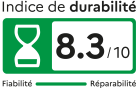
FrenchDurability index
FrenchTechnical data sheet
FrenchUser manual
FrenchEuropean product sheet
French
Technical specifications
Display
- Diagonal: 65 inches (164 cm)
- Panel: MiniLED QLED
- Resolution: Ultra HD 3840 x 2160
- Native refresh rate: 145 Hz, 280 Hz in HSR
- Local Dimming: 260 zones
- Peak brightness: 1400 nits
- Wide color gamut: 90% DCI-P3
- Color depth: 8-bit + FRC
- Light sensor
HDR formats and image processing
- HDR formats: Dolby Vision, Dolby Vision IQ, HDR10, HDR10+, HDR10+ Adaptive, HLG, 4K HDR Immersive
- Certifications: IMAX Enhanced, Calman Ready
- Quad Core MT9618 processor
- 4K upscaling
- MEMC motion compensation
- Picture modes: Cinema, Filmmaker, Sports
Gaming
- 144 Hz Game Mode
- Input lag: 4 ms
- AMD FreeSync Premium Pro
- HDMI 2.1 with ALLM and VRR
Sound
- Power: 2 x 10 W + 20 W
- Built-in subwoofer
- Tuned by Devialet
- Audio technologies: Dolby Atmos, Dolby Audio
- Equalizer with advanced settings
- Room Fitting Tuning
- WiSA SoundSend
- Sound modes: Hi-Concerto, TV Mode, EzPlay
Operating system and artificial intelligence
- System: VIDAA U9
- Built-in voice assistants: Alexa, Vidaa Voice
- Voice control via remote control
- AI automatic picture mode
- Vidaa ART
- VIDAA App Store, apps with direct access on the remote control
- Web browser, media player
Wireless connectivity
- Wi-Fi IEEE 802.11 a / b / g / n / ac, 2.4 GHz and 5 GHz
- Bluetooth 5.4
- Content sharing and screen sharing from PC, tablet and mobile
- AirPlay 2
Connections
- HDMI 1: HDMI 2.1, ALLM, 4K 60 Hz
- HDMI 2: HDMI 2.1, ALLM, 4K 60 Hz
- HDMI 3: HDMI 2.1, eARC, ALLM, VRR, 4K 144 Hz
- HDMI 4: HDMI 2.1, ALLM, VRR, 4K 144 Hz
- 1 USB 3.0 port
- 1 USB 2.0 port
- 1 S / PDIF audio output
- 1 headphone jack
- 2 antenna inputs
- Ethernet RJ45
- Common Interface CI+
TV reception
- DVB-T2 / T / C / S2 / S tuner
- Fransat certification
- HbbTV 2.0.4
- PVR and Timeshift
- Parental control
- Hotel mode
Supported formats and codecs
- Video formats: mp4, mov, mkv, ts, avi, wmv, webm
- Video codecs: MPEG1 / 2, MPEG4, AVC (H.264), HEVC (H.265), WMV3, VC1, VP8, VP9, AV1
- Audio formats: wav, mp3, wma, flac
- Audio codecs: LPCM, MPEG1 / 2 Layer1, MPEG1 / 2 Layer2, MPEG1 / 2 / 2.5 Layer3, WMA, AAC, MPEG-H, FLAC, Vorbis, Opus
- Photo formats: jpg, jpeg, png, bmp, gif, webp, tiff
Energy
- Power supply: AC 100-240 V, 50 / 60 Hz
- SDR energy class: E
- HDR energy class: G
- SDR consumption: 84 kWh / 1000 h
- HDR consumption: 160 kWh / 1000 h
- Standby consumption: 0.5 W
- Programmable shutdown and automatic standby
Dimensions and weight
- TV without stand: 1445 x 837 x 59 mm
- TV with stand: 1445 x 895 x 325 mm
- Cardboard packaging: 1649 x 151 x 996 mm
- Weight without stand: 18.6 kg
- Weight with stand: 19.4 kg
- Weight with carton: 25.9 kg
- VESA compatibility: 400 x 300 mm
Included accessories
- ERF2W38H voice remote control
- Power cable
Frequently Asked Questions
How far should you sit from a 65-inch screen?
Between 1.80 m and 2.50 m, Ultra HD definition remains invisible to the eye on a 65-inch screen: the pixels are no longer distinguishable and the field of view fills naturally without any need for scanning. Below 1.80 m, compression artifacts from television channels become more noticeable. Beyond 2.50 m, the benefit of 4K over Full HD gradually fades.
Does VRR work on all four HDMI ports?
No. On the 65-inch model, VRR is limited to HDMI 3 and 4. The other two ports support ALLM and are capped at 60 Hz in Ultra HD. A latest-generation console and a gaming PC will therefore occupy the two fast ports, which means routing the audio output through the optical connection or connecting the sources to an amplifier linked via eARC.
What do you need to record a broadcast?
An external hard drive or a USB flash drive, formatted by the television before first use, which erases its contents. The USB 3.0 port is preferable for recording an Ultra HD stream. Encrypted channels received via a CI+ module are generally not recordable, a restriction imposed by the operators and not by the television.
What does the Calman Ready label mean?
The television supports automatic calibration driven by Calman software, paired with a measurement probe. The software sends test patterns, reads the values recorded by the probe, and directly corrects the television’s internal lookup tables, without going through the menus. The procedure is of interest to installers and users who already have a probe; others will rely on Filmmaker mode, factory-set to remain close to production standards.
Can the television be used as a monitor for a computer?
Yes, via HDMI ports 3 or 4 to take advantage of 144 Hz and FreeSync Premium Pro. On a screen of this size, text reading comfort depends mainly on distance: at 2 m, displaying a desktop interface becomes uncomfortable for prolonged work. On the other hand, game mode and its 4 ms response time remain suitable for PC gaming from a couch.
What is hotel mode used for?
It locks certain settings, sets a maximum volume and a startup channel, and limits access to the menus. Its presence on a consumer model is also useful for seasonal rentals and waiting rooms, where the television must remain in a stable configuration from one user to another.
- Eco-contribution of €12.65 included in the sale price.
- Spare parts available for 7 years
- Manufacturer reference: 20018725
- GTIN / EAN: 6942351433851