Hisense 55U7S PRO 2026
Specifications and features



Overview
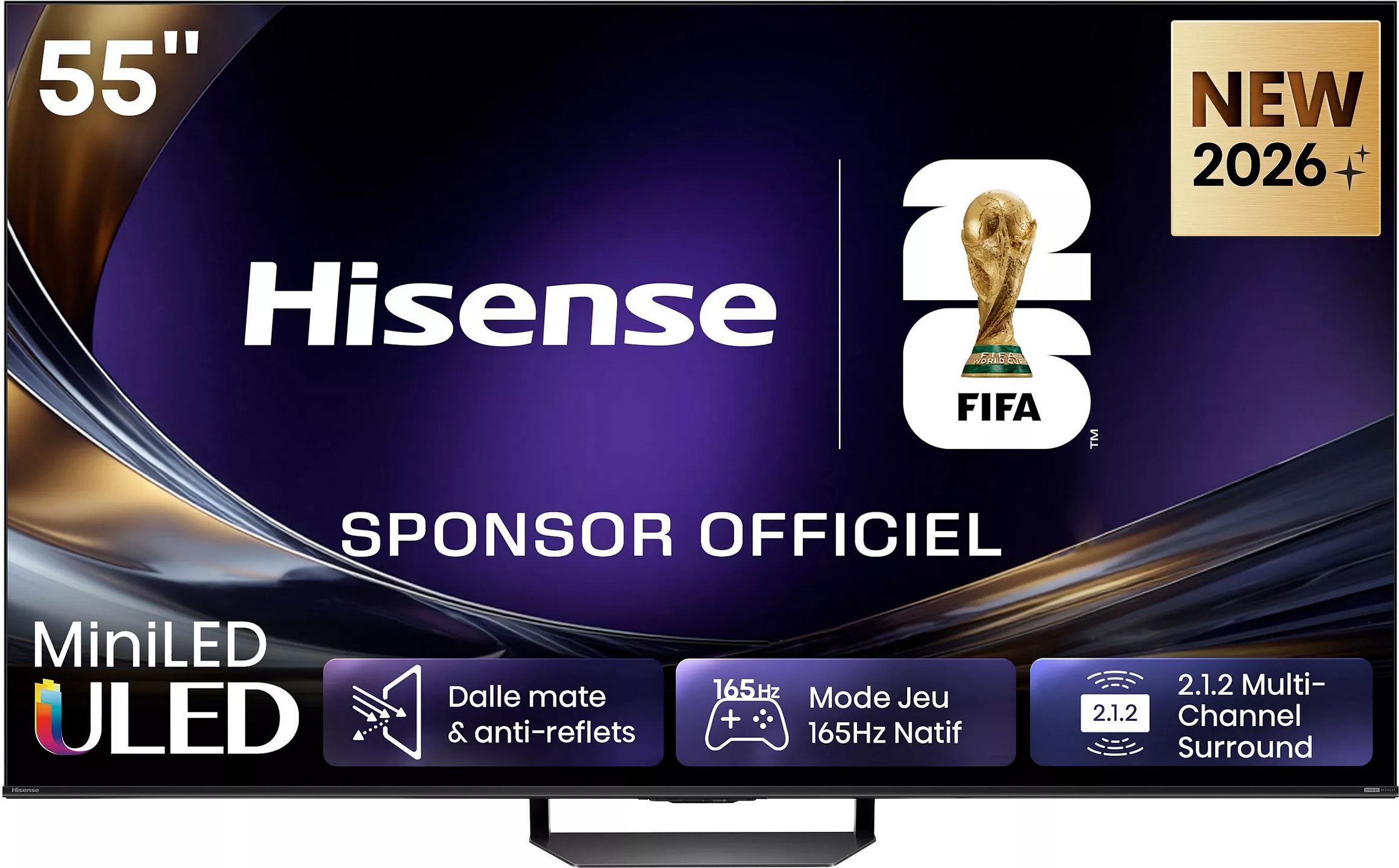
The 55-inch format remains the entry point for the living room, where space is limited and the screen has to hold its own against both the bay window and Sunday night football. Here, Hisense installs a 512-zone MiniLED backlight and a native 165 Hz matte panel, on a 2026 generation succeeding the U7Q Pro. Sports and video games clearly guide the technical trade-offs of this series.
MiniLED put to the test at 55 inches
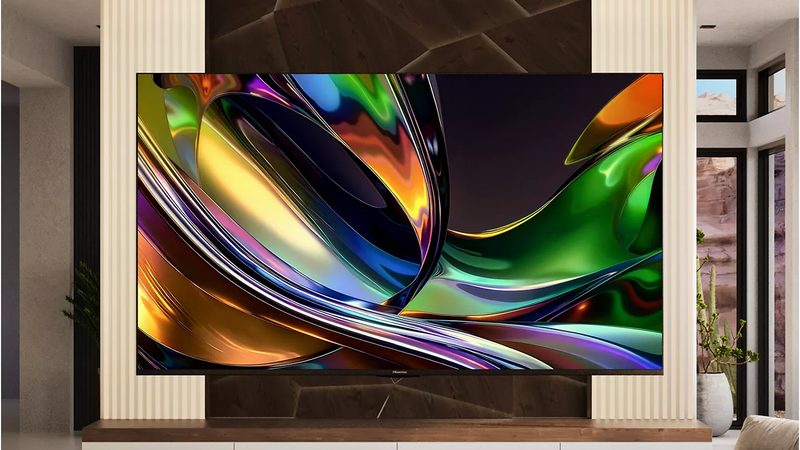
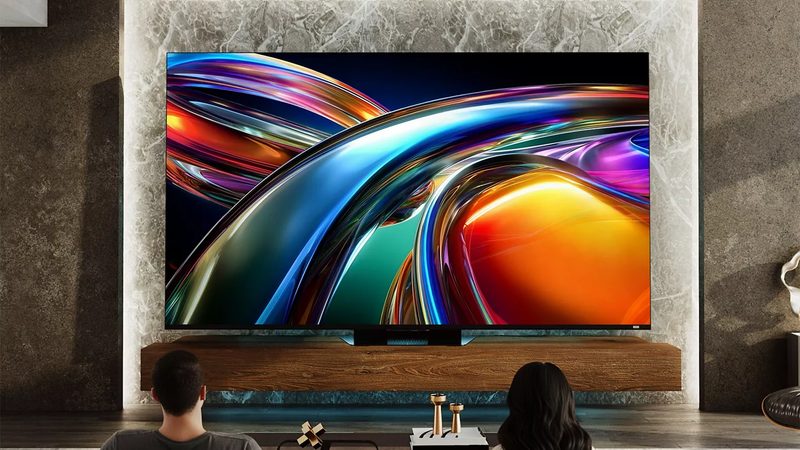
512 local dimming zones spread across a 139 cm diagonal: the density is decent for the size, and sufficient to deepen blacks without dimming highlights. The announced peak brightness reaches 2000 nits, a value that gives HDR scenes depth, whether it’s sunlight reflecting off bodywork or the embers of a nighttime fire. On a starry background or white subtitles set against black, a slight halo remains around bright sources. That is the structural limitation of zone-based backlighting, regardless of the number of zones.
The quantum dot layer covers 90% of the DCI-P3 space. That figure is respectable for this positioning, without rivaling the panels with the broadest color gamut coverage. The panel operates in 8 bits supplemented by FRC, a rapid alternation technique that simulates the missing shades of 10-bit color. In practice, the gradients of a sunset sky come through without visible banding.

A matte panel against reflections
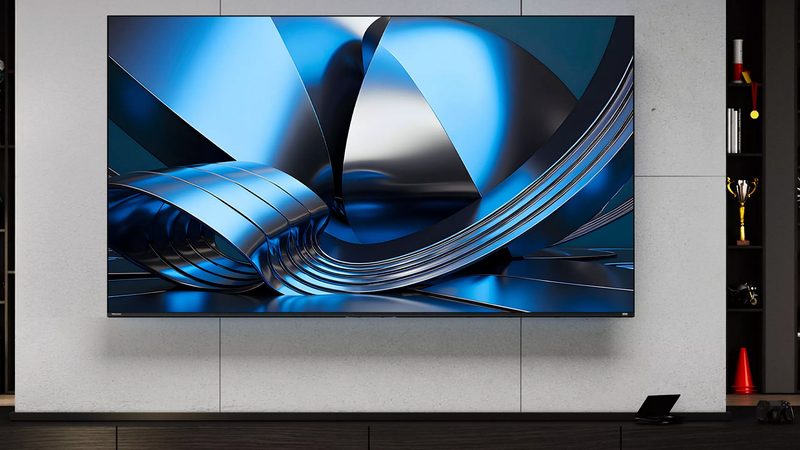
The anti-reflective treatment is probably the most defining decision of this series. A matte surface diffuses stray light instead of reflecting it like a mirror: the window behind the sofa no longer appears superimposed on the image, and a match broadcast in broad daylight remains readable. There is a trade-off. In a dark room, this type of treatment raises black levels very slightly and can soften the apparent sharpness of micro-details, where a glossy panel gains in purity. The choice depends more on the living room than on the television.
An ambient light sensor completes the setup by controlling Dolby Vision IQ and HDR10+ Adaptive modes, which adjust the tone curve according to the room’s actual lighting. The 55U7S PRO supports the four major HDR formats (Dolby Vision, HDR10+, HDR10, HLG) and carries IMAX Enhanced and Calman Ready certifications, the latter opening the door to software calibration by an installer.
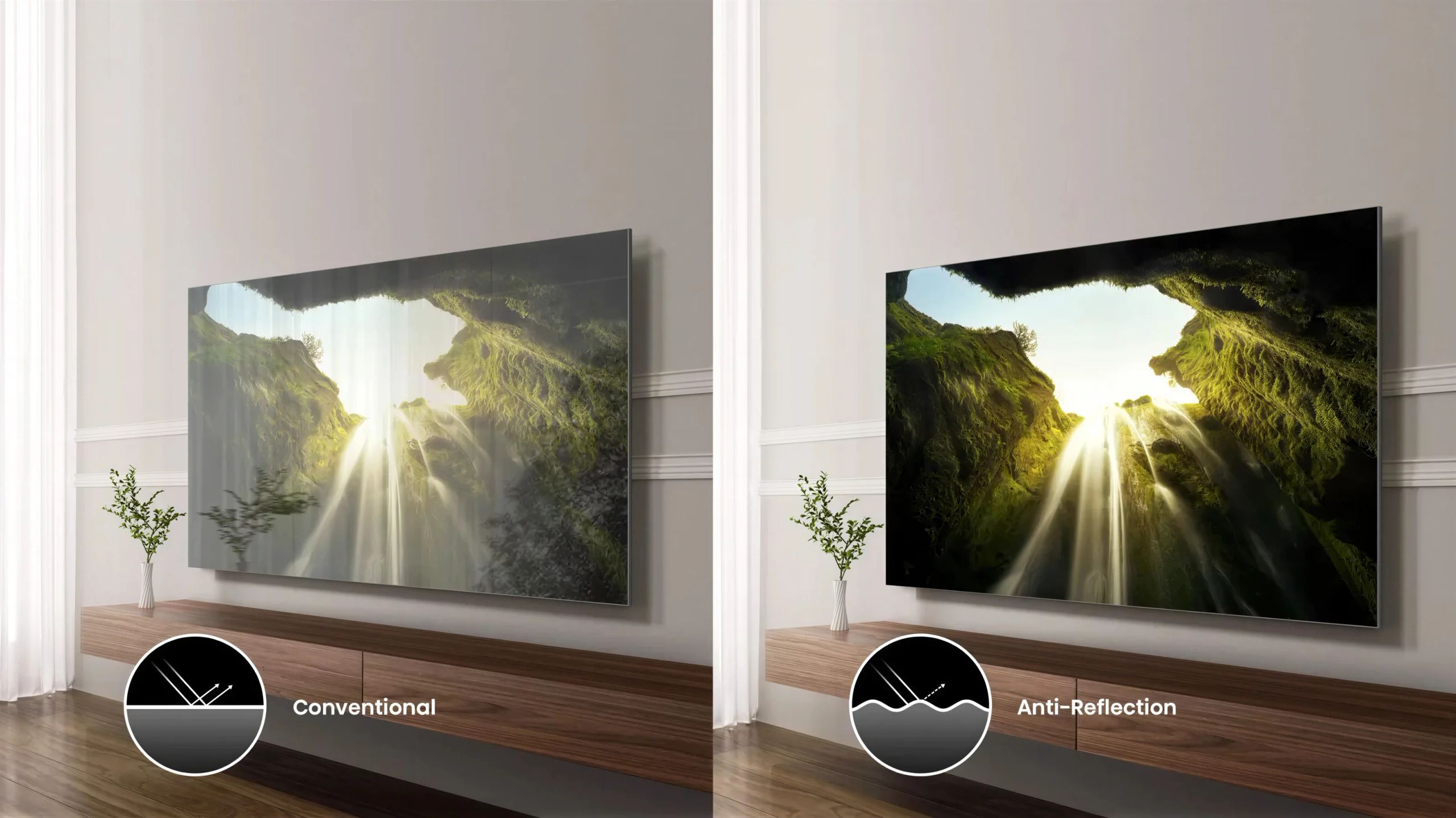
Image processing and its modes
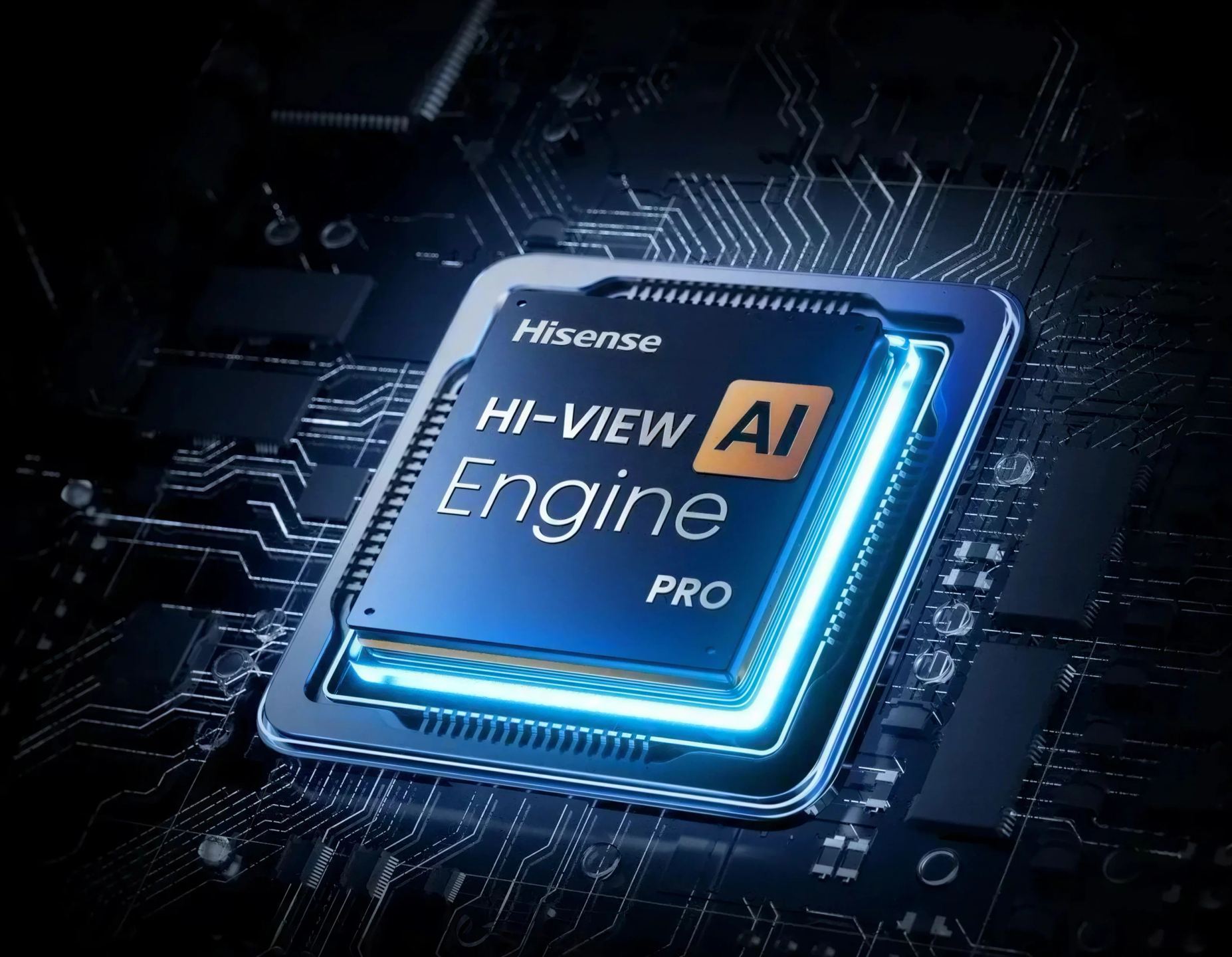
A MediaTek MT9655 quad-core processor handles the upscaling of sub-Ultra HD sources, noise reduction, and MEMC motion compensation. The latter smooths pans and fast camera movements, at the cost of a soap opera effect that some people hate in films. Filmmaker mode exists for that reason: it disables added processing and respects the original frame rate. Sport mode, by contrast, boosts smoothness and saturation, which makes sense when the subject is a ball traveling at 90 km/h.
An automatic AI picture mode analyzes the displayed content and continuously adjusts the settings. It can be disabled in the menus for those who prefer to lock in their parameters once and for all.
Native 165 Hz and 5 ms latency
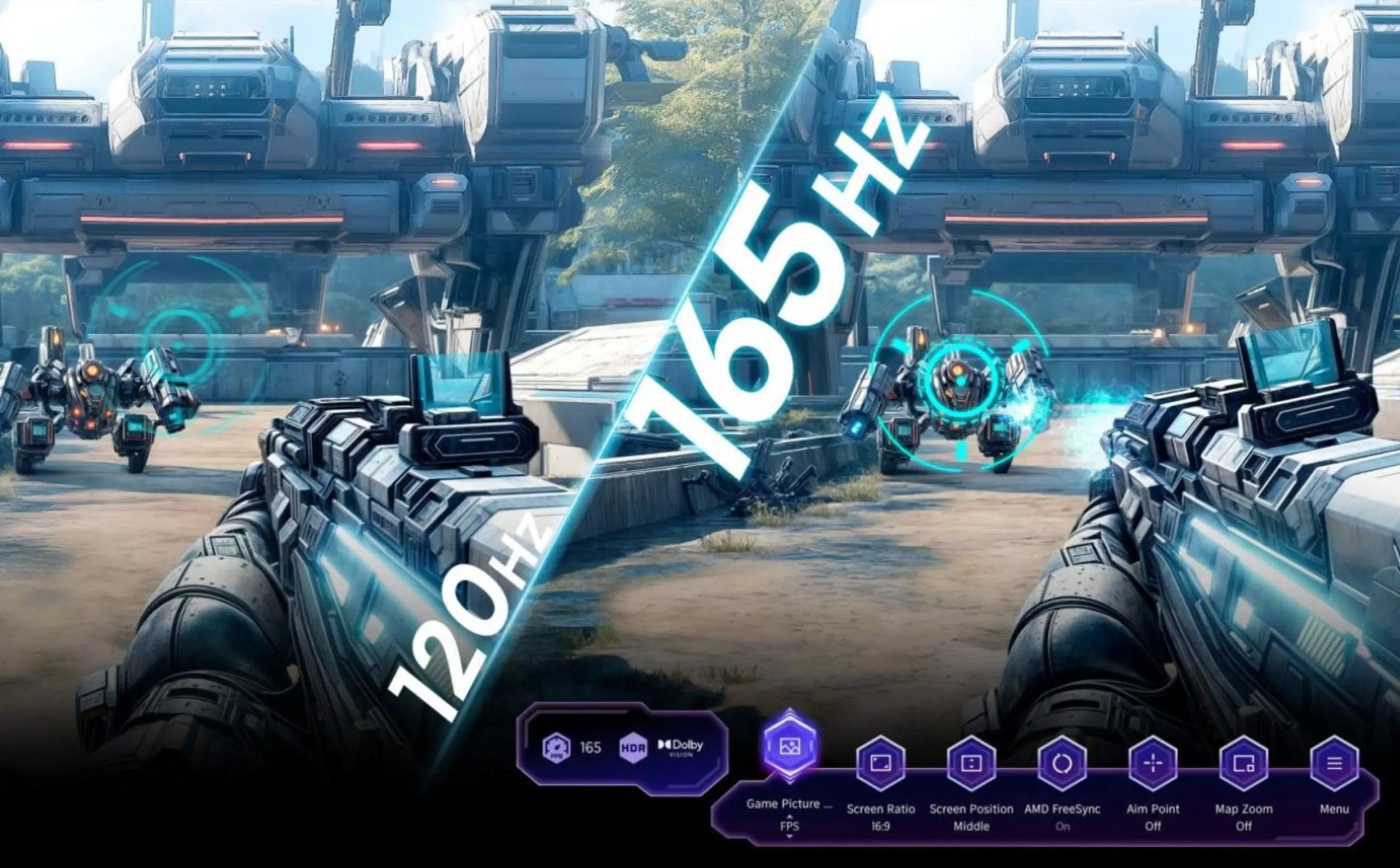
The panel refreshes natively at 165 Hz, and rises to 330 Hz via HSR technology at reduced resolution. The four HDMI 2.1 inputs support VRR up to 4K 180 Hz as well as ALLM, which automatically switches to Game mode when a console is detected. Latency then drops to 5 ms, a delay that goes unnoticed even in a competitive shooter. AMD FreeSync Premium Pro compatibility protects Radeon graphics cards and latest-generation consoles from screen tearing.
One detail that matters in use: eARC is wired to the third HDMI input. A soundbar therefore occupies that port, leaving three full HDMI 2.1 inputs for a console, an Ultra HD Blu-ray player, and a computer.
A 2.1.2 system tuned by Devialet
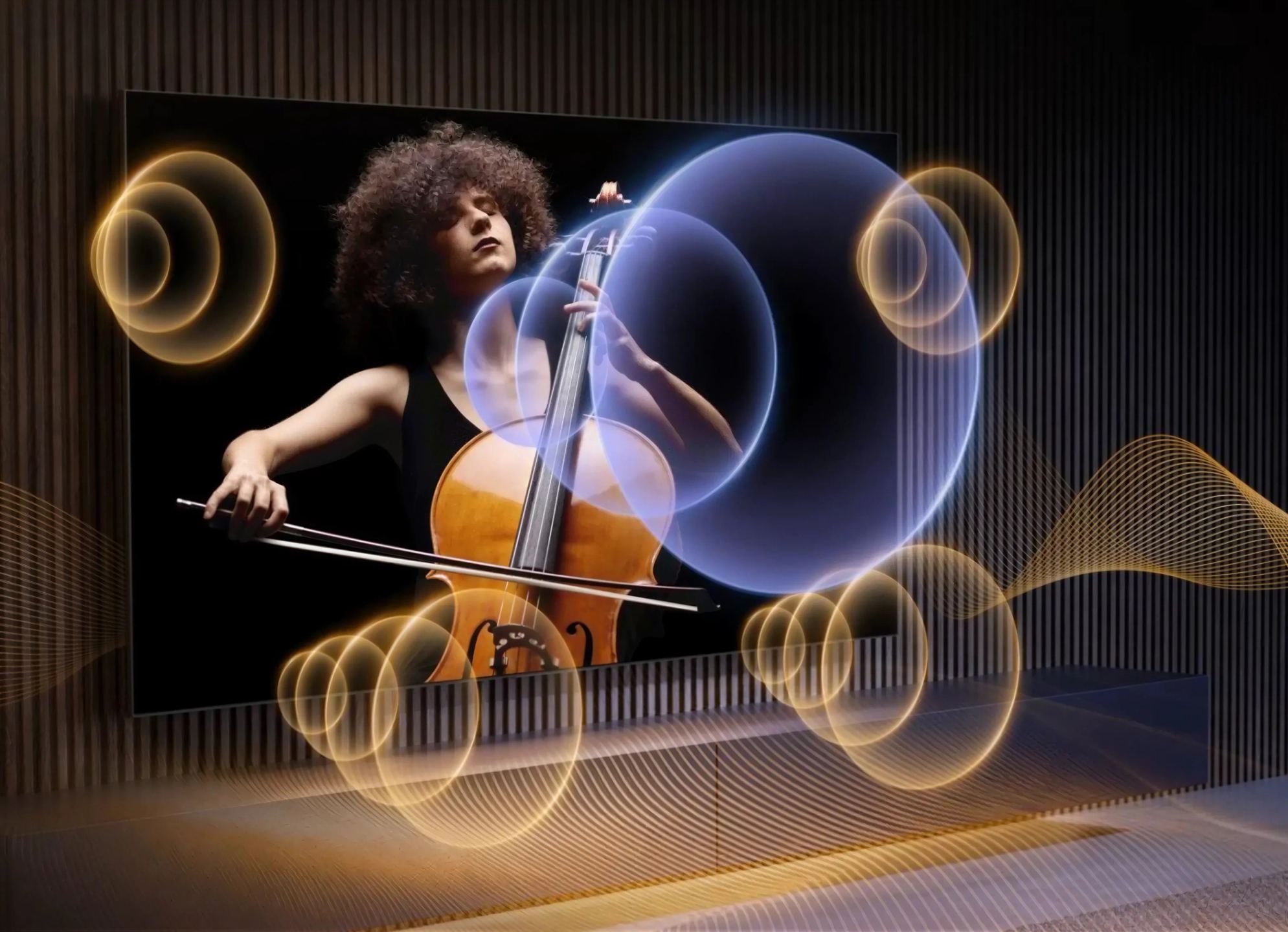
Fifty watts distributed in a 2.1.2 configuration: two main 10 W channels, a built-in 20 W subwoofer, and two 5 W upward-firing drivers responsible for Dolby Atmos height effects. The acoustic tuning is by Devialet, a collaboration that Hisense continues from one generation to the next. The Room Fitting Tuning function adapts playback to the room’s dimensions, and the equalizer provides access to advanced parameters.
You have to measure what physics allows. Two 5 W drivers in a 52 mm chassis produce a suggestion of verticality, not a sound bubble comparable to that of a system with rear speakers. Dialogues gain more body, the soundstage expands beyond the edges of the screen, and the built-in subwoofer avoids the usual thinness of flat TVs. To go further, Hi-Concerto synchronizes the TV’s speakers with a compatible Hisense soundbar, and WiSA SoundSend support opens the door to wireless speakers.
VIDAA U9.5 and everyday living room use
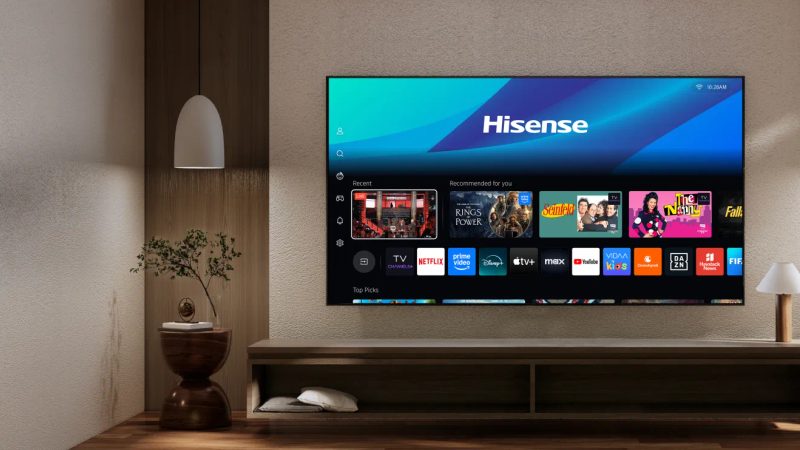
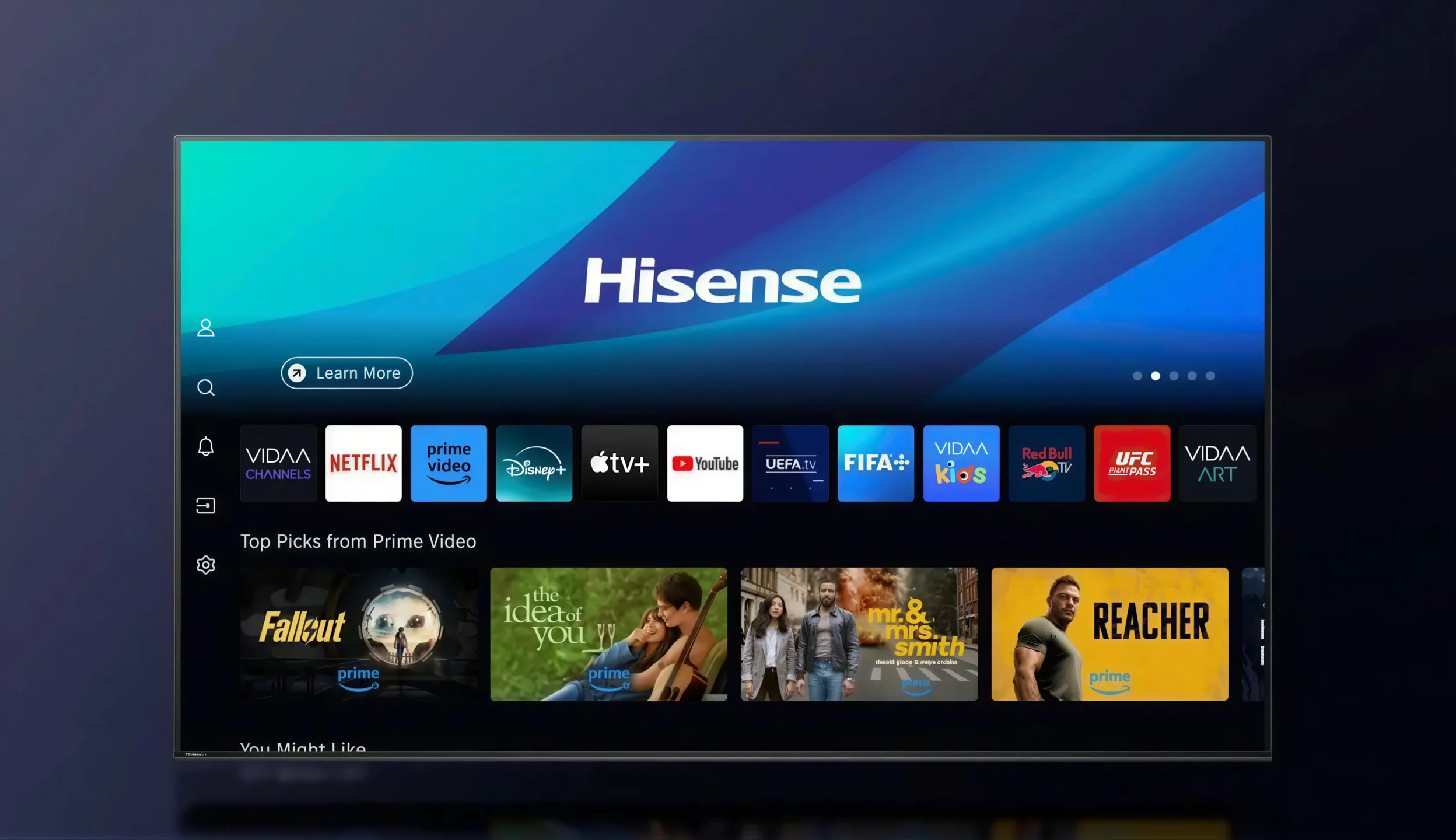
Hisense’s in-house system arrives in version U9.5, with the VIDAA App Store, an internet browser, a media player, and direct-access app buttons on the ERF6P66H voice remote. Two assistants coexist, Alexa and Vidaa Voice. AirPlay 2 accepts streams from an iPhone or a Mac, and screen sharing works from a PC, tablet, or mobile phone. Vidaa ART turns the screen into a digital frame when nobody is watching.
On the network side, Wi-Fi covers the 2.4 and 5 GHz bands in 802.11ac, without moving up to Wi-Fi 6. An RJ45 Ethernet port remains the best choice for a high-bitrate Ultra HD stream. Bluetooth 5.4 handles headphones or a controller.
Four HDMI 2.1 ports and two USB ports
Connectivity is organized around the four HDMI 2.1 inputs already mentioned, supplemented by one USB 3.0 port and one USB 2.0 port, an S/PDIF digital audio output, two antenna inputs, and a Common Interface CI+ slot. The tuner supports DVB-T2 terrestrial, cable, and DVB-S2 satellite, with Fransat certification for free-to-air satellite reception. HbbTV 2.0.4, parental controls, PVR recording, and Timeshift on a USB drive round out the traditional TV side.
Two absences to know before buying: no headphone jack and no analog audio input. Headphones go through Bluetooth, and an old DVD player with composite output will find no connector.
A slim chassis and two stand heights
Fourteen kilos and 52 mm thick without the feet: VESA 400 × 400 wall mounting requires no special reinforcement. On furniture, the stand offers two positions, a high one that brings the whole set to 774 mm and a low one to 744 mm. The extra 30 mm of clearance lets a soundbar slide underneath without encroaching on the bottom of the picture. Depth with feet reaches 263 mm, to be checked against the width of the furniture.
The energy ratings are E in SDR and G in HDR, with 64 kWh per 1000 hours in standard use and 150 kWh in HDR. Standby consumes 0.5 W, and programmable shutdown as well as automatic standby help limit being forgotten on in the evening.
Documentation
FrenchUser manual
FrenchTechnical data sheet
FrenchEuropean product sheet
FrenchDurability index
French
Technical specifications
Display
- Diagonal: 55 inches (139 cm)
- Panel: MiniLED QLED, matte anti-glare coating
- Resolution: Ultra HD 3840 x 2160
- Native refresh rate: 165 Hz, 330 Hz in HSR
- Local Dimming: 512 zones
- Peak brightness: 2000 nits
- Wide color gamut: 90% DCI-P3
- Color depth: 8 bits + FRC
- Brightness sensor
HDR formats and image processing
- HDR formats: Dolby Vision, Dolby Vision IQ, HDR10, HDR10+, HDR10+ Adaptive, HLG, 4K HDR Immersive
- Certifications: IMAX Enhanced, Calman Ready
- Quad Core MT9655 processor
- 4K upscaling
- MEMC motion compensation
- Picture modes: cinema, Filmmaker, sport
Gaming
- 165 Hz Game Mode
- Input lag: 5 ms
- AMD FreeSync Premium Pro
- HDMI 2.1 with ALLM and VRR up to 4K 180 Hz
Sound
- Power: 2 x 10 W + 20 W + 2 x 5 W
- 2.1.2 configuration with built-in subwoofer
- Surround effect
- Tuned by Devialet
- Audio technologies: Dolby Atmos, Dolby Audio
- Equalizer with advanced settings
- Room Fitting Tuning
- WiSA SoundSend
- Sound modes: Hi-Concerto, TV Mode, EzPlay
System and interface
- Operating system: VIDAA U9.5
- Built-in voice assistants: Alexa and Vidaa Voice
- Voice control via remote control
- Automatic AI picture mode
- Vidaa ART
- VIDAA App Store, apps with direct access on the remote control
- Internet browser, media player
Wireless connectivity
- Wi-Fi IEEE 802.11 a / b / g / n / ac, 2.4 GHz and 5 GHz
- Bluetooth 5.4
- Content sharing and screen sharing from PC, tablet, and mobile
- AirPlay 2
Connections
- HDMI 1: HDMI 2.1, ALLM, VRR 4K 180 Hz
- HDMI 2: HDMI 2.1, ALLM, VRR 4K 180 Hz
- HDMI 3: HDMI 2.1, eARC, ALLM, VRR 4K 180 Hz
- HDMI 4: HDMI 2.1, ALLM, VRR 4K 180 Hz
- 1 USB 3.0 port
- 1 USB 2.0 port
- 1 S / PDIF audio output
- 2 antenna inputs
- Ethernet RJ45
- Common Interface CI+
TV reception
- DVB-T2 / T / C / S2 / S tuner
- Fransat certification
- HbbTV 2.0.4
- PVR and Timeshift
- Parental control
- Hotel mode
Supported formats
- Video: mp4, mov, mkv, ts, avi, wmv, webm
- Video codecs: MPEG1 / 2, MPEG4, AVC (H.264), HEVC (H.265), WMV3, VC1, VP8, VP9, AV1
- Audio: wav, mp3, wma, flac
- Audio codecs: LPCM, MPEG1 / 2 Layer1, MPEG1 / 2 Layer2, MPEG1 / 2 / 2.5 Layer3, WMA, AAC, MPEG-H, FLAC, Vorbis, Opus
- Photo: jpg, jpeg, png, bmp, gif, webp, tiff
Power
- Power supply: AC 100-240 V, 50 / 60 Hz
- SDR energy class: E
- HDR energy class: G
- SDR consumption: 64 kWh / 1000 h
- HDR consumption: 150 kWh / 1000 h
- Standby consumption: 0.5 W
- Programmable shutdown and automatic standby
Dimensions and weight
- TV without stand: 1226 x 714 x 52 mm
- TV with stand:
- High position: 1226 x 774 x 263 mm
- Low position: 1226 x 744 x 263 mm
- Box: 1360 x 151 x 846 mm
- Weight without stand: 14.1 kg
- Weight with stand: 17.3 kg
- Weight with box: 22 kg
- VESA compatibility: 400 x 400 mm
Included accessories
- ERF6P66H voice remote control
- Power cable
Frequently Asked Questions
Is the 55U7S PRO still readable in a very brightly lit room?
That’s one of its strong points. The combination of the matte finish, the 2000-nit peak, and the ambient light sensor makes it possible to watch a game in broad daylight without drawing the curtains. In a south-facing room with a large picture window, the screen remains readable where a glossy panel would reflect the image of the window.
Which HDMI input should I use for a soundbar?
The third one, the only one equipped with eARC. This protocol sends the TV’s sound back to the soundbar while preserving Dolby Atmos streams and high-bitrate audio formats. The TV’s built-in streaming apps also go through this channel, which avoids the need for an additional optical cable.
Can programs be recorded?
Yes, the PVR and Timeshift functions use a hard drive or a USB flash drive connected to one of the USB ports. The storage device must be formatted by the television upon first use, an operation that erases its contents. Timeshift pauses the live broadcast and lets you resume where you left off.
What is needed to receive satellite television?
The integrated DVB-S2 tuner and Fransat certification are sufficient with a satellite dish pointed at Eutelsat 5 West A. A Fransat access card is inserted into the dedicated reader. For paid packages, the Common Interface CI+ slot accepts a module supplied by the operator.
Does the television support a PC at 165 Hz?
The HDMI 2.1 inputs accept high refresh rate signals, and FreeSync Premium Pro synchronizes the display with a Radeon graphics card. The HDMI cable must be certified Ultra High Speed to support the required bandwidth. HSR mode at 330 Hz operates at a reduced resolution, reserved for competitive gaming where smoothness takes priority over fine detail.
What file formats does the media player recognize?
Playback from a USB drive supports common video containers (mp4, mkv, avi, webm) with AVC, HEVC, VP9, and AV1 codecs. On the audio side, FLAC and standard compressed formats are supported, along with images in jpeg, png, webp, and tiff. A video encoded in AV1 plays without prior transcoding.
- Eco-contribution of €12.65 included in the sale price.
- Spare parts available for 7 years
- GTIN / EAN: 6942351437149