T+A Criterion S 230 lacquered black (pack of 2)


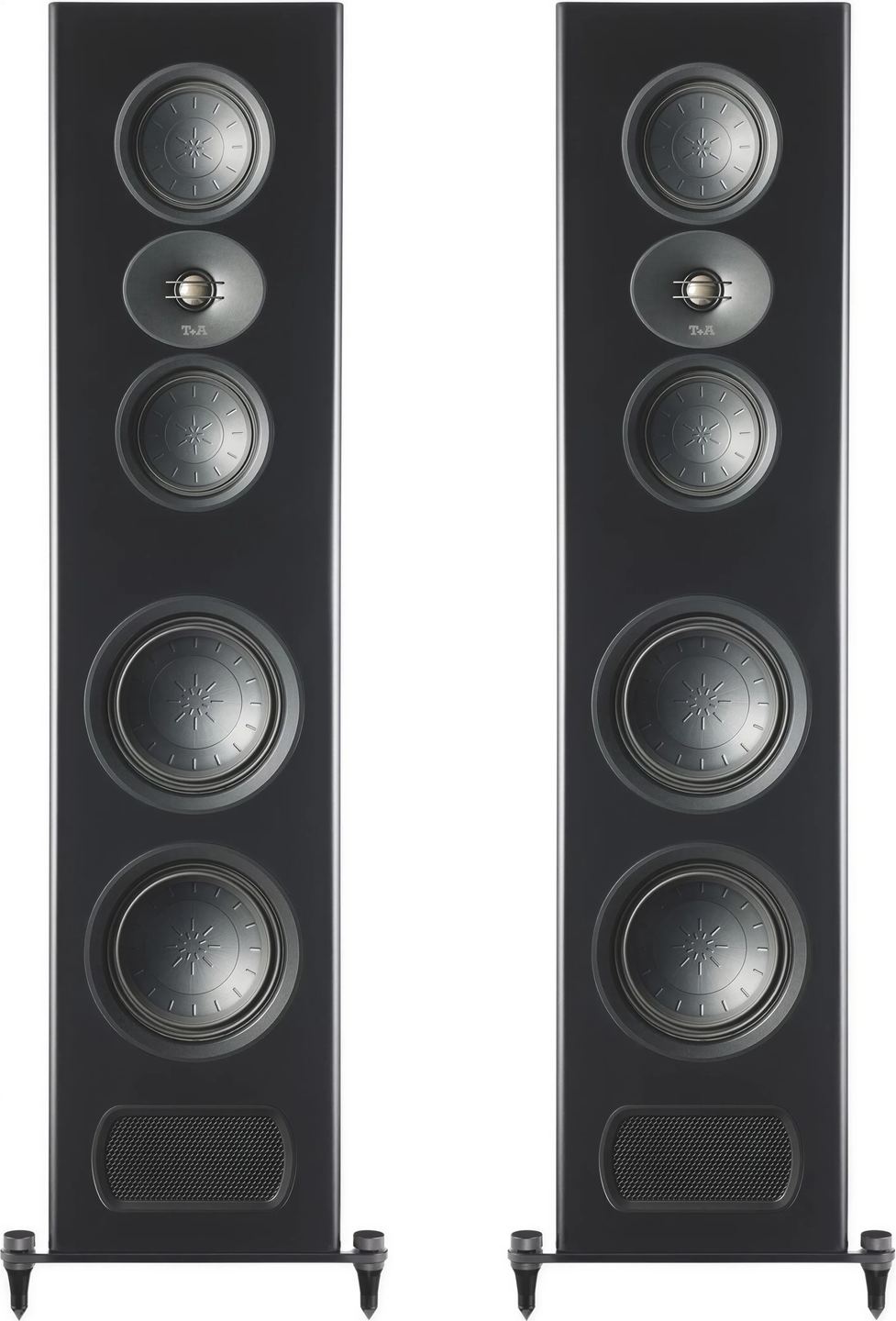
T+A Criterion S 230: the transmission-line floorstanding speaker
A folded transmission line inside a floorstanding speaker measuring one metre five, two midrange drivers positioned on either side of a magnesium tweeter: the Criterion S series takes a principle that T+A has been manufacturing since 1982 and pairs it with the midrange/tweeter system from the Solitaire speakers, the reference range of the Herford-based company. The S 230 is the more compact of the series’ two floorstanding speakers, and its curved cabinet conceals its 37.5 kg weight rather well.
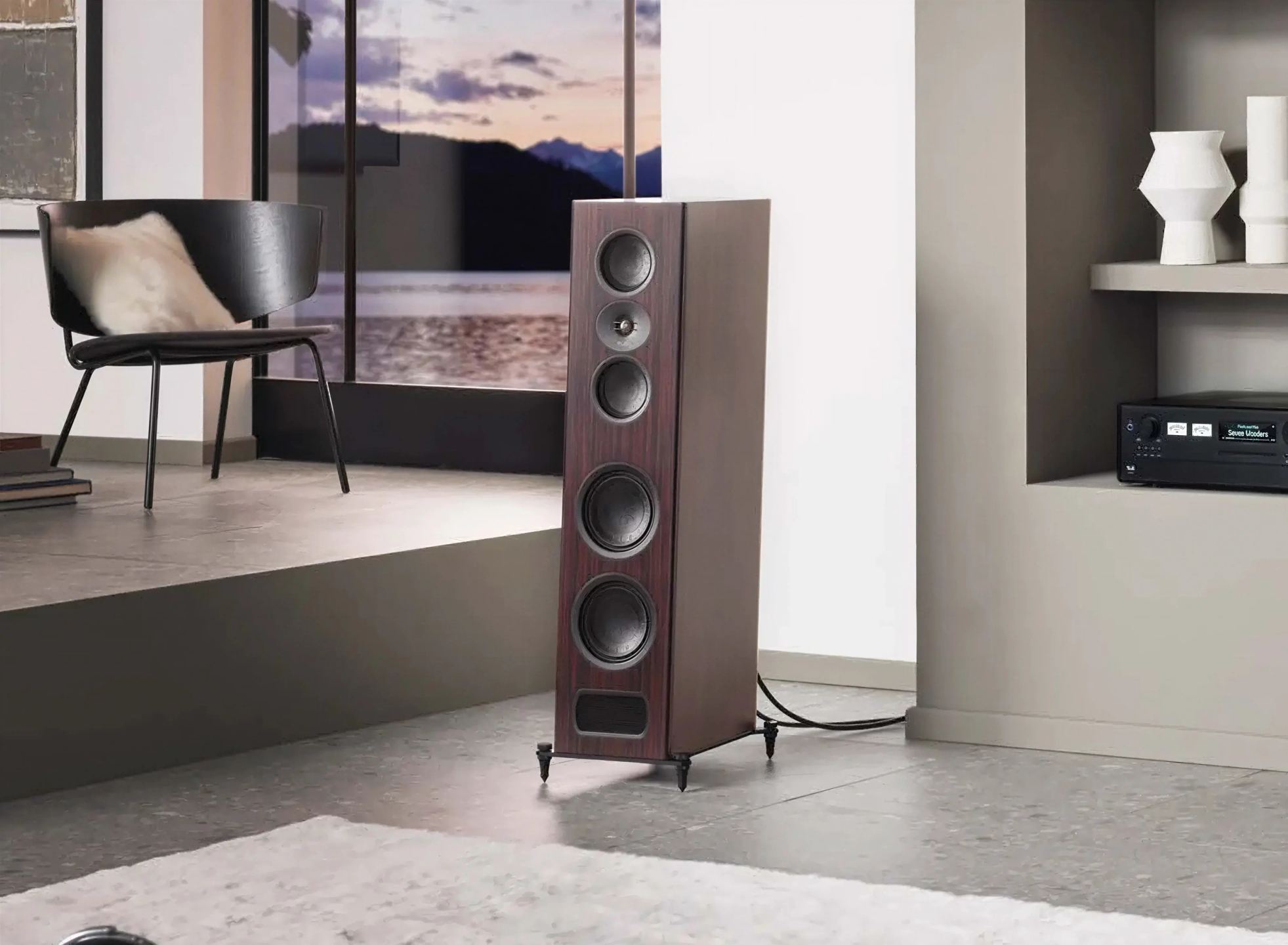
A folded transmission line behind the woofers
A speaker’s bass generally comes from a sealed cabinet, precise but offering limited output within a reasonable volume, or from a bass-reflex port that harnesses the wave emitted from the rear of the cones. A transmission line takes a different approach. Behind the two 170 mm woofers, a long, folded duct, machined along the inner rear panel, guides this rear wave like an organ pipe: the standing waves that form inside reinforce the lowest frequencies, which emerge through an opening on the front, below the woofers. This approach increases bass output with better transient response than a conventional port. T+A uses its MultiResonator version here, derived from the MultiResonator and Compensated Transmissionline designs of previous Criterion models, and the frequency response extends down to 29 Hz with an internal volume of just over 60 litres.
Such generous bass is highly dependent on the room: in a small living room, close to walls or in a corner, room resonances can make it sound thicker. Two absorbers are supplied for this situation. Inserted into the line’s outlet, they reduce the low end by 2 to 3 dB, and their position (upright, angled or flat) adjusts the effect. The tweeter and midrange drivers sit in their own sealed chambers, protected from the pressure inside the line, while internal partitions limit the transmission of vibrations through the cabinet.
Two midrange drivers on either side of the tweeter
The entire midrange/treble section is based on the Symmetric Directivity system, first introduced on the Solitaire S 430. Two 120 mm midrange drivers flank the tweeter, one above and the other below, and the crossover controls them to focus sound energy towards the listening area. Less sound travels towards the ceiling, floor and walls, so fewer reflections return to blur the stereo image. Doubling the midrange drivers also halves the excursion of each cone at the same output level, reducing distortion accordingly.
This controlled directivity has a practical consequence: the S 230 allows a greater listening distance without indirect sound obscuring the placement of voices and instruments. The recommended minimum is 3 m, which, following the equilateral triangle rule, also means placing the two floorstanding speakers at least 3 m apart. The tweeter and midrange drivers should be roughly at ear height, which the speaker’s height ensures for seated listening.
In-house drivers and a crossover on two boards
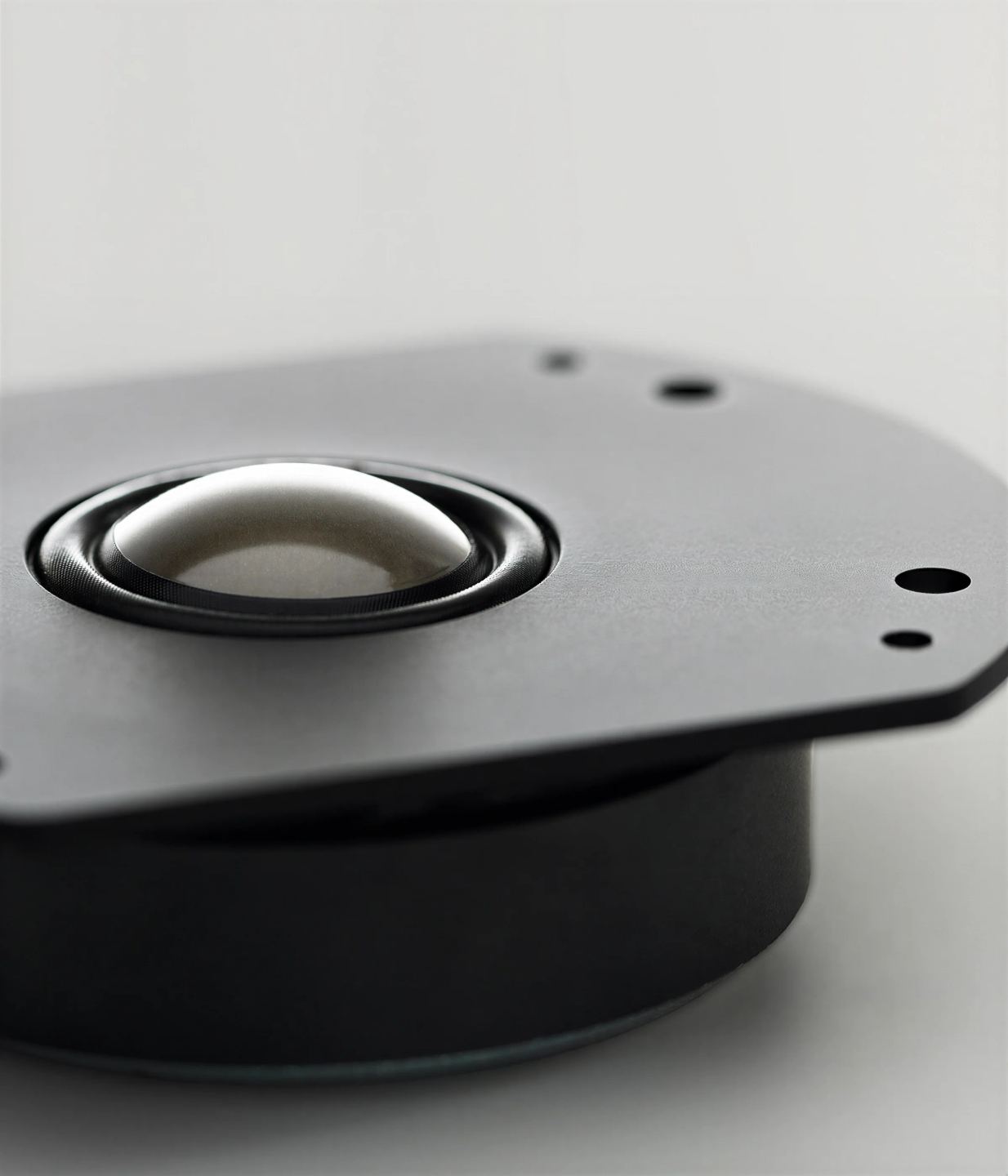
The five drivers, developed by T+A, feature the Star Stabilizer pattern on the woofer and midrange cones: a star-shaped central reinforcement which, combined with a calculated cone profile, prevents sections of the cone from deforming (the unwanted vibrations that colour the sound) and makes it operate like a piston, even at high output levels. The woofers and midrange drivers use die-cast aluminium baskets, with slim arms on the midrange drivers to limit air turbulence. The woofers combine powerful magnets, large-diameter voice coils and long-excursion suspensions, and their resonant frequency is tuned to that of the line. The 25 mm tweeter is new: its rigid, very lightweight magnesium diaphragm receives a surface treatment that neutralises resonances in the highest treble, a common flaw in metal domes.
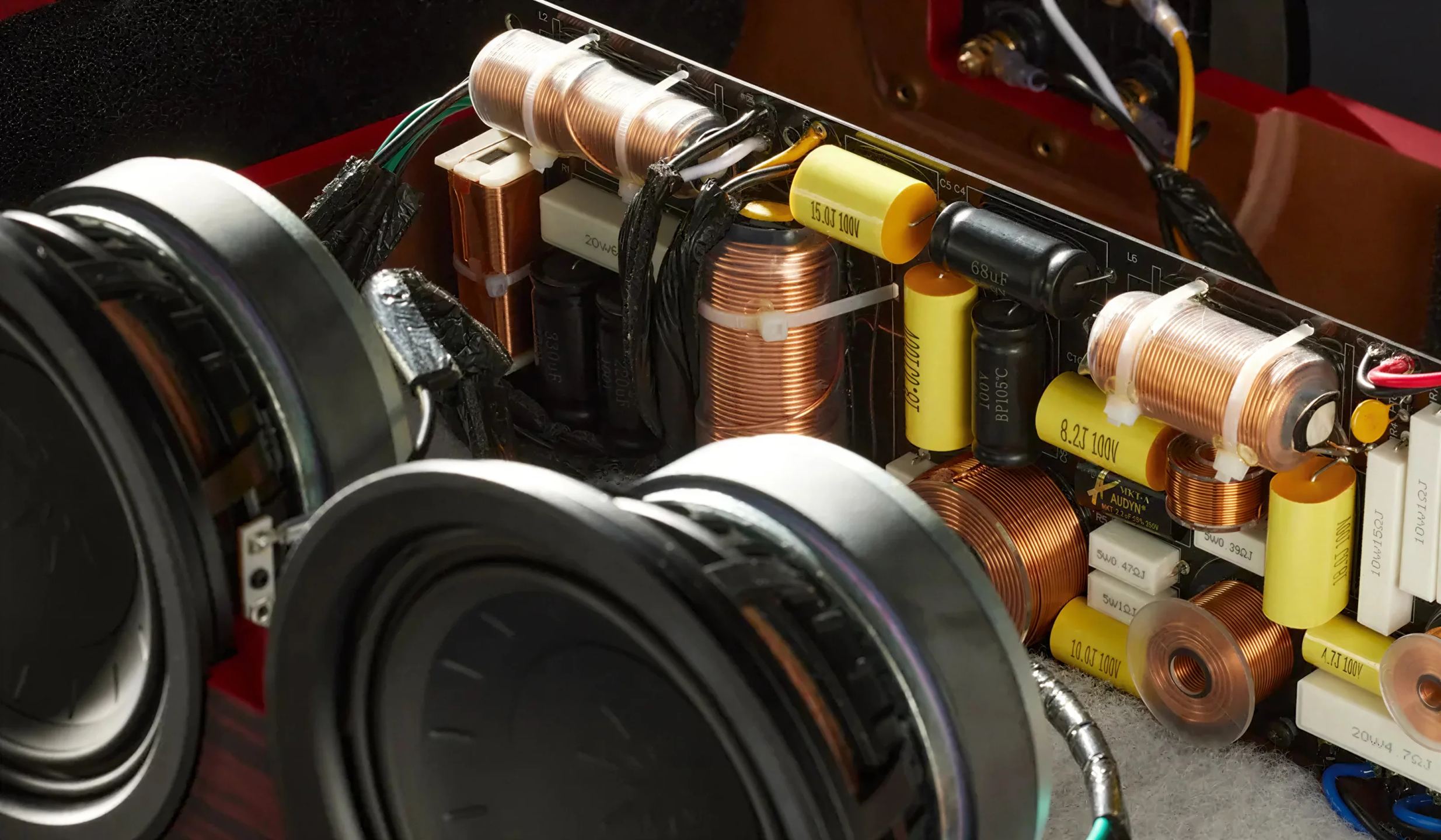
The three-way FSR (Fast Signal Response) crossover has crossover frequencies of 200 Hz and 2,000 Hz. It is built on double-sided circuit boards with a dedicated ground plane that handles the high currents of impulses, and the bass and midrange/treble sections occupy entirely separate boards. The dual binding posts in hard gold-plated brass, without nickel, take advantage of this: bi-wiring and bi-amping are possible by removing the jumpers supplied for single-wiring.
An Art Deco silhouette that lightens the bulk
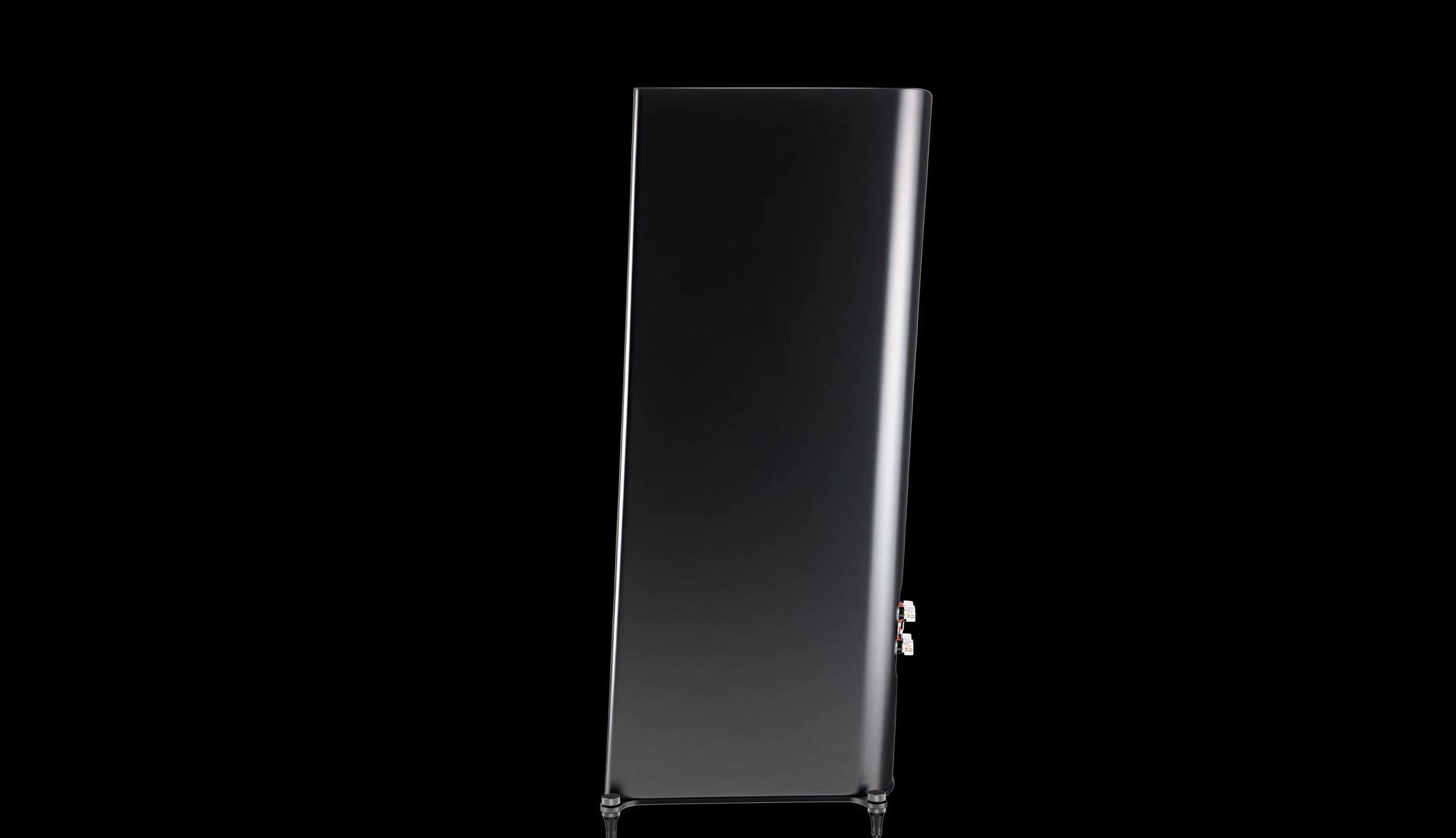
The cabinet follows the aesthetic direction T+A calls “Classic Modernity”: its distinctly curved sides, inspired by Art Deco, visually elongate the speaker and make its 43 cm depth easy to forget. The OrganicBaffle front panel serves an acoustic purpose as well as a visual one. The drivers are mounted from the inside, with no visible screws or fixings, and its edgeless profile avoids the small irregularities that diffract treble and colour its sound. The grilles are held in place by magnets.
Three multi-layer finishes are available: satin black lacquer, Macassar veneer and arctic silver. At the base, each speaker has four combination feet, fitted as spikes for carpet or, with the spikes removed, as pads for wood and tiled floors. At 105 cm tall including the plinth and feet, and weighing 37.5 kg, the S 230 requires two people to move it.
Choosing an amplifier and placement
With an impedance of 4 Ω and a sensitivity of 87 dB, the S 230 requires capable electronics. Any amplifier designed for a 4 Ω load can drive it, but a model that is stable at this impedance and capable of delivering more than 10 A will get considerably more out of it, with the power reserve needed to avoid clipping at high volume. The speaker handles 200 W nominal power and 300 W music power. The cables for both speakers must be the same length.
As for the room, a distance of 0.5 to 1 m from the rear wall prevents it from artificially boosting the bass. Slightly toeing in the speakers towards the listening position sharpens the stereo image, and it is best not to hide them behind furniture or a curtain, which would muffle the treble.
Technical specifications
Product identification
- Type: passive 3-way floorstanding speaker
- Manufacturer: T+A elektroakustik, Herford (Germany)
Acoustic architecture
- Bass loading: MultiResonator Transmissionline transmission line
- Folded structure along the internal rear panel
- Front bass outlet, below the bass drivers
- Bass adjustment: absorbers to be placed in the transmission line outlet
- Attenuation: 2 to 3 dB
- Adjustable intensity depending on absorber position
- Midrange-treble system: Symmetric Directivity, derived from the Solitaire series
- Two midrange drivers positioned symmetrically above and below the tweeter
- Focuses direct sound towards the listener and limits reflections from the ceiling, floor and walls
- Internal isolation: tweeter and midrange drivers housed in sealed chambers separate from the transmission line
- Front baffle: OrganicBaffle, mounting with no visible screws, edgeless profile
- Internal volume: over 60 litres
Drivers
- Technology: Star Stabilizer
- Treble: 1 × 25 mm, magnesium dome
- Midrange: 2 × 120 mm
- Bass: 2 × 170 mm
Performance and amplification
- Crossover frequencies: 200 Hz, 2000 Hz
- Frequency response: 29 to 45000 Hz
- Sensitivity: 87 dB
- Impedance: 4 Ω
- Rated power: 200 W
- Music power: 300 W
- Recommended amplification: amplifier stable into 4 Ω, current capacity greater than 10 A
Connectivity
- Dual binding posts: nickel-free hard gold-plated brass
- Compatible with bi-wiring and bi-amping
- Jumpers supplied for single wiring
Recommended installation
- Recommended listening distance: 3 m minimum
- Recommended distance from the wall: 0.5 to 1 m
Box contents
- Speakers: 2
- Grilles: 2, magnetic and removable
- Combination feet: 8, or 4 per speaker
- Usable as spikes or pads for delicate floors
- Spike installation tool: 1
- Transmission line port removal tools: 2
- Bass absorbers: 2
- Documentation: warranty card, manual
Dimensions and weight
- Dimensions, including base and feet (height × width × depth): 105 × 31 × 43 cm
- Weight: 37.5 kg per speaker
Frequently Asked Questions
How do you install bass traps?
The line opening is closed by a cover called the line port. The two supplied hooks slide into the holes around its edge to pull it gently forward, then it is removed by hand. The absorber compresses slightly, tilts backwards and is pushed about 5 cm into the duct, leaving a few centimetres of space between it and the cover. Once released, it returns to its original shape. The cover is put back in place by pressing lightly on both sides of its frame, without forcing it.
What's the difference compared to the Criterion S 240?
The S 240 uses the same design on a larger scale: 220 mm woofers, 150 mm midrange drivers, crossover frequencies of 170 Hz and 1,800 Hz, bass down to 26 Hz and a sensitivity of 88 dB. It stands 123 cm tall, weighs 55 kg and requires a larger room. The S 230 retains the same sound signature in a format that is easier to position.
Is a break-in period necessary?
Yes. Speaker diaphragms, surrounds and spiders need up to 100 hours of operation to reach their final performance characteristics. Sound reproduction evolves during this period, and critical listening is best done once the break-in process is complete.
Should you listen with the grilles on?
The grilles are acoustically optimised and protect the speakers, but the best sound reproduction is achieved without them. Thanks to the magnetic attachment, simply pull them forwards to remove them and position them against the edges of the cabinet to put them back on.
How do I connect the S 230 for bi-wiring or bi-amping?
In both cases, the jumpers between the “Bass” and “Mid/High” terminals are removed. With bi-wiring, each speaker receives two cables: on an amplifier with two outputs A and B, each output feeds one section; otherwise, both cables are connected in parallel to the same output. With bi-amping, one stereo amplifier handles the bass for both speakers and a second handles the midrange and treble.
What precautions should be taken for transport and installation?
Two people are needed to lift and move each speaker, and the spikes should be handled with care. The original packaging is worth keeping: it is the only packaging suitable for future transport. After exposure to cold, for example during delivery, wait for the speaker to return to room temperature before using it, allowing time for any condensation to disappear.
- Eco-contribution included in the sale price.