Debut Reference 10: Pro-Ject rethinks its entry-level turntable with a 10-inch tonearm
December 04, 2025
Contents
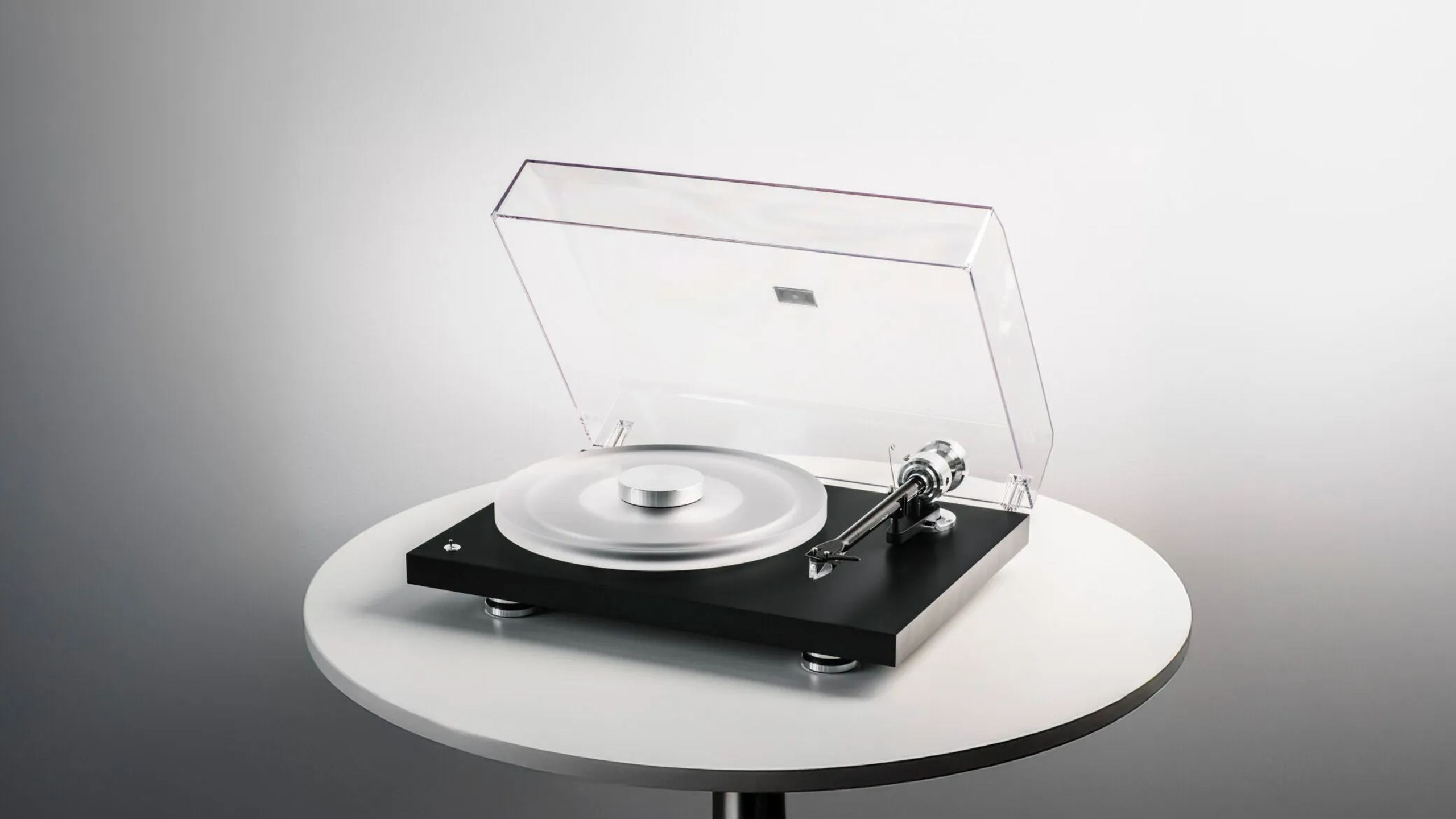
At €1,199, the Debut Reference 10 shakes up Pro-Ject’s internal hierarchy. The Austrian manufacturer has injected technologies previously reserved for its Xtension and RPM ranges, notably a 10-inch tonearm and a fully balanced signal architecture. A quarter of a century after the launch of the Debut series, this new iteration marks a turning point in Pro-Ject’s strategy.
The tonearm, centerpiece of the system
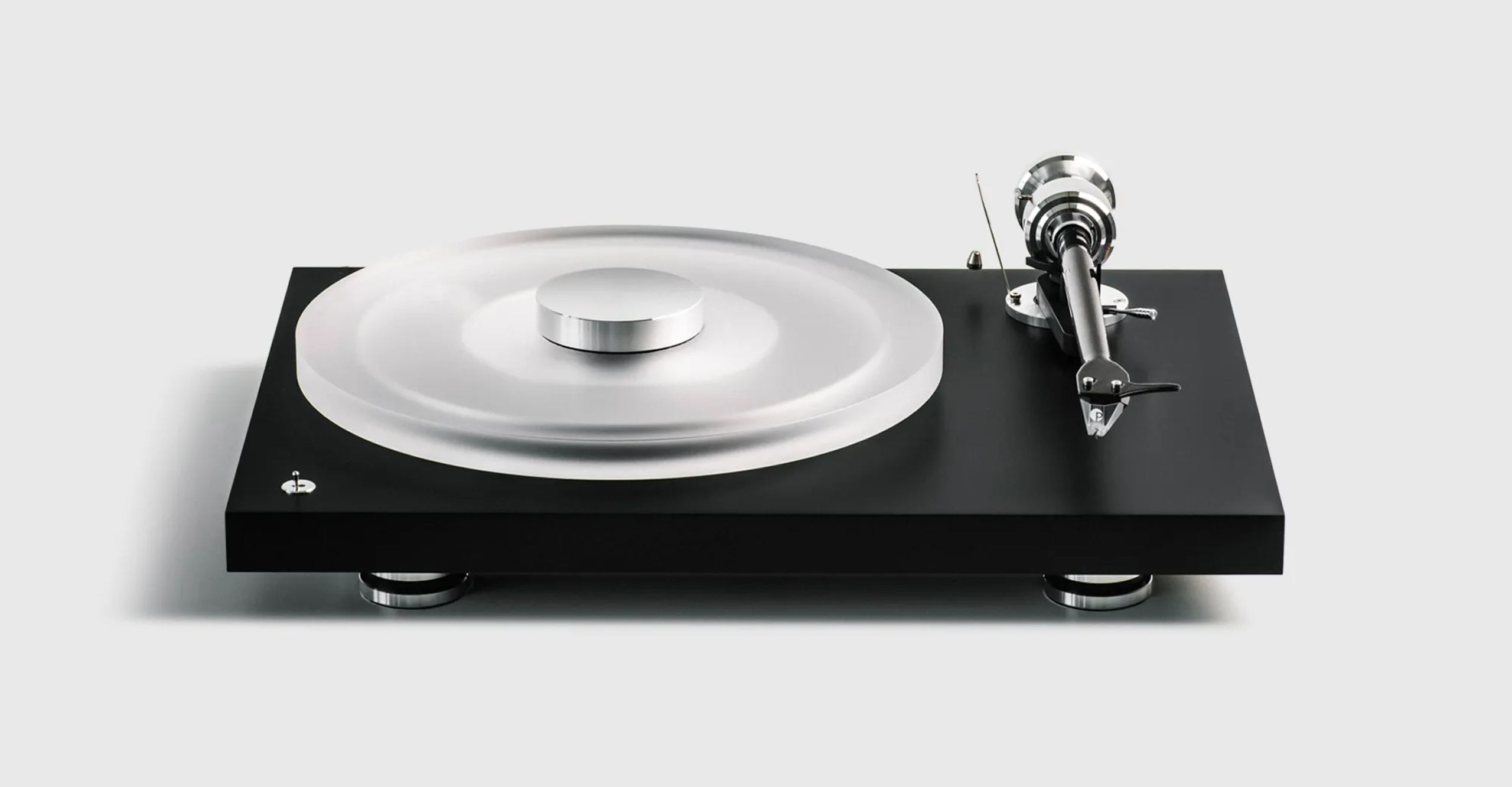
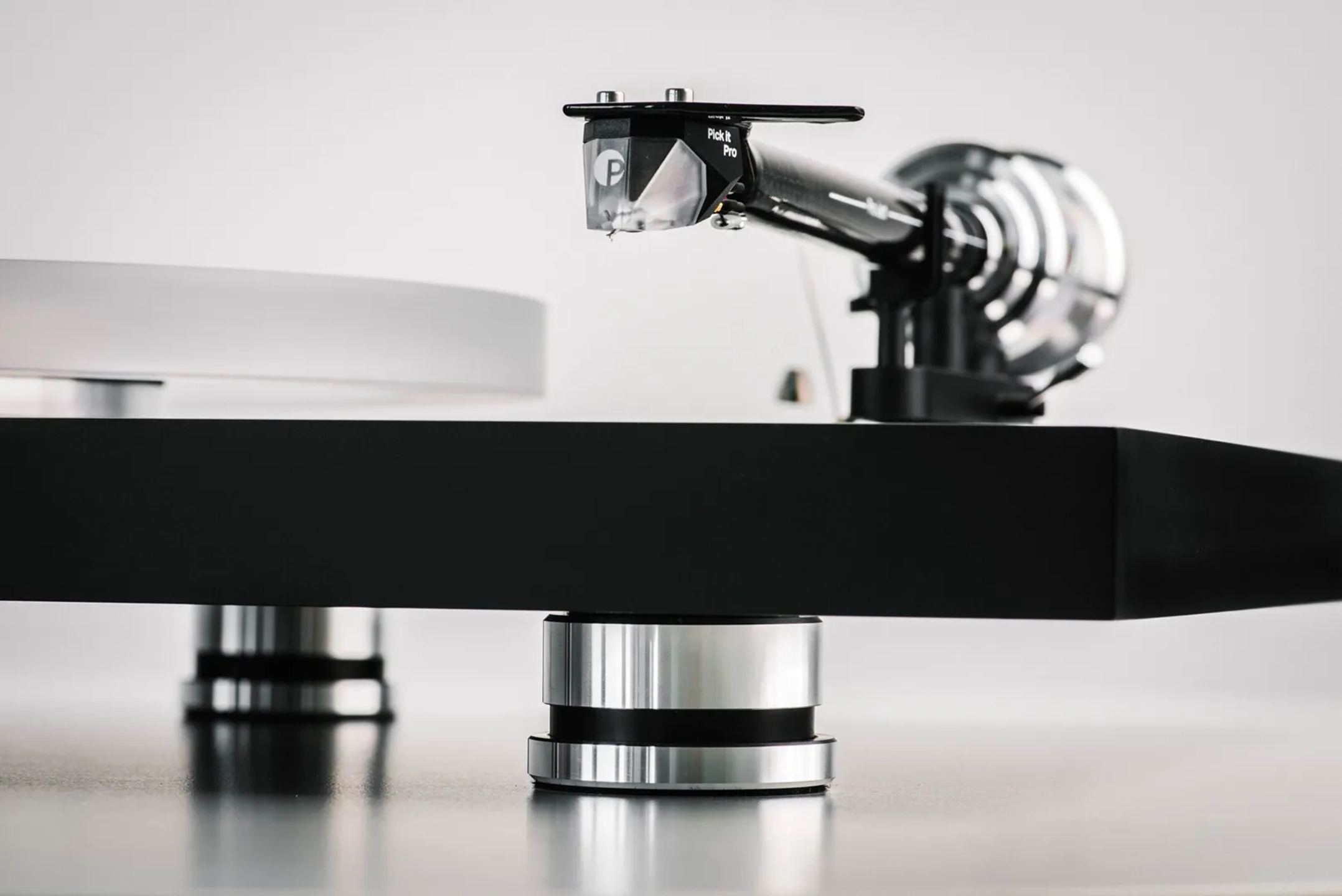
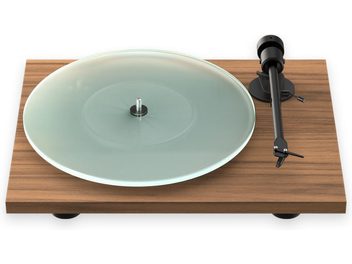
The 10-inch (254 mm) tonearm is the key element of this turntable. Its sandwich construction combines an outer carbon fiber tube with an inner aluminum core. Carbon provides the rigidity needed for precise groove tracking, while aluminum absorbs unwanted resonances. This hybrid approach follows a proven principle used on the brand’s more expensive models.
The bearing block, machined from a solid block of aluminum, integrates a two-point bearing. The whole assembly rests on a counterweight damped with thermoplastic elastomer (TPE) and an adaptive antiskating mechanism. Pro-Ject offers full adjustment of azimuth and vertical tracking angle (VTA) by simply loosening two screws, making it easy to adapt to different cartridges or mats.
Acrylic platter and machined sub-platter
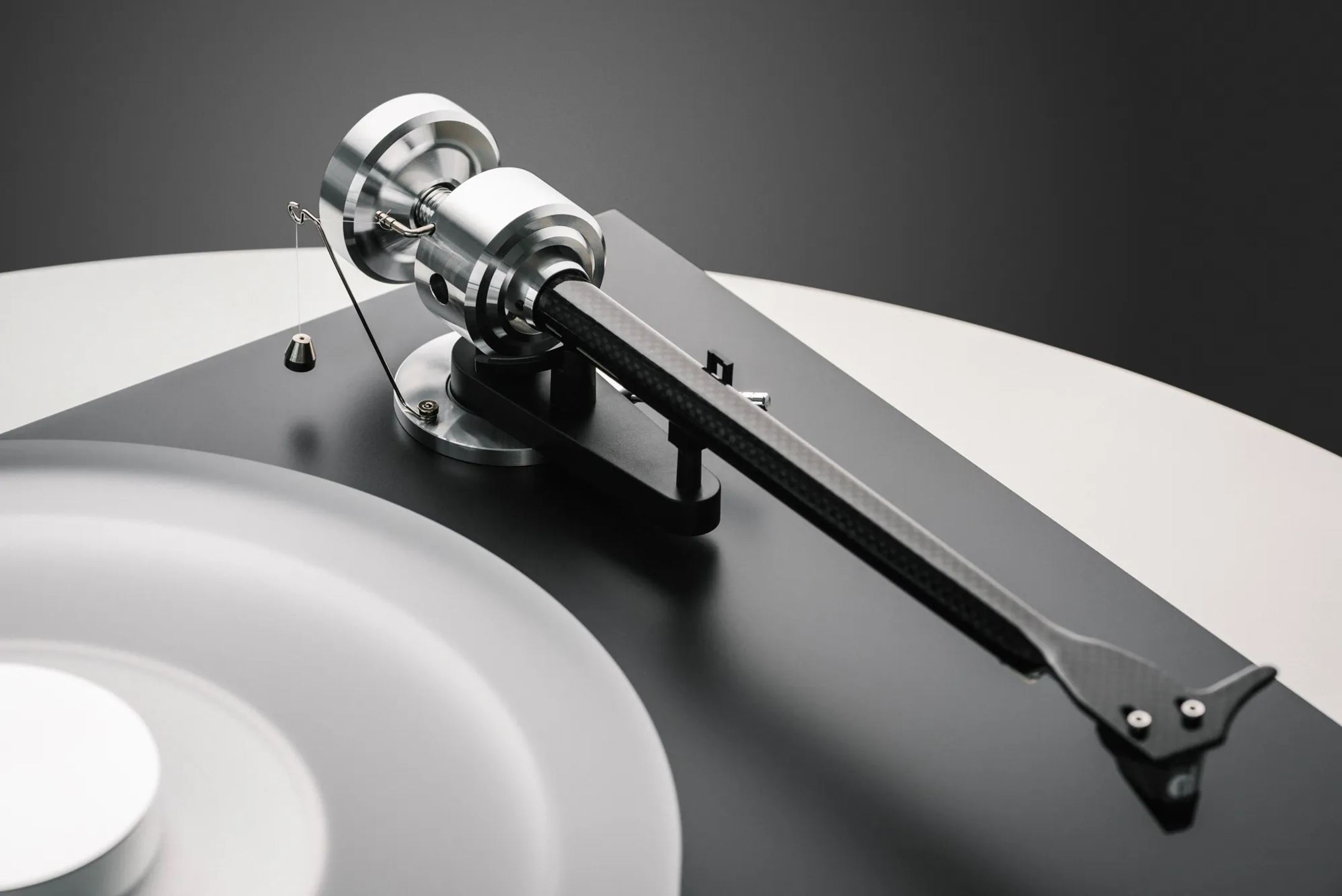
The 300 mm main platter uses acrylic rather than aluminum or steel. This material has mechanical characteristics similar to vinyl in terms of density and rigidity. The record can therefore rest directly on the platter without an intermediate mat, a configuration Pro-Ject recommends to optimize mechanical coupling.
The aluminum sub-platter features a diamond-cut finish, a CNC machining process that produces sharp edges and perfectly flat surfaces. Beyond the visual aspect, this precision contributes to rotational stability and reduced wow and flutter. The increased inertia of the sub-platter also helps maintain a consistent speed.
Rethought electrical architecture
Power management is based on an internal DC/AC generator that produces a clean sinusoidal waveform for the motor. The external power supply provides direct current, which is then converted by this generator into perfectly calibrated alternating current. This architecture isolates the motor from disturbances in the mains.
The motor suspension has been redesigned to limit the transmission of vibrations to the chassis. Speed selection (33⅓ and 45 rpm) is handled electronically via a front-panel button. An optional kit enables playback of 78 rpm records with a dedicated belt and pulley.
For further enhancement, Pro-Ject suggests pairing the turntable with the Power Box S3 Phono, a filtered external power supply capable of powering both the turntable and a compatible phono preamp simultaneously.
Balanced signal transmission from the cartridge
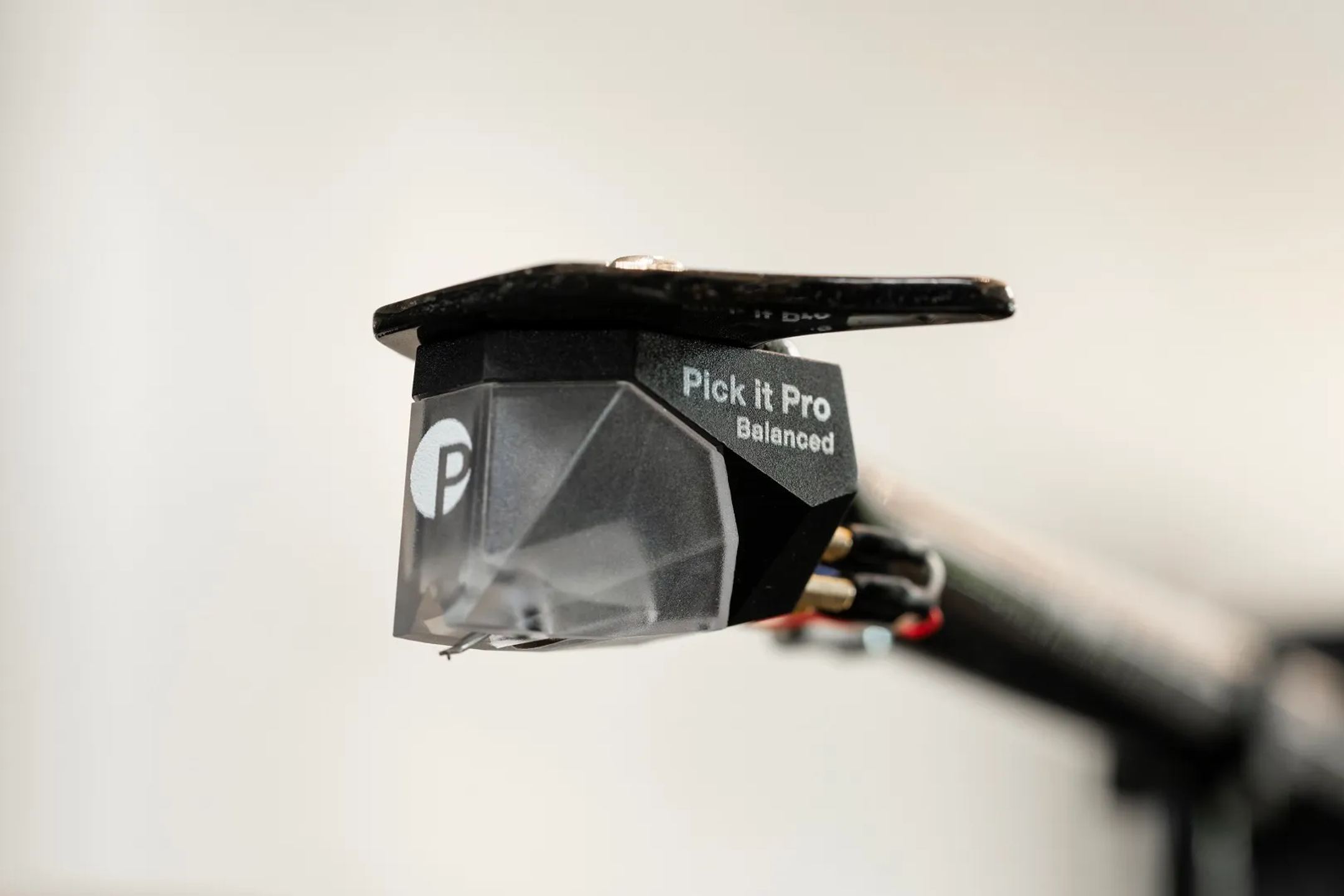
The Debut Reference 10 comes fitted with the Pick it PRO Balanced cartridge, developed jointly with Ortofon. Unlike conventional moving-magnet cartridges, whose generator shielding is connected to the right-channel ground, this version delivers a balanced signal right from the source.
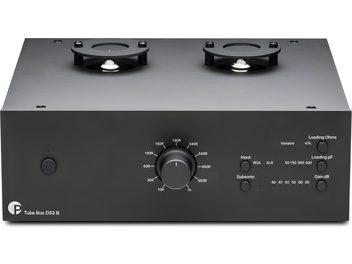
This particular design makes it possible to establish a fully balanced audio chain all the way to the preamplifier, via the mini-XLR output built into the turntable. Pro-Ject offers several compatible phono preamps in its range: Phono Box S3 B, DS3 B, or Tube Box DS3 B. In theory, balanced cabling provides better rejection of interference than traditional RCA connections, an advantage in electrically noisy environments.
The turntable nonetheless retains a standard RCA output for existing setups.
Chassis and mechanics
The MDF chassis receives eight layers of hand-applied lacquer, a finish inherited from the Debut Pro. MDF offers good acoustic behavior compared to less dense composite materials, with a natural ability to absorb vibrations.
Pro-Ject has opted for three height-adjustable feet instead of four. This geometric choice simplifies leveling on imperfect surfaces: three points define a stable plane, whereas four can introduce wobble. The feet include TPE damping to decouple the turntable from its support.
All visible metal parts feature a diamond-cut finish, giving the turntable a carefully coordinated aesthetic. An acrylic dust cover, a 45 rpm adapter, and an RCA phono cable (Connect it Phono E) complete the standard package.
Lineage and positioning
The Debut series began in 1999, four years after Pro-Ject was founded by Heinz Lichtenegger. At the time, CDs dominated the market, and affordable vinyl turntables had almost disappeared from store shelves. The original Debut offered decent playback quality at an accessible price point, helping to keep a viable analog offering alive.
Twenty-five years later, the Debut Reference 10 is positioned between the Debut EVO 2 (€699) and the manufacturer’s higher-end ranges. Compared with the Debut Pro B (€1,099), it brings a longer tonearm and an acrylic platter instead of aluminum.
The 10-inch tonearm offers a slightly lower tracking error angle than 8.6- or 9-inch models over part of the record, a modest but measurable advantage. The extra length, however, results in a larger footprint and potentially greater sensitivity to vibrations transmitted through the air.
A long-term bet
Pro-Ject emphasizes European manufacturing (mainly in the Czech Republic and Slovakia) and long-term availability of spare parts. The company guarantees replacement components for 25 years on its flagship models, a rare commitment in the consumer electronics sector.
The Debut Reference 10 fits squarely into this long-term approach. It remains upgradeable: cartridge changes, balanced cabling, improved external power supply. The chassis and tonearm form a solid enough foundation to support a gradual upgrade of the rest of the system.
At €1,199, the price tag is well above entry-level turntables, but still restrained compared with the brand’s high-end offerings. The Xtension 9 or RPM 9 Carbon, for instance, easily exceed €2,000. The Debut Reference 10 aims to capture part of their technical prowess in a more accessible price bracket.
Popular products
You may also like to read
 Turntable and speaker package: our best combinations under €1,000Comparisons and buying guides
 Which turntable to start with without making a mistakeComparisons and buying guides
 Stream Box E and Wireless Box E: Pro-Ject goes wireless multiroomHi-fi and home cinema news
 When should you replace your turntable stylus? The unmistakable signsTutorials and practical guides
 Beginner’s Vinyl Guide: How to Get Properly Equipped in 2026Tutorials and practical guides
 Sumiko Oriole: a new MC at €1,580 competing with Hana and Ortofon benchmarksHi-fi and home cinema news