

How to Choose the Right In-Wall/In-Ceiling Speakers for Your Home?
October 26, 2022
Contents
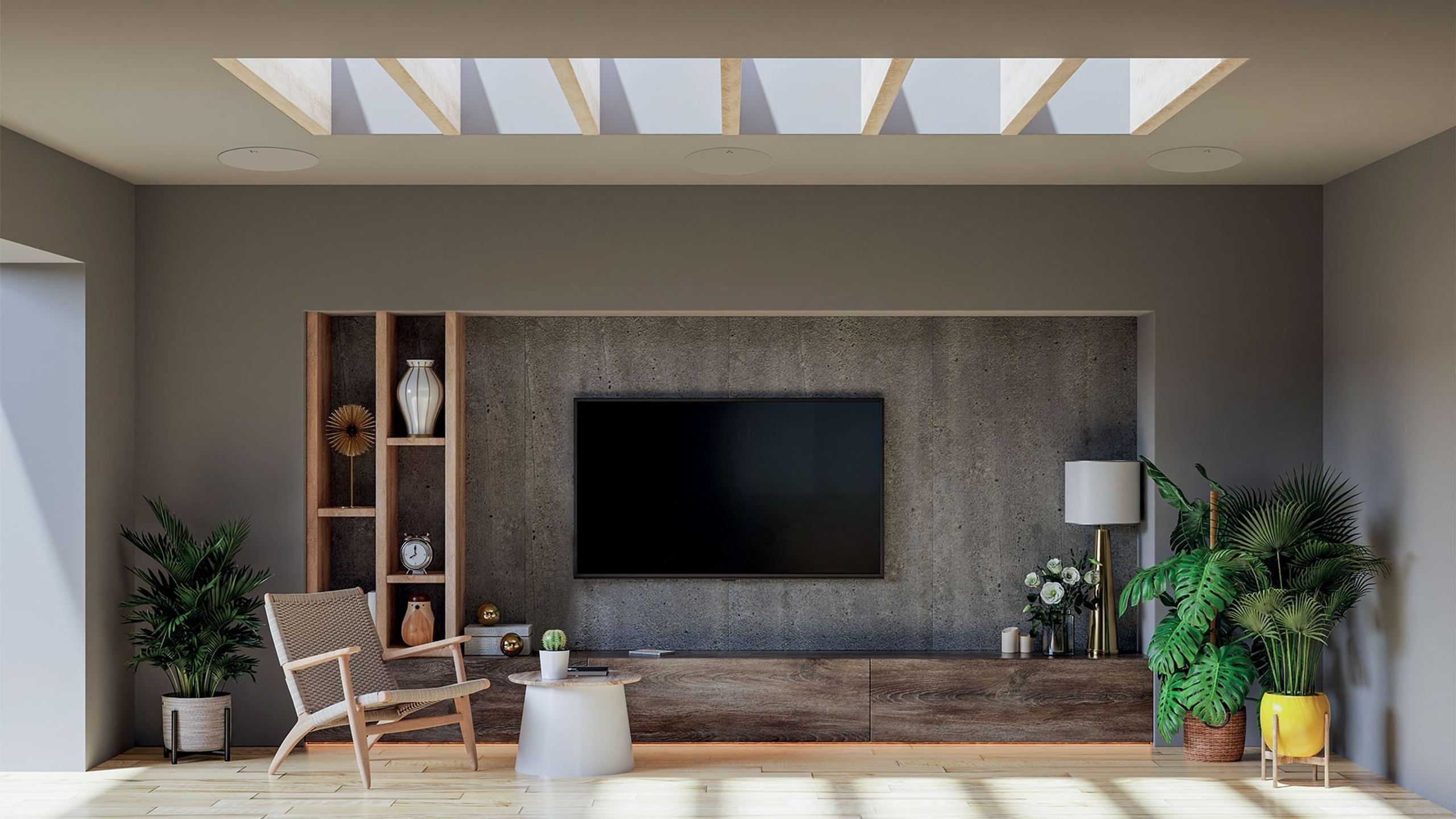
In-wall speakers are an excellent way to enjoy music without taking up too much space, in any room of the house—living room, bedroom, office, or even humid spaces. They can be installed in walls or ceilings and are ideal for those looking to save space or for aesthetic reasons compared to traditional speakers. All major speaker manufacturers now include them in their catalogs. Various models and formats are available depending on the size of the listening area, suitable for ambient music, high-fidelity listening, multiroom setups, or home theater installations composed of front speakers, a center speaker, surround speakers, and Atmos speakers.
Which in-wall speaker to choose for a home theater setup?
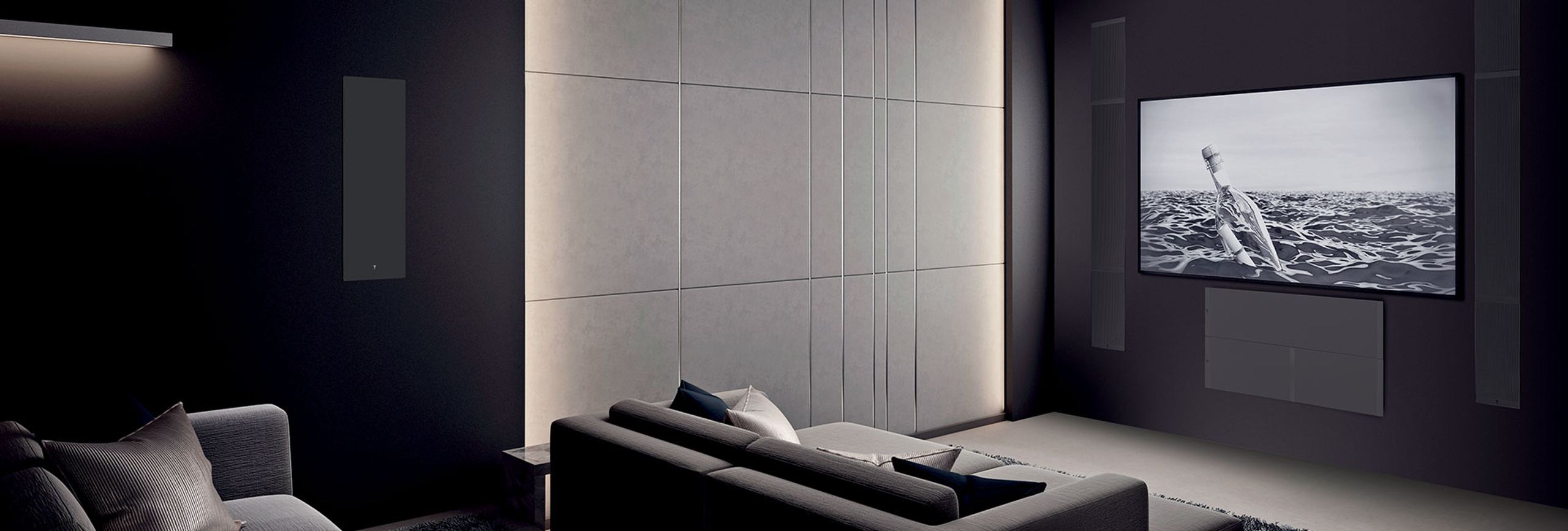
You will need two front speakers and a center speaker built into the wall around the TV or projection screen. The surround speakers should be installed on the wall in line with the sofa and/or on the wall behind the sofa. The Atmos speakers should be installed in the ceiling. Wall-mounted in-wall speakers should be placed at the same height, on the same horizontal plane. Ideally, the tweeter should be positioned at ear level for the listener at the listening point.
Which in-wall speakers are suitable for a bathroom?
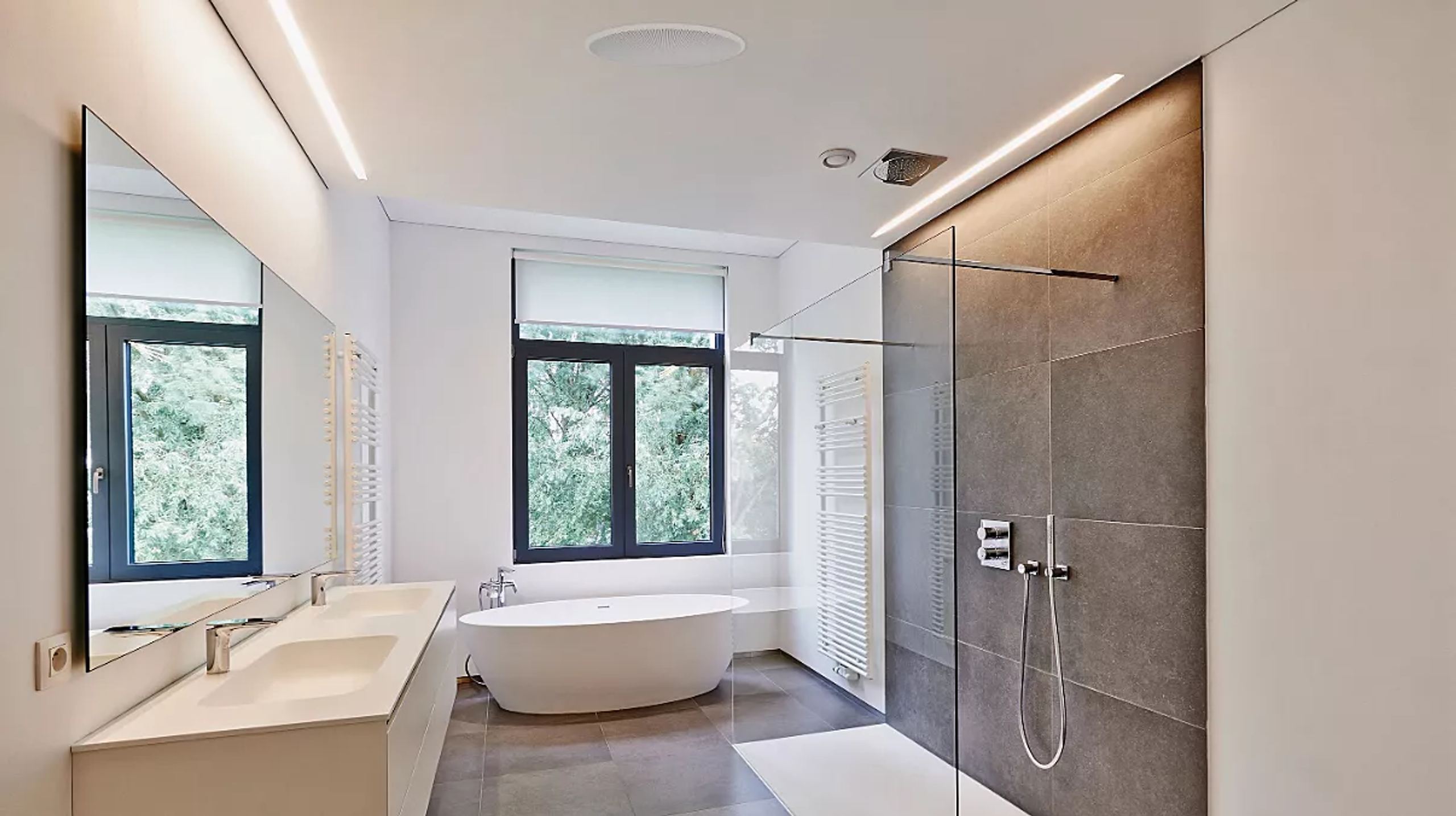
For wet areas, there are tropicalized speakers that resist humidity, and some models are even waterproof. There are also stereo speakers with dual tweeters. In this case, a single speaker is enough to deliver stereo sound.
In-wall or in-ceiling speakers: how to choose?
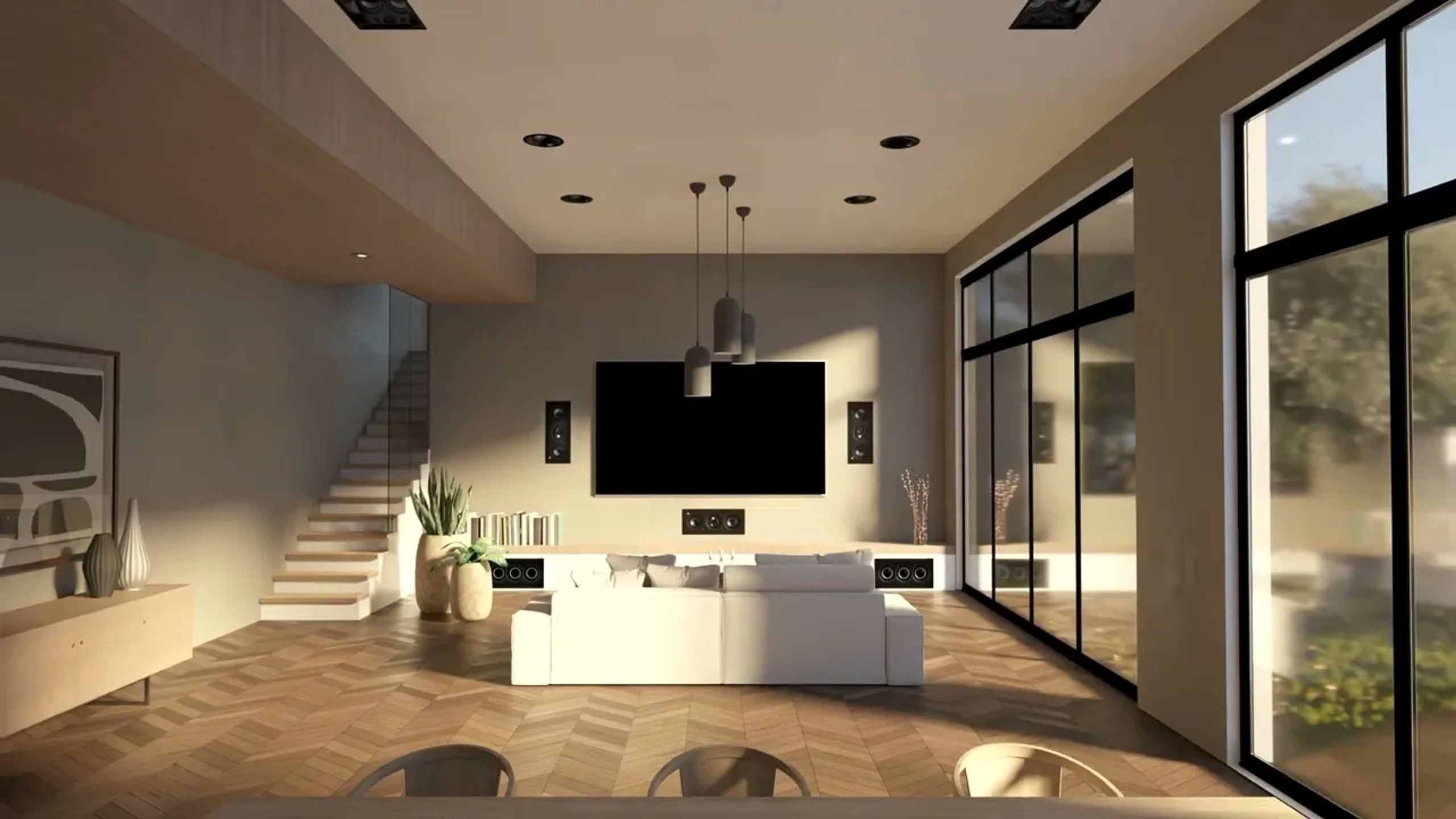
Two types of installation are possible. For walls, in-wall speakers (built into the wall) or on-wall speakers (mounted on the wall) in a rectangular format are used. They are directional, like bookshelf or floor-standing speakers, and are designed to be ideally positioned at ear level. For ceilings, in-ceiling speakers are used. They are generally round in shape for 360-degree spatialization, covering a wide area.
What is the best in-ceiling speaker?
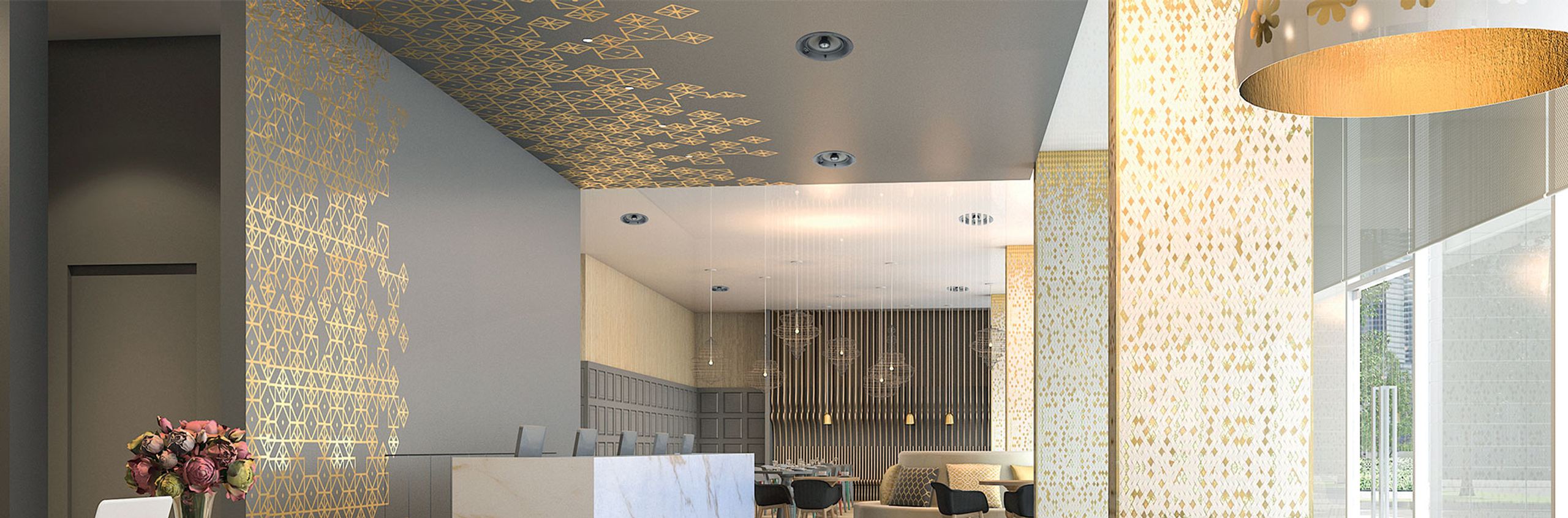
Whether for Atmos effects in a cinema setup or for ambient music, the round format of in-ceiling speakers is the most suitable. Their omnidirectional diffusion allows them to cover a large space.
What is the best in-wall speaker for a wall?
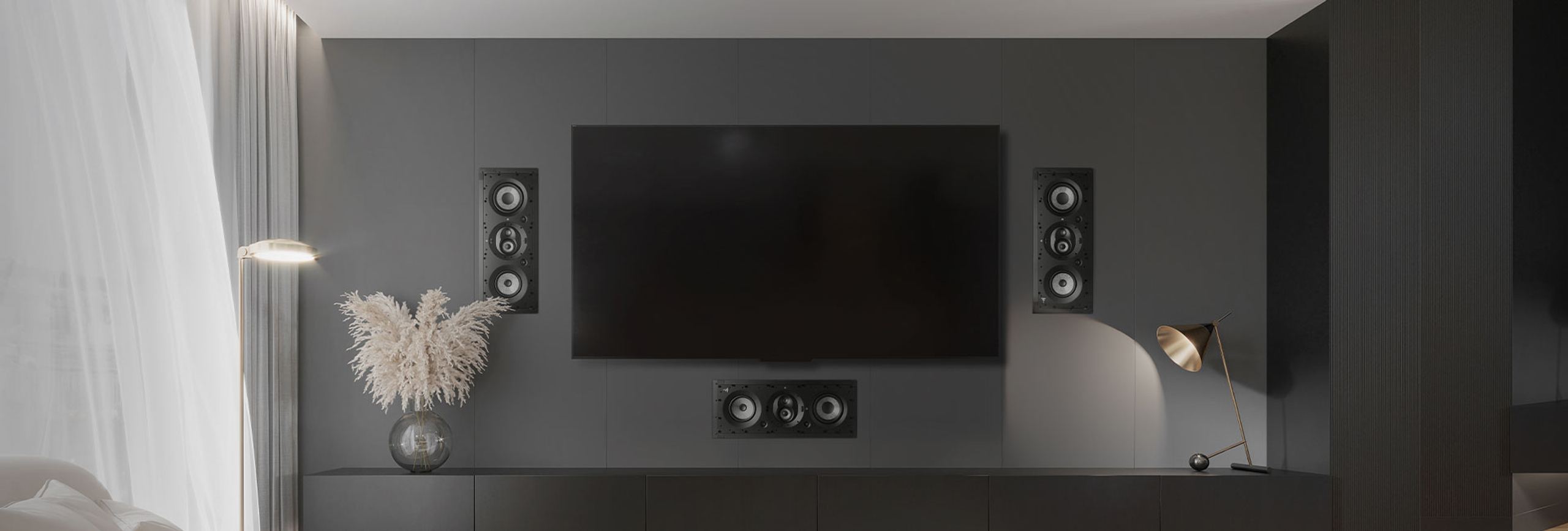
For walls, whether for a hi-fi or cinema setup, in-wall speakers or on-wall speakers are preferred. In a cinema setup, the front speakers should ideally be positioned on either side of the television, with the center speaker positioned below.
Which in-wall speakers are best for Dolby Atmos?
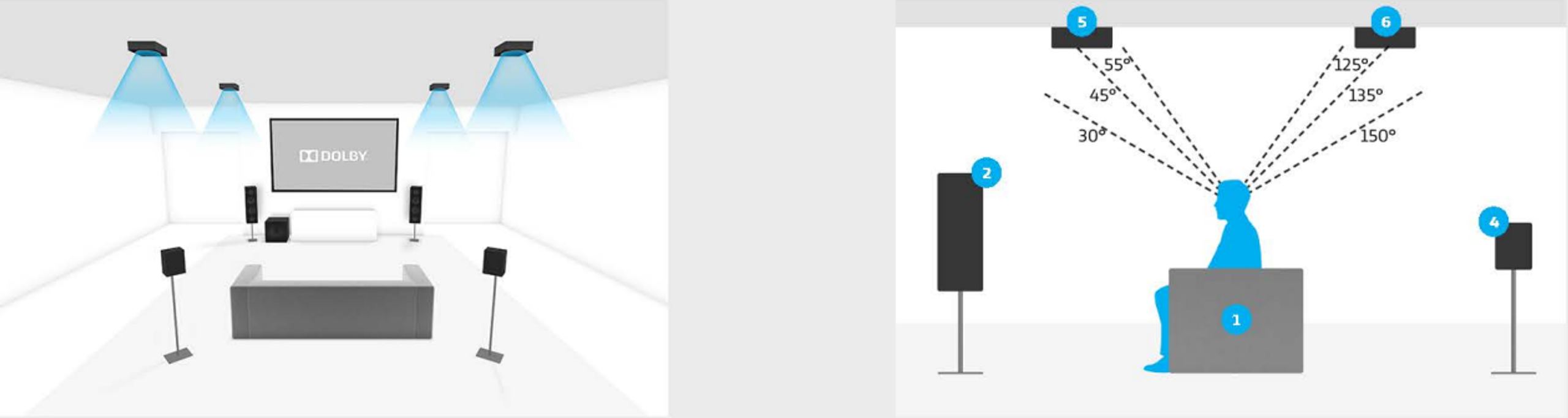
For Atmos effects, those famous height effects, in-ceiling speakers should be used in a hollow surface (false ceiling), omnidirectional. These speakers truly give the impression that the sound is coming down from the ceiling, creating a real sense of immersion. If the tweeter is adjustable, you can better direct the effects toward your listening area. This is the most effective solution.
Bluetooth in-wall speakers
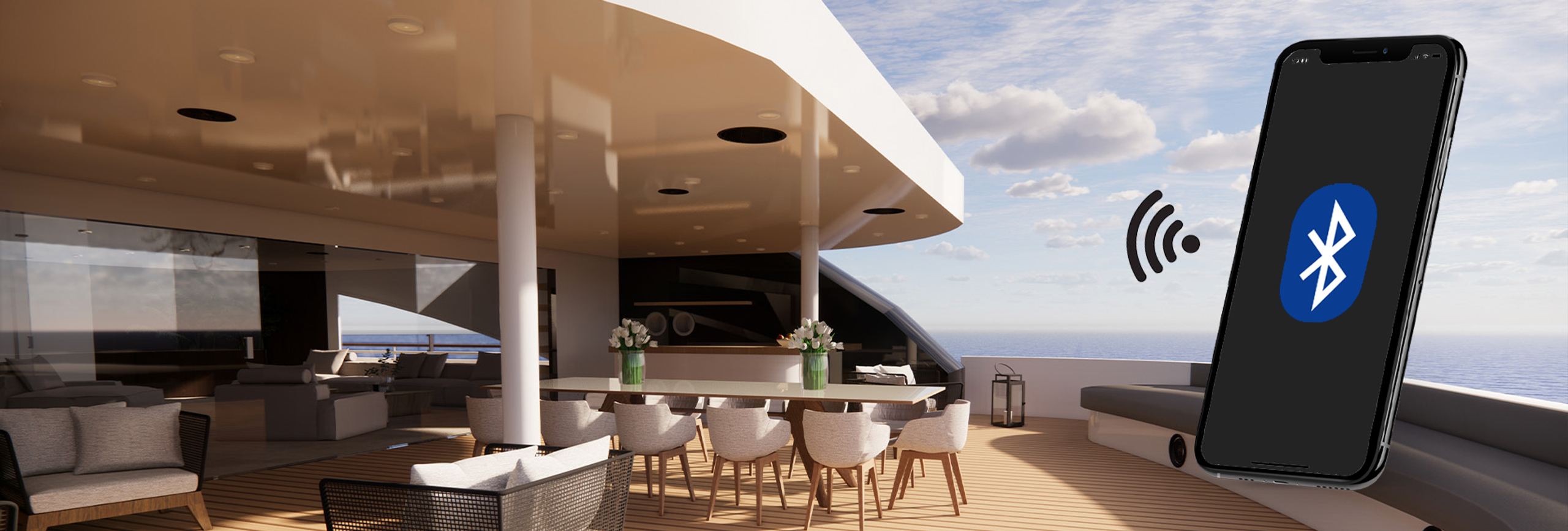
For added convenience, there are also Bluetooth in-wall speakers. Your music can be streamed wirelessly from your smartphone, tablet, or Bluetooth-compatible PC within a range of about 10 meters.
How to install ceiling speakers?
First, check that the ceiling or wall is hollow. Then ensure there are no electrical cables behind the partition before drilling. In-wall speaker manufacturers provide a template to facilitate drilling. Once the cutout is made, you should line the back wall with fiberglass insulation to avoid sound reflections and vibrations for optimal performance.
Now, fix them to the wall. In-wall speakers are equipped with a locking system using adjustable mounting brackets accessible from the front. Finally, connect your speakers to your hi-fi or home theater amplifier.