

Outdoor Speakers, outdoor
Outdoor speakers are designed to play your music on the patio, in the garden, or by the pool. Weather-resistant thanks to tropicalization and IP certification, they withstand rain, humidity, UV rays, and temperature fluctuations. Available in wired, Bluetooth, or Wi-Fi versions—wall-mounted, in-wall/in-ceiling, or freestanding—they adapt to any outdoor space for permanent or temporary installations. Learn more
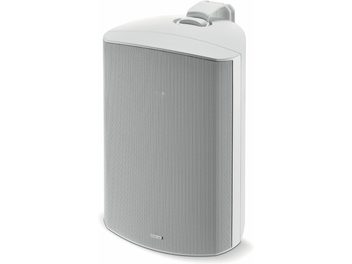
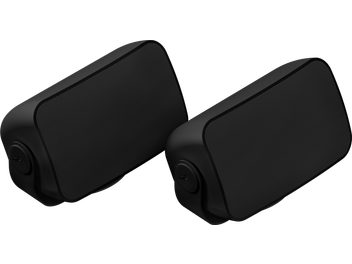
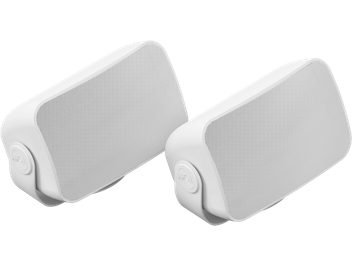
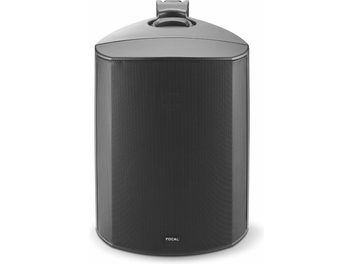
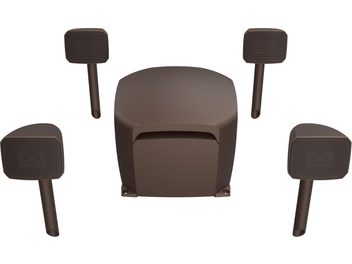

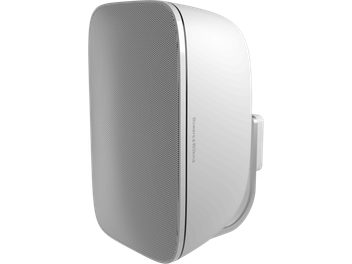

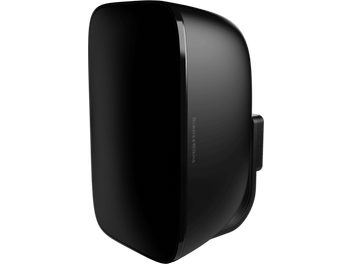
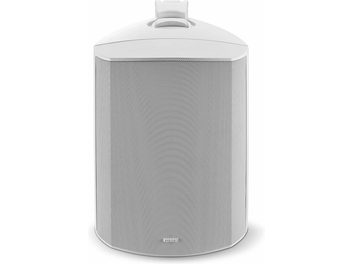
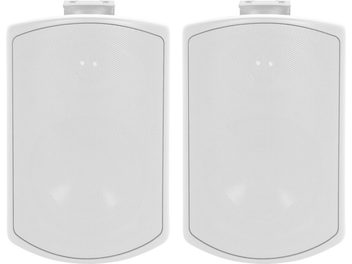
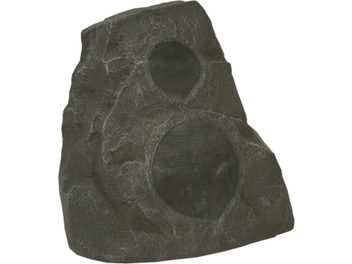
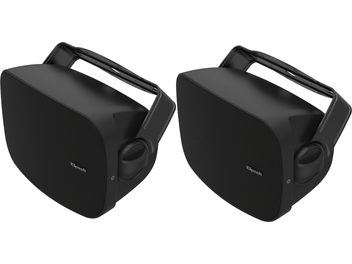
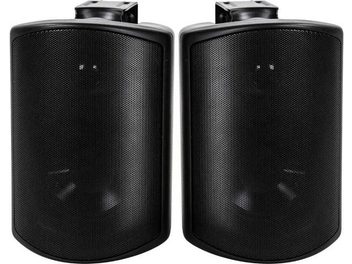
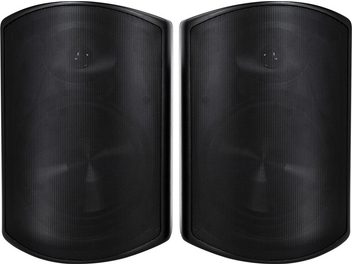

Weather resistance and certifications
An outdoor speaker differs from an indoor model by its ability to withstand harsh weather conditions. Tropicalization treats sensitive components (cones, circuits) against humidity, corrosion, and mold. The enclosure, often made from UV-treated PVC, handles sun, rain, and extreme temperatures (from -30°C to +70°C depending on the model).
The IP rating indicates the protection level: IPX4 withstands splashes, IPX6 resists powerful water jets, IP67 allows temporary immersion. The higher the rating, the more suitable the speaker is for continuous exposure. Models certified IP66 or IP67 are suited to the most demanding environments, including coastal areas exposed to salty sea spray.
Types of speakers and installation
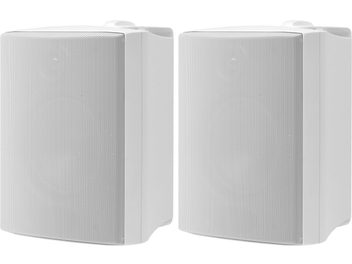
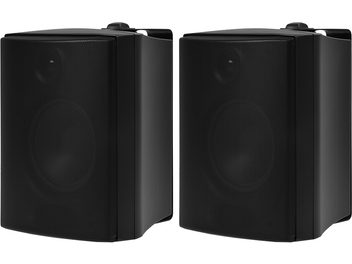
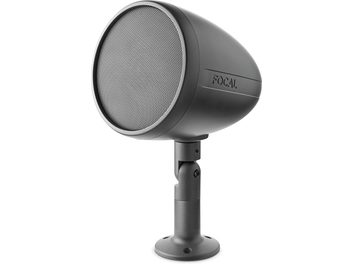
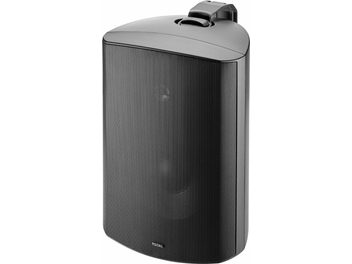
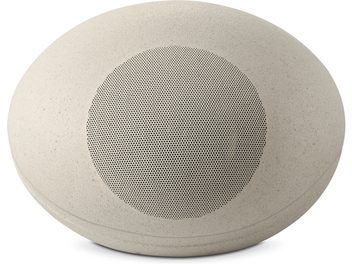
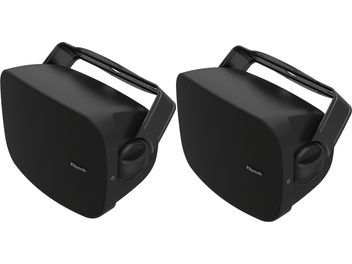
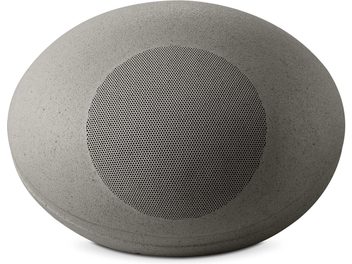
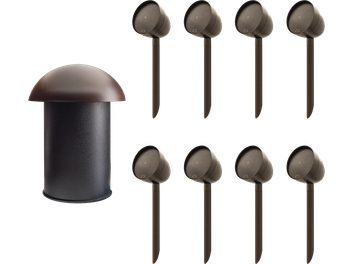
Wall-mounted speakers attach to façades or under eaves with adjustable brackets to fine-tune sound dispersion. Freestanding models are placed on the ground or flat surfaces, with some designed to look like rocks to blend into landscaping. In-wall/in-ceiling speakers disappear into walls or ceilings for a discreet integration.
Passive speakers require an external amplifier—often your living-room amp or a dedicated model like the Sonos Amp. Active versions include built-in amplification for plug-and-play use. Sound dispersion can be directional or 360°, depending on the coverage area.
Connectivity and technologies
Wired speakers ensure optimal sound quality and a permanent setup—ideal during construction or renovation work. Wireless Bluetooth models are suitable for occasional use with a range of around 10 meters. Wi-Fi or multiroom speakers integrate into larger audio systems to stream music simultaneously across multiple zones.
Battery-powered portable speakers offer maximum flexibility with 10 to 24 hours of playtime. Some feature a power bank function to charge other devices.
Power and sound quality
The absence of walls and ceilings outdoors requires more power than indoor speakers. For a patio or small garden, 15 to 30 watts is sufficient. Spaces over 100 m² require 60 watts or more. Sensitivity, expressed in dB, indicates the volume produced with 1 watt of input: above 89–90 dB, the speaker plays loud with little power.
Frequency response, ideally between 60 Hz and 20 kHz, ensures deep bass and detailed highs. Two-way configurations (mid-bass driver + tweeter) offer better tonal balance than full-range drivers.
Selection criteria
Your choice depends on usage: an IPX4 speaker is suitable under an awning, while a poolside installation requires an IP67 rating. For year-round, maintenance-free use, prioritize stainless materials, aluminum grilles, and UV-resistant enclosures.
A stereo setup with two speakers enhances immersion. The standard 8-ohm impedance ensures compatibility with most amplifiers. Some models offer a voltage selector to accommodate 100V line installations.




