

Active Filtering of Audio Signals
Active filtering is an advanced solution for separating the different frequency bands of an audio signal before amplification. Unlike passive filtering built into speakers, the active filter is placed between the source and the amplifiers, allowing precise control over the frequencies sent to each driver. This technology offers tuning flexibility and superior performance for demanding high-fidelity installations. Learn more
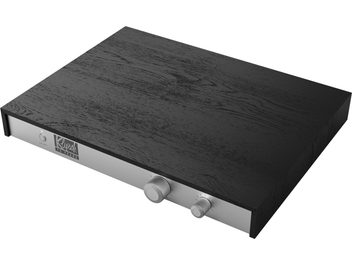
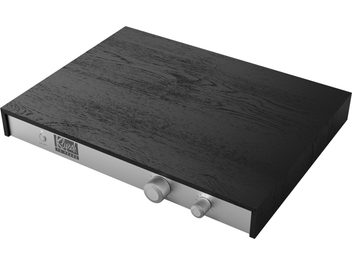
Principle and operation of active filtering
Active filtering uses active electronic components such as operational amplifiers or digital signal processors (DSPs) to split the audio signal into several distinct frequency bands. Each band is then routed to a dedicated amplifier that powers the corresponding driver. This architecture therefore requires one amplifier per way, typically two to four amplifiers depending on the speaker configuration.
The main difference from passive filtering lies in the position of the filter in the audio chain. The active filter operates upstream of amplification, on a line-level signal, whereas the passive filter sits after the amplifier, directly before the speakers. This fundamental distinction explains the advantages of active filtering in terms of control and precision.
Analog and digital active filtering
There are two main categories of active filters. Analog active filters use electronic circuits composed of operational amplifiers, resistors, and capacitors to process the signal. These devices allow cutoff frequency adjustment, generally via potentiometers, and operate with a fixed slope.
Digital active filters, also known as speaker processors or DSPs (Digital Signal Processors), represent the modern evolution of active filtering. These devices convert the analog signal to digital, process it numerically, then convert it back. They offer far greater versatility with adjustable slopes (typically 6 to 48 dB per octave), varied filter responses (Butterworth, Linkwitz-Riley, Bessel), and numerous additional functions.
Advantages of active filtering
Active filtering offers several decisive benefits for audiophiles and professionals. The precision of the filtering is the first advantage: cutoff frequencies can be finely adjusted to perfectly match the characteristics of each driver. This flexibility allows the transition between different ways to be optimized and ensures a coherent response across the entire audible spectrum.
The absence of insertion losses is another important benefit. A traditional passive filter dissipates part of the amplifier’s power as heat in its components. Active filtering, acting before amplification, avoids these losses and can even add gain if necessary. Each amplifier works only within its assigned frequency band, which improves its overall efficiency.
Component quality is also a determining factor. Passive filters, placed after the amplifier, must handle significant currents and require large, costly inductors, particularly for low frequencies. Active filters, working on low-level signals, use smaller, less stressed components, making it easier to use high-quality parts without major cost impact.
Advanced features of digital processors
Modern DSP processors offer features that go far beyond simple filtering. Parametric equalization helps correct speaker response anomalies or room resonance modes. Some models integrate several dozen EQ bands per channel, providing surgical precision in response curve correction.
Time delay adjustment is an essential function for acoustically aligning the different drivers. The varying physical distances between the tweeter and woofer naturally create a timing offset. The DSP compensates for this by delaying the signal of the nearest driver, thereby ensuring optimal phase coherence at the listening position.
Acoustic phase management is one of the most sophisticated features. Finite impulse response (FIR) digital filters can correct phase shifts introduced by the speakers and the listening room, significantly enhancing transparency and soundstage depth. This technology, long reserved for professional studios, is becoming increasingly accessible to audiophiles.
Crossover: the cutoff point between ways
The term “crossover” refers to the cutoff frequency at which the signal is split between two adjacent drivers. This critical parameter must be chosen according to the respective capabilities of each transducer. A tweeter generally cannot go below 2000–3000 Hz without excessive distortion, while a woofer struggles to properly reproduce frequencies above 3000–4000 Hz.
The choice of crossover frequency directly affects the quality of the handoff between ways. A frequency that is too high or too low places the drivers outside their comfort zone, generating distortion and coloration. Active filtering allows fine adjustment of this frequency and selection of the optimal slope to achieve the most natural possible transition.
Configuration and implementation
Setting up an active-filtered system requires a different approach than traditional passive speakers. The installation requires multiple power amplifiers, typically a stereo amplifier for the tweeters and a second for the woofers in a bi-amped configuration. The speakers must be modified to remove the internal passive crossover and allow a direct connection from the amplifiers to the drivers.
This bi-amped or tri-amped configuration offers absolute control over each transducer. Each amplifier can be selected for its specific qualities: a tube model for the mid-highs to achieve particular smoothness, a high-power Class D amplifier for the bass that requires more energy. This freedom of choice is one of the major attractions of active filtering for audiophiles.
Applications and uses
Active filtering naturally prevails in professional sound reinforcement. Public address systems and studio monitoring setups almost exclusively use this technology. Active studio monitors integrate active filtering and amplification in the same enclosure, greatly simplifying installation.
In home high-fidelity, active filtering remains more niche due to its implementation complexity. However, the most demanding audiophiles find fertile ground for experimentation to push their systems’ limits. DIY (Do It Yourself) speakers are a prime field for this technology, allowing the design of custom, perfectly optimized systems.
Integrating an active subwoofer is the most common form of active filtering in home use. The subwoofer’s built-in crossover filters the signal and passes only frequencies above the selected cutoff to the main speakers. This hybrid configuration combines the simplicity of passive speakers with the advantages of active filtering for low frequencies.
Available equipment
The market offers a wide range of active filtering solutions suited to different uses and budgets. Analog active crossovers are the entry level, with two- or three-way models providing basic cutoff frequency adjustment. These devices are suitable for simple installations that do not require extensive acoustic correction.
Modern DSP processors offer far broader possibilities. Brands like miniDSP, DBX, and Behringer offer compact models that integrate filtering, equalization, phase correction, and delay management. Computer or smartphone control interfaces greatly simplify setup, making this technology accessible even to non-specialists.
High-end solutions integrate sophisticated automatic correction algorithms. Systems like Dirac Live or Trinnov analyze the room’s acoustics and automatically calculate optimal corrections. These technologies, combined with a calibrated measurement microphone, deliver spectacular results with a reasonable time investment.
Practical considerations
Switching to active filtering involves a significant initial investment. In addition to the processor itself, you must plan to purchase additional amplifiers and potentially modify the speakers. Cabling also becomes more complex with multiple connections between the processor and amplifiers, then between the amplifiers and the speakers.
The learning curve can be steep for newcomers. Understanding the concepts of cutoff frequency, filter slope, acoustic phase, and equalization requires a minimum of theoretical knowledge. However, many online resources and simulation software tools make this approach easier today.
The results can be spectacular when the system is properly tuned. A wider and more precise soundstage, better dynamics, more natural timbre reproduction: the benefits of active filtering are quickly apparent. Conversely, rough settings can degrade performance compared to a good traditional passive crossover. Acoustic measurement with a calibrated microphone then becomes essential to optimize the parameters.