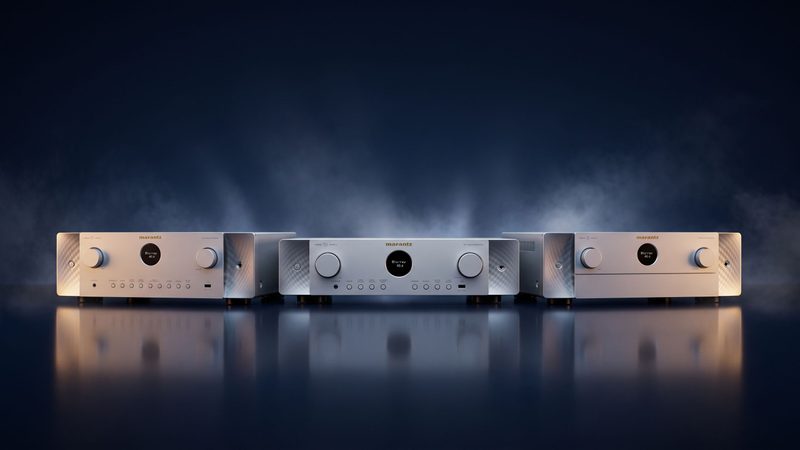
Marantz Cinema 60 DAB Series 2 black



Specifications and features


Overview
Four years after the arrival of the Cinema range, Marantz is updating the middle of its home theater catalog without changing the chassis or power output. The second series focuses on what is less visible: digital-to-analog conversion, available room correction, installation tools and compatibility with recent consoles.
An unchanged chassis, a plastic front panel
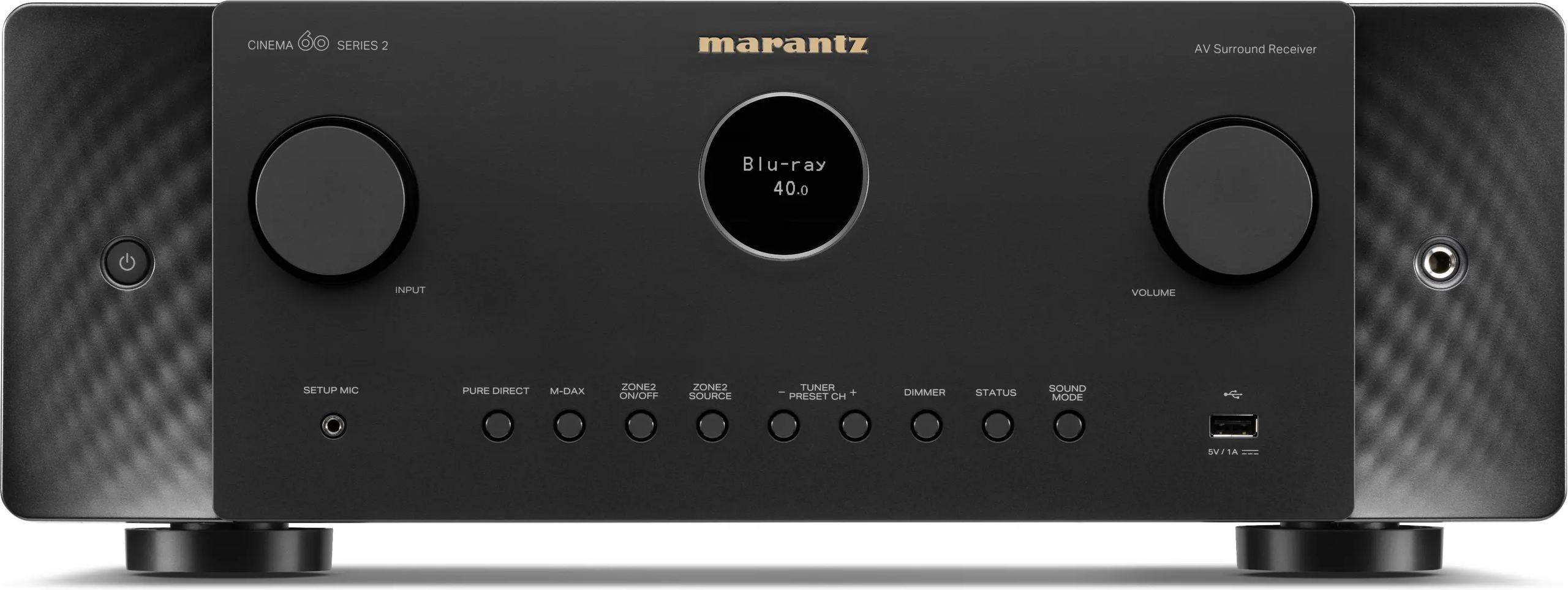
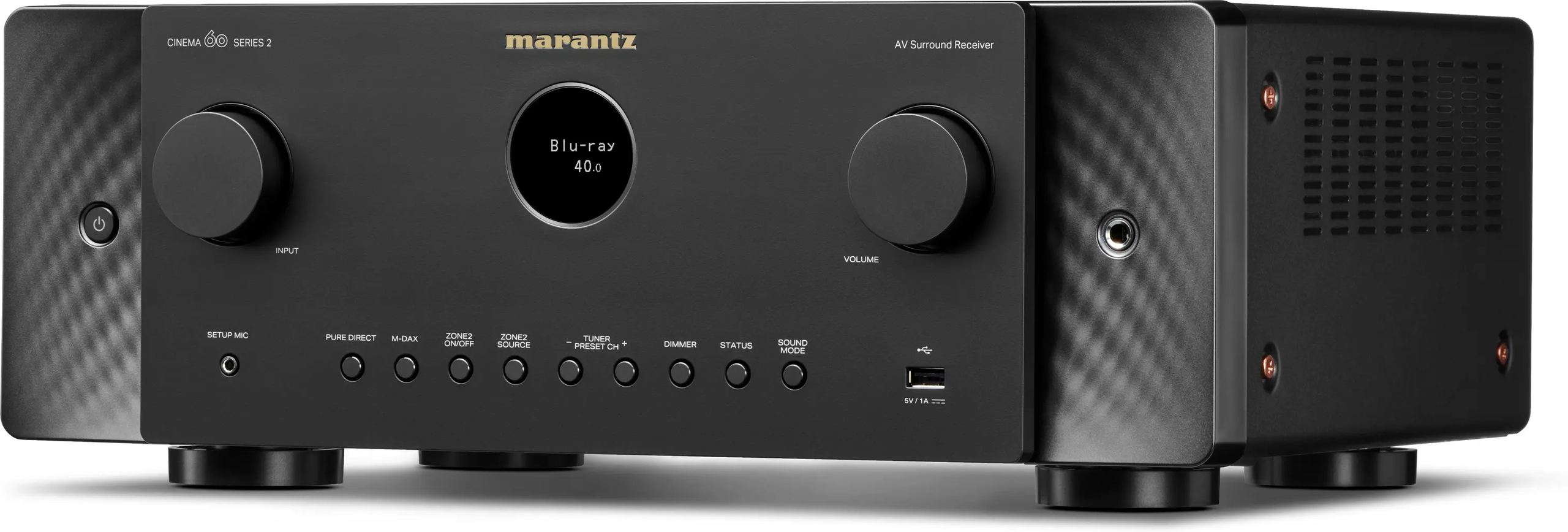
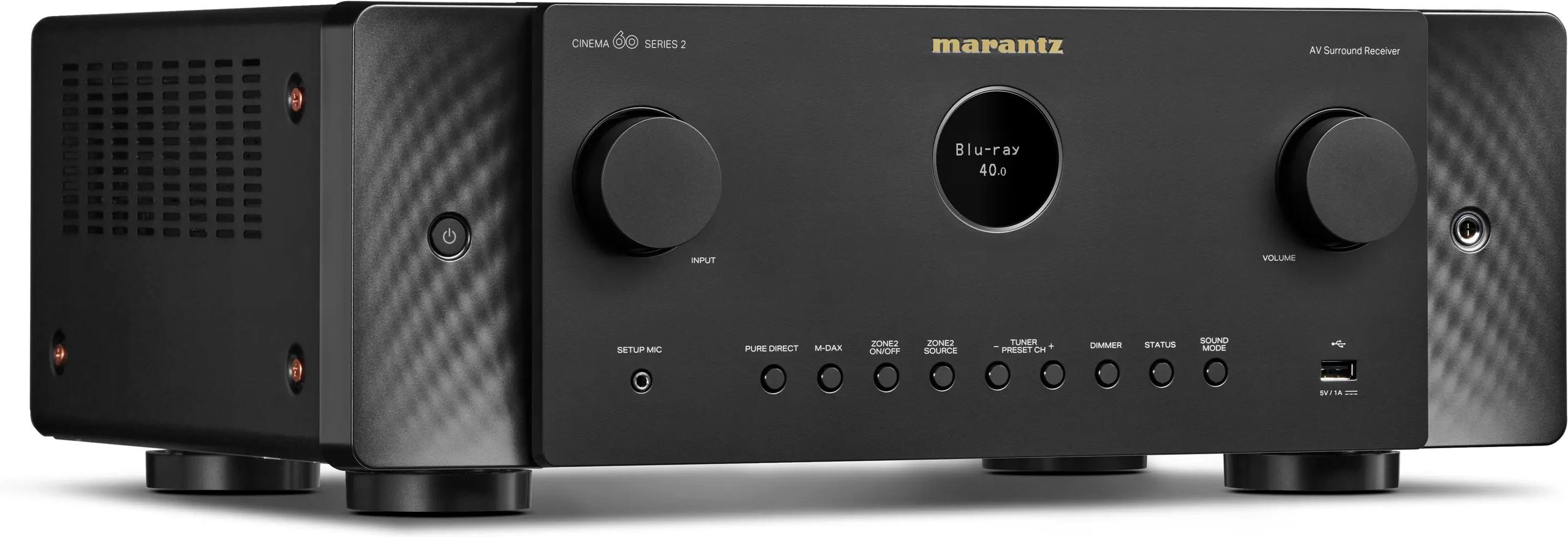
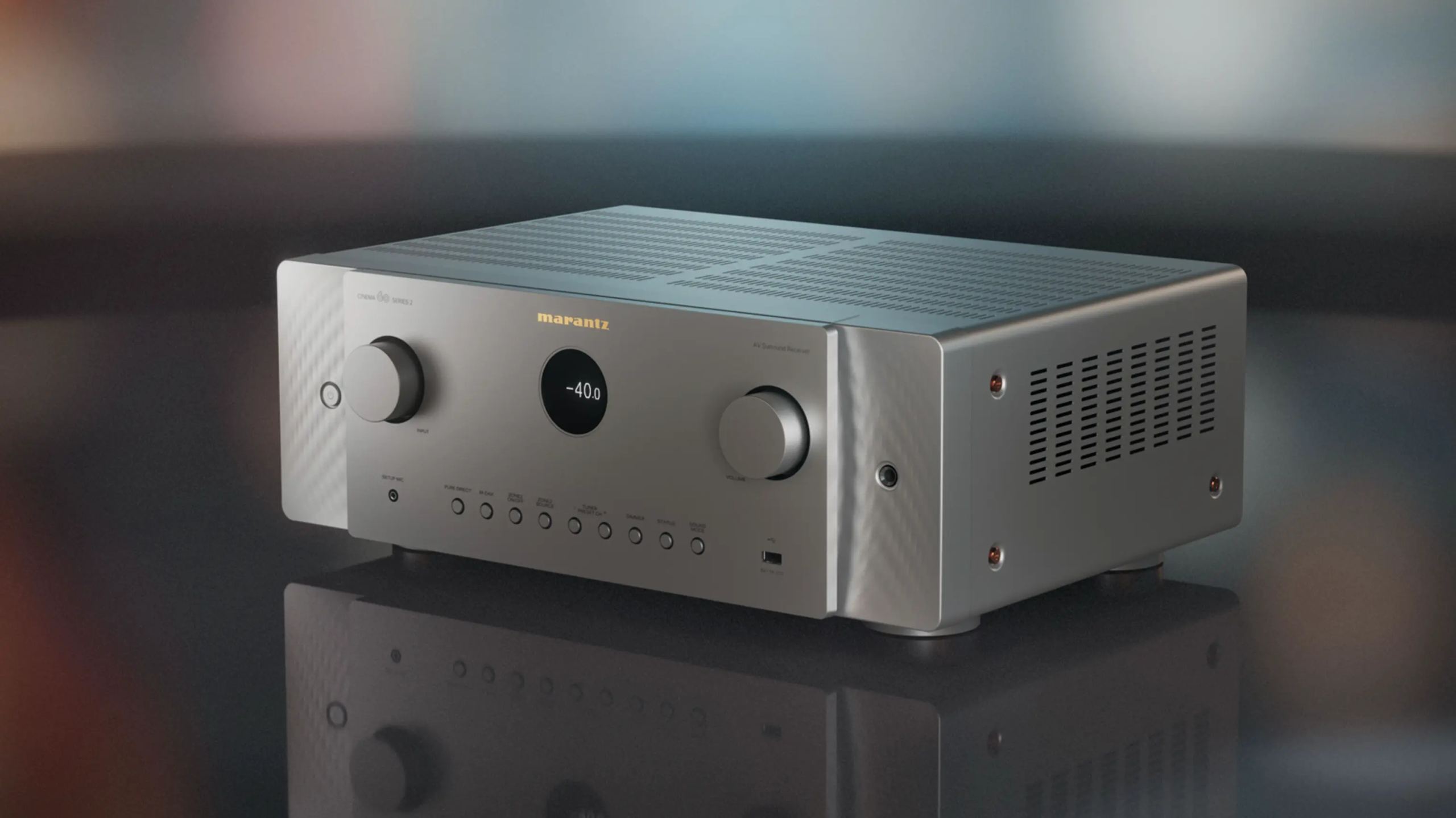
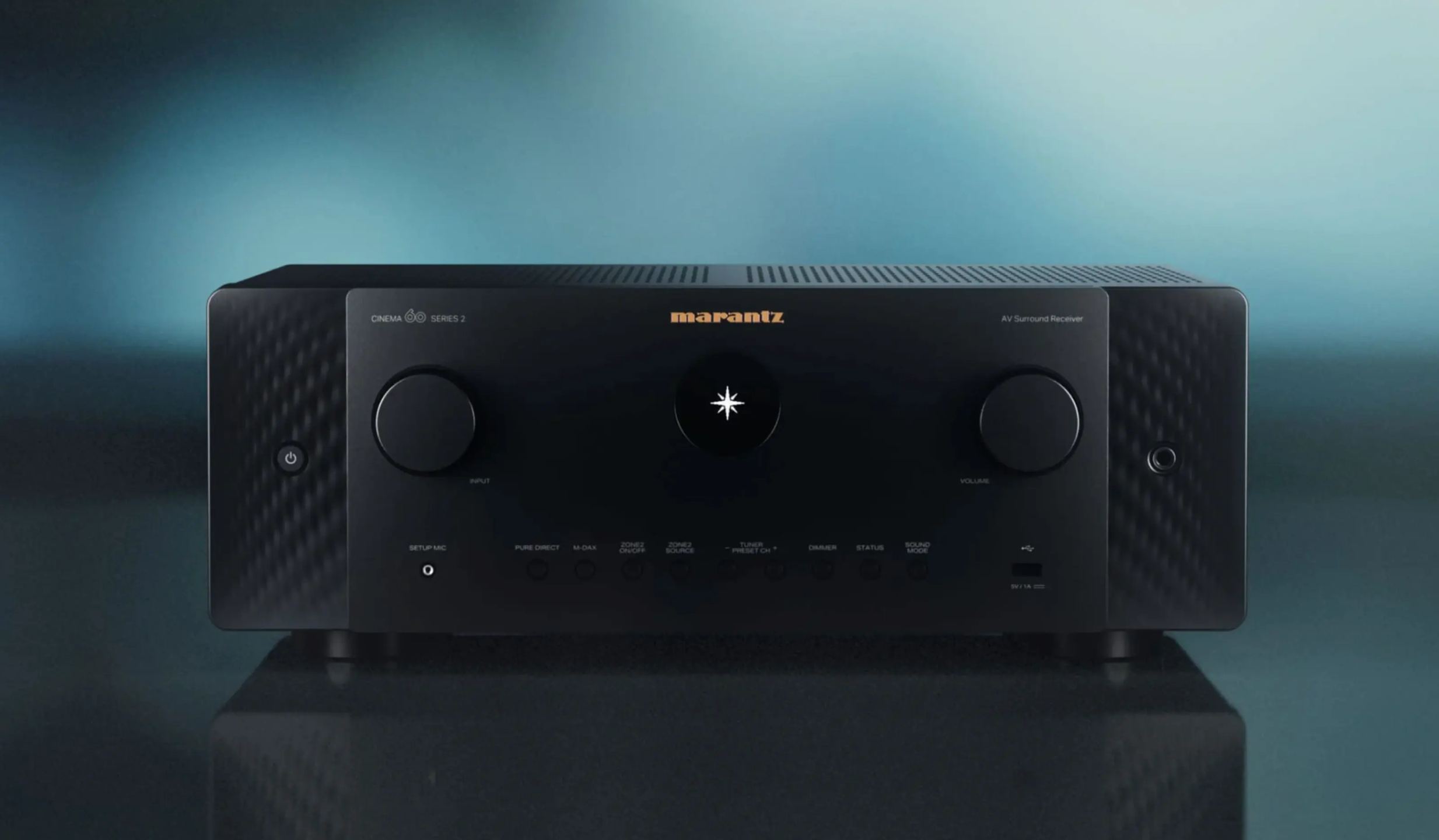
Nothing distinguishes the Cinema 60 DAB Series 2 from its predecessor at first glance, and Marantz embraces that. The symmetrical design, central OLED display window and two large knobs carry over unchanged to the new generation. The dimensions remain the same as well: 442 × 343 × 165 mm without the antenna, 354 mm deep when it is folded down, 235 mm high when raised, and 10.9 kg on the scales. The front panel is not metal, unlike that of the Cinema 50 Series 2: the central panel is molded plastic, framed by textured side sections that partly compensate for the effect. A USB audio input and a headphone jack complete the front panel, which has no HDMI input.
A 32-bit converter for all eight channels
The conversion section is the only clear hardware change in this second series, shared by all four models. Marantz replaces the previous stage with an eight-channel 32-bit converter: each channel has its own conversion, carried out at the same time as the others. The brand expects better channel balance stability, fewer synchronization discrepancies and a shorter signal path. Two digital filters are available through the menus, one with a gentle roll-off and the other with a steep roll-off, with audible effects mainly on the treble of highly detailed recordings. This type of upgrade is not heard like a doubling of power: it affects the coherence of the soundstage, not the level.
Seven power stages and up to 5.1.2
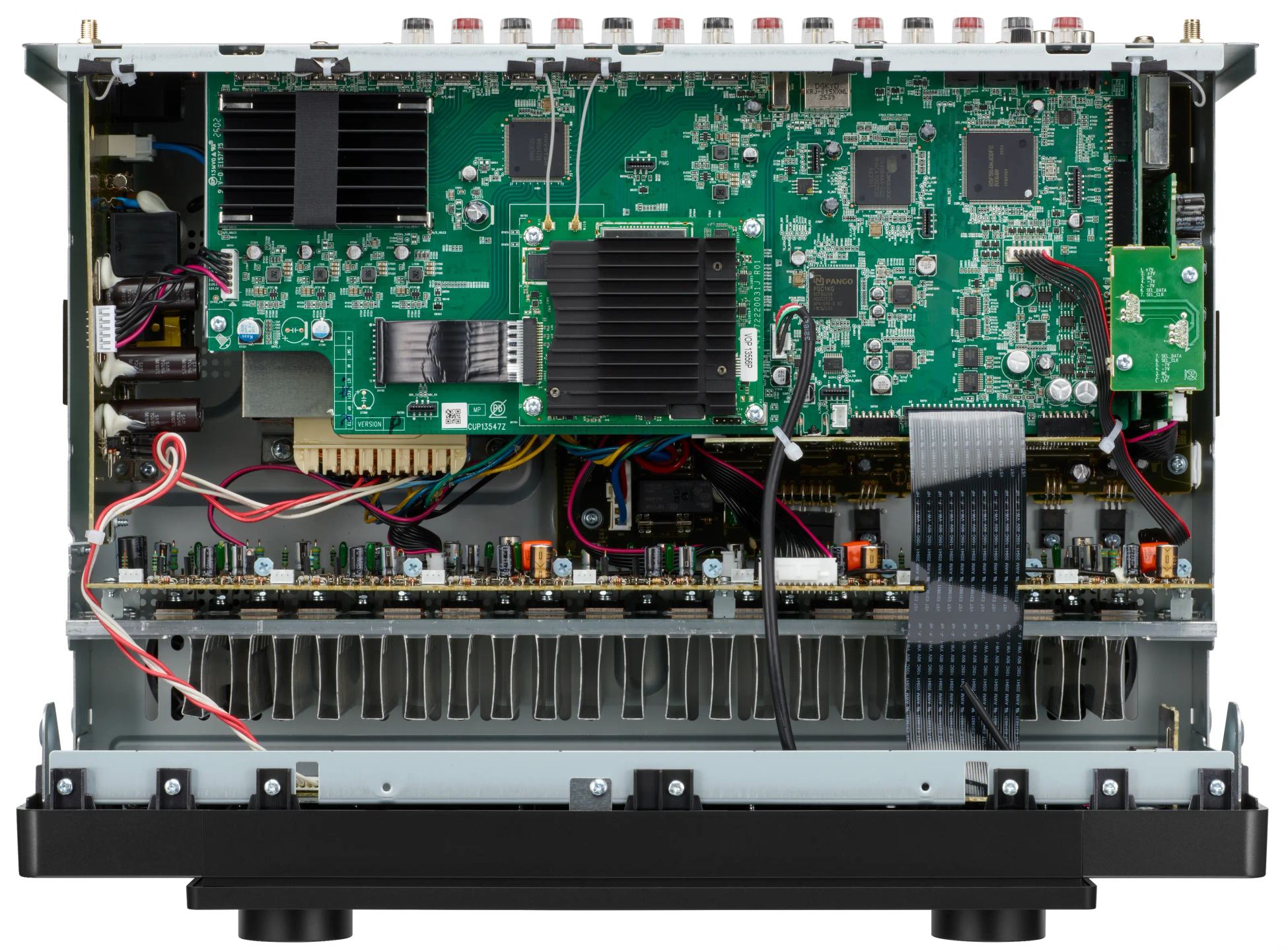
Seven discrete-component power stages deliver 100 W into 8 ohms, measured from 20 Hz-20 kHz at 0.08% distortion with two channels driven. The second catalog power rating, 140 W into 6 ohms, is measured only at 1 kHz and at 0.7% distortion: the first figure describes real-world behavior. Marantz guarantees 70% of this power with five channels driven simultaneously, a rarely stated figure that is useful when a soundtrack engages the entire system. The power supply uses an EI transformer rather than a toroidal one, with current-feedback topology and HDAM-SA2 modules updated for this series.
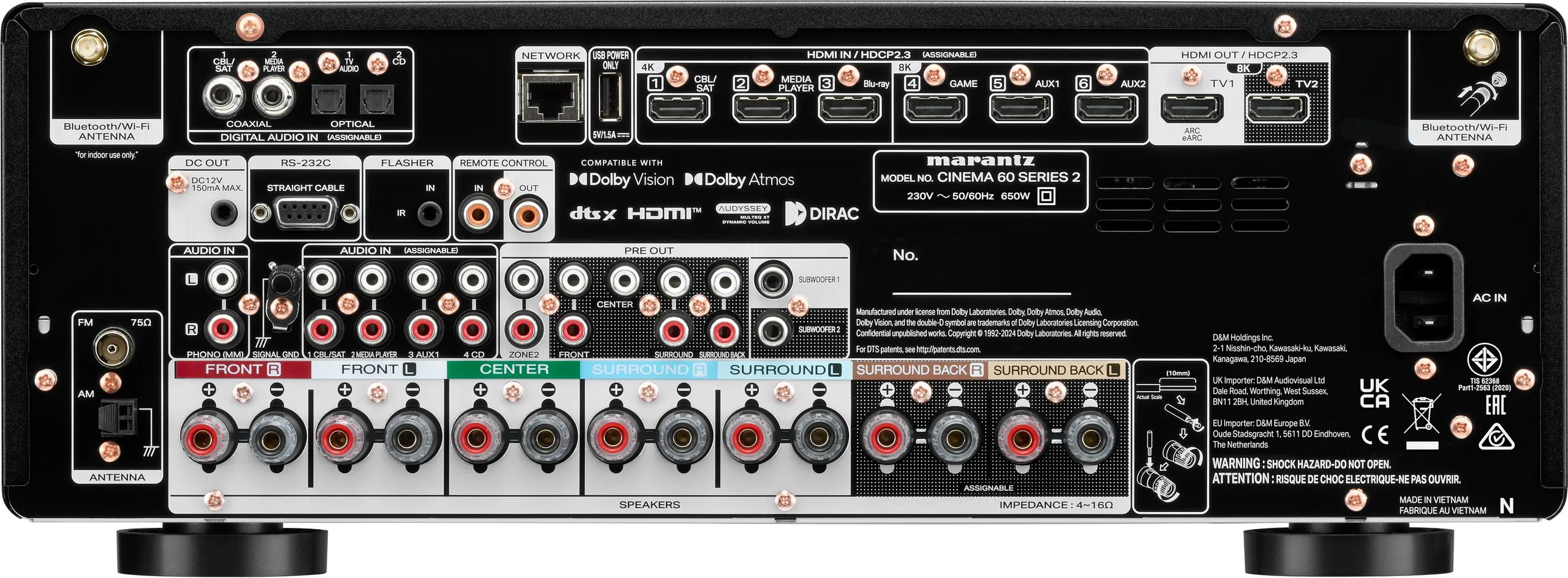
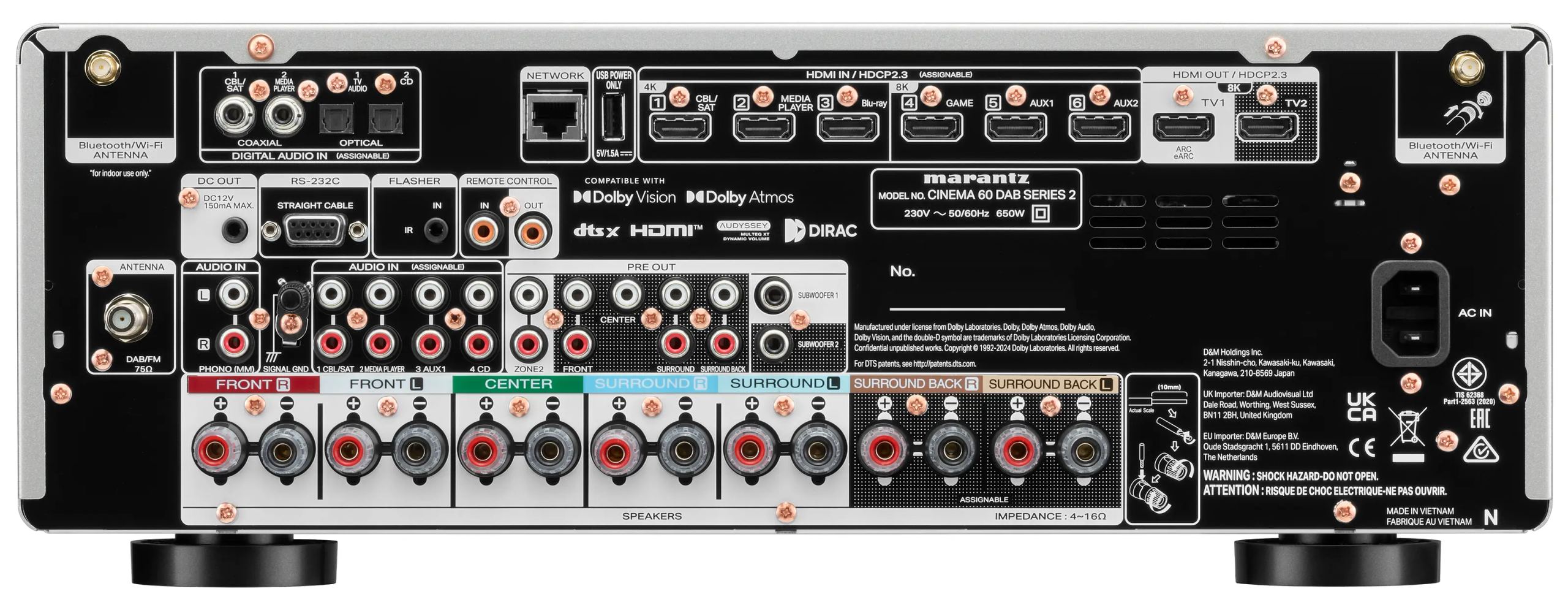
Processing is limited to 7.1 channels. In Dolby Atmos, this means 5.1.2: five floor-level speakers and two height channels, with one or two subwoofers. The seven screw terminals are allocated among these uses or switched to bi-amping the front speakers, a set of B speakers or the second zone, always drawing from the same seven stages. The 7.2 preamp output provides all channels, and the new Pre-Amp mode allows any channel to be routed to an external power amplifier. The two subwoofer outputs operate in standard mode only, without directional management.
Mechanical refinements inherited from hi-fi
Marantz has adopted a few practices from its stereo components. Copper-plated screws replace standard hardware on the rear and side panels, with the aim of improving ground continuity. Felt pads are added underneath to damp vibrations transmitted by the furniture. The master clock has been reworked, and the quartz resonator receives a Teflon sheet intended to lower the noise floor. None of these points can be isolated in listening, and the brand publishes no before-and-after measurements: they are manufacturing refinements, to be taken for what they are.
Audyssey included, Dirac Live extra
The Audyssey microphone and its cardboard stand are included in the box, and MultEQ XT handles calibration without requiring any purchase: measurements at several listening positions, response correction, Dynamic EQ to maintain tonal balance at low volume, and Dynamic Volume to smooth level differences. The Audyssey app and MultEQ-X software offer finer adjustments for those who want more control. Two speaker presets allow two configurations to be stored in memory, useful when the same room is used for cinema and stereo listening.
Series 2 also adds access to Dirac Live Room Correction, previously reserved for higher-end models. The license is purchased separately and activated through a software update. There are two caveats: only room correction is offered, with Bass Control and Active Room Treatment remaining exclusive to the Cinema 50 Series 2, and the Dirac measurement microphone is not included. MultEQ XT also has less filter resolution than the XT32 in the model above, a difference that matters especially in the bass range.
Six HDMI inputs and two parallel outputs
All six HDMI inputs are on the rear panel. Three support 40 Gbit/s and accept both 8K at 60 Hz and 4K at 120 Hz, while the other three remain 2.0b. The two outputs operate in parallel, with no dedicated video output for a zone, and eARC provides uncompressed audio return from the television. HDR support covers Dolby Vision, HDR10+, dynamic HDR and HLG, with 1080p and 4K upscaling to 8K and signal pass-through in standby. Four analog inputs, two optical inputs, two coaxial inputs and one phono input complete the connectivity.
For gaming, Series 2 adds 1440p pass-through and AMD FreeSync compatibility on inputs 4 to 6, alongside the existing VRR, ALLM and Quick Frame Transport. Quick Media Switching is absent: frame-rate changes still cause a brief black screen.
Digital radio, HEOS and second zone
The DAB tuner and DAB+ justify the suffix in the name, with FM and its RDS as an addition. AM is not received. This is the only functional difference from the Cinema 60 Series 2 sold outside Europe.
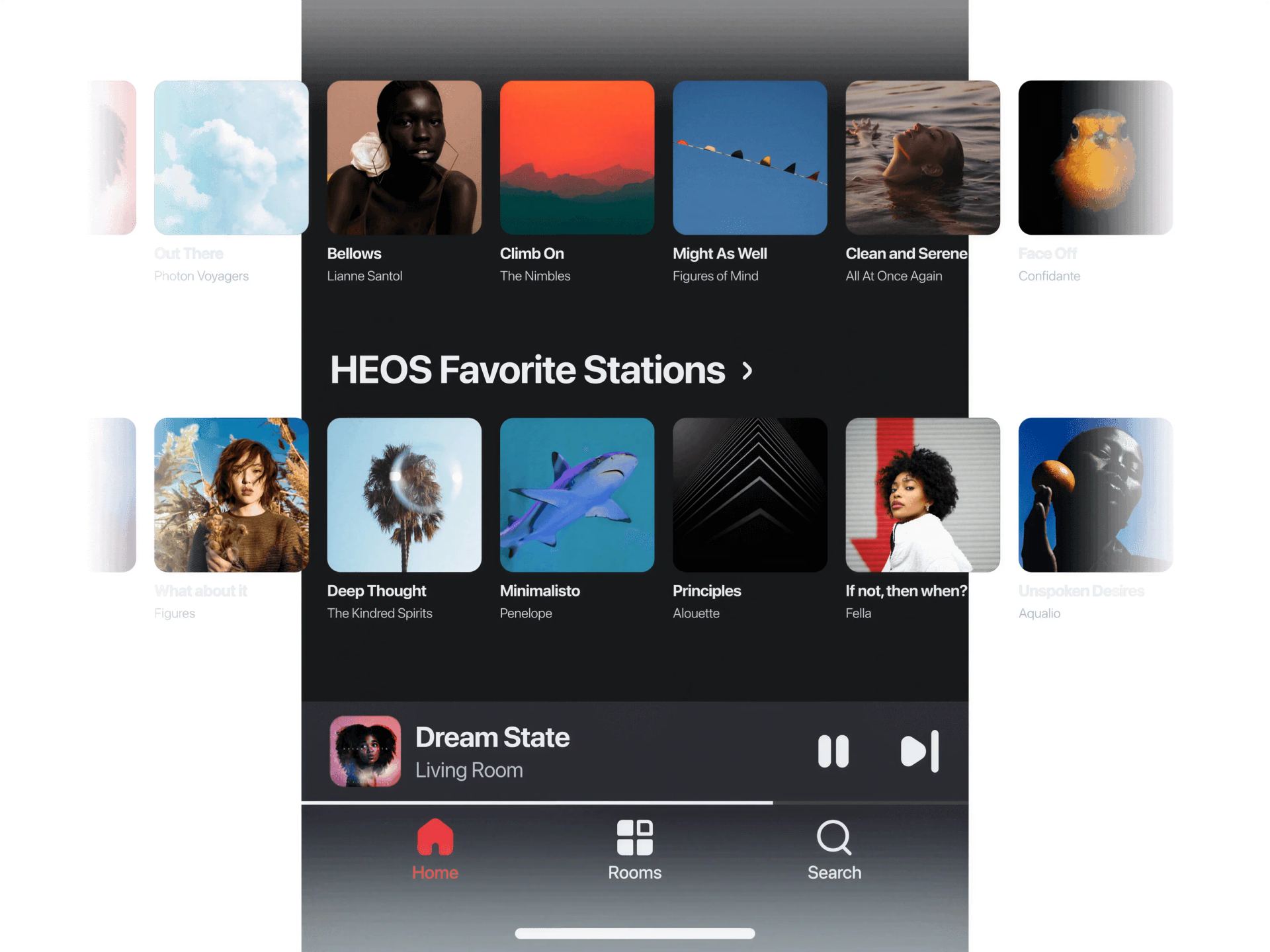
The HEOS module has been revised for this generation, with reportedly more responsive navigation. It provides access to Spotify Connect, Tidal Connect, Qobuz Connect, Deezer, Amazon Music HD and TuneIn web radio, in addition to AirPlay 2 and Roon Ready certification. Network or USB playback reaches 192 kHz/24-bit in FLAC, WAV and ALAC, handles DSD at 2.8 and 5.6 MHz and plays tracks gaplessly. Bluetooth works both ways, receiving from a phone and transmitting to headphones with volume adjustment; Marantz announces the addition of low-latency Bluetooth LE Audio via update.
The second zone remains audio-only. Its sources exclude HDMI and are limited to network, USB, analog inputs and optical and coaxial digital stereo inputs. Multichannel content from the main room is downmixed to stereo there. Output is available through preamplification or speaker terminals, taken from the seven channels.
Web Control 2.0 and installer tools
Configuring the unit without turning on the television is now possible: Web Control 2.0 opens all settings from a browser, on both phone and computer. CI mode adds HDMI Diagnostics 2.0, with a test-pattern generator and Hot Plug monitoring, enough to identify a faulty cable or component without dismantling the furniture. The channel level monitor displays each channel’s activity in real time, speeding up verification of a newly wired installation.
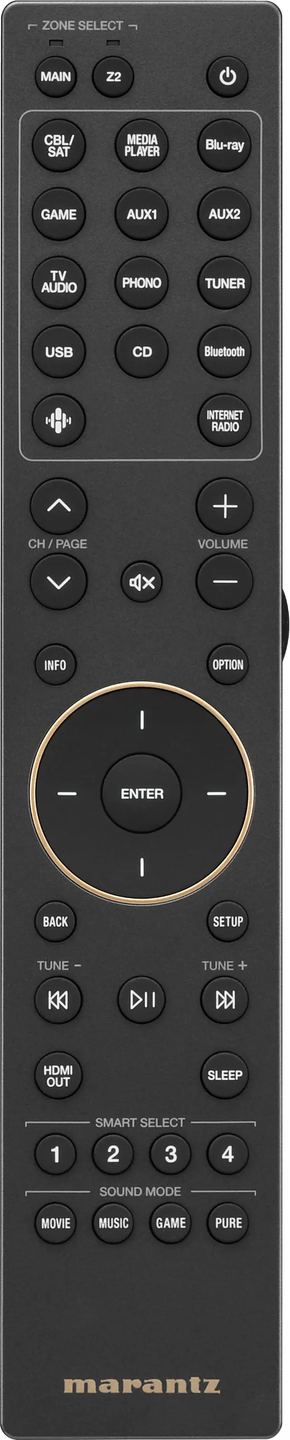
The graphical interface remains in 1080p and supports nine languages, with a setup assistant on first start-up and the Smart Select function for recalling a source and its settings at the touch of a button. Updates are installed through the network or a USB drive, and control supports IP, RS-232, browser and app. Installers will find the IR Flasher input, Marantz remote-control bus and a 12 V trigger output. The RC054SR remote control is backlit, and a 5 V/1.5 A USB port on the rear powers a streaming stick without adding a power adapter. ECO mode reduces idle power consumption from 75 to 45 W, while standby drops to 0.2 W.
Documentation
Technical specifications
Amplification and signal processing
- Number of amplification stages: 7
- Discrete component power stages
- Power transformer: EI
- Current feedback topology
- Hyper Dynamic Amplifier modules: HDAM-SA2
- High-end audio components
- Pure Direct mode
- Compressed file restoration: MDAX2
- Output power
- 100 W (8 Ω, 20 Hz-20 kHz, 0.08%, 2 channels)
- 140 W (6 Ω, 1 kHz, 0.7%, 2 channels)
- 70% power guarantee with 5 channels driven
Room correction and calibration
- Room correction: Audyssey MultEQ XT
- Audyssey Dynamic EQ and Dynamic Volume
- Compatible with the Audyssey app and Audyssey MultEQ-X
- Compatible with Dirac Live Room Correction (upgrade)
- Automatic microphone calibration: Audyssey MultEQ XT, Dirac Live as an upgrade
- Subwoofer mode: standard
- Speaker configuration presets: 2
- Variable crossover
- Optimized bass redirection
Surround formats and multichannel processing
- DTS-HD, DTS:X, DTS Neural:X, DTS Virtual:X
- Dolby TrueHD, Dolby Atmos, Dolby Atmos Music, Dolby Surround
- Atmos height channel virtualization
- Multichannel stereo
- Maximum number of processed channels (preamp): 7.1
HDMI connectivity and video compatibility
- HDMI inputs: 6 on the rear panel, including 3 compatible with 8K
- HDMI outputs: 2 main
- Maximum resolution: 8K / 60 Hz and 4K / 120 Hz
- HDMI upscaling: 1080p and 4K to 8K
- 8K, 4K, CEC and eARC compatibility
- Dolby Vision, HDR10+, Dynamic HDR, HLG
- ALLM (Auto Low Latency Mode)
- Quick Frame Transport
- VRR (Variable Refresh Rate)
- Compatible with AMD FreeSync on HDMI inputs 4 to 6
- HDMI standby passthrough
Network and streaming services
- Wi-Fi, Bluetooth and Ethernet port
- HEOS multiroom and streaming
- AirPlay 2
- Roon Ready
- Internet radio: TuneIn
- Spotify Connect, Tidal, Deezer and other services
- Tidal Connect, Qobuz Connect, Amazon Music HD
- Bluetooth transmission to headphones with volume adjustment
- Lossy formats: MP3, WMA, AAC
- Lossless formats: FLAC HD 192 / 24, WAV 192 / 24, ALAC 192 / 24
- DSD playback: 2.8 and 5.6 MHz
- Gapless playback: FLAC, WAV, ALAC, DSD
Multiroom and integration
- Built-in HEOS multiroom
- TV sound grouping
- Multiroom zones: 2
- Stereo downmix in a zone from a multichannel source in the main room
- Zone sources: optical and coaxial (2 channels), network, USB, analog
- Zone audio output: speakers and preamp
- Web browser configuration
- IP, RS232, web and app control
- IR Flasher input and Marantz Remote Bus
- Continuous trigger output: 1
Inputs and outputs
- HDMI inputs: 6
- HDMI outputs: 2
- Analog inputs: 4
- MM phono input
- Digital inputs: 2 optical and 2 coaxial
- Analog multiroom output: 1
- Multichannel preamp: 7.2
- Subwoofer outputs: 2
- Front-panel USB audio input
- Rear-panel USB power 5 V / 1.5 A
- Screw-type speaker terminals
- Number of speaker terminals: 7
- Assignable A and B speakers
- Assignable bi-amplification
- Assignable multiroom speaker terminal
Tuner
- DAB and DAB+ tuner
- FM tuner with RDS
Settings and user interface
- Display: OLED porthole
- Graphical user interface: 1080p high definition
- Interface languages: 9
- Setup assistant
- Smart Select
- Firmware update via network and USB
- HDMI diagnostic mode
- ECO mode, automatic shutdown, sleep timer
- Smartphone app: Marantz AVR Remote and HEOS
- Tablet app: Android, iOS, Amazon Kindle
Power supply and consumption
- Power consumption: 650 W
- No-signal consumption: 45 W in ECO mode, 75 W outside ECO mode
- Standby power consumption: 0.2 W
- CEC standby power consumption: 0.5 W
- Network standby power consumption: less than 2 W
Included accessories
- Main unit
- Remote control
- Batteries
- AM / FM antennas
- Cable labels
- Quick start guide
- Audyssey microphone
- Cardboard microphone stand
- 2 detachable external antennas
- AC power cord
Dimensions and weight
- Maximum dimensions with horizontal antenna: 442 × 354 × 165 mm
- Maximum dimensions with vertical antenna: 442 × 354 × 235 mm
- Dimensions without antenna: 442 × 343 × 165 mm
- Weight: 10.9 kg
- Carton dimensions: 520 × 434 × 273 mm
- Carton weight with product: 13.8 kg
Frequently asked questions
Does the Cinema 60 DAB Series 2 support a 7.1.4 configuration?
No. Processing is limited to 7.1 channels, allowing at most 5.1.2 in Dolby Atmos or 7.1 without height channels. Adding an external power amplifier changes nothing: the limitation lies in the processor, not the amplification. Four height speakers require a model with more extensive processing, such as the Cinema 50 Series 2 and its 11.4 channels.
Is the included microphone sufficient for Dirac Live?
No. The supplied Audyssey microphone is used for MultEQ XT calibration. Dirac Live requires a calibrated USB measurement microphone, sold separately, in addition to the paid license. Calibration is then controlled from the Dirac Live application installed on a computer or mobile device.
What distinguishes the Cinema 60 Series 2 from the Cinema 60 DAB Series 2?
The tuner, and nothing else. The DAB version adds DAB and DAB+ digital radio to FM RDS reception, and this is the version Marantz distributes in Europe; the non-DAB version is reserved for the Americas and the Asia-Pacific region. Amplification, connectivity, and network functions are identical from one model to the other.
Can you connect a turntable without a preamplifier?
Yes, if its cartridge is moving magnet: the MM phono input and its ground terminal are located on the rear panel. A moving-coil cartridge requires an external phono preamplifier or a step-up transformer, as the input sensitivity and load are not designed for this signal level.
Are the two subwoofer outputs independent?
No. Subwoofer mode is limited to the standard setting: both outputs receive the same signal. They are used to distribute the load between two identical subwoofers or to position them symmetrically in the room, not to calibrate them separately. Independent control, with position management and individual calibration, requires the Cinema 50 Series 2 and its four outputs.
Do you need an 8K TV to take advantage of HDMI 2.1 inputs?
No. The three 40 Gbit/s inputs are primarily intended for 4K at 120 Hz, the format used by current game consoles and graphics cards, along with VRR and ALLM. Upscaling to 8K remains available for a TV that accepts this signal, without adding detail to the original image.
- Eco-contribution included in the sale price.
- Manufacturer reference: CINEMA60DABS2N1B
- GTIN / EAN: 747192148218