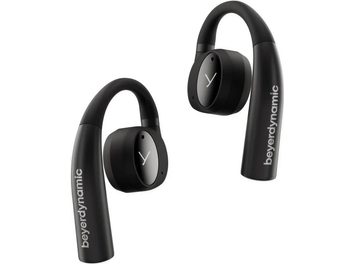
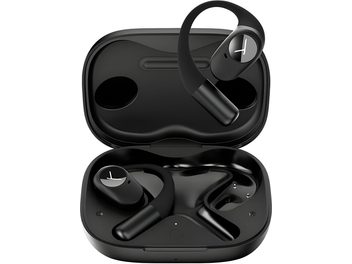
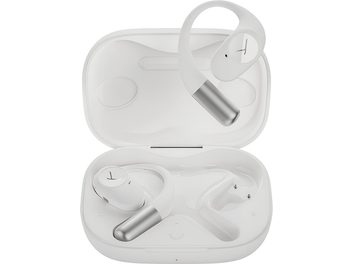
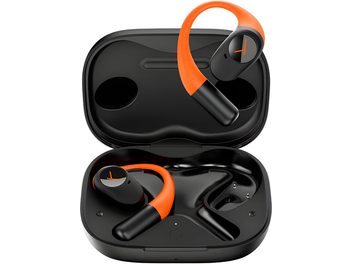
Open-Ear Headphones
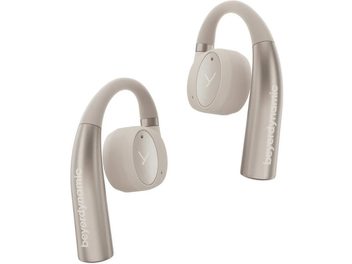
An open-ear headphone is worn without inserting anything into the ear canal: the speaker sits in front of the ear or rests against the temple, leaving the canal free. Sound reaches the ear through the air (air conduction) or through the bones of the skull (bone conduction), depending on the model. As a result, you can hear your music and your surroundings at the same time, without cutting yourself off from traffic, a colleague or an announcement. This format prioritizes safety and comfort over isolation: nothing presses inside the ear, heat and the plugged-ear sensation disappear, a real advantage for long days and for ears sensitive to in-ear models. The trade-off is clear. Without a seal, bass extension is reduced and the actual volume drops as soon as there is surrounding noise, meaning a noisy subway takes over. Sound leakage also occurs at high volume, with nearby people hearing a faint stream of music. Fit is ensured by flexible ear hooks, a neckband or a lightweight headband, designed to stay in place while walking or running, often with a sweat- and rain-resistance rating. Connectivity is almost always via Bluetooth, with a microphone for calls and a charging case on two-earbud models. To truly shut out the outside world, in-ear headphones remain the opposite choice, with their tips that seal the ear canal. A high-quality source remains useful for portable listening, whether it is an audiophile music player or a portable DAC connected to the phone.