

Real Cable Chenonceau XLR 1m cable
Overview
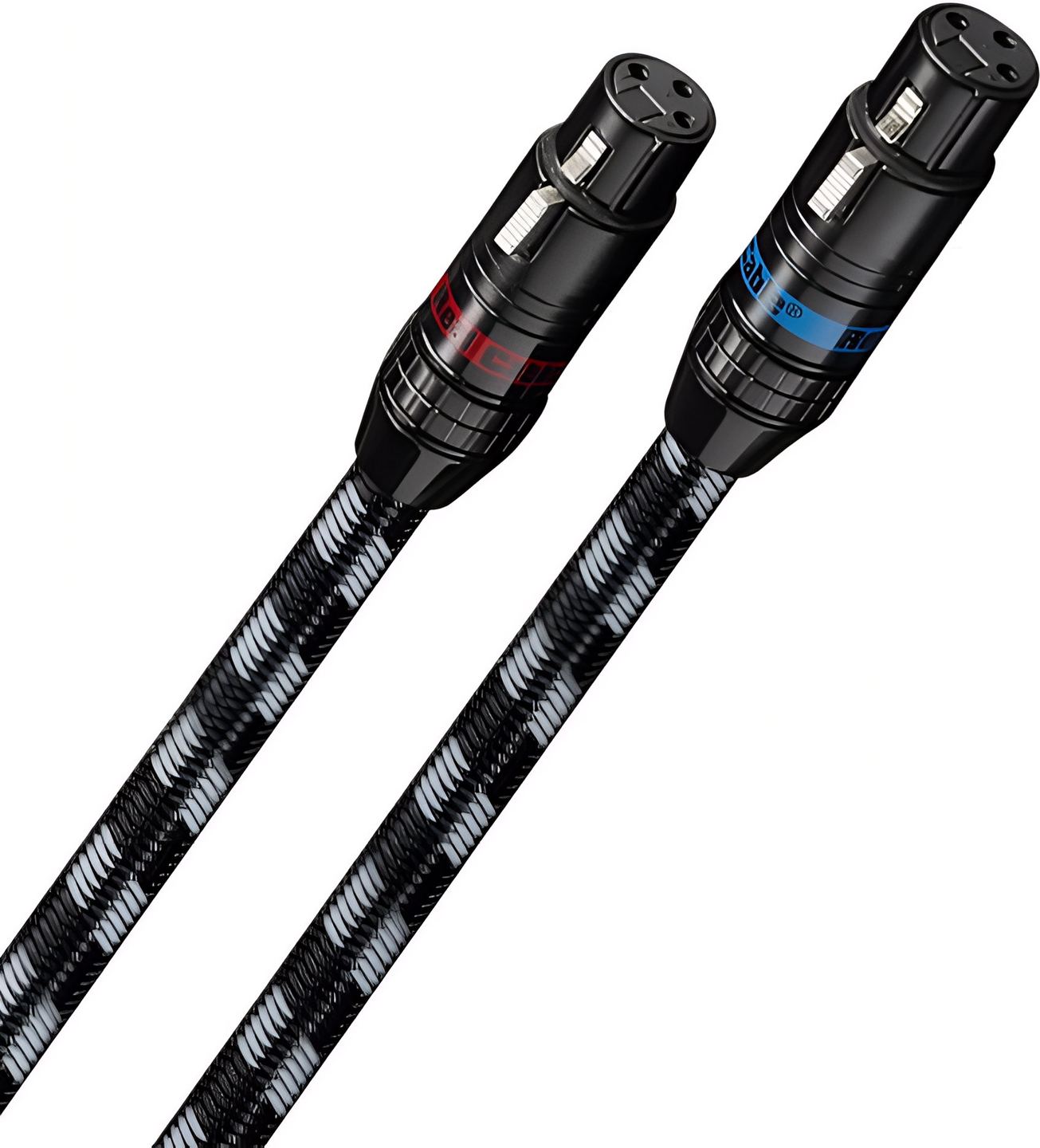
The Chenonceau XLR is a balanced interconnect cable from Real Cable’s Master range. Hand-assembled in France at the Guillerval workshops, it uses deoxygenated crystalline silver conductors, triple shielding, and professional connectors with a rotary locking mechanism. This limited-edition model is designed for transmitting balanced analog signals between sources and amplifiers.
OCC silver conductors for crystal-clear transmission
The choice of deoxygenated crystalline OCC (Ohno Continuous Cast) silver for the conductors forms the technical foundation of the Chenonceau XLR. This technology, developed by Professor Ohno at the Chiba Institute of Technology in Japan, enables a continuous monocrystalline structure along the entire length of the conductor. Unlike traditional copper composed of multiple crystals with intergranular boundaries, the OCC process yields a metal with purity reaching 99.9999%, virtually free of structural discontinuities.
The cable uses a two-conductor configuration: one solid core for the hot and one solid core for the cold, in accordance with the balanced XLR standard. This solid-core architecture, as opposed to multi-stranded conductors, preserves signal integrity by eliminating parasitic interactions between strands. The conductors are twisted at a calculated angle to reduce inductance per unit length, a critical parameter that directly influences frequency response and signal propagation speed.
The use of silver, the metal with the highest electrical conductivity in the periodic table (about 105% IACS versus 100% for copper), provides measurable benefits in high-frequency transmission. Its natural resistance to oxidation also ensures stable performance over time, unlike copper whose characteristics can gradually degrade.
Hollow Tube anti-vibration insulation: the Hollow Tube technology
Conductor insulation employs Real Cable’s proprietary “Hollow Tube” technology, consisting of hollow tubes that envelope each conductor. This approach is radically different from traditional solid dielectrics and offers several decisive technical advantages.
The hollow tubes create air gaps around the conductors, significantly reducing the cable’s capacitive effect. Since air has a dielectric constant close to 1 (versus 2.1 for solid PTFE), this configuration minimizes electrostatic energy storage between the conductors and the shield. This reduction in capacitance per unit length improves transient response and preserves the dynamics of complex musical signals.
Beyond their electrical properties, the hollow tubes act as mechanical dampers. Vibrations induced by the acoustic environment or by handling the cable are dissipated within the hollow structure rather than transmitted to the conductors. This mechanical decoupling reduces microphonics, where mechanical vibrations generate parasitic electrical signals.
The system combines this Hollow Tube structure with PTFE (polytetrafluoroethylene) insulation, a material renowned for its superior dielectric properties. PTFE’s insensitivity to static charges eliminates the memory effect, a phenomenon where the dielectric retains a residual charge after the signal passes. Its mechanical rigidity also maintains a constant spacing between conductors, ensuring a stable characteristic impedance along the entire length of the cable.
Triple-layer shielding against interference
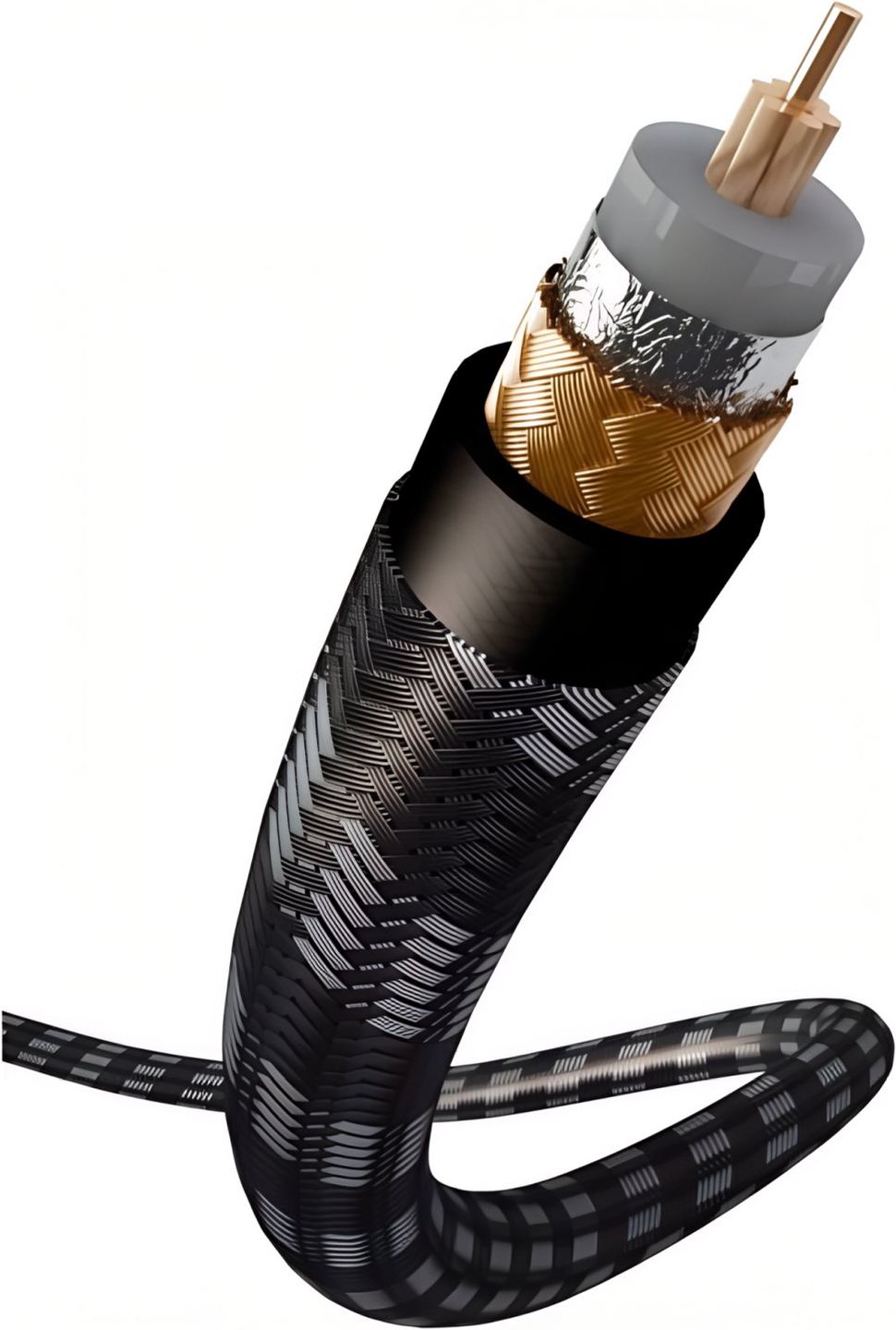
Protection against electromagnetic interference relies on a sophisticated three-tier shielding system. This multilayer architecture creates an exceptionally effective barrier against external disturbances while preserving the integrity of the transmitted signal.
The first line of defense is a nylon anti-vibration braid that envelops all insulated conductors. Beyond its mechanical damping role, this braid provides an initial dispersion of incident electromagnetic fields. It is followed by a high-density OFC copper braid serving as the primary shield. This tight weave offers optimal coverage while retaining the flexibility needed for cable handling.
The third layer uses an aluminum foil that completes the system by blocking parasitic high frequencies. Thanks to its high conductivity and low magnetic permeability, aluminum forms a particularly effective screen against radio-frequency interference. This combination of materials and techniques ensures greater than 95 dB rejection of unwanted signals across the audible spectrum and beyond.
The cable’s round design, with a substantial 12 mm diameter, also contributes to shielding effectiveness. This cylindrical geometry ensures a uniform distribution of electromagnetic fields and prevents concentrations of mechanical stress that could degrade shielding performance over time.
One-piece XLR connectors with rotary locking system
The XLR connectors are a critical element in the transmission chain. Real Cable has developed one-piece metal plugs machined from solid, ensuring optimal mechanical rigidity and conductivity. This monolithic construction eliminates screwed or clipped assemblies, potential sources of contact resistance and gradual loosening.
The patented rotary locking system ensures a perfectly secure connection. Unlike traditional spring systems that can loosen over time, this mechanism guarantees constant contact pressure between the pins and their receptacles. The rotation required for locking also cleans the contact surfaces through friction, removing any superficial oxidation.
The contacts feature 24-karat gold plating with a calibrated thickness to ensure durability and optimal conductivity. Gold, the quintessential noble metal, prevents corrosion and maintains minimal contact resistance even after hundreds of connection/disconnection cycles. The plating is applied using a controlled electrolytic process that guarantees perfect adhesion and uniform thickness across the entire contact surface.
Hand-soldering the conductors to the connectors showcases preserved artisanal expertise. Each joint is made individually by skilled technicians using lead-free audiophile-grade solder alloys. This manual approach allows visual inspection of every solder and ensures the absence of mechanical stress on the silver conductors, which are particularly sensitive to deformation.
Documentation
French
Technical specifications
Conductors
- Silver and OCC (Ohno Continuous Cast) copper conductors
- Two separate conductors
- 1 solid-core for positive
- 1 solid-core for negative
- Twisted conductors to reduce linear inductance
Construction and shielding
- Conductor insulation via anti-vibration hollow tubes
- Triple shielding
- Very large cross-section cable
- Round design
Connectors
- Male and female XLR connectors
- One-piece metal plugs with rotary locking system
- Gold-plated contacts
- Hand-soldered
Physical specifications
- Diameter: 12 mm
- Length: 1 m (pair)
General information
- Assembled in France
- Limited edition
- 100% handmade
- Sound characteristics: powerful bass, precise mids, detailed highs, wide soundstage
Frequently Asked Questions
What’s the difference between OCC silver and standard OFC copper for an audio cable?
OCC silver has about 5% higher conductivity than standard OFC copper and a monocrystalline structure that eliminates inter-grain boundaries. These characteristics translate into more detailed high-frequency transmission and better preservation of micro-information. Silver also resists oxidation better, ensuring stable performance over time, unlike copper which can gradually oxidize at the surface.
Why use hollow tubes instead of solid insulation?
Hollow Tube elements create air pockets around the conductors, reducing the effective dielectric constant of the insulation. This configuration decreases the cable’s capacitance per unit length by about 30% compared with solid PTFE insulation, improving transient response and reducing parasitic energy storage. The tubes also act as mechanical dampers, dissipating vibrations before they reach the conductors.
Is triple shielding really necessary in a home environment?
Today’s home environments are saturated with electromagnetic interference: Wi‑Fi, mobile phones, switching power supplies, light dimmers. The Chenonceau XLR’s triple shielding provides greater than 95 dB rejection across the spectrum, ensuring an optimal noise floor even in challenging conditions. This protection is particularly critical for long runs or when cables pass near sources of interference.
How does the rotary locking system improve the connection?
The rotary lock maintains constant pressure on the contacts, unlike spring systems that can loosen. The rotation mechanically cleans the contact surfaces, removing micro-oxidation. This system also prevents accidental disconnections during handling or vibration, a recurring issue with standard XLR connectors in fixed installations.
- Eco-contribution included in the sale price.
- GTIN / EAN: 3700195820564