Francis
Meets expectations, optimal sound and video quality.
Comment from January 01, 2024 — Experience from December 11, 2023
Automatically translated — Show original (French)
Conforme aux attentes, qualité son et vidéo optimaux.
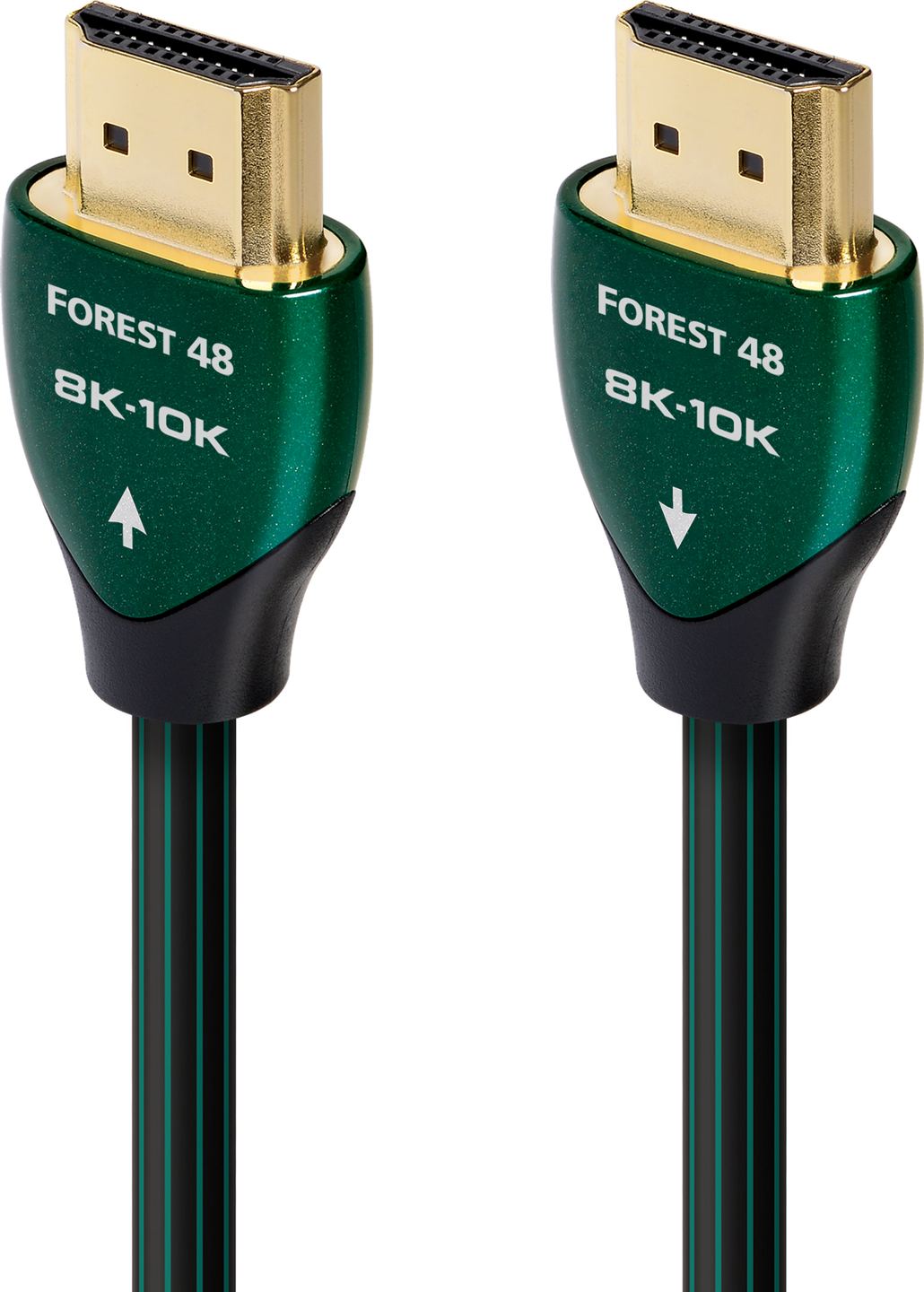


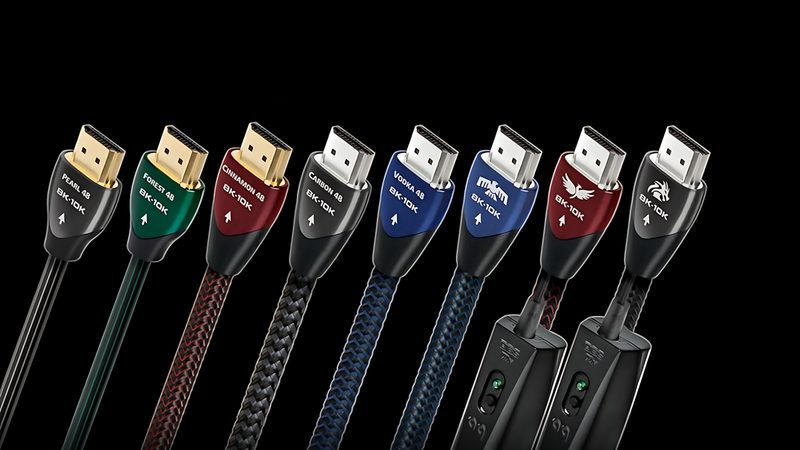
At a time when the HDMI 2.1 standard is becoming the norm in home cinema and gaming setups, AudioQuest is offering the Forest 48, an Ultra High Speed certified cable that incorporates the brand’s proprietary noise-dissipation technologies. This model occupies the second rung of the American manufacturer’s 48 Gbps range, just above the Pearl 48, and marks the entry point into silver-plated conductor cables.
The Forest 48 uses solid conductors made of LGC (Long-Grain Copper) coated with a layer of silver that accounts for 0.5% of the total thickness. This plating technique is no trivial detail: in a high-frequency digital cable, the signal travels mainly along the surface of the conductor, a phenomenon known as the skin effect. Placing silver, which conducts better than copper, on this surface optimizes transmission without requiring a cable made entirely of solid silver.
The choice of solid conductors instead of stranded ones eliminates the electrical and magnetic interactions between the different strands that would otherwise make up the conductor. AudioQuest applies the same treatment to the conductors dedicated to eARC (Enhanced Audio Return Channel), which is not always the case with other manufacturers, who sometimes reserve their best materials for the main audio/video pairs only.
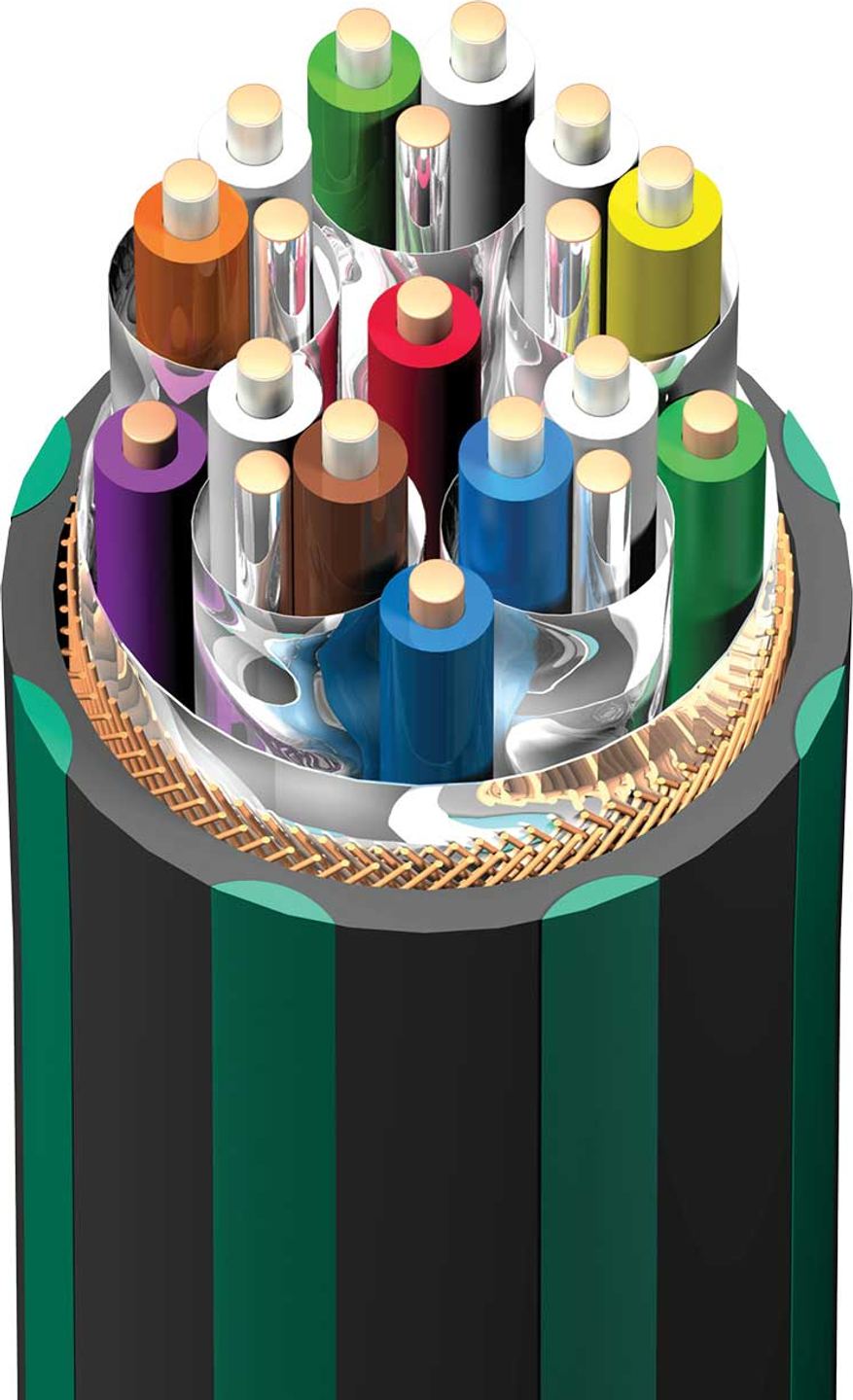
AudioQuest structures its noise-dissipation technology in several levels. The Forest 48 benefits from level 1, which is based on directional control of the cable’s 19 conductors. The principle starts from an observation: traditional shielding, even when rated at 100%, struggles to protect against radio-frequency interference generated by Wi‑Fi networks, Bluetooth, and mobile phones.
The granular structure of drawn metal presents an asymmetry that creates a preferred direction for draining noise. By controlling this orientation across all A/V pairs, eARC pairs, control and power conductors, AudioQuest directs captured interference towards the least sensitive circuits. Arrows on the connectors indicate the installation direction, from source to screen or amplifier.
Ultra High Speed certification guarantees a bandwidth of 48 Gbps, made possible by four balanced audio/video pairs, each capable of carrying 12 Gbps. This capacity allows the transmission of 4K streams at 120 frames per second, 8K at 60 frames per second, and even 10K at 30 frames per second over the shortest lengths.
The Forest 48 supports dynamic HDR in its various forms (HDR10+, Dolby Vision) and eARC, which can return uncompressed audio streams such as Dolby TrueHD, Dolby Atmos, DTS-HD Master Audio, or DTS:X from a TV to an amplifier or soundbar. Older generations of ARC were limited to compressed 5.1-channel audio; eARC removes this limitation.
All the gaming features of the HDMI 2.1 standard are supported: VRR (Variable Refresh Rate) to synchronize the screen’s refresh rate with the source, ALLM (Auto Low Latency Mode) to automatically activate the TV’s game mode, and QFT (Quick Frame Transport) to reduce latency in fast-paced action scenes. These features fully tap the potential of the PlayStation 5, Xbox Series X, and recent graphics cards.
The black PVC jacket with green stripes gives the cable greater stiffness than typical consumer cables, which can make routing through tight spaces more challenging but ensures good impedance stability over the entire length. The type A connectors are carefully assembled and feature the directional arrows characteristic of AudioQuest cables.
For an ARC connection between a TV and a soundbar, the cable must point towards the TV on both ends: the ARC conductors are wired internally to operate in the opposite direction to the main A/V pairs. This particularity is documented by AudioQuest but is worth keeping in mind during installation.
Yes, all AudioQuest 48 Gbps HDMI cables are backward compatible with earlier standards. You can use them with HDMI 2.0, 1.4, or even older equipment without any operational issues.
These arrows indicate the optimal installation direction for noise dissipation. The cable must be connected so that the arrows point from the source (player, console, set-top box) to the destination (TV, amplifier). For an ARC connection to a soundbar, the arrows must point towards the TV, even on the soundbar side.
The Cinnamon 48 uses thicker silver plating (1.25% vs. 0.5%) and benefits from optimized polyethylene insulation. According to AudioQuest, the difference is mainly noticeable on the audio side, with more precise transmission of high-resolution streams via eARC.
Yes, thanks to eARC and the 48 Gbps bandwidth, the cable can carry Dolby Atmos, DTS:X, and other uncompressed high-resolution audio formats, provided that both your source and receiving devices are also eARC compatible.
Francis
Meets expectations, optimal sound and video quality.
Comment from January 01, 2024 — Experience from December 11, 2023
Nicolas
Perfect! It does its job!
It's a brand I appreciate.
Comment from December 30, 2023 — Experience from December 18, 2023
Nicolas
HDMI cable good, color and sound. To connect my PC to my OLED UHD 4k TV.
Comment from October 19, 2023 — Experience from October 02, 2023