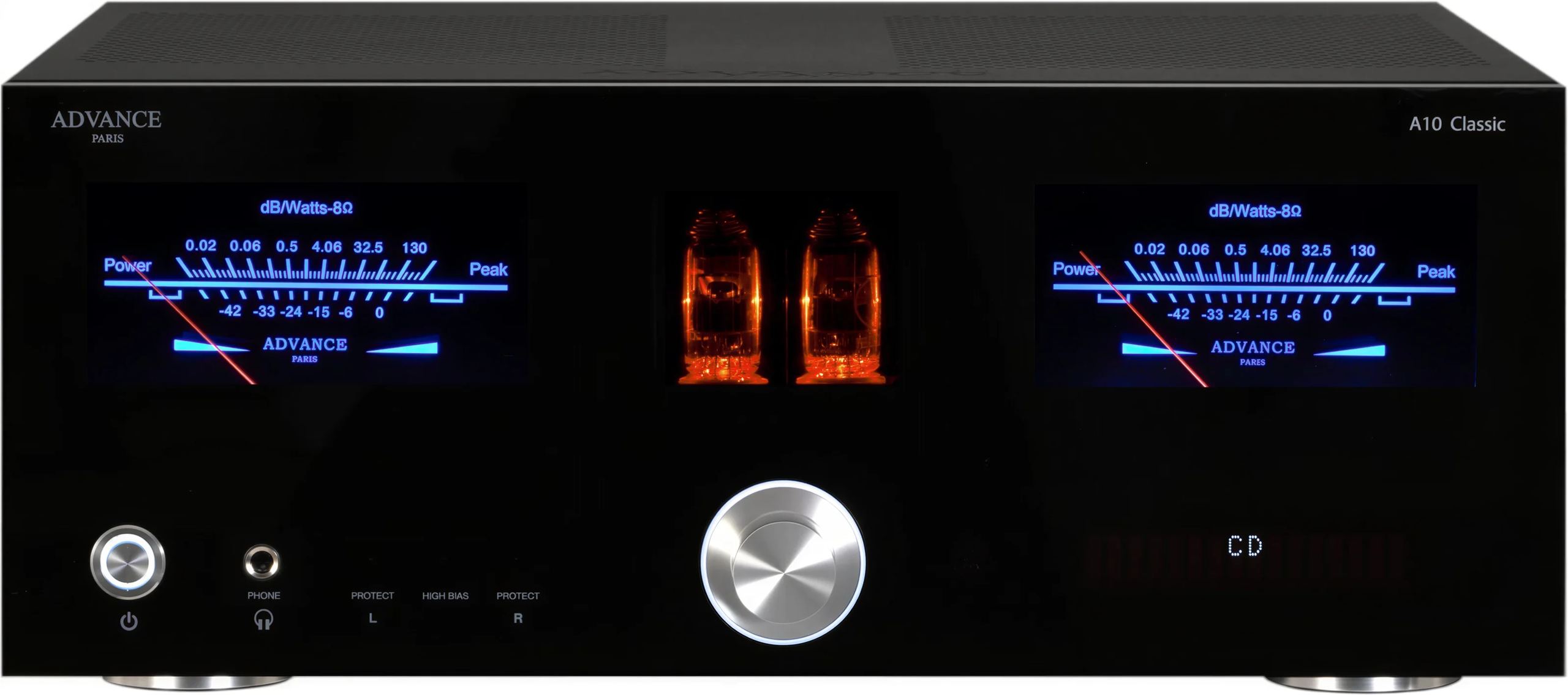
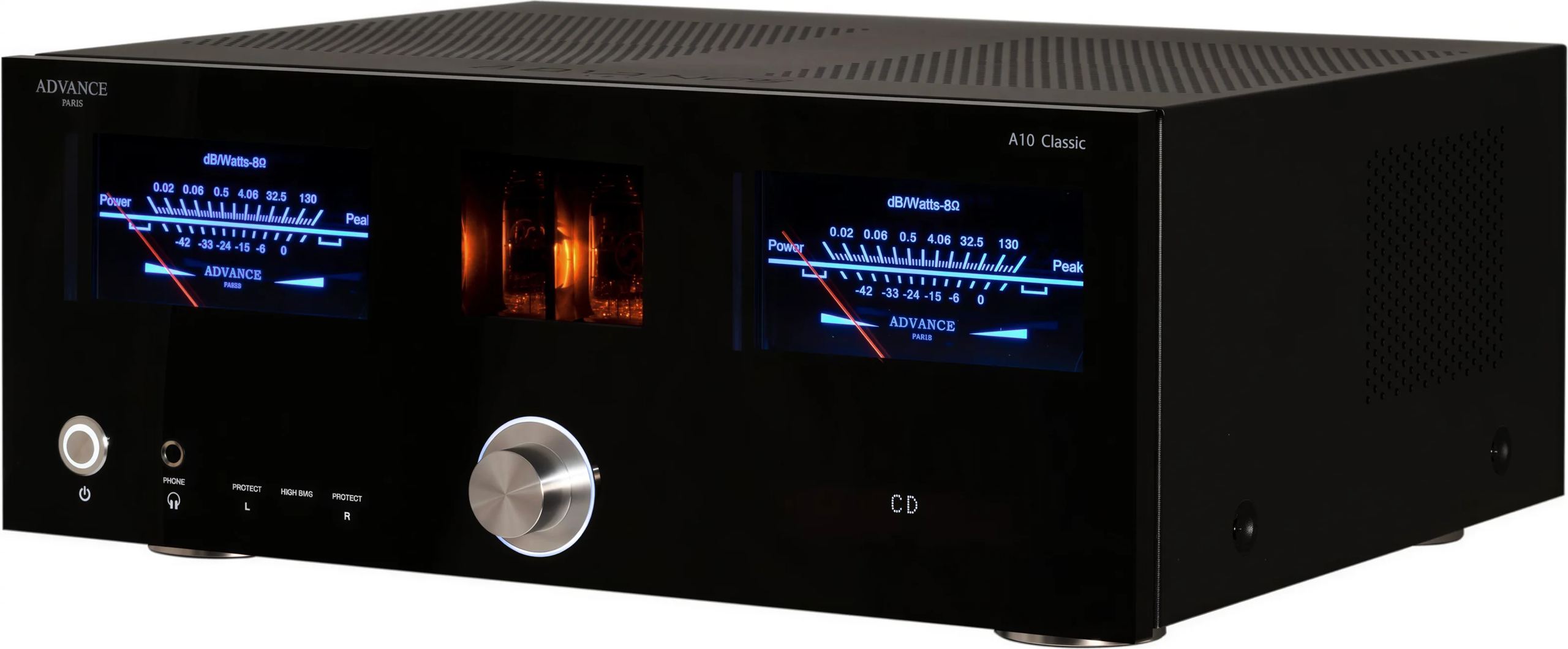
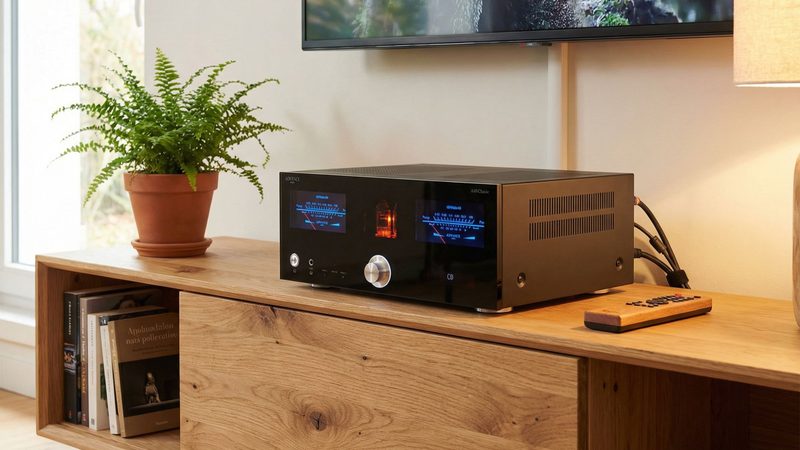
Spiritual successor to the legendary X-i1100, the Advance Paris A10 black embodies an ambitious and refined vision of hi-fi amplification. This hybrid amplifier elegantly combines the organic warmth of tubes with the precision and dynamics of transistors, delivering a rich, detailed, and lively sound reproduction.
With its 130 watts per channel, extensive connectivity (analog, digital, Bluetooth, phono, etc.), and meticulous audiophile design, the A10 stands out as a benchmark in its price range for discerning music lovers seeking a solution that is powerful, musical, and versatile.
Hybrid Architecture and Technical Design
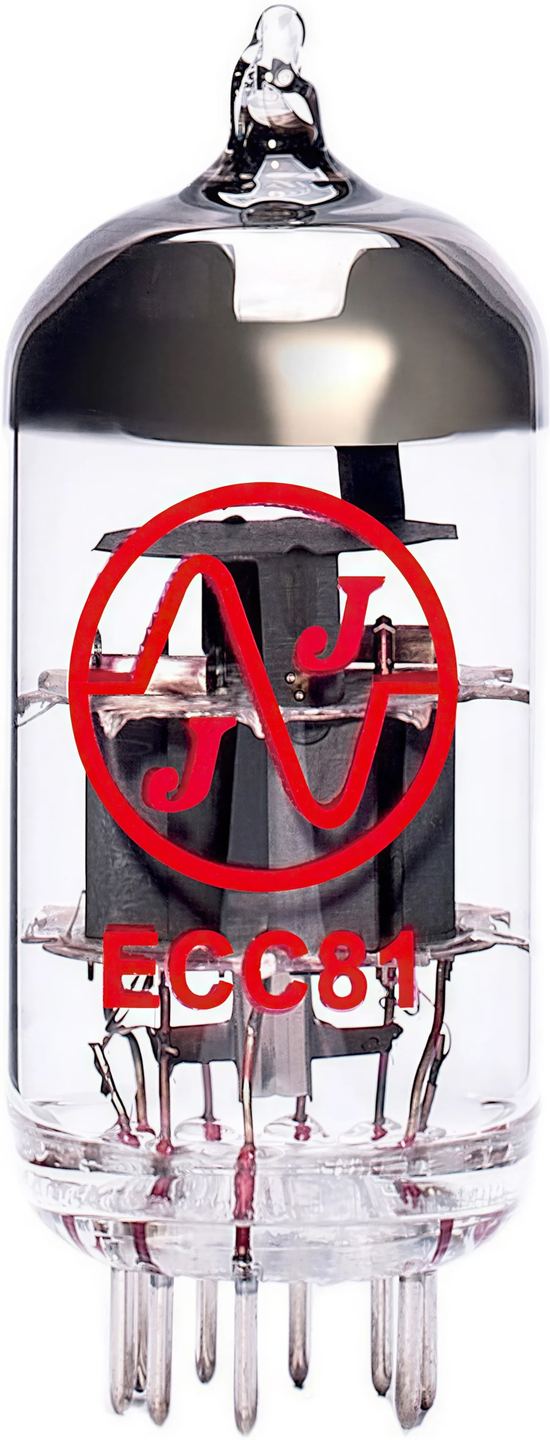
The A10 Classic adopts a design philosophy that clearly sets this model apart from its competitors. The preamplifier features two ECC81/12AT7 tubes from JJ Electronics, carefully selected for their tonal characteristics and reliability. This tube section processes the entire signal before amplification, bringing that musical dimension so sought after by audiophiles.
The power stage uses Onsemi NJW0281G and NJW0302G bipolar transistors, arranged in a double push-pull configuration and biased in class AB. This architecture delivers 130 watts into 8 ohms, 190 watts into 4 ohms, and even 250 watts into 2.66 ohms continuously. A High Bias switch on the rear activates class A biasing for the first few watts, optimizing linearity at low listening levels.
The 15-centimeter diameter, 500 VA toroidal power transformer reflects the care given to the power supply. Four 6800 μF filter capacitors, combined with multiple dedicated regulators, ensure stable and silent power for each circuit.
Digital Section and Integrated Converter
The A10 features a 32-bit AKM AK4490 digital-to-analog converter capable of processing PCM signals up to 768 kHz and DSD up to 11.2 MHz. Some more recent versions include an ESS ES9018 DAC, following the AKM factory fire, with no notable impact on performance. The AK4118 digital receiver completes this section to ensure optimal reception of digital signals.
This setup allows for processing all current high-resolution audio formats, positioning the amplifier as a future-proof solution for listening to digital files. Native DSD compatibility is a particular advantage for fans of this recording format.
Modern Connectivity and Versatile Use
The A10 stands out for its remarkably comprehensive connectivity for its price range. Six RCA analog inputs are joined by a balanced XLR input, while a moving magnet phono input offers three capacitance settings (100, 200, and 320 pF) to suit the various cartridges on the market.
The digital section includes three optical inputs, one coaxial S/PDIF input, and two USB ports—one USB-B for computer connection and one USB-A for direct MP3 playback from a flash drive or portable player. Two HDMI inputs complete the arsenal: one dedicated to audio sources, the other HDMI ARC-compatible for home theater integration.
A connector allows for the addition of an optional aptX Bluetooth receiver (XFTB01 or XFTB02), expanding wireless connection possibilities. Outputs include two subwoofer outputs, a variable preamplifier output, a fixed recording output, and trigger connectors for automation.
User Interface and Ergonomics
The A10’s interface combines visual elegance with ease of use. The central encoder wheel, managed by a microprocessor, allows intuitive menu navigation via short or long presses. The two-line LCD display provides essential information on the selected source and active settings.
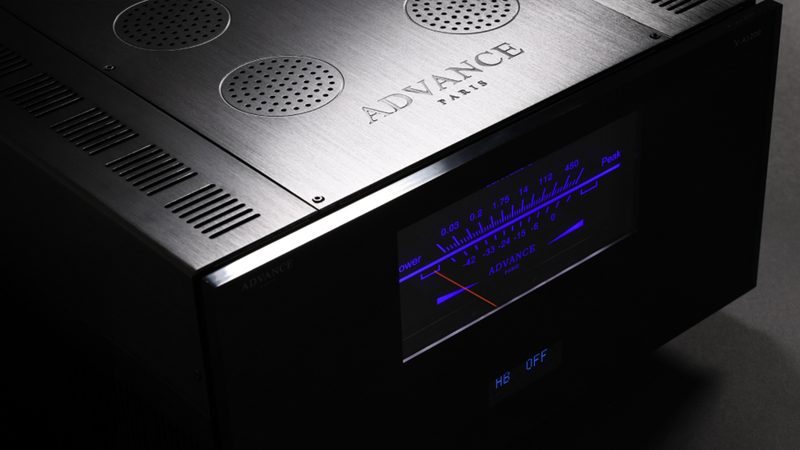
The blue backlit VU meters add a strong aesthetic dimension while retaining their primary function as visual level indicators. These meters can be dimmed according to listening preferences and ambient lighting.
The menu system provides access to tone controls (bass, treble), loudness, speaker output selection (A, B, or A+B), and programming of automatic standby from 5 to 90 minutes. A bypass mode neutralizes tone controls for direct sound reproduction.
Sound Quality and Musical Character
The A10 delivers a distinctive sound character that honors the legacy of its illustrious predecessor. The hybrid signature results in a warm musical presentation, free of harshness, with special attention paid to the midrange where voices and melodic instruments shine.
The bass is generous and well controlled, while the treble retains its sparkle without ever sounding analytical. The amplifier excels at reproducing dynamic nuances and building a coherent stereo image, making the speakers virtually disappear from the soundstage.
The High Bias mode reveals its full potential on delicate passages and acoustic ensembles, providing extra linearity appreciated during extended listening sessions. Switching to class AB occurs seamlessly as power demands increase.