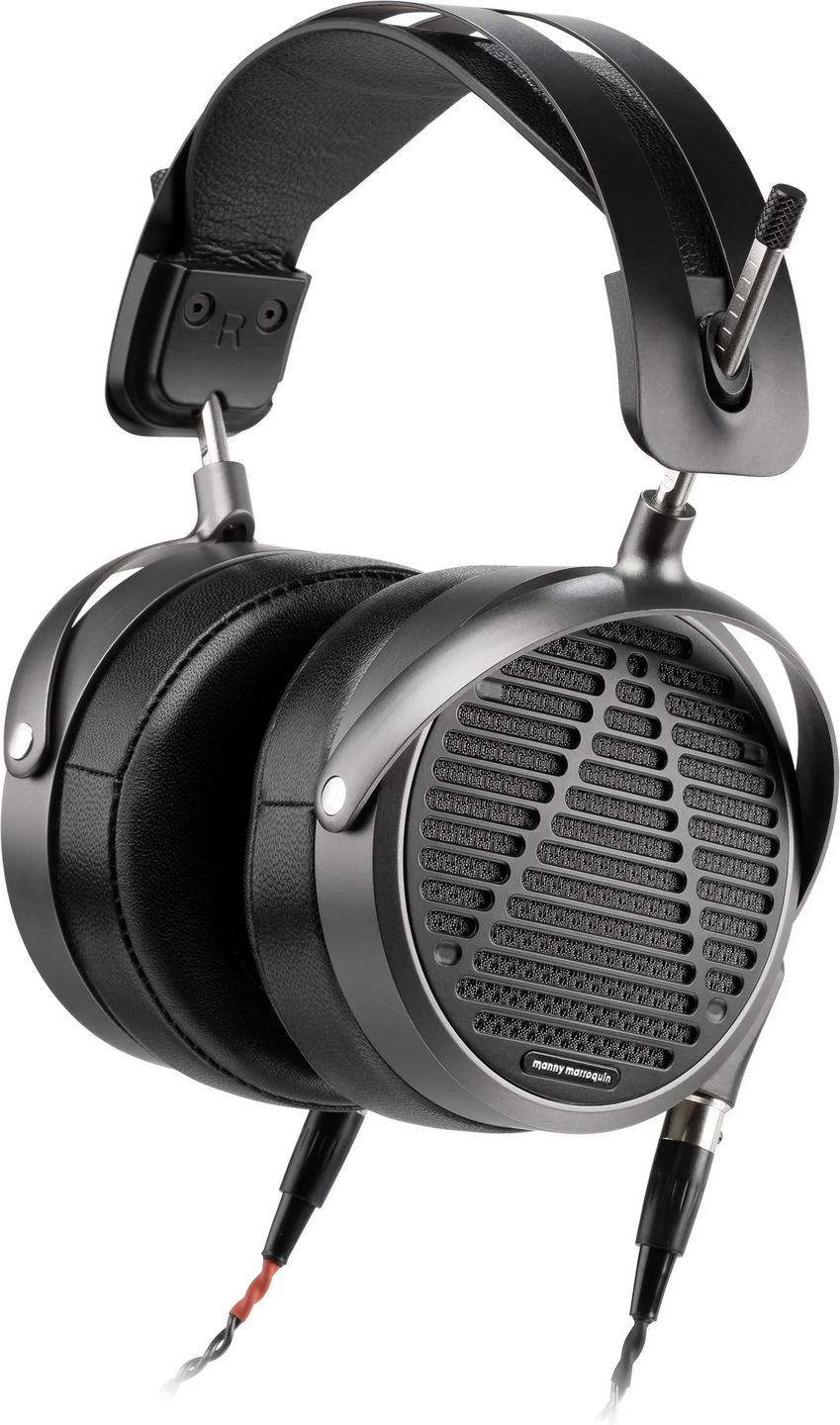
Larrabee Studios, Los Angeles. It was in this mixing room that the first headphones in the Manny Marroquin series, announced in June 2022, were tuned. Audeze entrusted its professional division to a mixing engineer rather than an acoustician, and the specifications reflect this: open-back planar magnetic headphones whose mission can be summed up in one sentence: to ensure that decisions made on headphones still hold up when the track is listened to elsewhere.
A mixing engineer at the helm
Manny Marroquin, a multiple Grammy Award winner, became head of Audeze’s professional products before the MM-500 was released. The headphones were developed and then refined in his studio, using the records passing through it as a test bench. This origin explains choices that an audiophile catalog would not necessarily have made: tonal tuning geared toward midrange neutrality, an electrical load compatible with the headphone outputs of interfaces and consoles, and a chassis designed to withstand entire days of handling.
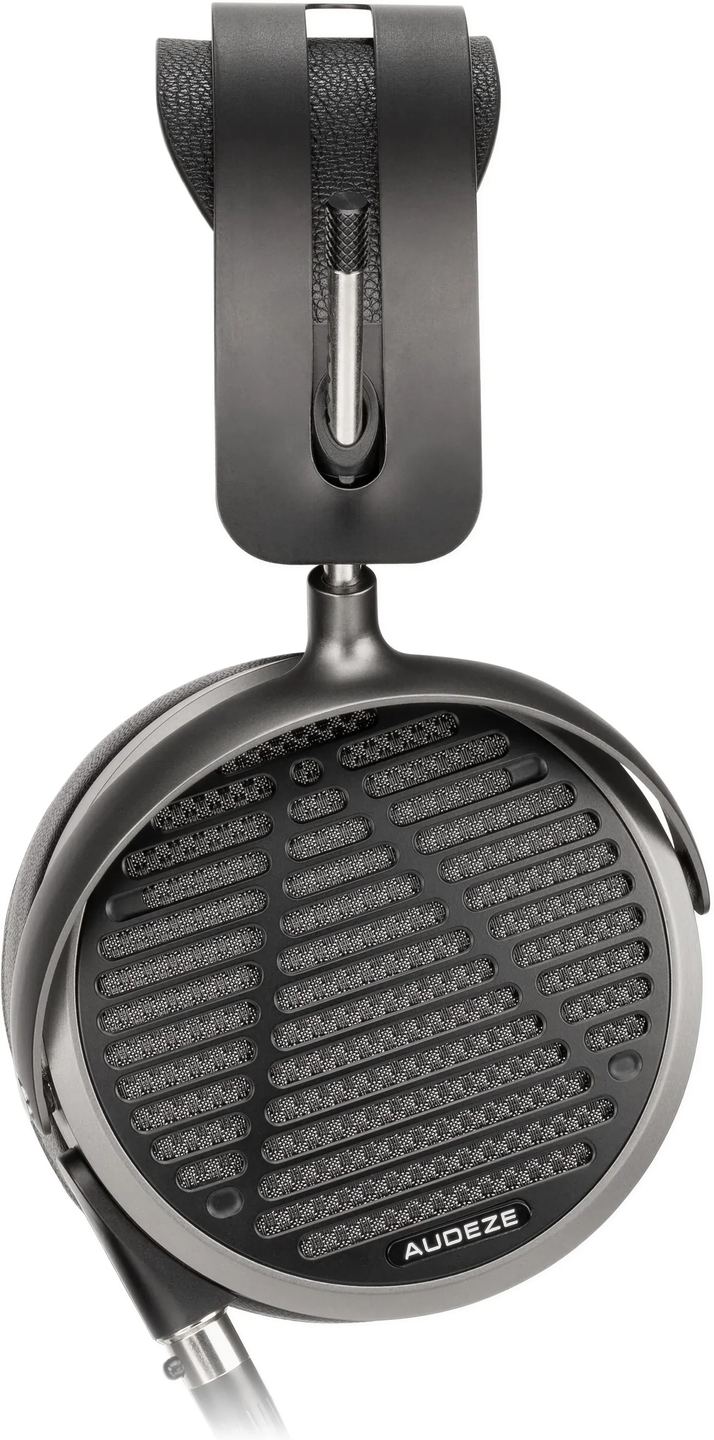
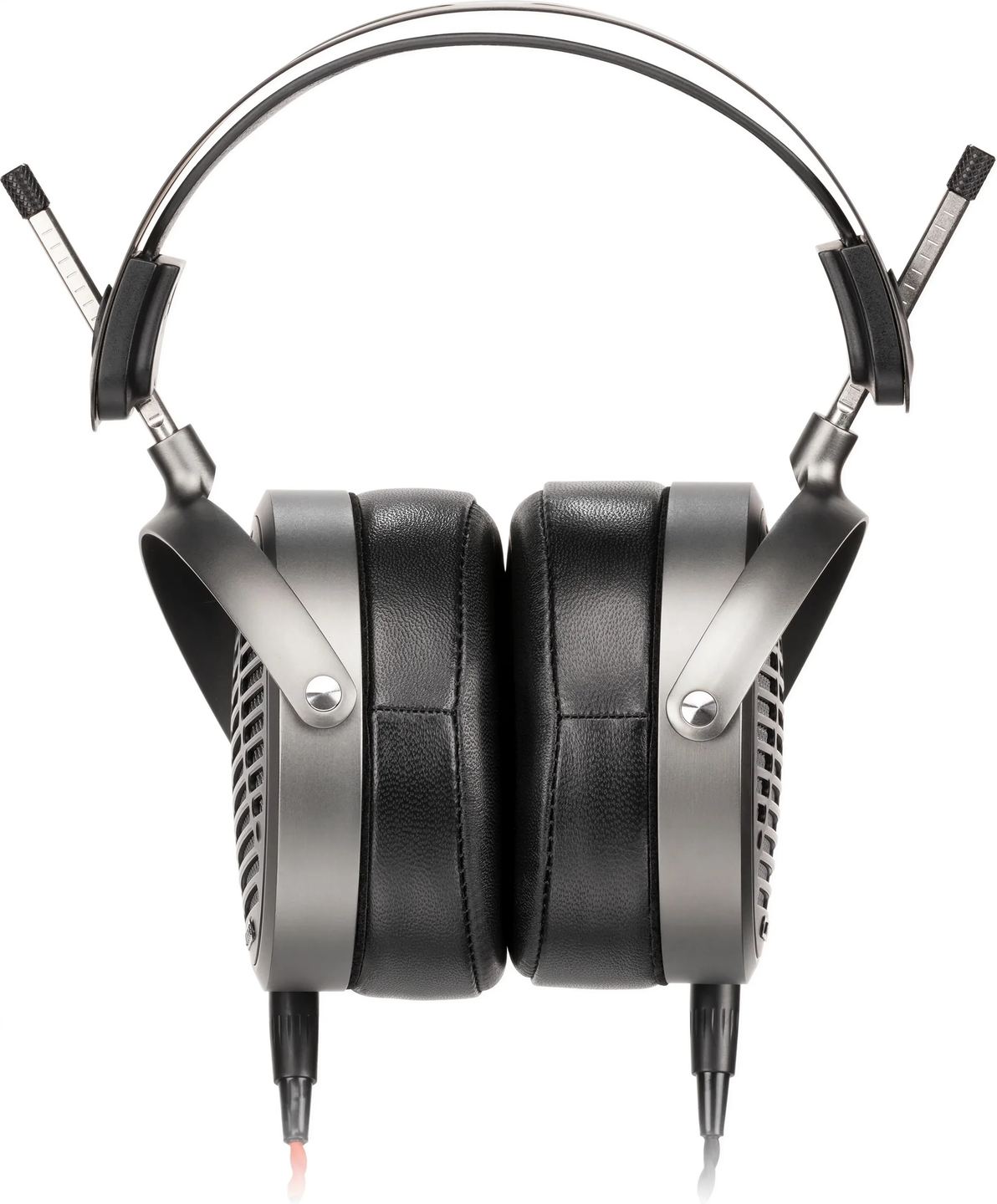
The visual kinship with the LCD-5, the brand’s high-end model, is deliberate. The MM-500 adopts its sliding rod adjustment system and rear earcup connector position, but replaces carbon fiber and acetate with machined aluminum and steel. Two headphones that look alike, two distinct construction methods.
The 90 mm driver in detail
The ultra-thin Uniforce diaphragm carries conductive traces of varying widths. The idea is to compensate for the unevenness of the magnetic field across the diaphragm’s surface: where the field weakens, the trace widens, and the driving force remains uniform from one end of the diaphragm to the other. Breakup modes, which appear when one part of the surface moves differently from the rest, are thus pushed back.
The Fluxor magnet array places fourteen N50 neodymium magnets on one side of the diaphragm only. This arrangement concentrates the flux instead of dispersing it, enabling high efficiency without doubling the magnets, and therefore without doubling the mass or obstructing the rear side. Fazor elements, placed on either side of the driver, channel waves around the magnetic structures and limit internal reflections that blur the upper end of the spectrum.
The figures follow: frequency response from 5 Hz to 50 kHz, total harmonic distortion below 0.1% at 100 dB SPL at 1 kHz, maximum level above 130 dB. The stated frequency response says nothing about response linearity; however, the distortion figure measured at such a high level reflects what planar technology does best: maintaining dynamics without becoming harsh.
An easy load for a planar
With 18 ohms and a sensitivity of 100 dB for 1 mW referenced to the eardrum reference point, the MM-500 needs very little. Audeze recommends at least more than 100 mW and 250 mW under nominal operation, with the driver capable of handling up to 5 W RMS. An audio interface headphone output, a console, a desktop converter: most studio sources are sufficient.
This ease comes with a trade-off. At 18 ohms, the amplifier’s output impedance and noise floor become audible: a slightly noisy device will reveal its hiss, and an output with high output impedance will slightly alter the response. The headphones do not require power; they require a clean output.
Machined aluminum and spring steel
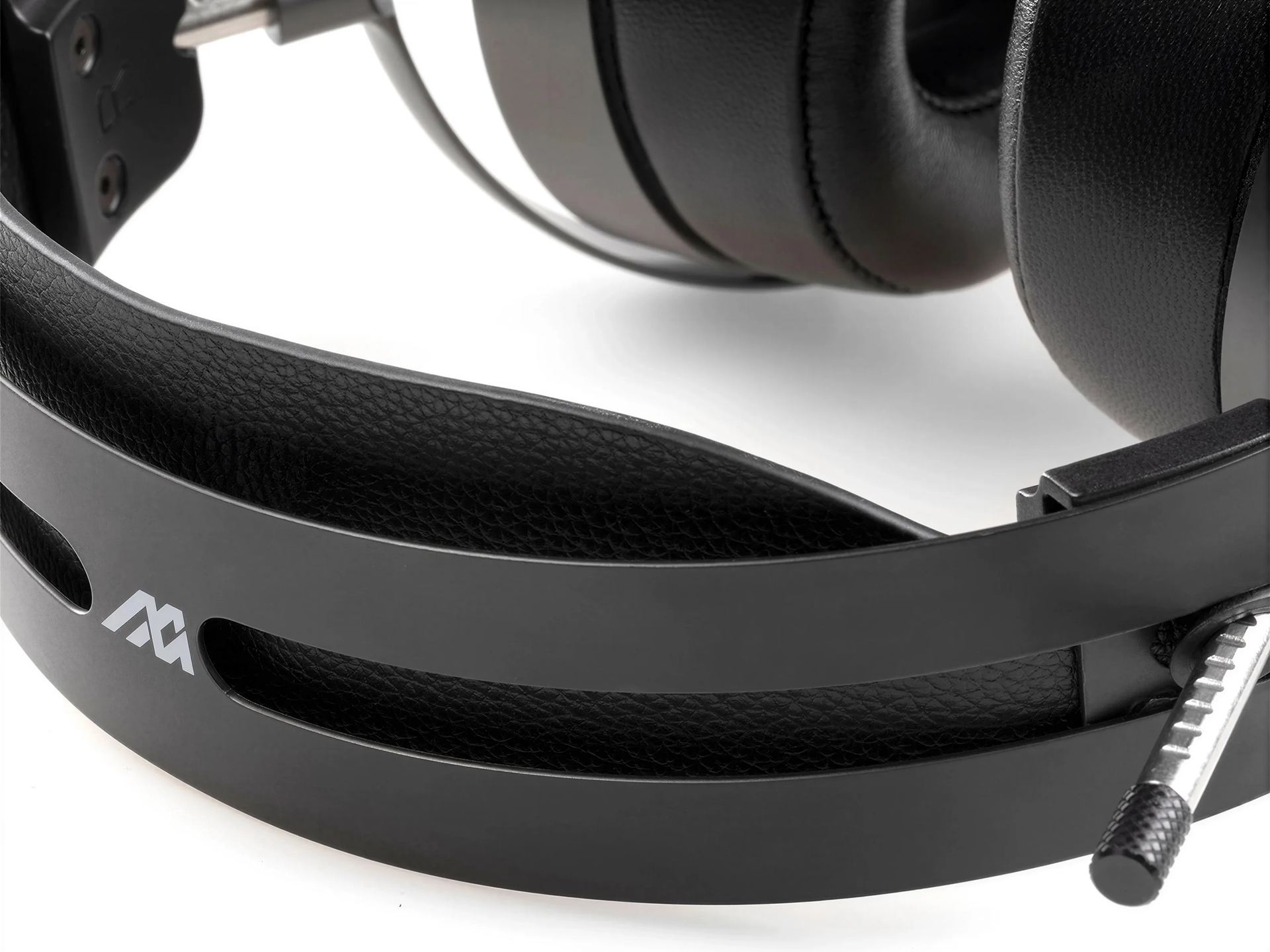
The spring steel headband supports a wide leather strap that distributes the load across the head, the yokes are made of machined aluminum, and the finish leans toward anthracite gray. The thick leather earpads are glued rather than clipped on, a choice Audeze applies across its entire production. Assembly is done by hand in the brand’s California workshop.
On the scales, 495 grams. That is significantly less than the LCD-X and its 612 grams, but it remains a heavy pair of headphones in absolute terms, and the lateral clamping force is noticeable during the first few hours before the headband loosens. The braided cable connects via two locking 4-pin mini-XLR connectors positioned at the rear and bottom of the earcups, angled so that the connectors do not rub against the collar. On the source side, there is an unbalanced 6.35 mm jack plug.
Open-back, with all that implies
The earcups are perforated: sound gets out, ambient noise gets in. Recording a voice with a microphone in the same room is out of the question, and listening in a shared space will be at the expense of those nearby. In return, the ear is subjected to no overpressure, the stereo soundstage gains width, and natural ventilation makes long sessions less taxing.
The full-size earpads differ from the angled earpads of the LCD-5, and the tuning was carried out with them. Replacing them with another model shifts the frequency response, something the brand explicitly advises against.
Its place in the Manny Marroquin series
The MM-100 occupies the entry level of the series, while the MM-520 succeeded the MM-500 in 2026. The latter retains the 90 mm driver, Uniforce, Fluxor and Fazor technologies, and the 18-ohm impedance, while adding the SLAM system, which manages air pressure in the earcup through vents around the driver to extend the bass response of open-back headphones. It gains 2 dB of sensitivity and magnetically attached earpads, but rises to 555 grams.
The MM-500 remains the lighter of the two models, without air pressure management, with the original tuning that many users had adopted for its midrange. Audeze moved it into its legacy products after the launch of the MM-520.