Sennheiser Pack HD 800S + HDV 820

Overview
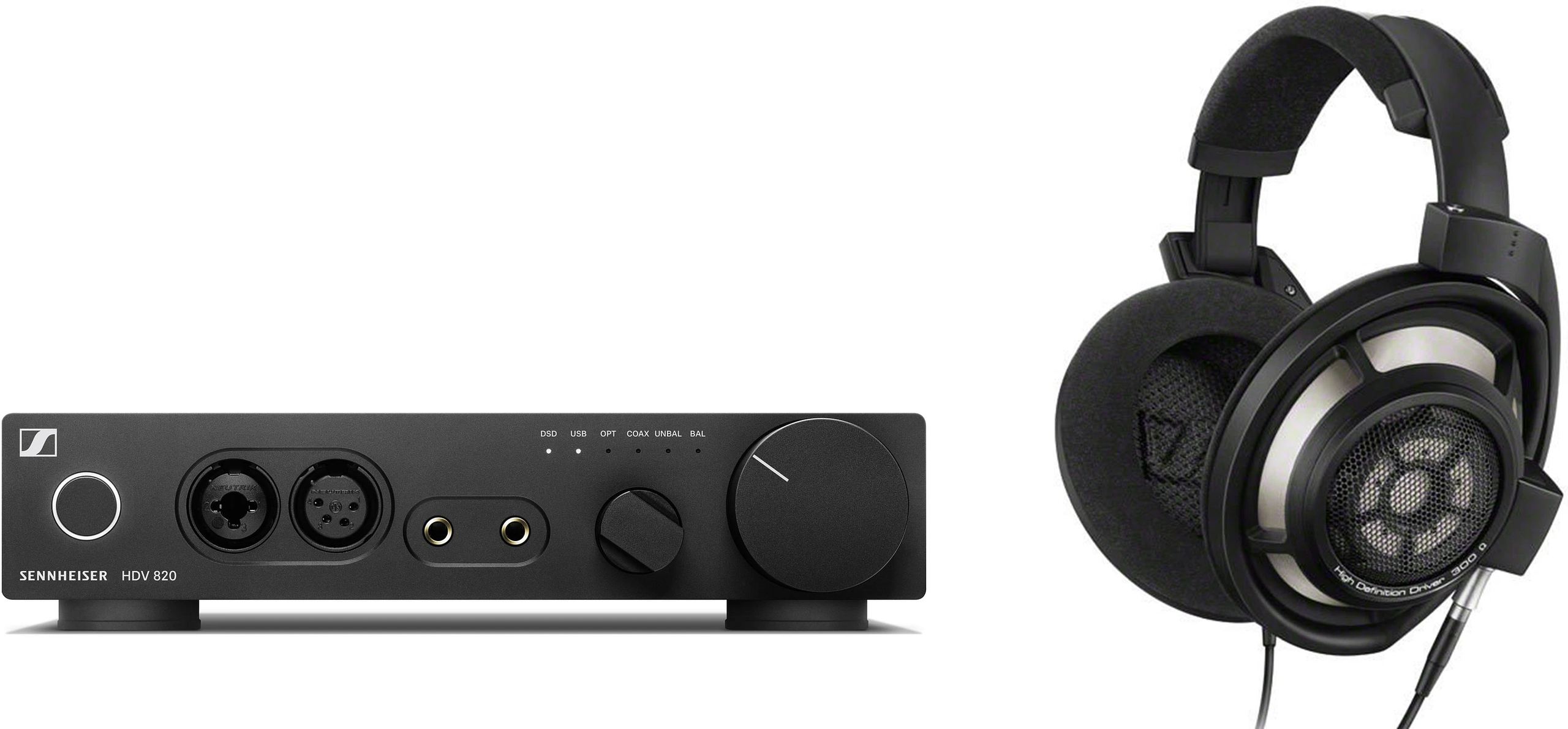
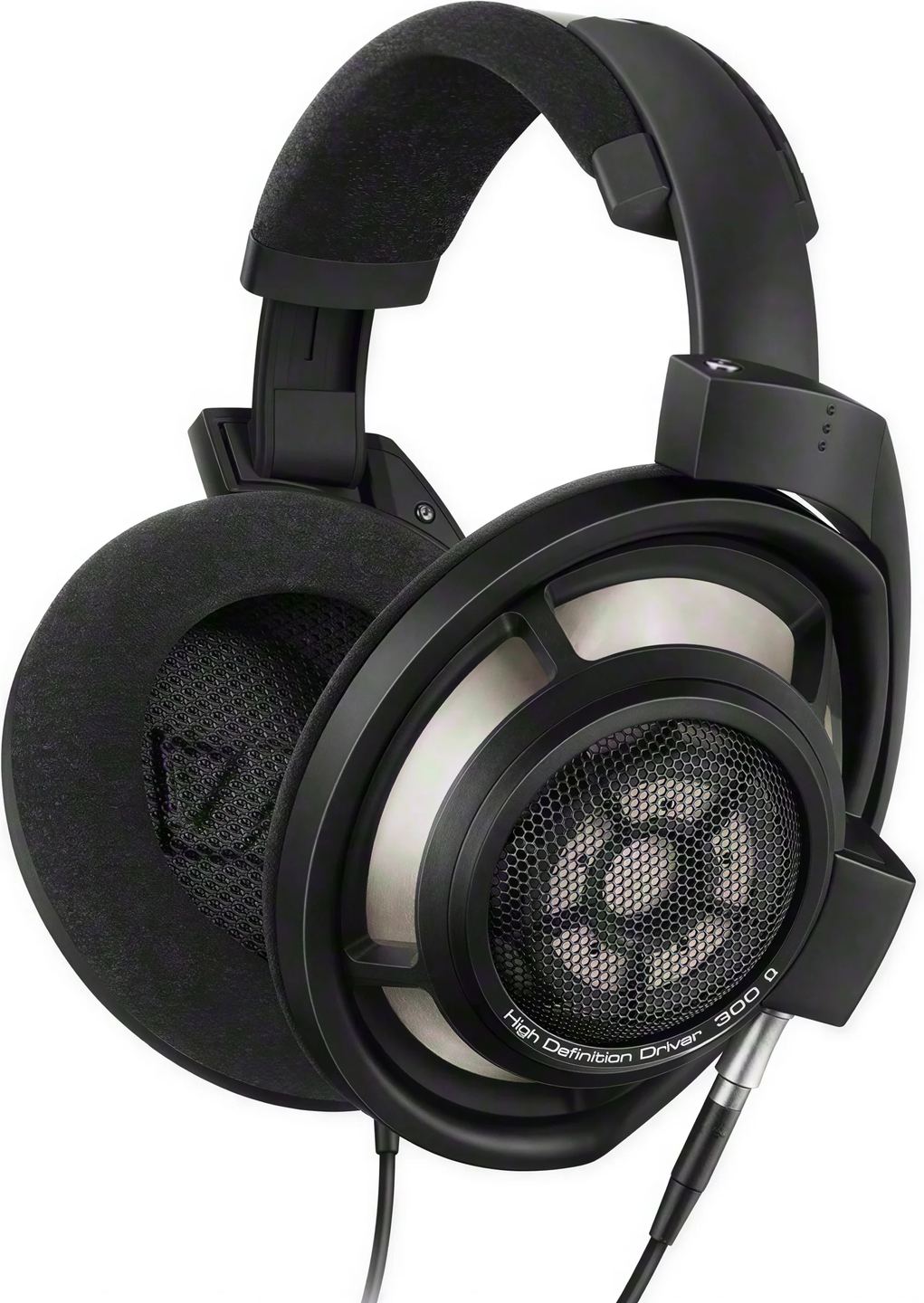
The 56 mm Ring Radiator transducer of the HD 800 S remains, more than fifteen years after the technology first appeared, a unique design in the headphone industry. Paired with the HDV 820, a fully symmetrical topology amplifier/DAC, this combo brings together two flagship components from the German manufacturer’s audiophile range. The HD 800 S retains the acoustic architecture of the original HD 800 while correcting its most debated weakness: the brightness peak around 6 kHz, now tamed thanks to an absorption technology inherited from the IE 800 in-ear monitors.
A ring-diaphragm transducer
At the heart of the HD 800 S beats a 56 mm transducer whose design breaks away from traditional dynamic architectures. The diaphragm does not form a classic dome: it adopts a ring-shaped structure, fixed both at its outer circumference and its inner edge, with the 40 mm voice coil positioned in a V-shaped groove between these two anchor points. This patented geometry gives the diaphragm maximum rigidity around the coil, allowing it to take advantage of the significant air displacement of a large transducer without suffering from the unwanted deformations that usually affect large-diameter diaphragms at high frequencies.
The Duofol technology used for the diaphragm a multilayer film of variable thickness controls resonance modes and helps extend the frequency response up to 51 kHz. Total harmonic distortion remains below 0.02% at 1 kHz under 1 Vrms, a value that reflects the precision of the system.
The HD 800 S absorption technology
The addition of a Helmholtz-resonator type acoustic absorber is the major evolution compared with the original HD 800. This device, initially developed for the IE 800 earphones, attenuates the resonance peak around 6 kHz that could make the first model sound aggressive on certain recordings. By absorbing the energy of unwanted resonances, this technology preserves the audibility of high treble harmonics without the volume spikes that sometimes masked the most subtle details.
The audible result is smoother, more natural highs, while maintaining the series’ hallmark resolving capability. Micro-details, reverberations, and instrumental textures are still reproduced with great precision, in a treble range that is less likely to cause listening fatigue during long sessions.
A three-dimensional soundstage
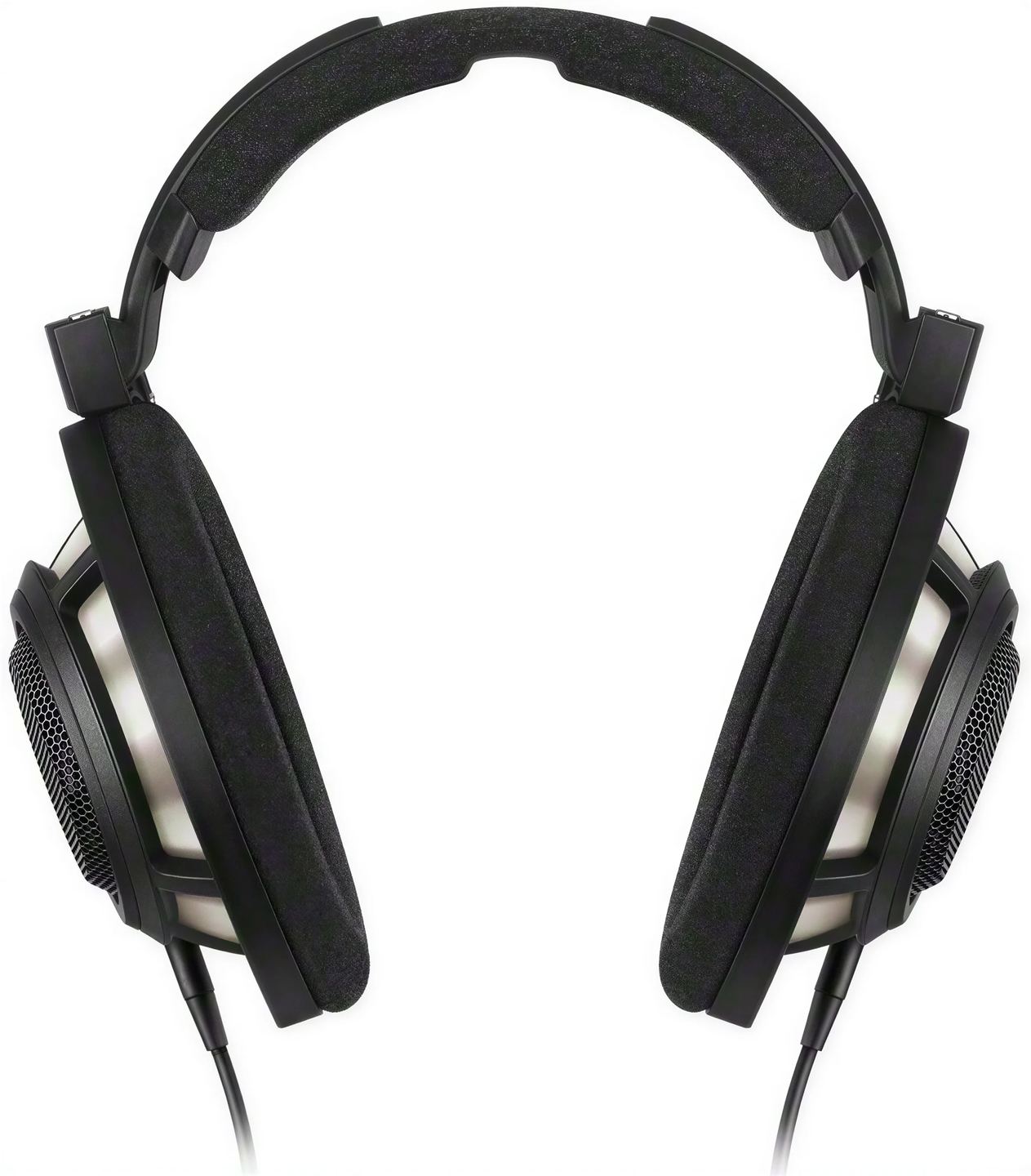
The HD 800 S transducers are not mounted facing the ear: they are tilted forward at a precise angle that directs the sound waves straight towards the ear canal at its natural inflection point. This layout more faithfully reproduces the way we perceive sound coming from speakers positioned in front of us, creating what is known as extra-cranial spatialization. The soundstage does not seem to form between the ears, but to extend beyond the physical limits of the headphones.
The open design, with its largely exposed ear cups protected by a fine stainless steel mesh, allows air to circulate freely around the transducers. This architecture promotes an airy reproduction where each instrument occupies a defined space, with clear separation between the different sound planes in both width and depth.
Aerospace-grade construction and materials
The HD 800 S chassis uses materials derived from the aerospace industry to combine mechanical strength and light weight. The transducer is embedded in a stainless steel structure, while the headband and ear cup supports use advanced composites. The multilayer plastic headband, protected by a metal shell, has damping properties that eliminate unwanted vibrations likely to affect sound reproduction.
With a weight kept to 330 grams and a contact pressure of around 3.4 N, the HD 800 S can be worn for extended periods without fatigue. The microfiber earpads are hand-assembled, and their particularly soft skin-contact surface contributes to comfort during long listening sessions. Each ear cup pivots on two axes and instantly adapts to the listener’s head shape.
The HDV 820: symmetrical conversion and amplification
At the heart of the HDV 820 lies the ESS 9028PRO SABRE converter, a 32-bit DAC capable of handling PCM streams up to 384 kHz and DSD files up to DSD256 (12.3 MHz). The fully symmetrical topology of the conversion circuit ensures accurate signal transmission across the entire spectrum, with total harmonic distortion below 0.001% and a dynamic range above 115 dB under a 600 Ω load.
The amplification section, a carefully optimized evolution of that in the HDVD 800 predecessor, delivers up to 480 mW into 600 ohms. This power is sufficient to drive not only the HD 800 S and its 300-ohm impedance, but also most audiophile headphones on the market, including planar magnetic models that are more demanding in terms of current. The HDV 820 can in fact accommodate up to four dynamic headphones simultaneously on its various outputs.
Comprehensive connectivity
The rear panel of the HDV 820 brings together the USB type B, optical S/PDIF, and coaxial S/PDIF digital inputs alongside the balanced XLR and unbalanced RCA analog inputs. An ASIO driver is supplied for native DSD playback on PC; Macs recognize the device automatically from macOS 10.6 onwards.
On the headphone output side, the unit offers a combined Neutrik XLR-3/6.35 mm unbalanced jack, a balanced XLR-4 output, and two balanced 4.4 mm Pentaconn jacks. This 4.4 mm connector, standardized by the Japan Electronics and Information Technology Industries Association (JEITA), offers very low contact resistance and is suitable for both fixed and mobile applications. A pair of balanced XLR outputs also allows the HDV 820 to be connected to a power amplifier or active speakers for use as a preamplifier.
The input gain is adjustable in steps (14, 22, 30, 38, or 46 dB from unbalanced input to XLR-4 output) to match the level to different sources and headphones. White LED indicators on the front panel show the selected input and playback mode (PCM or DSD).
Practical considerations
The 300-ohm impedance of the HD 800 S and its fully passive design with no wireless connectivity or active noise cancelling makes it clearly intended for sedentary listening with an audiophile system or at a workstation. The open design lets in ambient sounds and is not suitable for noisy environments. It also lets sound leak outwards, which may disturb people nearby.
The fine metal grille that protects the rear of the transducers is still sensitive to shocks and handling; it can deform under even light finger pressure. The ODU connectors at the headphone input are held in place by friction and thin-gauge wires: cables should be unplugged carefully to avoid damaging the sockets.
Technical Specifications
Sennheiser HD 800 S Headphones
Main Features
- Transducer type: dynamic open
- Ear coupling: circumaural
- Wearing style: headband
- Color: black
- Cable length: 3 m
Technical Specifications
- Frequency response: 4 - 51,000 Hz (-10 dB)
- Impedance: 300 Ω
- Contact pressure: ~3.4 N (± 0.3 N)
- Total harmonic distortion: 0.02% (1 kHz, 1 Vrms)
- Connector: 6.35 mm jack plug
- Weight without cable: 330 g
Box Contents
- HD 800 S headphones
- Cable with 6.35 mm jack plug
- Microfiber cleaning cloth
- User manual
Sennheiser HDV 820 Preamplifier
Audio Performance
- Frequency response: < 10 Hz to > 100 kHz
- Total harmonic distortion: < 0.001% (with 2 headphones of 300 Ω connected to the 4.4 mm outputs)
- Dynamic range: > 115 dB under 600 Ω load (A-weighted)
Gain and Power Supply
- Asymmetrical input / XLR-4 output gain: adjustable 14, 22, 30, 38, 46 dB
- Symmetrical input / XLR-4 output gain: 16 dB
- Power supply voltage: 100 - 240 V~, 50 - 60 Hz
- Nominal power consumption: 12 W
Front Panel Connectivity
- Combined XLR-3 / 6.35 mm jack headphone socket, asymmetrical
- XLR-4 headphone socket, symmetrical
- Pentaconn 4.4 mm headphone socket, symmetrical
Rear Panel Connectivity
- Symmetrical XLR input
- Asymmetrical RCA input
- Digital inputs: S/PDIF optical, S/PDIF coaxial, USB type B
- Symmetrical XLR output
- Power socket
- Input selector with RCA input gain
Physical Characteristics
- Dimensions: 224 × 44 × 306 mm
- Weight: 2.25 kg
Frequently Asked Questions
Can the HD 800 S be used without the HDV 820?
The headphones are compatible with any amplifier capable of delivering enough current for their 300-ohm impedance. A quality audio interface or a dedicated headphone amplifier will allow you to get the most out of them. The HDV 820 optimizes synergy with the HD 800 S thanks to its symmetrical topology and suitable gain settings, but other amplifiers including some tube models appreciated for their sonic coloration also work very well.
What audio formats does the HDV 820 support over USB?
The USB input supports PCM streams up to 32-bit/384 kHz as well as DSD files up to DSD256 (12.3 MHz). A front-panel LED indicator lights up in DSD mode when the amplifier receives a native stream in this format. On Windows, the supplied ASIO driver enables DSD playback without intermediate conversion; on macOS, no driver is required.
Can the HDV 820 be used as a preamplifier?
The balanced XLR outputs on the rear allow the HDV 820 to be used as a preamplifier feeding a power amplifier or active speakers. The output level is controlled by the front-panel volume potentiometer, which makes it easy to integrate into a wider hi-fi system.
Is the HD 800 S suitable for professional audio mixing?
The very wide soundstage and high resolution of the HD 800 S make it possible to distinguish elements in a mix with precision. Its slightly bright signature in the upper spectrum can, however, accentuate certain sibilances or harshness; some sound engineers use it alongside other reference headphones to check details and spatial separation, rather than as their sole mixing tool.
Is the HDV 820 compatible with headphones from other brands?
The amplifier accepts all dynamic headphones equipped with 6.35 mm jack, XLR-3, XLR-4, or 4.4 mm Pentaconn connectors. The gain settings allow it to be adapted to headphones with various impedances, including planar magnetic models from third-party manufacturers that require more current.
- Eco-contribution included in the sale price.