PSB Synchrony B600 gloss black (pack of 2)

Overview
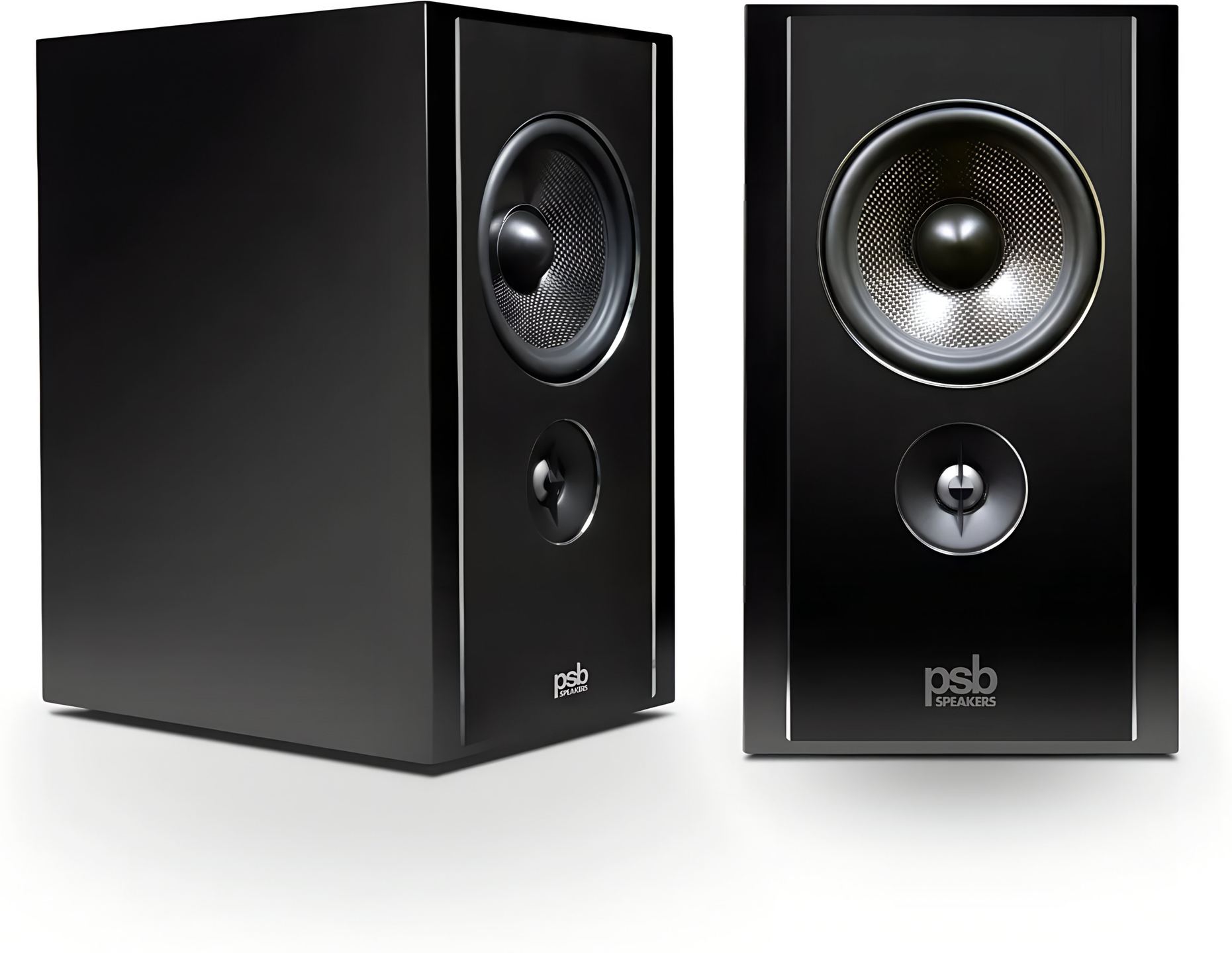
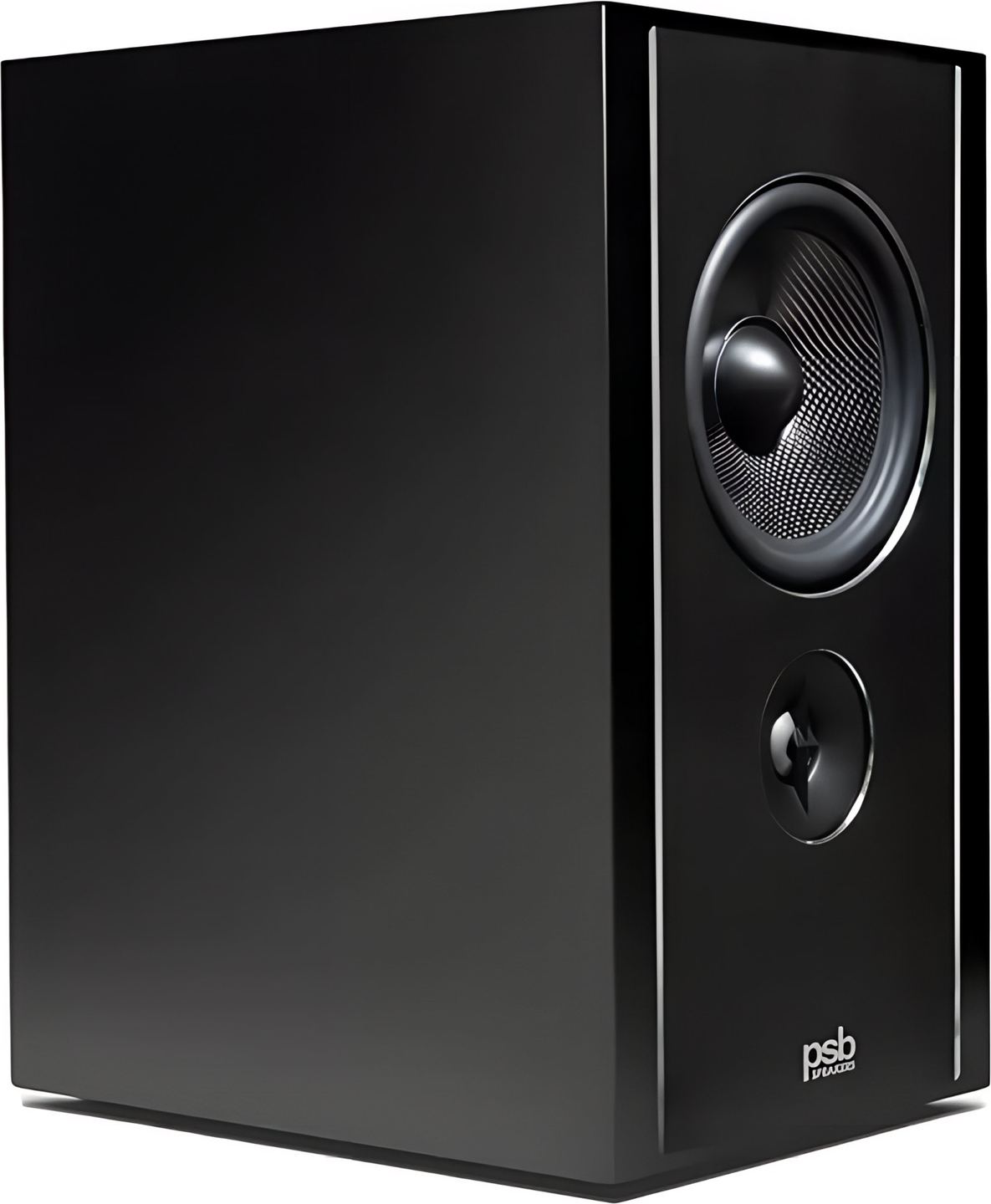
The PSB Synchrony B600 are two-way compact speakers developed over two years in the anechoic chambers of Canada’s National Research Council. They feature woven carbon-fiber and titanium drivers, a solid aluminum baffle, and IsoAcoustics feet. Their frequency response extends down to 35 Hz (-10 dB), which is uncommon for speakers of this size. The design aims to reproduce the audio signal with the highest possible neutrality.
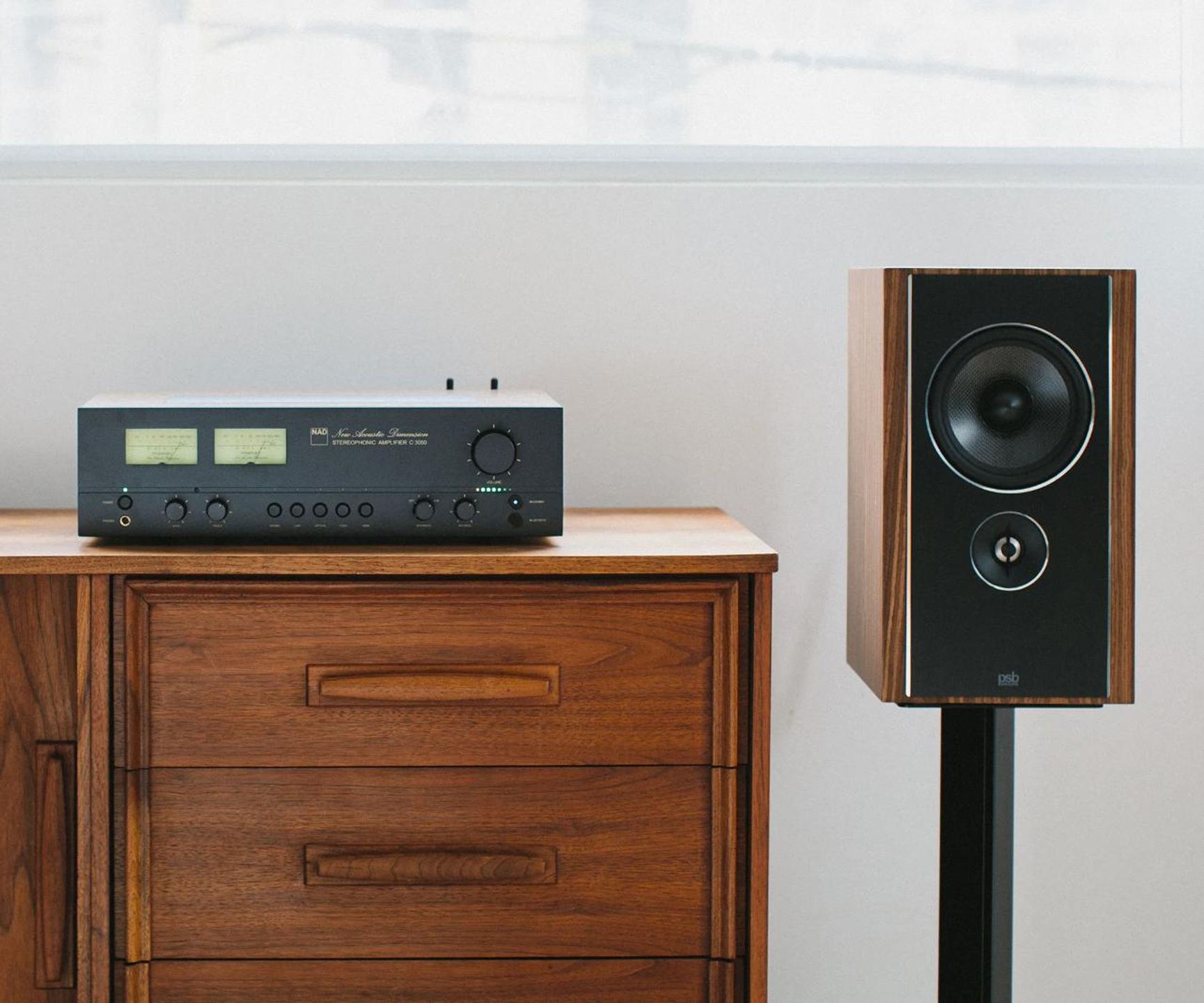
Acoustic architecture and next-generation drivers
At the heart of the Synchrony B600 are two entirely new drivers that represent a significant advance over previous generations. The 165 mm woofer uses a woven carbon-fiber cone, chosen for its optimal combination of lightness and rigidity. This diaphragm is mounted on a die-cast aluminum frame able to withstand mechanical stress without deformation and fitted with a rubber surround whose mass has been specifically added at the junction with the cone to suppress parasitic reflections.
The woofer’s motor structure incorporates four coordinated technical elements: a Faraday ring (shorting ring), an extended voice coil, a symmetrical magnetic circuit, and constant magnetic force in the gap. This complex architecture maintains a uniform magnetic force regardless of the voice coil’s position, drastically reducing harmonic and intermodulation distortion. The result is an extended bandwidth roughly half an octave deeper in the bass compared to earlier PSB designs, with higher sensitivity (88 dB at 1 meter) and improved power handling.
The 25 mm titanium dome tweeter is also a notable evolution. Using titanium—a metal that is both light and exceptionally rigid—extends the frequency response well beyond the audible spectrum while maintaining pistonic behavior up to high frequencies. Ferrofluid cools the voice coil, while the neodymium magnet, the most powerful magnetic material known, enables high sound pressure levels without dynamic compression. The tweeter is mounted in a shallow waveguide about 70 mm in diameter that optimizes its dispersion.
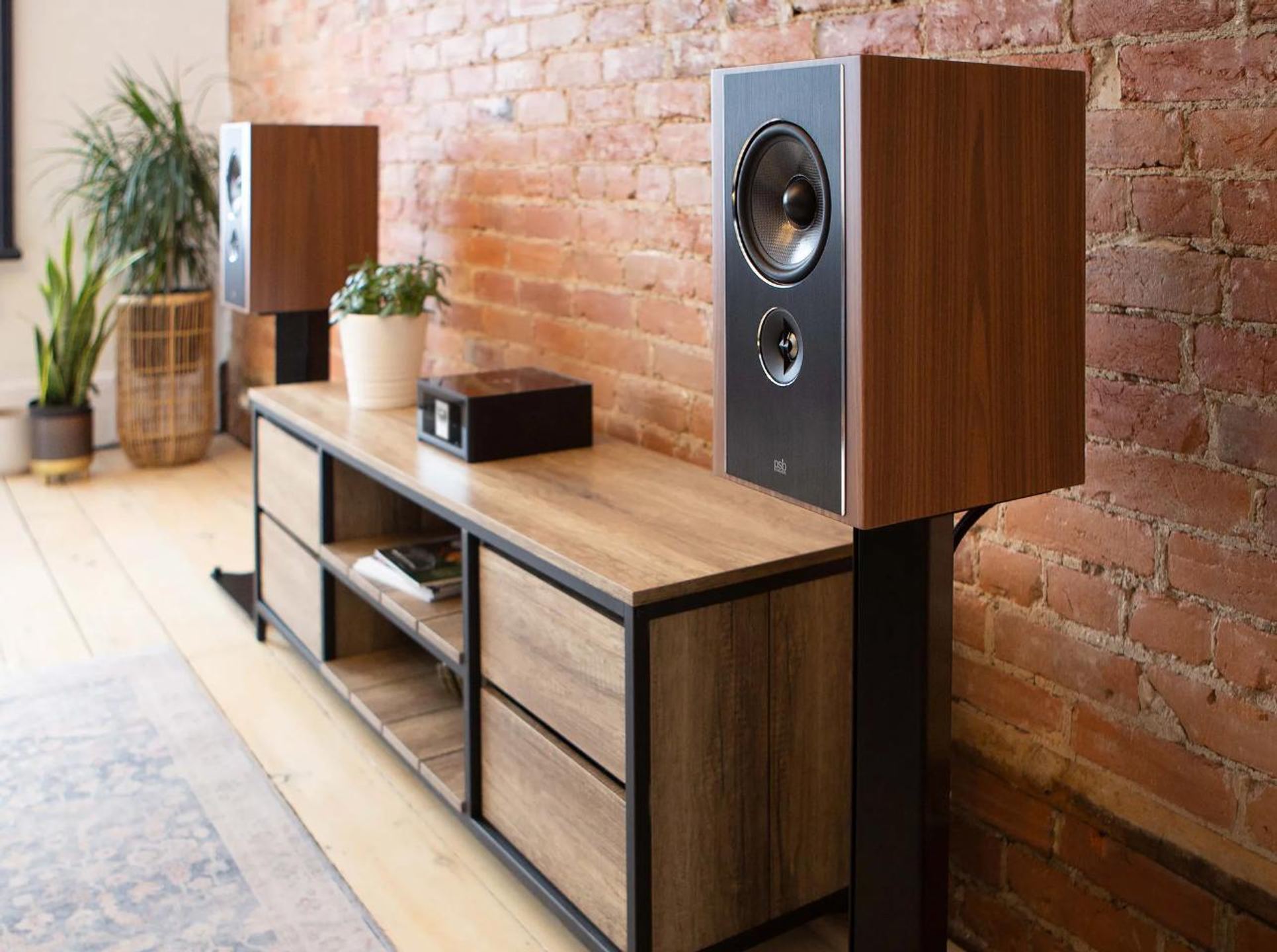
Cabinet construction: the pursuit of structural silence
The B600 cabinet reflects an obsessive focus on rigidity and resonance damping. Built from high-density MDF with multiple strategically placed internal braces, it minimizes vibrations that could color the sound. But the most distinctive element is the front baffle capped with a 5 mm-thick solid aluminum plate. This plate, decoupled from the rest of the enclosure by ten isolation cups, acts as a barrier against what engineers call “baffle talk”—the micro-vibrations of the baffle excited by driver motion that can mask fine sonic detail.
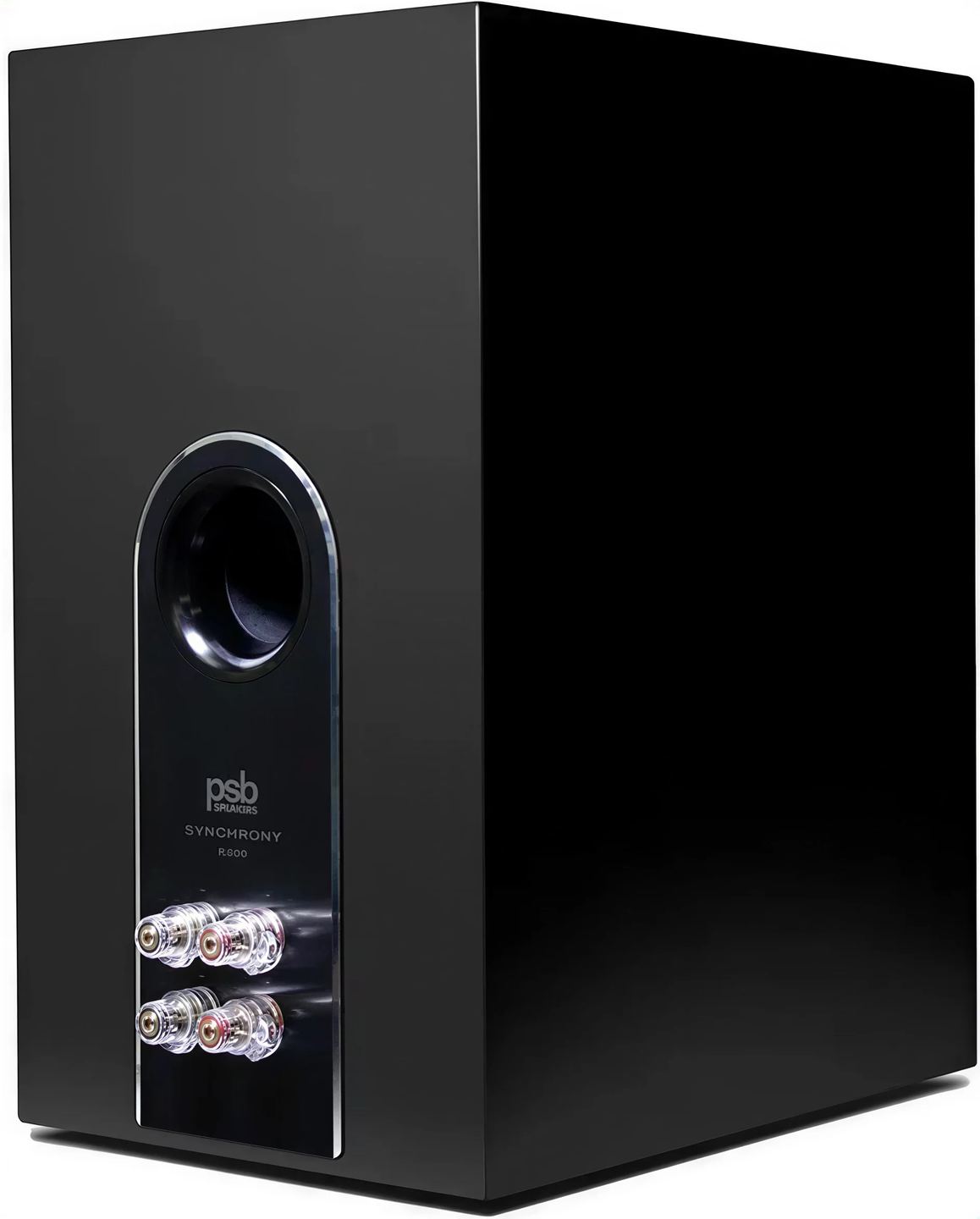
The rear bass-reflex port also deserves attention. Its flange is CNC-machined from aluminum, ensuring a finish and dimensional tolerances that match the quality level of the rest of the speaker. This tuned port extends the low-frequency response in a controlled manner, contributing to the B600’s surprising ability to reach 35 Hz at -10 dB—performance typically reserved for much larger speakers.
The unusual driver layout—with the tweeter positioned below the woofer—is not an aesthetic choice but a calculated acoustic decision. According to Paul Barton, this configuration helps maintain phase coherence at frequencies where both drivers operate simultaneously, while offering greater flexibility in listening position. Tonal balance remains consistent whether the listener is seated or standing, a particularly welcome trait in domestic settings where listening positions may vary.

IsoAcoustics innovation: built-in decoupling
The collaboration between PSB and IsoAcoustics on the Synchrony B600 is a first at this price point. Four isolating feet, specially designed by IsoAcoustics for this application and based on their award-winning Gaia II isolators, are integrated directly into the base of each speaker. These devices are not simple damping feet but true mechanical decoupling systems.
Dave Morrison, IsoAcoustics’ founder, worked directly with Paul Barton on this integration. The feet adhere to the supporting surface while preventing vibrational energy produced by the drivers and cabinet from being reflected back into the speaker. At the same time, they block structure-borne vibrations coming from the support from reaching the listener. This bidirectional isolation yields measurable improvements: more perceptible micro-detail, crisper transients, a wider soundstage, and more precise stereo imaging.
It is important to note that the spacing of these feet is wider than the top plates of many standard speaker stands. PSB therefore offers dedicated 60 cm-high SST-24 stands, designed to interface perfectly with the B600’s IsoAcoustics feet, ensuring an optimal non-resonant connection.
Acoustic performance and setup advice
Despite their “bookshelf” label, the Synchrony B600 require thoughtful placement to reveal their full potential. With a depth of nearly 30 cm and a rear port, they need sufficient clearance from the wall—PSB recommends at least 60 cm, ideally more. This distance allows the bass-reflex port to function properly and avoids undesirable low-frequency reinforcement.
With a sensitivity of 88 dB (in-room) and a nominal impedance of 6 ohms with a minimum of 4 ohms, the B600 fall into the moderately demanding category in terms of amplification. PSB recommends amplifiers from 15 to 150 watts, but user experience suggests a minimum of 75 watts with good current capability (15–20 amperes) to fully exploit their dynamic capabilities. Dual gold-plated binding posts accept bi-wiring and bi-amping, offering additional optimization possibilities for audiophiles seeking the last refinements.
The B600’s low-frequency extension deserves special mention. With a specified -3 dB point at 50 Hz and -10 dB at 35 Hz, these compact speakers provide a substantial bass foundation that, in many cases and depending on room size, can make adding a subwoofer unnecessary for music. This capability results from the judicious port tuning, the quality of the woven carbon woofer, and the cabinet’s exemplary rigidity that allows the driver to operate under optimal conditions.
Horizontal dispersion remains remarkably consistent up to 10 kHz at 30 degrees off-axis, a characteristic that gives the B600 a generous listening window. This makes them particularly well-suited to setups where multiple listeners should enjoy high-quality reproduction, or in rooms where the optimal listening point cannot be strictly defined.
Documentation
Technical Specifications
Highlights
- 25 mm titanium tweeter (ferrofluid, neodymium magnet): crisp, precise highs
- 165 mm woven carbon woofer (cast basket, rubber surround)
- Rigid cabinet (internal bracing, aluminum baffle, CNC-machined port): minimized vibrations
- IsoAcoustics technology: isolation and precise soundstage
- Refined design, two premium finishes
Transducers
- High-frequency driver: 25 mm titanium dome with ferrofluid and neodymium magnet
- Low-frequency driver: 165 mm woven carbon fiber
- Cast basket
- Rubber surround
Acoustic Response
- Frequency response
- On-axis @ 0° ±3 dB: 50–20,000 Hz
- On-axis @ 0° ±1.5 dB: 55–20,000 Hz
- Off-axis @ 30° ±1.5 dB: 55–10,000 Hz
- Low-frequency cutoff (-10 dB): 35 Hz
- Sensitivity
- Anechoic: 86 dB
- In-room: 88 dB
- Impedance
- Nominal: 6 Ω
- Minimum: 4 Ω
Power and Amplification
- Recommended input power: 15–150 W
- Program power: 150 W
- Bi-wire/bi-amp compatible
- Tri-wire/tri-amp compatible
Acoustic Design
- Type: 2-way bass-reflex system
- Crossover: 2200 Hz, L4
- Rear-firing CNC-machined port
- Ultra-rigid cabinet with internal bracing
- Solid aluminum baffle
- Integrated IsoAcoustics technology
Dimensions and Weight
- Dimensions (W x H x D): 228 x 393 x 298 mm
- Net weight: 10.4 kg per speaker
Finishes and Options
- Available finishes: satin walnut, high-gloss black
- Five-way gold-plated dual binding posts
- Magnetic grille
- Integrated IsoAcoustics feet
Frequently Asked Questions
Are the IsoAcoustics feet compatible with all stands?
The integrated feet have a wider spacing than standard, which can be an issue with some conventional speaker stands. PSB’s SST-24 stands are specifically designed for a perfect fit. If you use other stands, ensure their top plate is at least 228 mm wide to properly accommodate the isolating feet.
How does bi-wiring improve performance?
Bi-wiring allows the signals for the woofer and tweeter to be separated, potentially reducing intermodulation between low and high frequencies in the cables. While the benefits are subtle and depend on cable quality, some listeners report better separation of registers and a more airy soundstage. The supplied jumpers are of sufficient quality for single-wiring if you prefer not to explore this option.
Why is the tweeter positioned below the woofer?
This configuration, combined with the Linkwitz–Riley crossover, optimizes acoustic summation between the two drivers and maintains superior phase coherence at the crossover region. It also offers more uniform vertical directivity, ensuring consistent sound quality whether you’re seated in a low chair or standing. It’s a technical signature of Paul Barton applied to several recent PSB models.
Do the magnetic grilles affect the sound?
PSB states the grilles are acoustically transparent, but independent measurements show slight attenuation above 10 kHz. For critical listening, removing the grilles is recommended. Their magnetic system allows effortless installation and removal, making them easy to use as needed—protection during cleaning or around children, off for serious listening sessions.
What room size suits the B600?
The B600 thrive in spaces from 15 to 40 m². In smaller rooms, their generous bass may become excessive without appropriate acoustic treatment. In larger spaces, they may lack low-end authority at high listening levels, though they retain their tonal quality. Room acoustics influence performance more than absolute size.
- Eco-contribution included in the sale price.