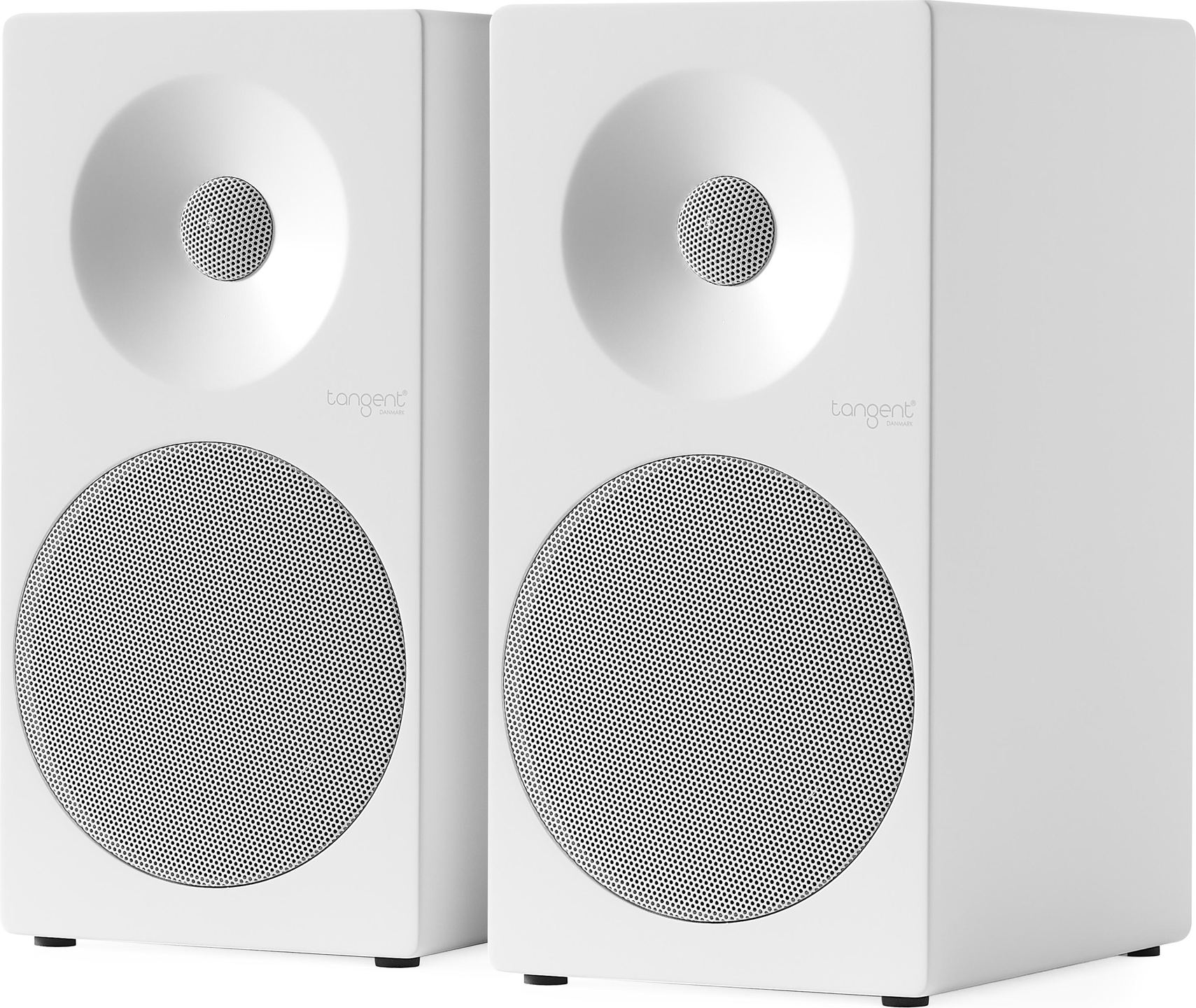
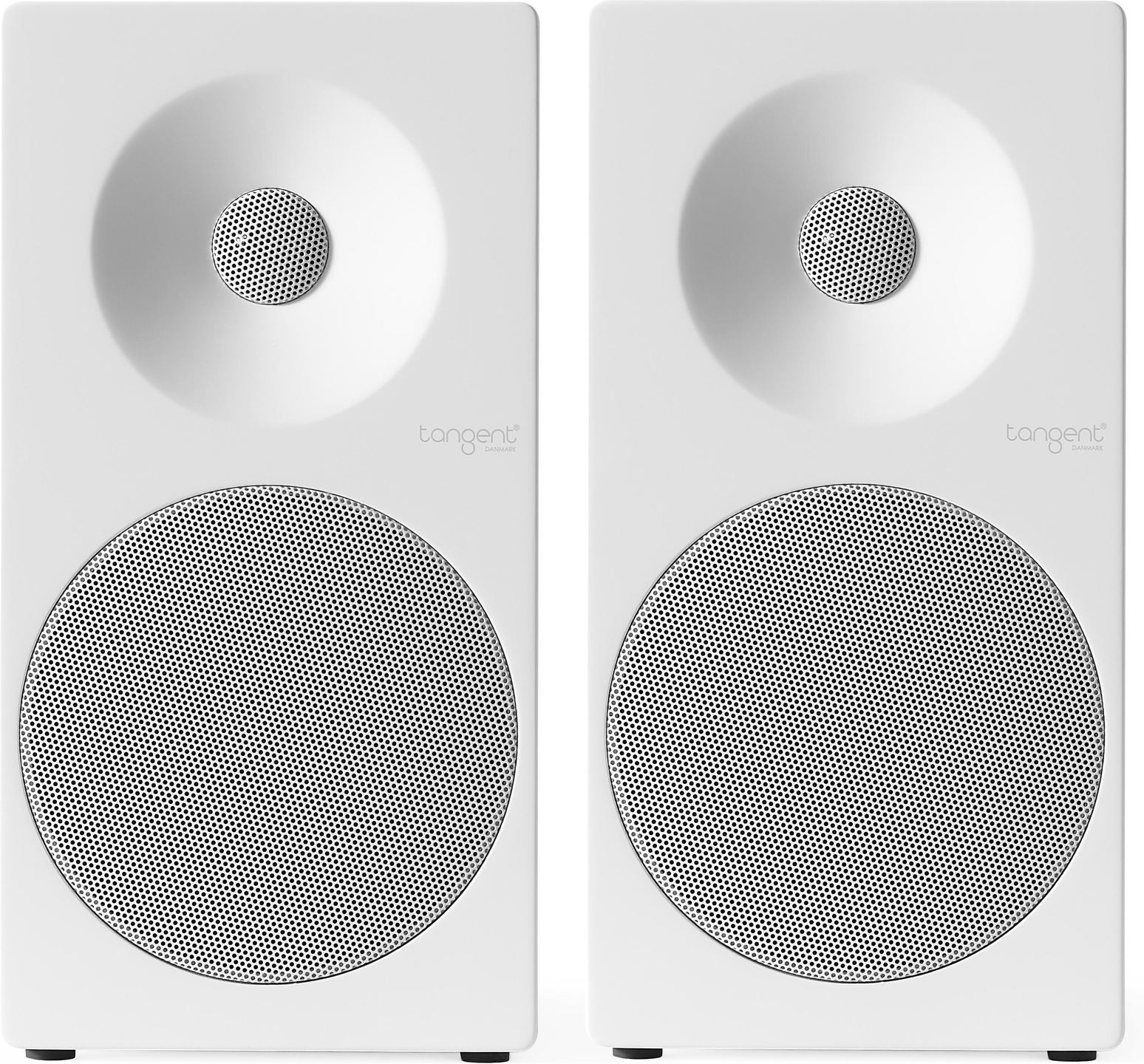
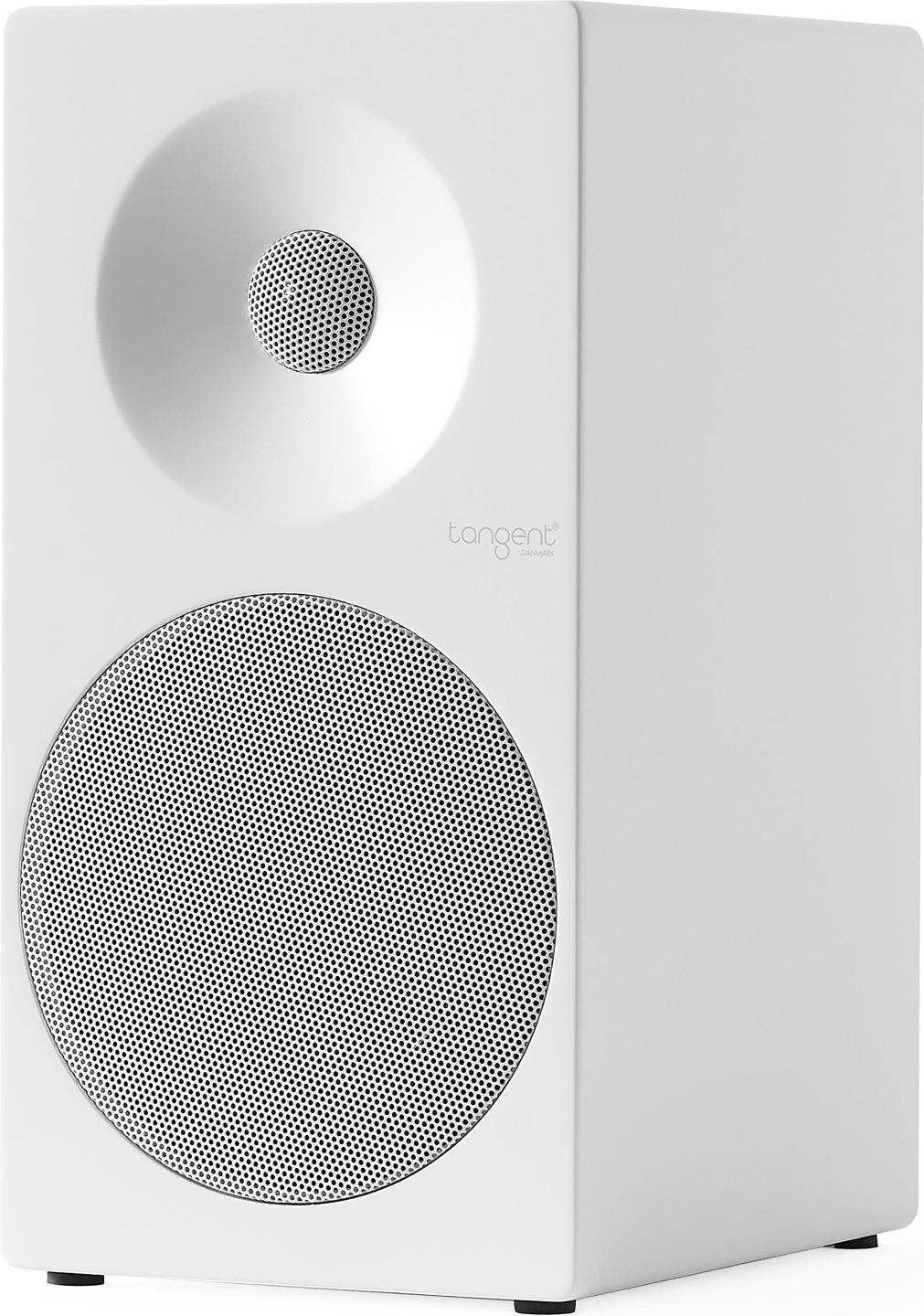
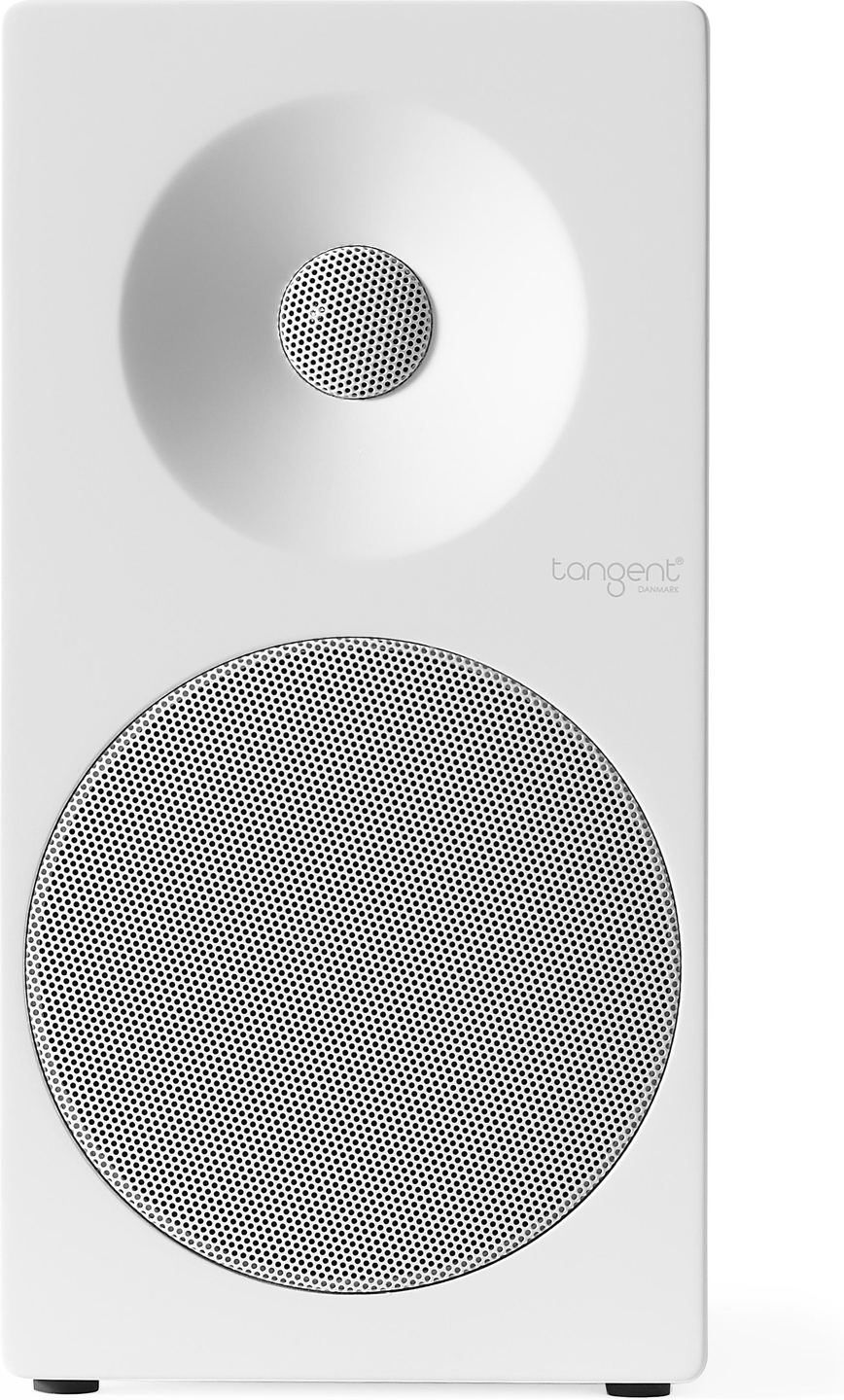
The Tangent Spectrum II X5 is a passive bookshelf loudspeaker developed by Tangent, a Danish company specializing in audio. It combines minimalist design with technical features optimized for its category.
A Scandinavian design that transcends trends
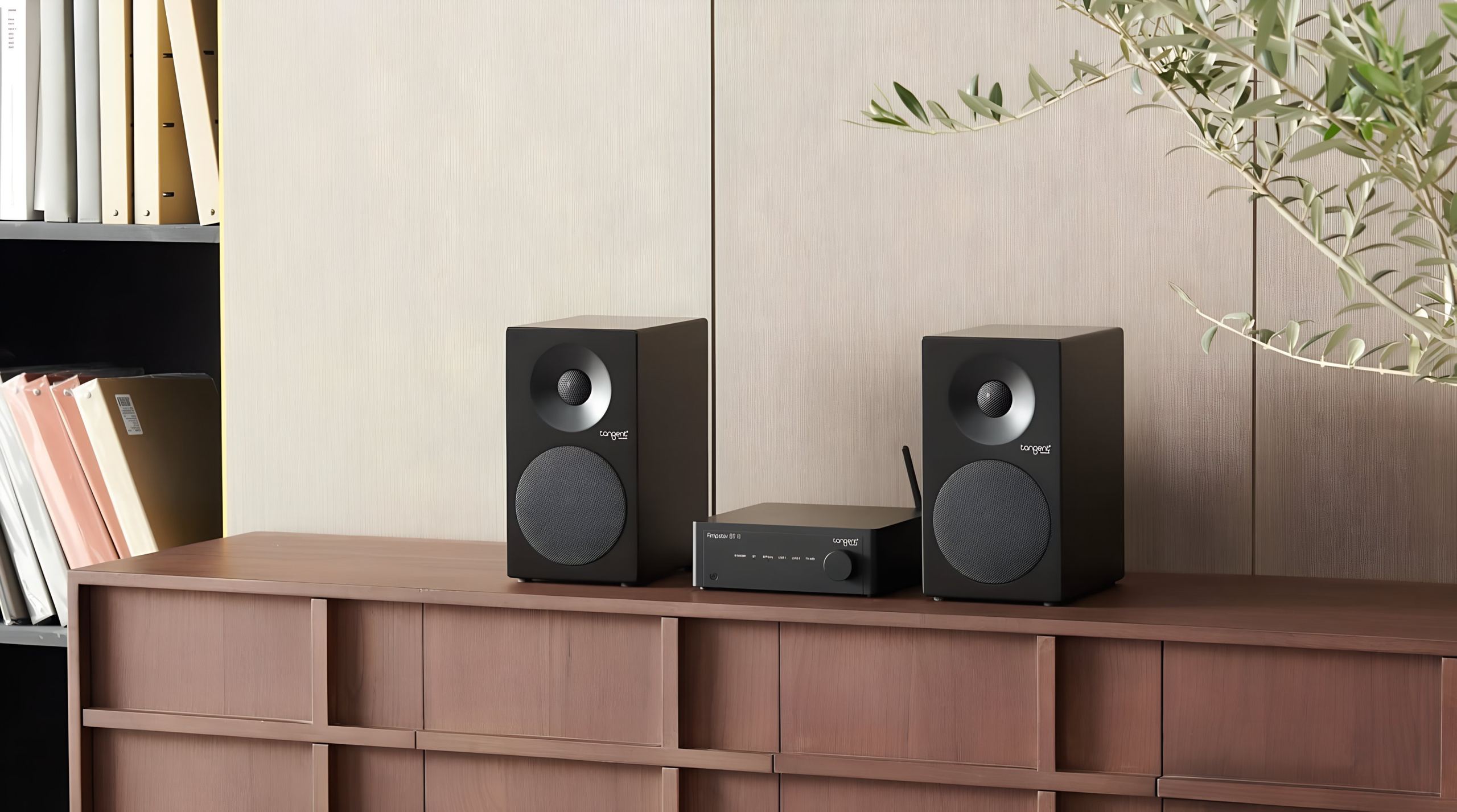
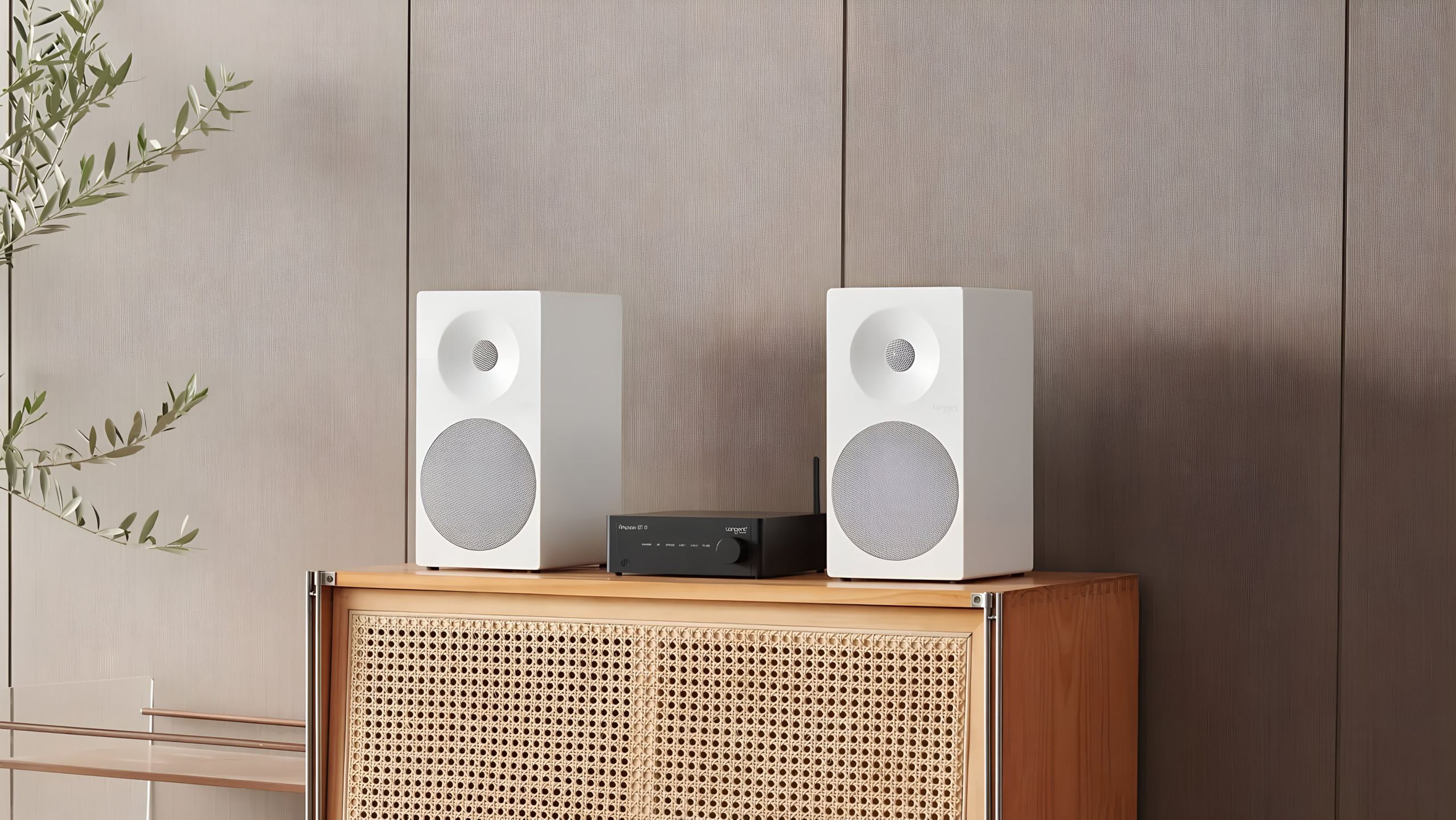
The Spectrum II X5 features compact dimensions of 166 × 322 × 205 mm, allowing it to blend naturally into any home environment. Its cabinet with subtly rounded edges sports a satin finish, available in black or white, reflecting a level of attention to detail rarely seen in this range. The protective metal grilles, perfectly integrated and color-matched to the cabinet, conceal the drivers while preserving optimal acoustic transparency.
The walnut-veneer plinth is far more than a mere aesthetic flourish. This base adds an organic touch that breaks up monochrome uniformity while helping to manage cabinet resonances. This visual signature, common to the entire Spectrum II series, creates visual coherence when several elements of the range are combined.
The cabinet’s construction reveals particular attention to structural rigidity. Weighing in at 4.3 kg per speaker, the X5 offers substantial density for its volume, indicative of carefully engineered internal damping. This mass directly helps limit unwanted cabinet coloration, allowing the drivers to perform without parasitic interference.
Cellulose pulp: a deliberate technical choice
The 13 cm mid-bass driver in cellulose pulp is the beating heart of the Spectrum II X5. Although sometimes viewed as traditional compared to modern composites, this material remains the choice of many prestigious manufacturers for fundamental acoustic reasons.
Cellulose pulp has a naturally heterogeneous structure that limits the emergence of pronounced resonances, unlike homogeneous materials such as aluminum or polypropylene. This intrinsic characteristic enables a gradual dispersion of vibrational energy across the cone, reducing breakup phenomena that generate audible distortion. The result is a particularly natural reproduction of timbres, especially with acoustic instruments and voices.
The high internal damping of cellulose is another major asset. While metal cones can exhibit pronounced resonances requiring complex crossover networks, cellulose naturally absorbs these undesirable vibrational modes. This property allows Tangent’s engineers to design a simpler, more transparent crossover, preserving the signal’s temporal coherence.
The treatment applied to Tangent’s pulp includes specific binders that stabilize the material against humidity variations while preserving its acoustic qualities. This formulation, the fruit of expertise accumulated since 1996, ensures consistent performance over time.
An optimized bass-reflex configuration for versatility
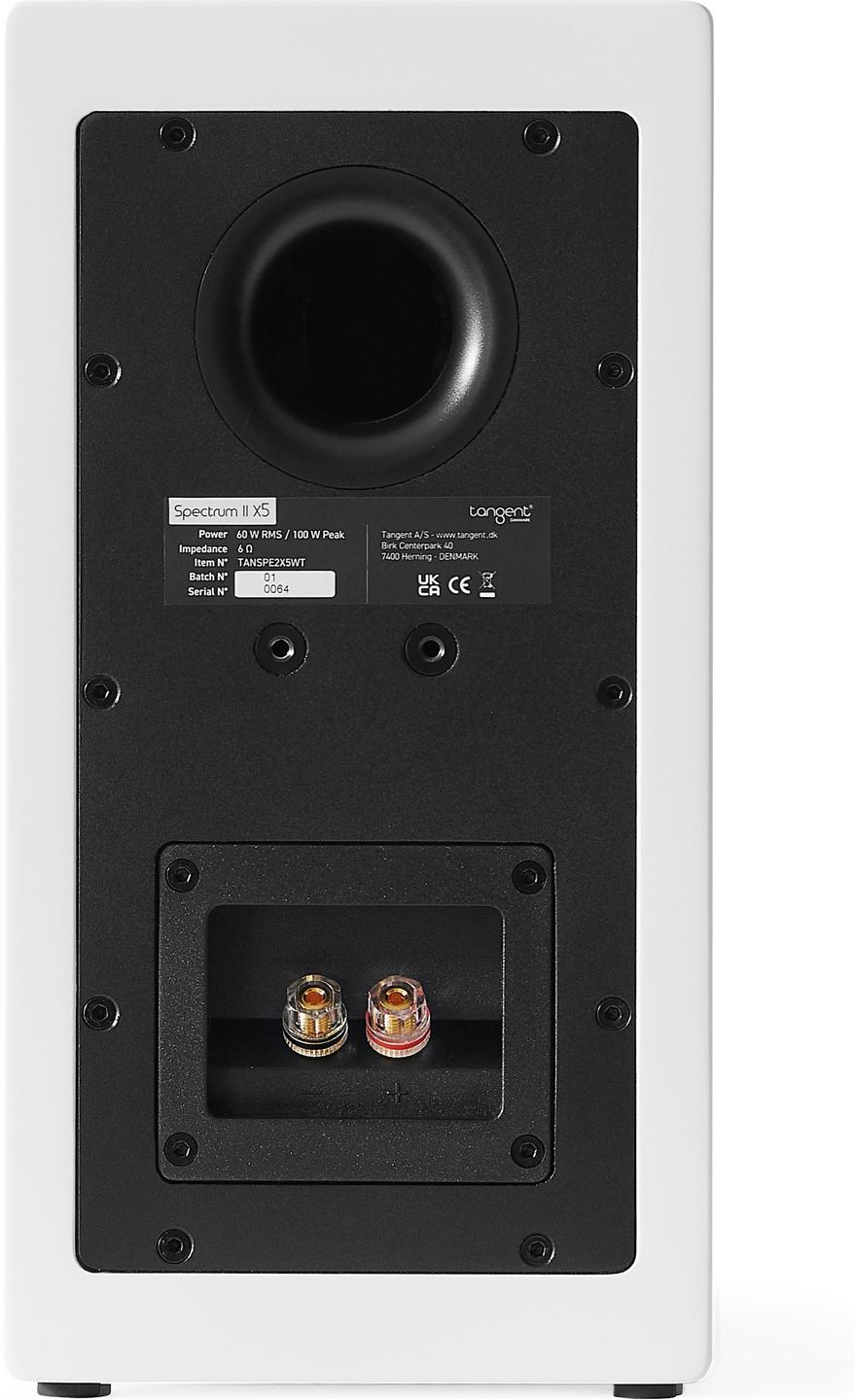
The Spectrum II X5’s bass-reflex architecture employs a carefully sized rear port to extend low-frequency response down to 60 Hz. This cutoff frequency, realistic for a 13 cm driver, avoids the artifices of forced extension that would compromise mid-bass definition.
The port tuning has clearly been meticulously optimized to minimize chuffing while maintaining controlled air velocity. This fine-tuning allows the X5 to keep its composure even during demanding dynamic passages, without the compression or saturation that sometimes affects compact speakers when pushed hard.
The 2-way configuration with a 2,800 Hz crossover and a 12 dB/octave slope is a classic yet relevant technical choice. This transition frequency, located in a relatively insensitive zone for the human ear, allows the mid-bass to cover most of the vocal spectrum while handing over the upper harmonics—where it excels—to the tweeter.
The dome tweeter: Nordic precision and smoothness
The 2.5 cm dome tweeter uses a soft diaphragm that favors smoothness and naturalness over surgical analysis. This approach, typical of the Danish acoustic school, aims for extended listening without fatigue. The wide dispersion of this driver ensures a stable, coherent soundstage even off the optimal listening axis.
A sensitivity of 88 dB for 1 watt at 1 meter places the X5 in the average range for current bookshelf speakers. This moderate efficiency is paired with a nominal impedance of 6 ohms, posing no particular challenge for modern amplifiers. The recommended power range of 20 to 100 watts offers comfortable latitude for pairing with different types of electronics.
The Spectrum II ecosystem: a coherent home cinema vision
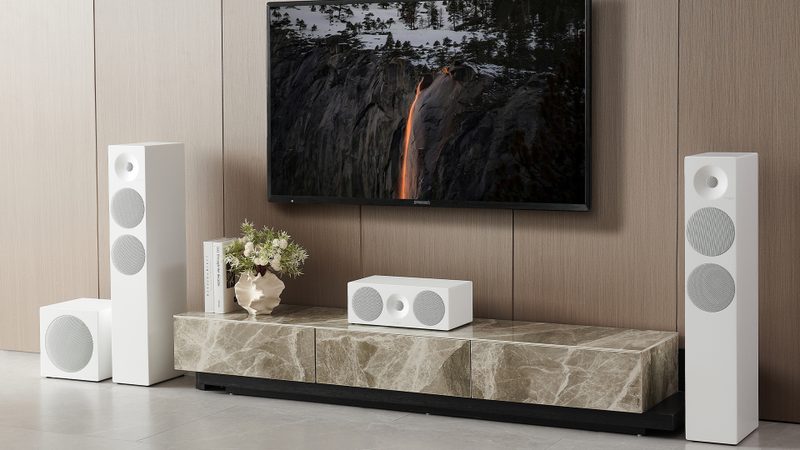
The Spectrum II X5 is part of a complete family that enables the construction of a homogeneous multichannel system. The range includes the compact X4 for surround channels, the X6 floorstanders for users seeking additional low-end extension, as well as the specialized XC (center), XLCR (wideband center), XATM (Atmos), and the XSW8 subwoofer.
This systemic approach guarantees perfect tonal coherence across all channels, a fundamental criterion for convincing spatialization in a home theater setup. Tangent’s engineers have ensured a uniform sonic signature throughout the series, making system matching and incremental upgrades straightforward.
Compatibility with the Tangent EVO wall mount offers valuable installation flexibility. This mounting system, specifically designed for the Spectrum series, enables secure wall installation while preserving the speakers’ acoustic qualities through effective decoupling.
Is the Spectrum II X5 suitable for home theater use?
+
Perfectly suited as main speakers in a 5.1 or 7.1 system, the X5 delivers sufficient dynamics and clarity for modern soundtracks. Its 6-ohm impedance and 88 dB sensitivity make it compatible with most AV receivers. Pairing with the XSW8 subwoofer provides satisfying low-frequency extension for special effects.
What minimum distance should be kept from the rear wall?
+
The bass-reflex design with a rear port requires at least 20 to 30 cm of clearance from the wall to allow the port to function properly. Placing the speaker too close to the wall will cause excessive bass reinforcement and unwanted turbulence. The Tangent EVO wall mount automatically maintains this optimal distance.
How does the Spectrum II X5 compare to the previous Spectrum series?
+
The Spectrum II series benefits from redesigned drivers, a cabinet with better-controlled resonances, and a refined crossover. Satin finishes replace the first generation’s matte lacquers, offering a higher perceived quality. The most notable improvement concerns tonal coherence and midrange definition.
What type of amplifier is best for the X5?
+
An amplifier delivering 40 to 60 watts into 8 ohms is a balanced choice for normal home use. Both solid-state and tube electronics are suitable, as the 6-ohm impedance poses no particular difficulty. The X5’s relative neutrality allows the partnering amplifier’s character to shine through.
Are the protective grilles removable?
+
The metal grilles are designed to remain in place permanently; their visual integration and acoustic transparency have been optimized accordingly. Unlike traditional fabric grilles, they do not introduce audible coloration and effectively protect the drivers.
What is the difference between the satin black and satin white finishes?
+
Beyond color, both finishes offer identical build quality. The choice is purely aesthetic and based on integration into the environment. Both versions share the same walnut-veneer plinth that adds a common touch of warmth.
User reviews
Guy
Product received in good condition, perfect packaging, impeccable presentation, and very smooth sound. It suits me completely. Also very sensitive to bass/treble variations. Nothing more to add.
Comment from January 06, 2026 — Experience from December 26, 2025
Automatically translated — Show original (French)
Produit bien reçu, emballage parfait, présentation impeccable et son très doux. Me convient totalement. Très sensible également aux variations grave/aigu. Rien de plus à ajouter.
Eco-contribution of €0.75 included in the sale price.
To better understand our visitors, measure marketing effectiveness and personalise ads, we and our partners use cookies and mobile advertising identifiers on your device. This data makes it possible to display personalised and non-personalised ads and measure their performance. Some cookies, which are technically necessary, are exempt from consent. You can accept those that require your consent, refuse them by clicking "Refuse", or customise your choices via the settings screen.
To find out how Google uses the data collected once you have given your consent, see Google’s Business Data Responsibility site.
You can change or withdraw your consent at any time via the "Consent and cookies" link. Your choices will apply on our site for 12 months.