Daniel
Excellent speaker at a reasonable price
Comment from February 03, 2026 — Experience from January 23, 2026
Automatically translated — Show original (French)
Excellente enceinte avec un prix raisonnable
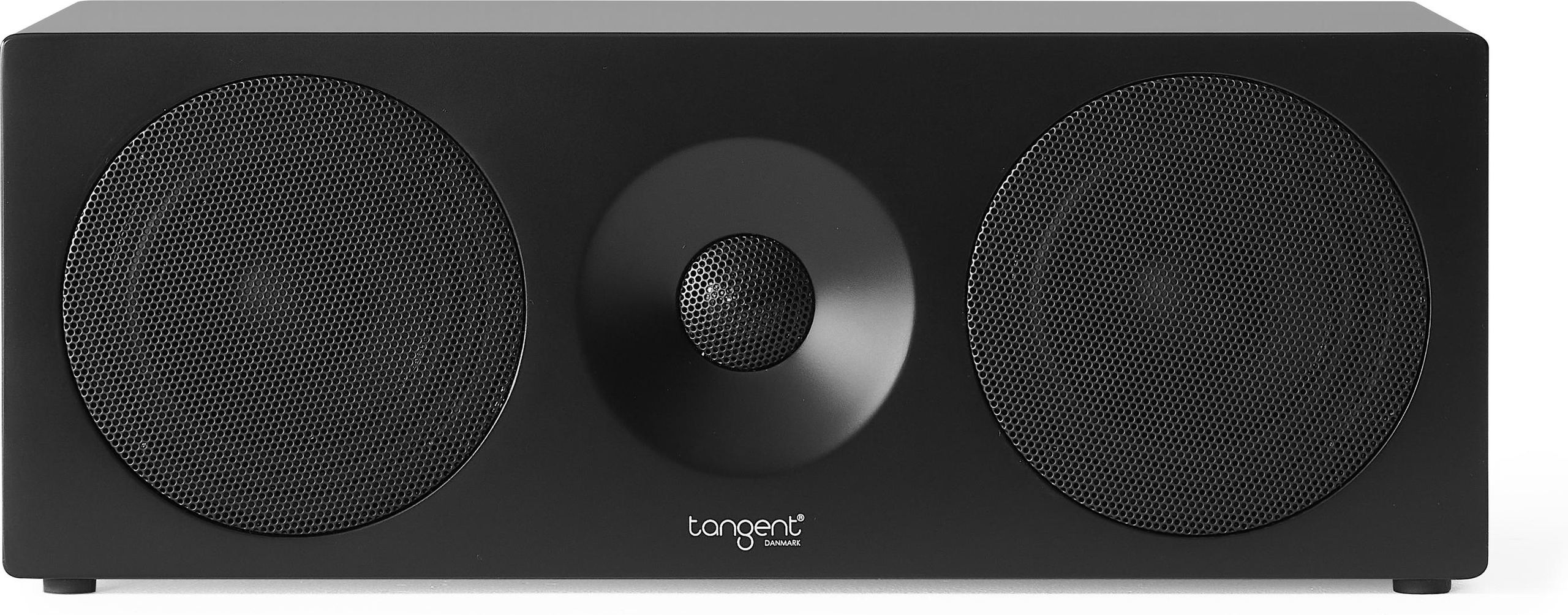
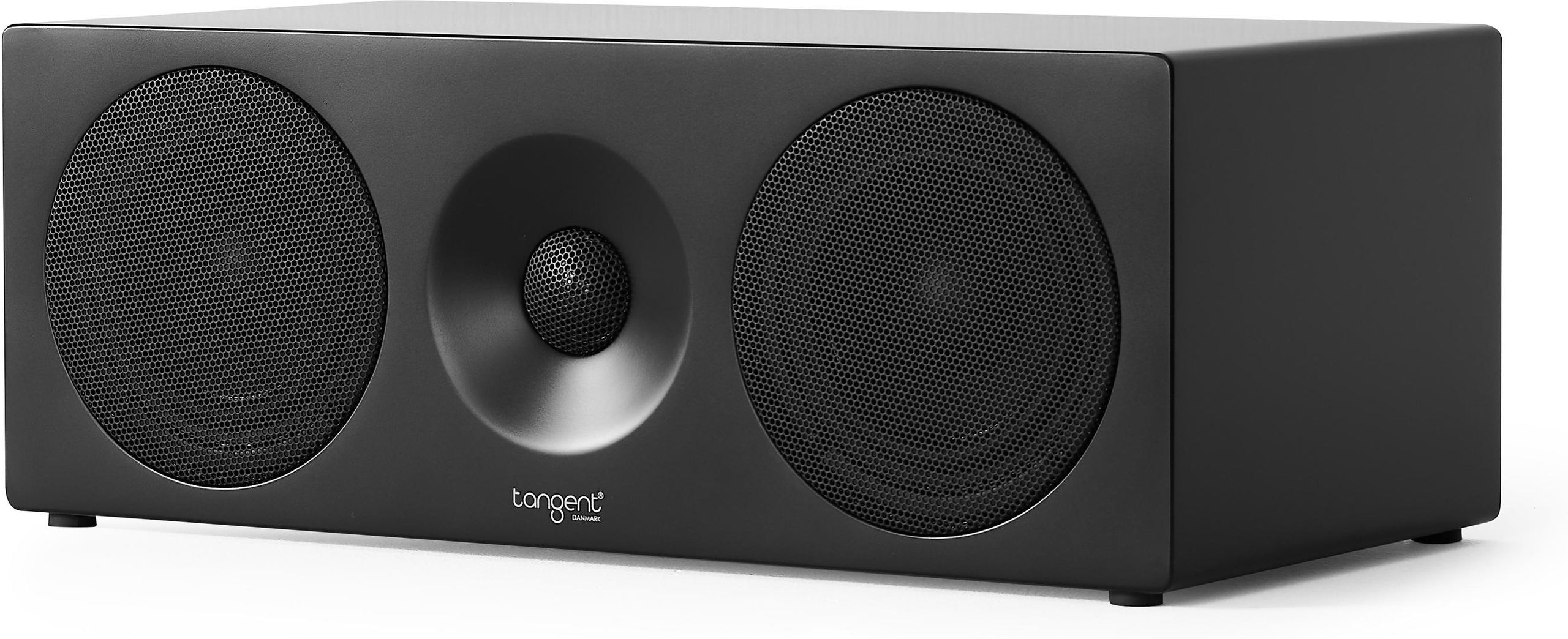
The Tangent Spectrum II XC is a compact 4.6 kg center speaker. It features two 110 mm cellulose pulp mid-bass drivers and a 25 mm dome tweeter in a bass-reflex configuration. It delivers 80 watts RMS power and 88 dB sensitivity, suited to reproducing dialogue and multichannel soundtracks.
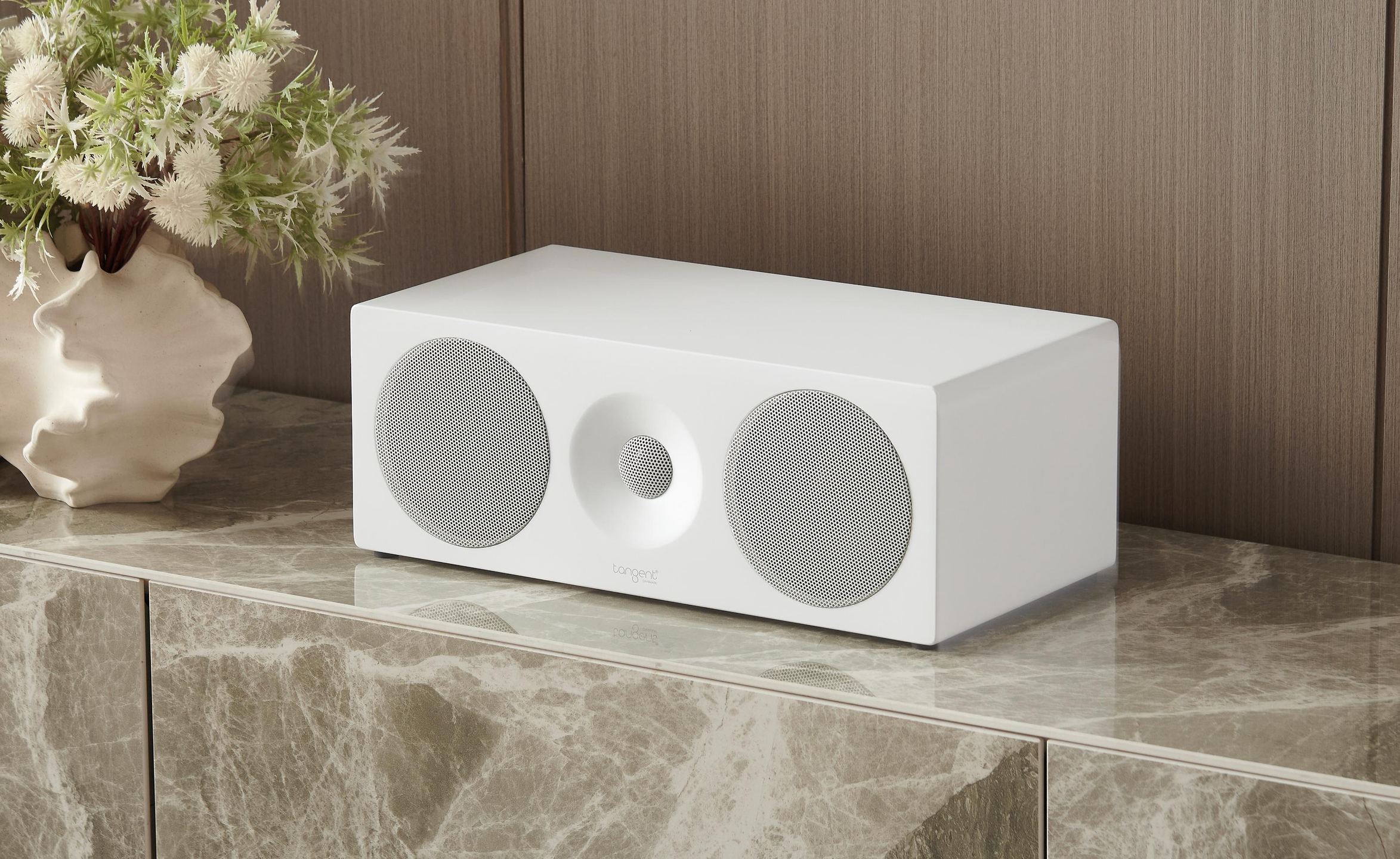
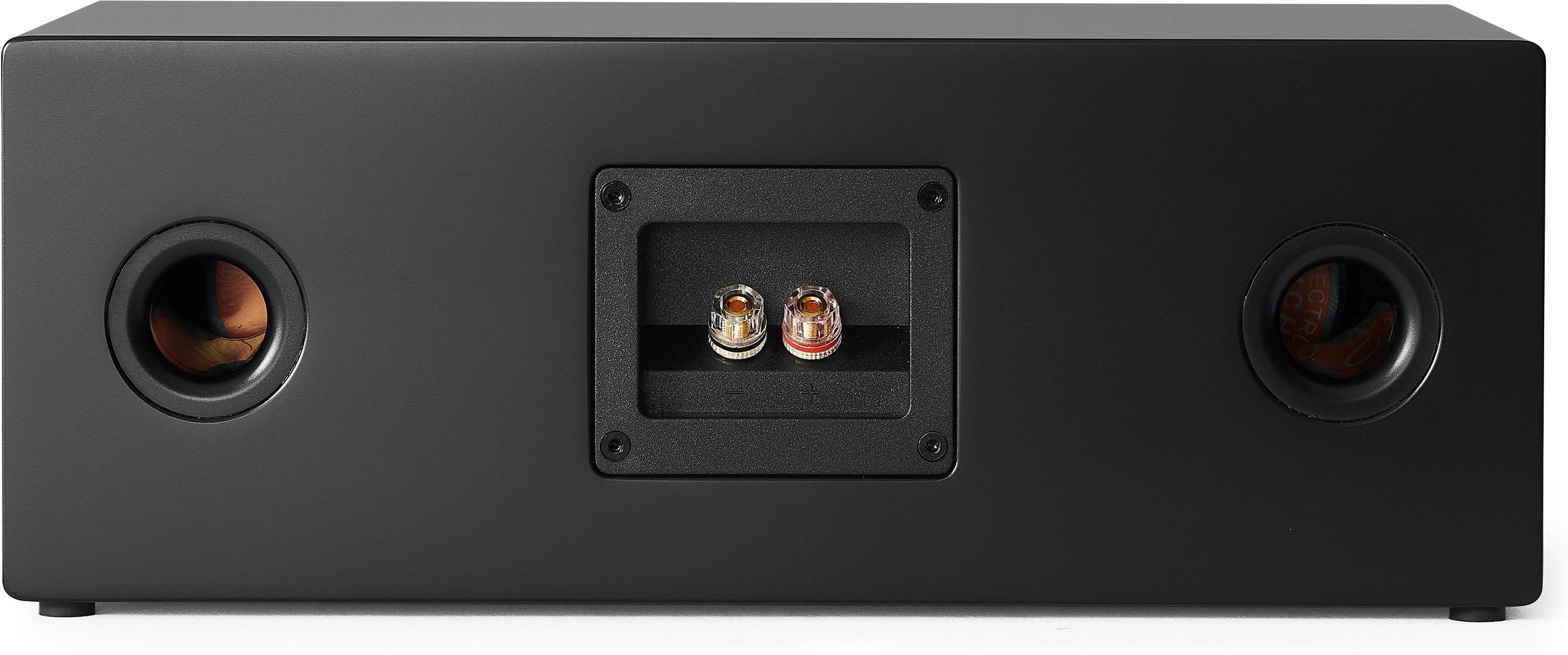
The Spectrum II XC uses a two-way configuration with a crossover set at 2,300 Hz. This carefully chosen crossover point allows the two 110 mm drivers to handle the entire vocal range without interference, while the 25 mm tweeter naturally takes over for upper harmonics and sibilants. The bass-reflex design, with carefully sized rear ports, extends frequency response down to 55 Hz while preserving definition in the midrange.
The two mid-bass drivers operate in parallel, a layout that increases radiating surface area while maintaining a coherent wavefront. This dual approach offers several acoustic benefits: better horizontal dispersion to cover a wider listening area, reduced distortion thanks to load sharing between the two drivers, and increased power handling without dynamic compression. The calculated spacing between the two cones also creates beneficial acoustic coupling that reinforces vocal presence in the critical 200 to 800 Hz range.
The cabinet, measuring 395 × 145 × 198 mm, features an optimized width/height ratio to minimize edge diffraction while providing enough front surface for stable placement below or above the screen. The construction uses medium-density panels whose thickness and internal bracing reduce unwanted colorations. The integrated protective grilles, available in satin black or white finishes, shield the drivers without creating significant acoustic obstacles.
Cellulose pulp cones are far more than a budget-friendly choice—they embody an acoustic philosophy where naturalness takes precedence over ostentatious technology. This composite material, made of interlaced plant fibers, has intrinsic damping properties particularly favorable for vocal reproduction. Unlike uniform synthetic materials that can generate pronounced resonances at specific frequencies, cellulose’s heterogeneous structure naturally disperses vibrational energy, avoiding distortion peaks that could mask dialogue subtleties.
The pulp used in Spectrum II drivers undergoes a specific treatment that optimizes the stiffness-to-mass ratio while preserving the material’s natural damping qualities. This approach yields a fast impulse response—essential for consonant clarity—without sacrificing the characteristic warmth of low vowels. The manufacturing process also ensures remarkable consistency across production units, guaranteeing perfect acoustic symmetry between the two drivers of each speaker.
The nominal impedance of 6 ohms is a smart compromise between ease of drive and optimal electrical control. This value, slightly lower than the standard 8 ohms but higher than the 4 ohms of more demanding speakers, allows most home theater amplifiers to deliver their rated power without excessive thermal stress. The 12 dB-per-octave passive crossover ensures a smooth transition between registers, preserving the tonal coherence crucial for believable voice reproduction.
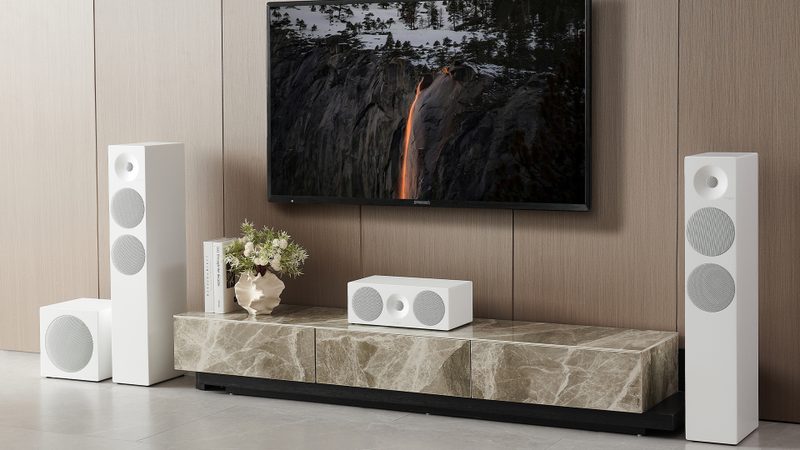
The Spectrum II range forms a coherent set where each element shares a common sonic signature. The XC naturally pairs with the floorstanding speakers X6 for the main channels, the compact X4 or X5 for surround effects, and the subwoofer XSW8 for sub-bass frequencies. This timbral consistency ensures a homogeneous soundstage where sound objects move without perceptible discontinuity between channels.
The Spectrum XATM speakers, designed for reproducing Dolby Atmos height effects, can complement the system by adding the vertical dimension. These coaxial modules, positioned on the X6, create a three-dimensional sound dome where the XC maintains the central anchor for dialogue. Electrical compatibility among all models simplifies system calibration, whether done manually or via the automatic correction systems of modern amplifiers.
The recommended amplification range of 20 to 120 watts offers welcome flexibility. A 50-watt-per-channel amplifier is more than sufficient for a medium-sized room, while installations in larger spaces can benefit from more generous amplification without risking damage to the drivers. The 120-watt peak capacity allows intense dynamic passages without audible compression, preserving the emotional impact of action scenes.
The Spectrum II series benefits from redesigned drivers with optimized cellulose pulp diaphragms, replacing the traditional paper cones of the first generation. The new 2,300 Hz crossover offers better integration between registers, while the cabinet construction incorporates additional internal bracing. The slightly higher sensitivity (88 dB versus 86 dB) also ensures better compatibility with moderately powered amplifiers.
While technically possible thanks to the speaker’s compact dimensions, this setup is not optimal. The rear bass-reflex ports require at least 10 cm of breathing space to function properly. In a confined space, low frequencies can become muddy and heat from amplification may build up. If placement in a closed cabinet is unavoidable, opt for a ventilated shelf and leave the front door open during use.
The XC’s cellulose cones offer superior natural damping compared to rigid composite materials, reducing colorations in the midrange critical for voices. While Kevlar may sound “faster” and carbon fiber more “detailed,” cellulose excels in timbral naturalness and the absence of parasitic resonances. For dialogue reproduction, where intelligibility takes precedence over showiness, this choice is particularly relevant.
Not necessarily, though timbral coherence will be optimal within the same range. The 6-ohm impedance and 88 dB sensitivity make the XC compatible with most modern home theater speakers. The key is to correctly calibrate levels and distances via your amplifier’s setup to ensure harmonious integration with third-party speakers.
For a room up to 35 m², this power is more than adequate, especially considering that the center speaker primarily reproduces dialogue, which demands less energy than special effects. In larger spaces, adding acoustic treatment (rugs, curtains) improves intelligibility without requiring more power. The 120-watt peak capacity allows for high short-term levels without distortion.
Ideally, the speaker’s acoustic center (between the two woofers) should be at the lower third of the screen, angled slightly toward the main listening position. If placed below the screen, a slight upward tilt improves projection. Above the screen, tilt it downward. Maintain a minimum distance of 20 cm from side walls to avoid early reflections that harm clarity.
Daniel
Excellent speaker at a reasonable price
Comment from February 03, 2026 — Experience from January 23, 2026