

Yamaha HA-L7A


Overview
The Yamaha HA-L7A marks the Japanese manufacturer’s entry into the world of reference headphone preamplifiers. Designed to accompany the flagship YH-5000SE headphones, this device concentrates seven decades of expertise in hi-fi components, from the first player bearing the “Hi-Fi” designation in 1954 to modern digital sound field processors. This 440,000 yen centerpiece crystallizes Yamaha’s most advanced technologies in an L-shaped construction that defies the sector’s usual aesthetic conventions.
A mechanical construction that tells a sonic philosophy
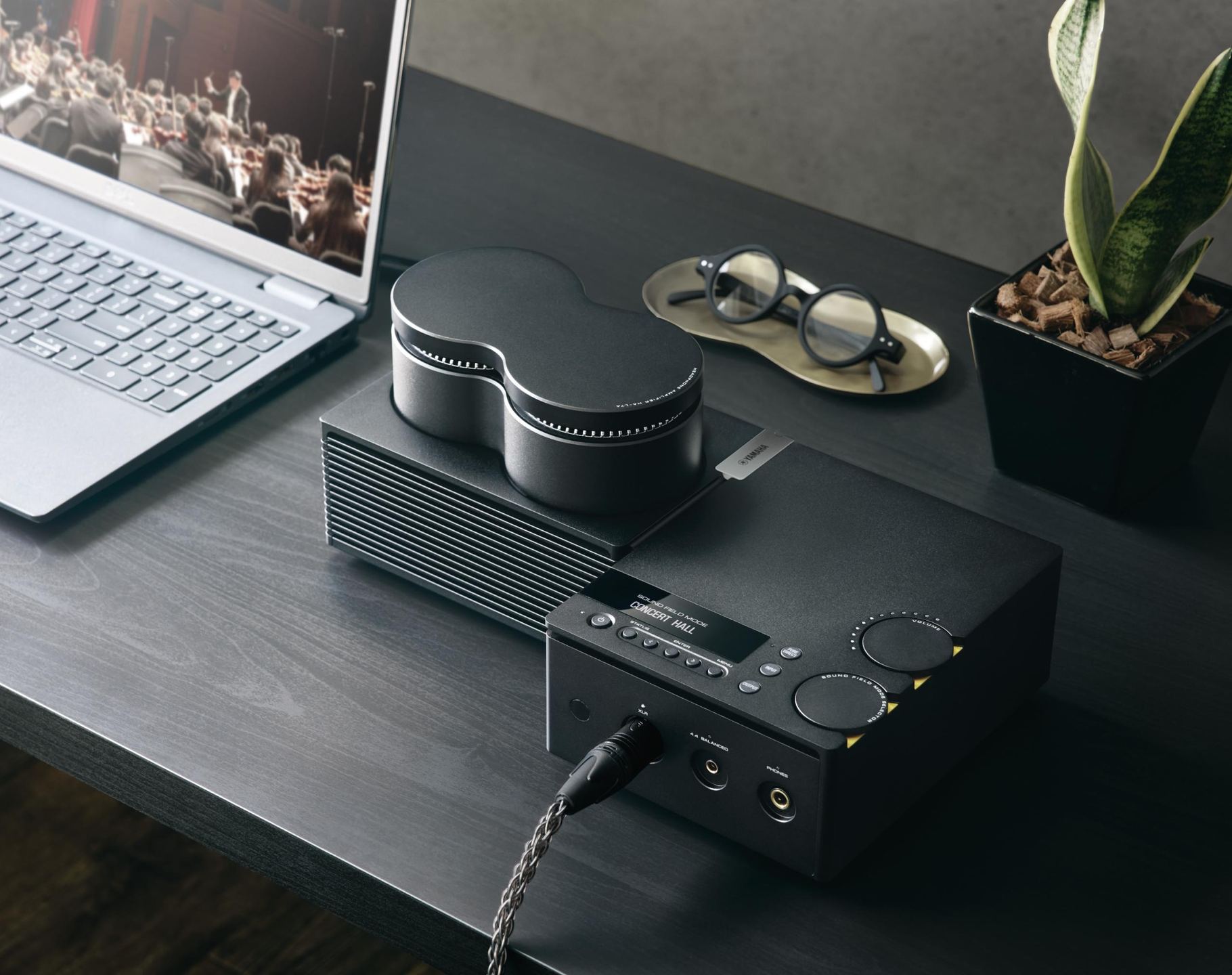
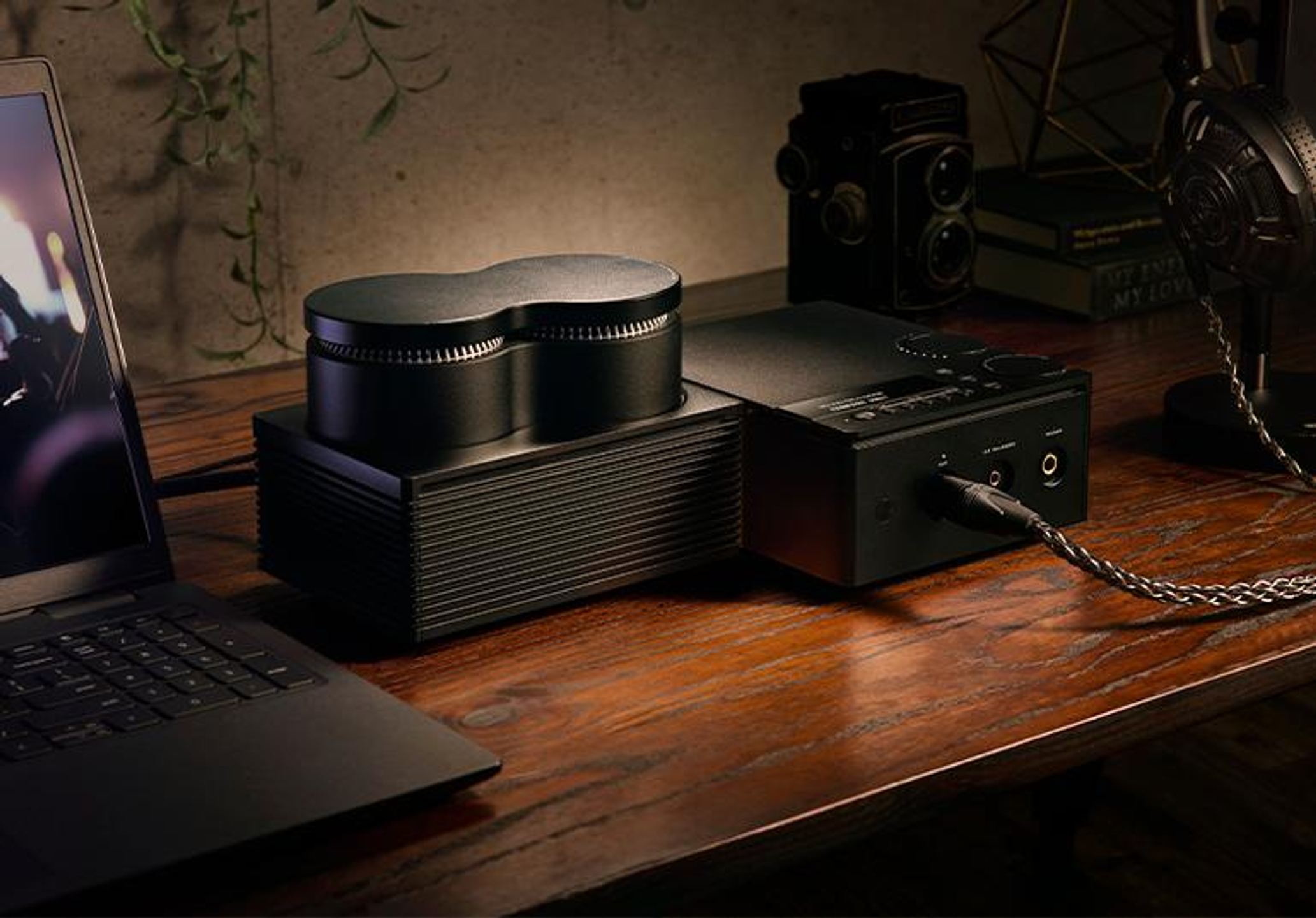
The L-shaped silhouette of the HA-L7A intrigues at first glance. This singular geometry results from extensive reflection on circuit isolation and vibration management. The two prominent cylinders dominating the left section house two independent toroidal transformers - one dedicated to the preamplification stages, the other to power amplification. These transformers, wound using the bifilar technique to minimize voltage variations, are firmly anchored to a 2 mm thick steel plate, itself integrated into an 8 mm extruded aluminum chassis.
The 5.3 kg weight is distributed across five conical metal feet positioned at the angles of this atypical structure. Each foot incorporates a specially calibrated damper to dissipate micro-vibrations. This obsessive attention to parasitic resonances originates from Yamaha’s long tradition in instrument making - the manufacturer intimately understands the impact of vibrations on sound reproduction. The thick front panel, double rear panel, and bottom cover together form a natural Faraday cage that protects sensitive circuits from electromagnetic interference.
The OLED display sits at the center of the top surface, flanked by flush touch controls that respond to a simple touch. The yellow accents beneath the volume and mode selection knobs subtly echo the connectors of the YH-5000SE headphones, creating visual coherence between the two devices. This assertive industrial aesthetic, far from the usual luxury codes, reflects a functionalist approach where every visible element contributes to acoustic performance.
Floating & Balanced technology: when amplification defies gravity
At the heart of the HA-L7A beats the patented “Floating & Balanced Power Amplifier” technology, a radical amplification approach that Yamaha has been developing since the 1970s. This topology literally makes the four amplification circuit sets (positive and negative sides of the left and right channels) “float” relative to ground. By completely isolating these circuits from earth, including the power supply, the system eliminates any influence from voltage fluctuations and noise carried by ground.
This perfectly symmetrical push-pull configuration presents a decisive advantage for headphone amplification: it delivers exactly the same power and sonic characteristics whether the headphones are connected in balanced or unbalanced mode. Measurements confirm this unique feature - 1000 mW per channel at 32 ohms, identical across all outputs. This uniformity eliminates the tonal differences usually perceptible depending on the type of connection used, offering rare versatility in this product category.
The fully discrete post-digital-to-analog conversion circuit maintains balanced transmission from the converter to the output terminals. Even incoming unbalanced signals undergo internal conversion to the balanced domain, thus benefiting from the noise immunity characteristic of this topology. Volume control uses the MUSES72320 chip, recognized for its transparency and low noise injection, preserving signal integrity even at very low levels.
A digital-to-analog converter at the pinnacle of the art
The HA-L7A incorporates the ESS ES9038PRO converter, an 8-channel chip configured here in 4-channels-per-side mode for exceptional stereo conversion. This reference DAC, paired with a low phase-noise master clock, natively handles PCM streams up to 384 kHz/32-bit and DSD up to 11.2 MHz (DSD256). Asynchronous transmission via USB, controlled by the HA-L7A’s high-precision clocks rather than the source computer, drastically reduces jitter.
Two separate quartz oscillators clock the 44.1 kHz and 48 kHz frequency families, ensuring optimal synchronization regardless of the source. Multi-layer circuit boards physically separate the digital and analog sections, eliminating parasitic interactions between domains. This compartmentalized architecture, inherited from the brand’s high-end integrated amplifiers, contributes to the exceptional 120 dB signal-to-noise ratio.
Eight digital filters are offered, seven from the ESS catalog plus a proprietary low-latency Yamaha filter, allowing subtle adaptation of reproduction according to listening preferences. Pure Direct mode completely bypasses the digital signal processing stages for absolute transparency when the source warrants it.

The DSP-1 legacy: spatialization reinvented for headphones
The HA-L7A incorporates a unique feature in its category: six sound field modes derived from the Cinema DSP technology that Yamaha has been perfecting since the DSP-1 processor of 1986. This pioneering spatialization approach, based on acoustic measurements of real rooms, finds an unprecedented application here for headphone listening.
CINEMA and DRAMA modes optimize soundtrack rendering by widening the soundstage and recreating the acoustics of a screening room. MUSIC VIDEO accentuates presence and rhythmic impact for filmed concerts. CONCERT HALL simulates the natural reverberation of a large performance hall, while OUTDOOR LIVE recreates the open space sensation characteristic of festivals. BGM (Background Music) mode applies sophisticated HRTF (Head-Related Transfer Function) processing for extended listening without fatigue.
These DSP treatments, developed by a dedicated team of engineers in their thirties and forties, aim to transcend the spatial limitations inherent in headphone listening. Unlike consumer spatialization algorithms, they preserve tonal coherence and musical message precision. The Pure Direct button allows instant deactivation of all these treatments to restore the source signal in its purest form.
Connectivity designed for all uses
The front panel accommodates three types of headphone outputs: 4-pin XLR for professional balanced cables, 4.4 mm Pentaconn - the new balanced standard favored by enthusiasts - and traditional 6.3 mm jack. Neutrik connectors for XLR and Japan Dix for Pentaconn guarantee foolproof reliability and optimal electrical contact.
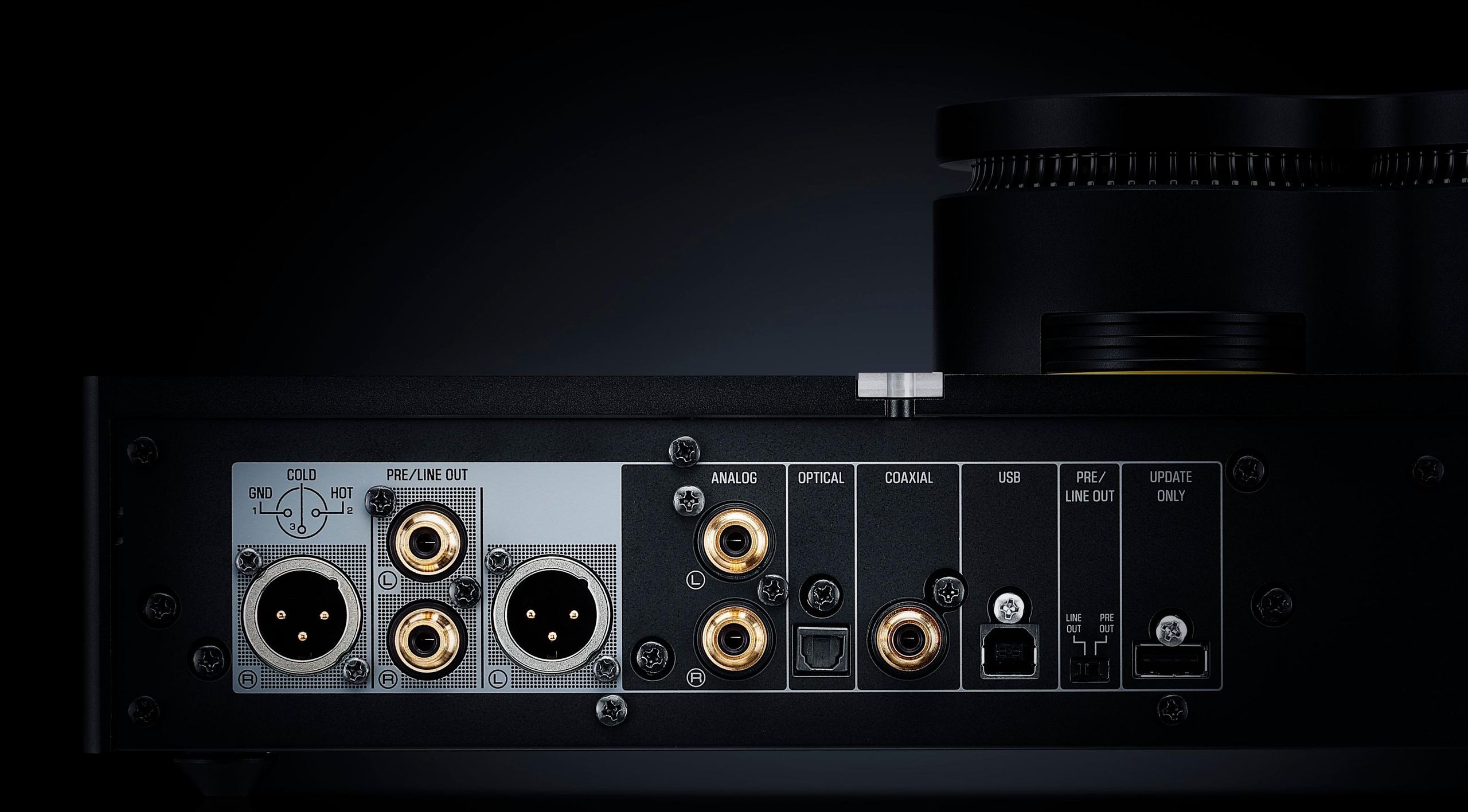
The rear concentrates comprehensive digital connectivity: USB Type-B for high-resolution computer connection, optical and coaxial inputs for CD players and digital transports. An RCA analog input allows integration of vintage sources or turntables equipped with phono preamps. Line/preamp outputs on RCA and XLR transform the HA-L7A into a converter or preamplifier to feed an external amplification system.
This versatility meets the expectations of a clientele that has invested in different formats and technologies over the decades. The HA-L7A thus becomes the central hub of a sophisticated personal listening system, capable of sublimating both a DSD file and a CD from the 1980s.
Documentation
French
Technical Specifications
Audio Performance
- Output power: 1000 mW + 1000 mW (1 kHz, 0.01% THD, 32 Ω)
- Frequency response (headphone output): 4 Hz – 80 kHz (−3 dB)
- Total harmonic distortion: ≤ 0.003% (digital input, 1 kHz, 300 mW, 32 Ω)
- Signal-to-noise ratio: > 120 dB
- Input sensitivity
- Headphone output: 1.4 V
- Pre-amplifier output: 0.2 V
- Line output: 2.0 V (analog input)
- Input impedance: RCA 50 kΩ
Architecture and Technologies
- High-performance digital-to-analog converter: ESS ES9038PRO (32-bit) with low phase noise clock
- Amplification technology: Yamaha Floating and Balanced (symmetrical push-pull)
- Power supply: dual independent toroidal transformer (pre-amplification and amplification)
- Construction
- 8 mm extruded aluminum chassis
- Anti-vibration transformer mounting
- Conical metal feet with dampers
- Circuit isolation: digital/analog signal separation, multilayer circuits
- Volume control: MUSES72320 chip (low distortion, low noise)
Supported Audio Formats
- Optical input: 2-channel PCM, maximum 96 kHz / 24-bit
- Coaxial input: 2-channel PCM, maximum 192 kHz / 24-bit
- USB input (Type-B): 2-channel PCM, maximum 384 kHz / 32-bit; 2-channel native DSD, maximum 11.2 MHz (DSD256)
Features
- 3D sound field mode: 6 presets (CINEMA, DRAMA, MUSIC VIDEO, CONCERT HALL, OUTDOOR LIVE, BGM) + DIRECT
- Pure Direct: bypass of non-essential circuits for maximum fidelity
- Digital filters: 8 types available (including Yamaha low latency filter)
- USB converter: asynchronous transmission with dedicated high-precision clocks (44.1 kHz and 48 kHz)
- Display: OLED screen (source, sampling frequency, volume, sound field mode)
Connectivity
- Inputs
- Stereo analog (RCA) × 1
- Digital optical × 1
- Digital coaxial × 1
- USB (Type-B) × 1
- Headphone outputs
- 6.3 mm jack × 1
- 4.4 mm balanced (Pentaconn) × 1
- 4-pin XLR × 1
- Pre-amplifier / line outputs
- Stereo analog RCA × 1
- 3-pin analog XLR × 1
General Information
- Dimensions (W × H × D): 333 × 133 × 189 mm
- Weight: 5.3 kg
- Power consumption: 19 W (standby 0.2 W)
- Packaging: 490 × 270 × 320 mm carton, weight 9.5 kg
Frequently Asked Questions
Can the HA-L7A drive difficult headphones like magnetic planars?
With 1000 mW per channel at 32 ohms and a design optimized for complex loads, the HA-L7A has sufficient reserves for the majority of headphones on the market, including power-hungry planar models. Floating & Balanced technology maintains exemplary control even with the fluctuating impedances characteristic of certain orthodynamic headphones.
What is the real difference between balanced and unbalanced outputs?
Unlike most amplifiers, the HA-L7A delivers strictly the same performance across all its outputs thanks to its unique Floating & Balanced topology. The choice of connection therefore depends solely on your headphone’s cabling, without sonic compromise.
Do the Sound Field modes denature the original signal?
These modes use Cinema DSP algorithms perfected over nearly 40 years by Yamaha. They enrich the spatial experience without degrading resolution or fundamentally altering timbre. Pure Direct mode remains available to instantly bypass all processing and restore the unmodified source signal.
Why choose the ES9038PRO DAC rather than a more recent model?
The ES9038PRO remains an absolute reference in digital-to-analog conversion, particularly in 8-channel configuration used in quad for stereo. Its implementation in the HA-L7A, with dedicated clocks and separate power supply circuits, fully exploits its potential. Yamaha engineers favored exemplary implementation of a proven chip rather than the race for specifications.
- Eco-contribution of €2.58 included in the sale price.




